
Improving critical thinking Worksheets for Ages 3-8
6 filtered results
Difficulty Level
Grade
Age
-
From - To
Subject
Activity
Standards
Enhance your child’s critical thinking skills with our engaging Worksheets designed for ages 3 to 8. Our worksheets encourage young minds to explore problem-solving, analyzing information, and developing reasoning abilities through fun and interactive activities. By integrating colorful visuals and age-appropriate challenges, children will enjoy honing their cognitive skills while building a strong foundation for future learning. Perfect for home or classroom use, these worksheets aim to foster independence, creativity, and analytical thinking. Explore our selection today to support your child's critical thinking development in an enjoyable and effective way. Start nurturing inquisitive thinkers from an early age!
Favorites
With answer key
Interactive
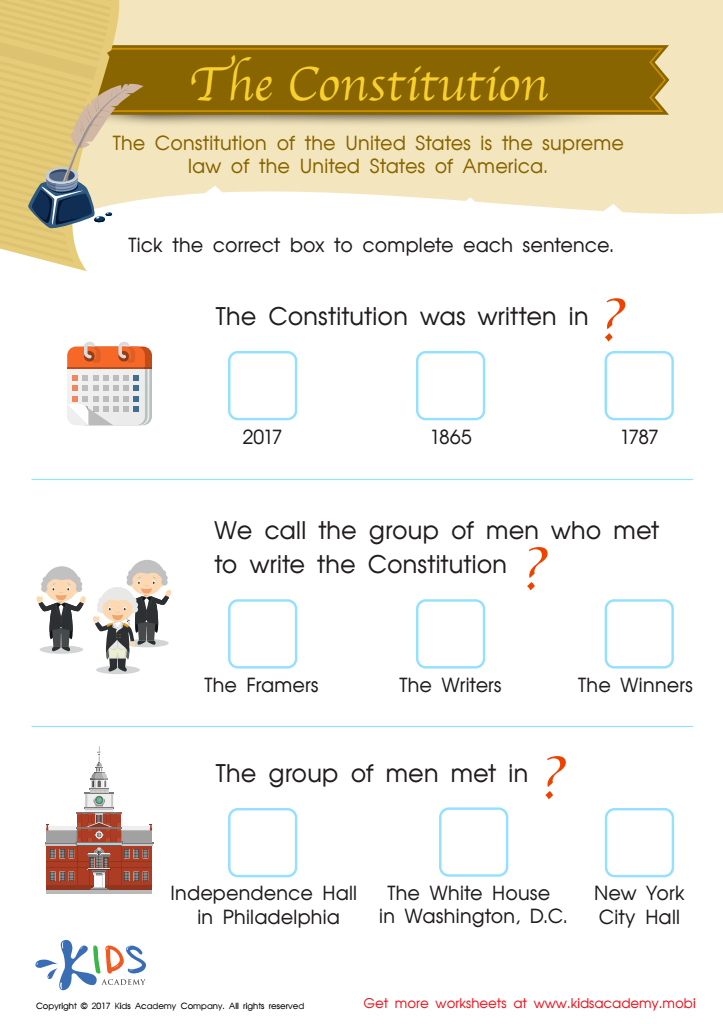
The Constitution Worksheet
Teach your child America's history and identity: have them complete the Constitution of the United States of America worksheet. It's essential for our nation that our future generations understand the importance of our constitution. Make sure your child is prepared!
 Assign to My Students
The Constitution Worksheet
Worksheet
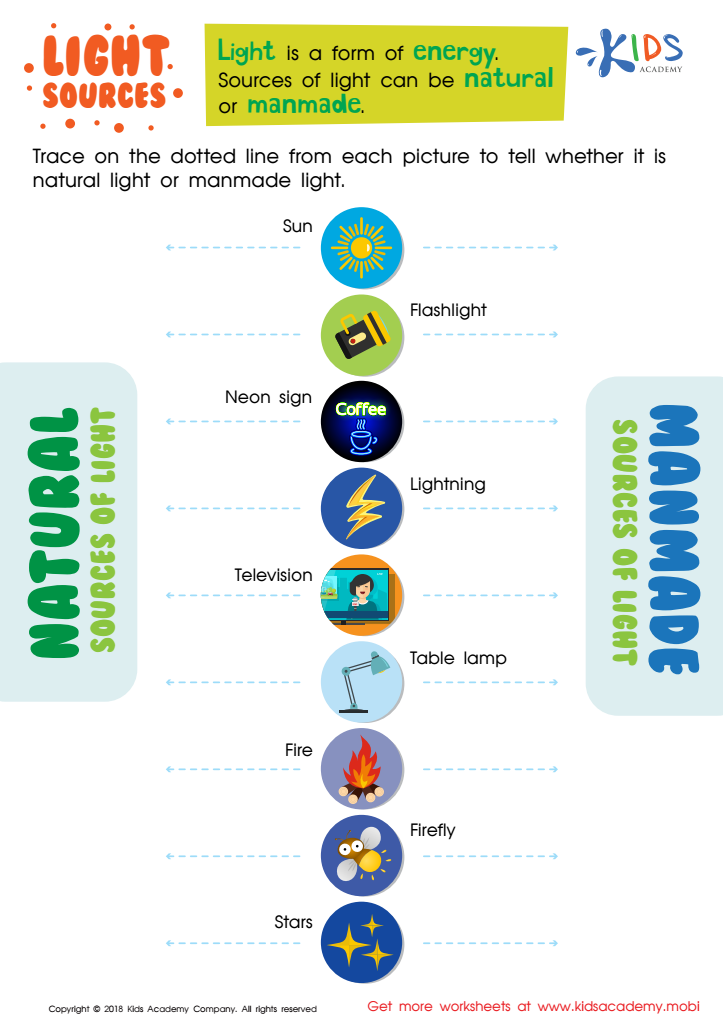
Natural and Manmade Light Sources Worksheet
Have your child learn about natural and manmade light sources with this fun worksheet! They'll distinguish the sun, fireflies and more as either natural or artificial sources. Brighten up their knowledge with this engaging activity!
Natural and Manmade Light Sources Worksheet
Worksheet
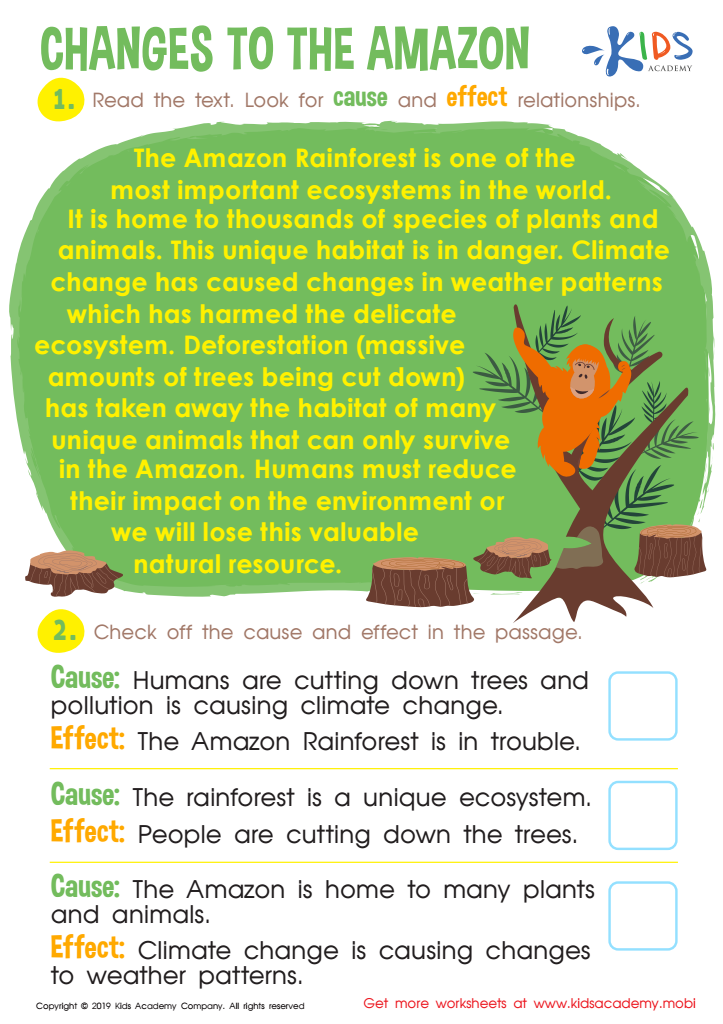
Changes to the Amazon Worksheet
If your kids are interested in protecting the planet, they should know about the Amazon. Use this worksheet to teach them about it. Read it with them and help them find the cause and effect relationships, then check them off. It explains the situation in the Amazon, why it's happening and the results.
Changes to the Amazon Worksheet
Worksheet
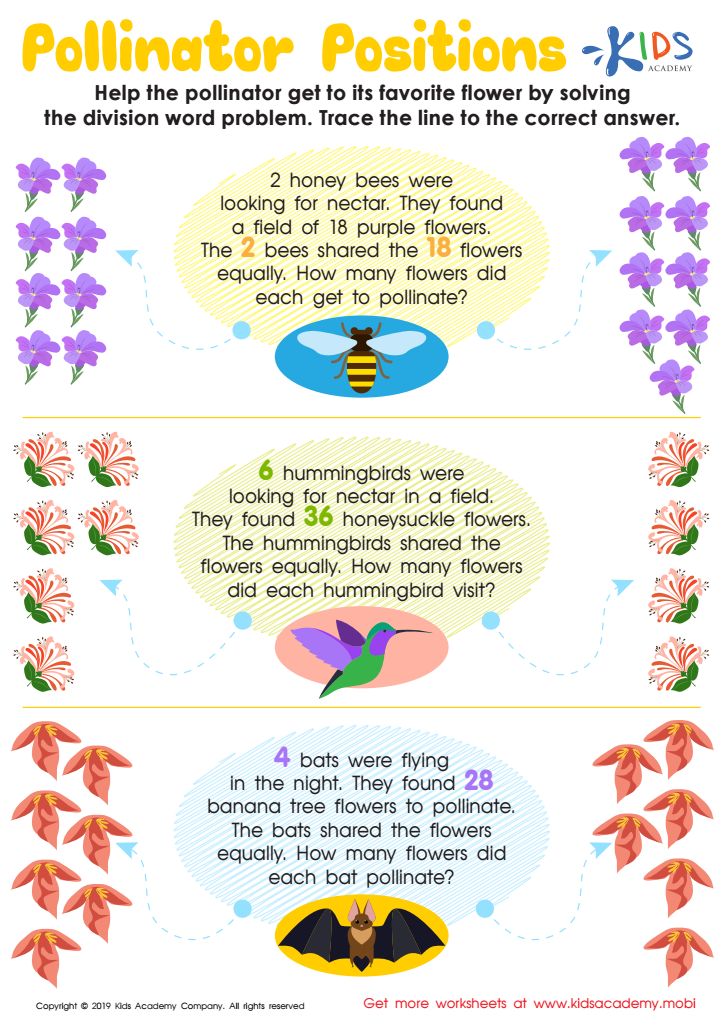
Pollinator Positions Worksheet
Kids will love learning about pollinators and how vital they are. Help their favorite friends get to the right flowers with this fun PDF. Children can solve the problems without even knowing they're doing division; just read the word problems and use the highlighted numbers. Finish by tracing the lines to the correct quotient!
Pollinator Positions Worksheet
Worksheet
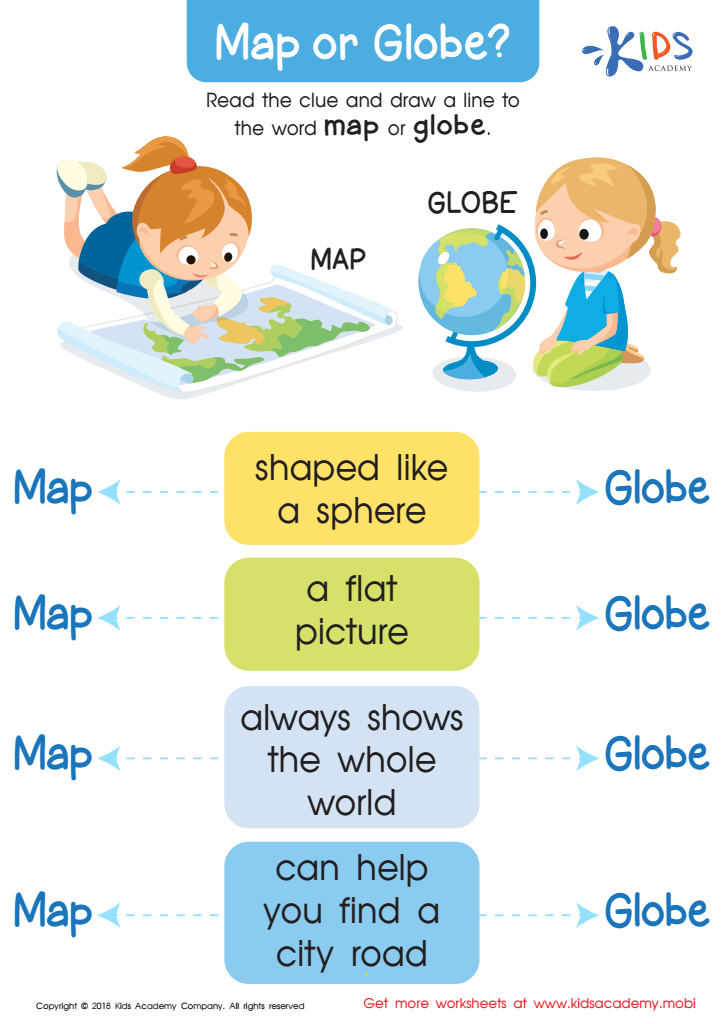
Map or Globe? Worksheet
Learning the difference between maps and globes can be difficult for young children. Get this free worksheet to help them! It offers word and picture clues for them to practice matching. They'll also get to use their fine motor skills as they trace the lines to find the answers.
Map or Globe? Worksheet
Worksheet
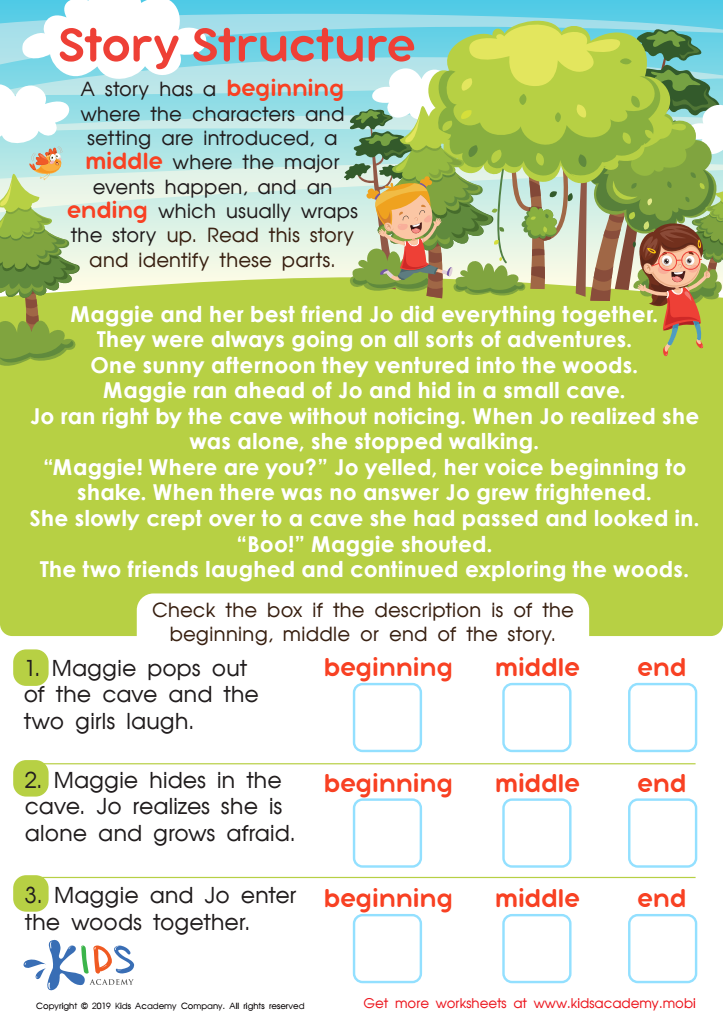
Story Structure Worksheet
Help your students read and identify the parts of the story in this worksheet: the beginning (characters and setting), middle (major events), and ending (events are resolved). Show them how to structure a story for clarity.
Story Structure Worksheet
Worksheet
Learning Skills
Join Kids Academy for Free
Who is primarily going to use this learning content?








Improving critical thinking skills in children ages 3-8 is essential for their overall development and future success. At this young age, children's cognitive abilities are rapidly developing, making it an ideal time to foster thinking skills that promote curiosity and problem-solving. By encouraging critical thinking, parents and teachers can help children learn to analyze situations, make decisions, and understand the implications of their choices.
Critical thinking not only supports academic success but also equips children with essential life skills. It promotes creativity and innovation as children learn to explore multiple perspectives and solutions to problems. Additionally, critical thinking helps build resilience, allowing children to face challenges with confidence and a positive mindset.
Engaging children in activities that stimulate critical thinking—such as open-ended questions, hands-on experiments, or collaborative projects—nurtures their inherent curiosity and enthusiasm for learning. This engagement fosters a love for inquiry, allowing children to feel empowered in their learning journeys.
In an increasingly complex world, fostering critical thinking prepares children not just for school, but for lifelong learning and effective citizenship. Therefore, parents and teachers play a crucial role in nurturing these vital skills during a formative stage of life.








