
Improving problem-solving skills Worksheets for Ages 3-8
7 filtered results
Difficulty Level
Grade
Age
-
From - To
Subject
Activity
Standards
Enhance your child's critical thinking with our "Improving Problem-Solving Skills Worksheets" designed for ages 3-8. These engaging, interactive worksheets foster essential skills in a fun and age-appropriate way. Our carefully crafted activities encourage logical thinking, creativity, and the ability to tackle challenges independently. Perfect for both home and classroom settings, these worksheets cover various themes, offering diverse problems to solve. Let your child explore different scenarios, build confidence, and develop strategies for finding solutions. With a focus on playful learning, these worksheets ensure your little ones are equipped with the foundational skills they'll need for future success. Download and get started today!
Favorites
With answer key
Interactive
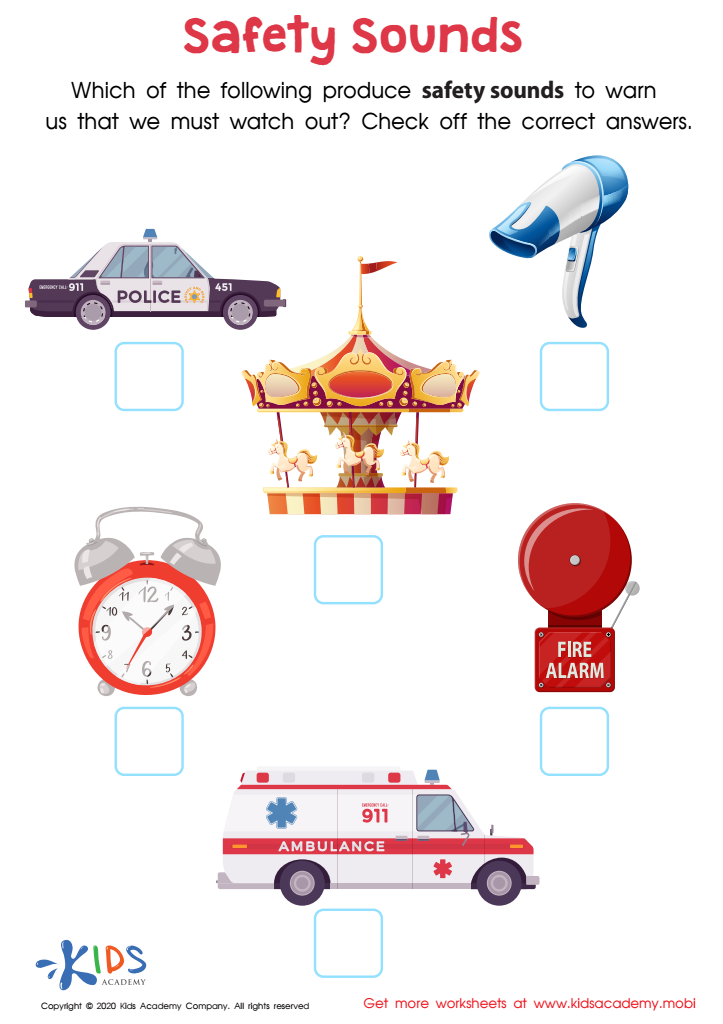
Safety Sounds Worksheet
Teach your kids about safety. Explain the rules and let them know what sounds to be aware of. Review the worksheet with pictures of objects and ask them to recognize which ones produce safety sounds. Have them check their answers. Doing this will help ensure their safety and that of others.
 Assign to My Students
Safety Sounds Worksheet
Worksheet
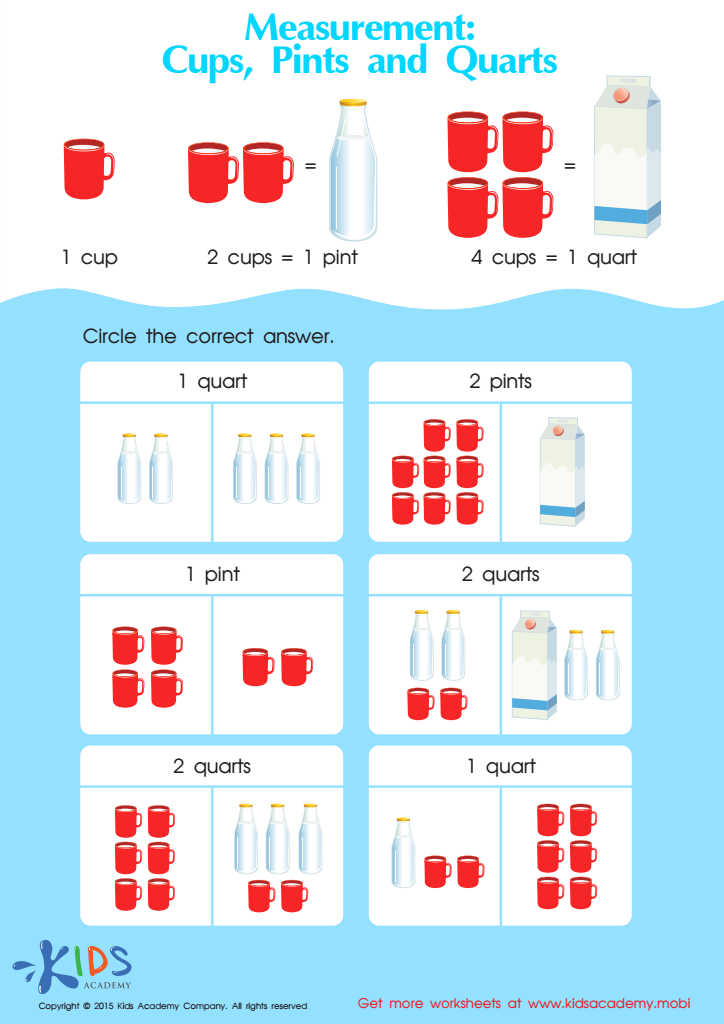
Cups, Pints and Quarts Worksheet
Let your kids explore the world of math with our worksheet! Have them count cups, pints and quarts in pictures and circle the right answer. Get even more free printable math worksheets for kindergarten on our website. Come on, join the adventure!
Cups, Pints and Quarts Worksheet
Worksheet
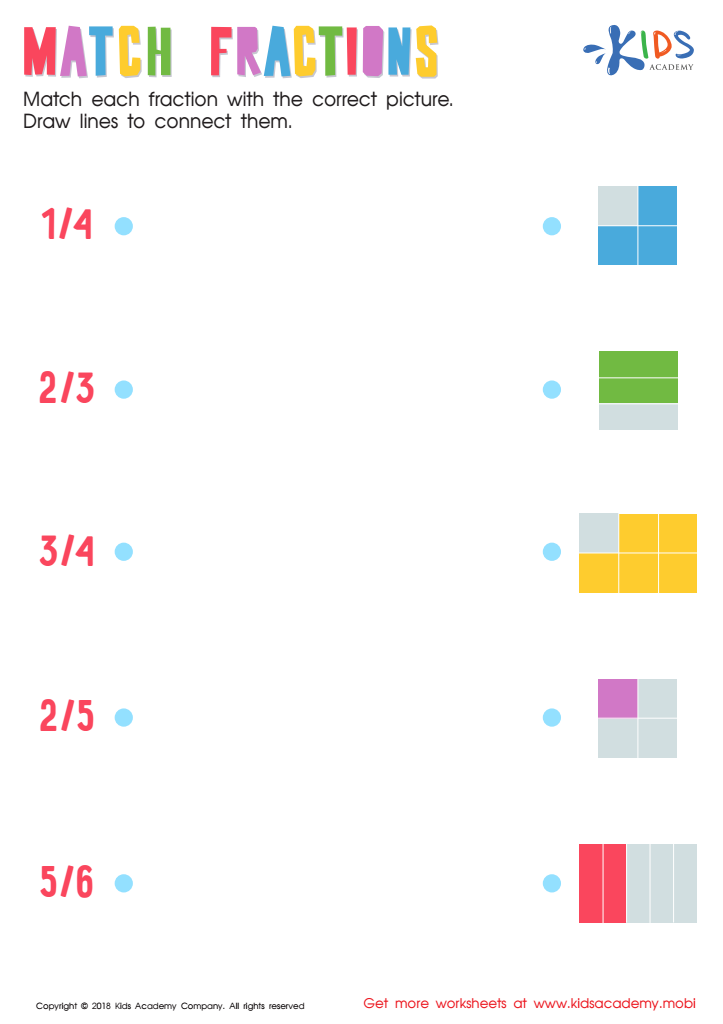
Match Fractions Worksheet
Have your child match fractions to images with this worksheet. There are five fractions on the left and five pictures on the right. Ask them to draw lines to connect each fraction to the right image. It's a great way to learn while having fun!
Match Fractions Worksheet
Worksheet
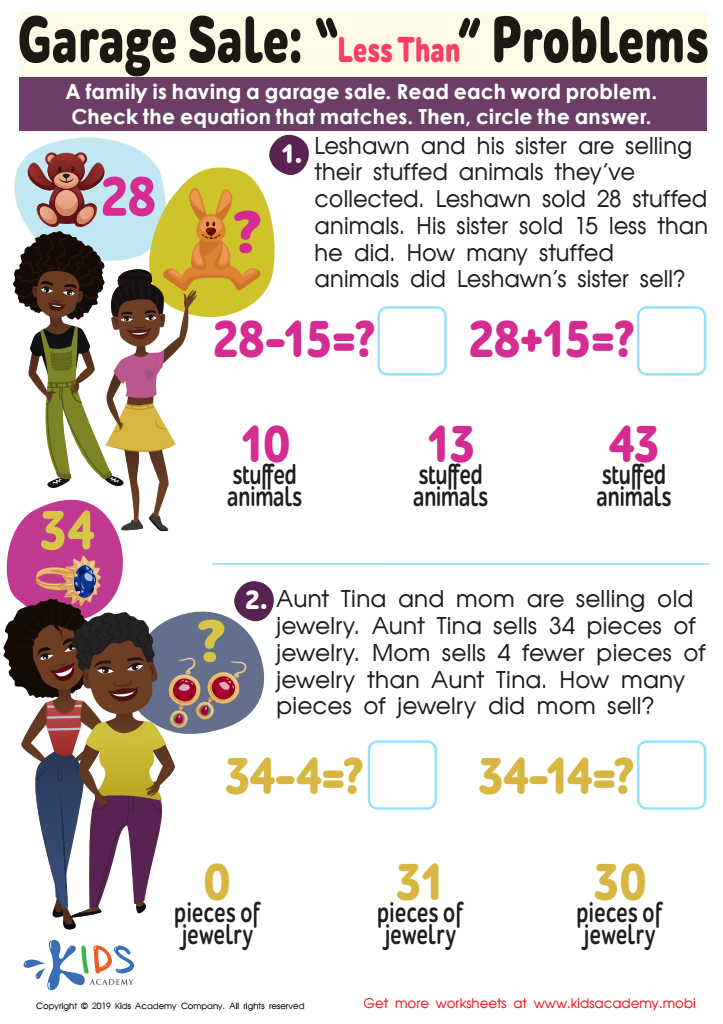
Garage Sale Less Than Worksheet
Kids often struggle with math word problems. This worksheet offers practice, using a real-world situation: friends having a garage sale. Students read each problem, extract the relevant information, match it with the correct equation and solve. Great for honing those essential problem-solving skills!
Garage Sale Less Than Worksheet
Worksheet
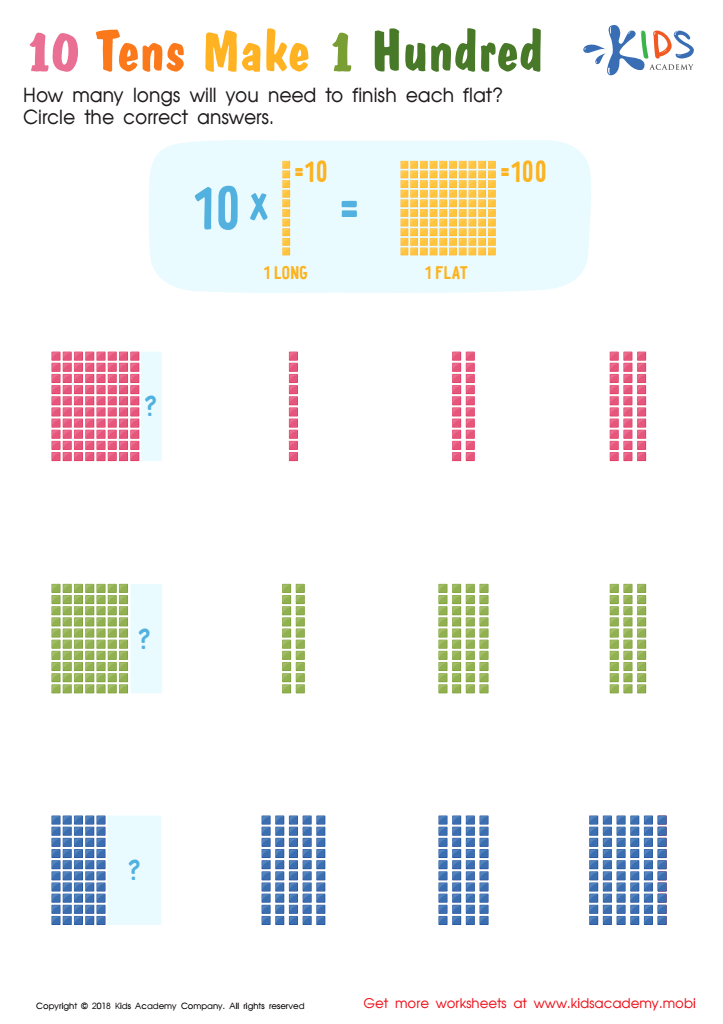
10 Tens Make 1 Hundred Worksheet
Help your child understand multiplication with this worksheet. Ask them how many 'longs' will be needed to complete each flat, then have them circle the correct answer from the options. With this exercise, your child will learn that 10 'tens' make 1 'hundred'!
10 Tens Make 1 Hundred Worksheet
Worksheet
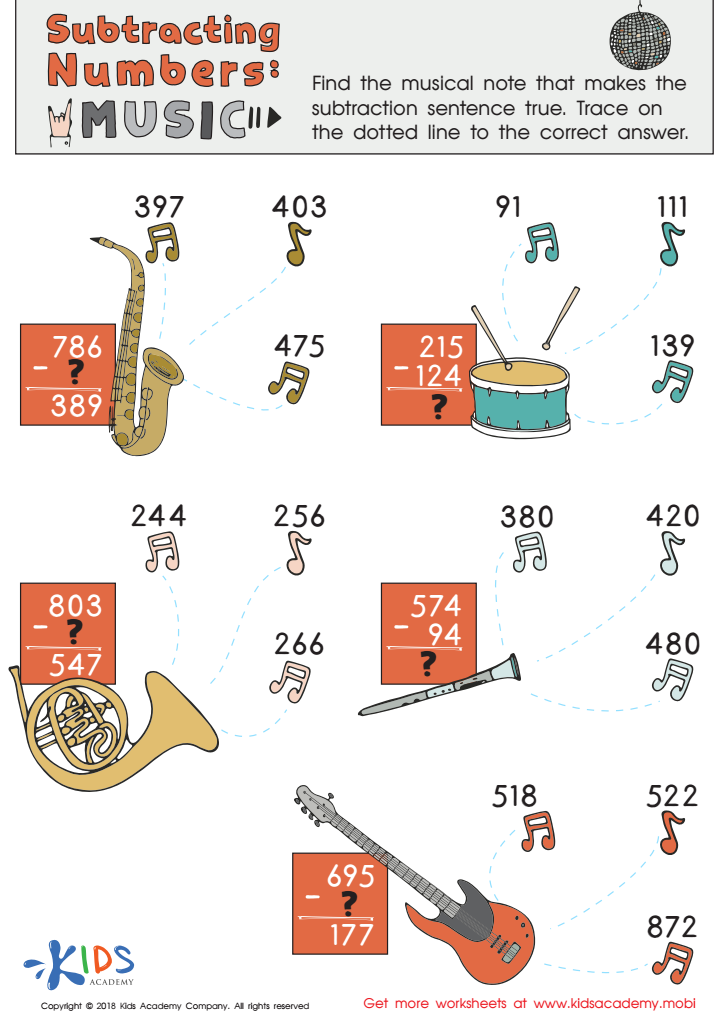
Subtracting Numbers: Music Worksheet
Enroll your kids in a music class and let them express their feelings via music! This worksheet challenges them to identify the musical note that makes the subtraction sentence true. Help them solve the problem and trace the dotted line to the correct answer. Let their appreciation for music grow!
Subtracting Numbers: Music Worksheet
Worksheet
Join Kids Academy for Free
Who is primarily going to use this learning content?





.jpg)


Improving problem-solving skills in children aged 3-8 is crucial for their overall development and future success. At this stage, children are naturally curious and eager to explore their environment. Teaching them how to solve problems fosters cognitive development, enhances critical thinking, and encourages creativity.
By engaging in problem-solving activities, children learn to approach challenges systematically, think logically, and develop perseverance. These abilities not only support academic success in later years but also equip them with essential life skills. For instance, being able to work through a misunderstanding with a peer, strategize in play, or even solve simple math problems lays a foundation for more complex skills they will need in school and beyond.
Moreover, when parents and teachers emphasize problem-solving, they help children build confidence. Experiencing success in overcoming challenges boosts their belief in their abilities. This sense of self-efficacy can lead to a positive attitude towards learning and instill a lifelong love for inquiry and investigation.
Ultimately, nurturing problem-solving skills in young children prepares them for a rapidly changing world, where adaptability and creative solutions are crucial. By investing time in these areas, parents and teachers play a pivotal role in shaping resilient and capable learners.








