Pronoun identification Worksheets for Ages 3-8
4 filtered results
-
From - To
Unlock the magic of language with our "Pronoun Identification Worksheets for Ages 3-8". Specially designed for young learners, these engaging worksheets make mastering pronouns fun and easy. Each activity helps children identify and properly use pronouns, reinforcing their grammar skills through interactive exercises. From simple pronoun matching games to more advanced sentence-building tasks, our worksheets cater to various learning levels. Perfect for classroom use or at-home practice, they offer a delightful way to boost your child's language skills. Watch as their confidence grows with every worksheet completed! Visit our site to access these valuable resources today.
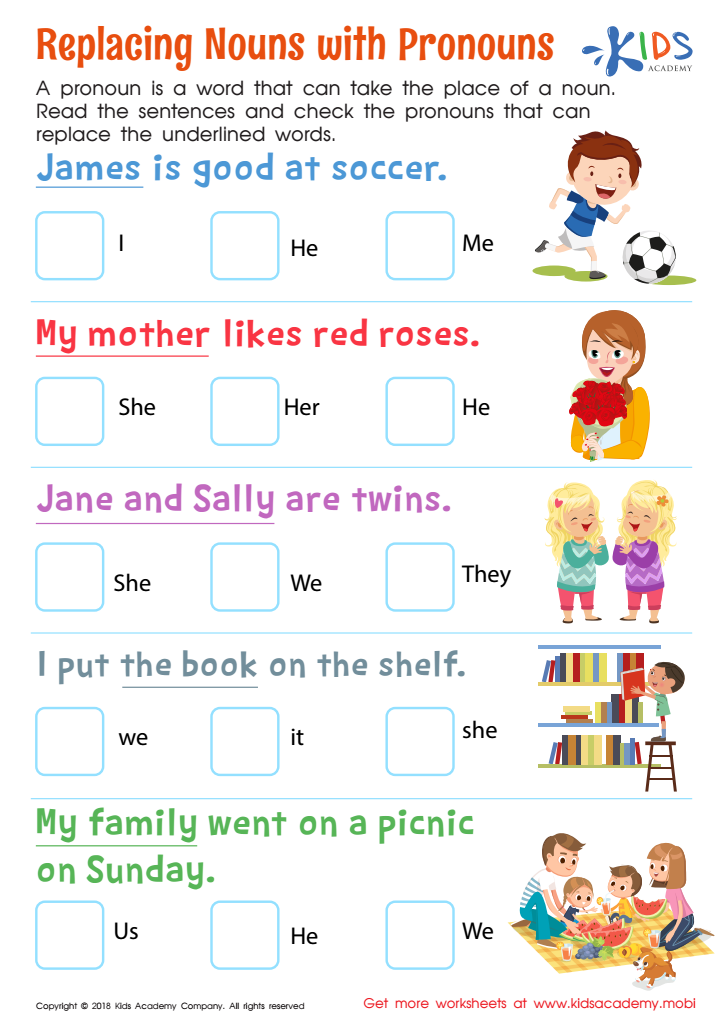
Replacing Nouns with Pronouns Worksheet
 Assign to My Students
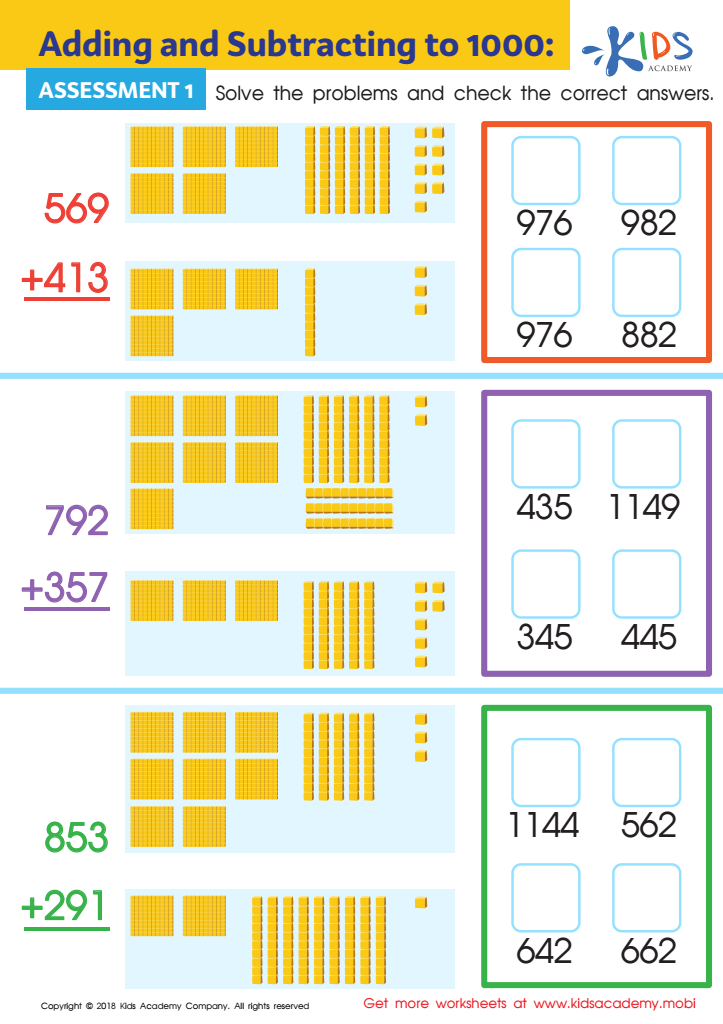
Adding and Subtracting to 1 Worksheet: Assessment 1
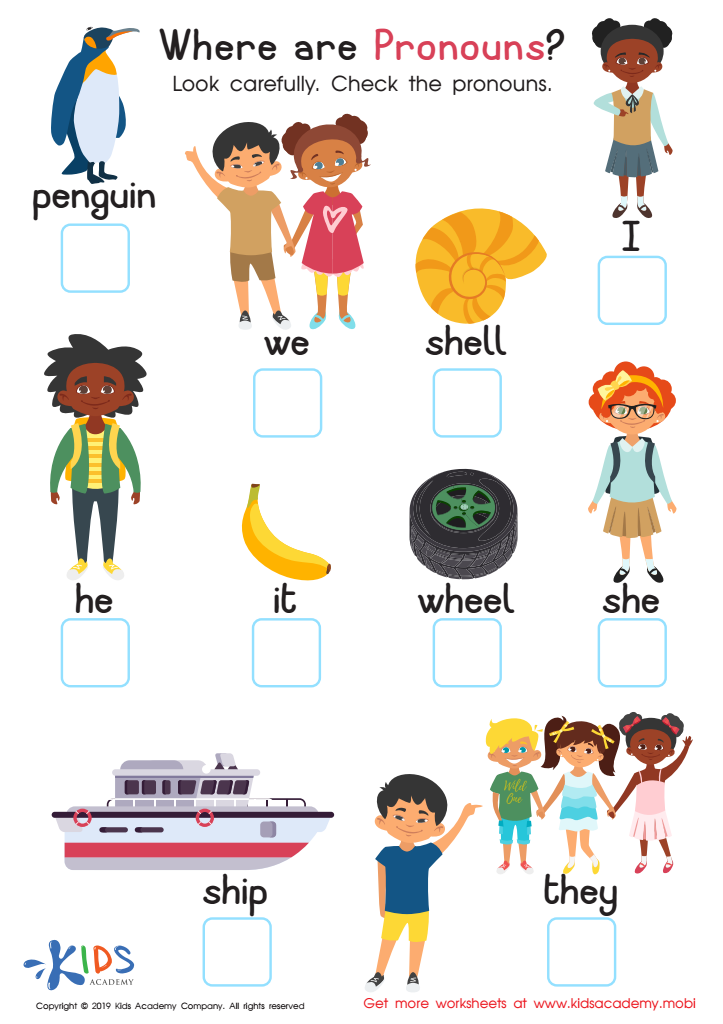
Where Are Pronouns? Worksheet
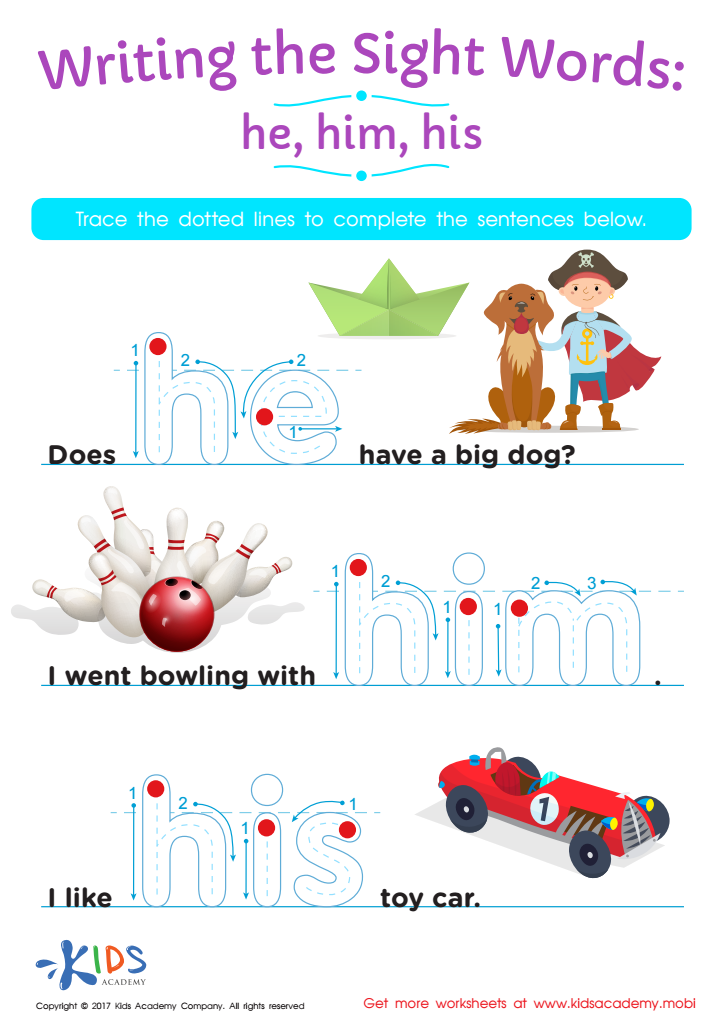
He, Him, His Printable Sight Words Worksheet








Understanding and properly using pronouns—words like he, she, they, it—is fundamental to the language development of young children aged 3-8. During these formative years, children are learning to articulate their thoughts and needs, and pronouns are integral to that process. When parents and teachers emphasize pronoun identification, they help children build the grammar skills necessary for effective communication.
Correct pronoun usage fosters social skills by allowing kids to reference people accurately, which is vital for forming relationships. For instance, calling a friend "he" or "she" rather than using their name repeatedly makes conversations smooth and natural. Additionally, pronoun mastery aids in reading comprehension, as many storybooks and educational materials use pronouns extensively.
Understanding pronouns also aligns with social-emotional learning. As children recognize and respect how others identify themselves through various pronouns (like he, she, or they), they cultivate empathy, respect, and inclusivity early on. This awareness is crucial in a diverse and socially conscious world.
Finally, early mastery of pronouns sets the foundation for future academic tasks, such as writing compositions and understanding complex texts. Teachers and parents, by prioritizing pronoun identification, guide children toward becoming articulate, empathetic, and skilled communicators.








