
Recognizing numbers Worksheets for Ages 3-8
11 filtered results
Difficulty Level
Grade
Age
-
From - To
Subject
Activity
Standards
Introduce your little learners to the world of numbers with our "Recognizing Numbers Worksheets for Ages 3-8"! Perfect for early childhood education, our engaging worksheets help children identify, count, and write numbers through fun activities. Featuring colorful designs and age-appropriate challenges, these printables support numerical awareness, enhance fine motor skills, and build a strong mathematical foundation. Ideal for use at home or in the classroom, our worksheets make learning numbers an enjoyable and interactive experience. Nurture your child's number recognition abilities and set the stage for future math success. Visit Kids Academy to browse our collection today!
Favorites
With answer key
Interactive
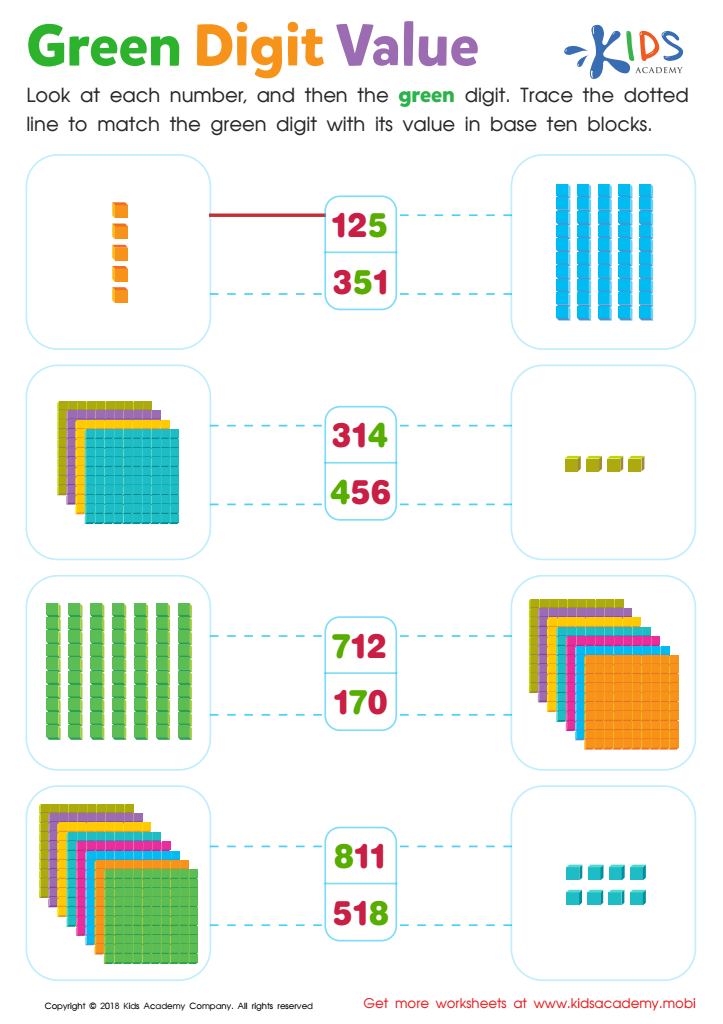
Green Digit Value Worksheet
Math can be stressful for kids. But you can help relieve their anxiety with this simple worksheet. It gives them practice to help them prepare for tougher tasks. Have your child look at the numbers and green digit, then trace the dotted lines to match the green digit with its value in base ten blocks. This will help make math more manageable.
 Assign to My Students
Green Digit Value Worksheet
Worksheet
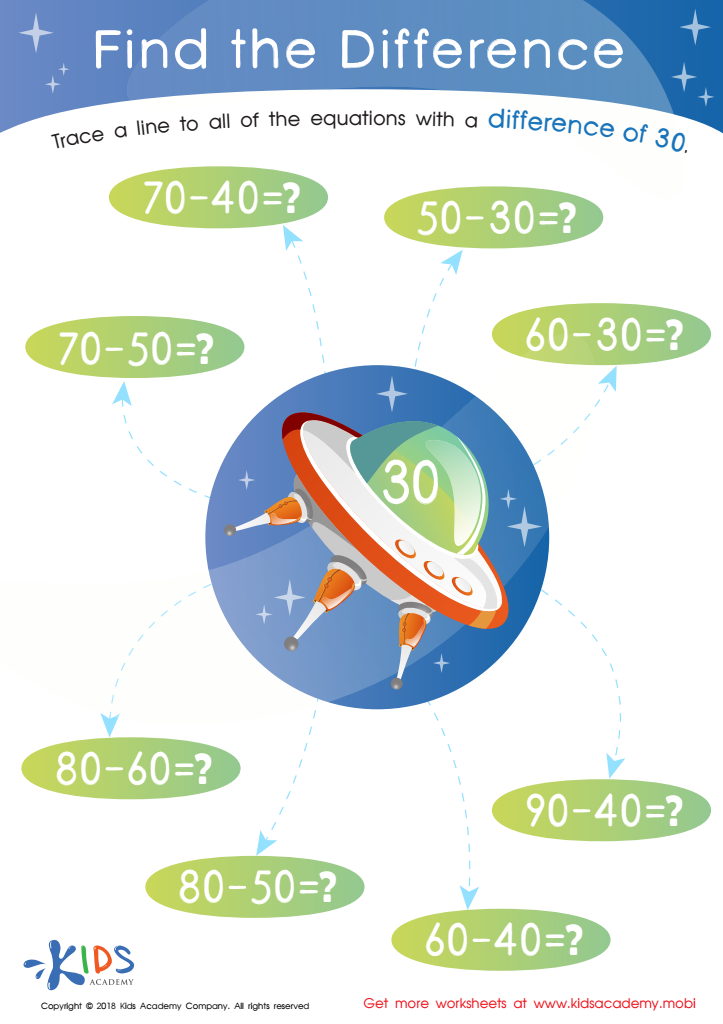
Find The Difference Worksheet
Kindergarteners need to work out subtraction problems and get the right answers. To help them, point to the alien ship with '30' in it on the worksheet. Get them to follow a line to the equations with a difference of 30. Solving these simple subtraction problems will give the answers.
Find The Difference Worksheet
Worksheet
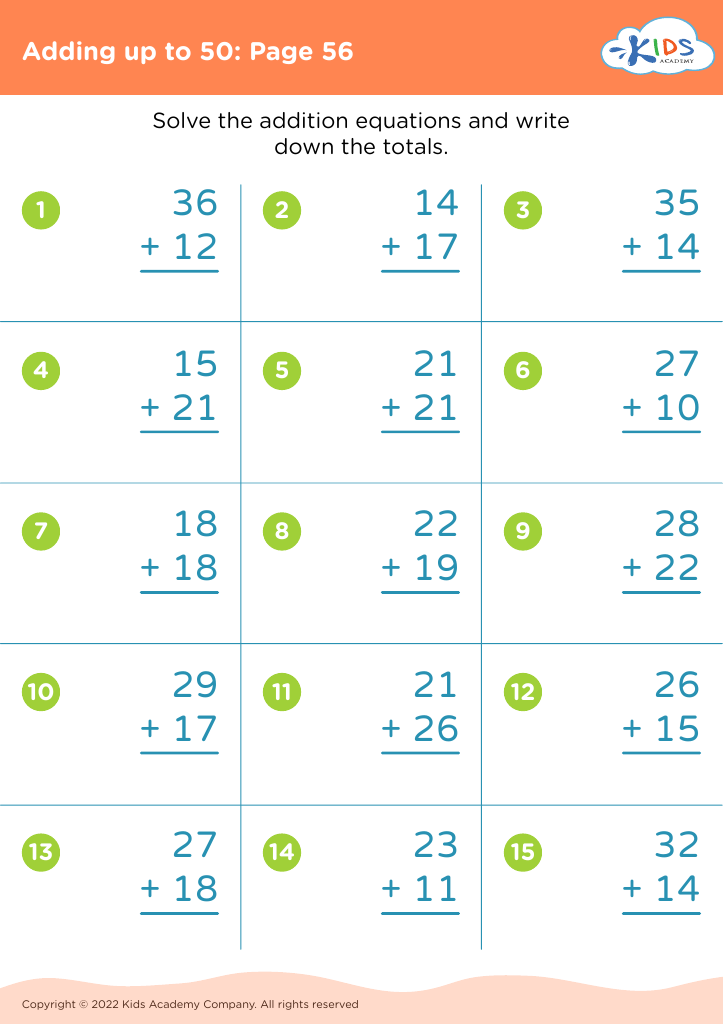
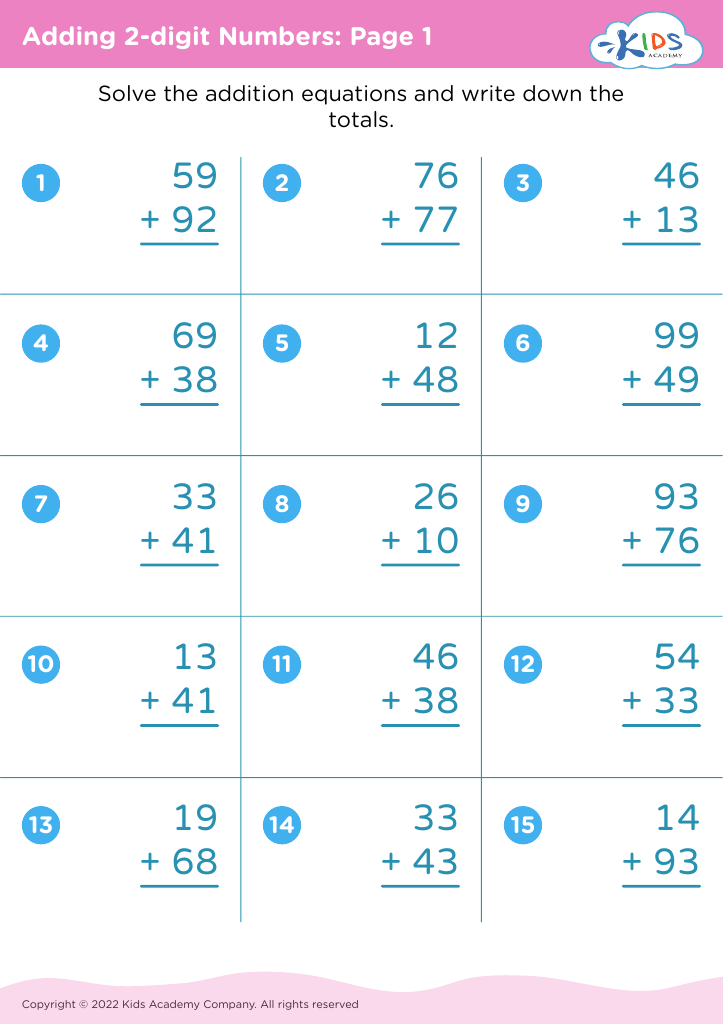
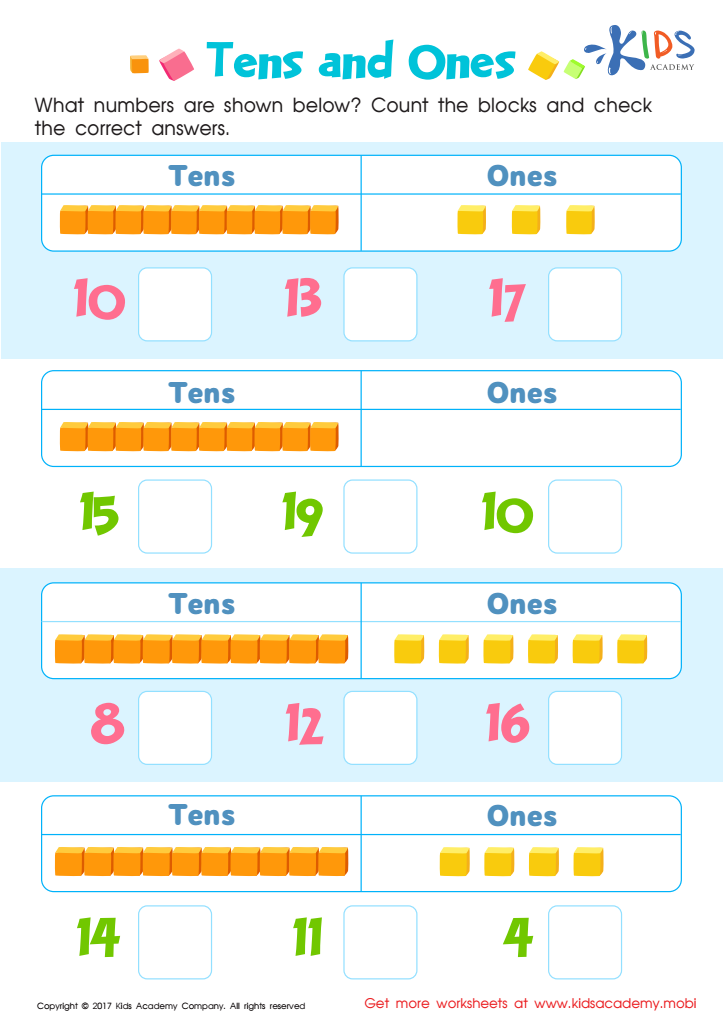
Tens and Ones Worksheet
Help your child make math fun with this worksheet! Count the blocks on both sides and enter the total in the box below the figures. This will help them overcome any math-related anxieties they might have and let them enjoy the learning process.
Tens and Ones Worksheet
Worksheet
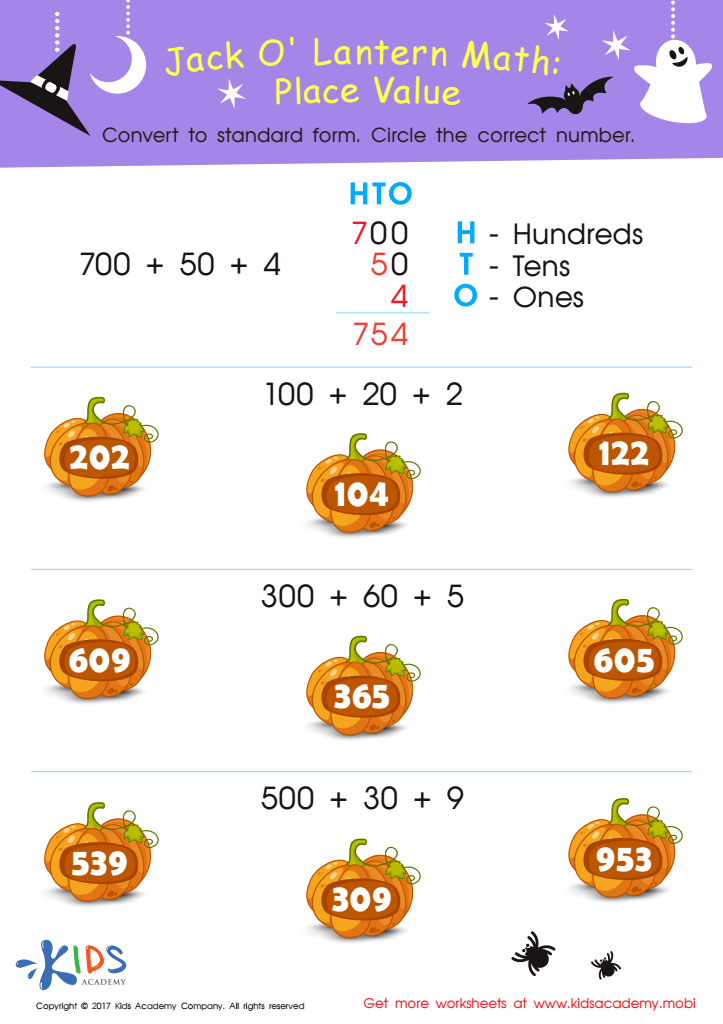
Free Place Value Worksheet
This Halloween-themed worksheet helps children practice converting equations to standard form and understand place value for better problem-solving. Download this free PDF for a fun way to do it!
Free Place Value Worksheet
Worksheet
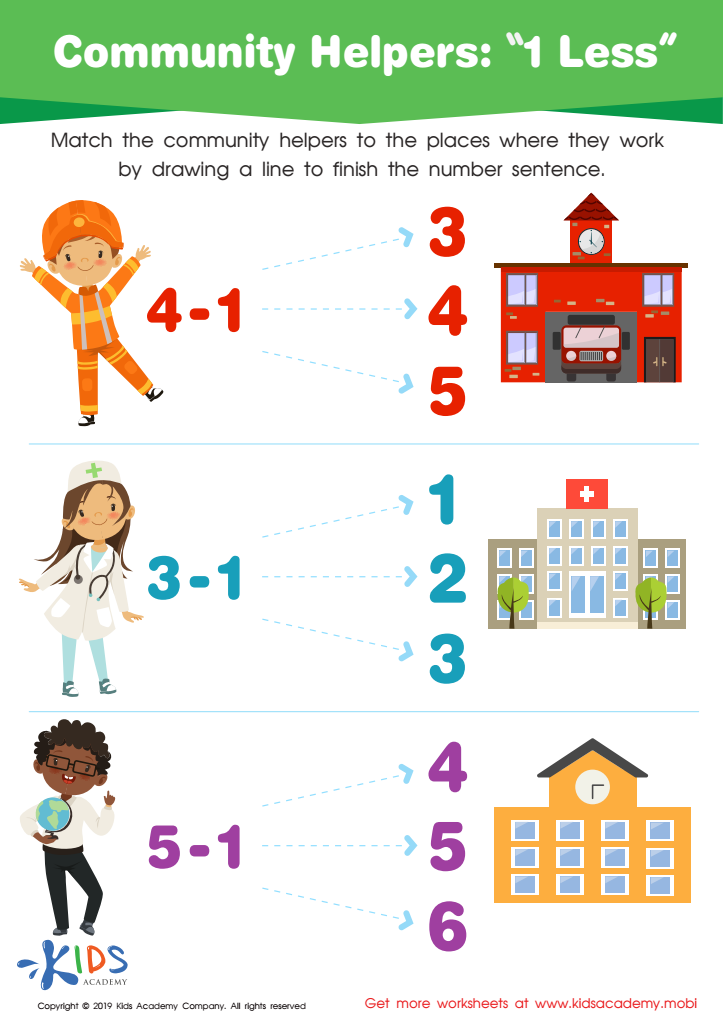
Community Helpers: 1 less Worksheet
Look at this worksheet with your child and ask them to identify the different community helpers. Match them to the places where they work by drawing a line to finish the number sentence. This helps them identify the people that help keep the community organized and running smoothly. Examples of community helpers include doctors, police officers, firefighters, teachers, etc.
Community Helpers: 1 less Worksheet
Worksheet
Join Kids Academy for Free
Who is primarily going to use this learning content?



.jpg)

.jpg)

Recognizing numbers is a foundational skill that sets the stage for a child’s mathematical development and overall academic success. For children aged 3-8, grasping the concept of numbers and their recognition involves more than just rote memorization; it nurtures cognitive abilities crucial for problem-solving and analytical thinking. Numbers are a core component of everyday life—be it through counting apples, understanding time, or handling money—and helping young children become familiar with them equips them to navigate the world more effectively.
Early number recognition aids in developing a child's sense for quantity and order, essential for more advanced mathematical skills such as addition, subtraction, and pattern recognition. Moreover, mastering these basics fosters confidence and tackles math anxiety early on, empowering children to approach more challenging tasks with a positive mindset.
For parents and teachers, promoting number recognition isn't merely about academic preparation; it's also about fostering critical life skills. Activities such as number-themed games, counting exercises, and daily incorporation of numbers in routine tasks make learning fun and relevant. By prioritizing this early education, parents and teachers contribute to a strong, adaptable mathematical foundation that benefits their children long-term, maximizing their potential in both academic and real-world settings.








