
Rhyme recognition Worksheets for Ages 3-8
7 filtered results
Difficulty Level
Grade
Age
-
From - To
Subject
Activity
Standards
Looking for fun and engaging ways to introduce your child to rhyme recognition? Check out our Rhyme Recognition Worksheets for Ages 3-8! These thoughtfully designed printables help kids develop essential phonemic awareness skills through entertaining activities, such as matching rhyming words, completing rhyming phrases, and more. Perfect for preschoolers, kindergartners, and early elementary students, our worksheets make learning a joy. Boost your child's reading readiness, enhance their vocabulary, and cultivate a love for words. Start now and lay a strong foundation for their future literacy success with Kids Academy's expert-crafted resources!
Favorites
With answer key
Interactive
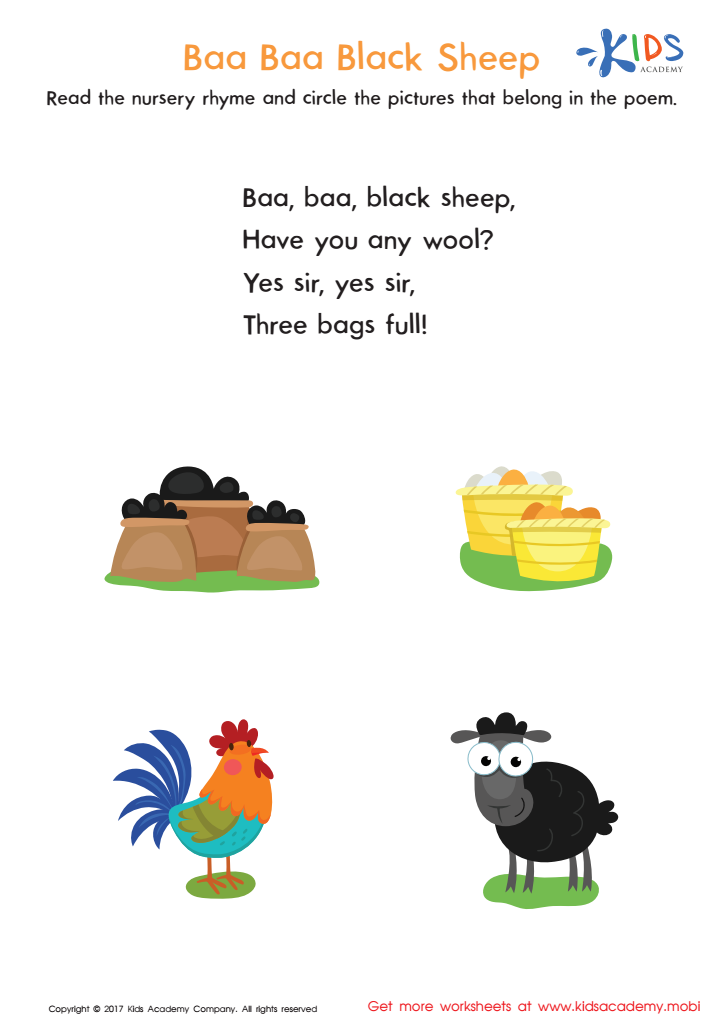
Baa Baa Black Sheep Printable
Jumpstart your child's reading skills with this printable Baa Baa Black Sheep worksheet! Recite the lines with them, then have them select the pictures associated with the poem to test comprehension. Fun and educational!
 Assign to My Students
Baa Baa Black Sheep Printable
Worksheet
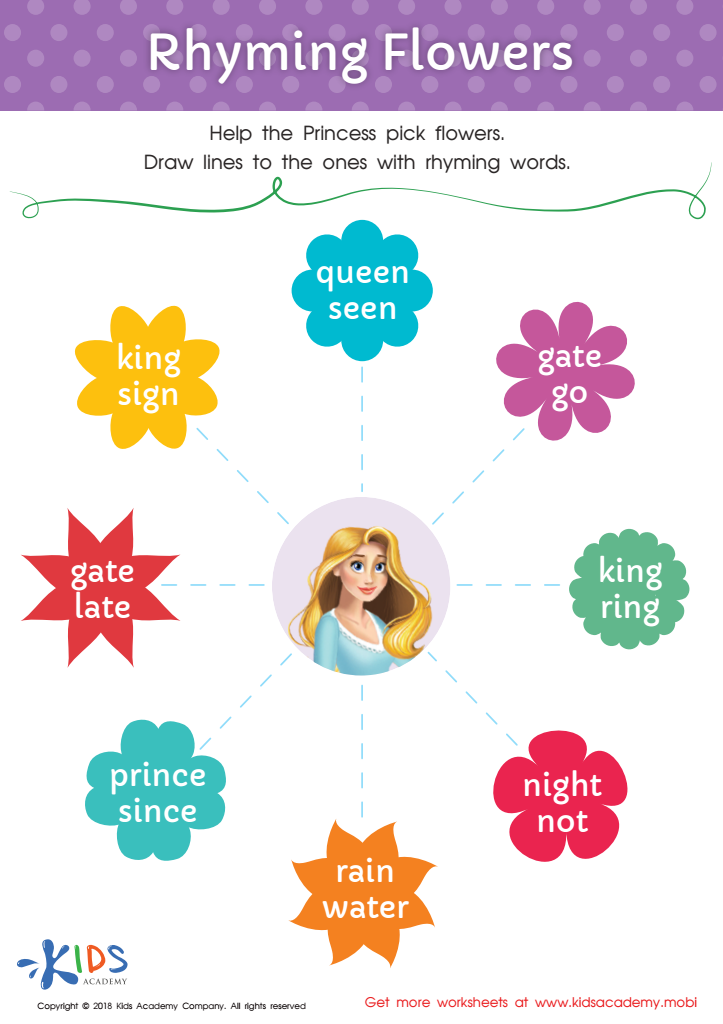
Rhyming Flowers Worksheet
Recognizing rhyming words boosts phonological awareness. With this skill, students can identify similar sounds in words and predict new words more accurately. This worksheet provides practice and is ideal for the reading classroom. Download and find the rhyming words! (80 words)
Rhyming Flowers Worksheet
Worksheet
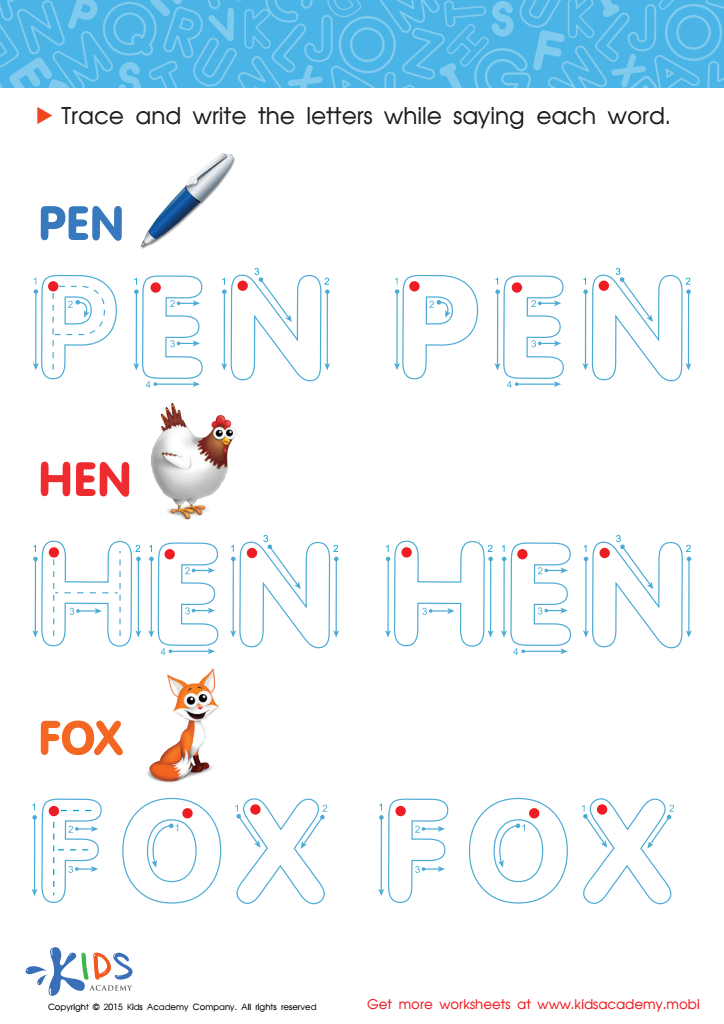
A Pen, a Hen and a Fox Spelling Worksheet
Practice spelling with this free worksheet: three lines, three new words. Say them, trace them, write them correctly. Keep learning with Kids Academy for more printable worksheets and more fun! (80 words)
A Pen, a Hen and a Fox Spelling Worksheet
Worksheet
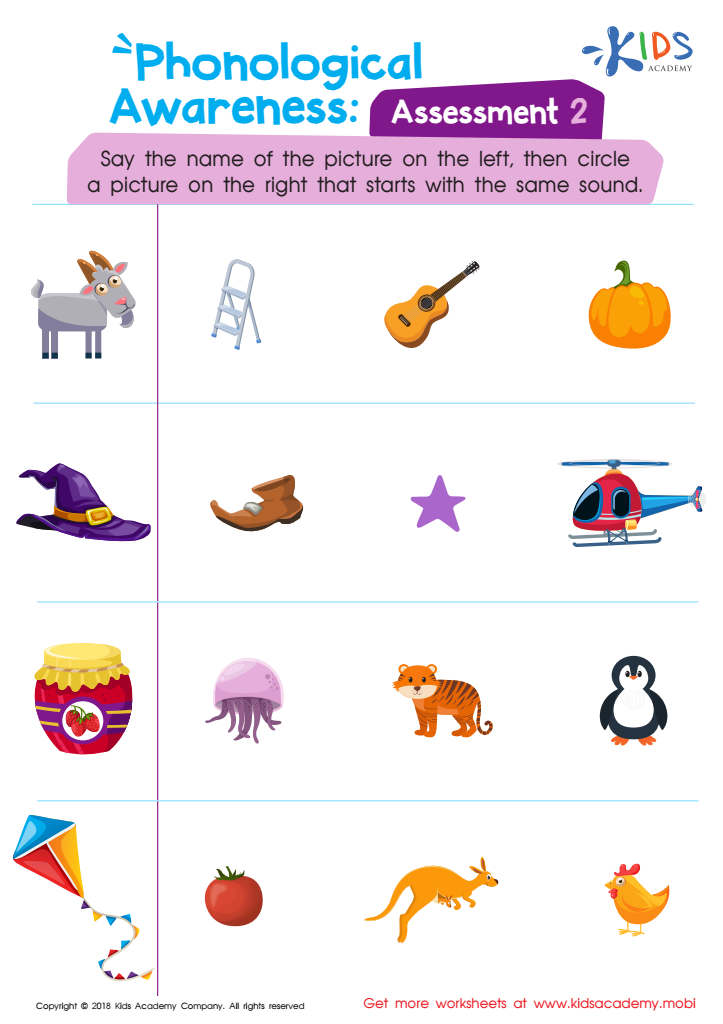
Phonological Awareness: Assessment 2 Worksheet
Test your child’s phonological awareness and reading readiness with this charming worksheet! Perfect for K-1, it assesses if they can name a picture aloud, listening for the starting sound and matching it to another word. Watch as they think deeply and listen to the sounds as they name each picture. Determine if your child is ready to sound out words or needs more phonics practice.
Phonological Awareness: Assessment 2 Worksheet
Worksheet
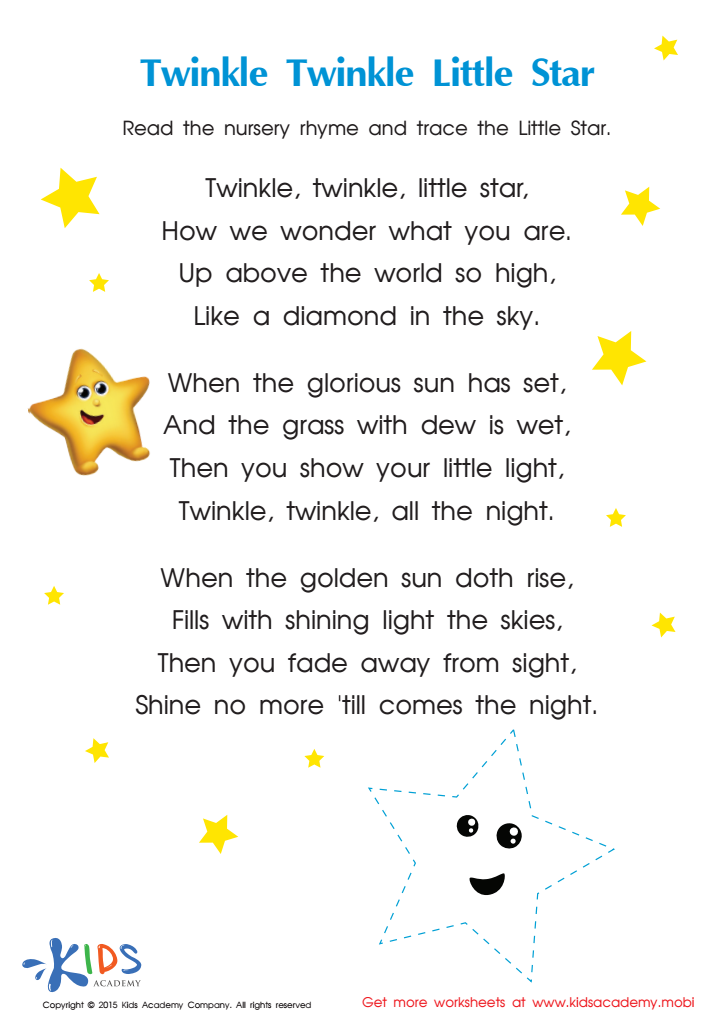
Nursery Rhymes: Twinkle Little Star Worksheet
Introduce your kindergartener to nursery rhymes using this printable worksheet. Sing Twinkle Little Star with your child and incorporate some simple actions. Even as a lullaby, it's a great way to teach letters and counting - have your child find and count all the letter 'S's in the song. For extra fun, try the Twinkle Little Star coloring page.
Nursery Rhymes: Twinkle Little Star Worksheet
Worksheet
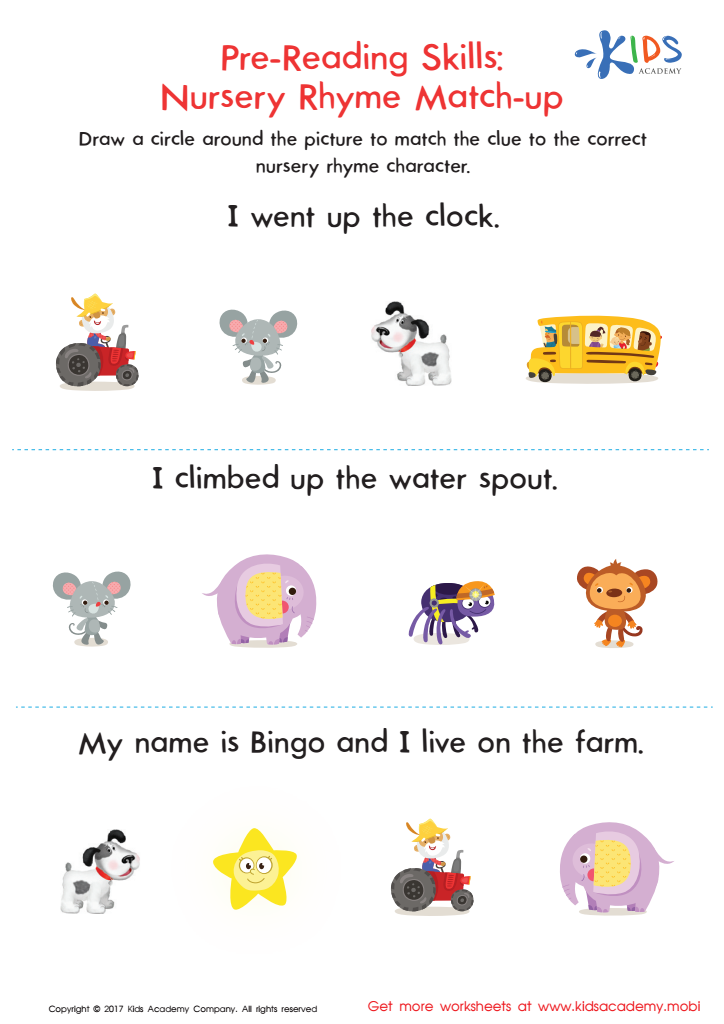
Nursery Rhyme Match–Up Worksheet
This worksheet helps kids build pre-reading skills using stories they know and love! By connecting with prior knowledge, kids can develop ideas about characters and set the stage for reading strategies.
Nursery Rhyme Match–Up Worksheet
Worksheet
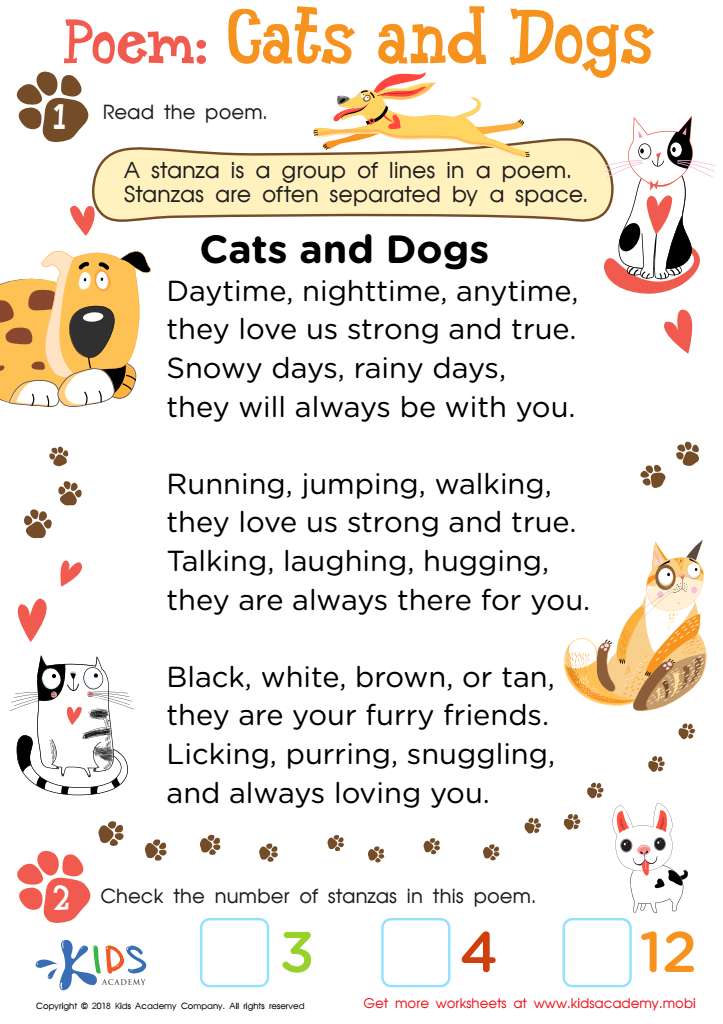
Poem: Cats and Dogs Worksheet
Read the poem to your child and point out where each stanza ends. Ask if they know what a stanza is (if not, explain it's a group of lines in a poem). Help them answer the question at the bottom of the printout. This simple, sweet poem about cats is easy for your child to relate to.
Poem: Cats and Dogs Worksheet
Worksheet
Join Kids Academy for Free
Who is primarily going to use this learning content?








Rhyme recognition is a critical skill that plays a foundational role in early literacy development for children aged 3-8. This skill helps children notice and work with the sounds within words, which is crucial for phonemic awareness. Phonemic awareness is the ability to hear, identify, and manipulate individual sounds—phonemes—in spoken words, and is a strong predictor of future reading success.
When children engage with rhyming activities, they learn to recognize patterns within words, developing familiarity with common sounds. This kind of auditory discrimination is beneficial when they begin to decode new words as they start reading. Engaging in read-alouds that feature rhyming schemes, singing rhyming songs, and playing rhyming games can foster a love of language and develop this critical skill seamlessly.
Rhymes also enhance memory and cognitive development, as children recall and predict repeating sounds and words, building their vocabulary incidentally. Moreover, rhyming activities engage children and are enjoyable, making learning to read a fun experience rather than a chore. Encouraging rhyming also supports social interaction as children often enjoy rhyming games with peers or family.
Parents and teachers should care about rhyme recognition because it lays a supportive groundwork for reading and writing proficiency, ultimately cultivating lifelong learning and a deep appreciation of language.








