Shape comparison Worksheets for Ages 3-8
4 filtered results
-
From - To
Enhance your child's geometric skills with our Shape Comparison Worksheets designed for ages 3-8. These engaging, age-appropriate printables make learning about shapes fun and intuitive. Children will develop essential skills like recognizing, comparing, and distinguishing different shapes while improving their fine motor and cognitive abilities. Perfect for both classroom settings and home practice, our worksheets offer a variety of activities that keep young learners entertained and educated. Watch as they enjoy discovering new shapes, understanding spatial relationships, and sharpening their problem-solving skills. Start your child's shape adventure today with Kids Academy’s expertly designed worksheets!
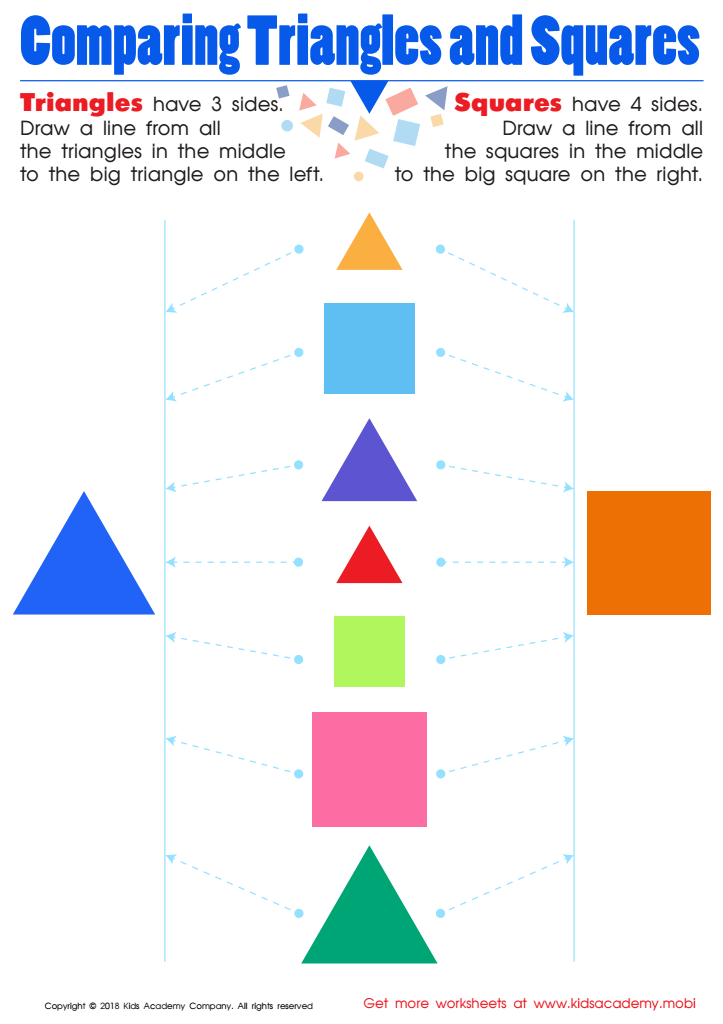
Comparing Triangles Squares Worksheet
 Assign to My Students
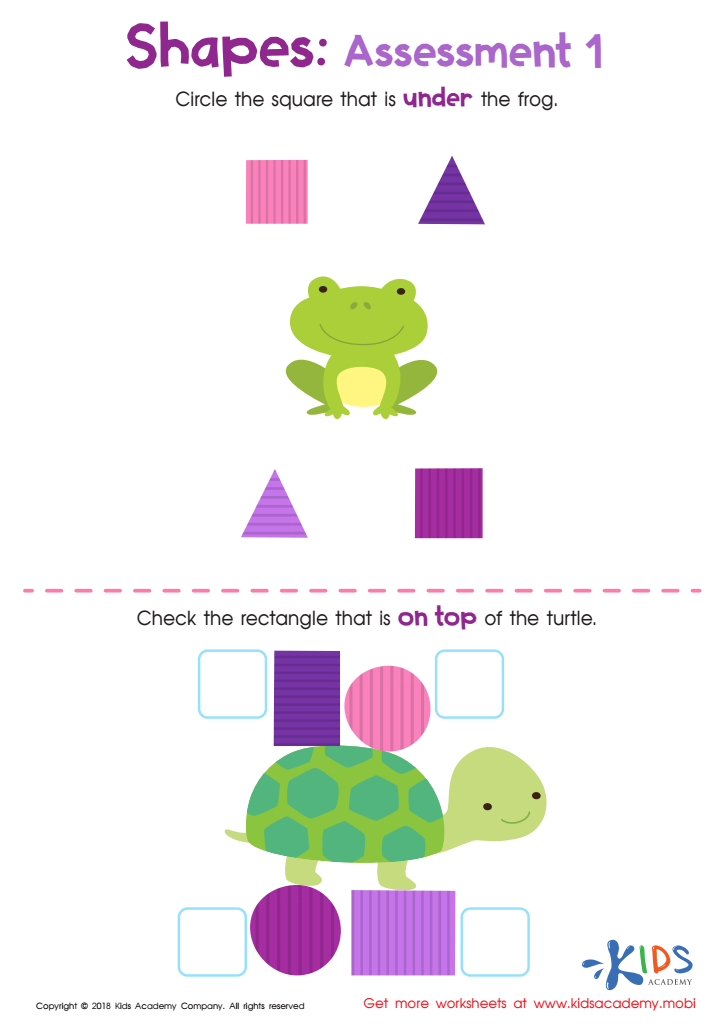
Geometry – Assessment 1 Worksheet
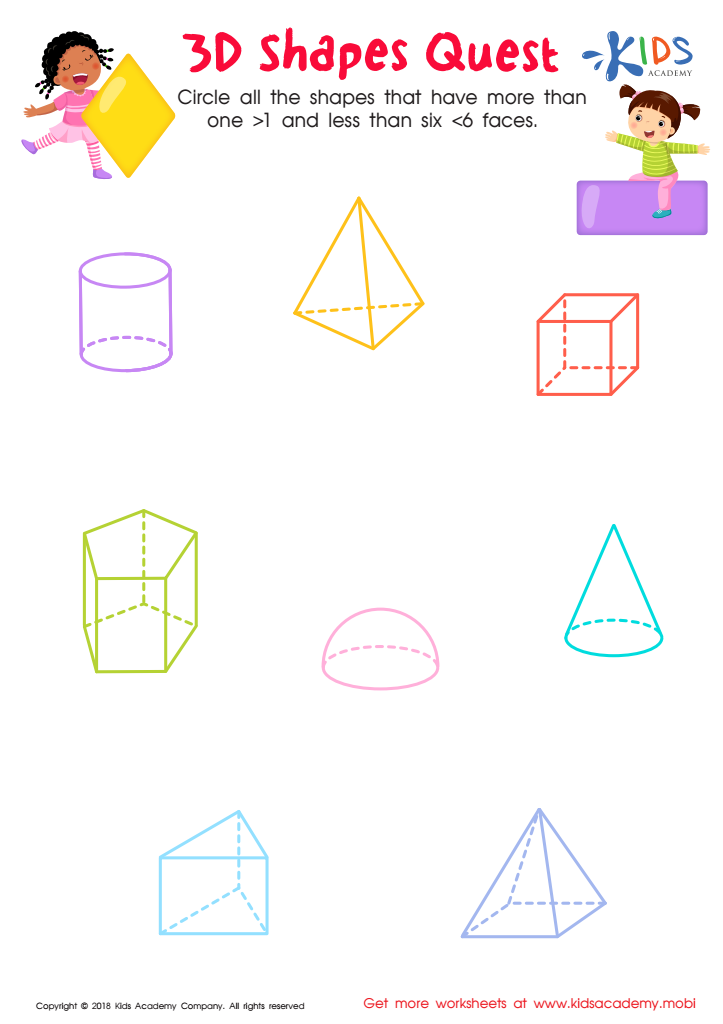
3D Shapes Quest Worksheet
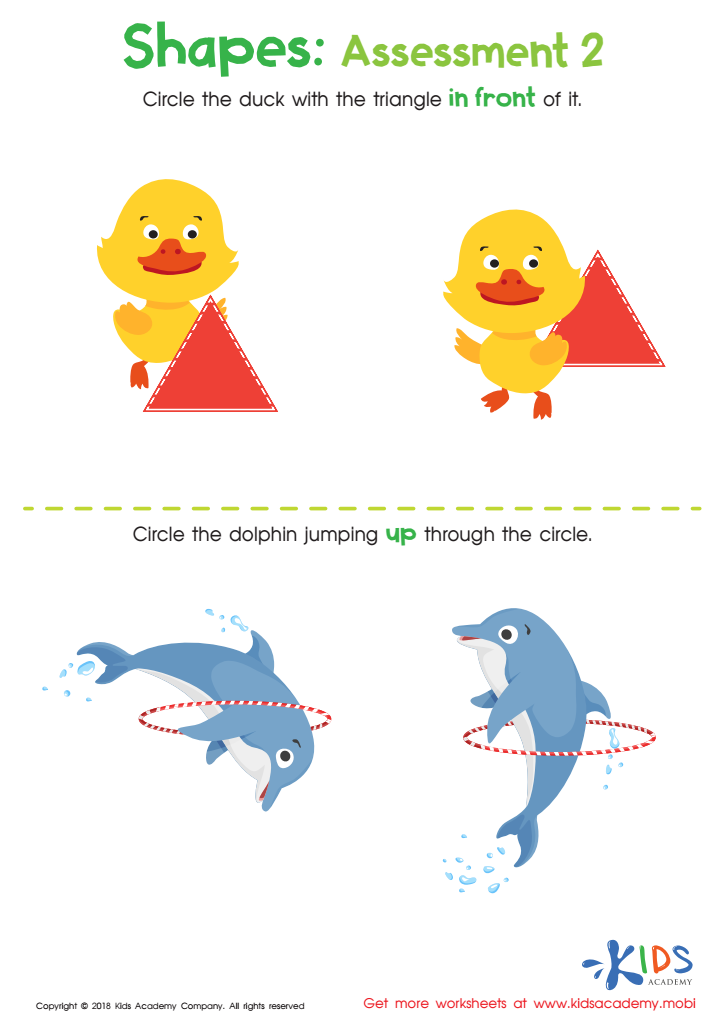
Geometry – Assessment 2 Worksheet






%20(1).jpg)

Shape comparison plays a crucial role in the cognitive development of children aged 3-8, and both parents and teachers should pay attention to this aspect of early education. Firstly, engaging in shape comparison helps to build foundational math skills. Children learn to recognize, classify, and differentiate shapes, which are essential skills for understanding more complex geometric concepts as they grow older.
Additionally, shape comparison enhances visual-spatial reasoning. This is critical for tasks such as reading and writing, as understanding shapes and how they relate to each other can aid in letter and number recognition. It also supports problem-solving and critical thinking abilities as children analyze how shapes can fit together and form patterns.
Moreover, comparing shapes can boost language development. Children use descriptive language to talk about shapes (e.g., sides, corners), enriching their vocabulary and communication skills. Including such activities in the classroom or at home also fosters children's fine motor skills as they manipulate objects to compare and contrast shapes.
Parents and teachers who focus on shape comparison provide children with a well-rounded foundation, setting them up for academic success and strengthening essential life skills. By incorporating shape-related activities in daily routines, adults can make learning fun and engaging, encouraging natural curiosity and a love for learning.








