Solve word problems Worksheets for Ages 3-8
3 filtered results
-
From - To
Boost your child's critical thinking and math skills with our engaging "Solve Word Problems Worksheets" designed for ages 3-8. These worksheets offer fun, age-appropriate challenges that develop essential problem-solving abilities. Each activity encourages young learners to read carefully, comprehend scenarios, and use logical reasoning to find solutions. With colorful illustrations and simple language, our worksheets make learning enjoyable and effective. Ideal for use at home or in the classroom, these resources help children build a strong foundation in math, preparing them for future academic success. Start nurturing your child's love for learning today with our dynamic word problem worksheets!
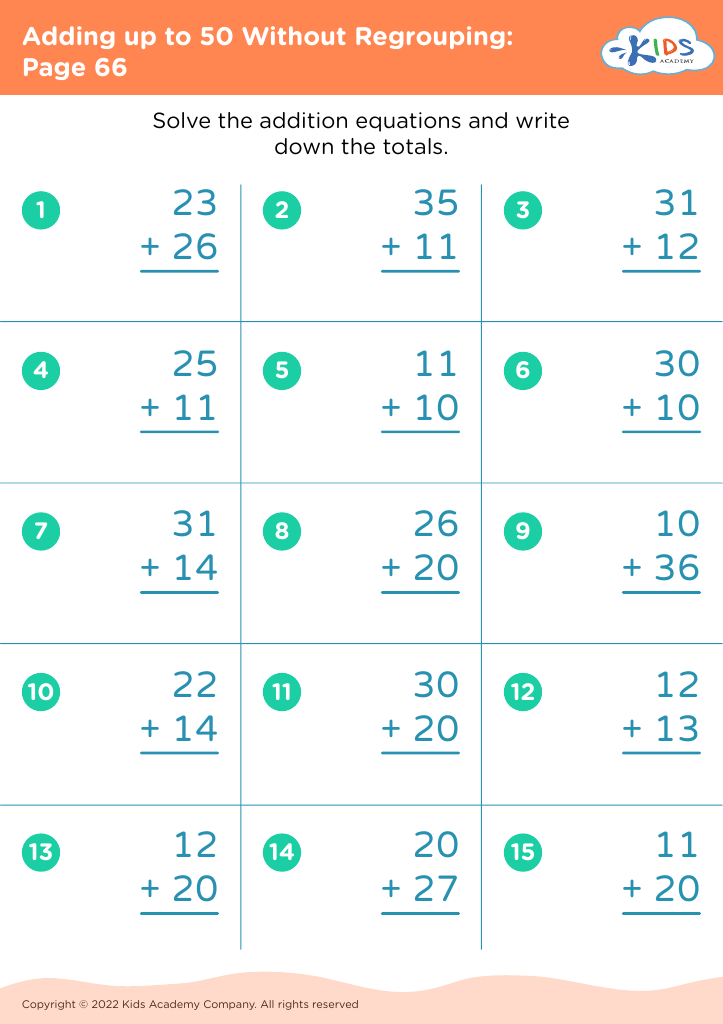
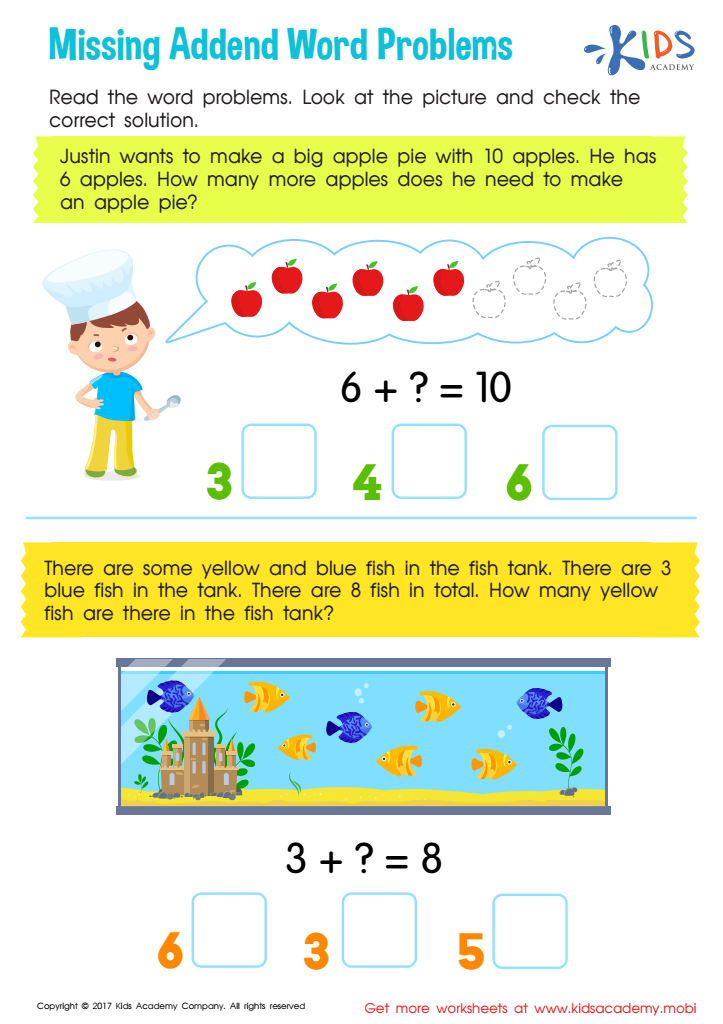
Missing Addend Word Problems Worksheet
 Assign to My Students


%20(1).jpg)





Parents and teachers should care deeply about helping children aged 3-8 solve word problems because it builds foundational skills that are crucial for their overall development. Early exposure to problem-solving not only enhances mathematical reasoning but also stimulates critical thinking and cognitive growth. Word problems encourage children to comprehend and process information, improving their reading and listening skills as they interpret the text to understand the question.
Moreover, solving word problems fosters perseverance and resilience. Young learners often find these problems challenging, so guiding them through the process helps them learn that persistence and effort lead to success. This growth mindset is invaluable for lifelong learning and overcoming obstacles in various aspects of life.
Additionally, word problems make math more tangible and relevant by connecting abstract numbers to real-world scenarios. This contextual learning makes math enjoyable and accessible, helping to develop a positive attitude towards the subject. By encouraging kids to discuss and brainstorm solutions, parents and teachers can also promote collaboration and communication skills.
In short, focusing on solving word problems for ages 3-8 lays a strong foundation for academic and personal success, cultivating essential life skills and a love for learning that will benefit children throughout their educational journey.








