Spelling Skills Worksheets for Ages 3-8 - Page 2
26 filtered results
-
From - To
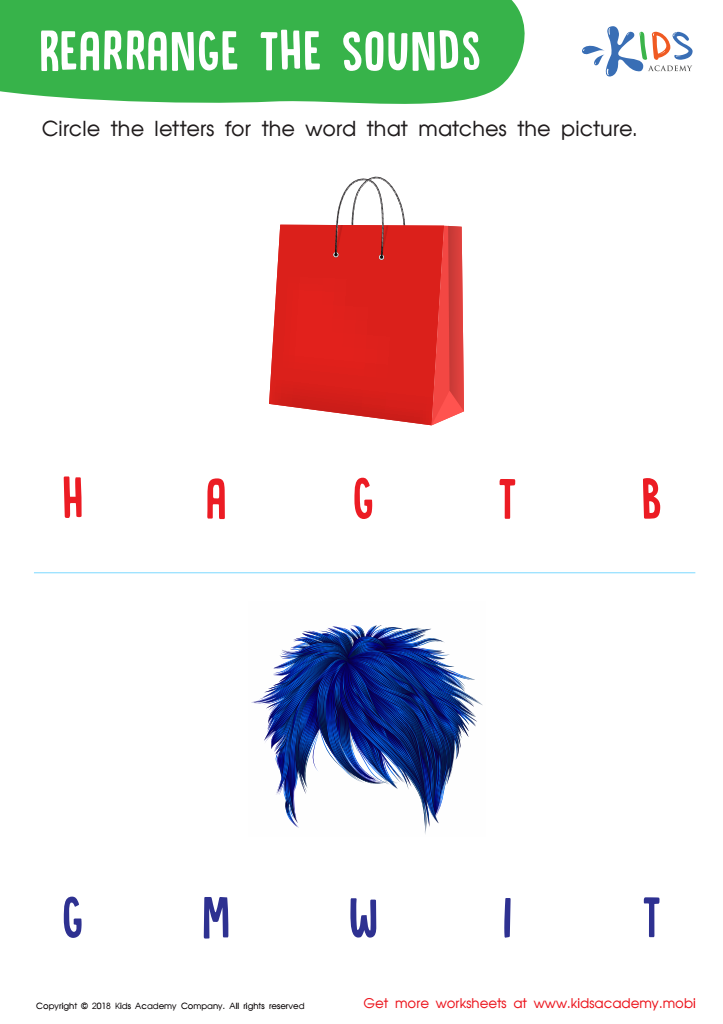
Rearrange the Sounds Worksheet
 Assign to My Students
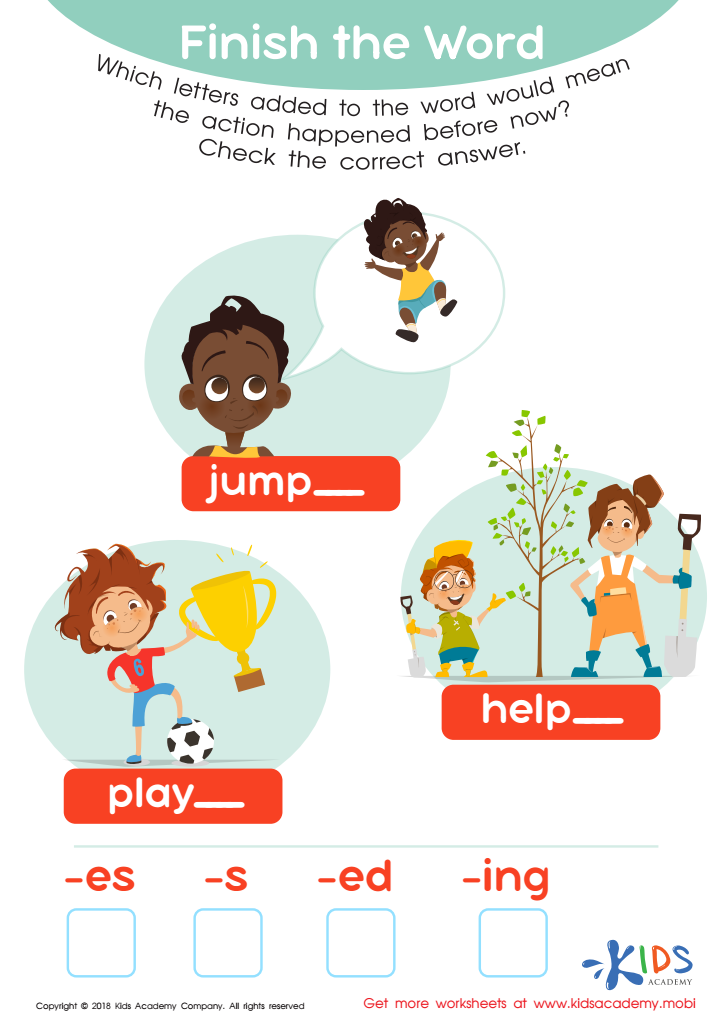
Finish the Word Worksheet







Parents and teachers should highly prioritize spelling skills for children aged 3-8 because it serves as a foundational pillar for effective communication and literacy development. Understanding the correlation between sounds and letters helps young learners decode new words, enhancing their reading proficiency. This early grasp of spelling supports vocabulary expansion, enabling children to express themselves more clearly and with greater confidence.
Fostering spelling skills also aids in cognitive development. When children engage in spelling activities, they enhance their memory, improve auditory processing, and develop critical thinking skills essential for other academic disciplines. In addition to cognitive growth, consistent practice hones fine motor skills as children write words repeatedly, promoting hand-eye coordination and precision.
Moreover, cultivating strong spelling abilities from a young age sets the groundwork for future academic success. Students who are adept at spelling are often better readers and writers, contributing to a smoother academic journey. These foundational skills also foster a love for reading, sparking curiosity and a thirst for knowledge, which are critical traits for lifelong learning.
Finally, in a digital age where autocorrect and spell-check are prevalent, a solid understanding of spelling rules nurtures independent thinking and attention to detail, providing children with fundamental skills they will rely on throughout their lives.








