Time reading skills Worksheets for Ages 3-8
12 filtered results
-
From - To
Enhance your child's understanding of time with our engaging "Time Reading Skills Worksheets" designed for ages 3-8. These worksheets provide a fun and interactive way to introduce young learners to concepts like reading clock faces, understanding hours and minutes, and distinguishing between digital and analog time. With colorful visuals and age-appropriate activities, children will develop essential time-telling skills that lay a foundation for future learning. Our worksheets encourage critical thinking and foster independence, helping kids gauge time management in a playful manner. Explore our resources today and watch your child’s confidence in time reading grow!
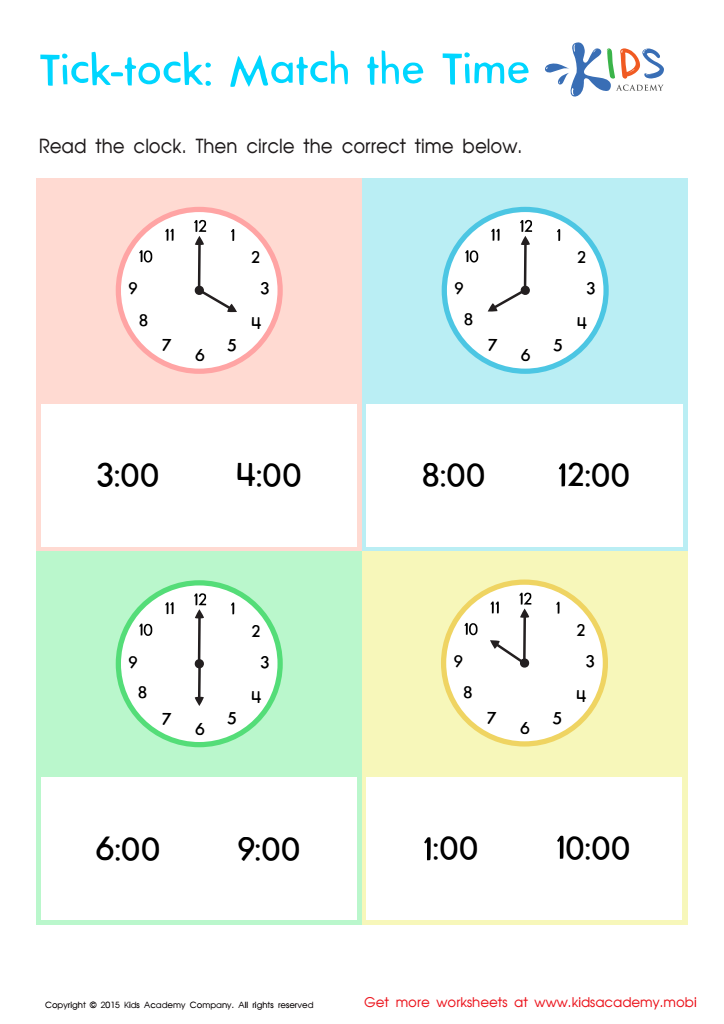
Telling The Time Worksheet: Part 4
 Assign to My Students
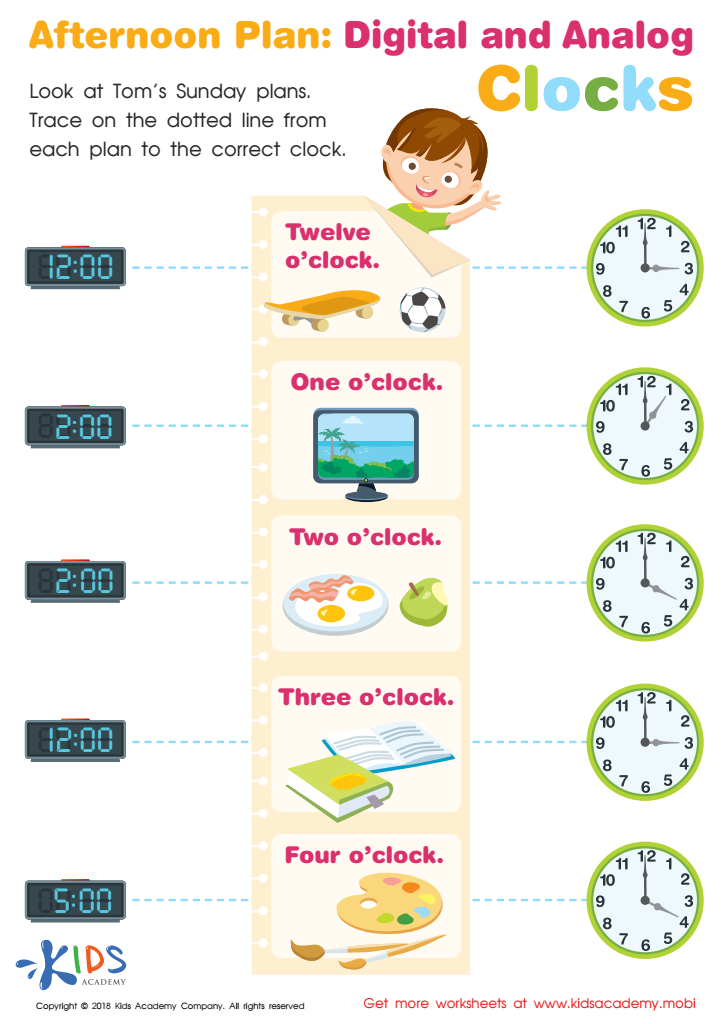
Afternoon Plan: Digital and Analog Clocks Worksheet
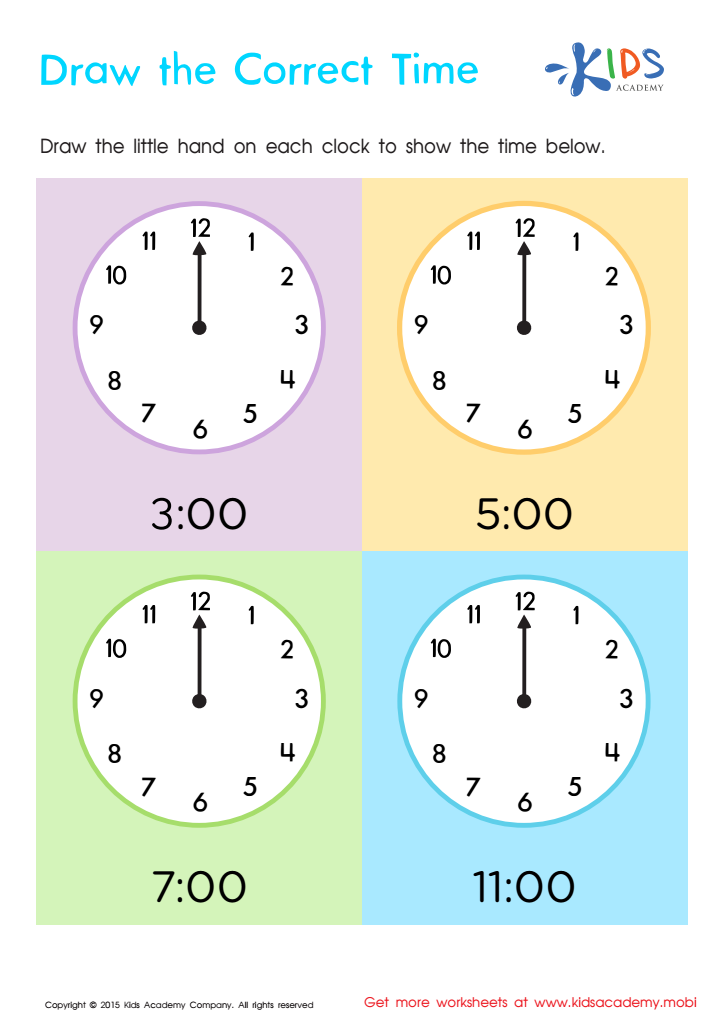
Telling The Time Worksheet: Part 1
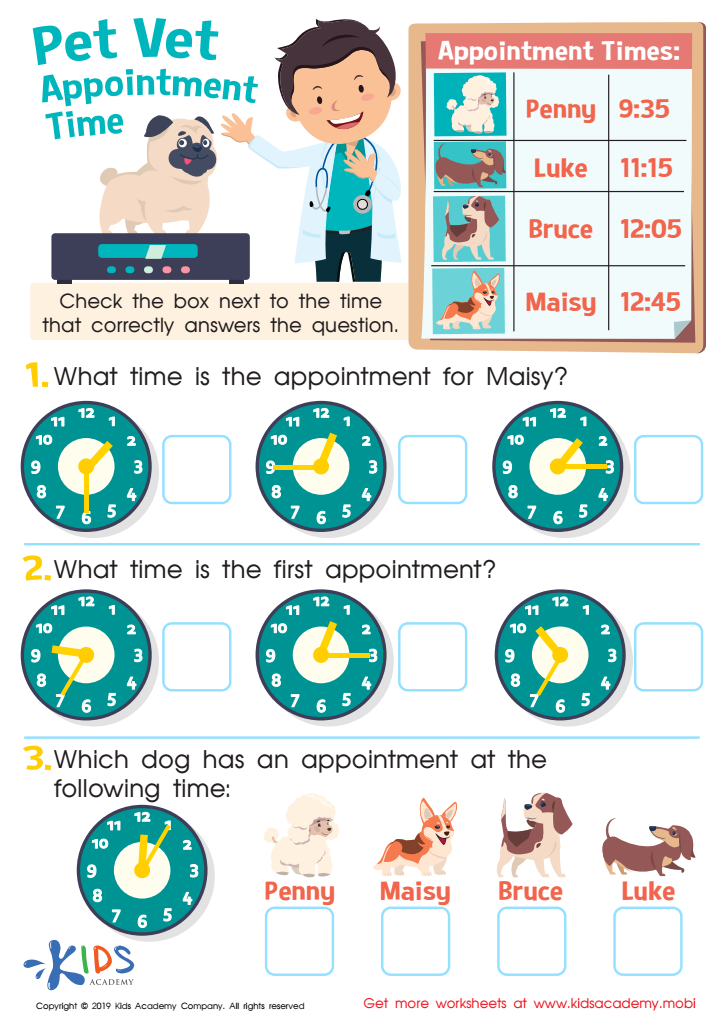
Pet Vet Appointment Time Worksheet
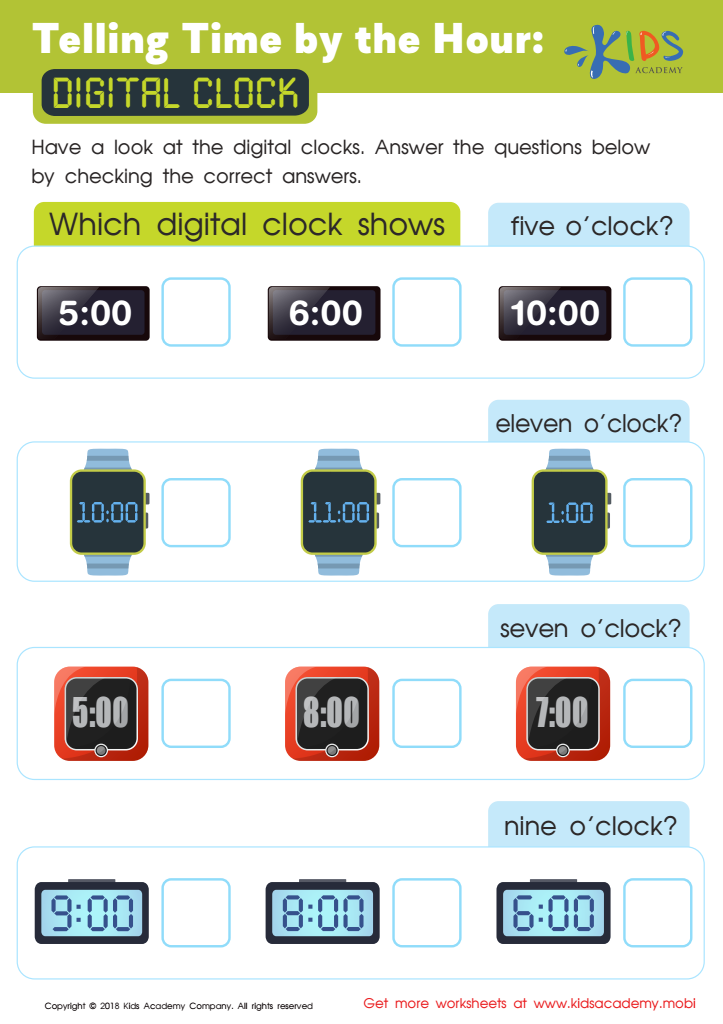
Telling Time by the Hour: Digital Clock Worksheet
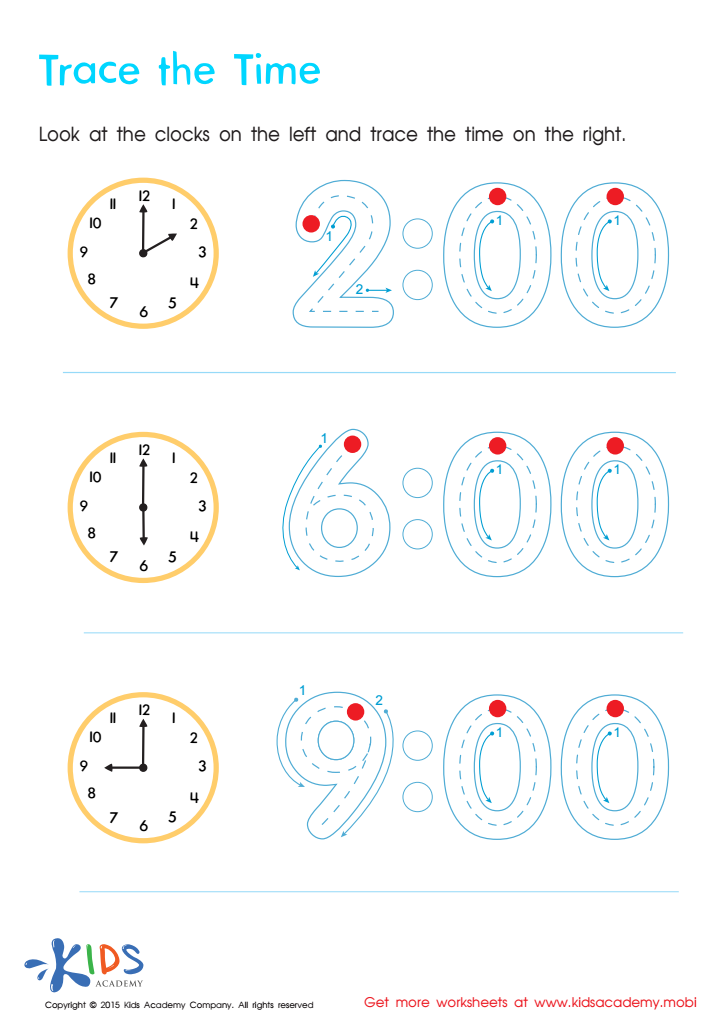
Telling The Time Worksheet: Part 2
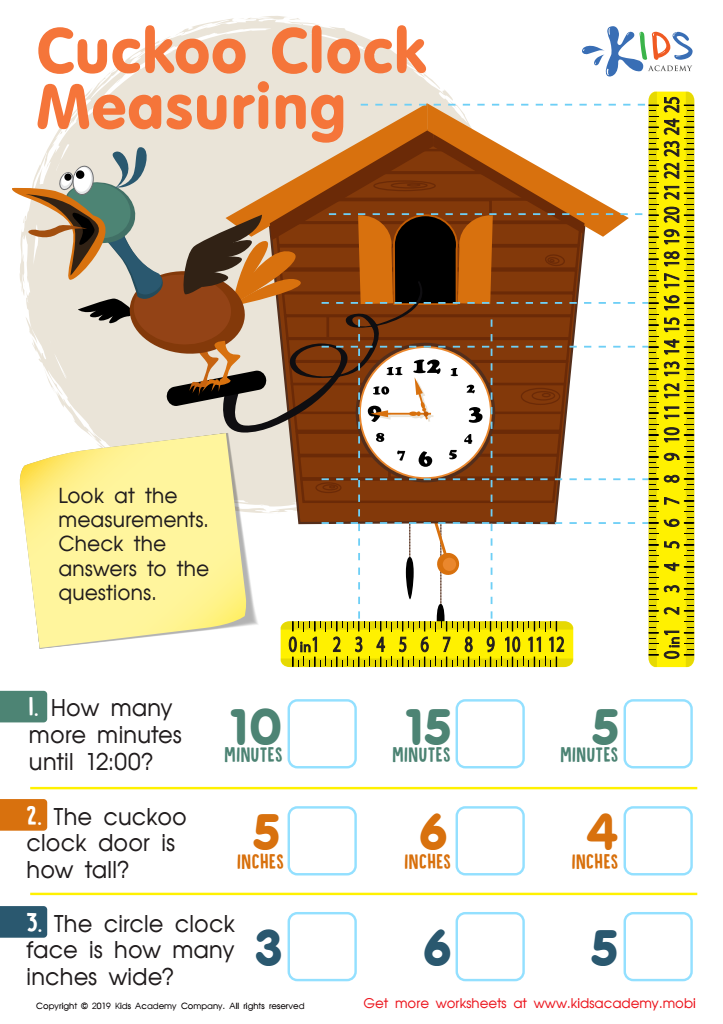
Cuckoo Clock Measuring Worksheet
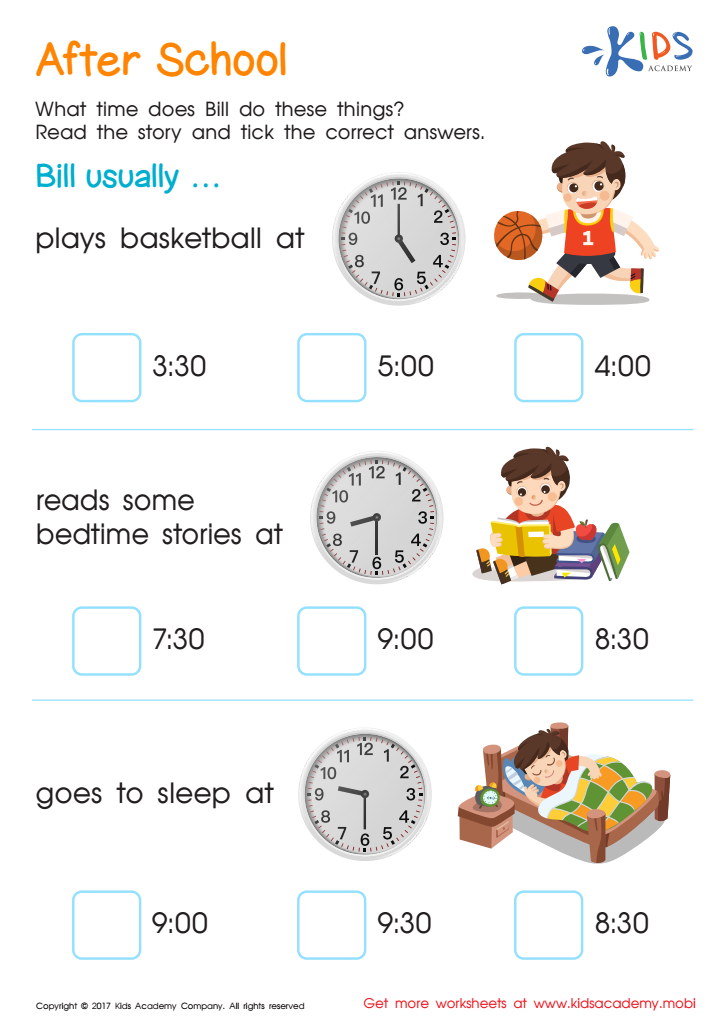
After School Time Printable
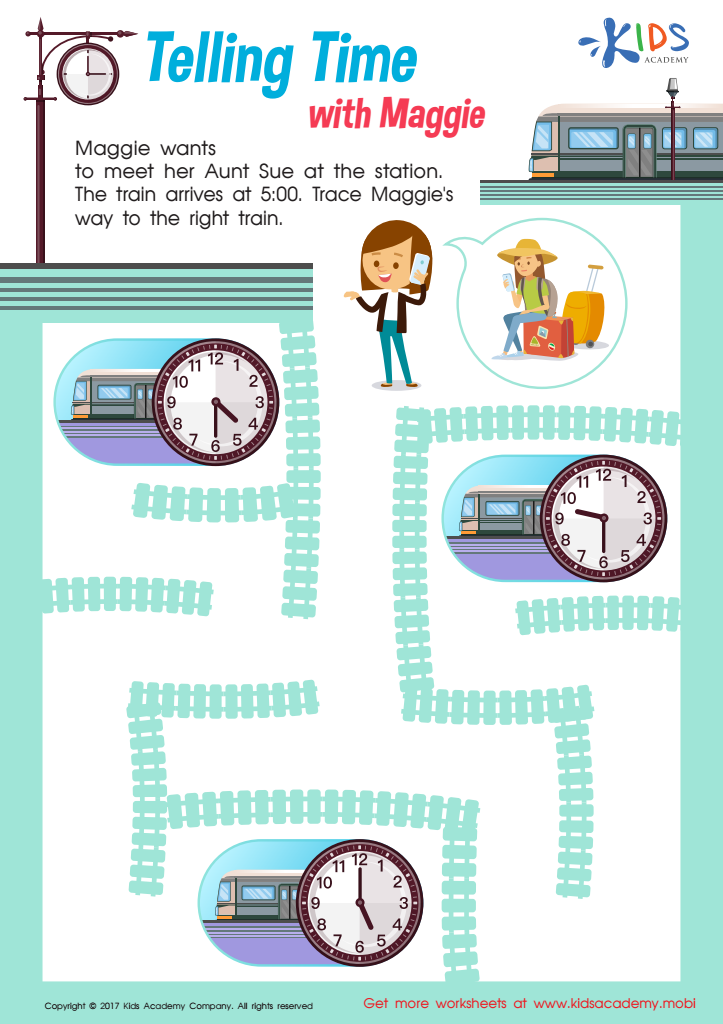
Telling Time With Maggie Time Worksheet
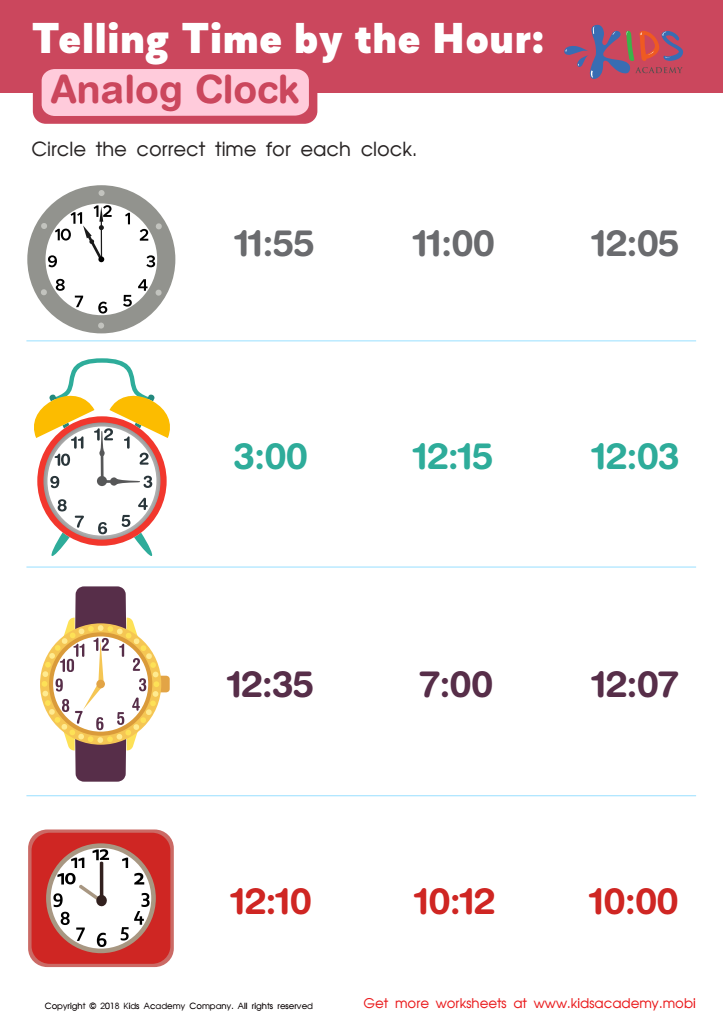
Telling Time by the Hour: Analog Clock Worksheet
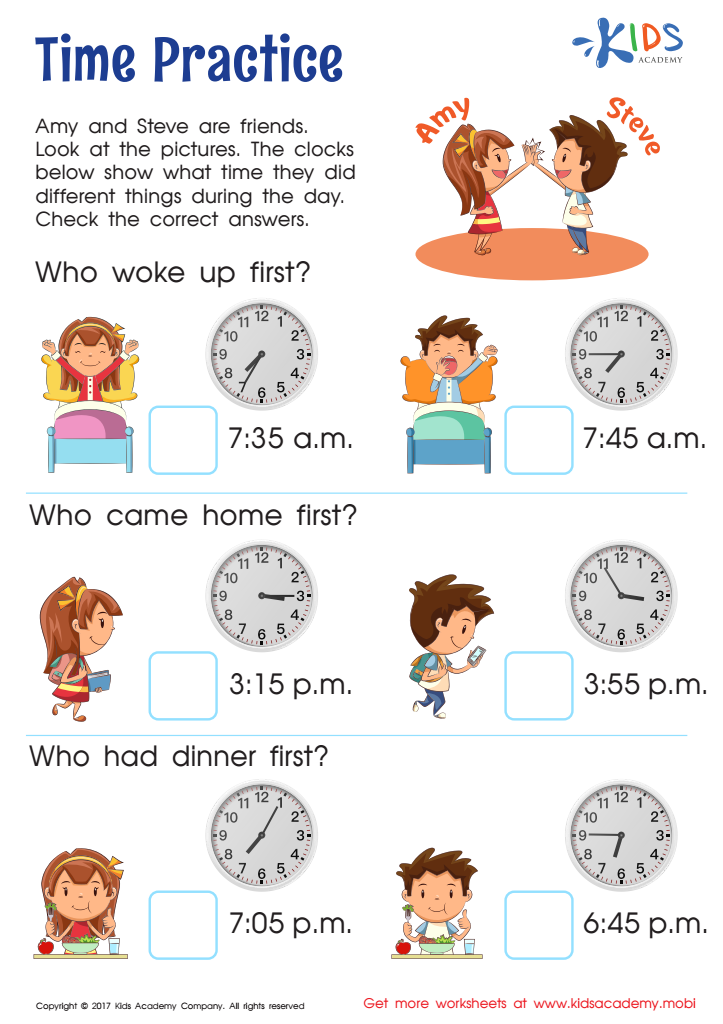
Time Practice Worksheet
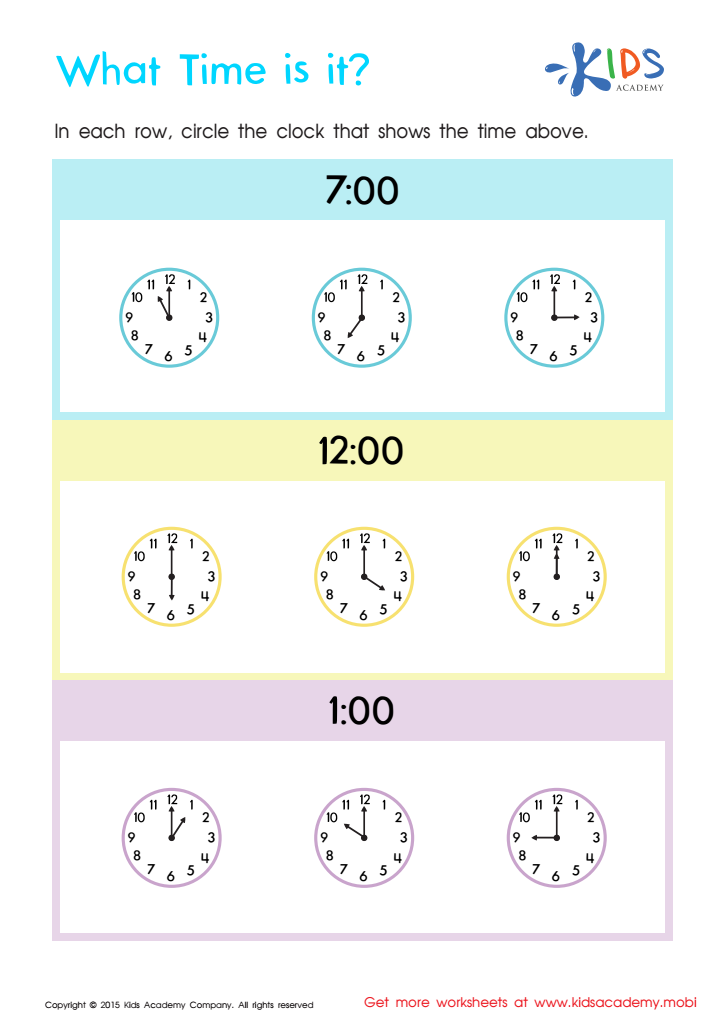
Telling The Time Worksheet: Part 3






Parents and teachers should prioritize time reading skills for children ages 3-8 as these foundational abilities significantly impact literacy and cognitive development. During early childhood, children are at a critical stage for acquiring language and reading proficiency. By fostering time reading skills, we can help children understand the connection between written text and temporal concepts, such as sequences of events, duration, and schedules, which are essential for academic success and everyday life.
When children learn to read time, they develop critical thinking and problem-solving abilities as they engage with concepts like ‘before’ and ‘after,’ timelines, and schedules. Integrating time reading into their learning not only aids in comprehending stories but also enhances overall literacy skills. Furthermore, these skills encourage independence, as children learn to manage their routines and make decisions based on time constraints.
Ultimately, nurturing time reading from a young age lays the groundwork for advanced literacy, numeracy, and self-management skills. It fosters an understanding of the world around them, promoting a sense of responsibility and empowerment. In this digital age, ensuring that children acquire these vital skills is essential for preparing them to navigate complex tasks in school and in life.








