Time recognition Worksheets for Ages 3-8
6 filtered results
-
From - To
Discover our educational Time Recognition Worksheets designed for children ages 3-8! These engaging printables help young learners grasp essential time-telling skills, from reading analog and digital clocks to understanding hours and minutes. Each worksheet features fun illustrations and interactive tasks, making learning time both enjoyable and effective. Perfect for classroom activities or at-home practice, our worksheets support time awareness and build a strong foundation for future learning. Empower your child with confidence in time recognition—start exploring now and watch their skills grow! Visit Kids Academy today to access our comprehensive collection.
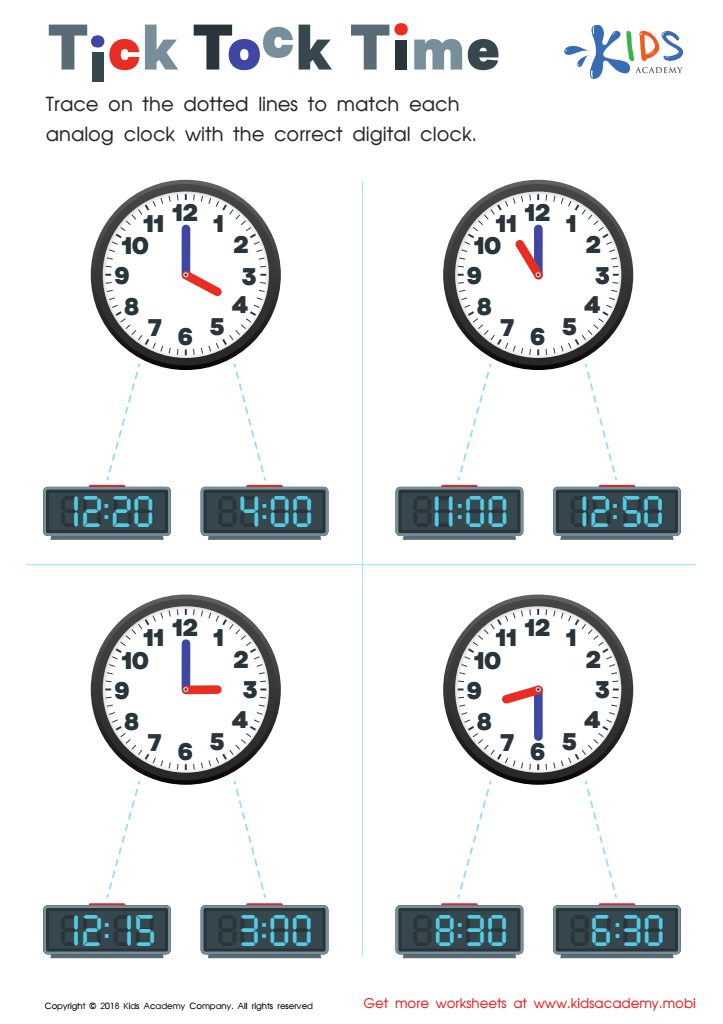
Tick Tock Time Worksheet
 Assign to My Students
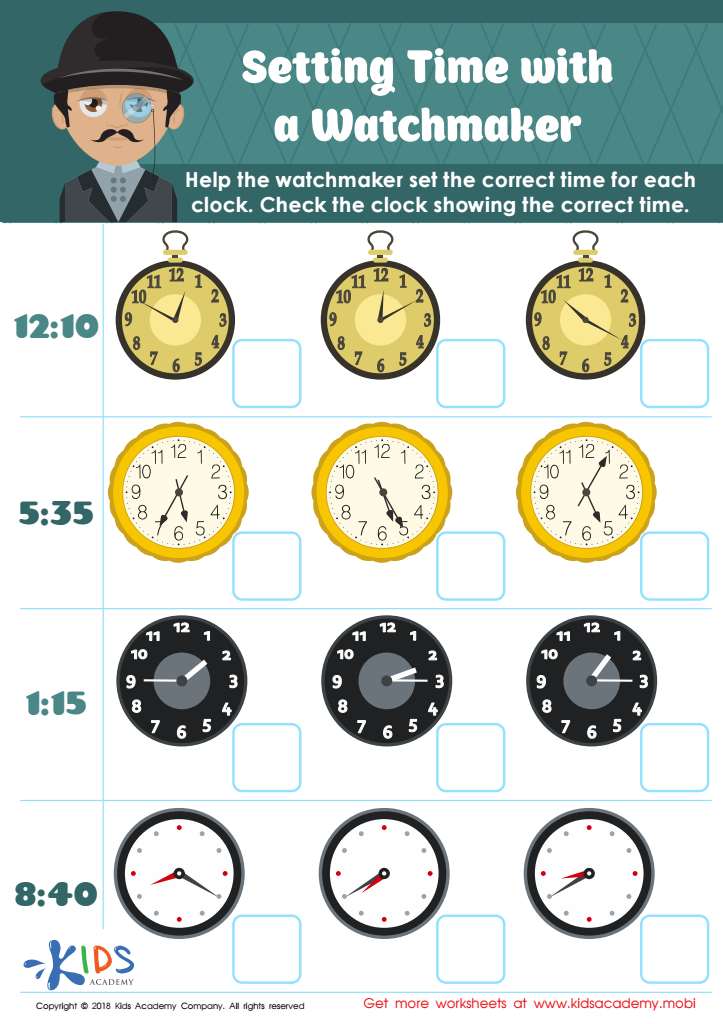
Setting Time with Watchmaker Worksheet
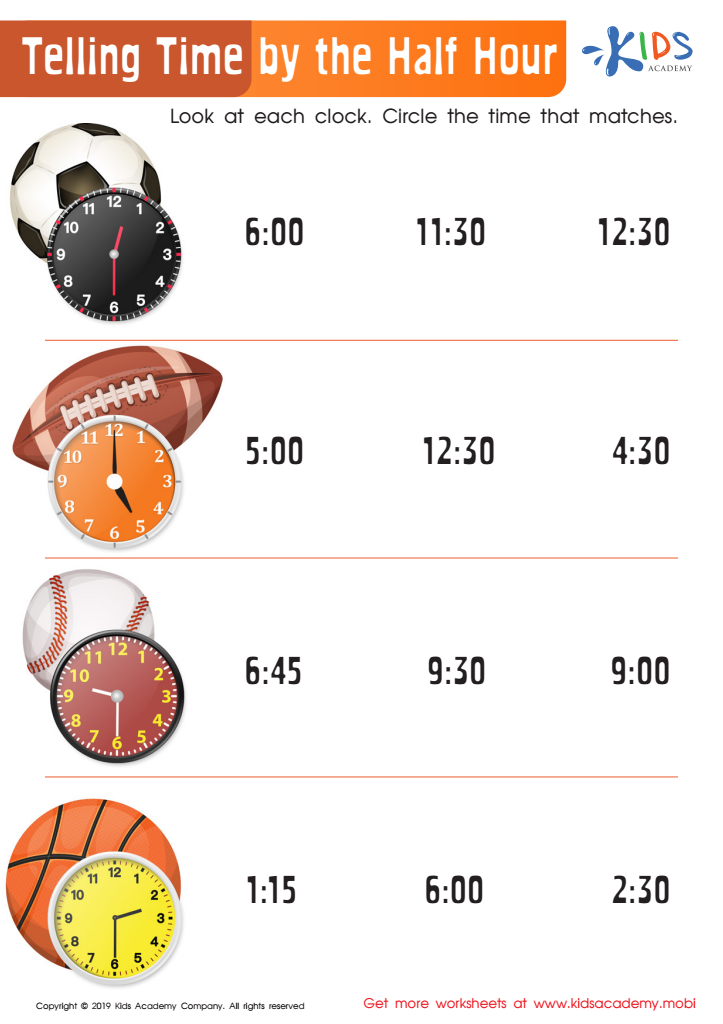
Telling Time by the Half Hour Worksheet
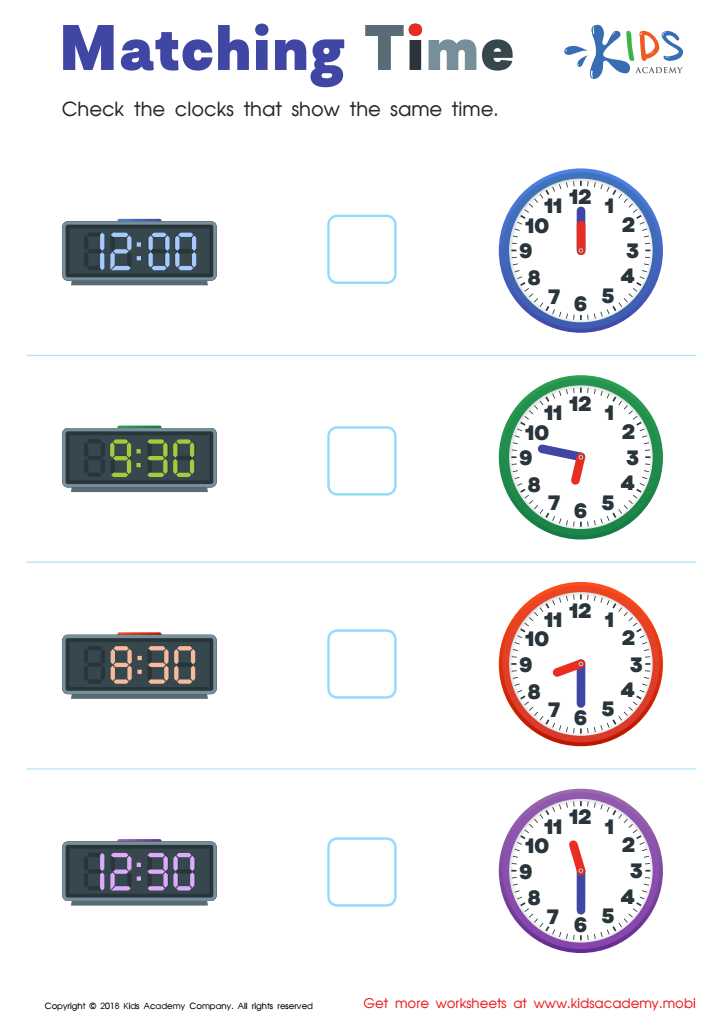
Matching Time Worksheet
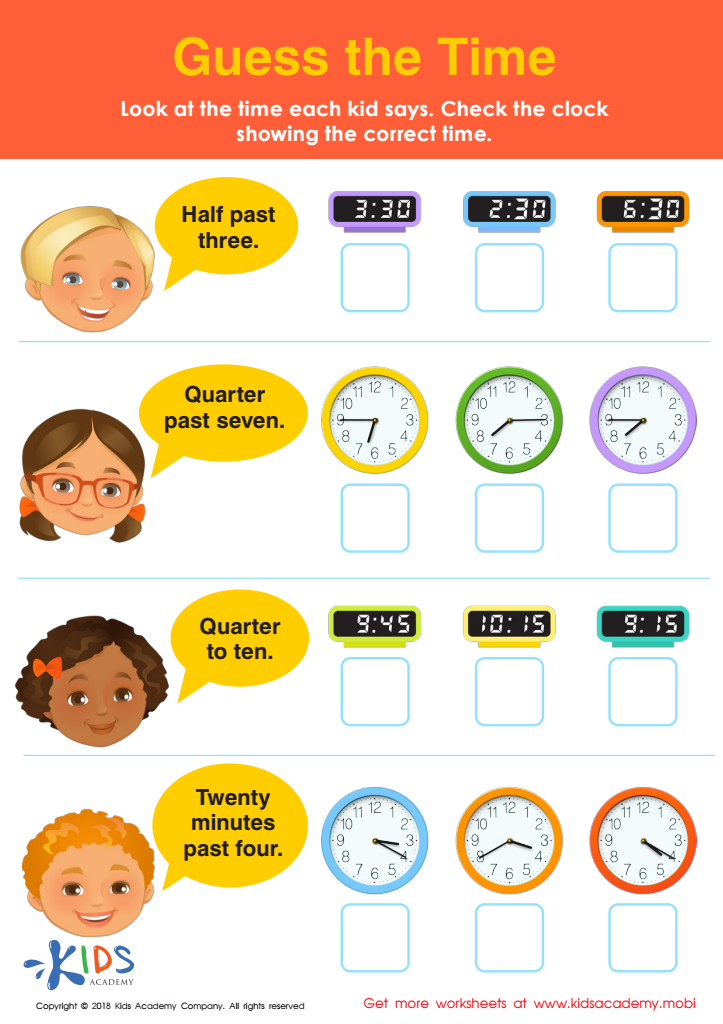
Guess the Time Worksheet
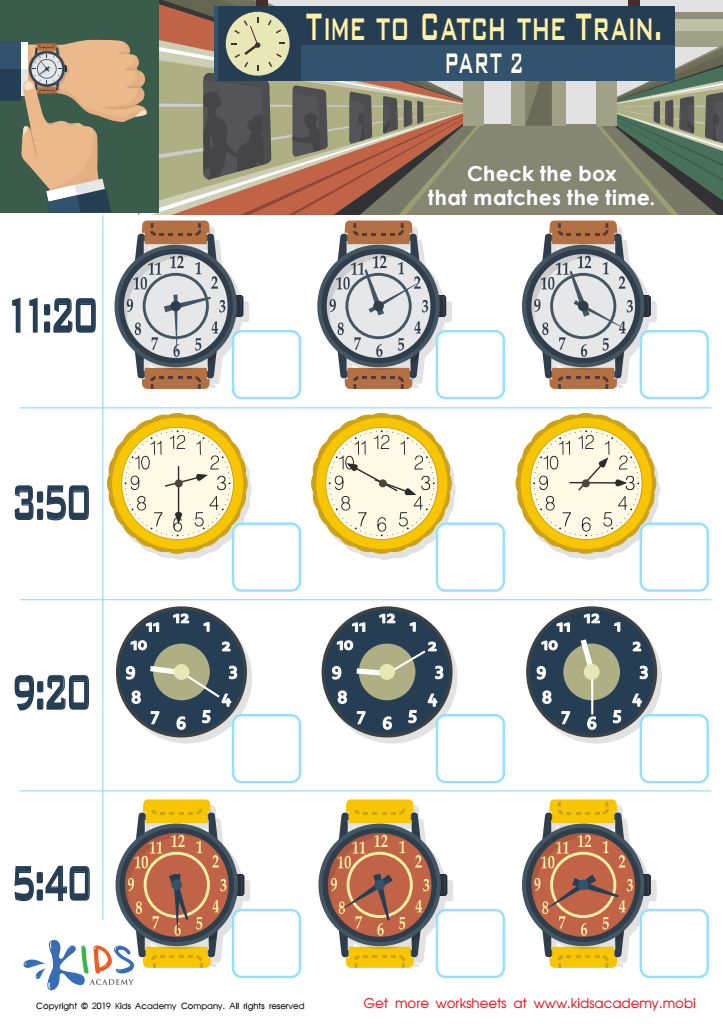
Time to Catch the Train Part 2 Worksheet








Understanding time is an essential skill for children aged 3-8, as it lays the foundation for their cognitive, social, and academic development. Parents and teachers should prioritize time recognition because it fosters a sense of routine and structure, which are crucial for young children’s sense of security and independence. Children who recognize time can follow daily schedules, understand the sequence of events, and manage transitions between activities more smoothly.
In addition, early time recognition helps children develop important mathematical and problem-solving skills. Recognizing numbers, counting, and understanding the concept of time intervals are fundamental math skills that will benefit their future academic pursuits. Time-telling games and activities can make learning math more enjoyable and practical, setting a positive tone for lifelong numeracy skills.
Socially, children who understand time can better grasp the concept of past, present, and future, which aids them in narrating events, anticipating activities, and even developing patience and planning skills. It also enables them to participate more actively in conversations about schedules and routines. Therefore, investing in time recognition educates children in a multi-faceted way, enhancing their academic abilities, social skills, and emotional well-being. Through interactive clocks, stories, and engaging activities, educators and parents can make this learning process fun and impactful.








