Understanding area Worksheets for Ages 3-8
3 filtered results
-
From - To
Unlock the world of measurements with our "Understanding Area Worksheets" designed for children ages 3-8. These engaging and visually appealing resources introduce young learners to the concept of area through fun activities that incorporate shapes and basic math skills. Parents and educators can easily access printable worksheets that feature colorful illustrations, interactive exercises, and innovative problem-solving tasks to enhance spatial awareness. With clear instructions and varied challenges, these worksheets cater to different learning styles, ensuring every child builds foundational skills in geometry. Start your child's journey to mathematical confidence and mastery of area today with our expertly crafted worksheets!
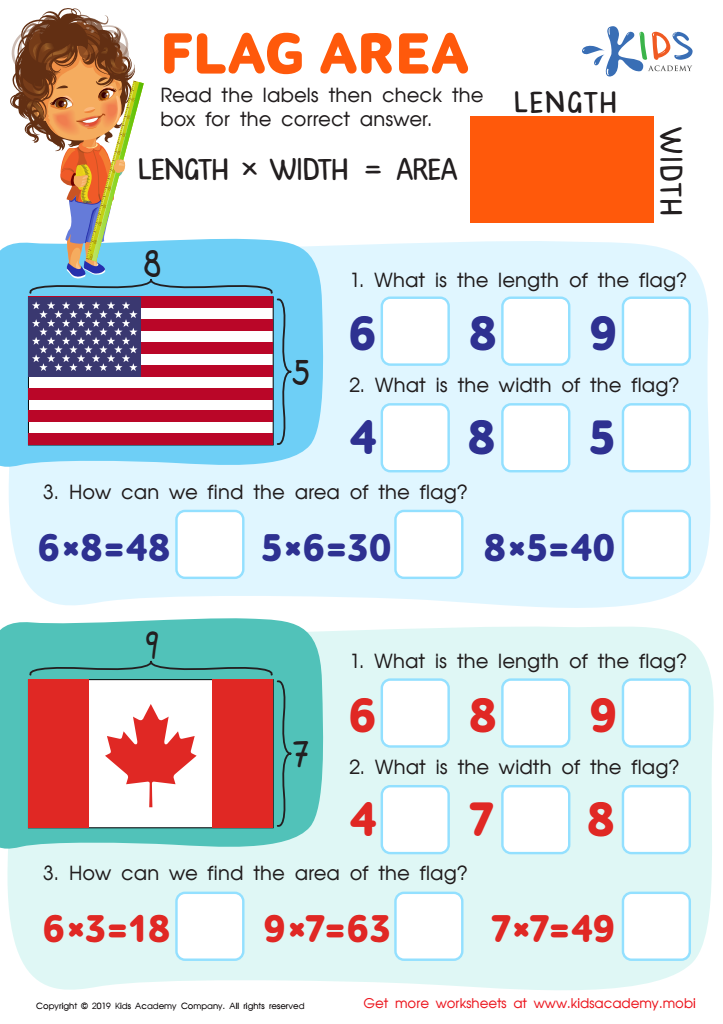
Flag Area Worksheet
 Assign to My Students
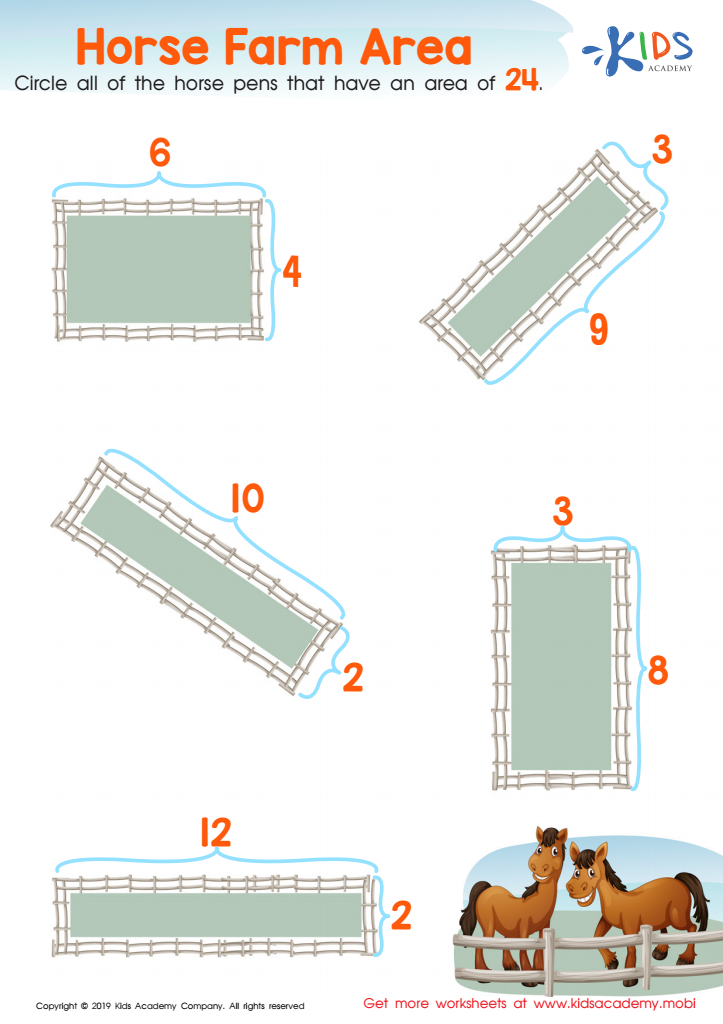
Horse Farm Area Worksheet
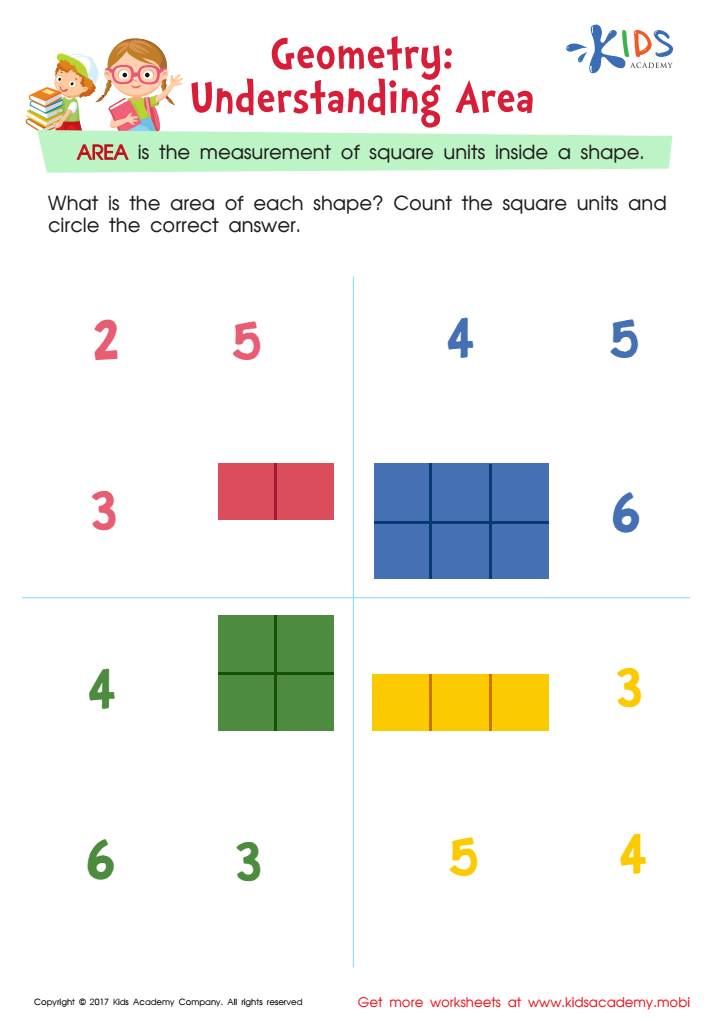
Understanding Area Worksheet







Understanding area is a fundamental mathematical concept that is essential for young learners, especially those aged 3-8. At this early stage, children are naturally curious and eager to explore their environment, making it an ideal time to introduce them to the idea of space and measurement.
Learning about area helps children develop critical thinking skills as they compare different shapes and sizes, fostering spatial awareness. For instance, when children play with blocks or draw shapes, they intuitively begin to understand how objects occupy space. This foundational knowledge is crucial not only for mathematics but also for practical life skills.
Moreover, activities that involve measuring area, such as gardening or arranging furniture, give children an opportunity to engage in hands-on learning. This experiential approach promotes a deeper understanding of concepts while simultaneously enhancing their problem-solving abilities.
Parents and teachers play a pivotal role in this learning process, as they can create stimulating environments that encourage exploration and discussion about area. By nurturing these skills from an early age, we empower children to build a strong mathematical foundation that will benefit them throughout their education and daily lives. Fostering this understanding makes learning more meaningful and enjoyable.








