Understanding measurement Worksheets for Ages 3-8
3 filtered results
-
From - To
Explore our comprehensive "Understanding Measurement Worksheets for Ages 3-8" designed to cultivate early math skills in young learners. Our engaging printable worksheets introduce children to essential measurement concepts through fun and interactive activities. Designed specifically for kids aged 3 to 8, these resources include activities on length, weight, volume, and time, helping children understand different units of measurement. By blending learning with play, our worksheets make math enjoyable and accessible. Foster your child's confidence and proficiency in measurement, setting a strong foundation for future academic success. Download our easy-to-use worksheets today and watch your child’s mathematical curiosity thrive!
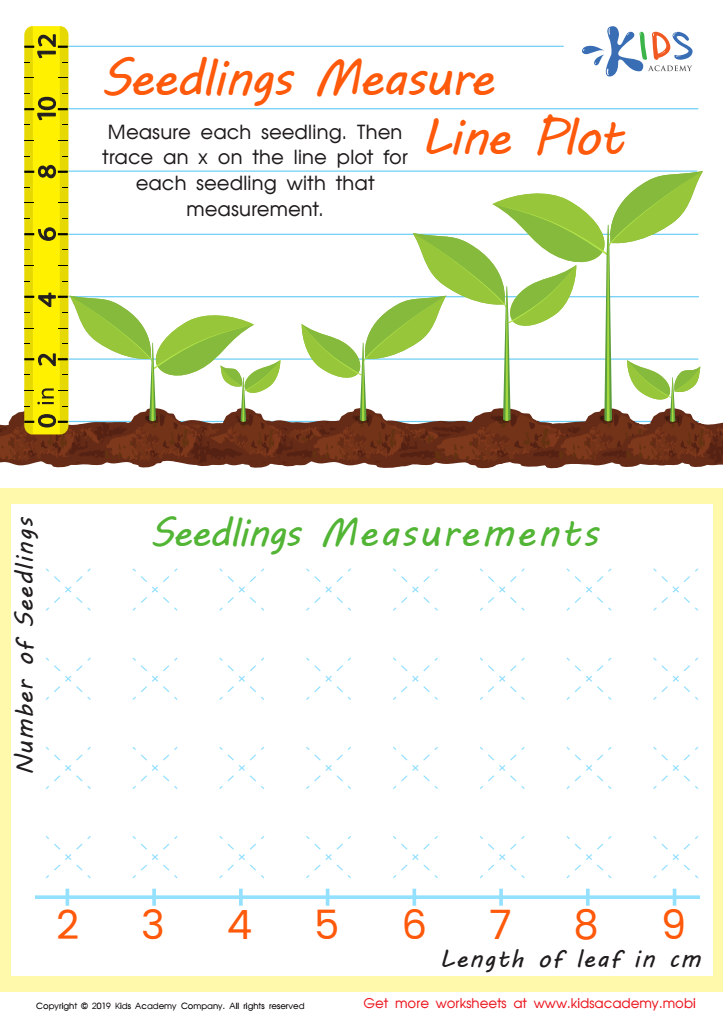
Seedling Measure Line Plot Worksheet
 Assign to My Students
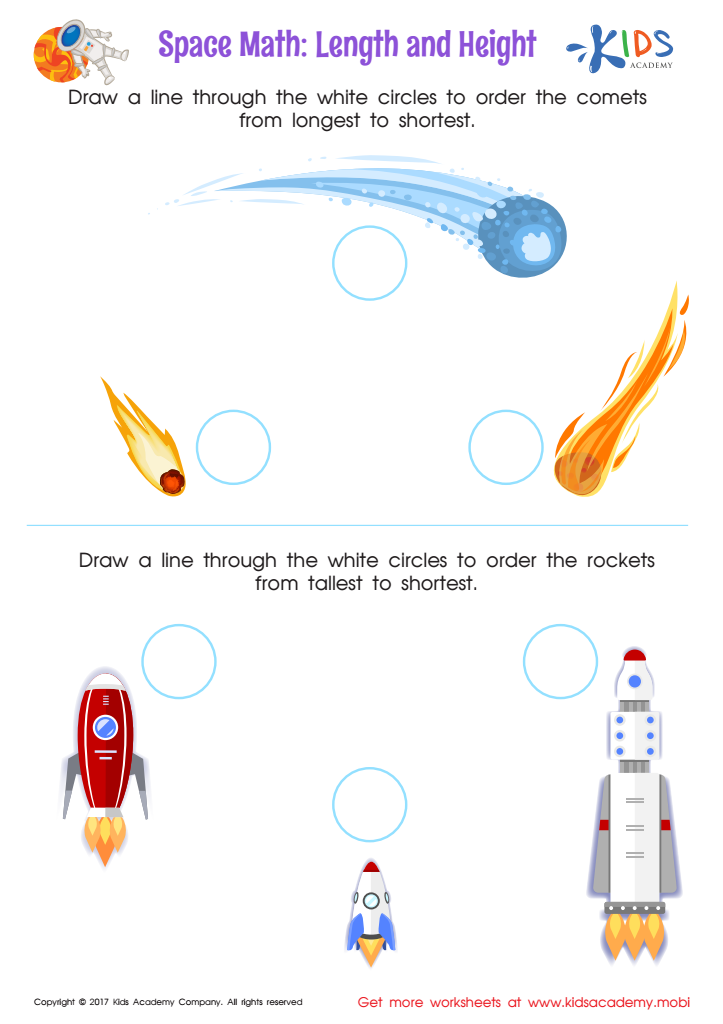
Space Math Worksheet
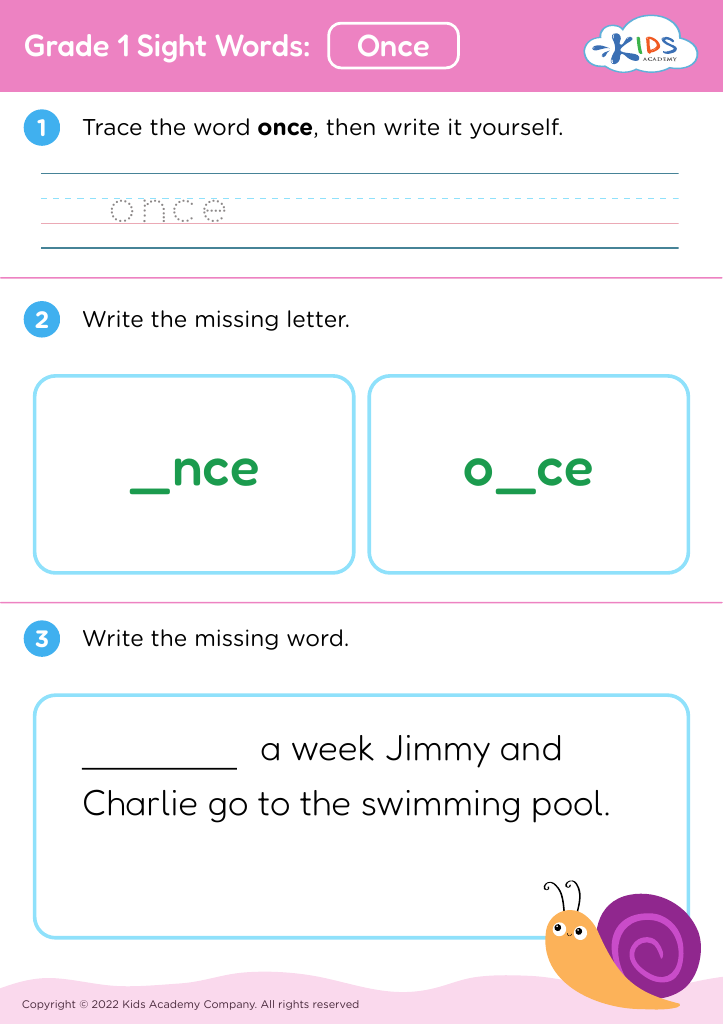



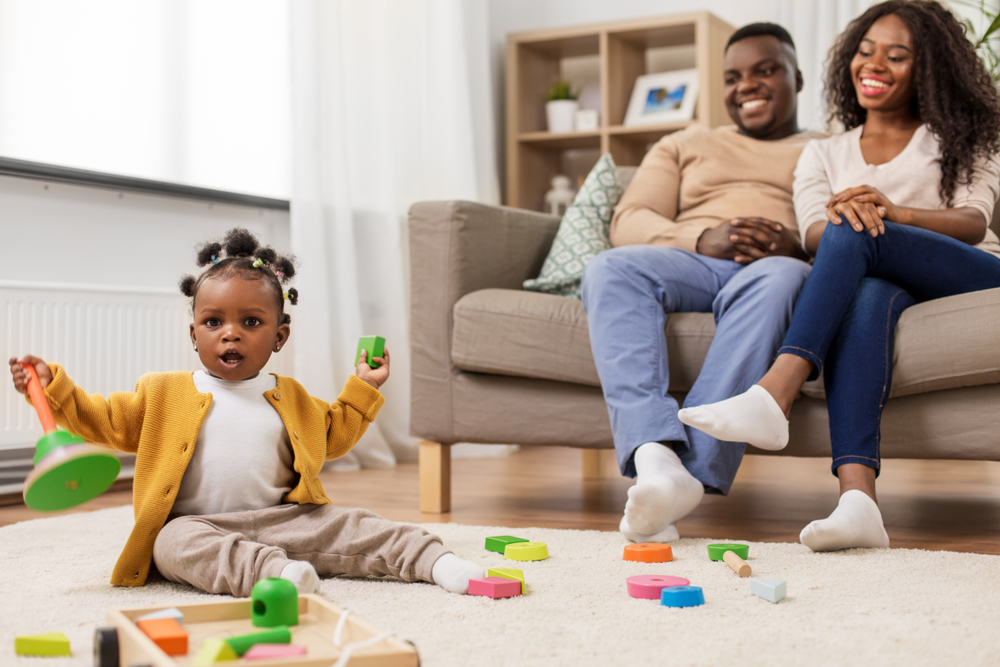


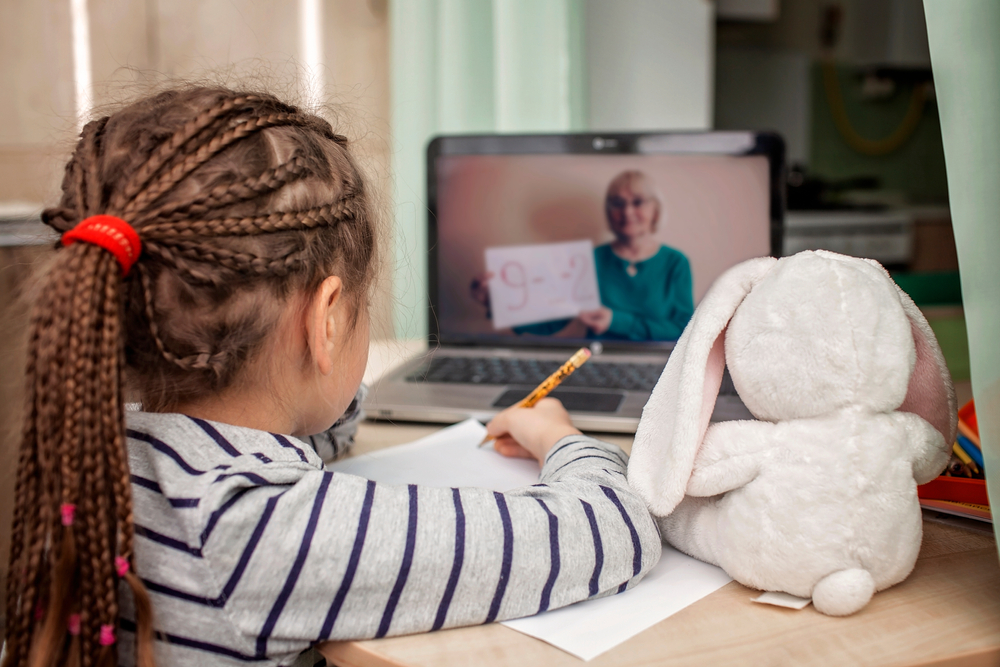
Understanding measurement is crucial for children aged 3-8 as it lays the foundation for their mathematical learning and critical thinking skills. During these formative years, children are naturally curious about the world around them. Introducing measurement concepts—such as length, weight, and volume—helps develop their problem-solving abilities and spatial awareness.
Early measurement activities, like comparing heights of objects or measuring ingredients for a simple recipe, make learning interactive and engaging. These hands-on experiences encourage children to explore, ask questions, and draw conclusions, nurturing fundamental scientific skills. Additionally, measuring promotes the use of language and vocabulary, as children learn new terms relevant to dimensions and quantities.
Establishing a solid understanding of measurement also boosts confidence in mathematics as children progress in their education. It’s essential for tasks involving time management, understanding money, and planning activities. Moreover, as children develop mathematical concepts, they learn to connect measurement to real-life situations, enhancing their overall daily experiences.
Ultimately, parents and teachers play a vital role in fostering these skills. By providing opportunities for measurement exploration, they can support cognitive development, encourage curiosity, and prepare children for future academic success and everyday life challenges.








