Unlock your child's curiosity about the environment with our "Understanding Natural Resources" worksheets designed for ages 3-8! These engaging, age-appropriate activities introduce young learners to essential concepts about natural resources including water, minerals, and plants. With colorful illustrations and interactive tasks, children will explore the importance of nature and how it supports life. Our worksheets promote critical thinking, fine motor skills, and environmental awareness while ensuring fun and educational experiences. Perfect for home or classroom use, these resources foster a sense of stewardship for our planet. Begin your journey into environmental education today!

Check out this FREE "Understanding natural resources" Trial Lesson for age 3-8!

Taking Care of Nature

Favorites
With answer key
Interactive
  • 3-8
  • Understanding natural resources
Natural resources water worksheet

Natural Resources: Water Worksheet

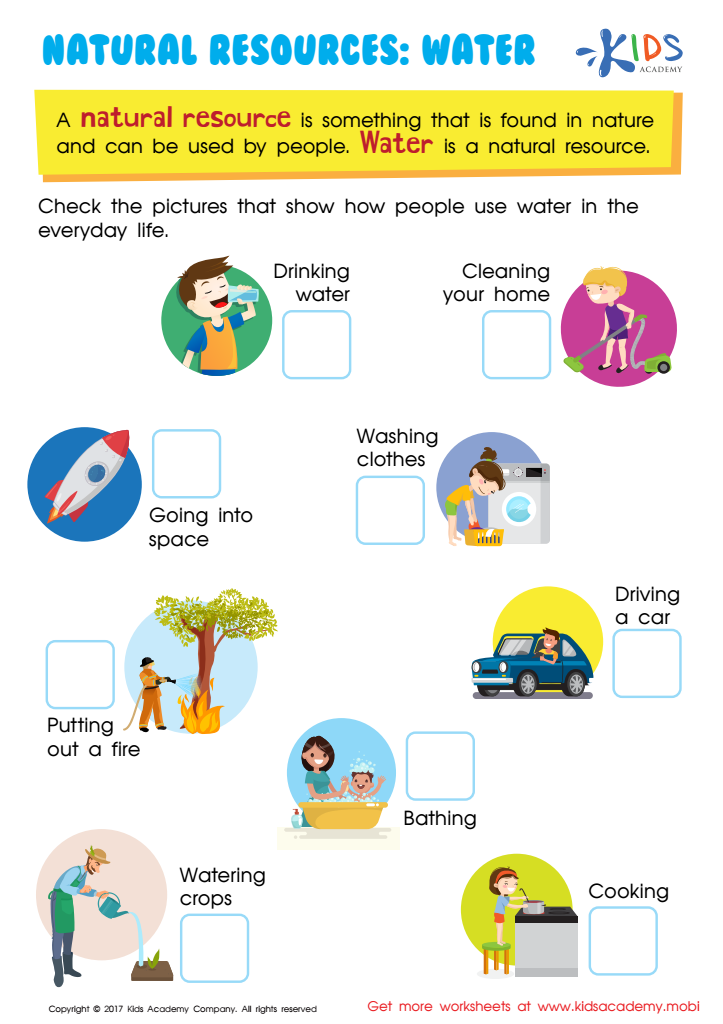
With our natural resources water worksheet, your child will explore the significance of this precious resource. Unlock your child’s understanding of water’s importance with our natural resources water worksheet. They’ll learn the many ways we use water in our day-to-day lives, and grasp the necessity of this vital natural resource.
Natural Resources: Water Worksheet
Worksheet
Natural Resources Coloring Page Worksheet

Natural Resources Coloring Page Worksheet

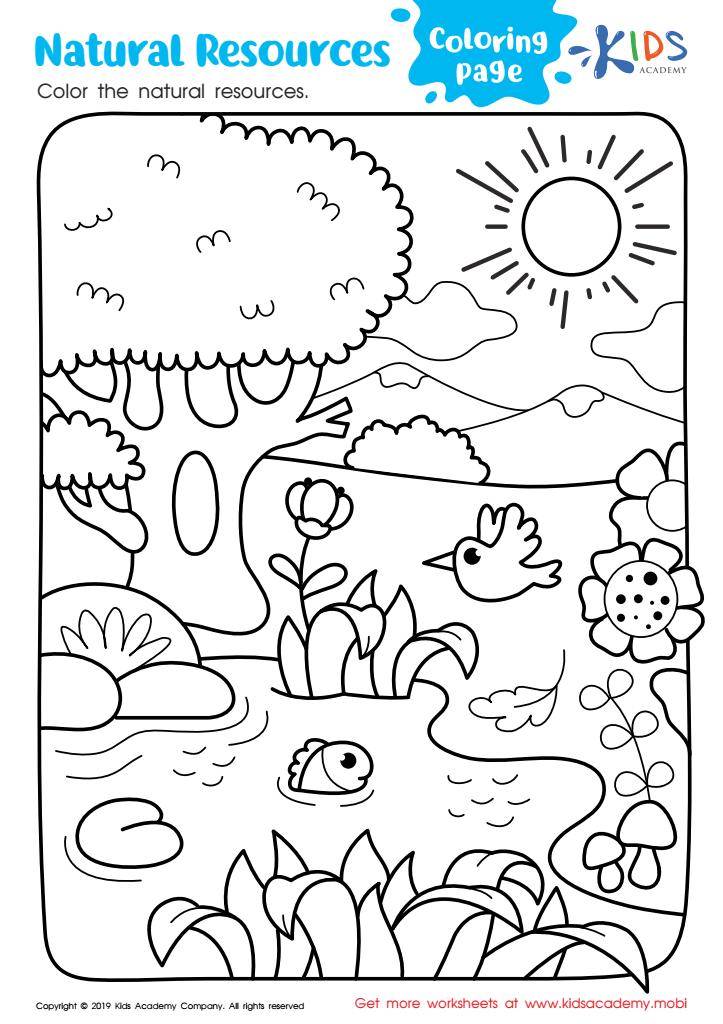
Kids will love coloring this beautiful nature scene! Download our free PDF and show your children how the sun is integral to our life cycle. Explain the interactions between the sun, wind and water cycles that make it possible for trees and plants to grow. Coloring also helps develop fine-motor skills in kids.
Download (PDF)
Assign to My Students
Natural Resources Coloring Page Worksheet
Worksheet
Challenging natural resources worksheet

Natural Resources Worksheet

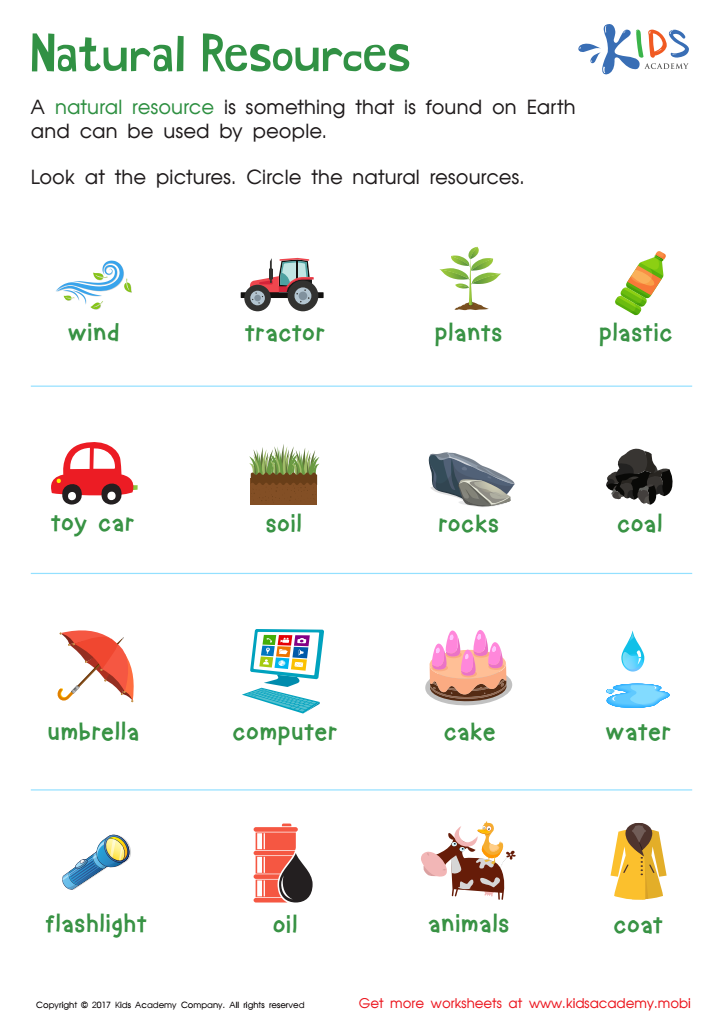
Use this engaging worksheet to explore nature’s resources and their importance. Teach your child about the importance of natural resources and how to conserve them with this fun worksheet! Help your child explore and understand Earth's natural gifts! Use this challenging worksheet to identify natural resources and learn about their importance. Encourage your child to be mindful and conserve these precious resources. Enjoy teaching your child about nature's gifts with this fun worksheet!
Natural Resources Worksheet
Worksheet
Natural Resources: Conservation Worksheet

Natural Resources: Conservation Worksheet

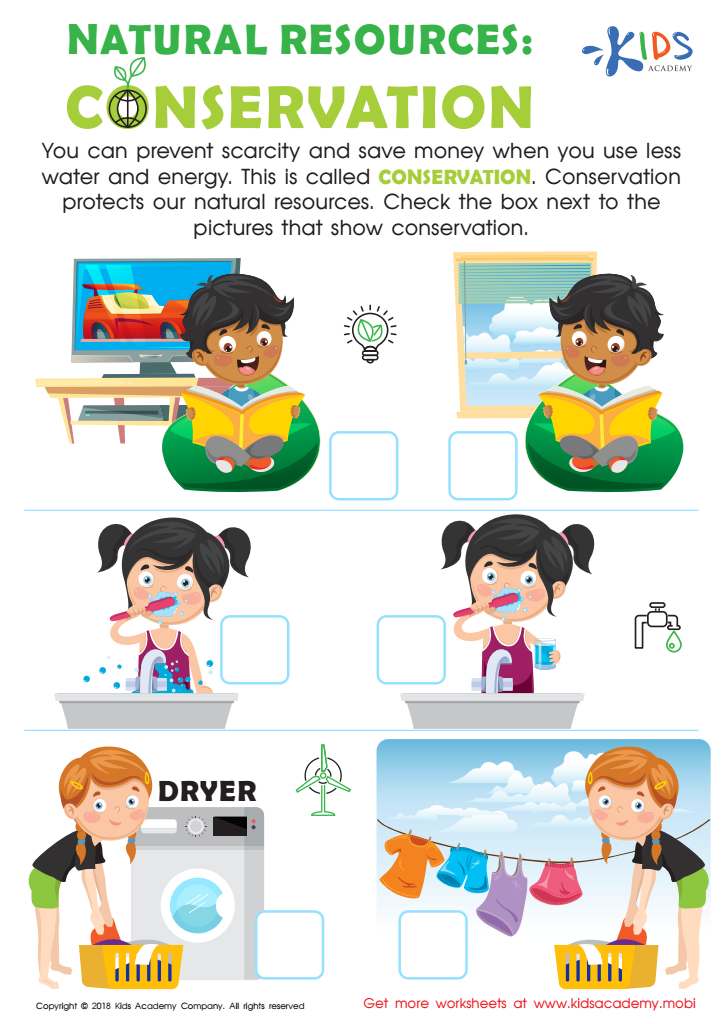
Water scarcity is a challenge. When people don't have enough water, they can't do certain things. We can prevent this with conservation: using less energy and water. This helps protect our natural resources and saves money. Talk to your child about conservation and have them check the box next to the pictures that show it.
Natural Resources: Conservation Worksheet
Worksheet
Rounding Natural Resources Worksheet

Rounding Natural Resources Worksheet

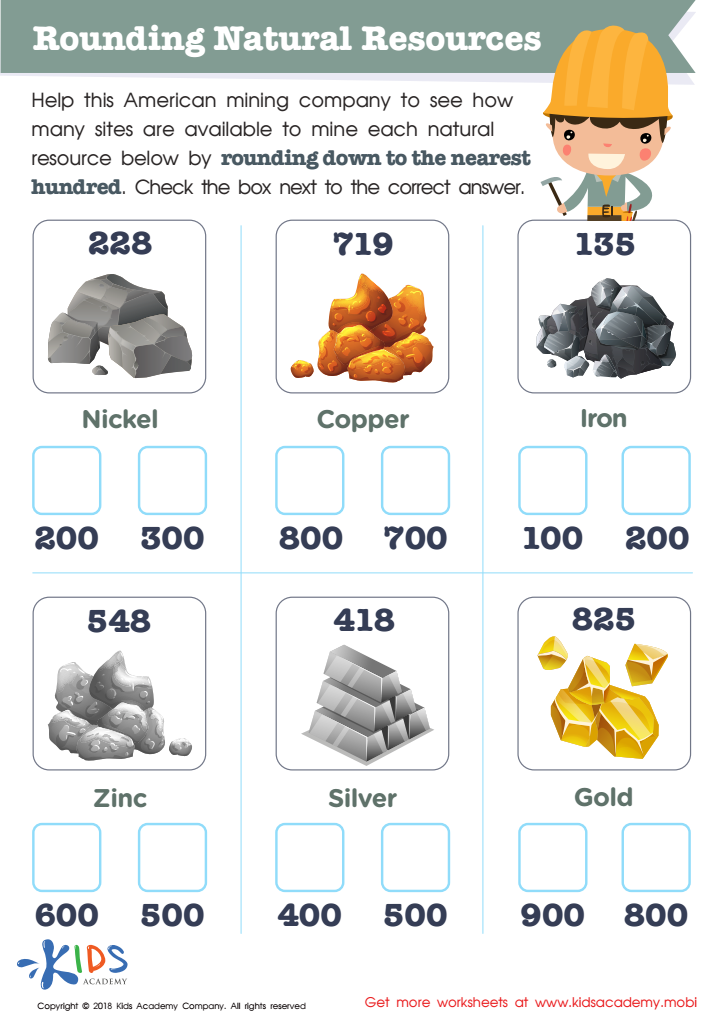
This worksheet from Kids Academy helps review rounding skills while reviewing natural resources. Learners view pictures of natural resources and round down to the nearest hundred. Use it to jumpstart a science discussion about the various resources found on the planet. A great way to make math relevant to real life!
Rounding Natural Resources Worksheet
Worksheet
Natural resources plant worksheet

Natural Resources: Plants Worksheet

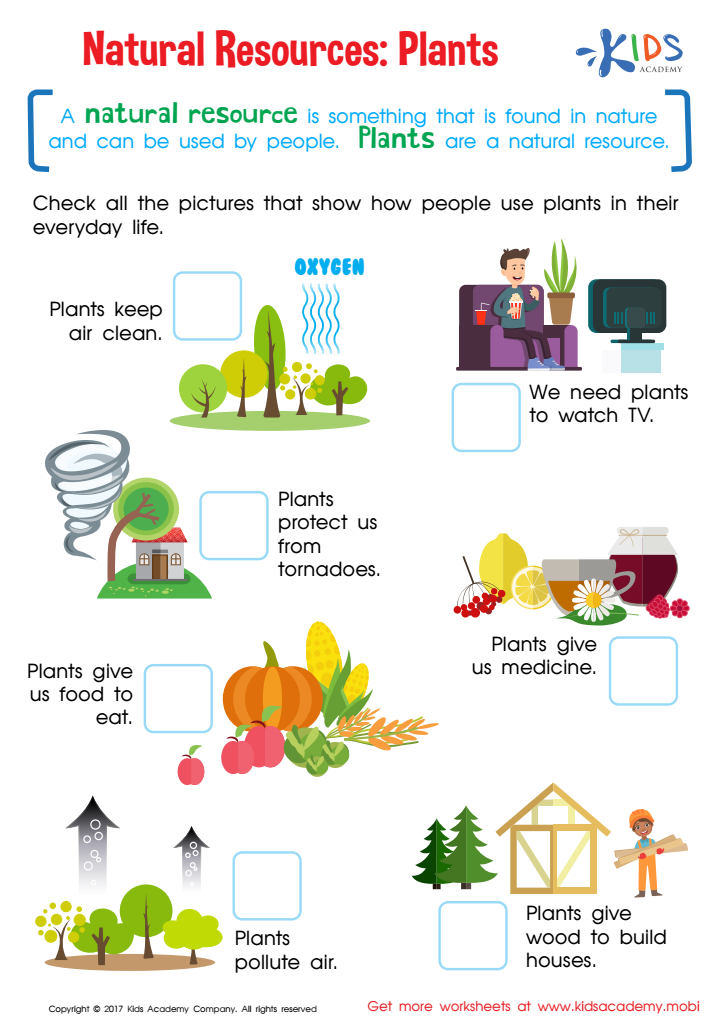
Plants provide essential natural resources: oxygen and protection from hazards. This worksheet helps 2nd graders appreciate plants more. It's the perfect way to review natural resources.
Natural Resources: Plants Worksheet
Worksheet


Understanding natural resources is crucial for children aged 3-8 as it lays the foundation for environmental awareness and sustainability. At this impressionable age, children are like sponges, eagerly absorbing information about the world around them. By teaching them about natural resources—like water, air, soil, plants, and minerals—parents and teachers help cultivate respect and appreciation for the planet.

Early exposure to these concepts fosters curiosity, encouraging children to explore nature. This engagement can lead to lifelong habits of environmental stewardship, encouraging them to make conscious choices, such as recycling and conserving energy. Furthermore, learning about natural resources can be integrated into various subjects, such as science, mathematics, and art, making lessons enjoyable and memorable.

Instilling the importance of natural resources not only prepares children to understand more complex environmental issues in the future but also enhances critical thinking skills. They will learn to recognize the interconnectedness of ecosystems and human impact. By nurturing a sense of responsibility and fostering an emotional connection with nature, parents and teachers contribute to the development of conscientious individuals who can advocate for sustainability in their communities. Ultimately, the knowledge gained during these formative years can contribute to a healthier planet for generations to come.