Understanding Rhymes Worksheets for Ages 3-8
4 filtered results
-
From - To
Discover our "Understanding Rhymes Worksheets for Ages 3-8" to provide your little ones with engaging activities designed to nurture their phonemic awareness and love for language. These fun, interactive worksheets help children recognize and practice rhyming words through delightful exercises, stories, and songs. Perfect for both classroom and home learning, our resources support literacy development and enrich vocabulary while fostering a joy for reading. Tailored specifically for early learners, these worksheets make mastering rhymes both educational and enjoyable, giving young minds a head start in their language skills. Dive in today and watch your child's reading confidence soar!
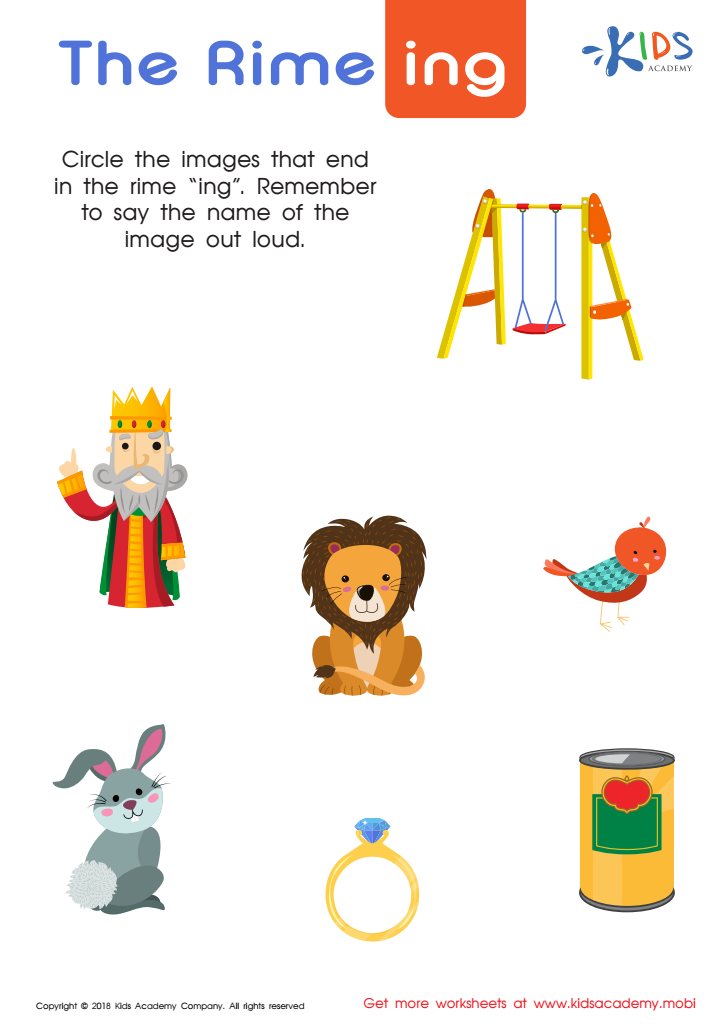
The Rime "ing" Worksheet
 Assign to My Students
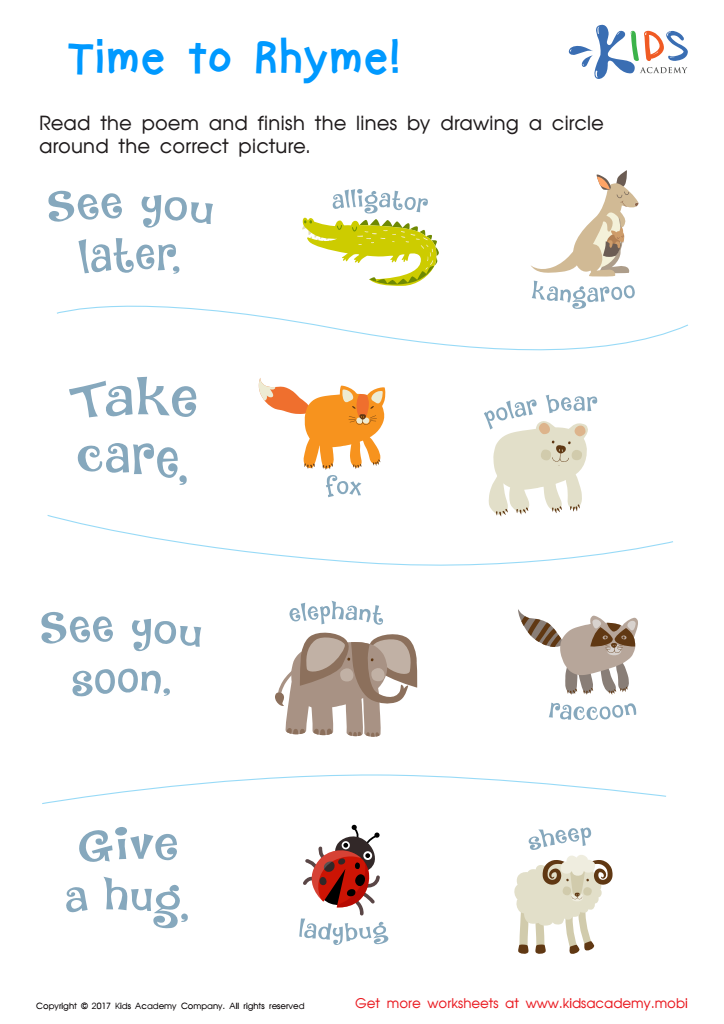
Time to Rhyme Rhyming Worksheet
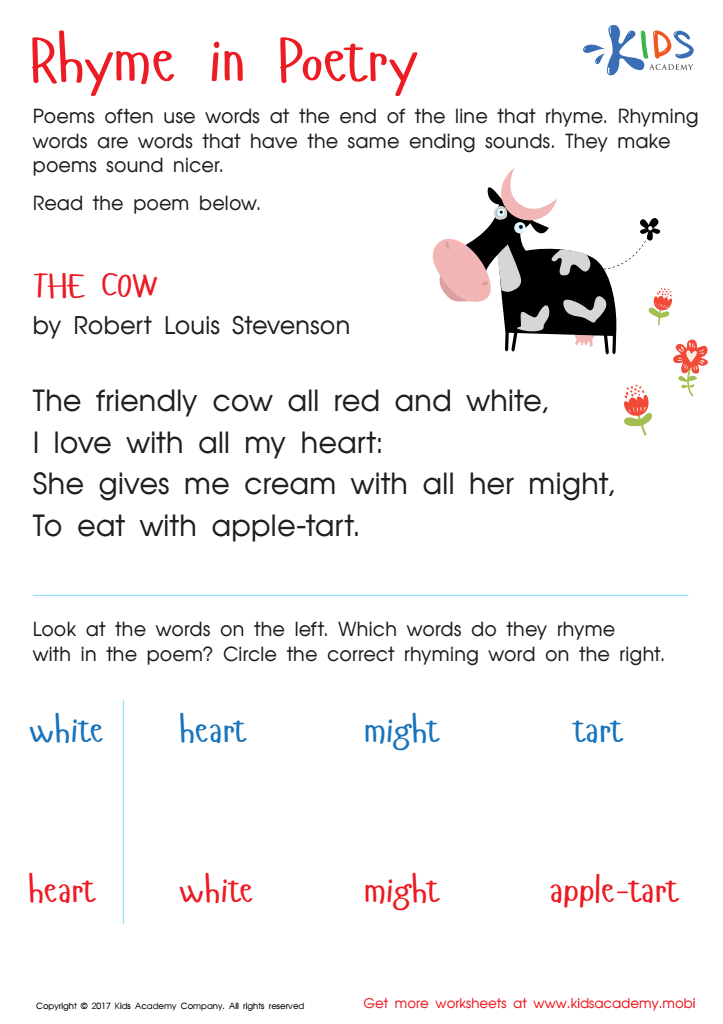
Rhyme In Poetry Worksheet








Understanding and appreciating rhymes is fundamental for children aged 3-8 because it lays the groundwork for essential literacy skills. At this developmental stage, children's brains are incredibly receptive to patterns and sounds, making rhymes an effective tool for language acquisition. Rhyming improves phonemic awareness, which is the ability to hear, identify, and manipulate individual sounds in words—a crucial precursor to reading. When children recognize rhymes, they learn about the predictable structures of language, enhancing their ability to decode new words and contributing to reading fluency.
Moreover, engaging with rhymes fosters a love for reading and literature. The melodic and repetitive nature of rhyming makes learning enjoyable and memorable, encouraging children to participate actively. This active engagement not only bolsters vocabulary and comprehension but also inspires creativity and imagination as children consider new ways to use and combine words.
In addition, rhymes develop listening and verbal communication skills. As children master rhymes, they also improve their ability to follow along with stories, understand sequencing, and anticipate what comes next, all of which are critical for effective listening and speaking.
By prioritizing rhymes, parents and teachers provide children with a strong linguistic foundation, setting them up for future academic success and a lifelong love of learning.








