Filters

45 filtered results

Clear all filters
Favorites
With answer key
Interactive

45 filtered results

Difficulty Level

Grade


Check out this FREE Trial Lesson on Adding in the Sea for age 3-8!

Short and Long Vowel Sort

Favorites
With answer key
Interactive
  • 3-8
  • Counting practice
  • Adding in the Sea
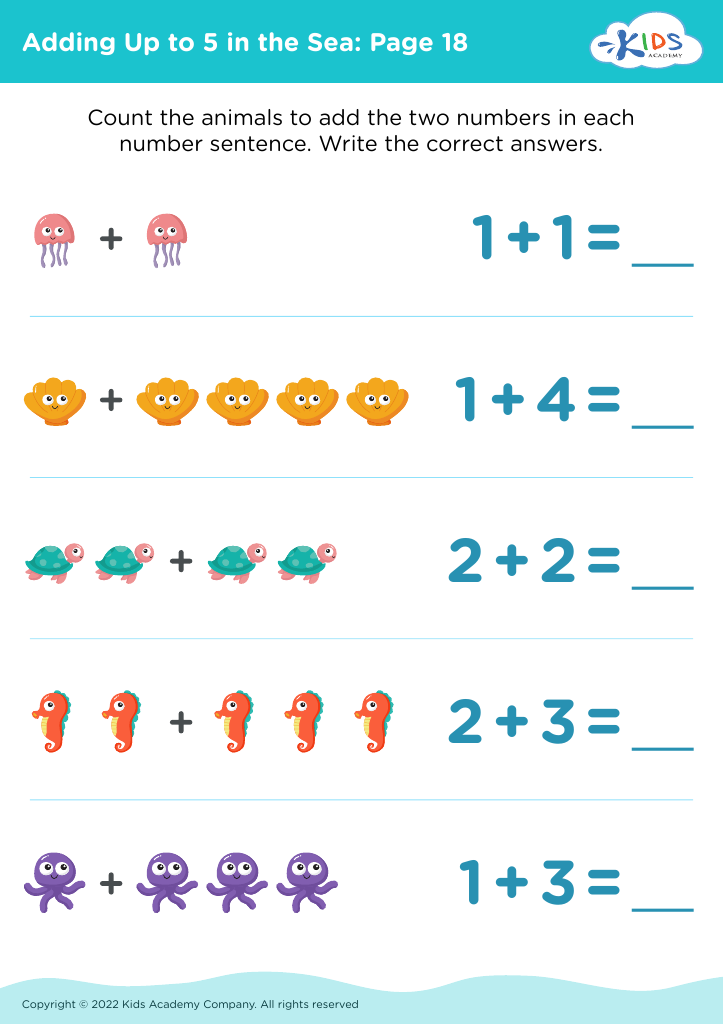
Adding Up to 5 in the Sea: Page 18
Worksheet
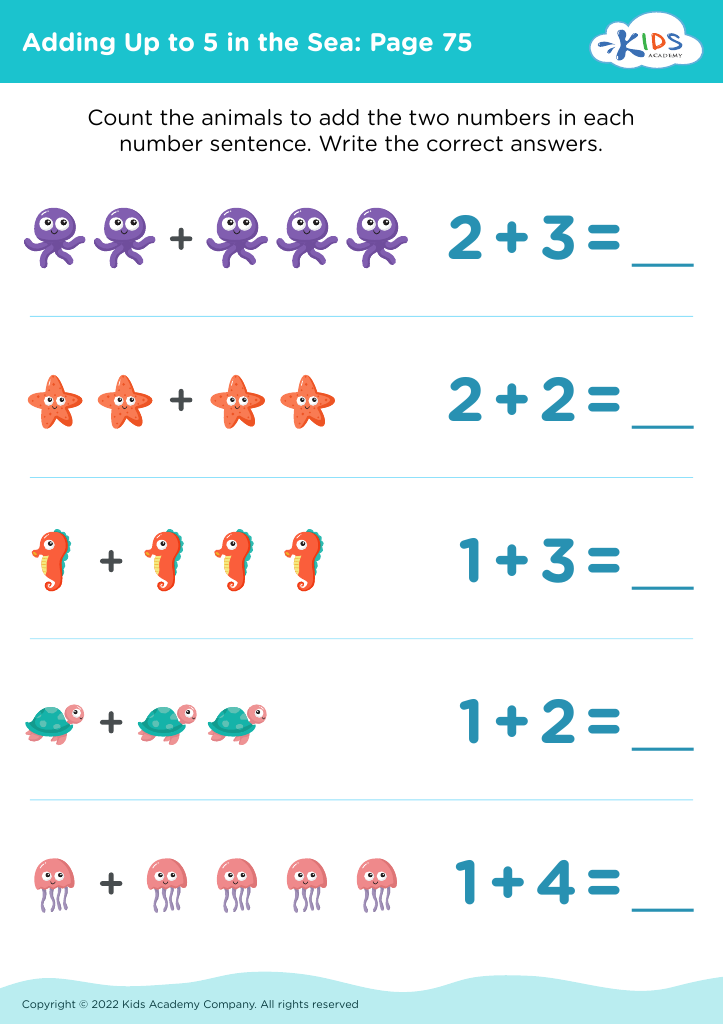
Adding Up to 5 in the Sea: Page 75
Worksheet
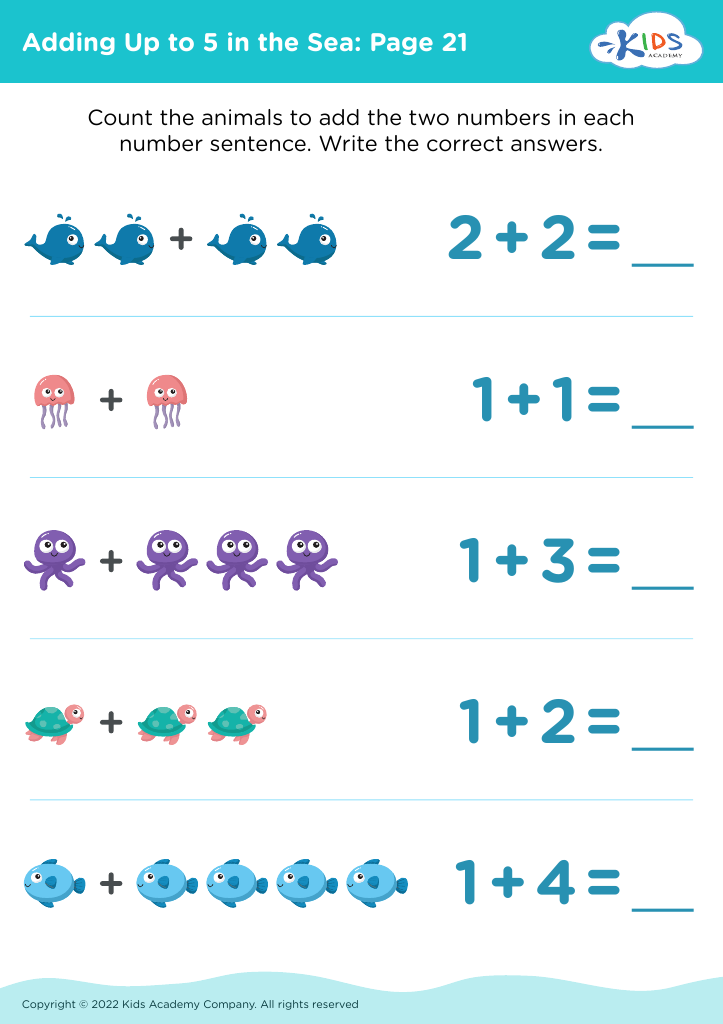
Adding Up to 5 in the Sea: Page 21
Worksheet
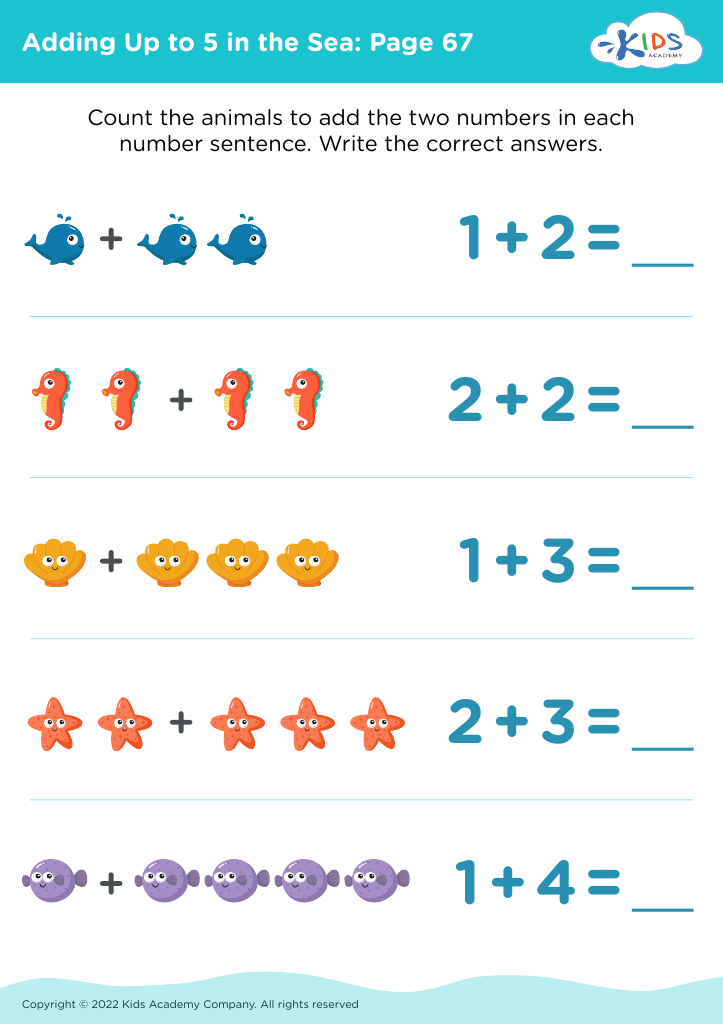
Adding Up to 5 in the Sea: Page 67
Worksheet
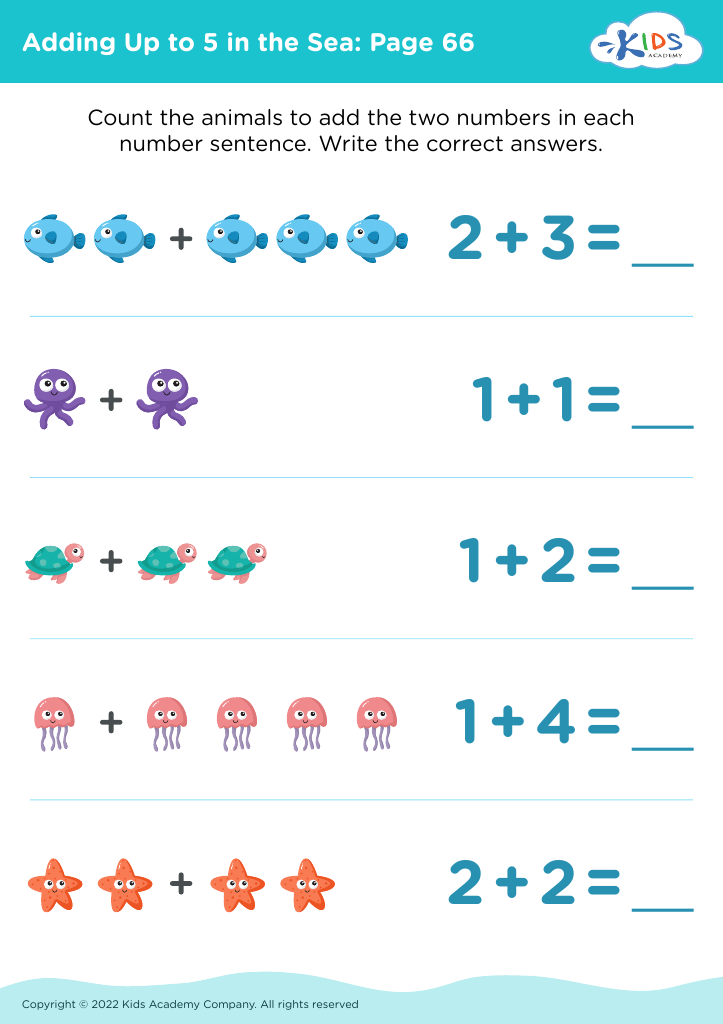
Adding Up to 5 in the Sea: Page 66
Worksheet
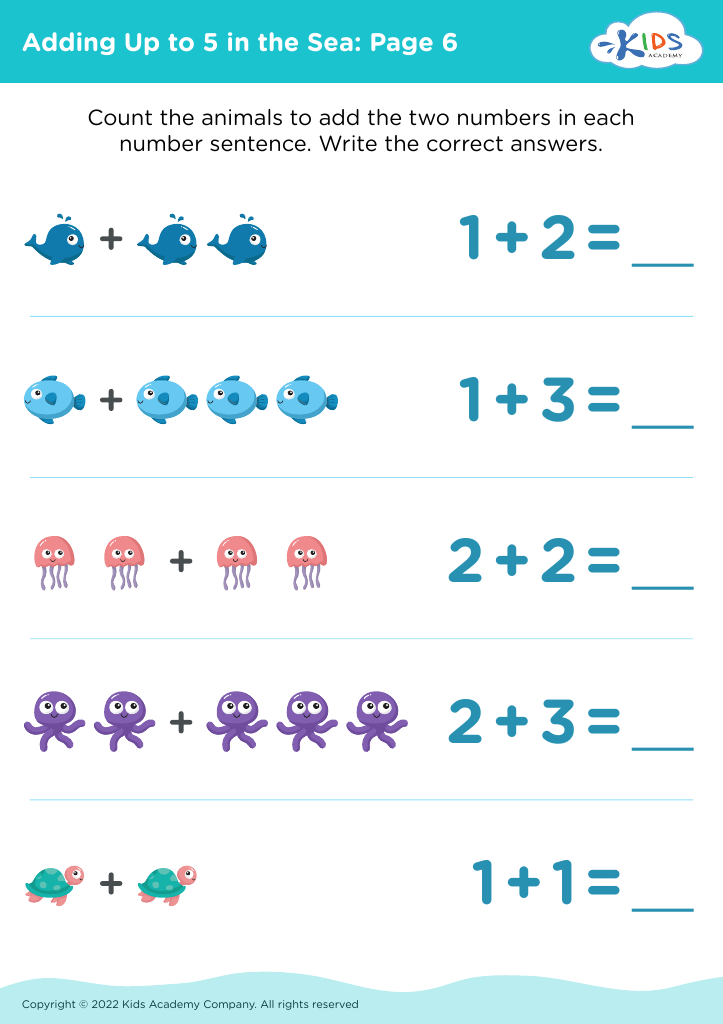
Adding Up to 5 in the Sea: Page 6

Adding Up to 5 in the Sea: Page 6

Adding Up to 5 in the Sea: Page 6
Worksheet
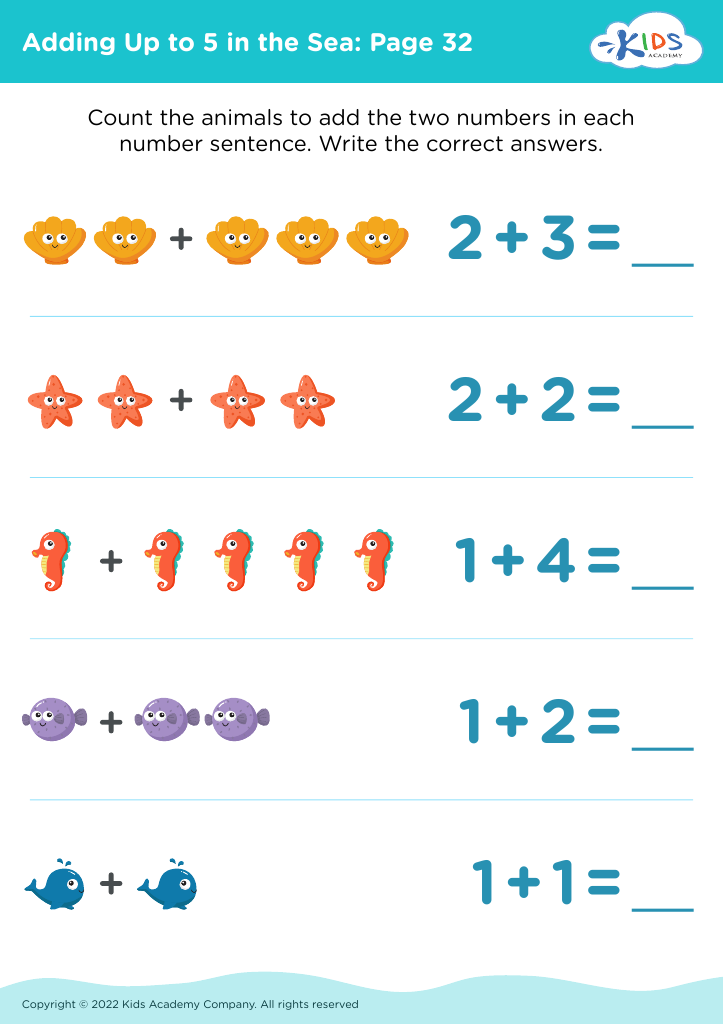
Adding Up to 5 in the Sea: Page 32
Worksheet
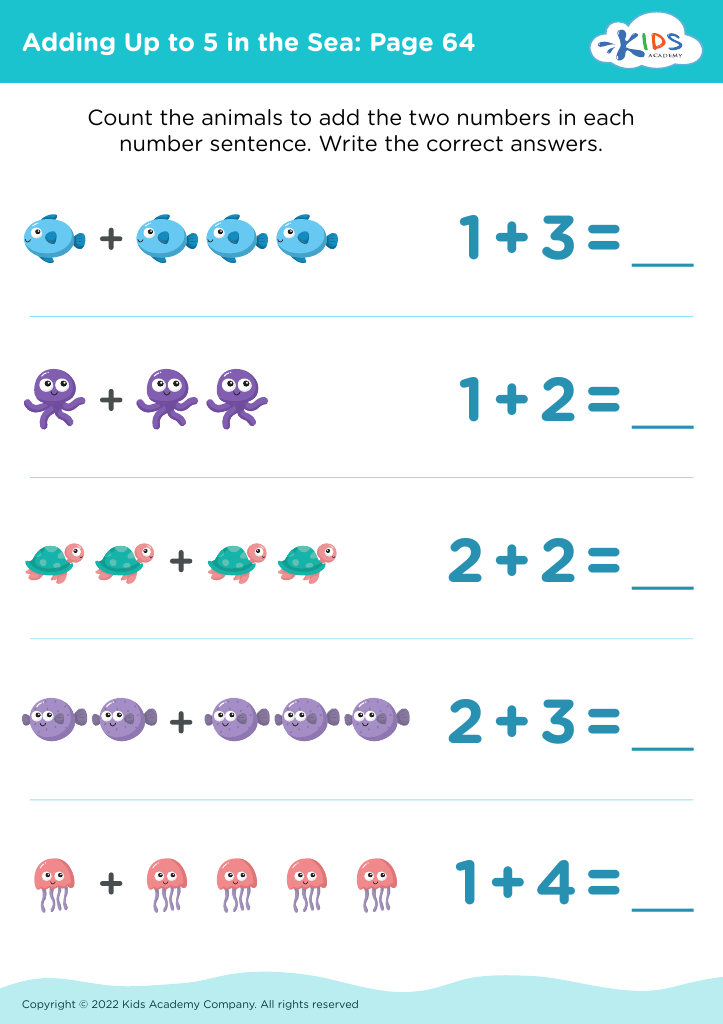
Adding Up to 5 in the Sea: Page 64
Worksheet
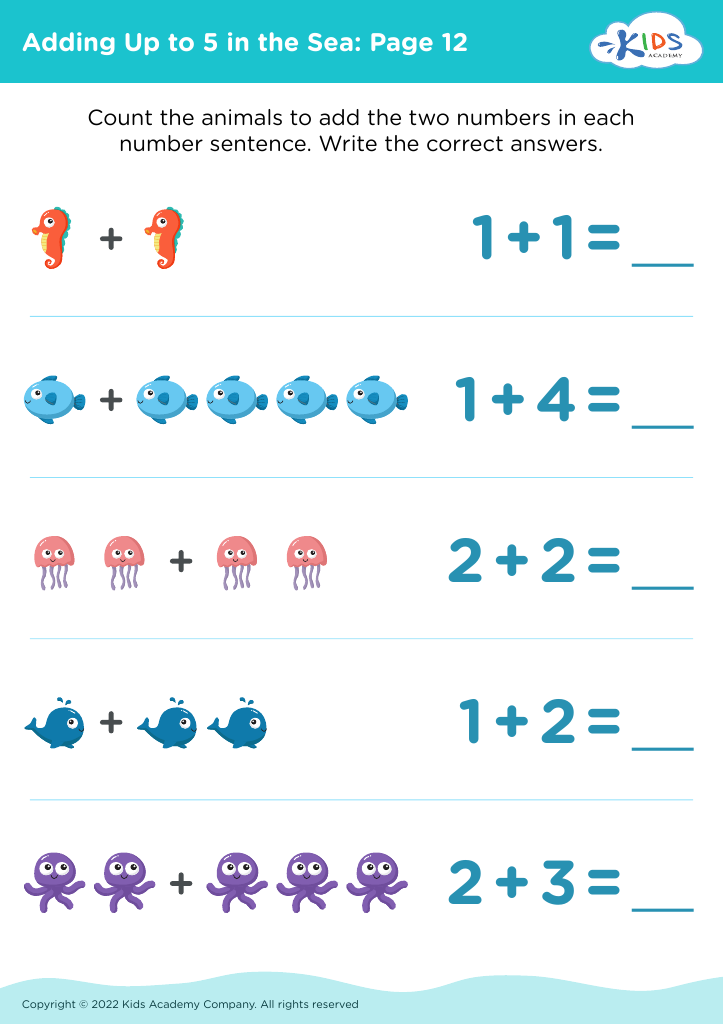
Adding Up to 5 in the Sea: Page 12
Worksheet
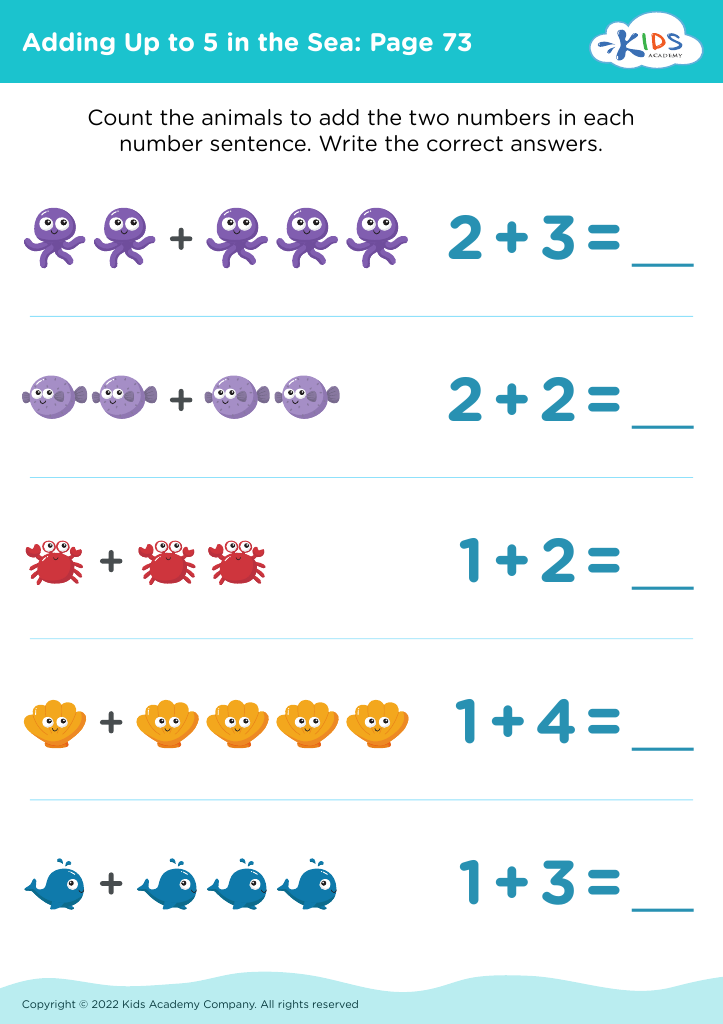
Adding Up to 5 in the Sea: Page 73
Worksheet
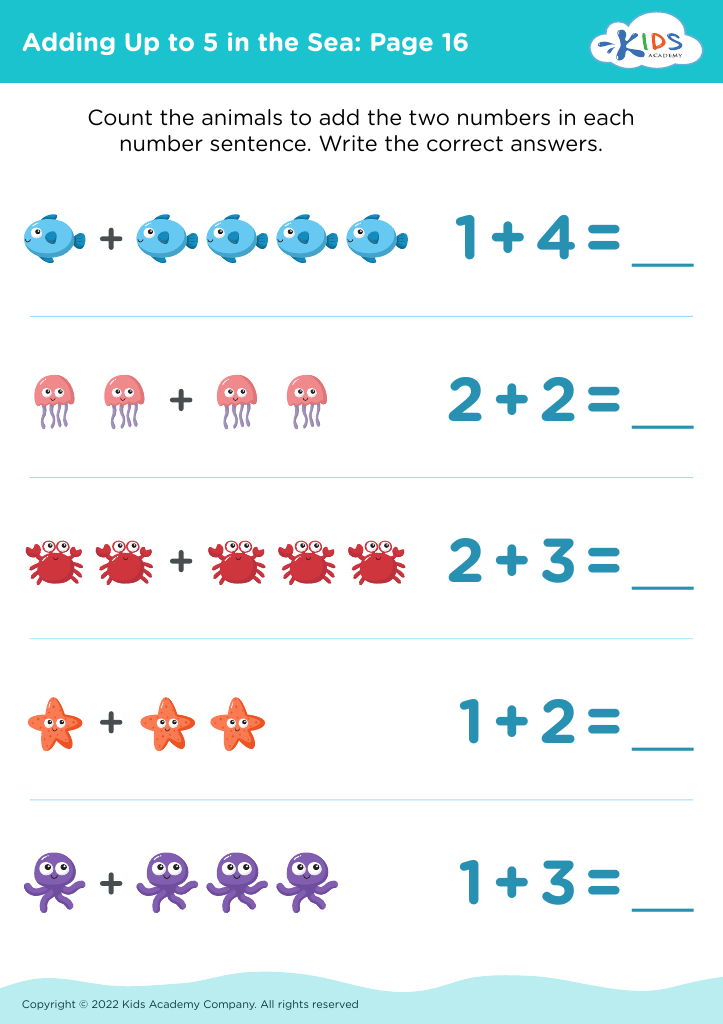
Adding Up to 5 in the Sea: Page 16
Worksheet
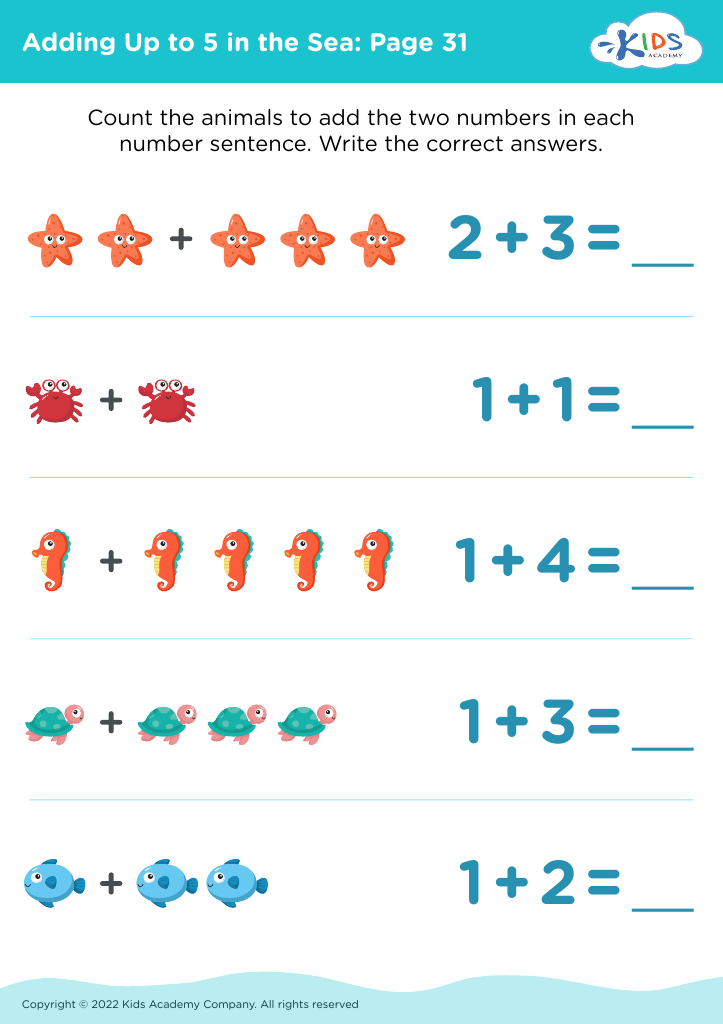
Adding Up to 5 in the Sea: Page 31
Worksheet
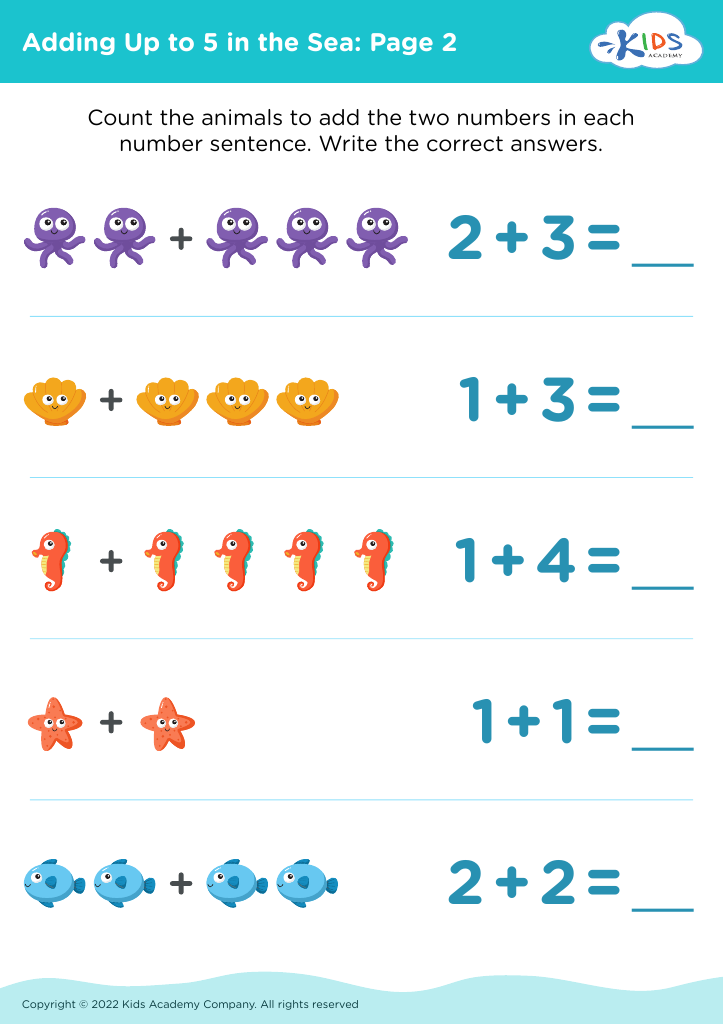
Adding Up to 5 in the Sea: Page 2

Adding Up to 5 in the Sea: Page 2

Adding Up to 5 in the Sea: Page 2
Worksheet
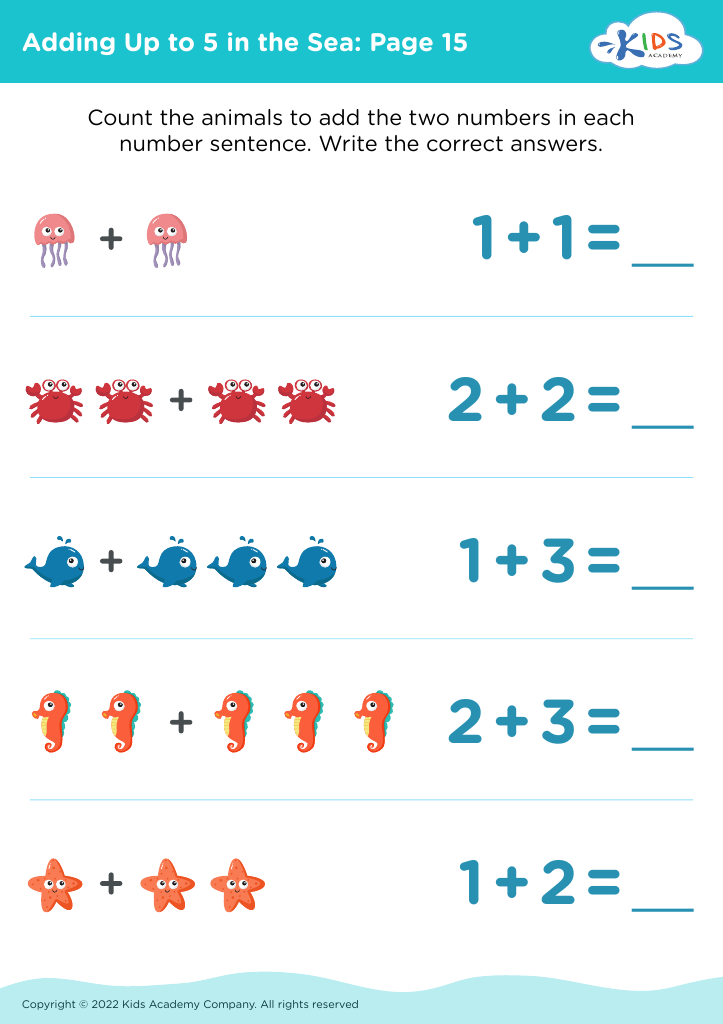
Adding Up to 5 in the Sea: Page 15
Worksheet
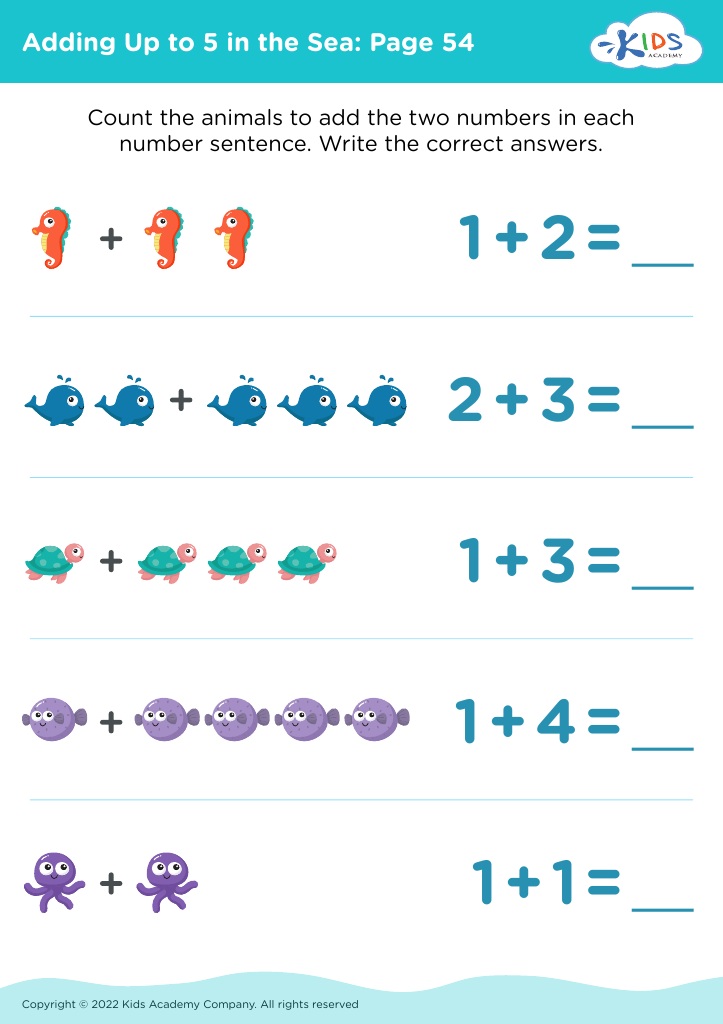
Adding Up to 5 in the Sea: Page 54
Worksheet
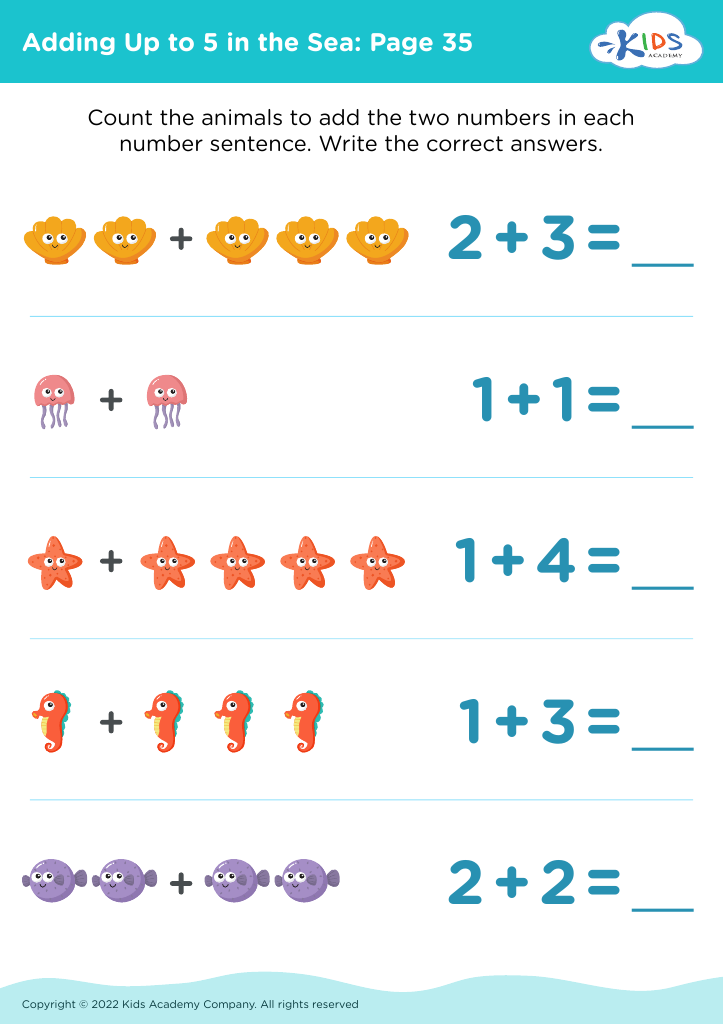
Adding Up to 5 in the Sea: Page 35
Worksheet
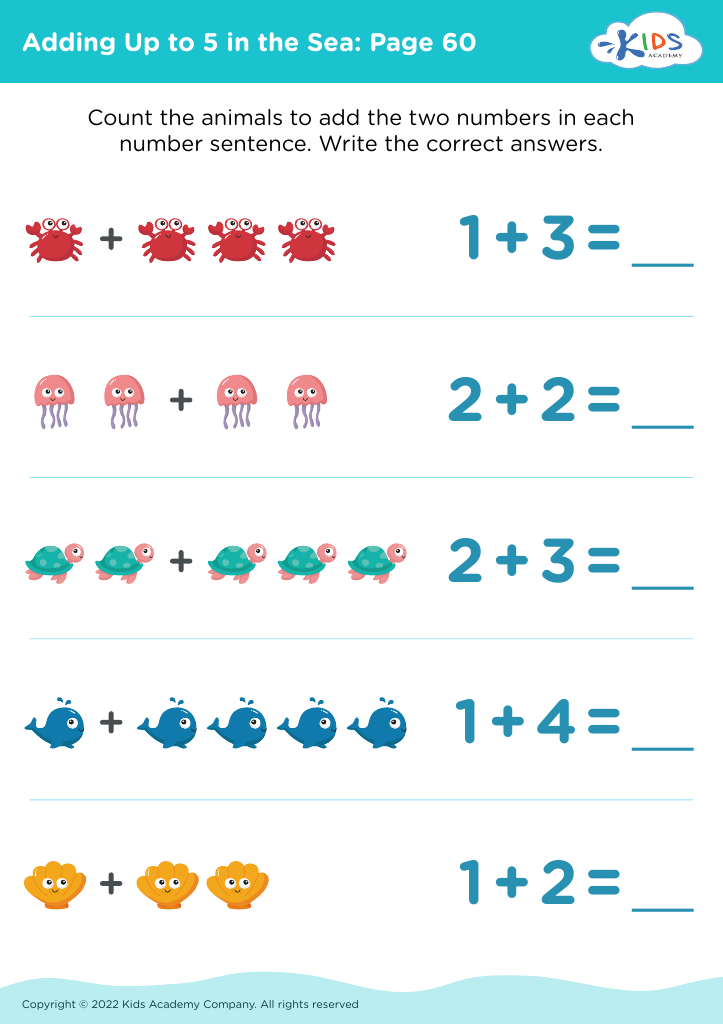
Adding Up to 5 in the Sea: Page 60
Worksheet
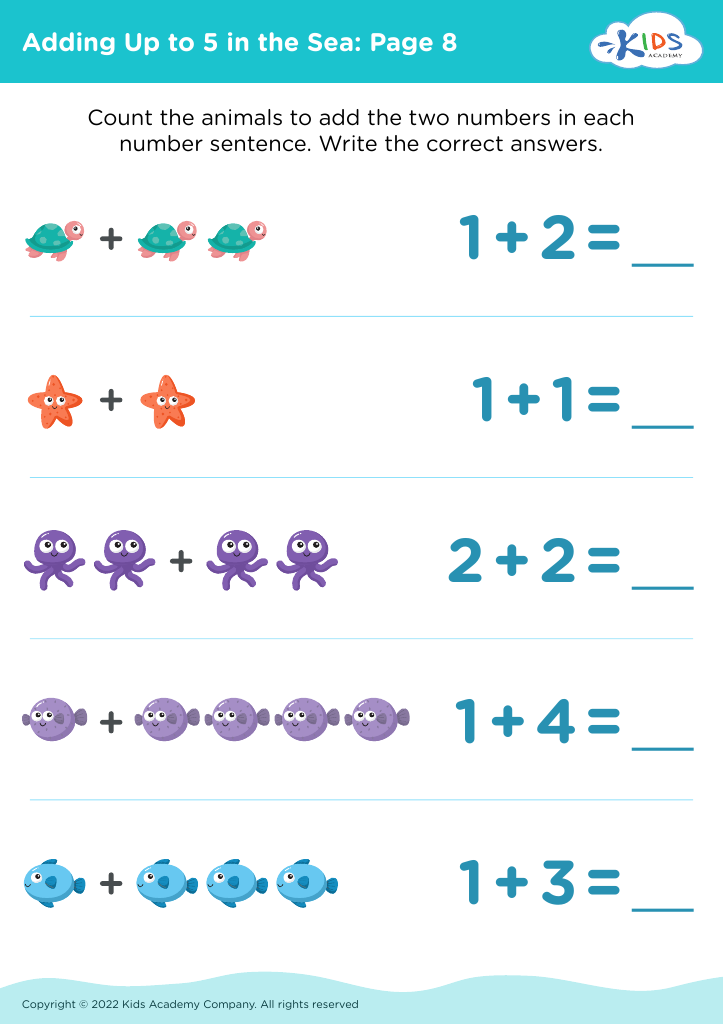
Adding Up to 5 in the Sea: Page 8

Adding Up to 5 in the Sea: Page 8

Adding Up to 5 in the Sea: Page 8
Worksheet
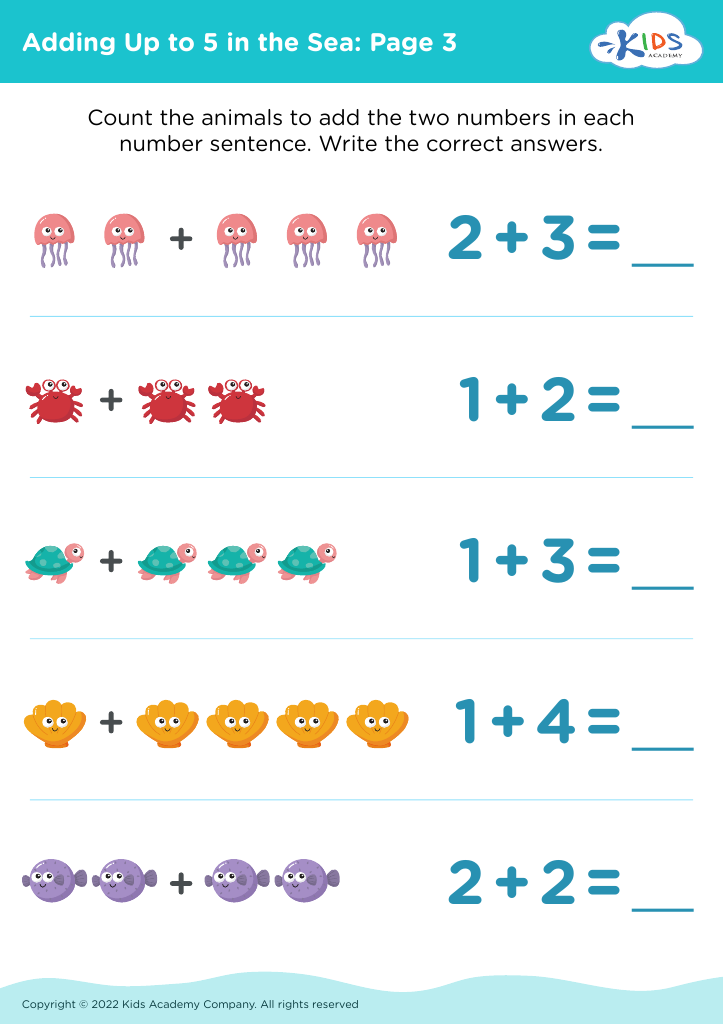
Adding Up to 5 in the Sea: Page 3

Adding Up to 5 in the Sea: Page 3

Adding Up to 5 in the Sea: Page 3
Worksheet
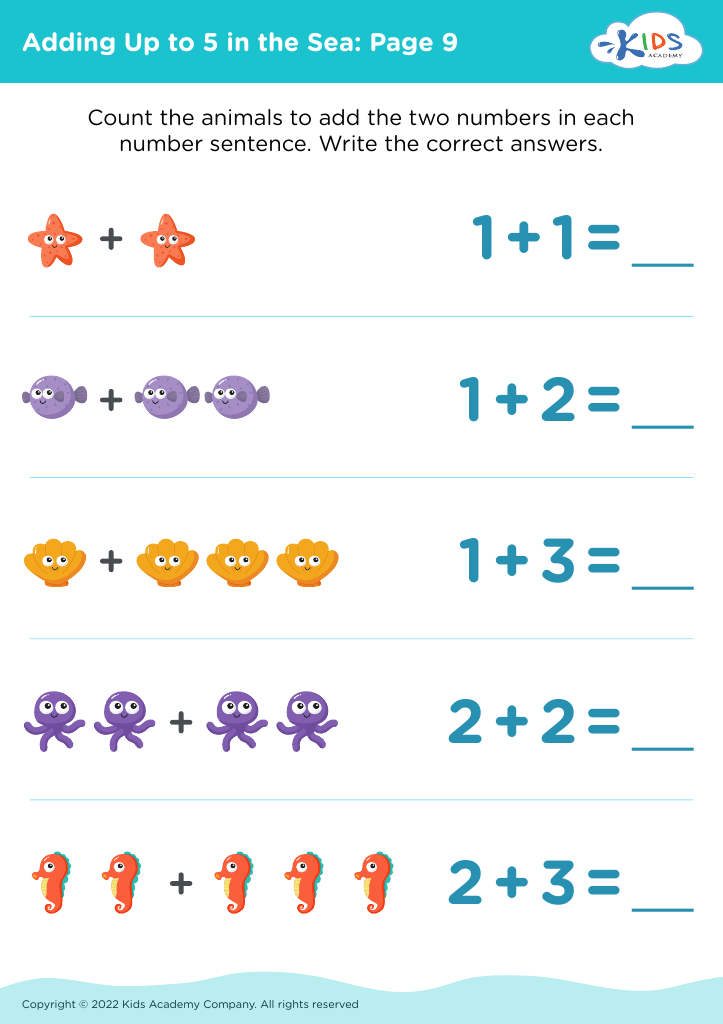
Adding Up to 5 in the Sea: Page 9

Adding Up to 5 in the Sea: Page 9

Adding Up to 5 in the Sea: Page 9
Worksheet
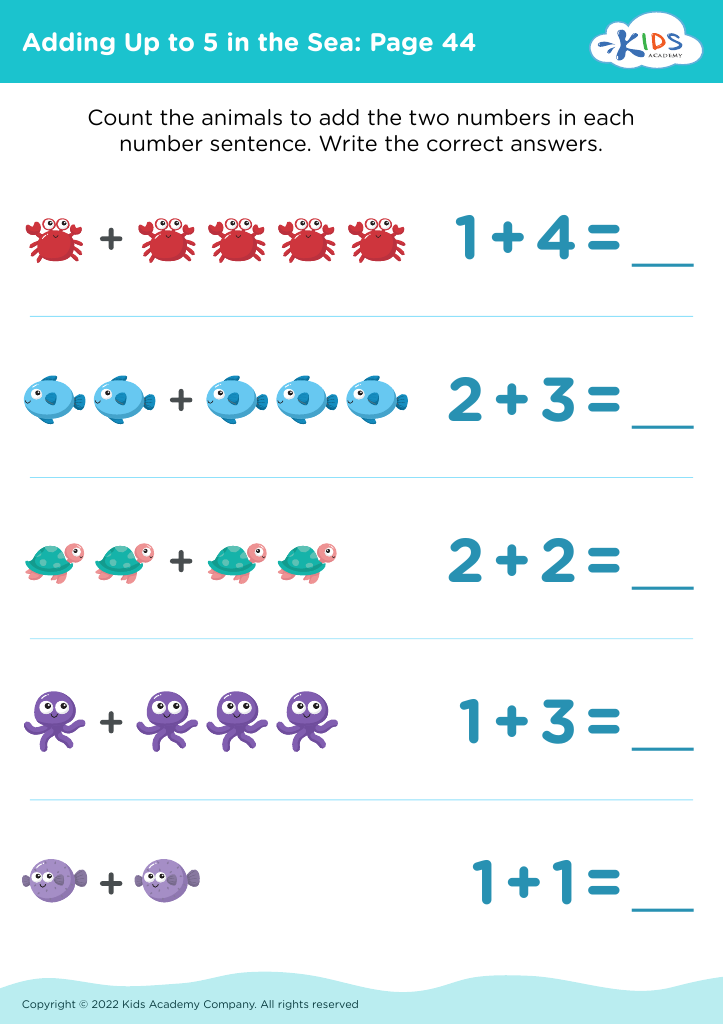
Adding Up to 5 in the Sea: Page 44
Worksheet


Counting practice is fundamental for young children's cognitive development, laying the groundwork for future mathematical understanding. "Adding in the Sea" brilliantly taps into this by engaging children through vibrant, sea-themed visual aids and interactive elements. For ages 3-8, this period is crucial for nurturing basic arithmetic skills, developing number sense, and fostering early problem-solving abilities.

Parents and teachers should care about tools like "Adding in the Sea" because they transform abstract math concepts into something tangible and enjoyable. The captivating ocean scenes, colorful marine creatures, and playful addition exercises capture children's attention, making learning feel more like an adventure than a chore. This engaging format not only holds their interest but also helps retain their attention span, improving concentration and focus.

Furthermore, incorporating counting practice into a playful context supports the development of fine motor skills through activities like tracing numbers or arranging objects. It also encourages vocabulary expansion by introducing sea-themed terms alongside numerical concepts.

By consistently integrating "Adding in the Sea" into early learning routines, parents and teachers can create a supportive and stimulating environment. This not only enhances mathematical understanding but also builds a positive attitude towards learning, setting a solid foundation for academic success in later years.