Fine Motor Skills Adding on the Farm Worksheets for Ages 3-8
3 filtered results
Difficulty Level
Grade
Age
-
From - To
Subject
Activity
Standards
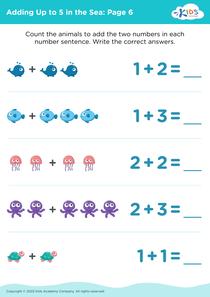
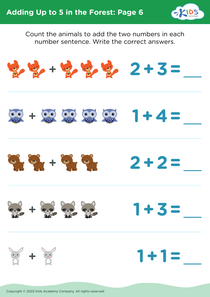
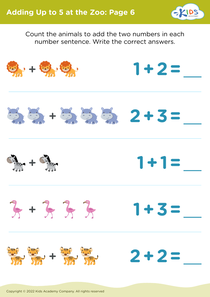
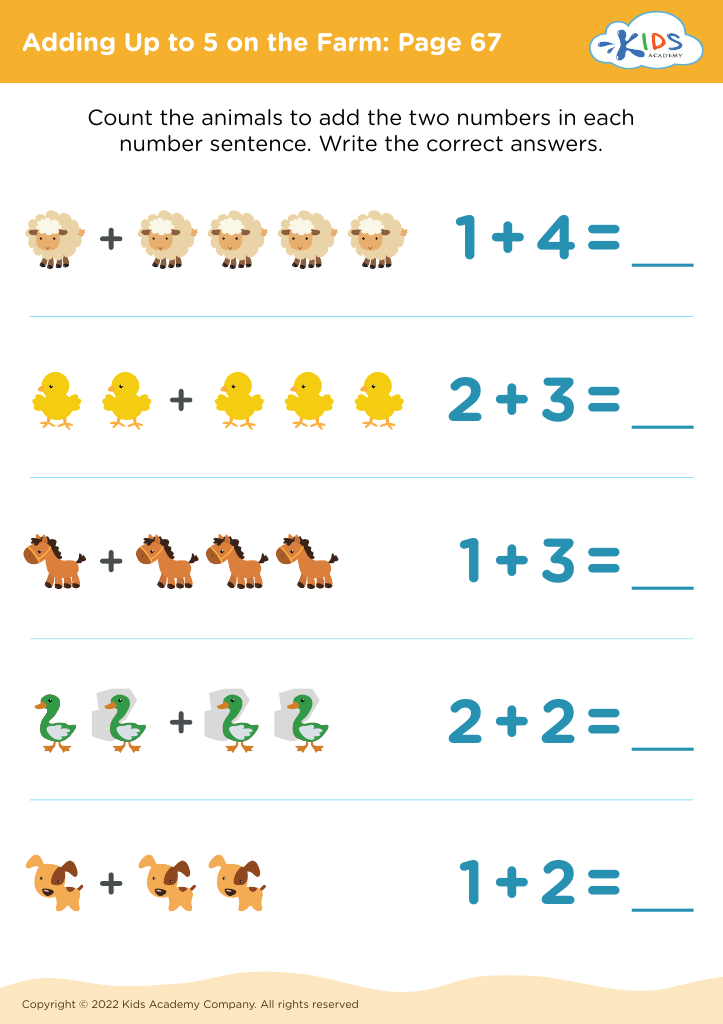
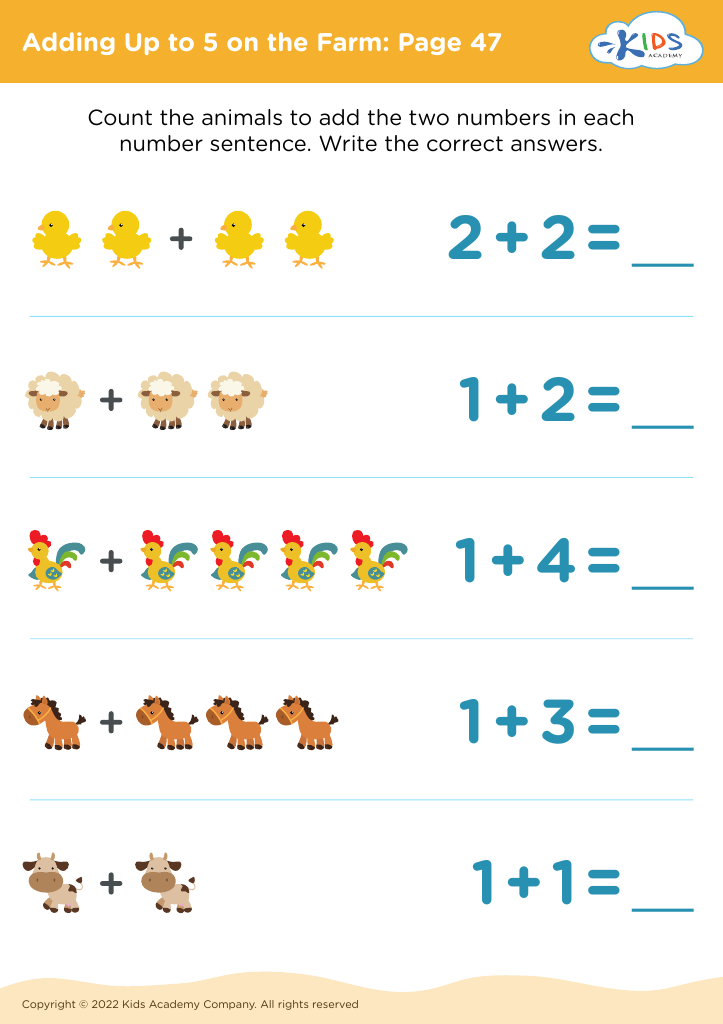
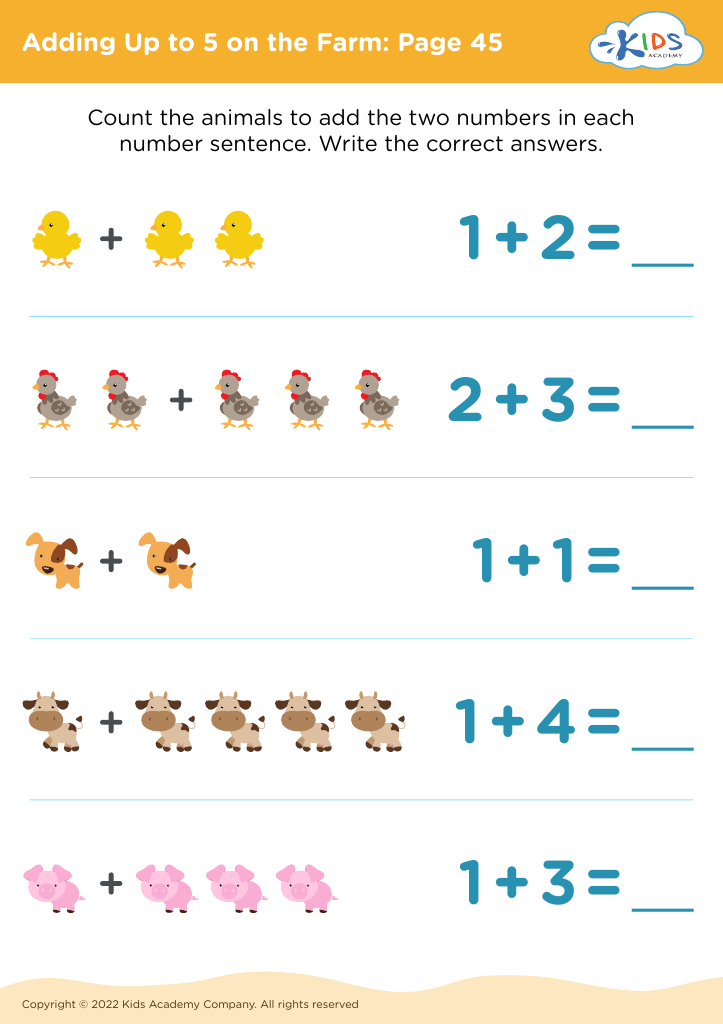
Introduce your little learners to agricultural adventures while enhancing fine motor skills with our "Fine Motor Skills Adding on the Farm Worksheets" designed for ages 3-8. These engaging worksheets combine math practice with farm-themed activities, allowing children to develop their counting and addition abilities in a fun, hands-on way. Each printable resource features delightful illustrations from the farm, encouraging kids to color, trace, and cut, which ultimately boosts their dexterity and hand-eye coordination. Perfect for home or classroom use, these worksheets make learning math a joyful experience, fostering a love for numbers through the charming world of farm life.
Favorites
With answer key
Interactive
Join Kids Academy for Free
Who is primarily going to use this learning content?



Fine motor skills are essential for young children's overall development, particularly in the early years when they are honing their abilities to interact with the world. Activities like “Fine Motor Skills Adding on the Farm” for ages 3-8 provide an engaging approach to enhancing these skills through play-based learning. By navigating tasks that involve grasping, stacking, or connecting farm-themed manipulatives, children develop hand-eye coordination, dexterity, and muscle control.
Parents and teachers should care about nurturing fine motor skills because they are foundational for various everyday tasks, including writing, drawing, buttoning clothes, and using utensils. Children with well-developed fine motor skills are often more confident and independent, which aids their emotional and social development.
Additionally, these activities in a familiar, engaging context, like the farm setting, make learning enjoyable and relatable. As children practice counting and basic math through adding on the farm while improving their fine motor abilities, they simultaneously enhance cognitive skills like problem-solving and spatial awareness. Investing time and resources into fostering fine motor skills prepares children for academic success and everyday challenges, ultimately laying a solid foundation for their lifelong learning journey.