Counting skills Adding up to 100 Without Regrouping Worksheets for Ages 3-8
6 filtered results
-
From - To
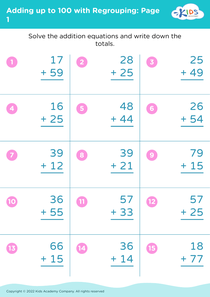
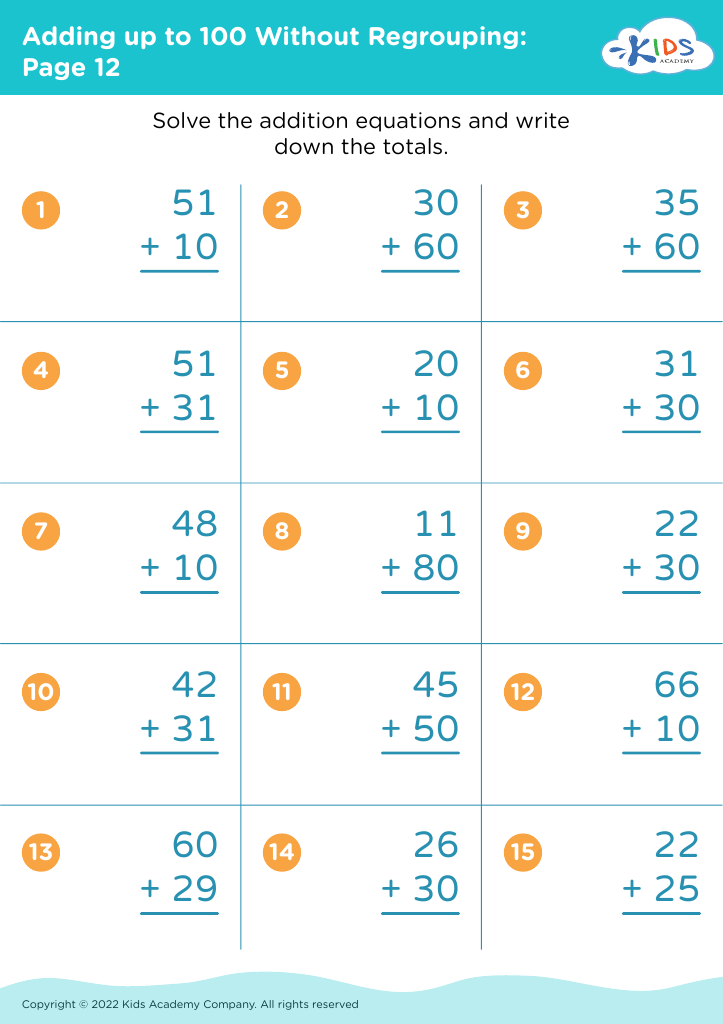
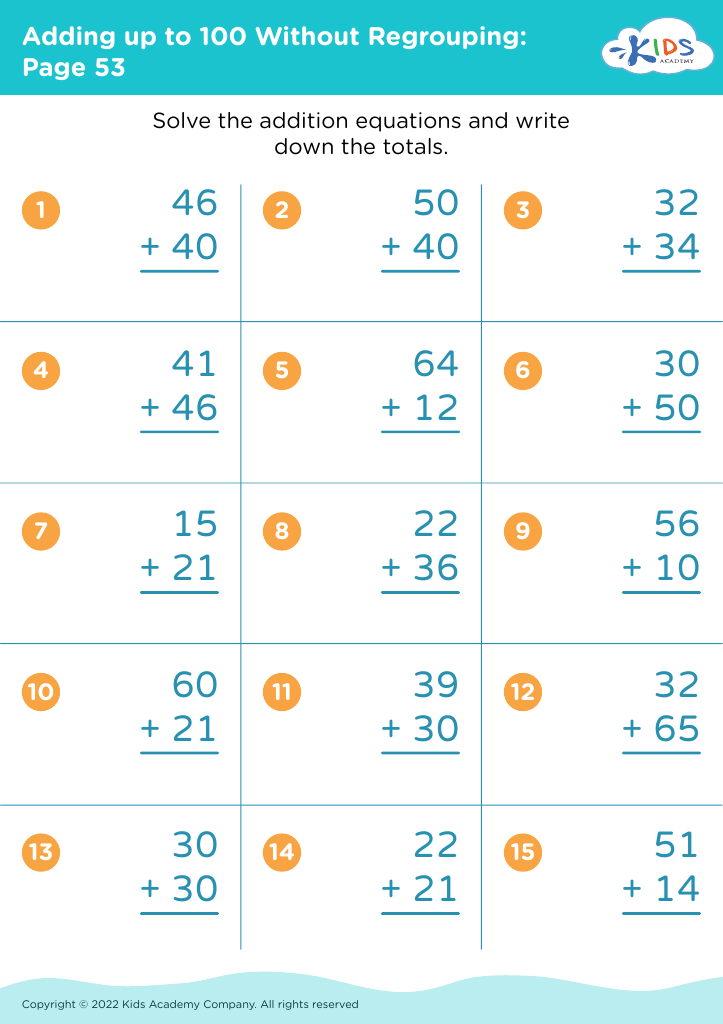
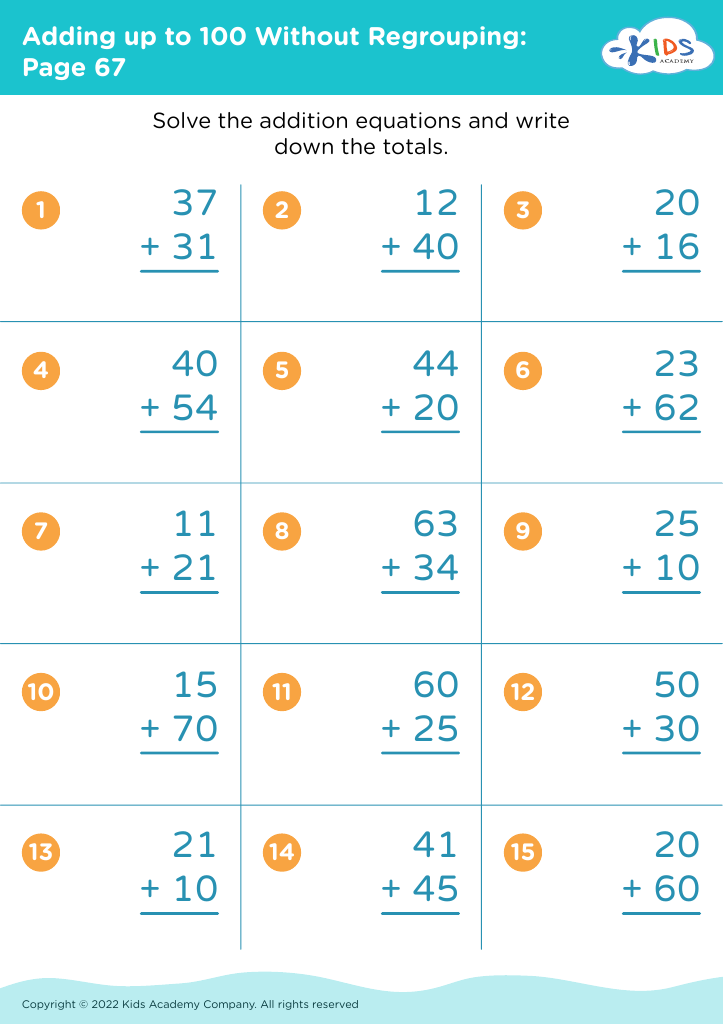
Unlock your child’s potential with our "Counting Skills: Adding Up to 100 Without Regrouping" worksheets, perfect for ages 3-8. These engaging worksheets help young learners practice addition in a fun and interactive way, fostering essential counting skills. Designed to promote a solid understanding of basic arithmetic, our resources focus on combining numbers up to 100 without the complexity of regrouping. Each worksheet encourages children to visualize and manipulate numbers, boosting their confidence in math. Explore our collection today and support your child's numerical skills as they embark on their learning journey! Perfect for home or classroom use.
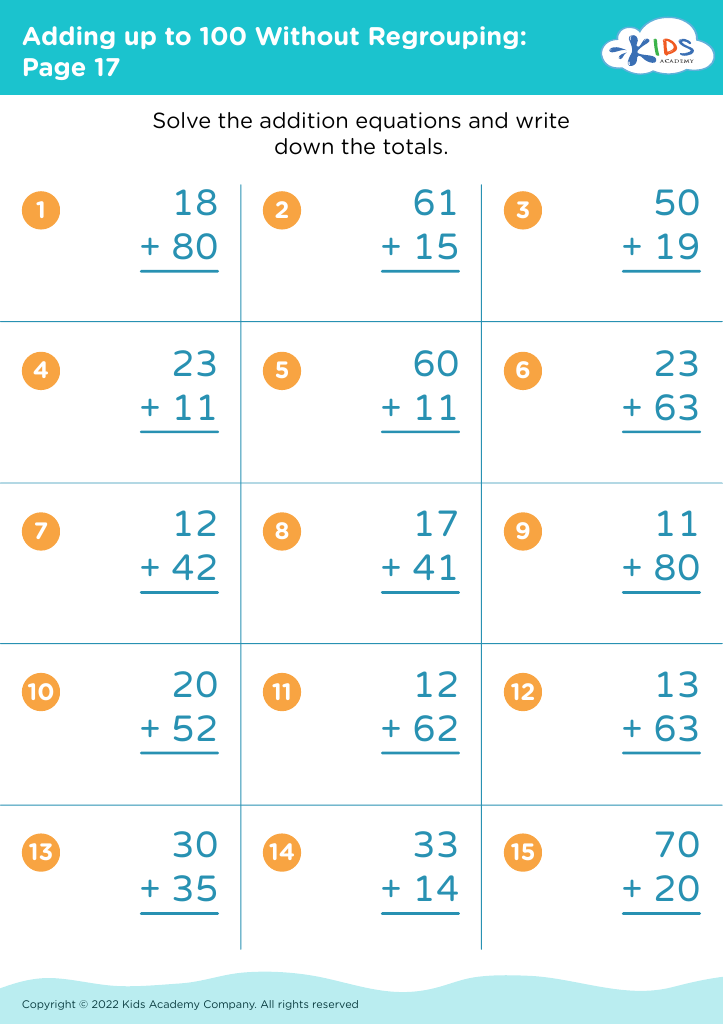
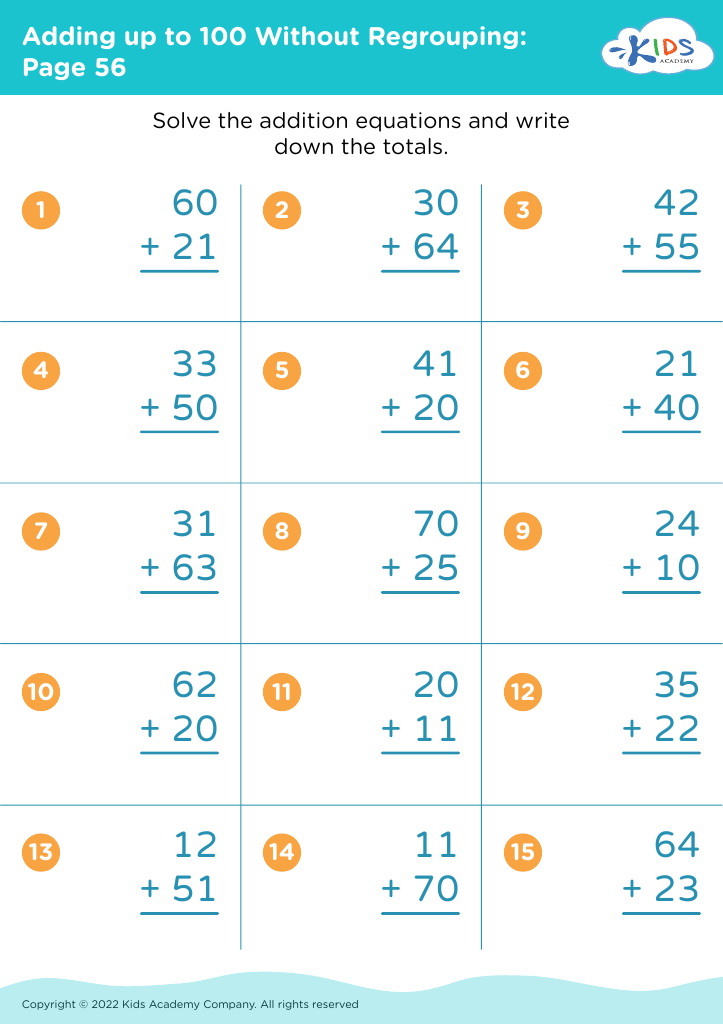
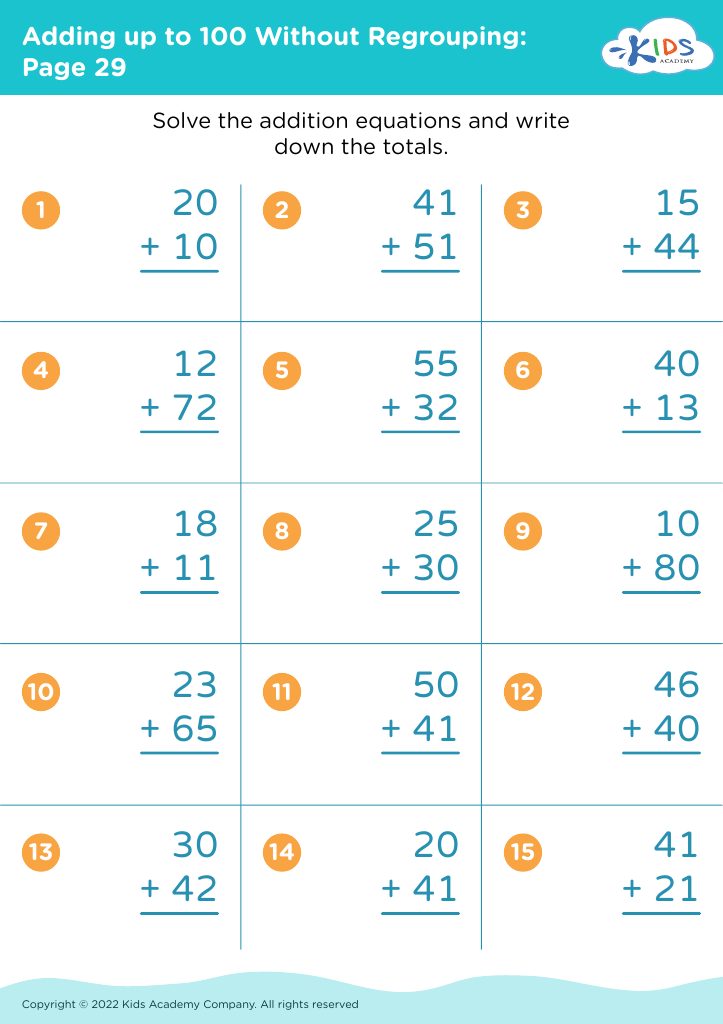




Counting skills, particularly the ability to add up to 100 without regrouping, are foundational to a child's mathematical development. For parents and teachers, fostering these skills in children aged 3-8 is critical for several reasons. Firstly, early math proficiency builds confidence and creates a positive attitude toward learning. Children who can easily count and perform simple additions develop a sense of accomplishment, encouraging them to tackle more complex concepts later on.
Moreover, these skills serve as a building block for advanced mathematical understanding. Mastery of basic counting and addition primes young learners for future topics, such as subtraction, multiplication, and problem-solving. It enhances their ability to engage in everyday activities that require numeracy, such as managing money or measuring during cooking.
Additionally, counting skills are useful in supporting cognitive development. They encourage logical reasoning, pattern recognition, and critical thinking. Engaging young learners in counting activities fosters not just math skills but also language development and social skills through collaborative play and interaction.
In summary, prioritizing counting skills helps lay a solid foundation for children’s academic journey and personal growth, making it a shared responsibility among parents and educators.