Basic arithmetic skills Adding up to 100 Worksheets for Ages 3-8
3 filtered results
-
From - To
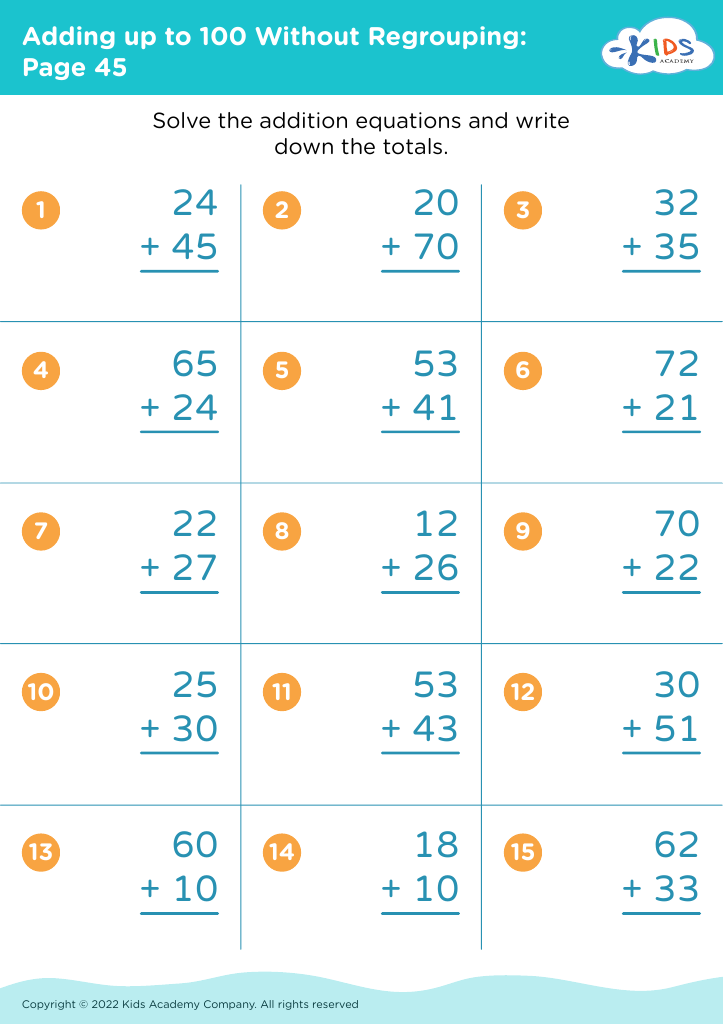
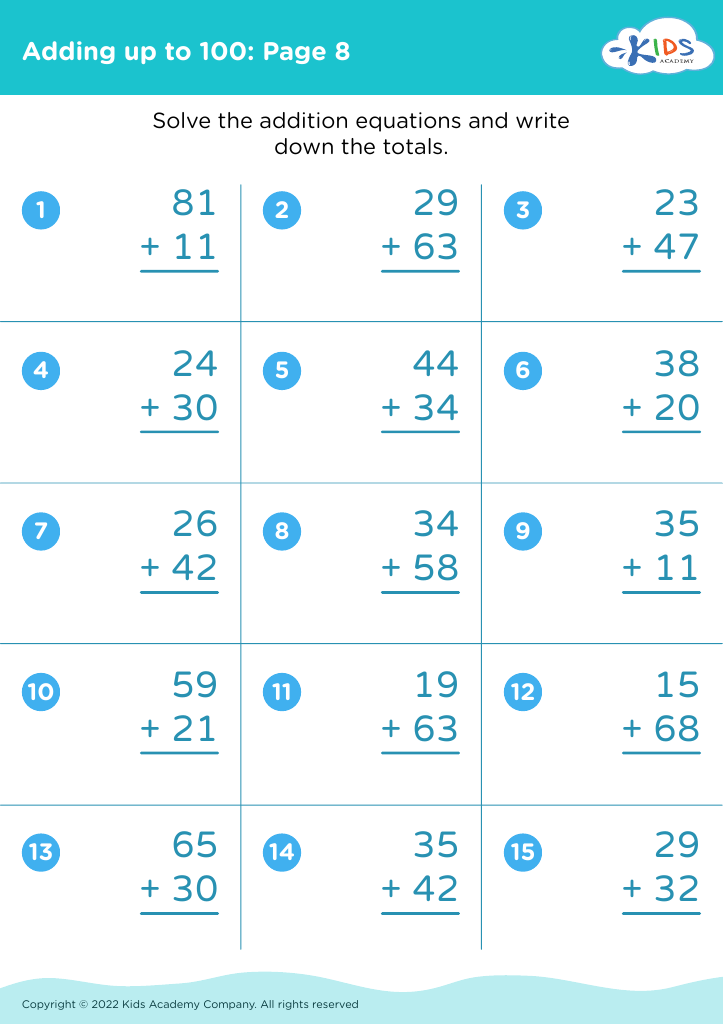
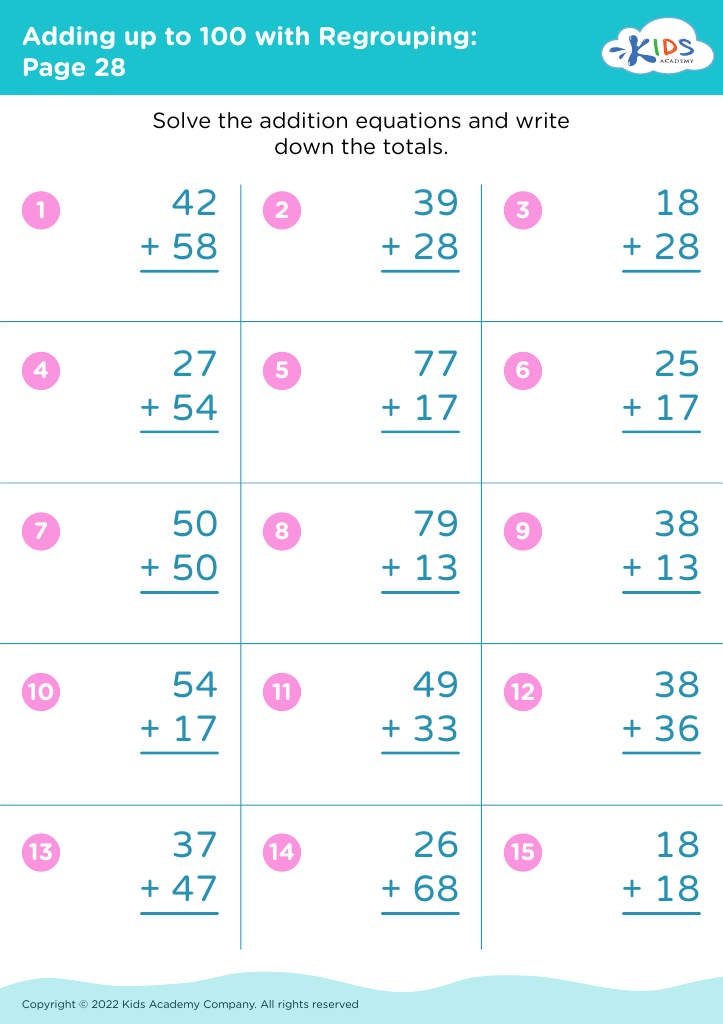
Unlock your child's potential with our expertly crafted "Basic Arithmetic Skills Adding up to 100 Worksheets for Ages 3-8." Perfectly tailored for young learners, these interactive worksheets focus on fundamental addition, helping kids master sums up to 100 with ease. Designed to be fun and engaging, the activities incorporate visual aids and practical exercises suited to their developmental stage. Boost your child's confidence in math, enhance problem-solving skills, and make learning arithmetic an enjoyable experience. Perfect for both classroom use and home practice, set the foundation for academic success with our high-quality resources!






%20(1).jpg)
Basic arithmetic skills, especially addition up to 100, form a crucial foundation for young learners aged 3-8. This mathematical competence is not just about knowing numbers; it unlocks a world of cognitive and practical benefits essential for a child’s overall development.
For one, mastering these skills stimulates cognitive growth by enhancing memory and problem-solving abilities. When children practice adding numbers up to 100, they engage in exercises that develop logical thinking and improve their concentration and focus. These benefits extend beyond math, positively affecting performance in other academic disciplines.
Moreover, early math skills are predictive of future academic success. Studies show that children proficient in basic arithmetic tend to perform better in higher-grade math and are more likely to pursue STEM subjects in the future. Beyond academics, arithmetic proficiency is crucial for practical life skills. From understanding time and money to use logical reasoning in daily tasks, these skills promote independence and self-confidence.
From a social-emotional perspective, the mastery of arithmetic facilitates a sense of achievement and builds resilience. When children succeed in these seemingly small tasks, it fosters a growth mindset, encouraging them to tackle more complex challenges with confidence.
Therefore, parents and teachers should prioritize foundational arithmetic skills to nurture well-rounded, capable, and confident future learners.








