Develop fine motor skills Adding up to 100 Worksheets for Ages 3-8
5 filtered results
-
From - To
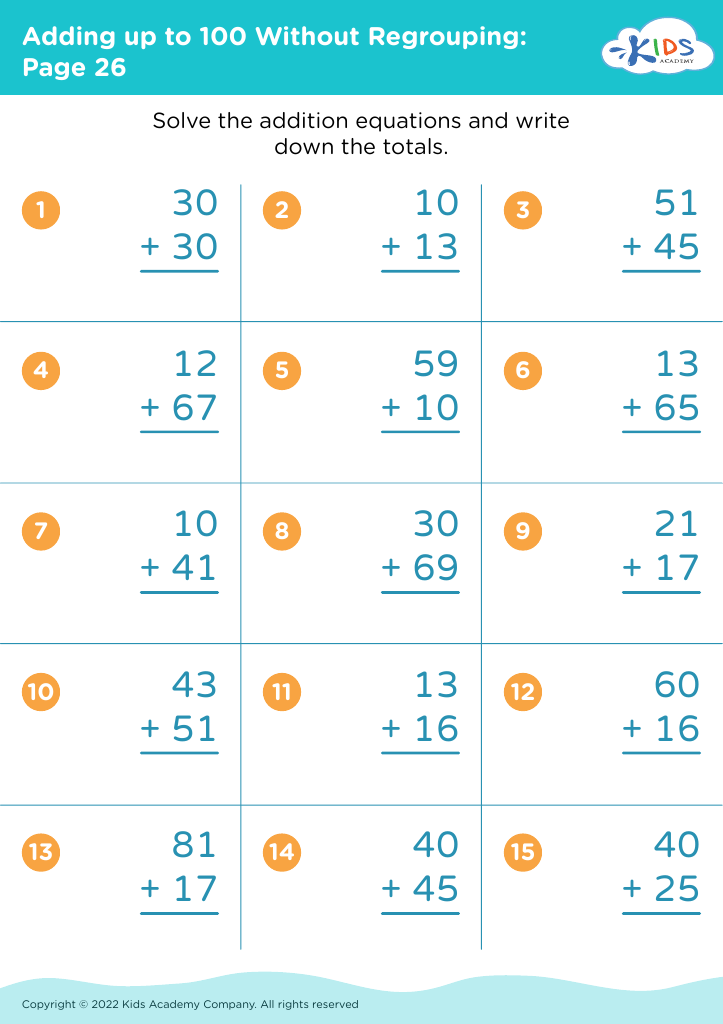
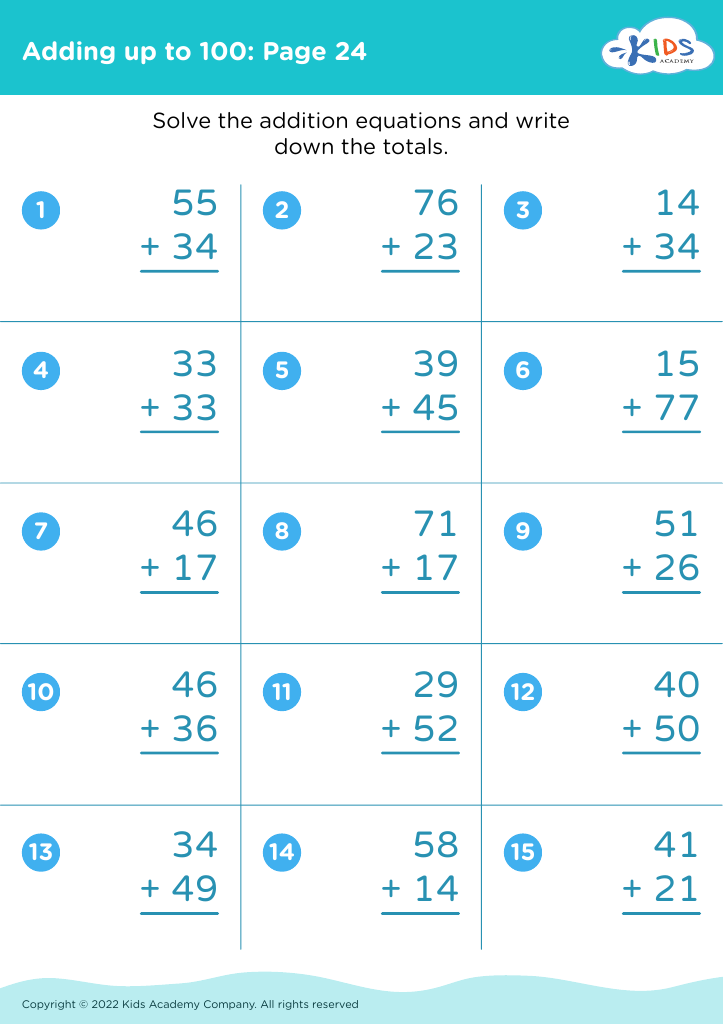
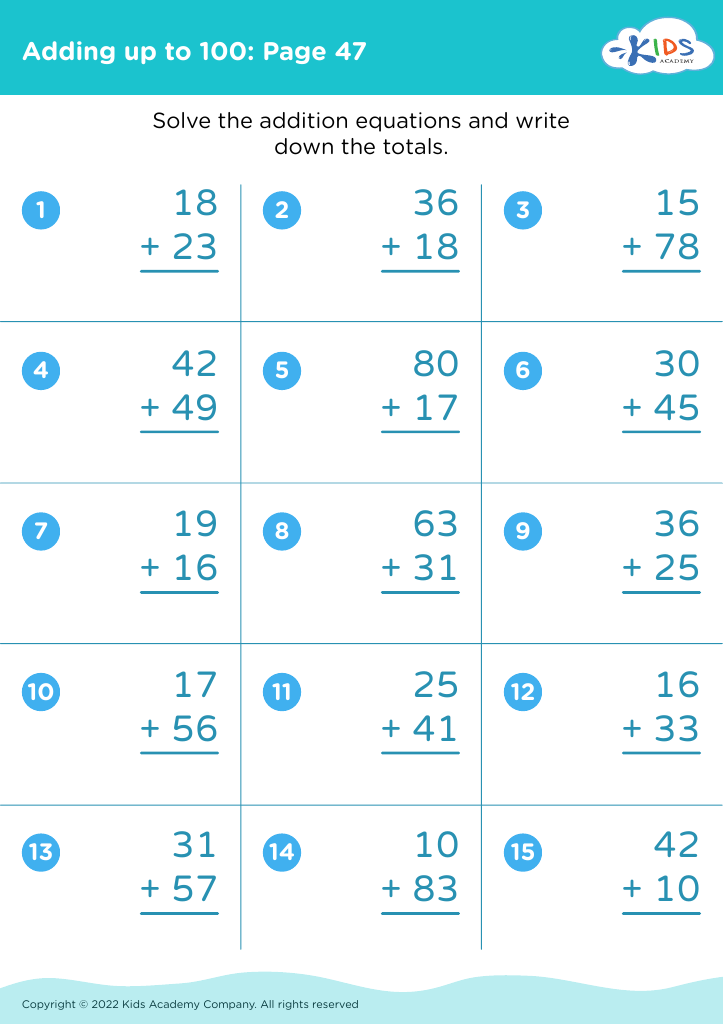
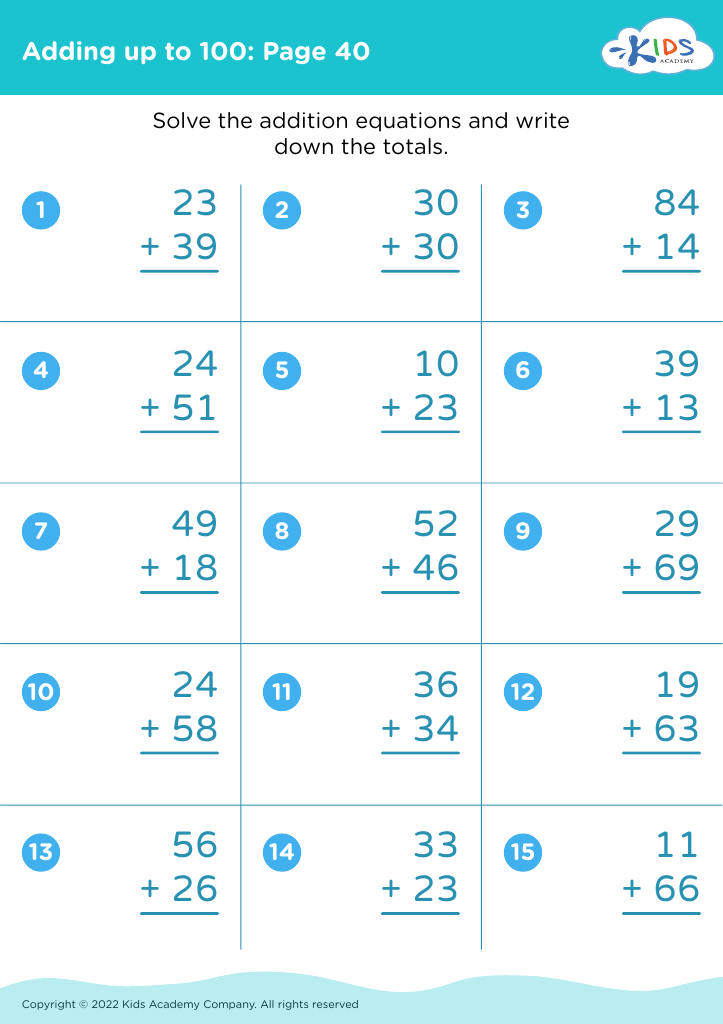
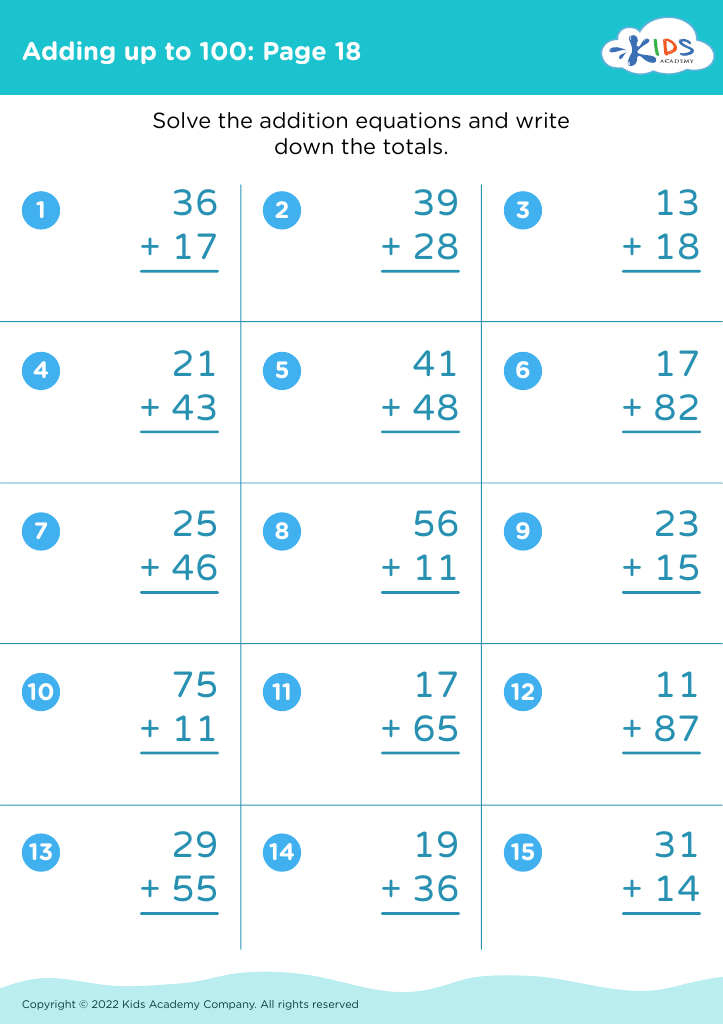
Our "Adding up to 100 Worksheets" for ages 3-8 are the perfect tool to help your child develop fine motor skills while building a strong math foundation. These engaging worksheets encourage young learners to trace numbers, count, and solve simple addition problems, enhancing their precision and hand-eye coordination. Designed by educational experts, our printable activities make learning fun and interactive. Suitable for both home and classroom use, these resources support essential developmental milestones by combining learning with play. Empower your child with the skills they need to succeed in school and beyond! Browse our collection to get started.


%20(1).jpg)




Parents and teachers should prioritize helping children develop fine motor skills that support their ability to add up to 100 for ages 3-8 because these skills are essential building blocks for overall academic success and daily life activities. Fine motor skills involve the coordination of small muscles in movements—typically involving the synchronization of hands and fingers with the eyes. Activities that enhance these skills, such as manipulating small objects, writing, and using scissors, lay the groundwork for more complex mathematical concepts like adding up to 100.
Skillful addition requires cognitive development that begins early in life. As children practice lining up numbers, holding pencils correctly, and organizing their work, they develop the precision and coordination needed to engage effectively with mathematics. Fine motor skills also contribute to a child's ability to understand and use math tools like number lines and abacuses efficiently.
Moreover, early math skills have been correlated with higher academic achievement in later years. Parents and teachers who foster these skills early provide children with a crucial foundation in both numeracy and fine motor capabilities. Consequently, activities designed to practice adding up to 100 not only bolster arithmetic prowess but also support integrated, fine motor development, setting children on a path to long-term educational success.








