Enhance counting skills Adding up to 100 Worksheets for Ages 3-8
6 filtered results
-
From - To
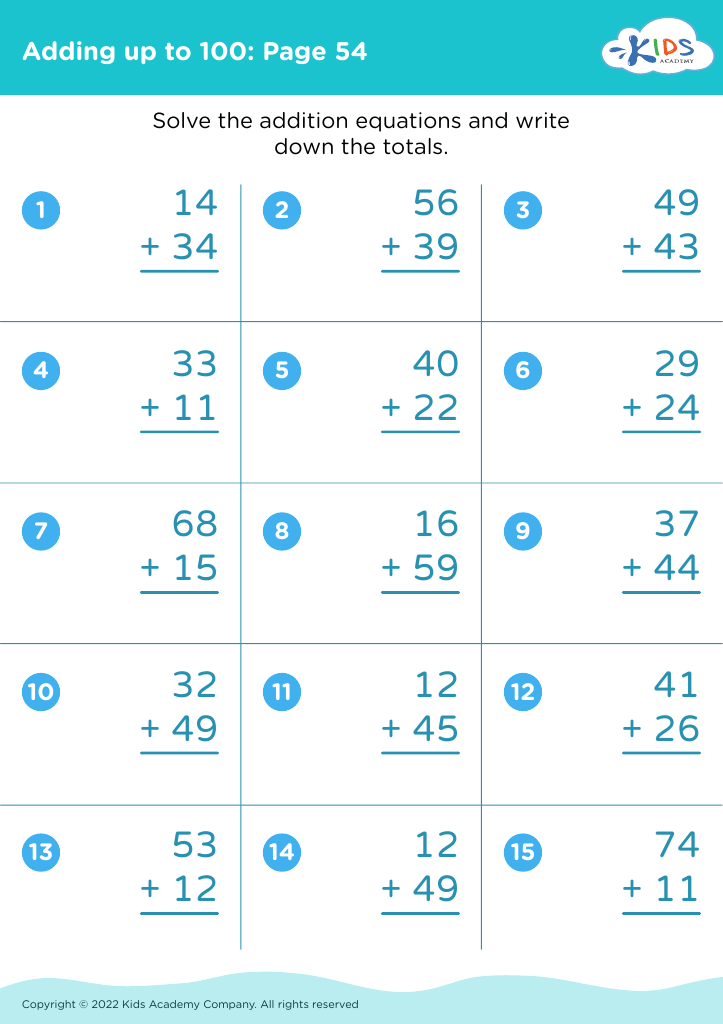
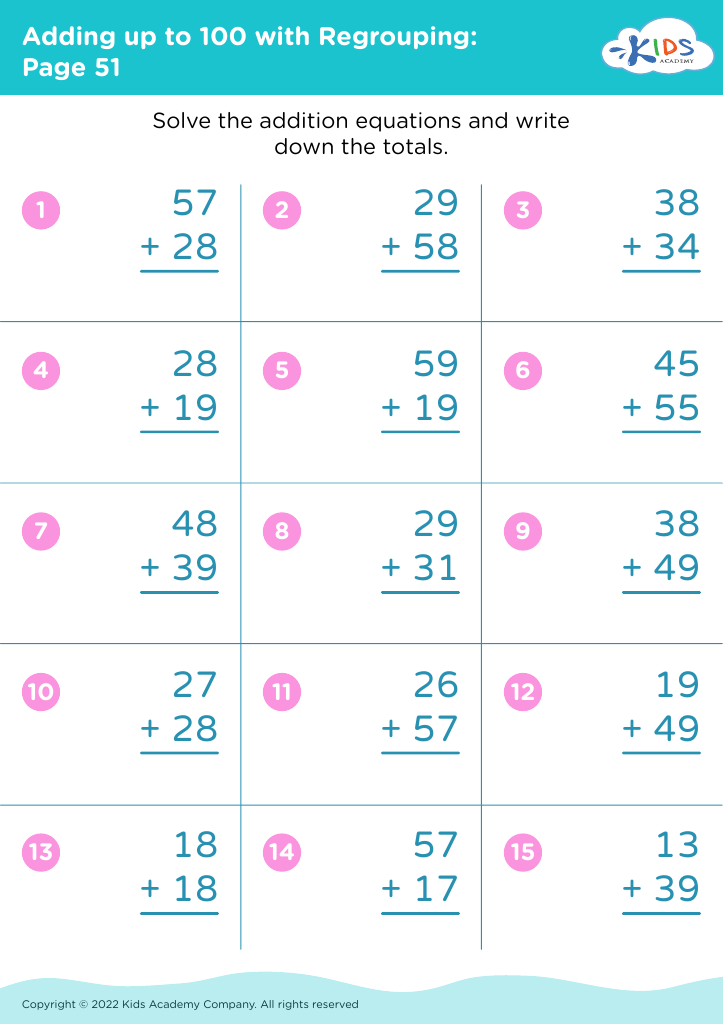
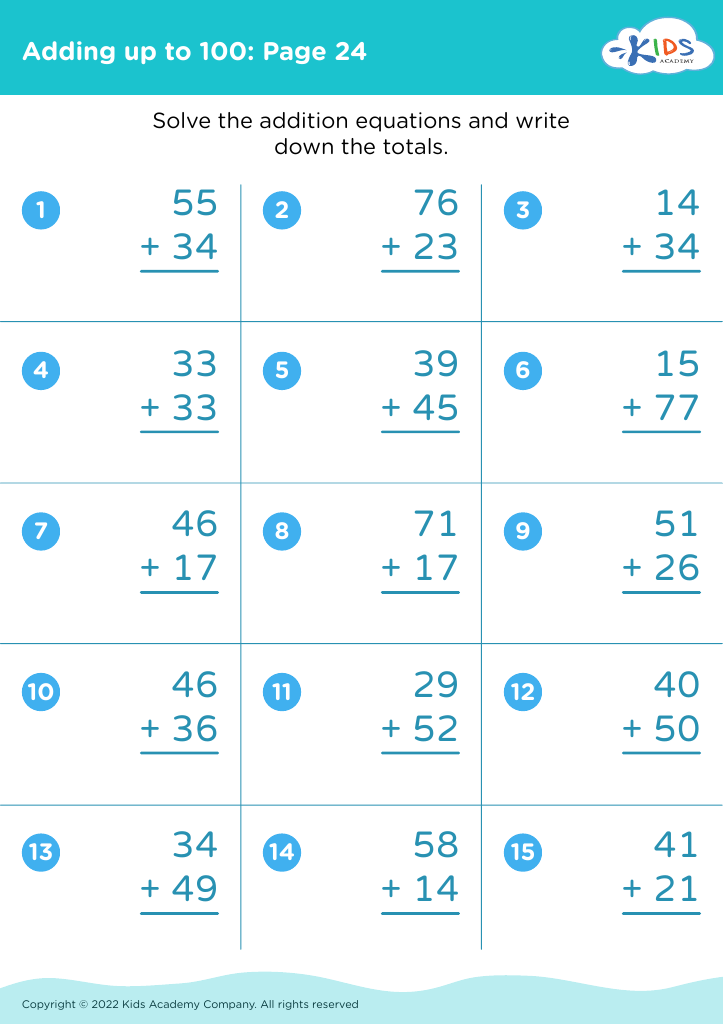
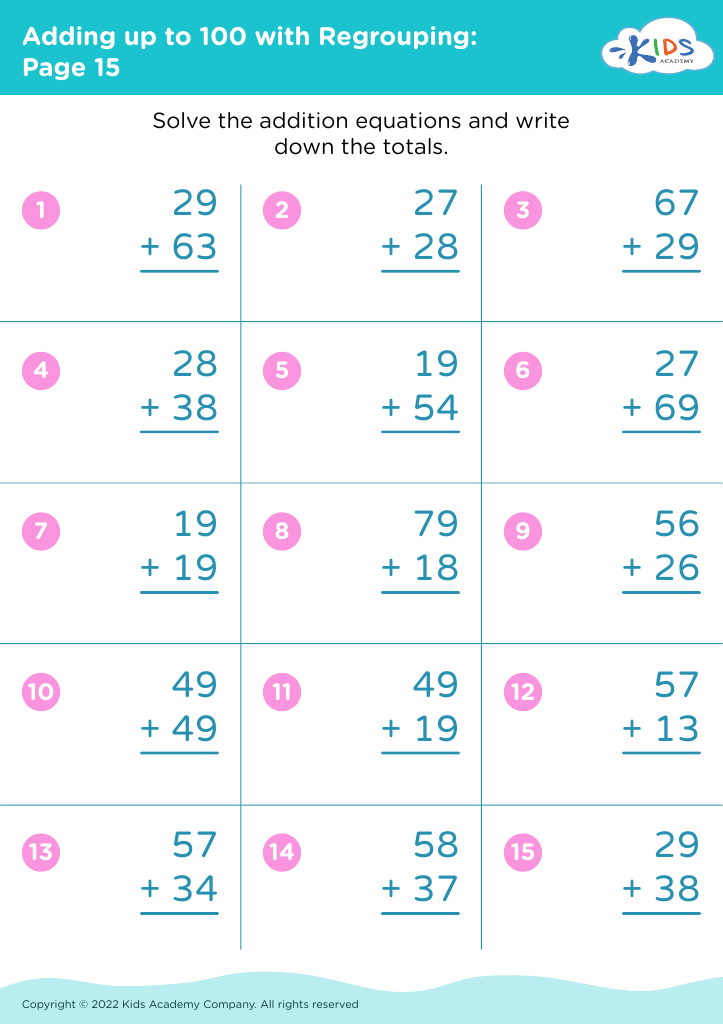
Unlock your child's potential with our "Enhance Counting Skills: Adding up to 100 Worksheets" designed for ages 3-8. These engaging worksheets provide fun and interactive exercises that help young learners develop essential counting and addition skills. Tailored to foster confidence and proficiency, these resources incorporate vibrant visuals and age-appropriate challenges suitable for various learning styles. As kids practice adding numbers up to 100, they will improve their number sense while enjoying playful activities. Perfect for homeschooling, classrooms, or extra practice at home, our worksheets make learning math enjoyable and effective. Invest in your child's future with these vital counting skill worksheets today!
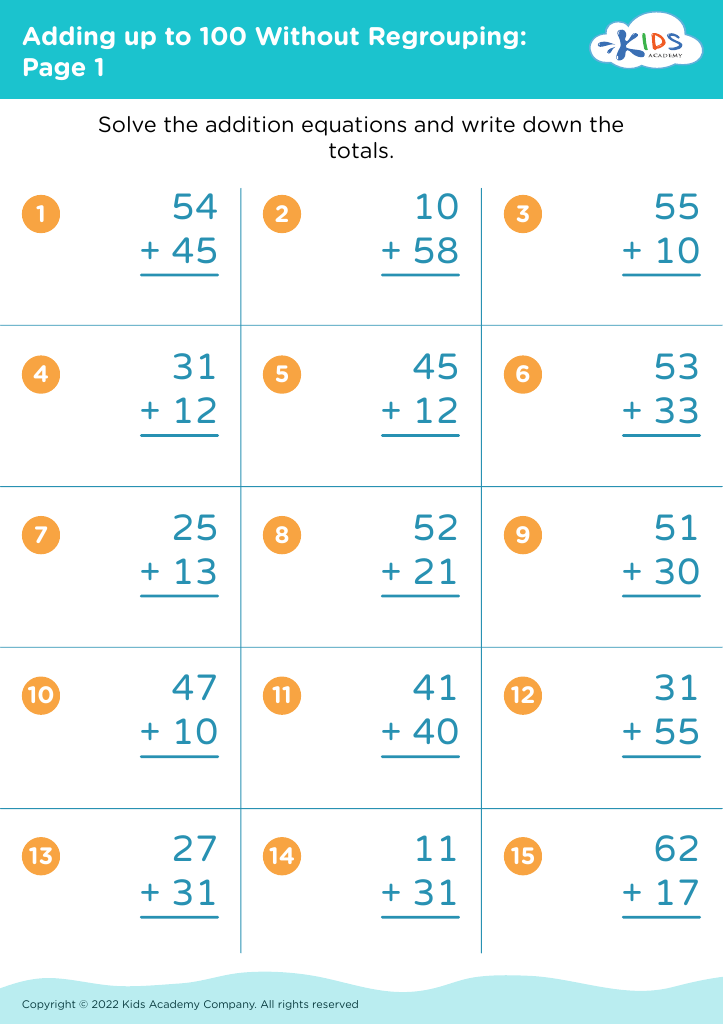
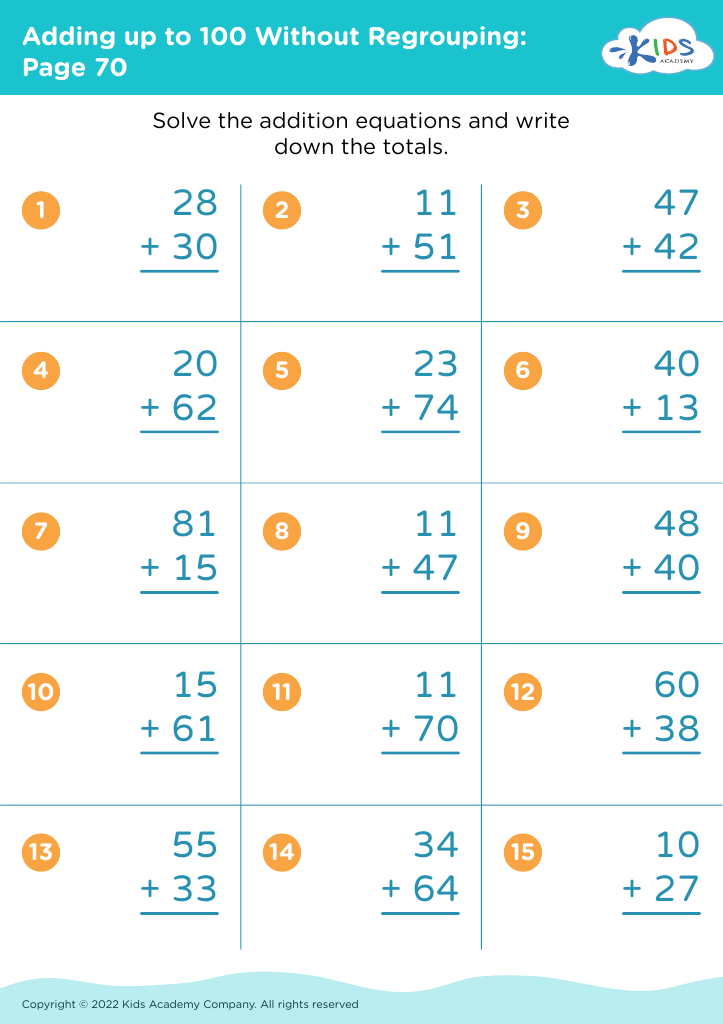




%20(1).jpg)


Enhancing counting skills, particularly in the range of adding up to 100, is crucial for children aged 3-8, as it serves as a foundational element of their mathematical development. During these formative years, children develop vital cognitive skills that impact their confidence in handling numbers. Mastering counting up to 100 not only facilitates basic arithmetic—such as addition, subtraction, and even later concepts like multiplication and division—but also supports their overall problem-solving abilities.
Moreover, strong counting skills enhance children's everyday life skills, enabling them to manage resources, understand money, and engage in activities that require sequencing and organization. It fosters logical thinking and promotes cognitive connections crucial for math-related tasks throughout their academic journey.
For parents and teachers, nurturing these skills can improve children's self-esteem and reduce math anxiety, making them more open to learning and exploration. Furthermore, it provides a wondrous opportunity for bonding during engaging activities such as counting games, songs, or puzzles, making learning fun and memorable. By focusing on reinforcing counting skills, caregivers play a pivotal role in laying a robust foundation for children's future success in mathematics and beyond.








