Recognize patterns Adding up to 100 Worksheets for Ages 3-8
4 filtered results
-
From - To
Discover our "Recognize Patterns: Adding Up to 100" worksheets, designed for children ages 3-8! These engaging activities help young learners develop essential math skills through fun and interactive pattern recognition exercises. By exploring numbers and relationships through visual aids and hands-on tasks, children will strengthen their understanding of addition while boosting critical thinking. Our worksheets are perfect for home or classroom use, providing a structured approach to learning that promotes confidence in math. Ideal for young learners, these resources lay the foundation for future mathematical success in a creative, accessible way. Get started today and make learning math enjoyable!
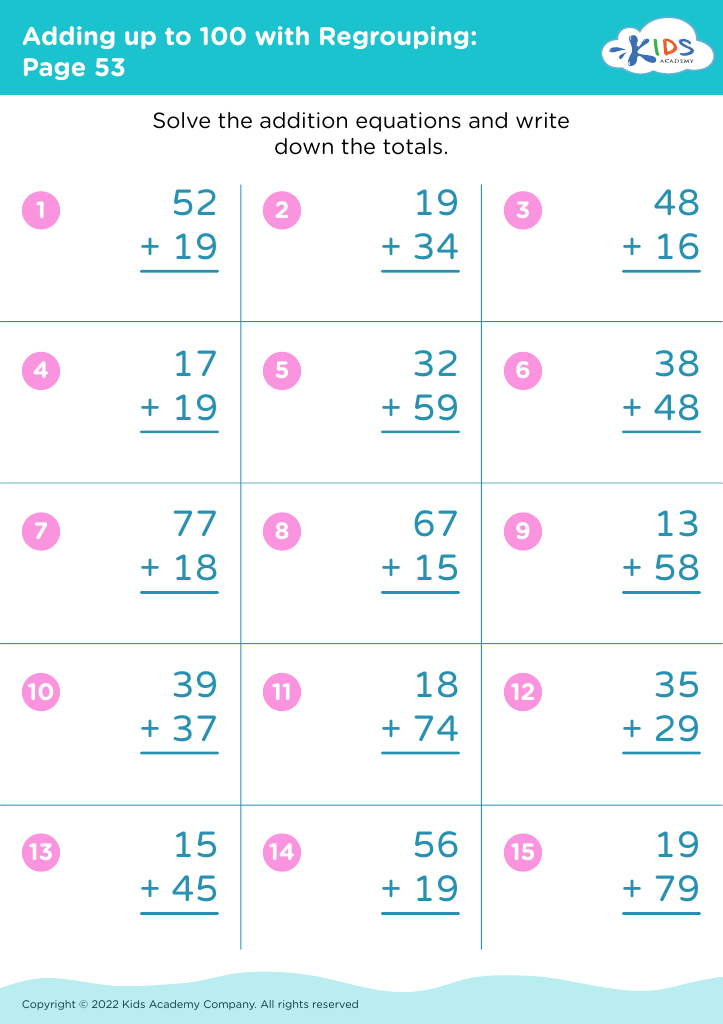
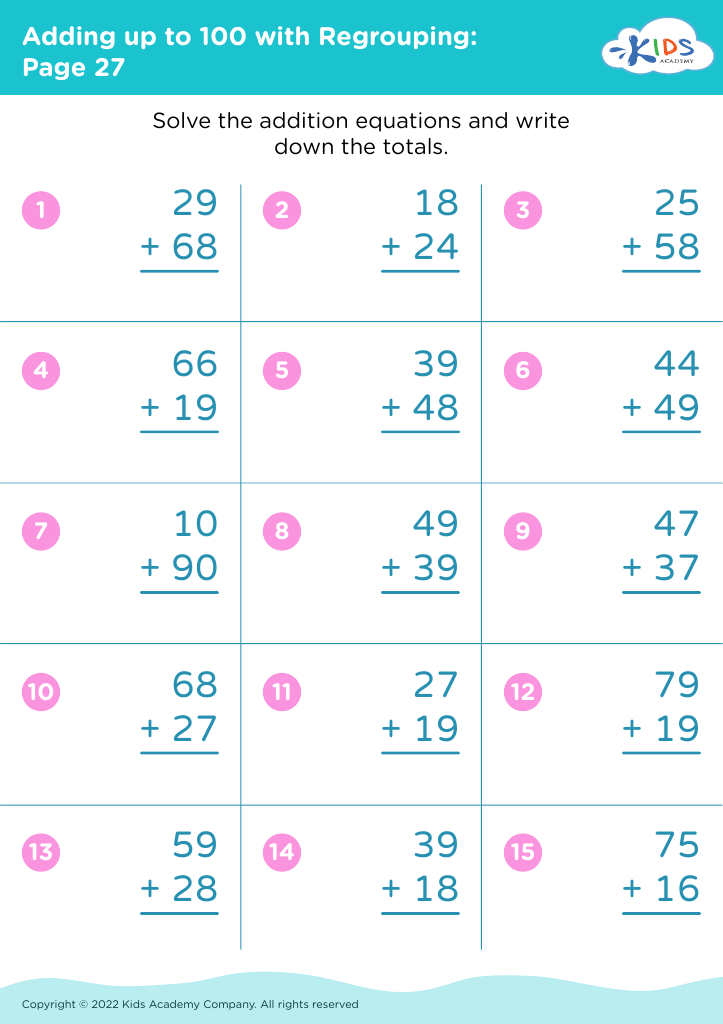
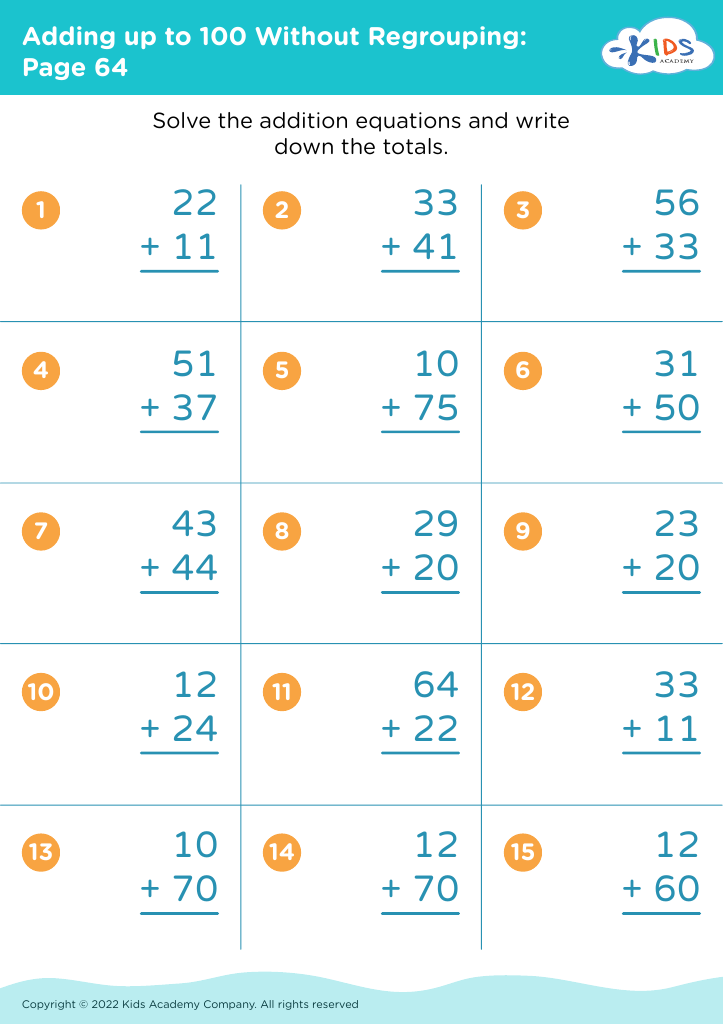
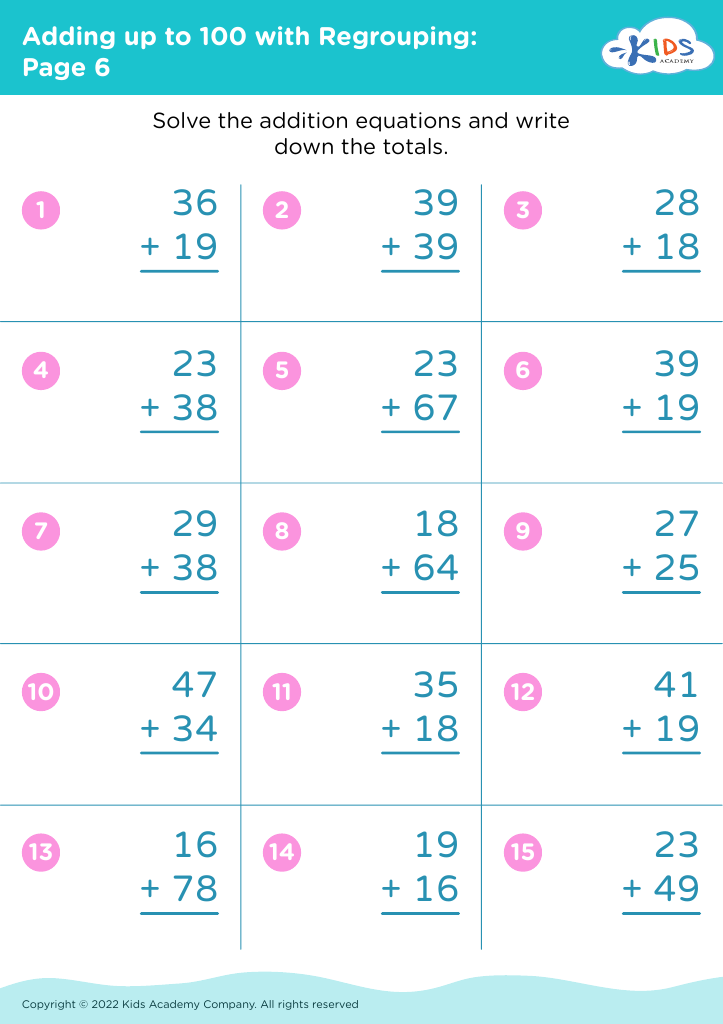


%20(1).jpg)




Recognizing patterns and adding up to 100 is a foundational math skill that lays the groundwork for more complex mathematical concepts. For children ages 3-8, developing this skill is crucial for several reasons. First, understanding patterns enhances cognitive skills, enabling children to classify, sequence, and predict outcomes. This pattern recognition translates into various areas of learning, assisting children in making connections between concepts.
Additionally, mastering addition up to 100 builds confidence and fluency in mathematics. When children grasp how numbers relate to one another, they develop a sense of number sense that is essential for problem-solving tasks encountered in daily life. Such skills are directly linked to achievements in math in later academic stages.
For parents and teachers, fostering these skills through engaging activities—such as games and hands-on manipulatives—can make learning enjoyable and interactive. This approach not only encourages cooperation but also nurtures a positive attitude towards math. Investing in these foundational skills can significantly impact a child's academic journey, instilling a love for learning and resilience needed to tackle future challenges in mathematics and beyond. Encouragingly, children will carry these skills through lifelong learning experiences.








