Simplifying Fractions Adding up to 100 Worksheets for Ages 3-8
3 filtered results
-
From - To
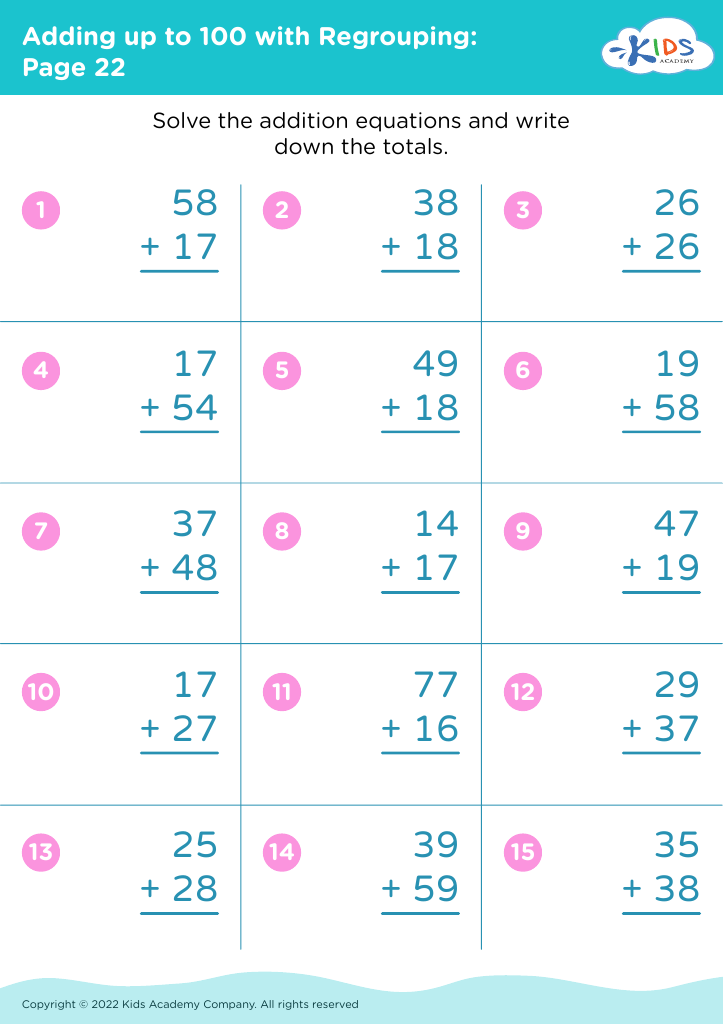
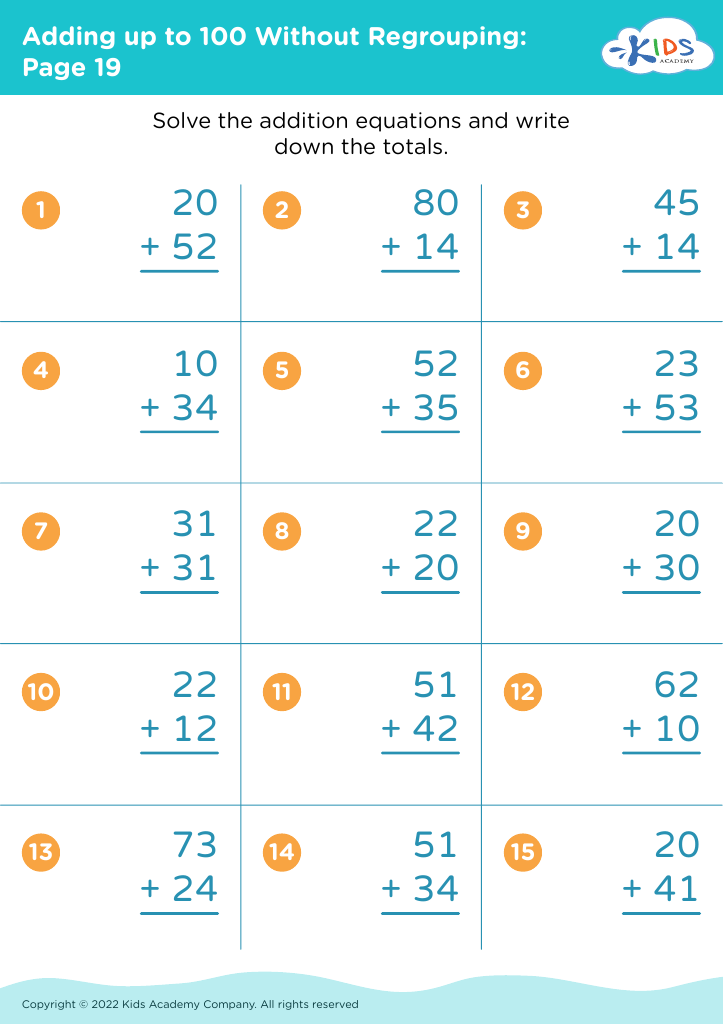
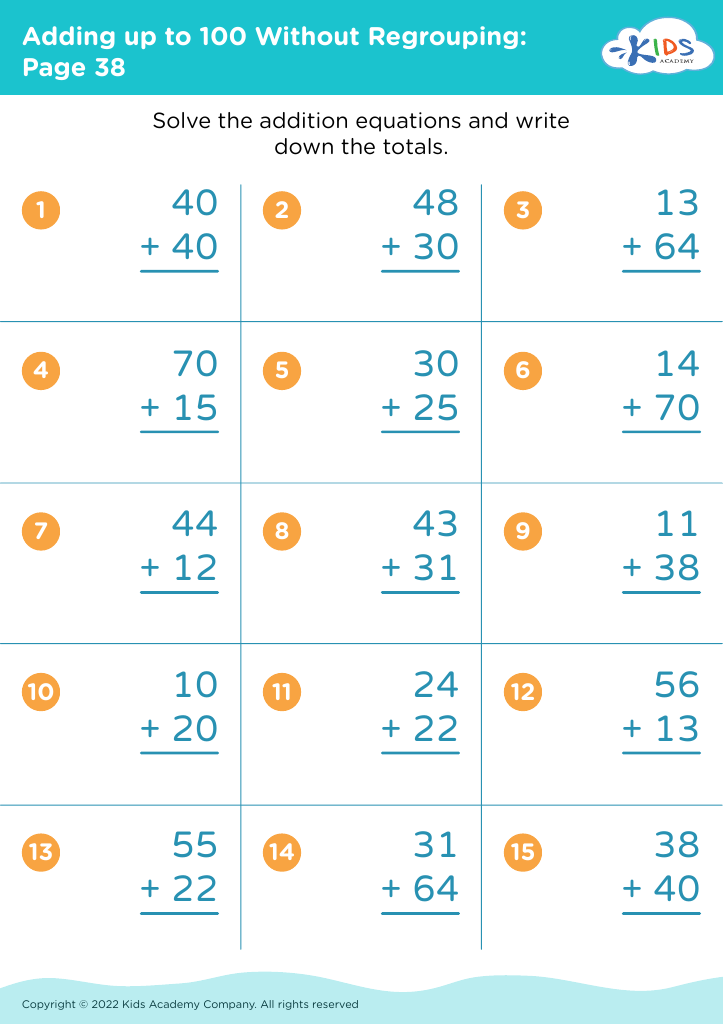
Welcome to our “Simplifying Fractions Adding Up to 100 Worksheets” designed for children ages 3-8. These engaging worksheets provide young learners with essential skills in simplification and addition, ensuring a solid foundation in mathematics. Through colorful illustrations and age-appropriate exercises, kids will practice identifying and reducing fractions, enhancing both their problem-solving abilities and confidence in math. Each worksheet is crafted to blend learning with fun, making math an enjoyable journey. Perfect for home or classroom use, these resources encourage early numeracy skills and provide a seamless transition to more complex mathematical concepts. Unlock the joy of learning today!



%20(1).jpg)



Understanding and simplifying fractions, especially in the context of adding up to 100, is a foundational skill for children ages 3 to 8. By introducing this concept early, parents and teachers can help set the stage for a solid mathematical framework. First, it encourages critical thinking and problem-solving abilities, allowing young learners to recognize relationships between numbers and develop logical reasoning skills.
Simplifying fractions also enhances children's number sense, an essential aspect of overall mathematical competency. When children see how different fractions can combine to reach a total of 100, it engages their curiosity and fosters a deeper understanding of parts and wholes. This awareness of relationships among numbers can lead to better performance in complex mathematical concepts later on.
Furthermore, real-life applications of fractions become more apparent when children see how they relate to everyday situations, such as cooking or sharing, making learning relevant and meaningful. Instilling this knowledge early empowers children, promoting confidence as they progress in their mathematical journey. Parents and teachers play a crucial role in nurturing this skill, facilitating a positive and engaging learning environment that fosters enthusiasm for math and enhances overall educational outcomes.








