Filters

51 filtered results

Clear all filters
Favorites
With answer key
Interactive

51 filtered results

Difficulty Level

Grade


Check out this FREE Trial Lesson on Adding up to 100 for age 3-8!

P

Favorites
With answer key
Interactive
  • 3-8
  • Understanding fractions
  • Adding up to 100
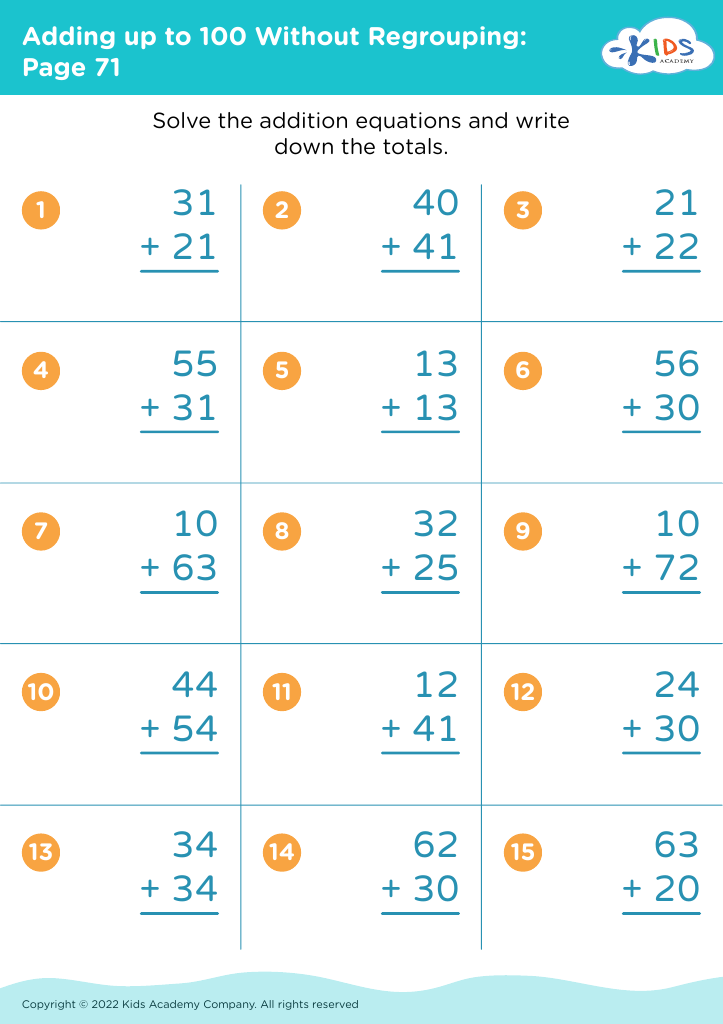
Adding up to 100 Without Regrouping: Page 71
Worksheet
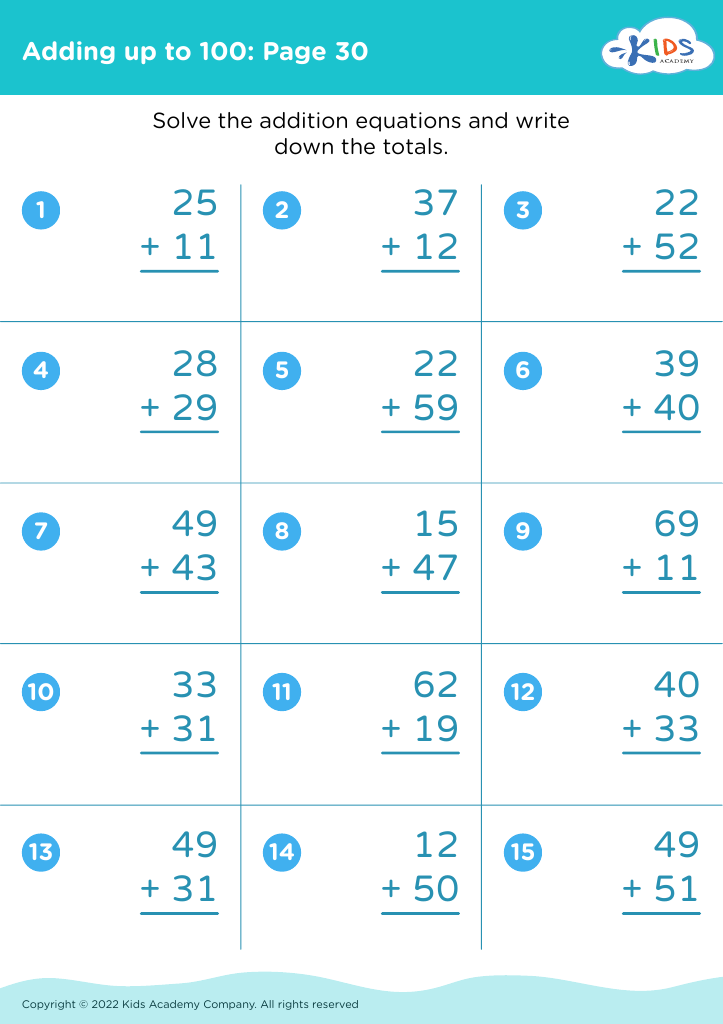
Adding up to 100: Page 30

Adding up to 100: Page 30

Adding up to 100: Page 30
Worksheet
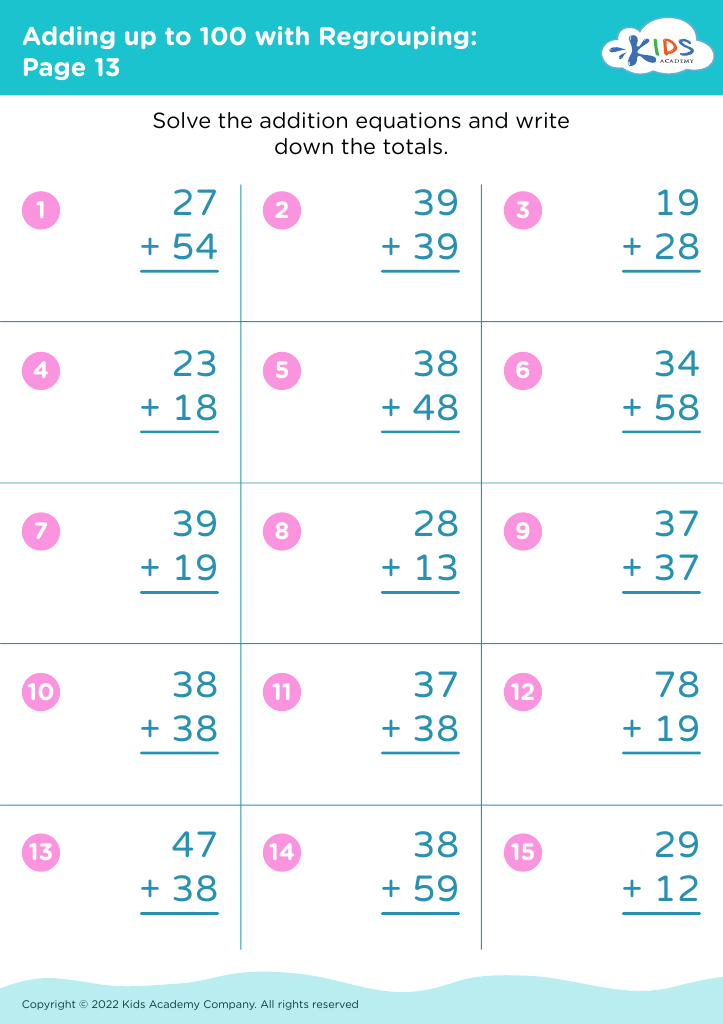
Adding up to 100 with Regrouping: Page 13
Worksheet
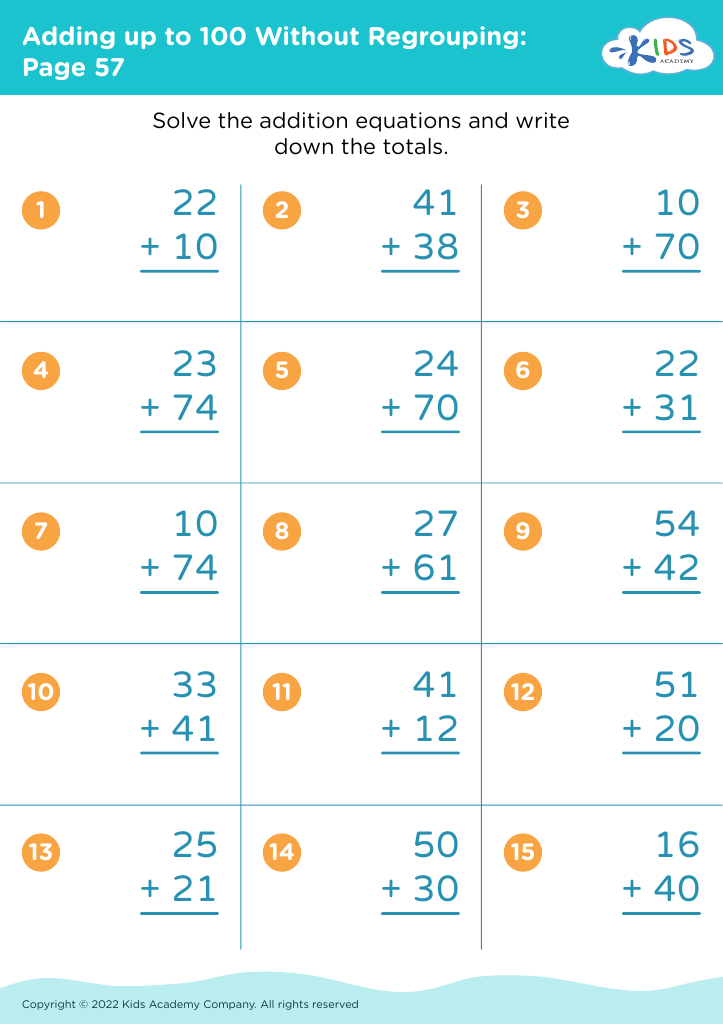
Adding up to 100 Without Regrouping: Page 57
Worksheet
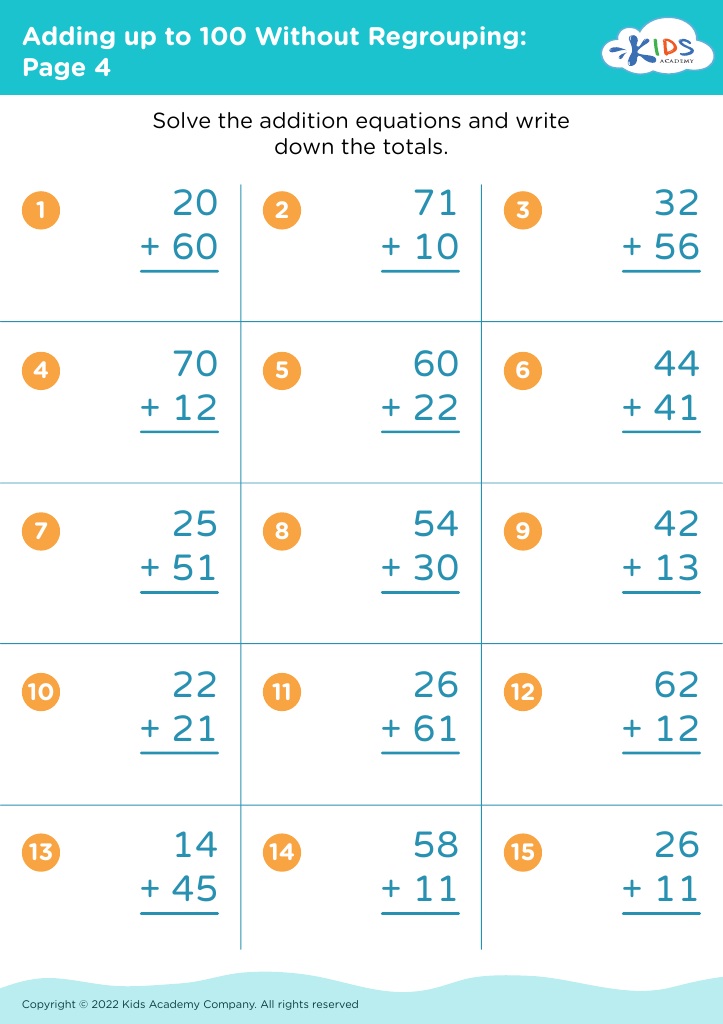
Adding up to 100 Without Regrouping: Page 4
Worksheet
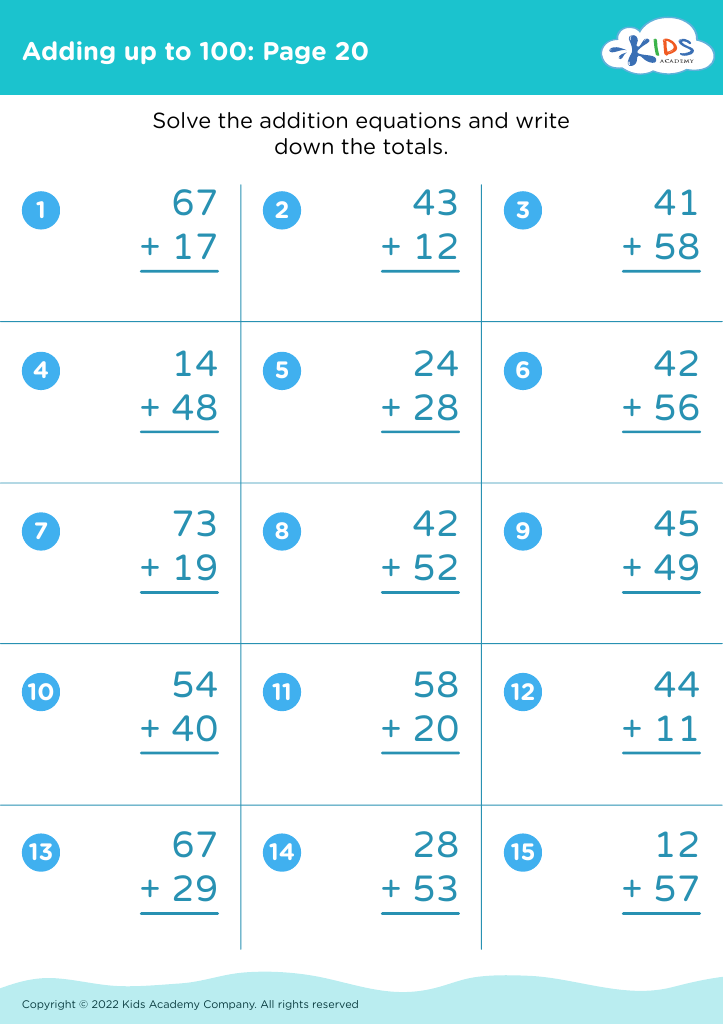
Adding up to 100: Page 20

Adding up to 100: Page 20

Adding up to 100: Page 20
Worksheet
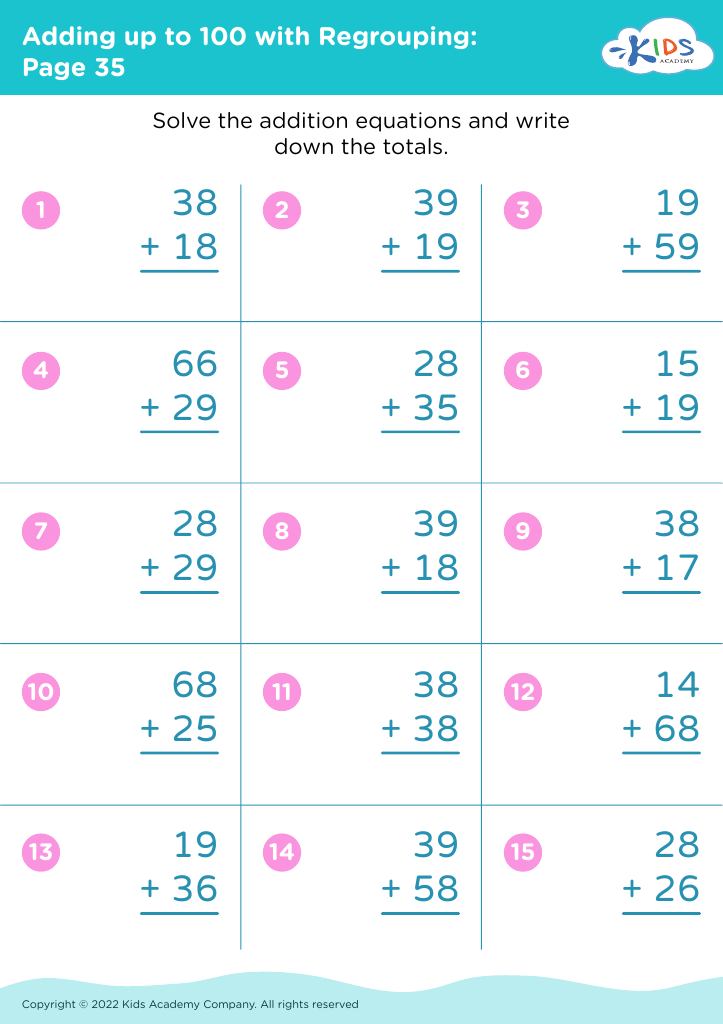
Adding up to 100 with Regrouping: Page 35
Worksheet
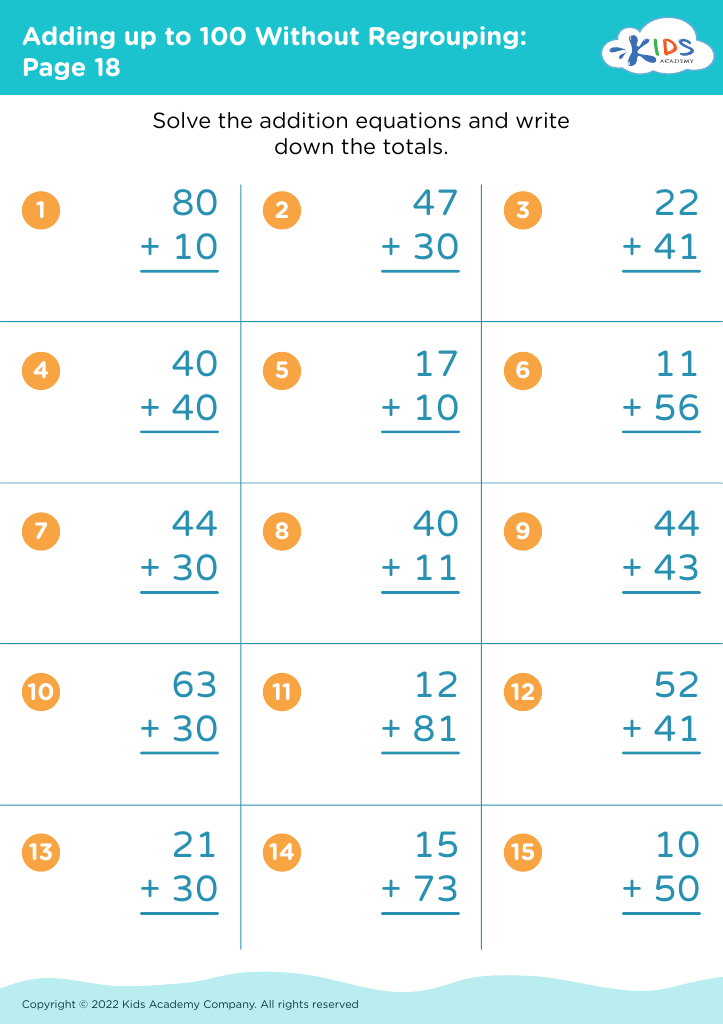
Adding up to 100 Without Regrouping: Page 18
Worksheet
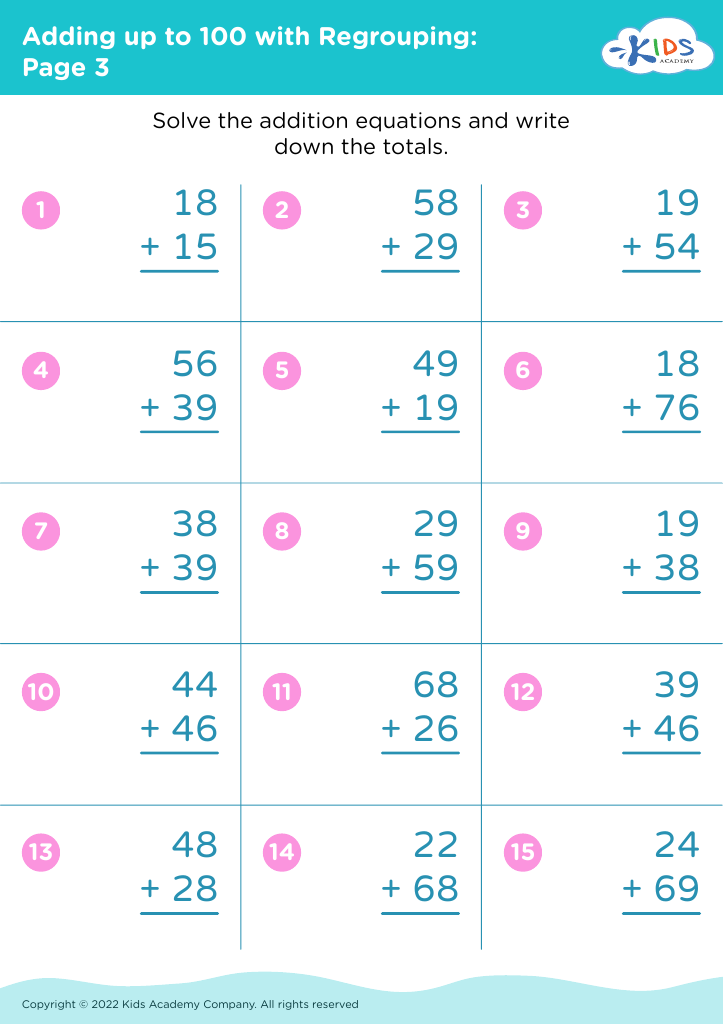
Adding up to 100 with Regrouping: Page 3
Worksheet
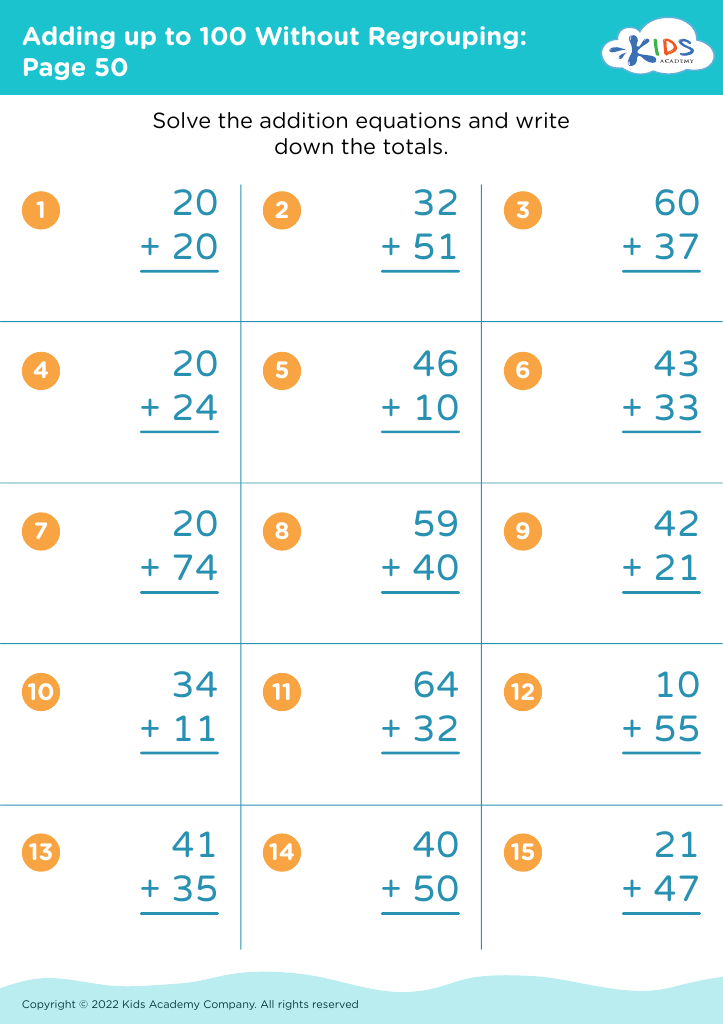
Adding up to 100 Without Regrouping: Page 50
Worksheet
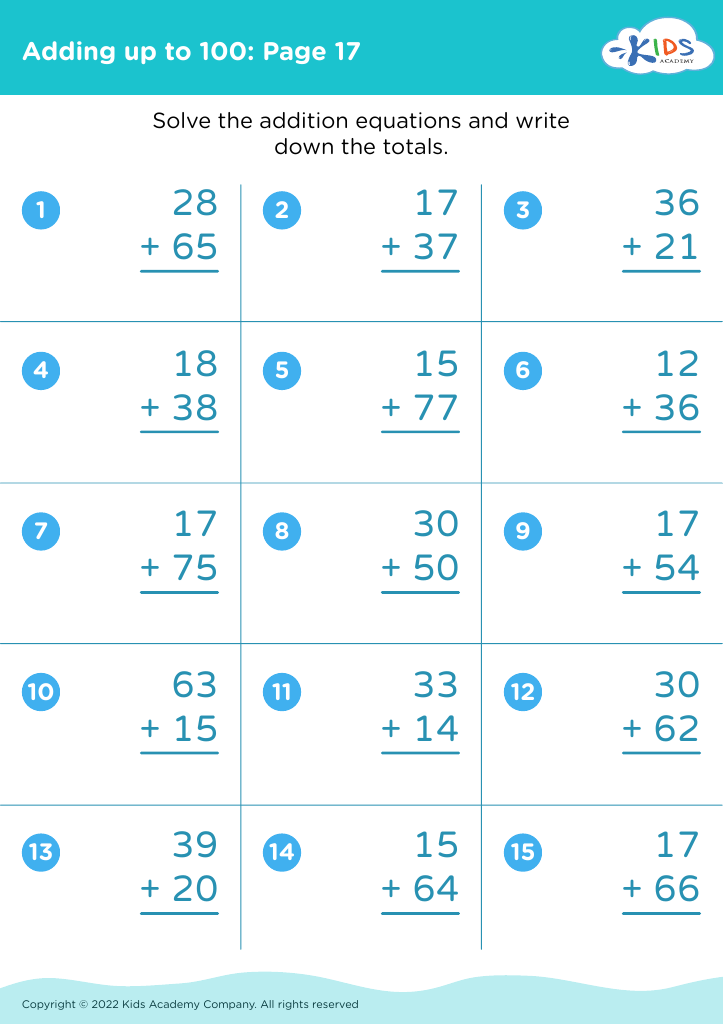
Adding up to 100: Page 17

Adding up to 100: Page 17

Adding up to 100: Page 17
Worksheet
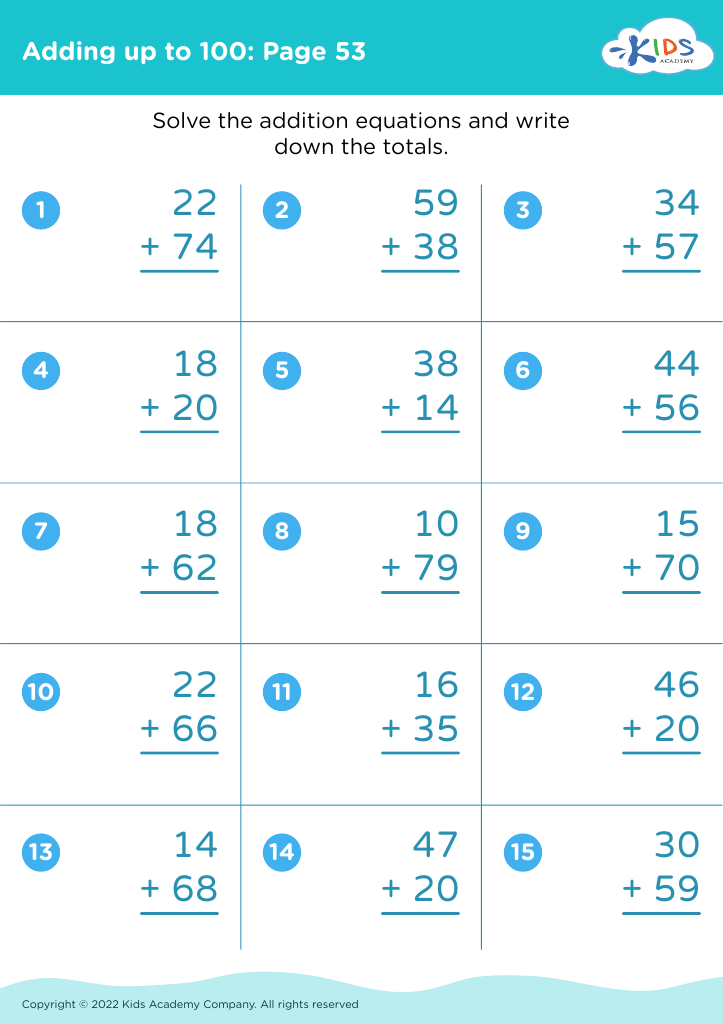
Adding up to 100: Page 53

Adding up to 100: Page 53

Adding up to 100: Page 53
Worksheet
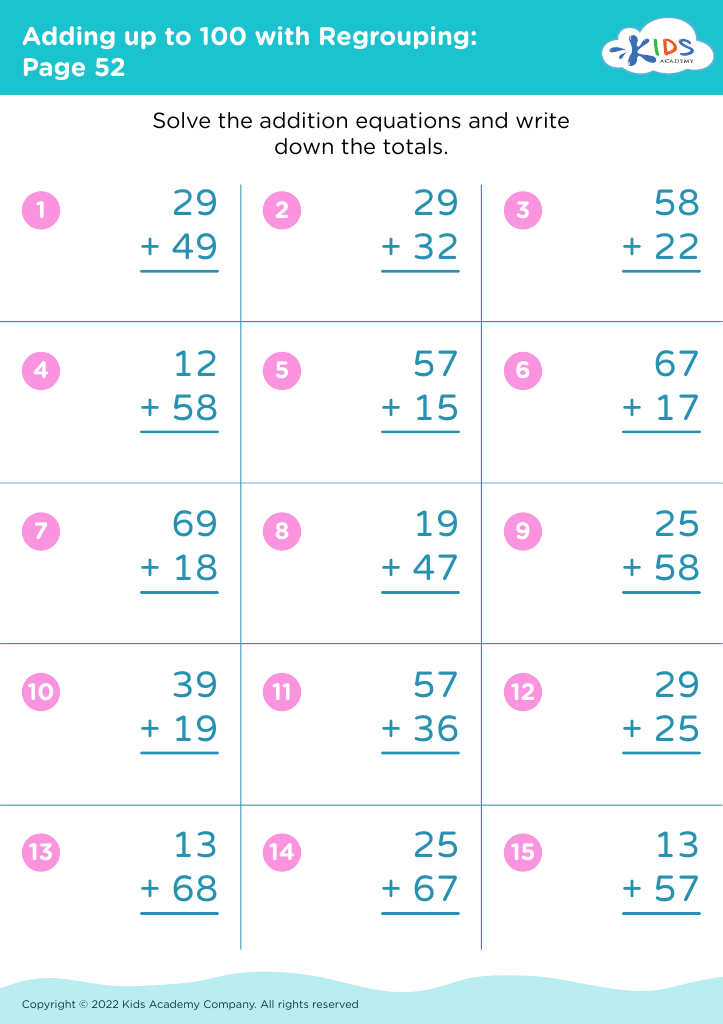
Adding up to 100 with Regrouping: Page 52
Worksheet
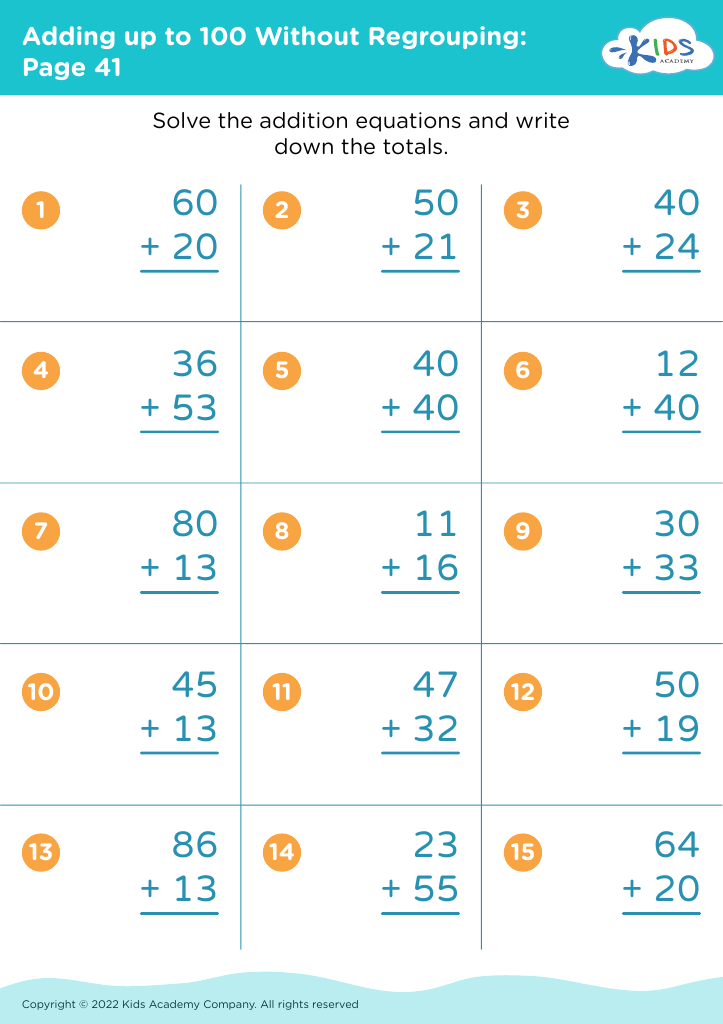
Adding up to 100 Without Regrouping: Page 41
Worksheet
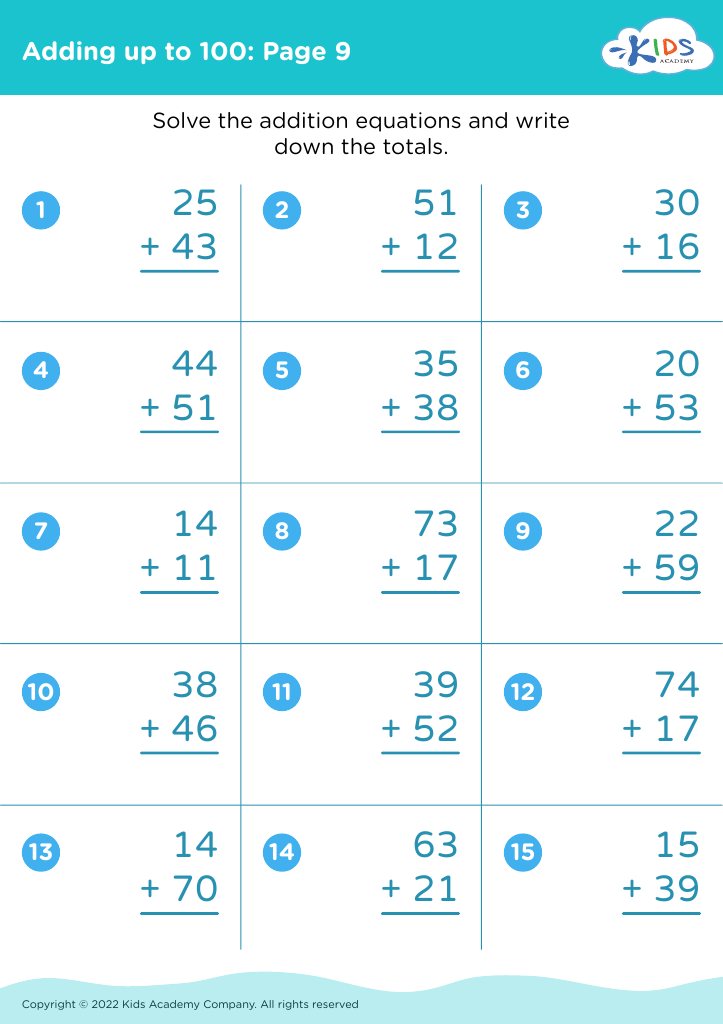
Adding up to 100: Page 9

Adding up to 100: Page 9

Adding up to 100: Page 9
Worksheet
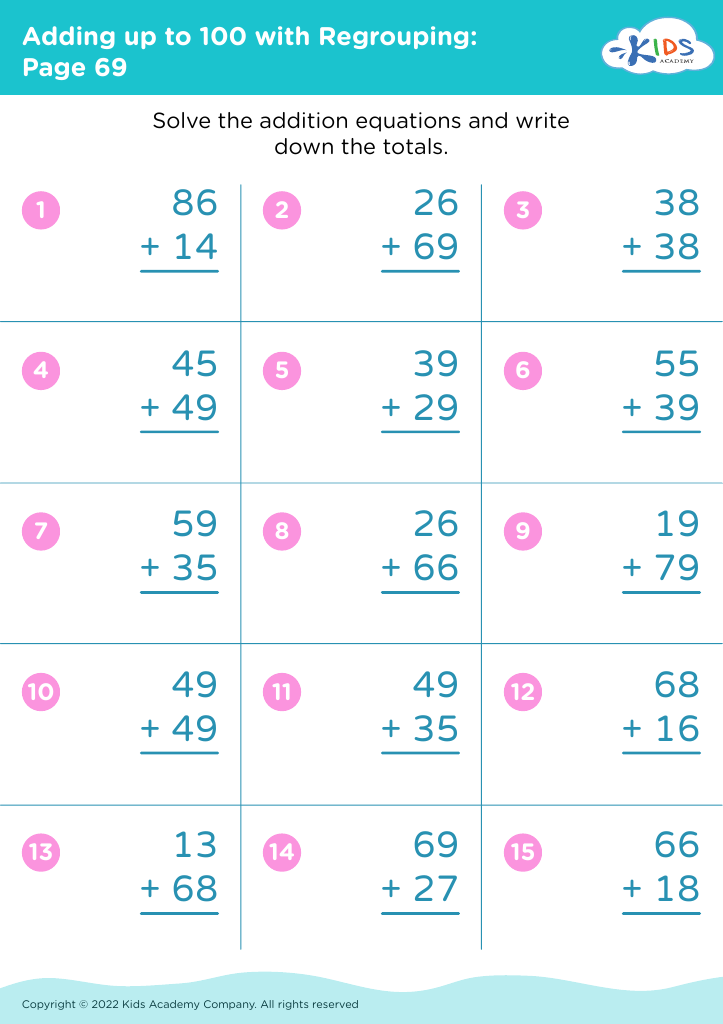
Adding up to 100 with Regrouping: Page 69
Worksheet
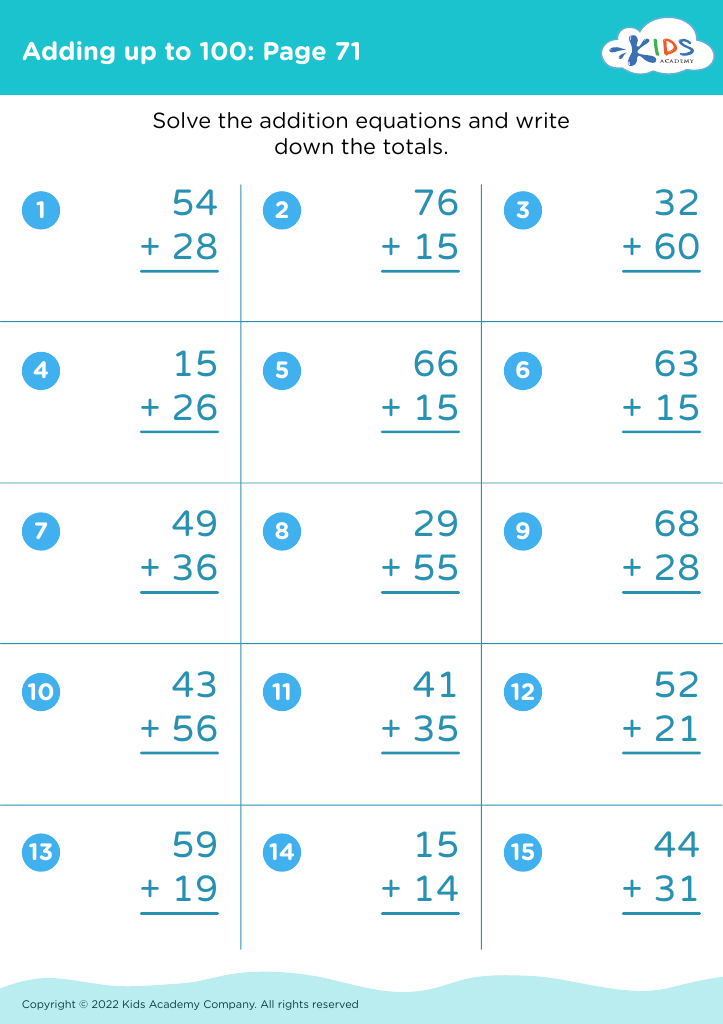
Adding up to 100: Page 71

Adding up to 100: Page 71

Adding up to 100: Page 71
Worksheet
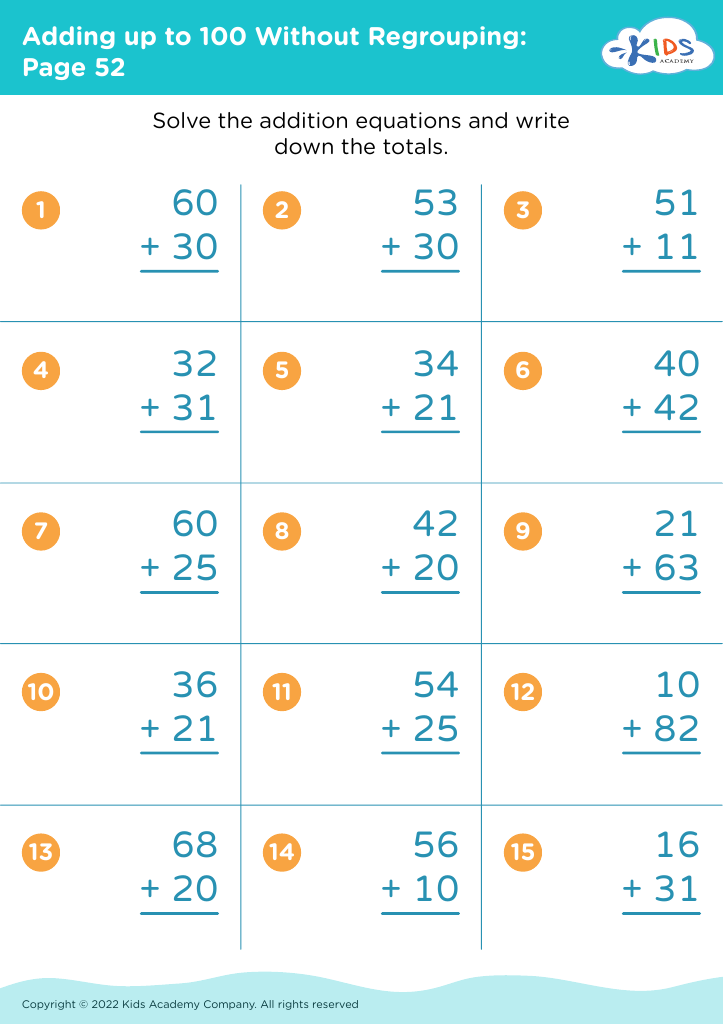
Adding up to 100 Without Regrouping: Page 52
Worksheet
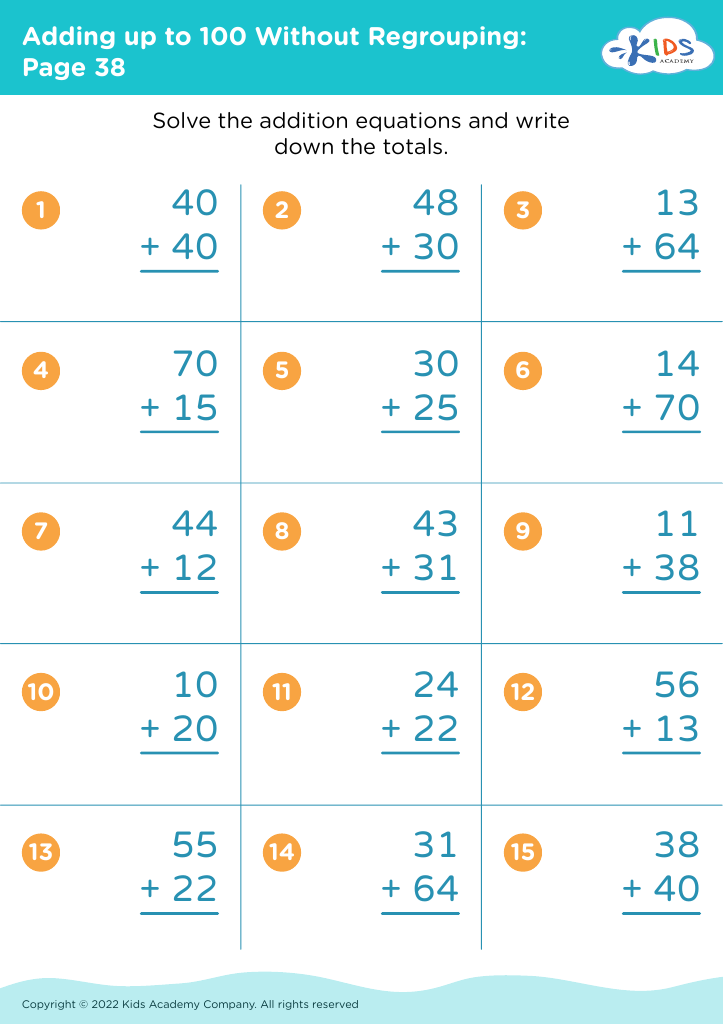
Adding up to 100 Without Regrouping: Page 38
Worksheet
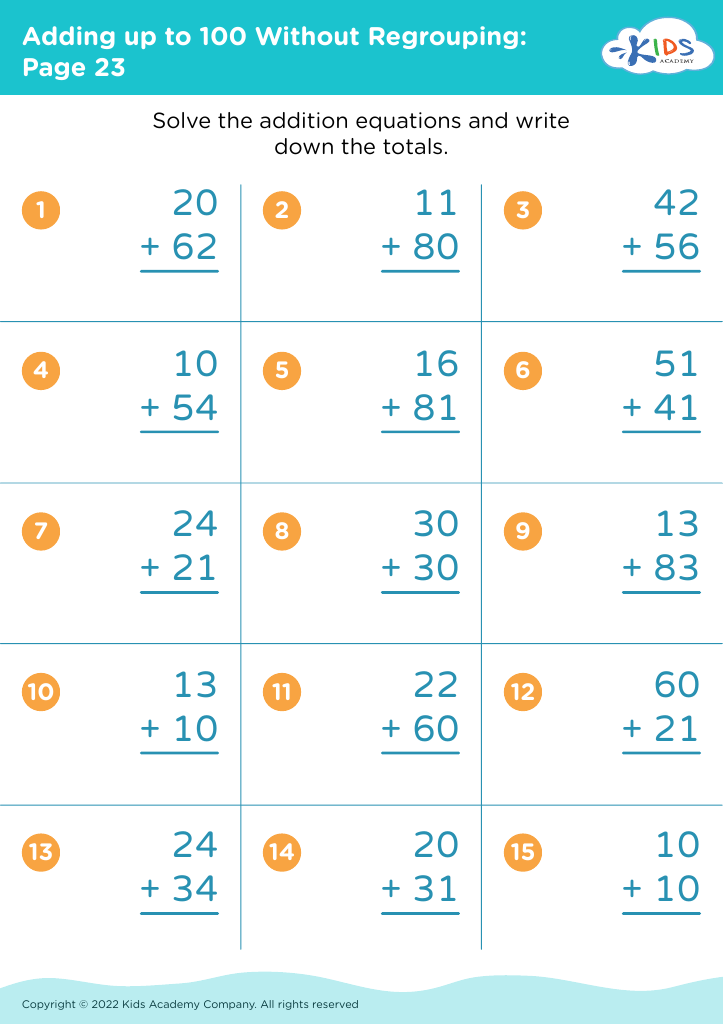
Adding up to 100 Without Regrouping: Page 23
Worksheet
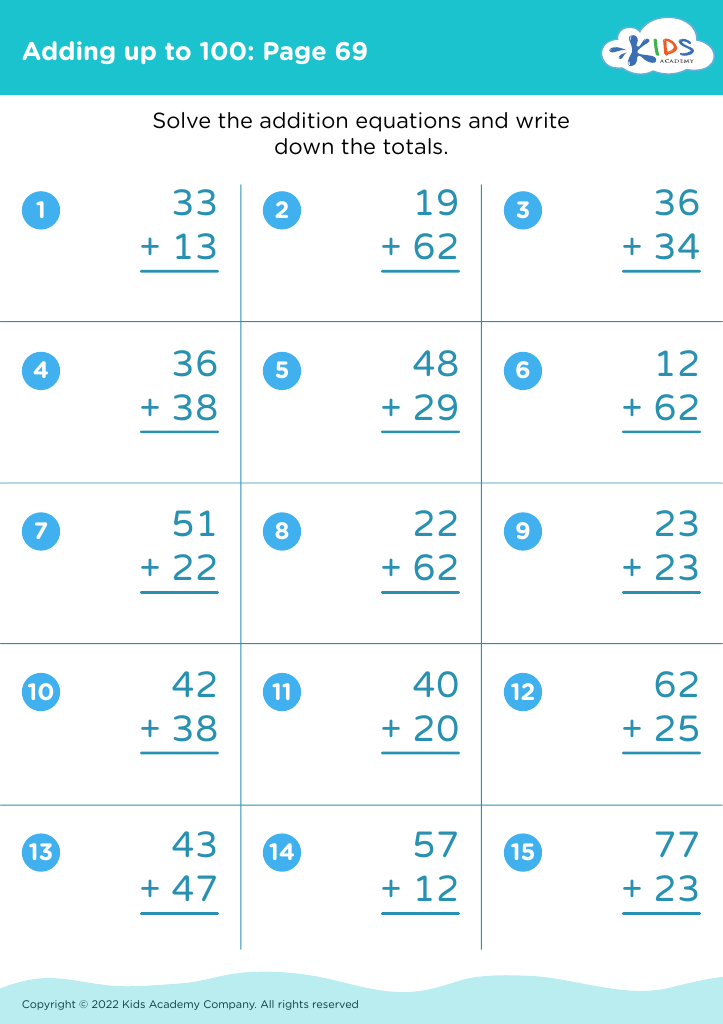
Adding up to 100: Page 69

Adding up to 100: Page 69

Adding up to 100: Page 69
Worksheet
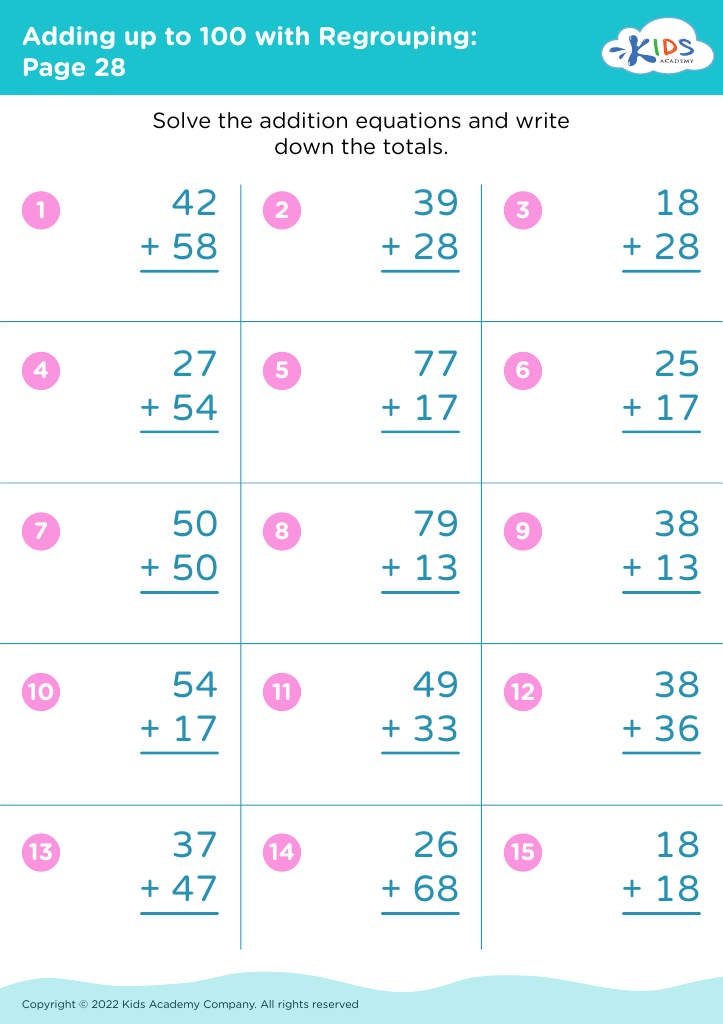
Adding up to 100 with Regrouping: Page 28
Worksheet
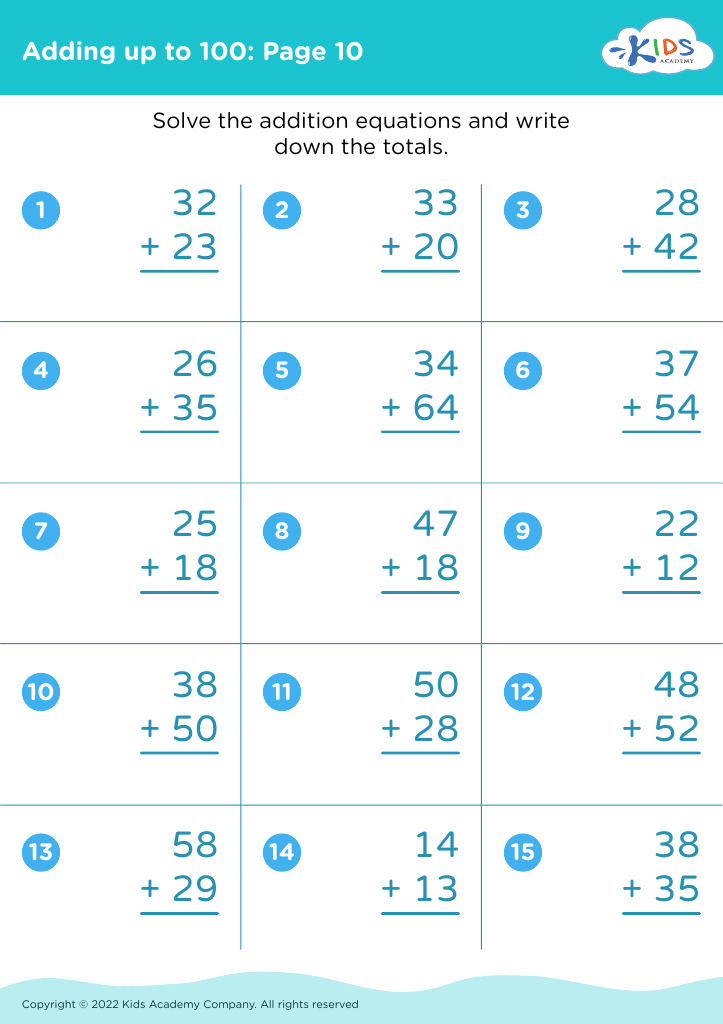
Adding up to 100: Page 10

Adding up to 100: Page 10

Adding up to 100: Page 10
Worksheet
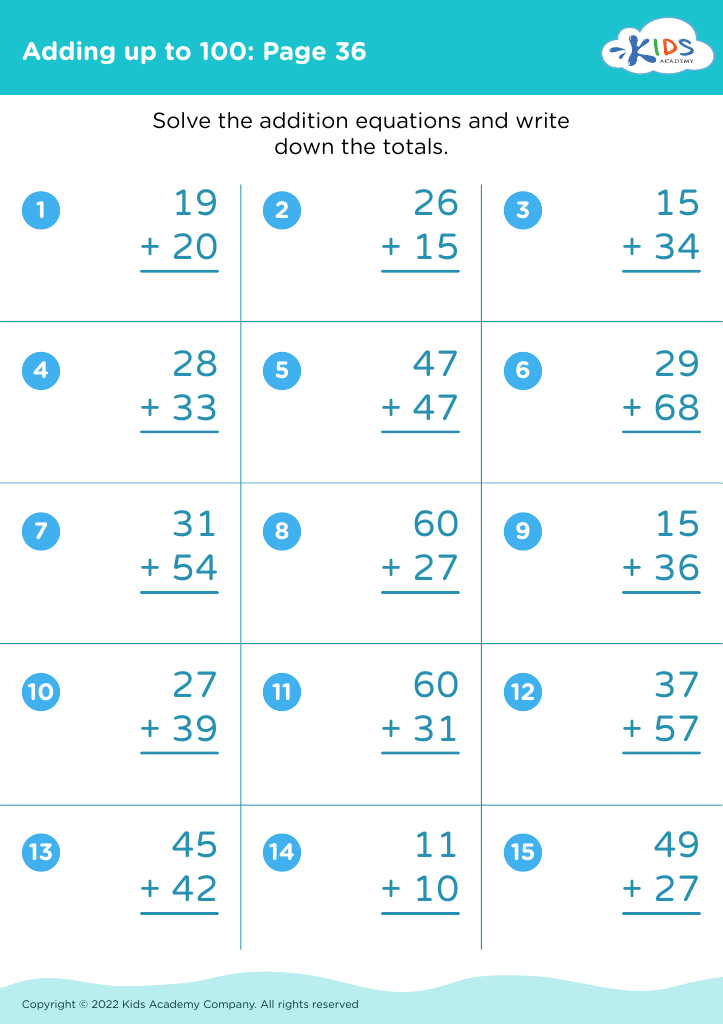
Adding up to 100: Page 36

Adding up to 100: Page 36

Adding up to 100: Page 36
Worksheet


Understanding fractions and the concept of numbers adding up to 100 is foundational in early childhood education, particularly for ages 3-8. At this crucial stage, kids are in their formative years of cognitive development, where they begin to grasp mathematical concepts that support more advanced problem-solving skills in later years. Teaching fractions and sum concepts to young learners improves their number sense, an essential aspect of mathematics literacy.

Exploring fractions allows children to comprehend parts of a whole, an idea that extends beyond mathematics into real-life scenarios such as sharing and measurements. Informally introducing these ideas through activities with pizza slices, sharing toys, or dividing treats can ground these abstract concepts in tangible experiences. Understanding how numbers add up to 100 allows children to build arithmetic skills, reinforcing addition, subtraction, and the sense of place value. Moreover, engaging with such arithmetic from an early age helps cultivate mental agility and critical thinking.

Engaging children in these mathematical principles fosters a positive and confident attitude toward mathematics. With solid foundational skills, they'll find it easier to tackle more complex mathematical tasks in the future. Consequently, parents and teachers enable children to develop proficiency and a love for mathematics, setting them on a path toward academic success and practical life skills.