Understanding patterns Adding up to 100 Worksheets for Ages 3-8
11 filtered results
-
From - To
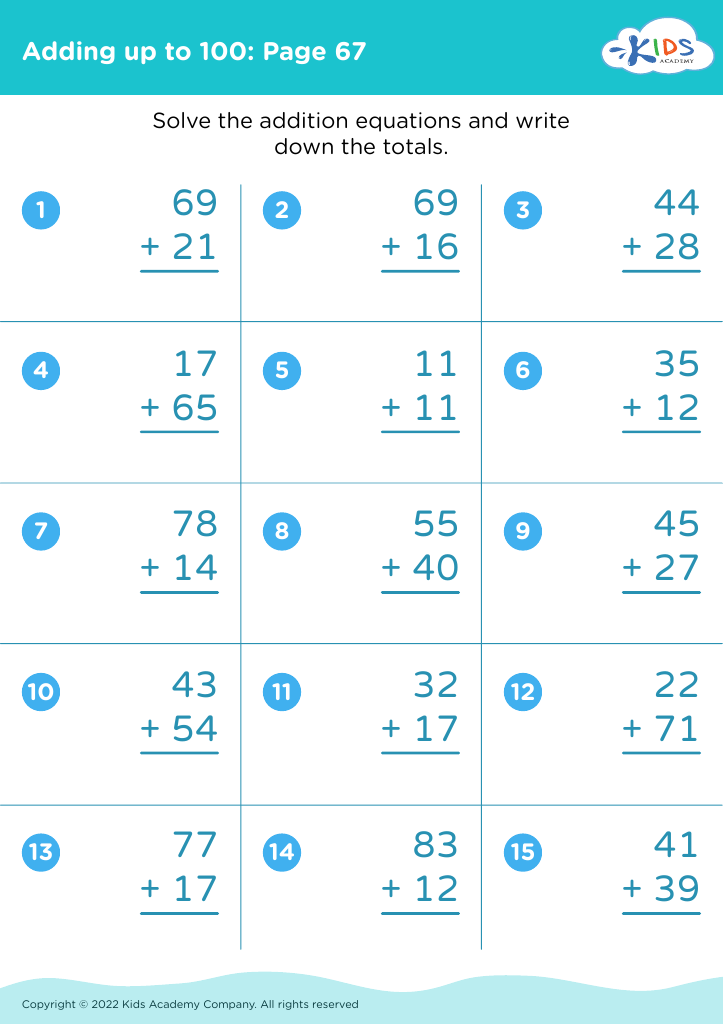
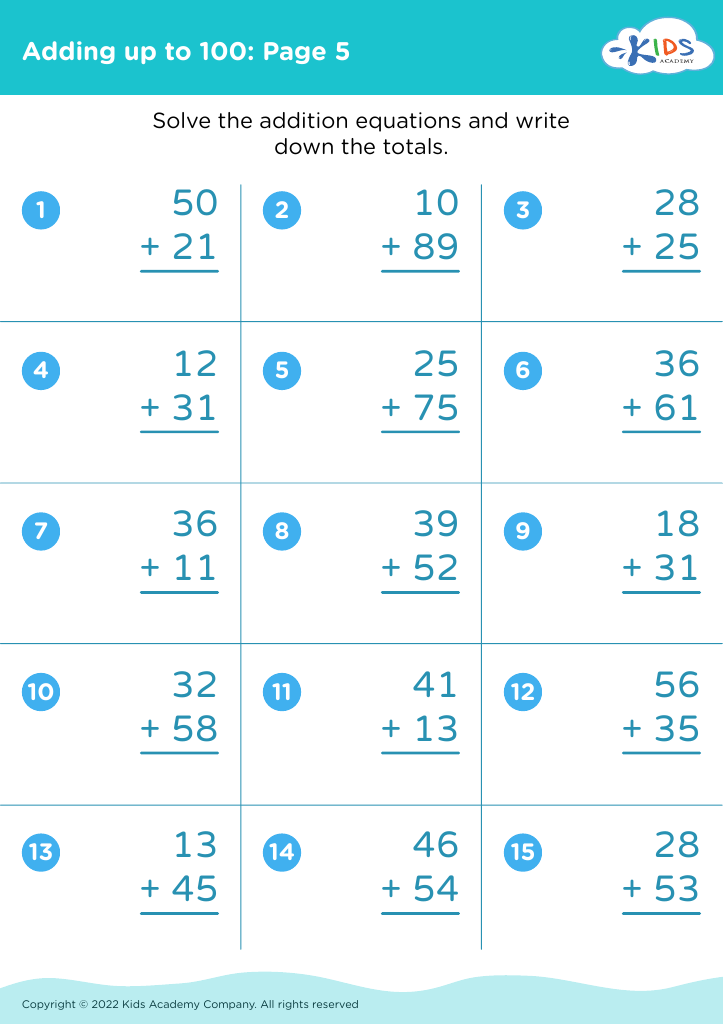
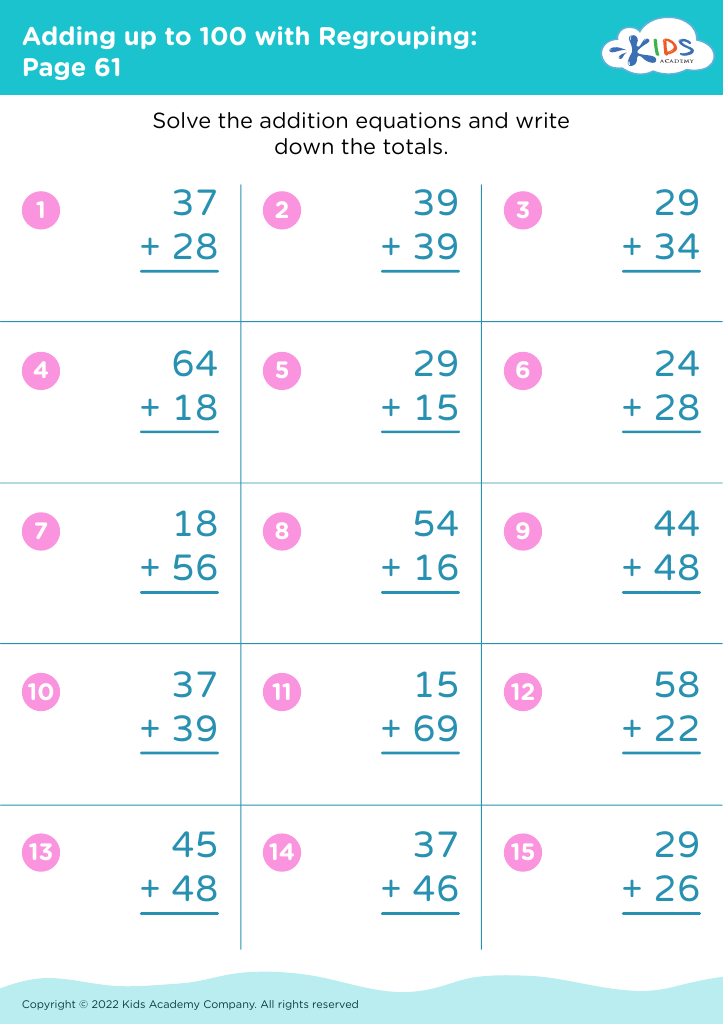
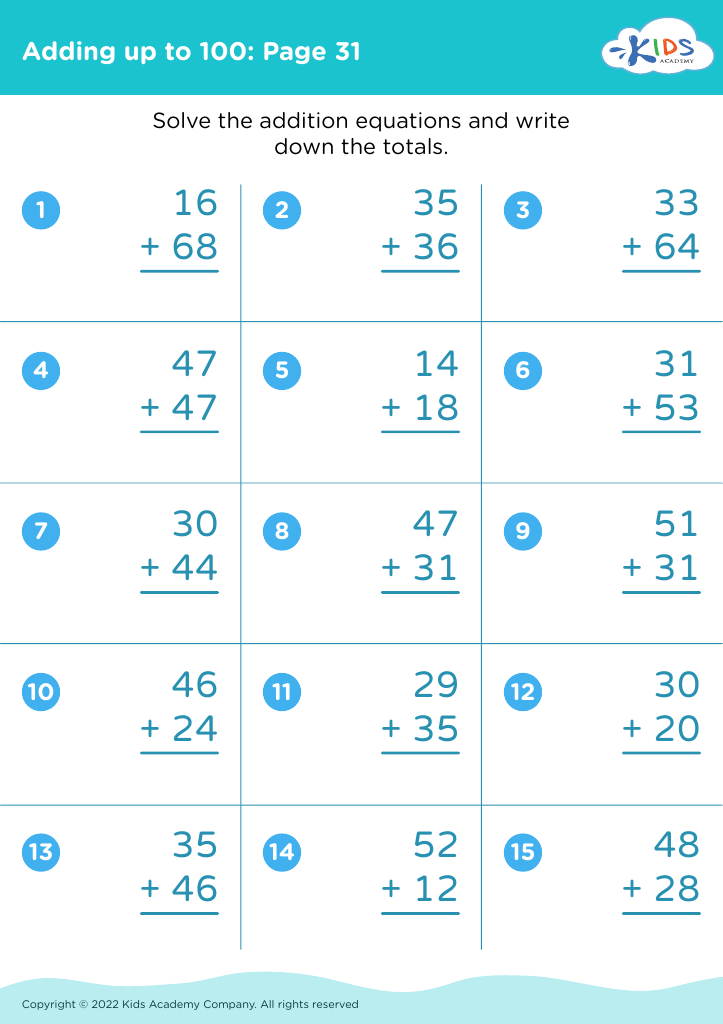
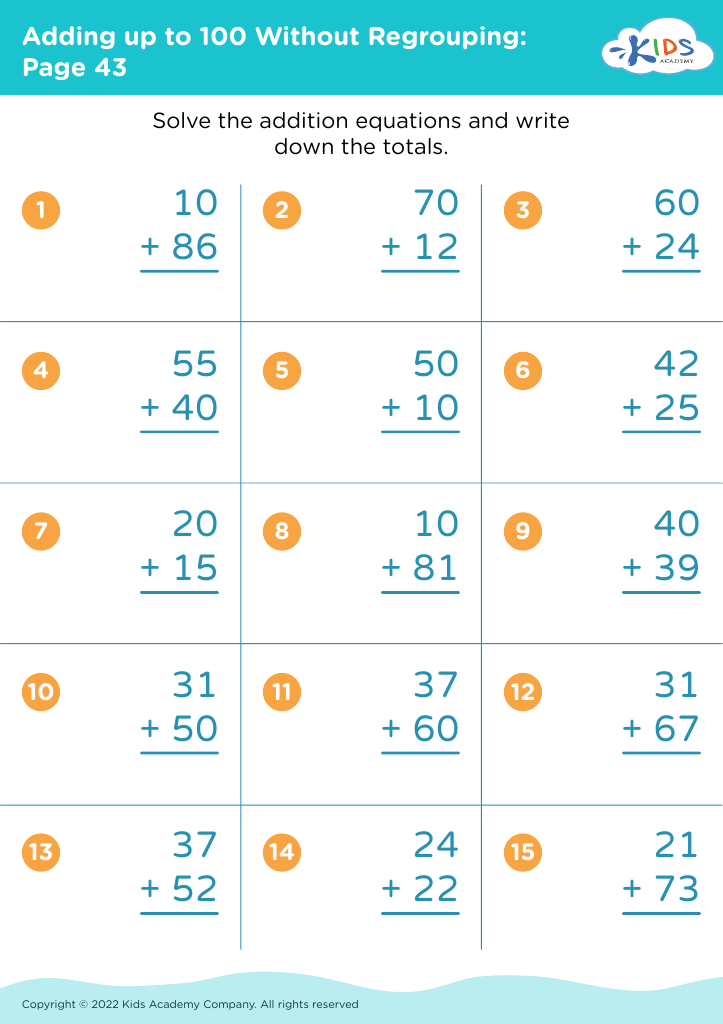
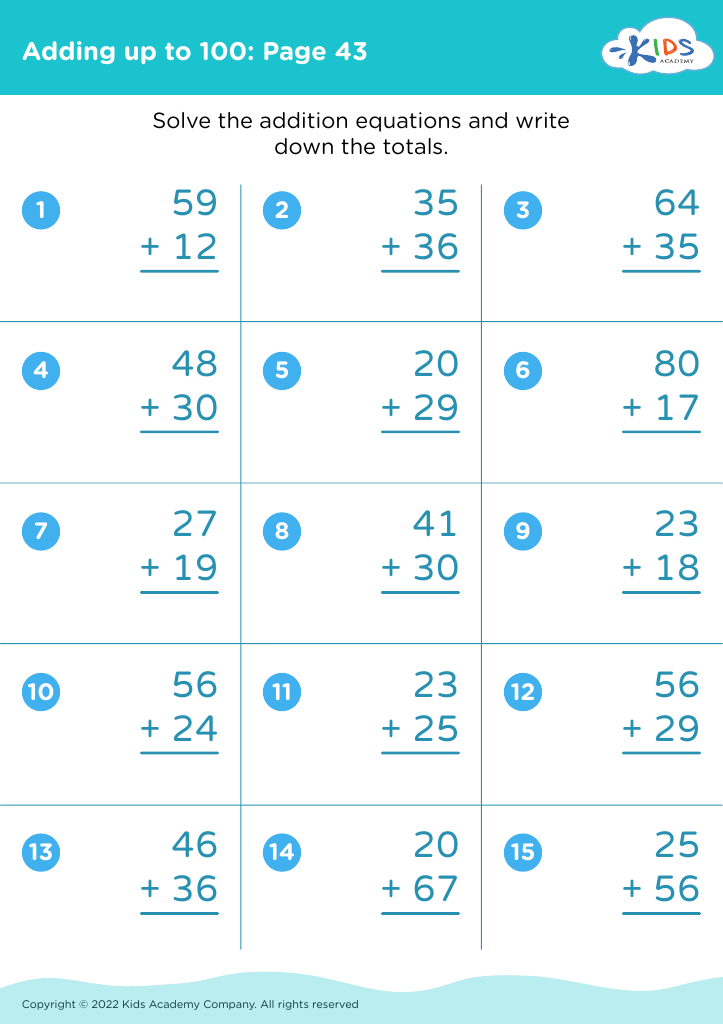
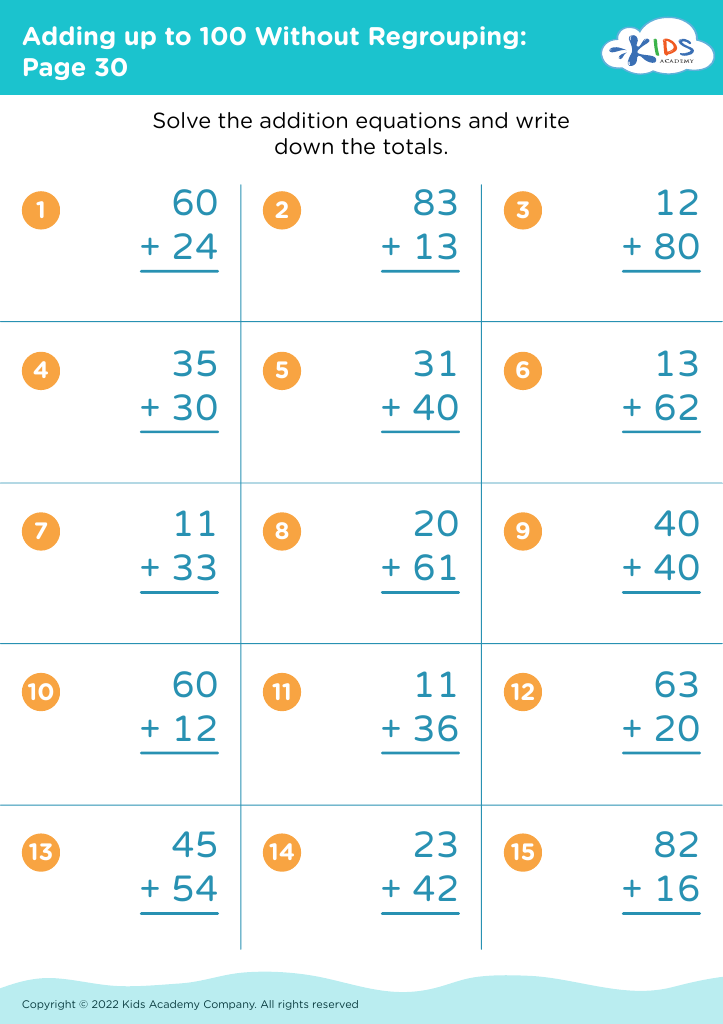
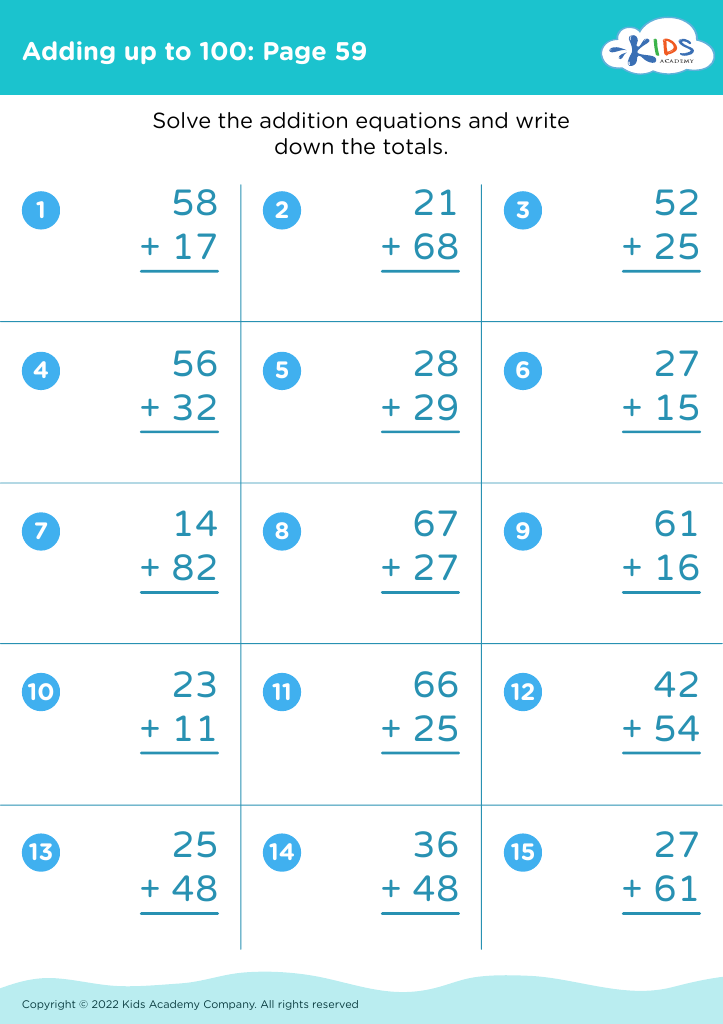
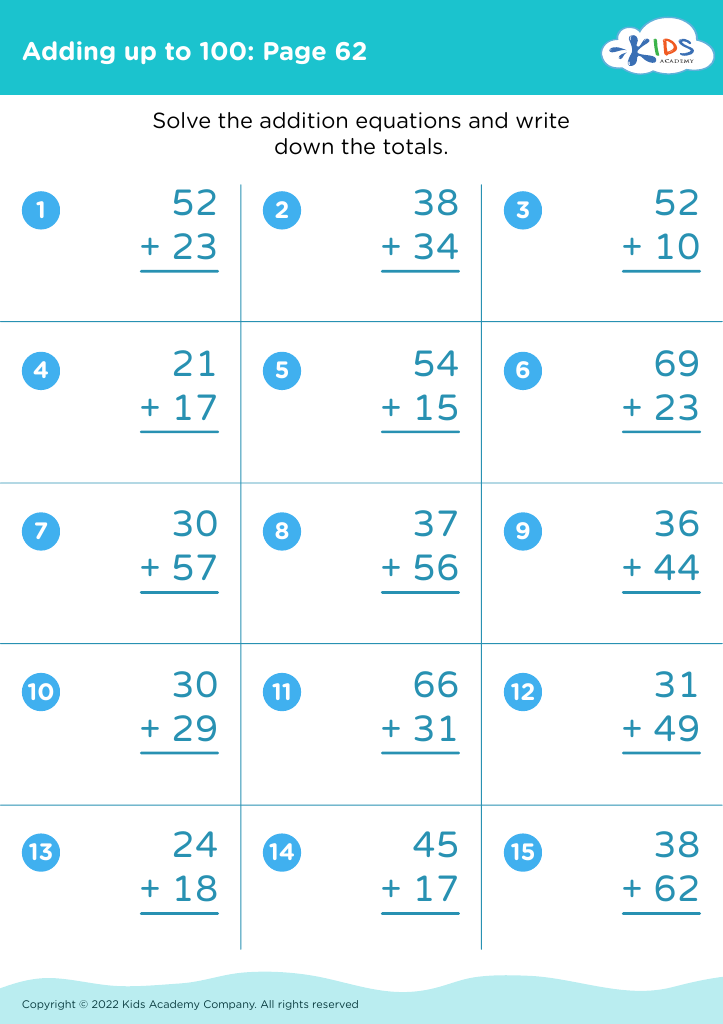
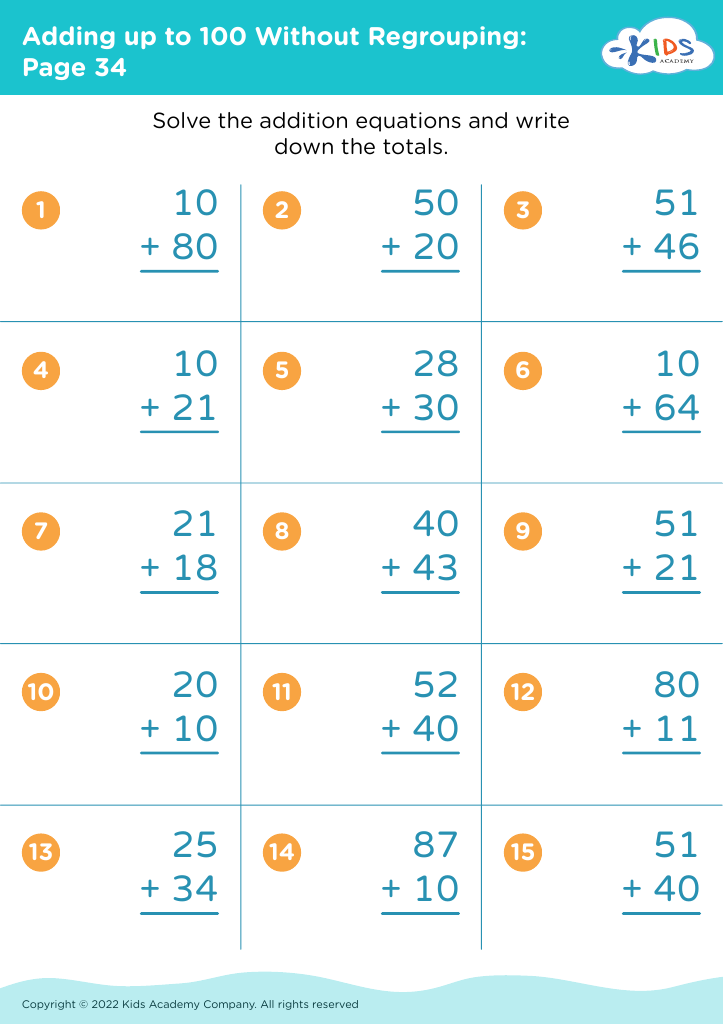
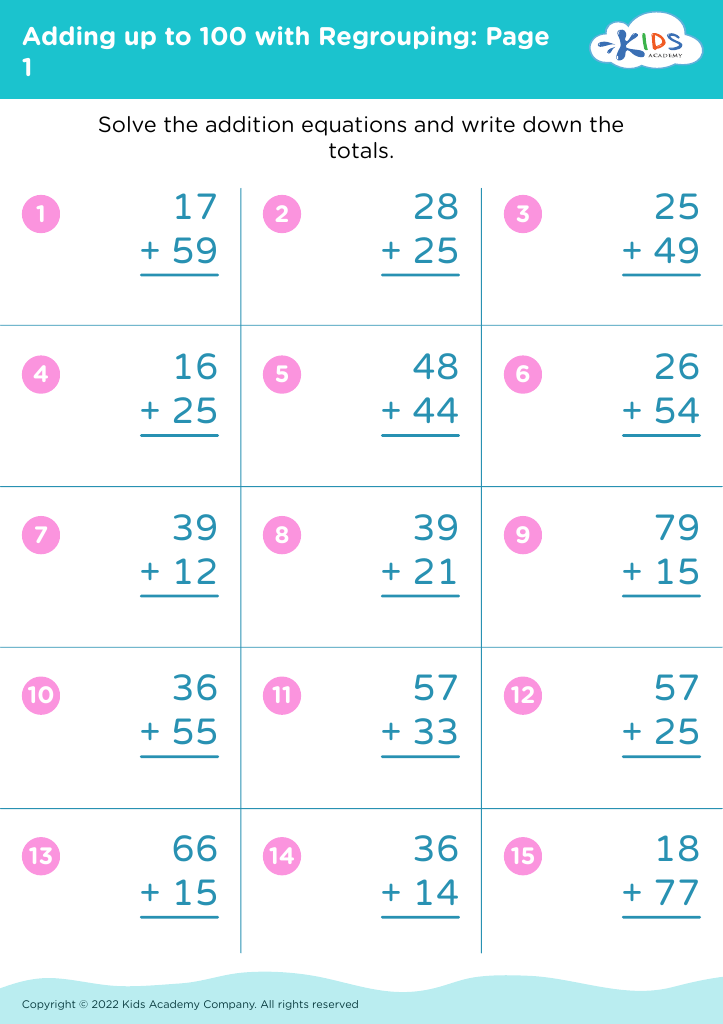
Explore our "Understanding Patterns: Adding Up to 100 Worksheets" designed for children ages 3-8. These engaging resources help young learners recognize and build mathematical patterns while developing their addition skills up to 100. With a variety of activities, children will enjoy interactive exercises that reinforce their understanding of numerical relationships and enhance critical thinking. Perfect for both home and classroom settings, these worksheets foster a strong foundation in mathematics while making learning fun. Help your child gain confidence in their math abilities—download our worksheets today and watch them thrive as they uncover the world of patterns and addition!



%20(1).jpg)



Understanding patterns and the foundational concept of adding up to 100 is crucial for children ages 3-8, as it lays the groundwork for their mathematical and cognitive development. Early exposure to patterns helps children recognize regularities in numbers and sequences, fostering critical thinking and problem-solving skills. Patterns are everywhere in our environment, and teaching children to identify and create them enhances their observational skills and boosts their confidence in tackling math-related tasks.
Adding up to 100 serves as a pivotal milestone in mathematical learning. Mastering this concept aids children in understanding place value, number relationships, and basic arithmetic skills, all of which are vital for success in more advanced math topics later on. By focusing on these ideas, parents and teachers can equip children with a robust number sense, enabling them to approach math with a positive attitude.
Moreover, proficiency in these areas supports children’s performance in school, as math is a fundamental element in various subjects. When parents and teachers prioritize understanding patterns and adding up to 100, they cultivate a strong foundation that not only prepares children for future academic success but also enhances their overall cognitive development and analytical reasoning skills. Engaging with these concepts early fosters a lifelong love for math and learning.








