Filters

385 filtered results

Clear all filters
Favorites
With answer key
Interactive

385 filtered results

Difficulty Level

Grade


Subject

    Check out this FREE Trial Lesson on Adding Up to 5 for age 3-8!

    A

    Favorites
    With answer key
    Interactive
    • 3-8
    • Adding Up to 5
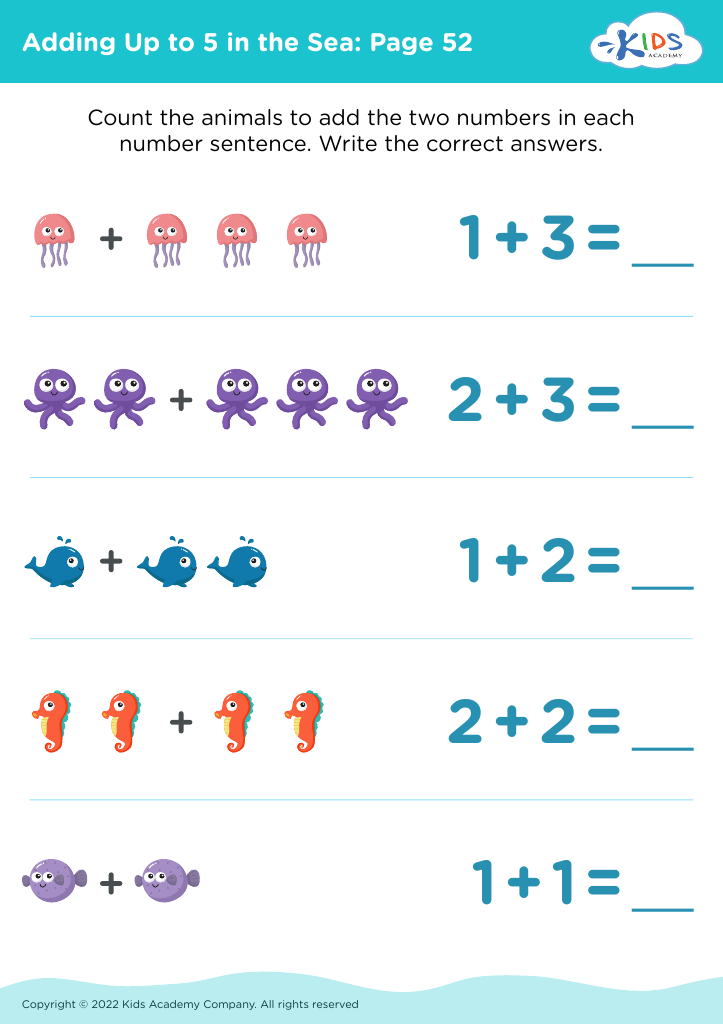
    Adding Up to 5 in the Sea: Page 52
    Adding Up to 5 in the Sea: Page 52
    Adding Up to 5 in the Sea: Page 52
    Worksheet
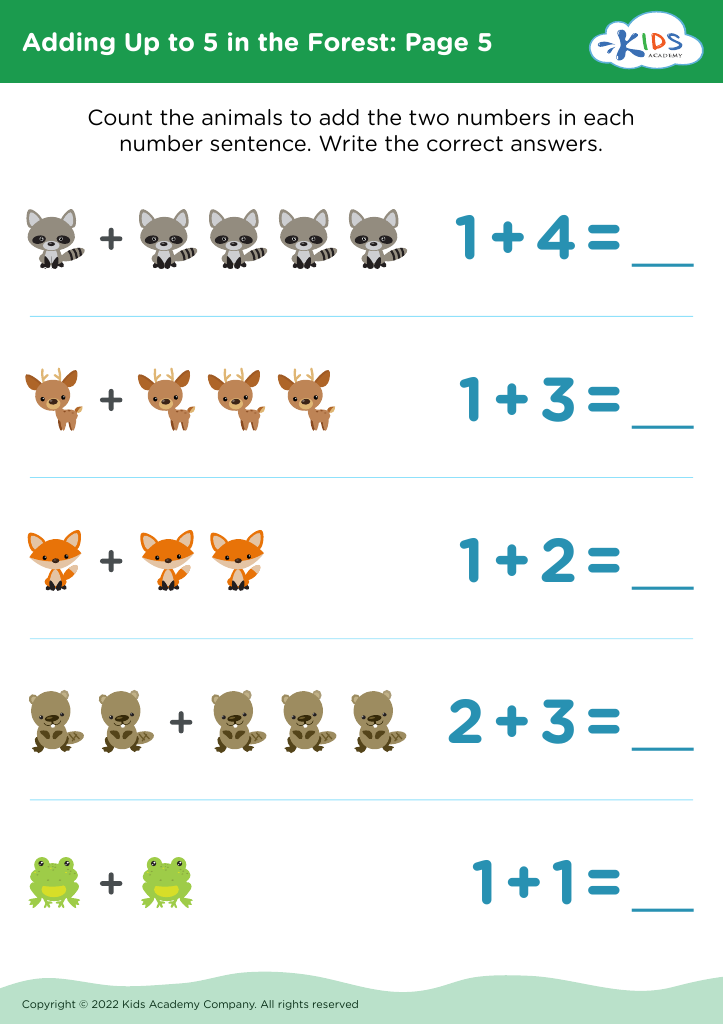
    Adding Up to 5 in the Forest: Page 5
    Adding Up to 5 in the Forest: Page 5
    Adding Up to 5 in the Forest: Page 5
    Worksheet
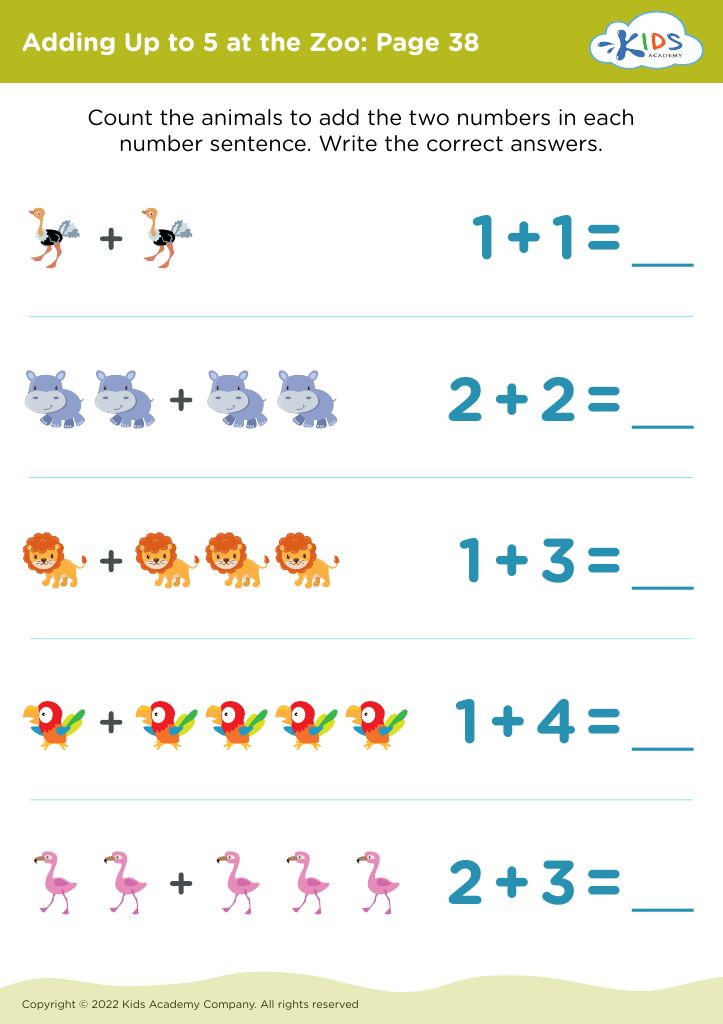
    Adding Up to 5 at the Zoo: Page 38
    Adding Up to 5 at the Zoo: Page 38
    Adding Up to 5 at the Zoo: Page 38
    Worksheet
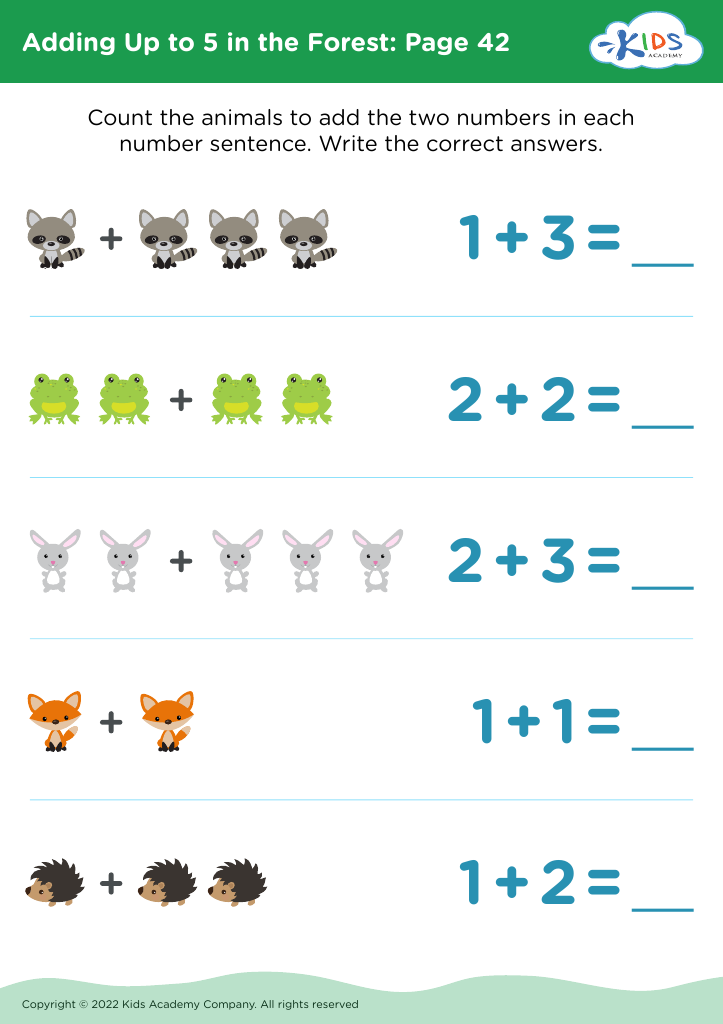
    Adding Up to 5 in the Forest: Page 42
    Adding Up to 5 in the Forest: Page 42
    Adding Up to 5 in the Forest: Page 42
    Worksheet
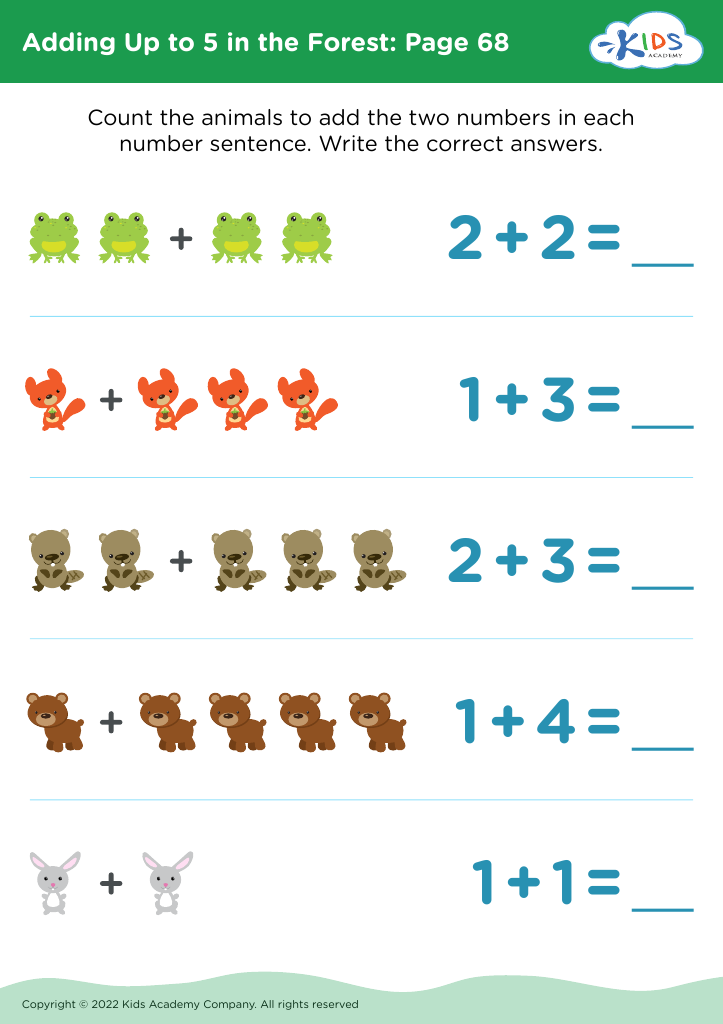
    Adding Up to 5 in the Forest: Page 68
    Adding Up to 5 in the Forest: Page 68
    Adding Up to 5 in the Forest: Page 68
    Worksheet
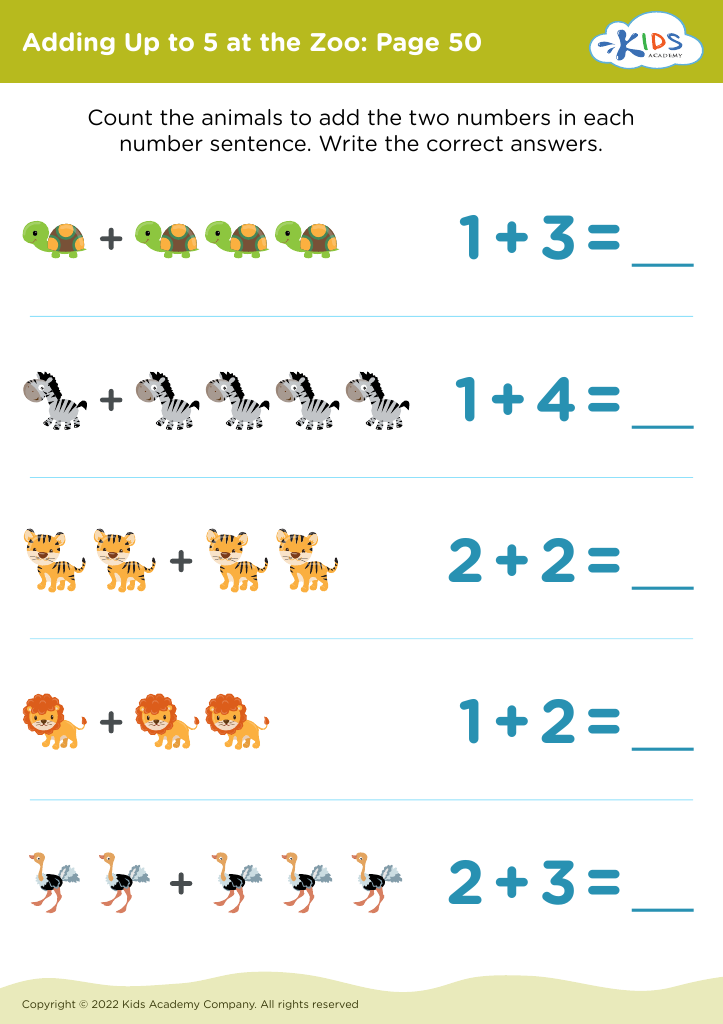
    Adding Up to 5 at the Zoo: Page 50
    Adding Up to 5 at the Zoo: Page 50
    Adding Up to 5 at the Zoo: Page 50
    Worksheet
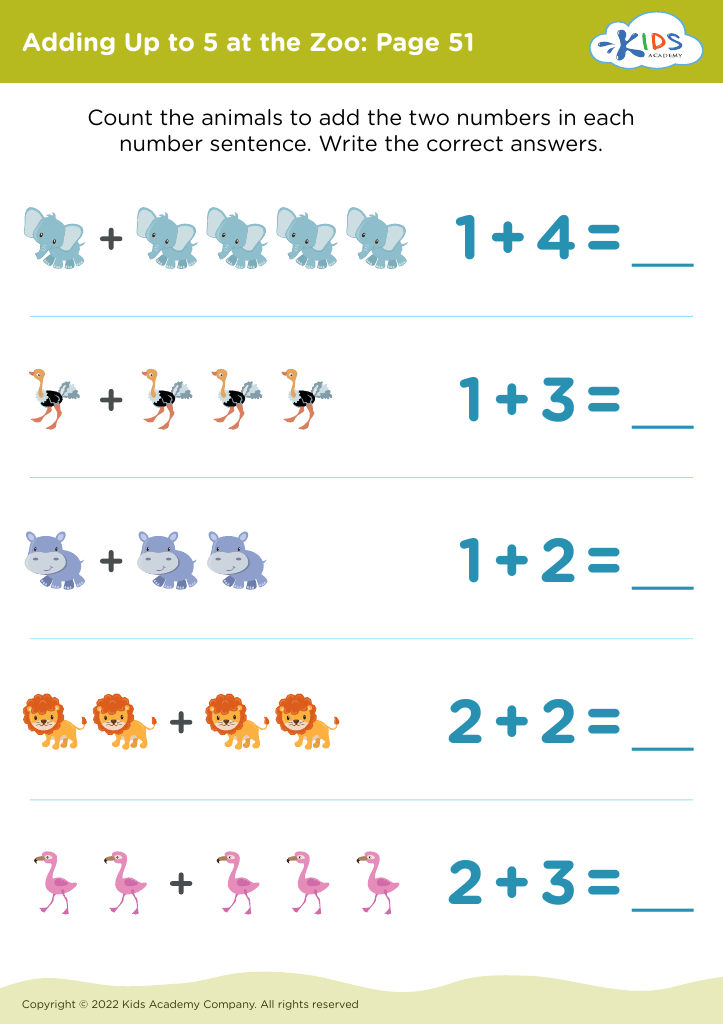
    Adding Up to 5 at the Zoo: Page 51
    Adding Up to 5 at the Zoo: Page 51
    Adding Up to 5 at the Zoo: Page 51
    Worksheet
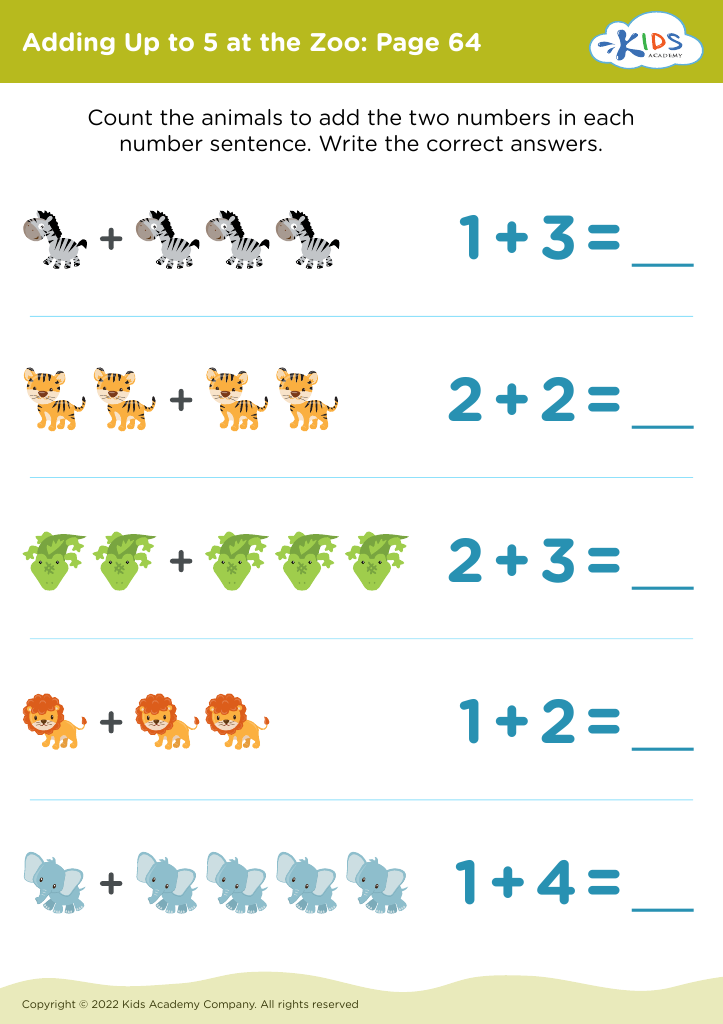
    Adding Up to 5 at the Zoo: Page 64
    Adding Up to 5 at the Zoo: Page 64
    Adding Up to 5 at the Zoo: Page 64
    Worksheet
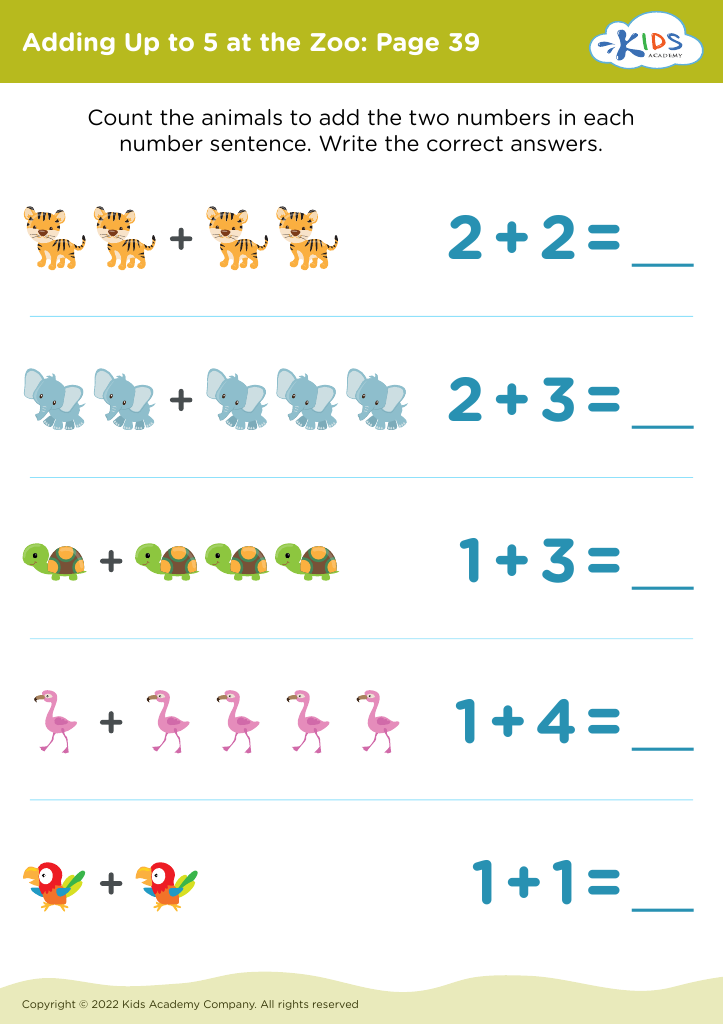
    Adding Up to 5 at the Zoo: Page 39
    Adding Up to 5 at the Zoo: Page 39
    Adding Up to 5 at the Zoo: Page 39
    Worksheet
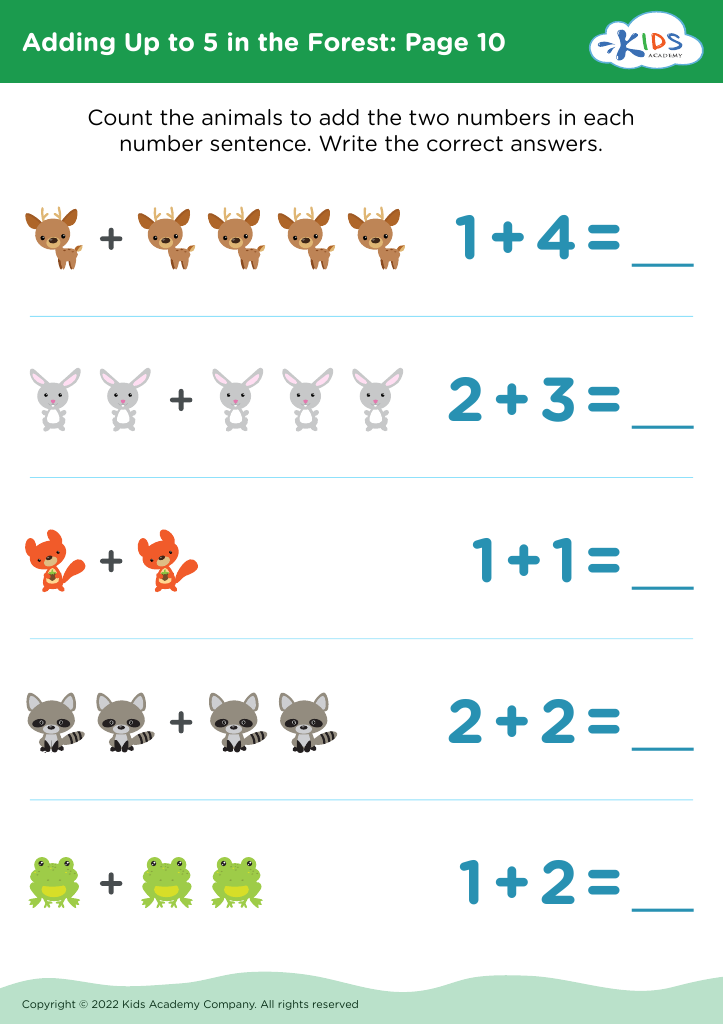
    Adding Up to 5 in the Forest: Page 10
    Adding Up to 5 in the Forest: Page 10
    Adding Up to 5 in the Forest: Page 10
    Worksheet
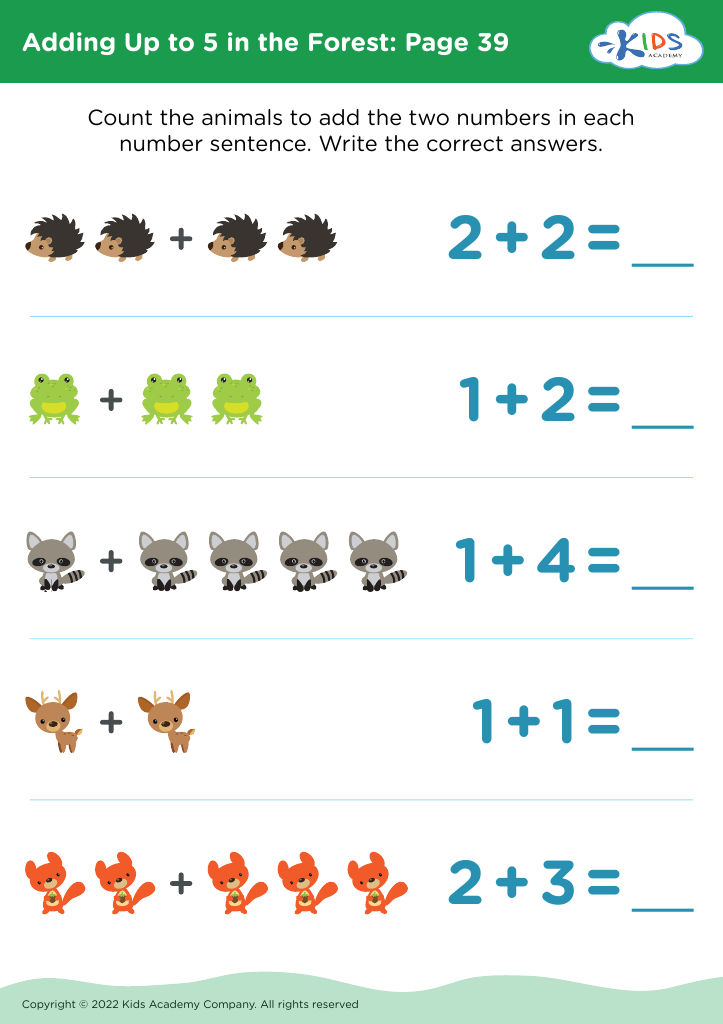
    Adding Up to 5 in the Forest: Page 39
    Adding Up to 5 in the Forest: Page 39
    Adding Up to 5 in the Forest: Page 39
    Worksheet
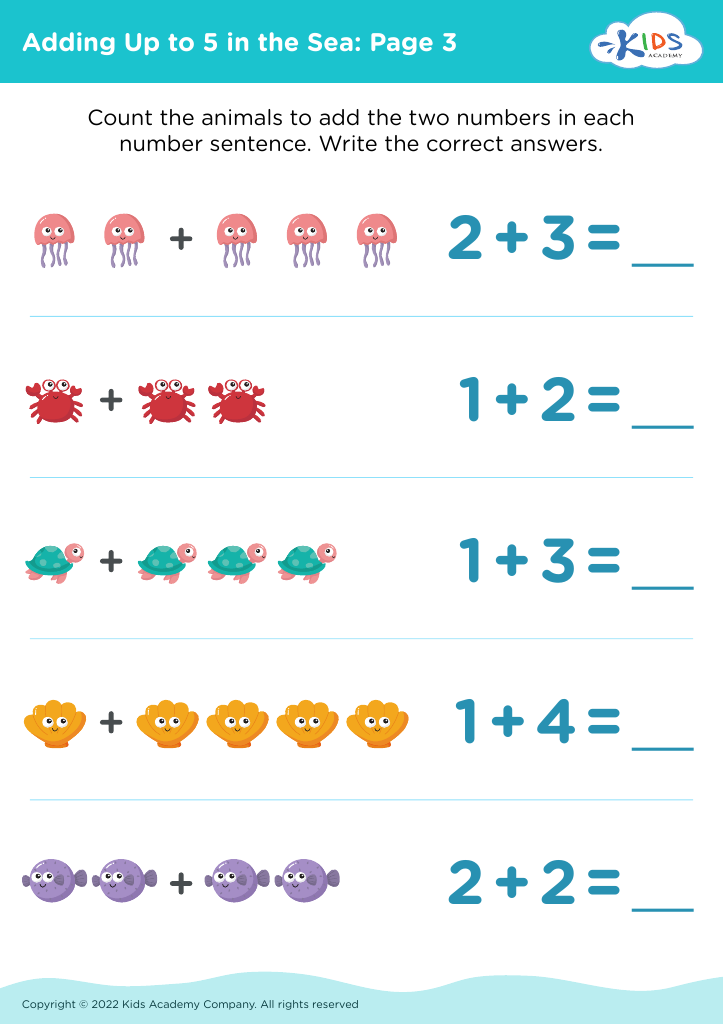
    Adding Up to 5 in the Sea: Page 3
    Adding Up to 5 in the Sea: Page 3

    Adding Up to 5 in the Sea: Page 3

    Adding Up to 5 in the Sea: Page 3
    Worksheet
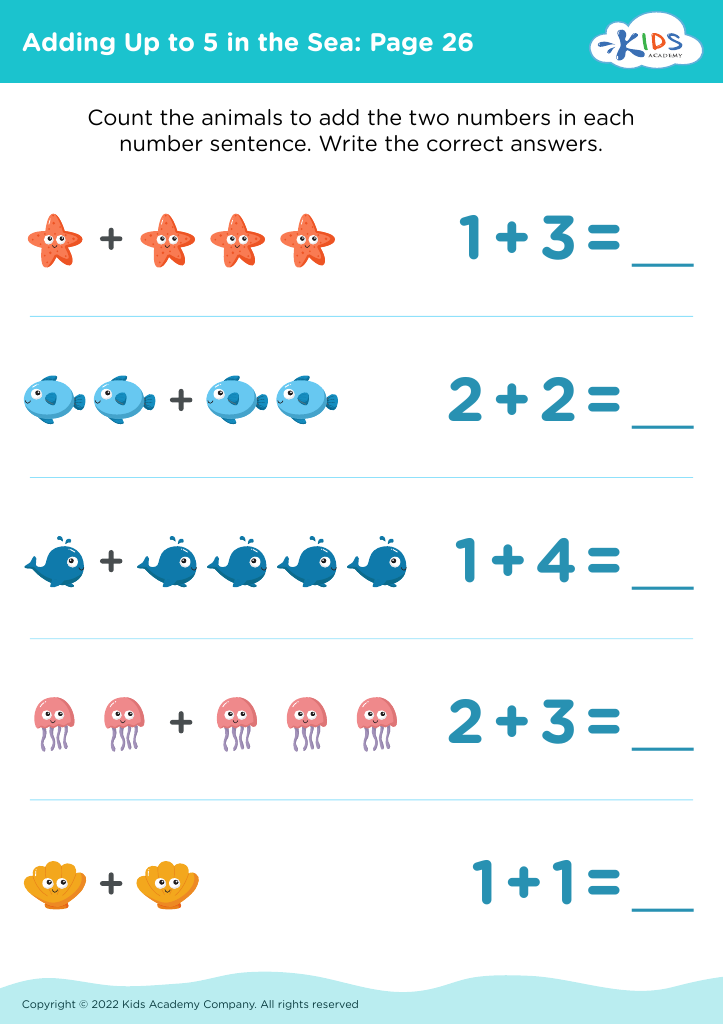
    Adding Up to 5 in the Sea: Page 26
    Adding Up to 5 in the Sea: Page 26
    Adding Up to 5 in the Sea: Page 26
    Worksheet
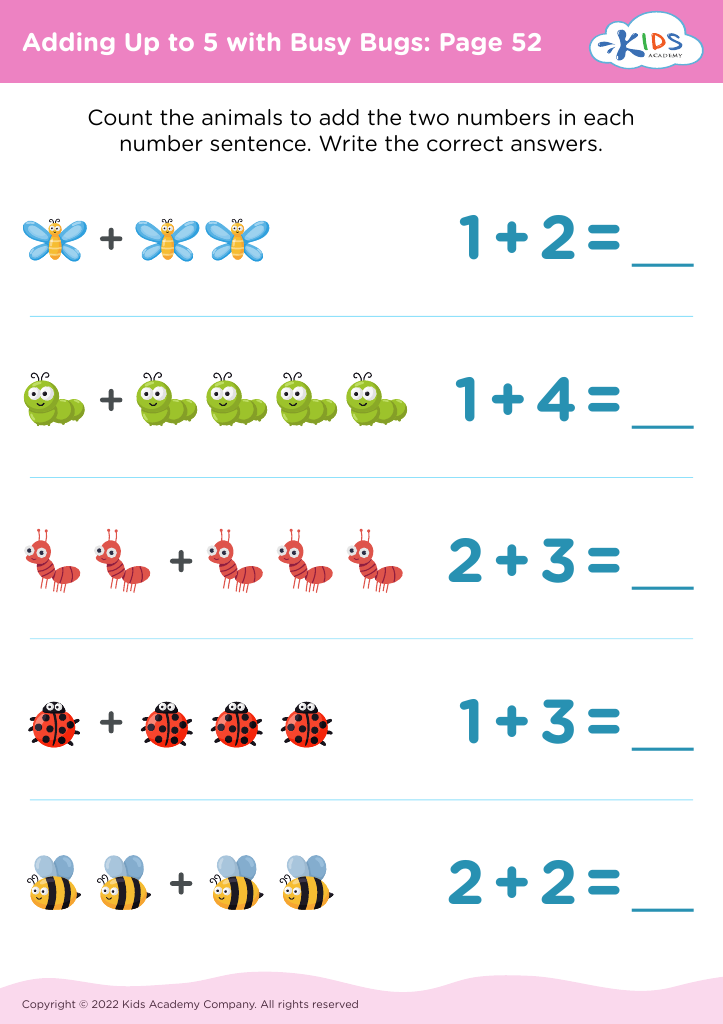
    Adding Up to 5 with Busy Bugs: Page 52
    Adding Up to 5 with Busy Bugs: Page 52
    Adding Up to 5 with Busy Bugs: Page 52
    Worksheet
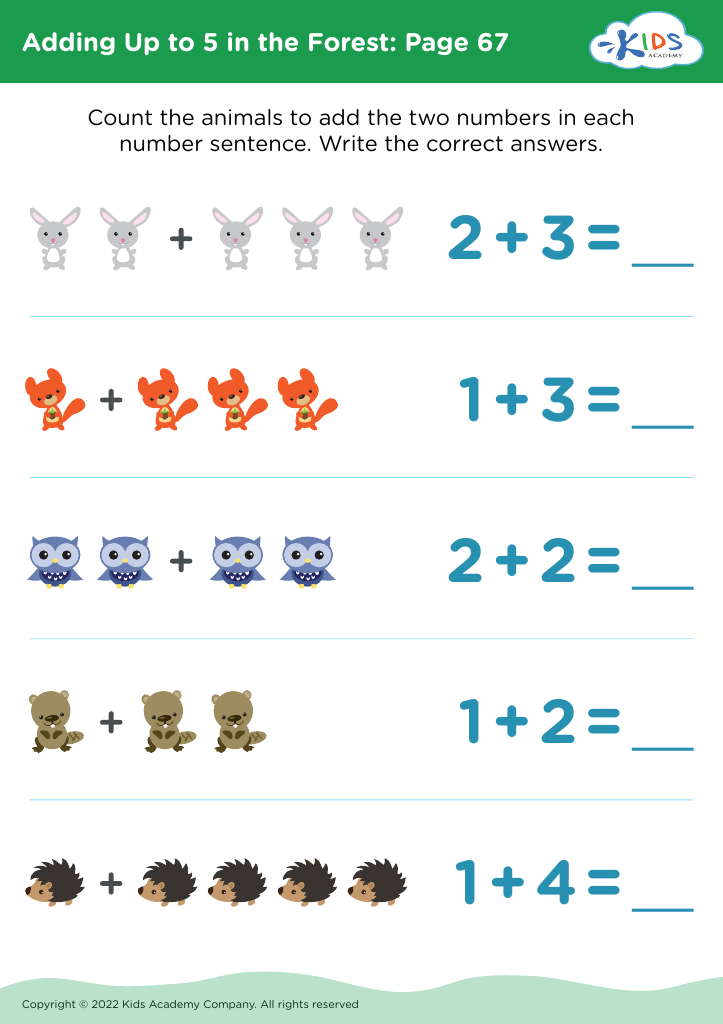
    Adding Up to 5 in the Forest: Page 67
    Adding Up to 5 in the Forest: Page 67
    Adding Up to 5 in the Forest: Page 67
    Worksheet
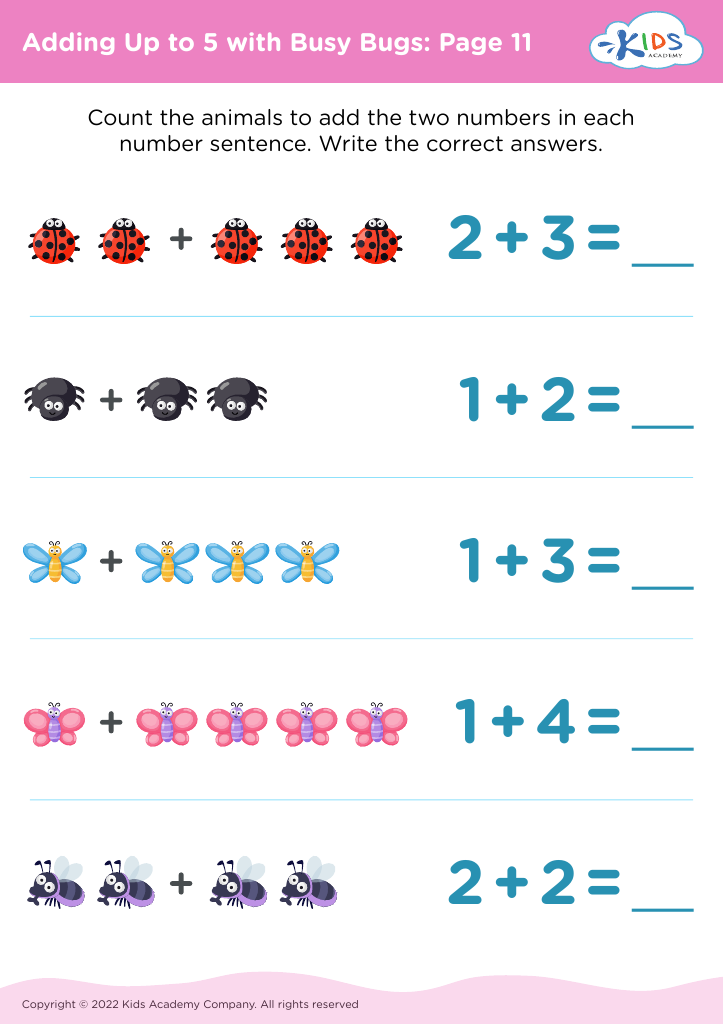
    Adding Up to 5 with Busy Bugs: Page 11
    Adding Up to 5 with Busy Bugs: Page 11
    Adding Up to 5 with Busy Bugs: Page 11
    Worksheet
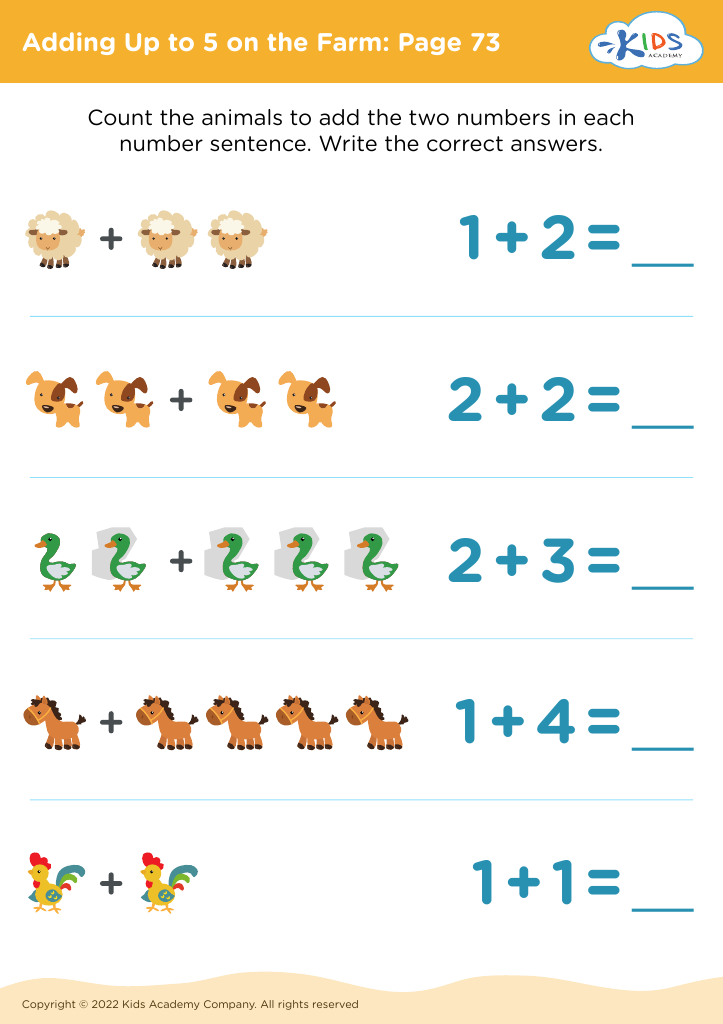
    Adding Up to 5 on the Farm: Page 73
    Adding Up to 5 on the Farm: Page 73
    Adding Up to 5 on the Farm: Page 73
    Worksheet
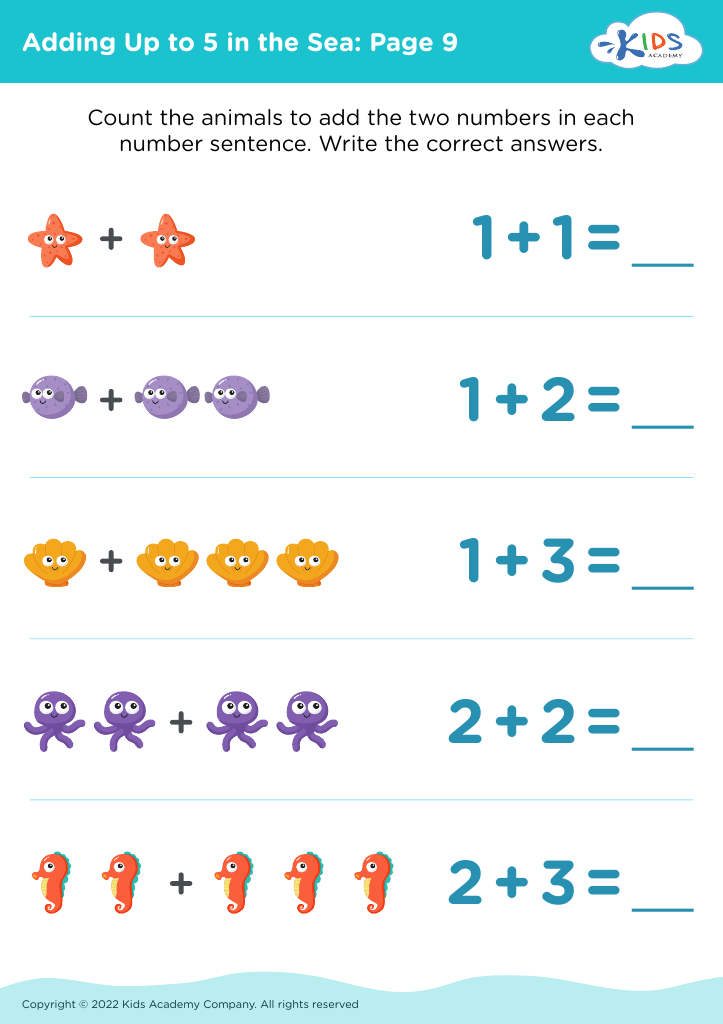
    Adding Up to 5 in the Sea: Page 9
    Adding Up to 5 in the Sea: Page 9

    Adding Up to 5 in the Sea: Page 9

    Adding Up to 5 in the Sea: Page 9
    Worksheet
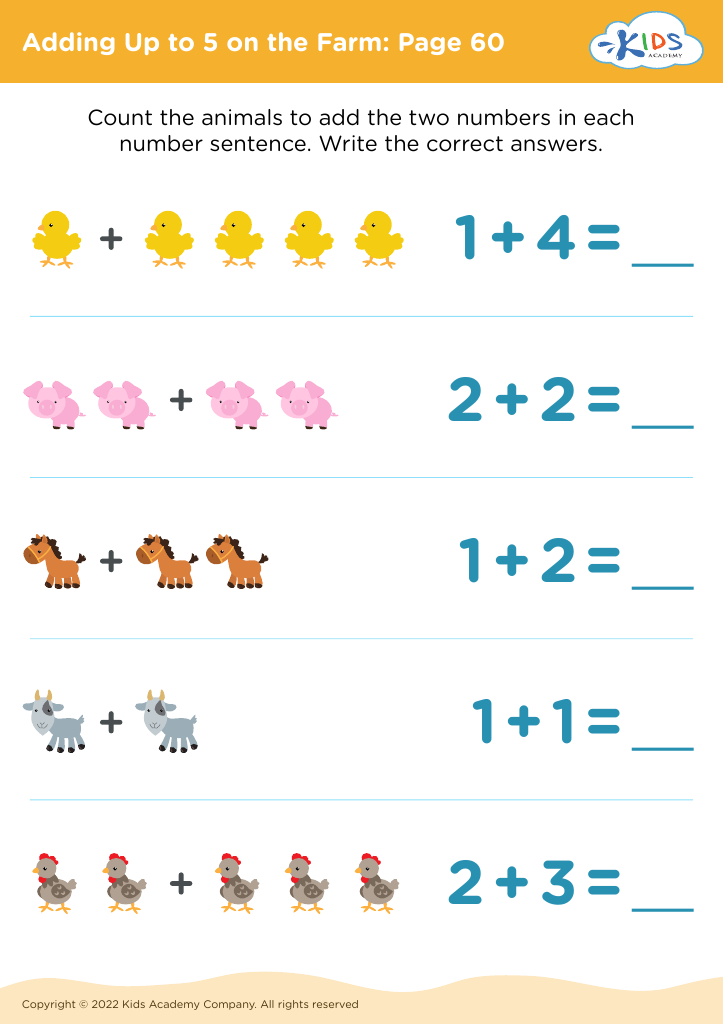
    Adding Up to 5 on the Farm: Page 60
    Adding Up to 5 on the Farm: Page 60
    Adding Up to 5 on the Farm: Page 60
    Worksheet
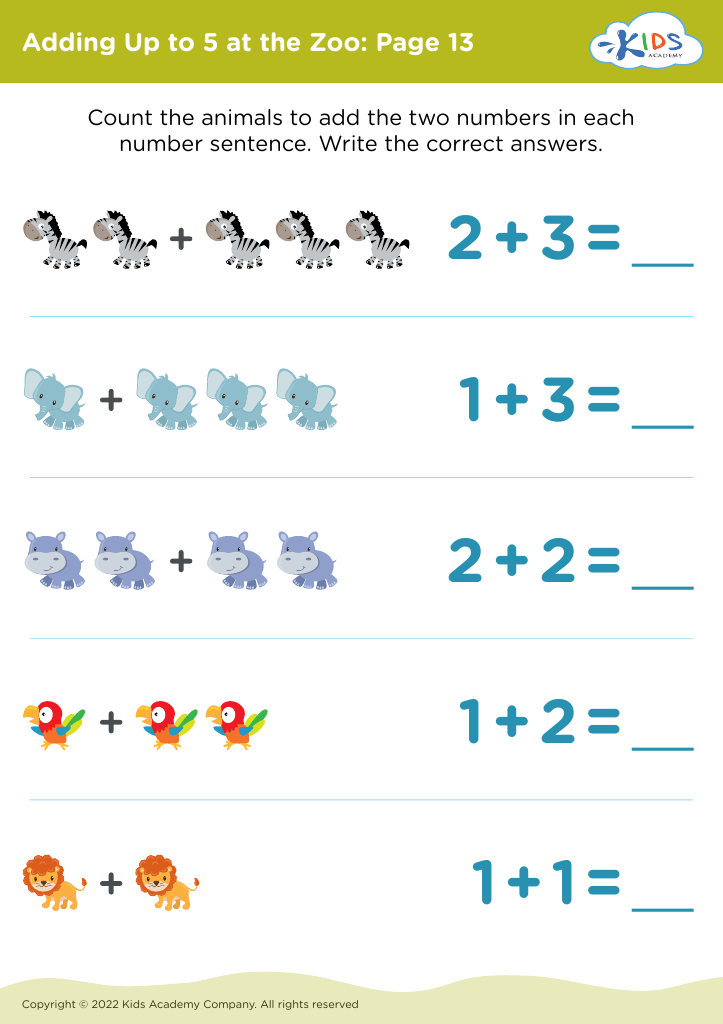
    Adding Up to 5 at the Zoo: Page 13
    Adding Up to 5 at the Zoo: Page 13
    Adding Up to 5 at the Zoo: Page 13
    Worksheet
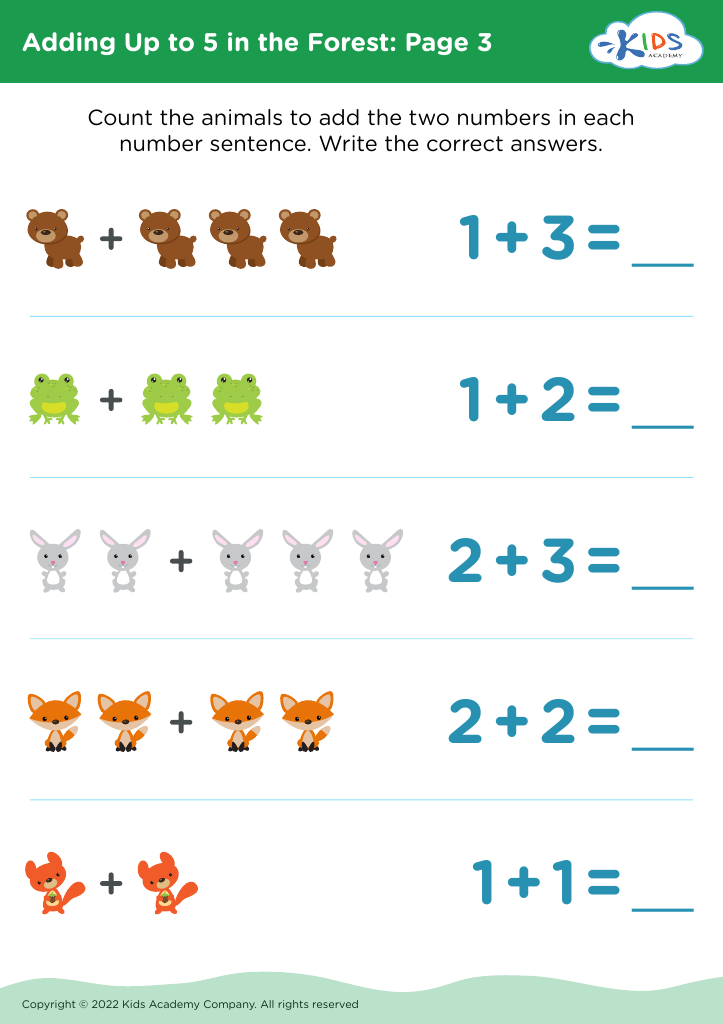
    Adding Up to 5 in the Forest: Page 3
    Adding Up to 5 in the Forest: Page 3
    Adding Up to 5 in the Forest: Page 3
    Worksheet
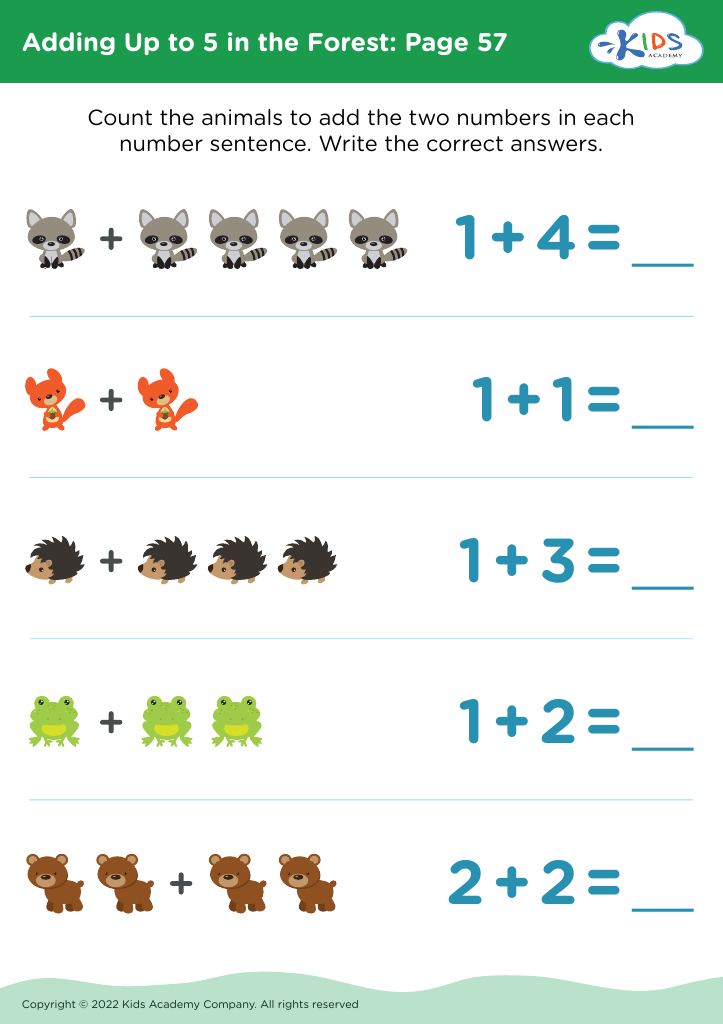
    Adding Up to 5 in the Forest: Page 57
    Adding Up to 5 in the Forest: Page 57
    Adding Up to 5 in the Forest: Page 57
    Worksheet
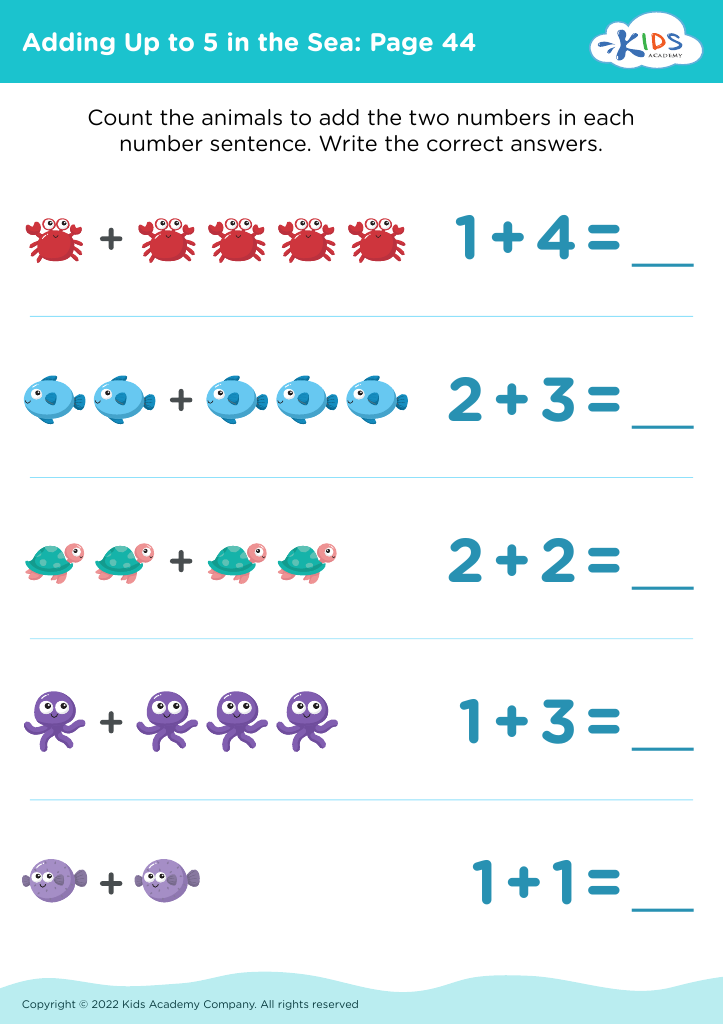
    Adding Up to 5 in the Sea: Page 44
    Adding Up to 5 in the Sea: Page 44
    Adding Up to 5 in the Sea: Page 44
    Worksheet
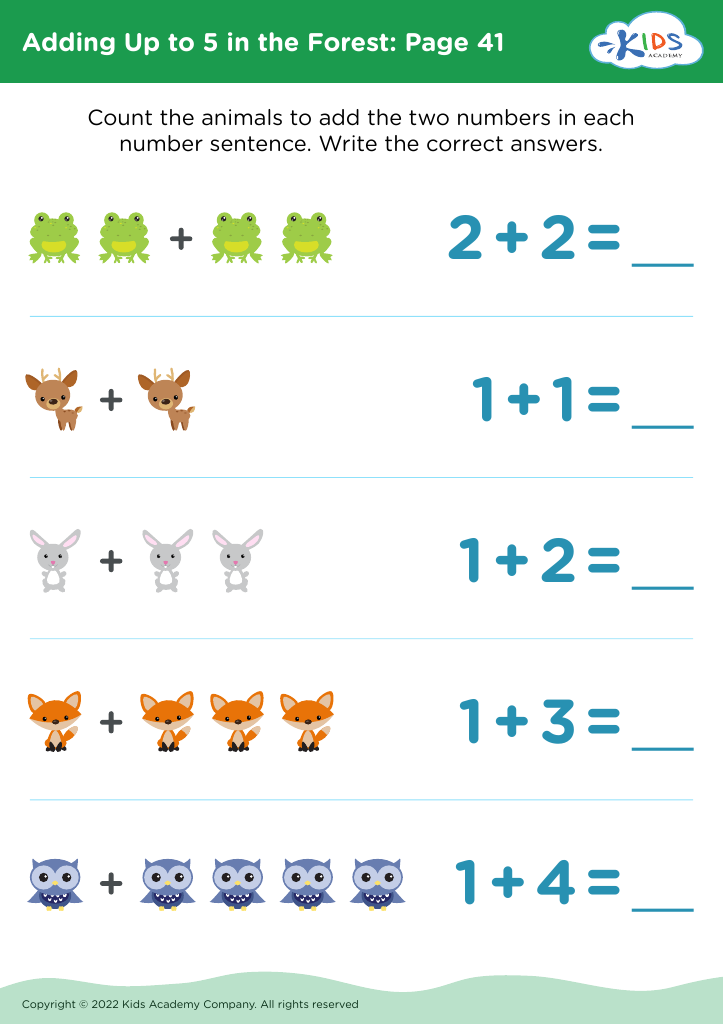
    Adding Up to 5 in the Forest: Page 41
    Adding Up to 5 in the Forest: Page 41
    Adding Up to 5 in the Forest: Page 41
    Worksheet


    Parents and teachers should care about helping children master the skill of adding up to 5 from an early age because it establishes foundational math concepts that are critical for future learning. Introducing addition in a manageable and tangible way fosters a positive relationship with mathematics and builds confidence. For children aged 3-8, these early encounters with numbers and very basic operations lay the groundwork for understanding more complex mathematical concepts later on.

    Adding up to 5 provides an excellent opportunity for children to develop number sense, a critical component for all subsequent arithmetic learning. Number sense includes the ability to recognize quantities without counting, understanding the relationships between numbers, and developing strategies for simple calculations. By mastering simple addition, children learn to think logically and recognize patterns, which are skills essential not just in mathematical pursuits, but in problem-solving tasks across all subjects.

    Furthermore, engaging with simple addition enhances fine motor skills and fosters social interactions as children can often learn these concepts through hands-on activities or in group settings. Overall, working on adding up to 5 equips children with essential cognitive tools early on, making future academic topics less intimidating and more approachable. This early intervention can ignite a lifelong interest and proficiency in math, benefiting children well beyond the classroom.