Animal identification Adding Up to 5 Worksheets for Ages 3-8
27 filtered results
-
From - To
Introduce "Animal Identification Adding Up to 5 Worksheets" from Kids Academy, specially designed for children ages 3-8. These engaging worksheets combine math and animal identification to make learning fun and educational. With colorful animal illustrations and simple addition problems, young learners can practice adding numbers up to 5 while enhancing their recognition skills of various animals. Perfect for early mathematics practice, homeschooling, or classroom use, these worksheets help build a strong foundation in basic math and cognitive development. Unlock your child's potential with these interactive, educational exercises and watch their confidence soar!
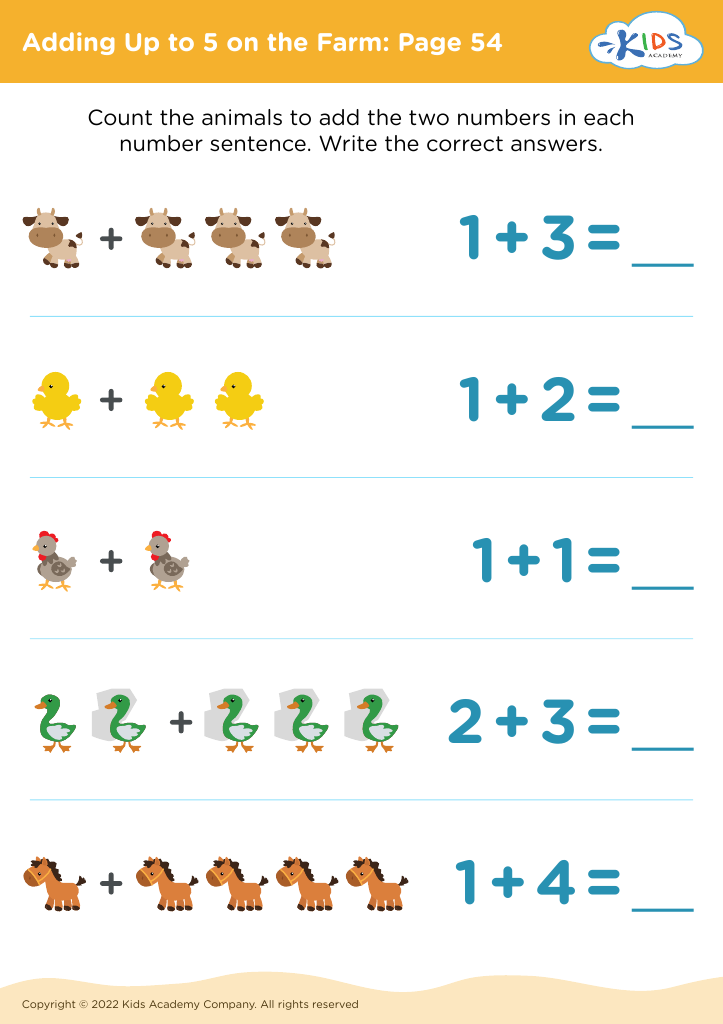
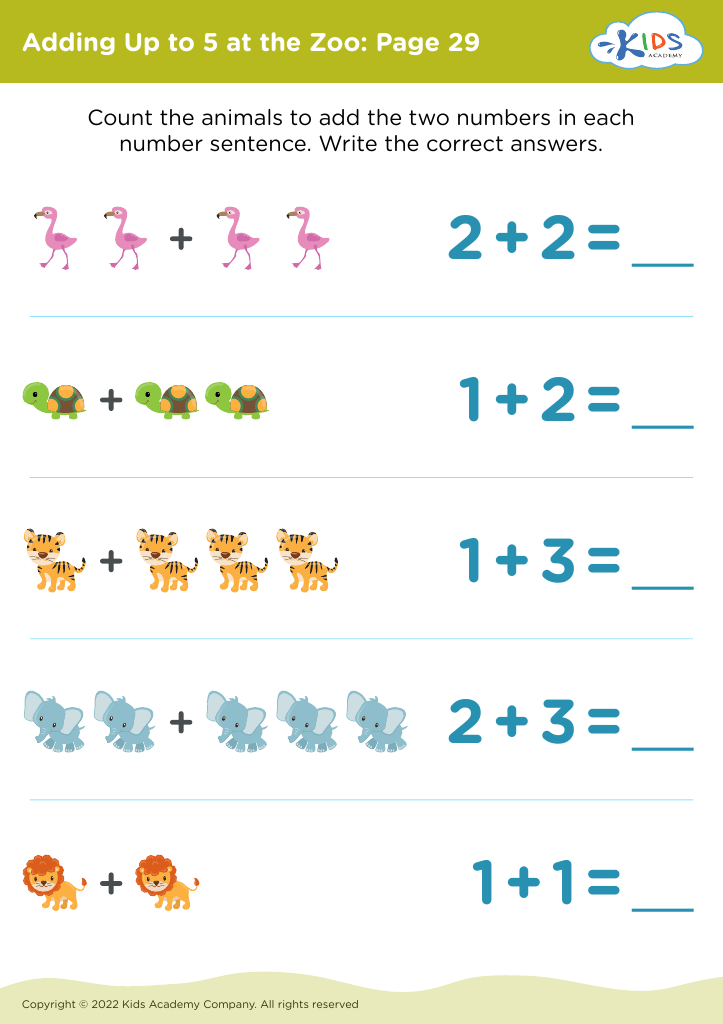
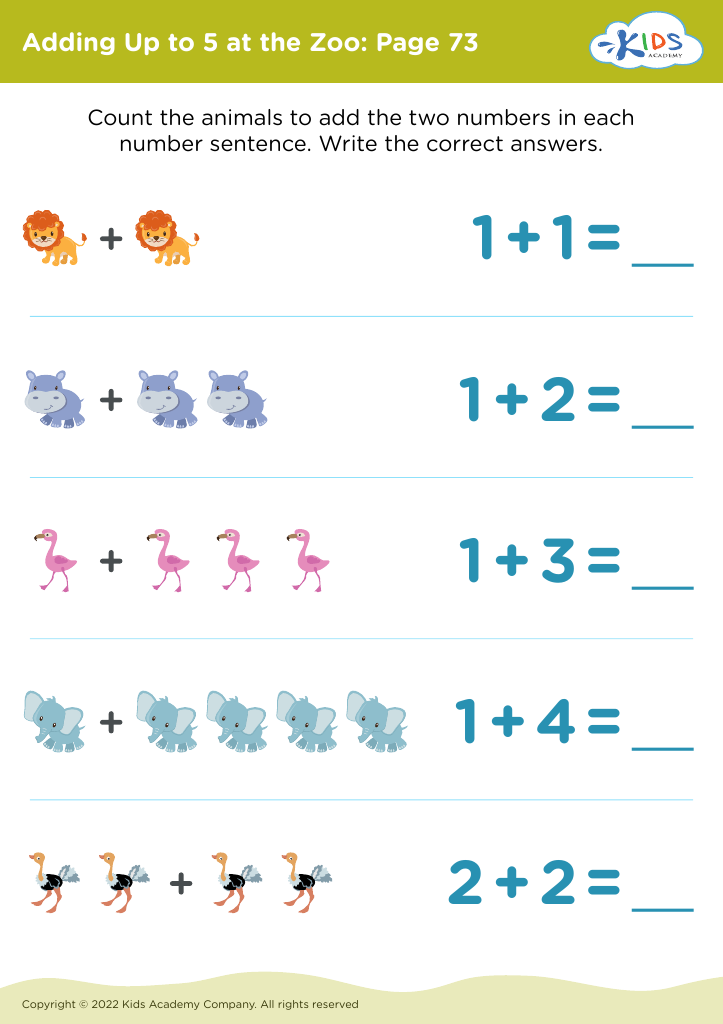
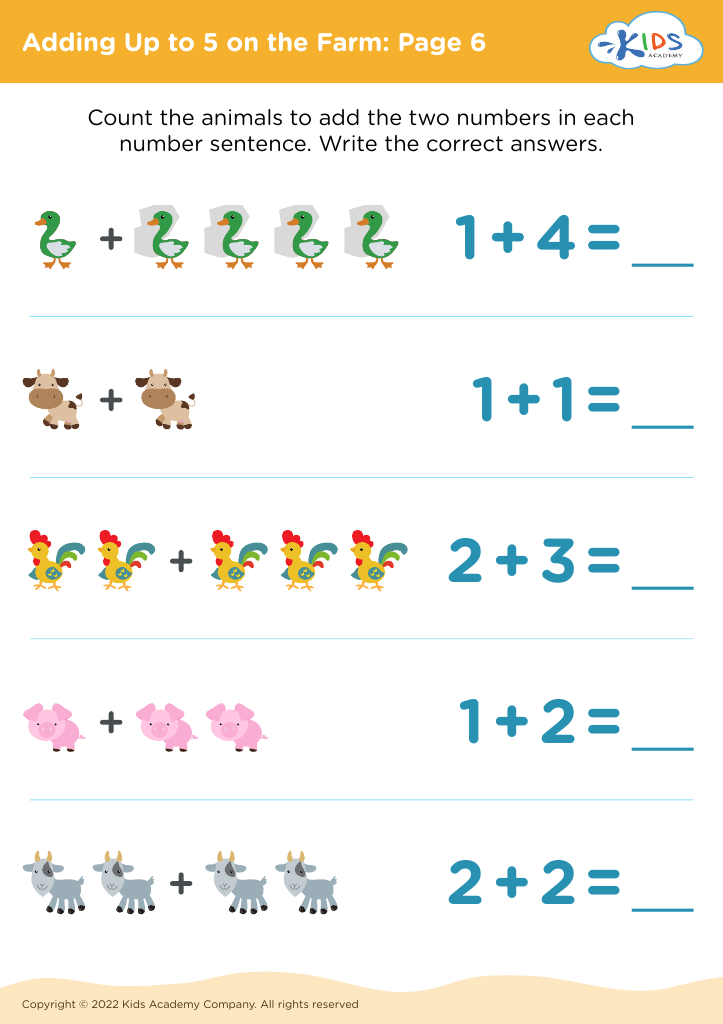
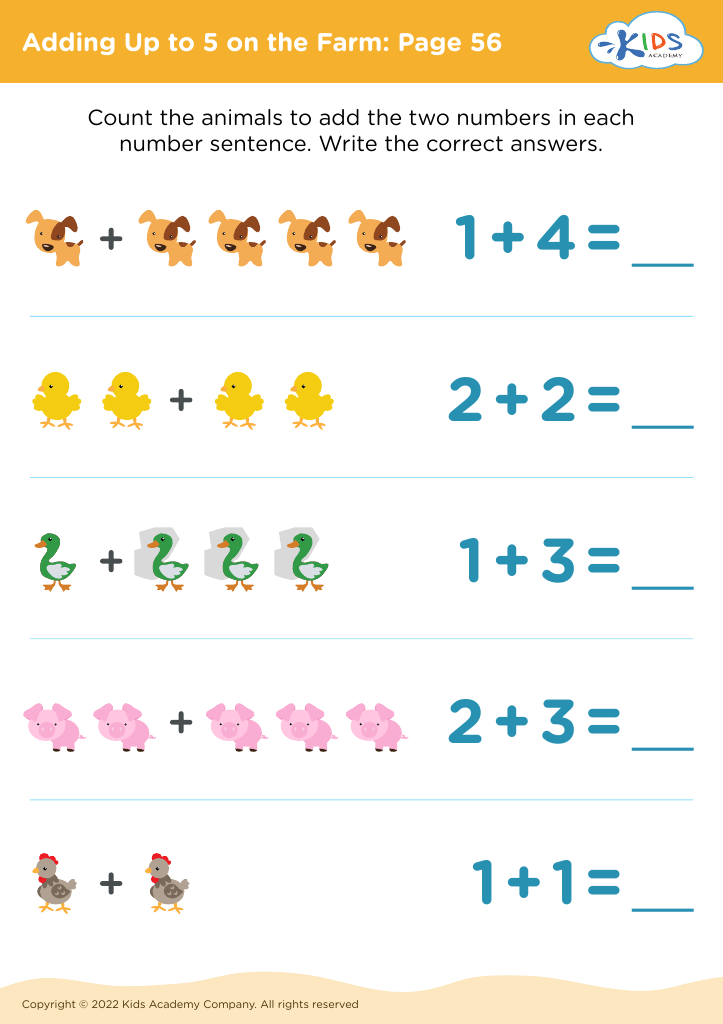
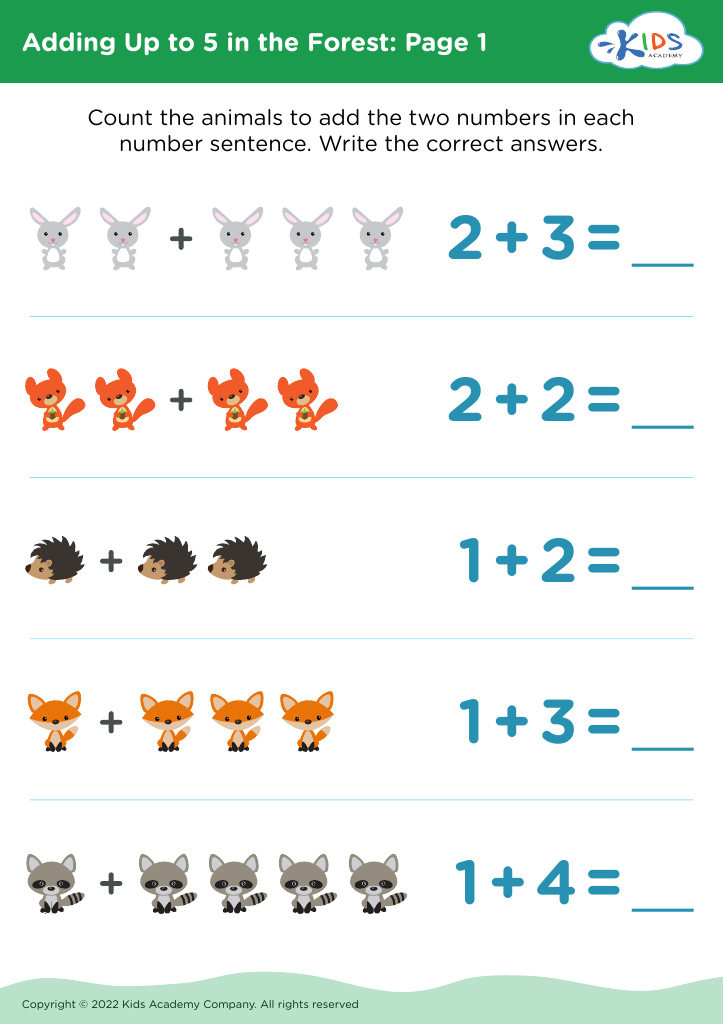
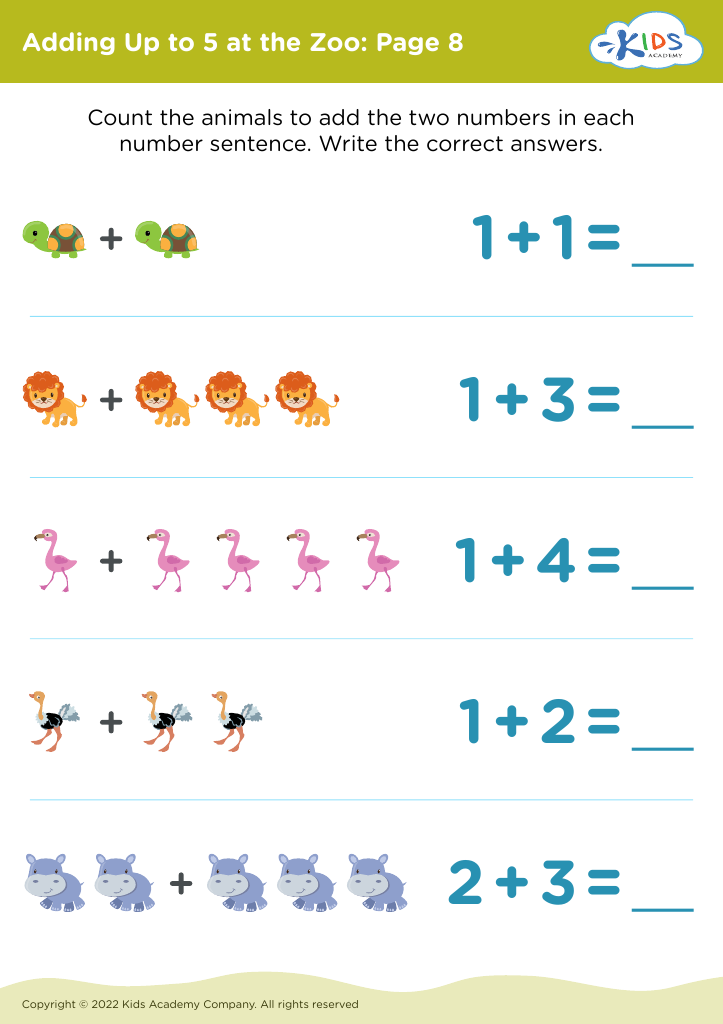
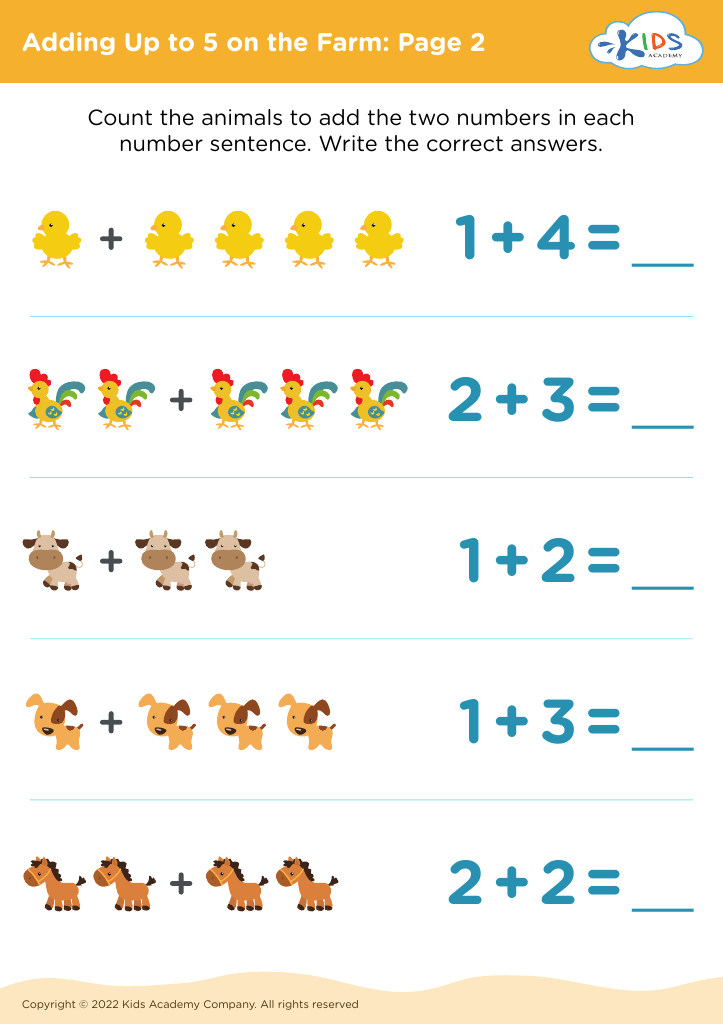
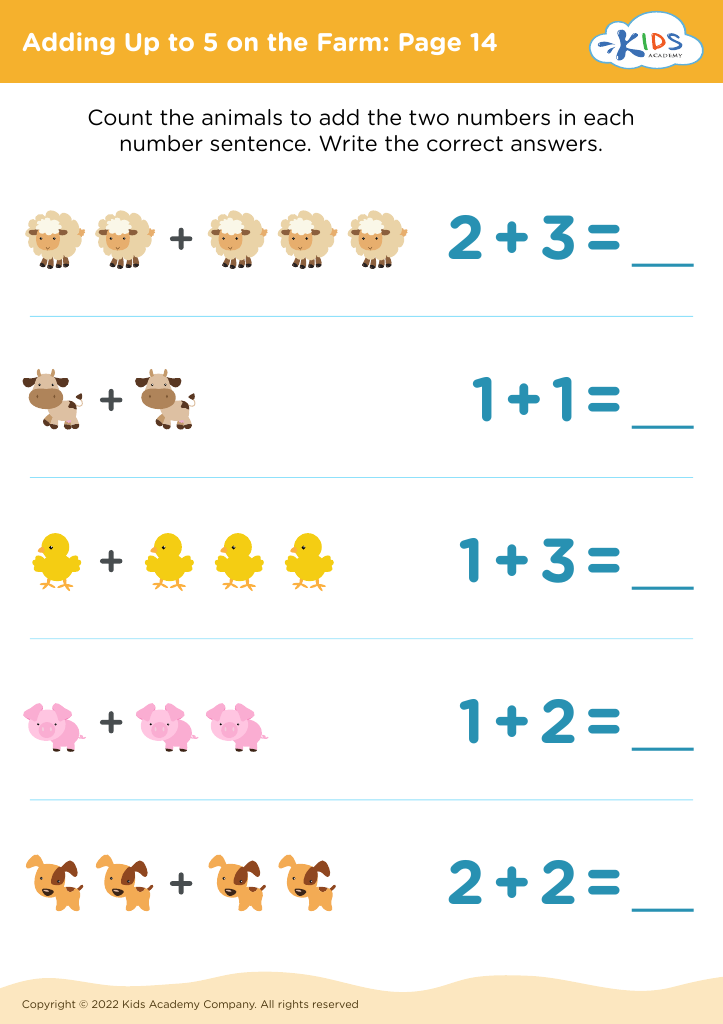
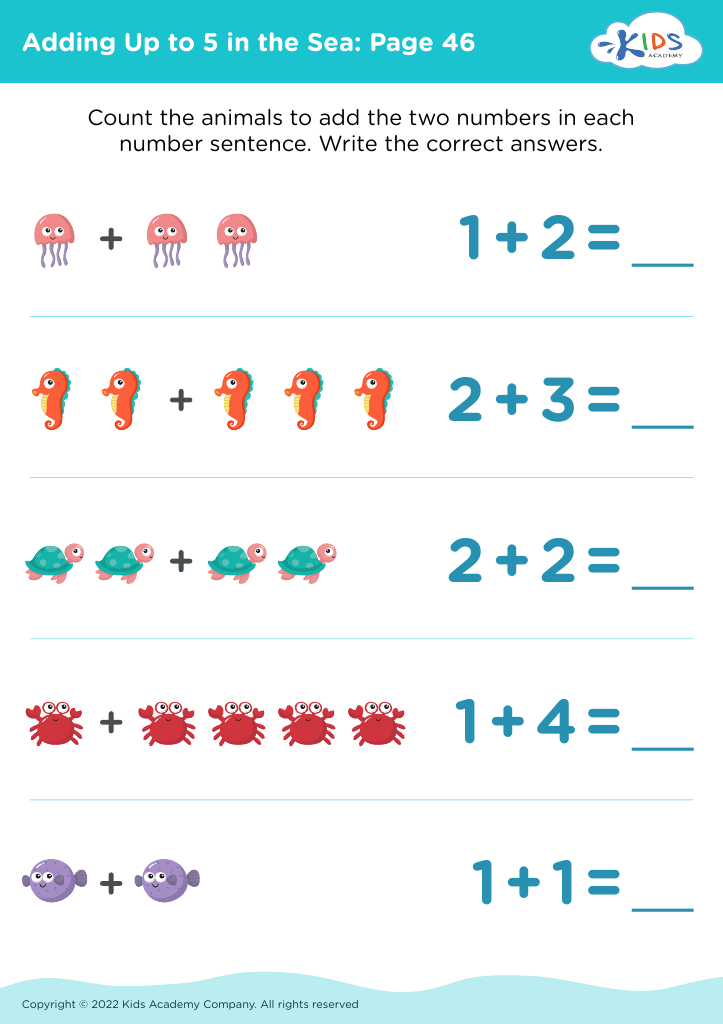
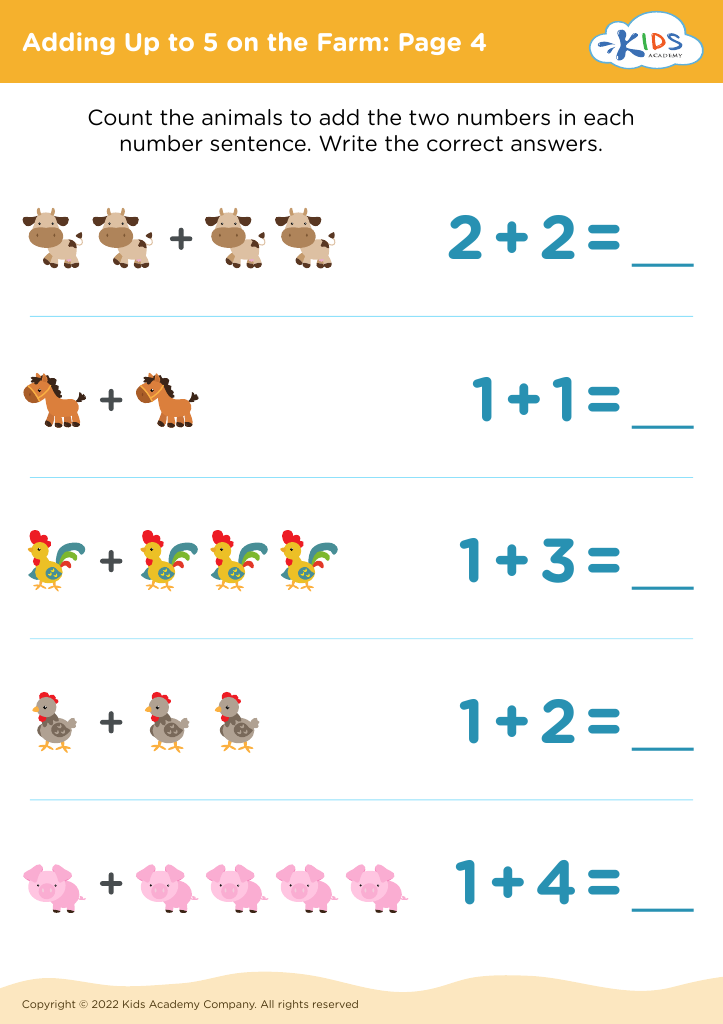
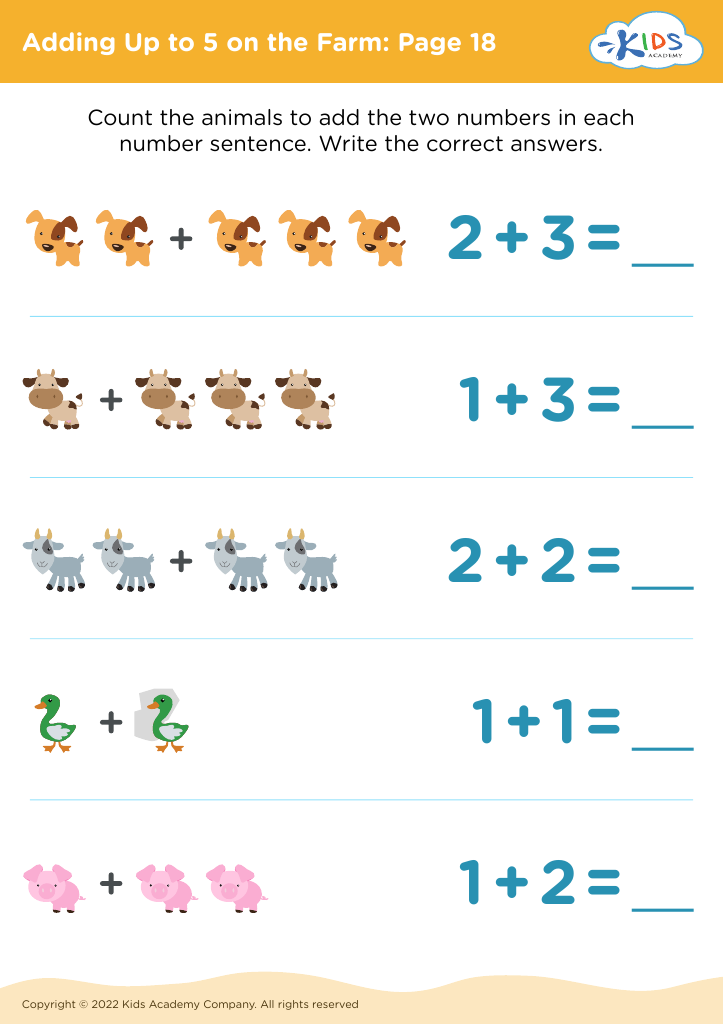
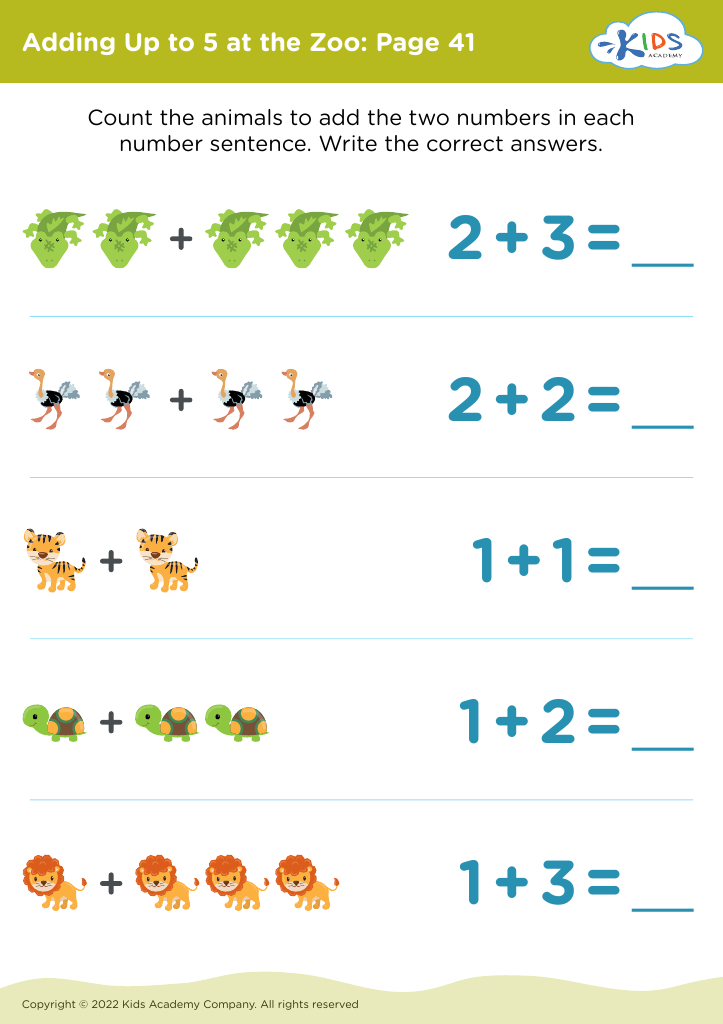
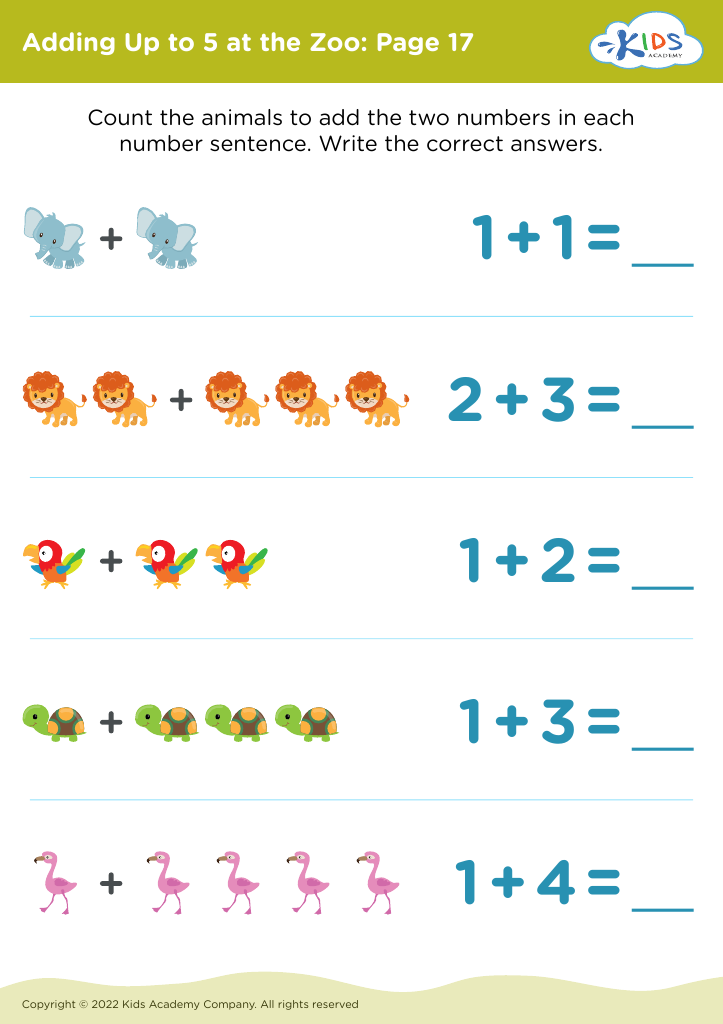
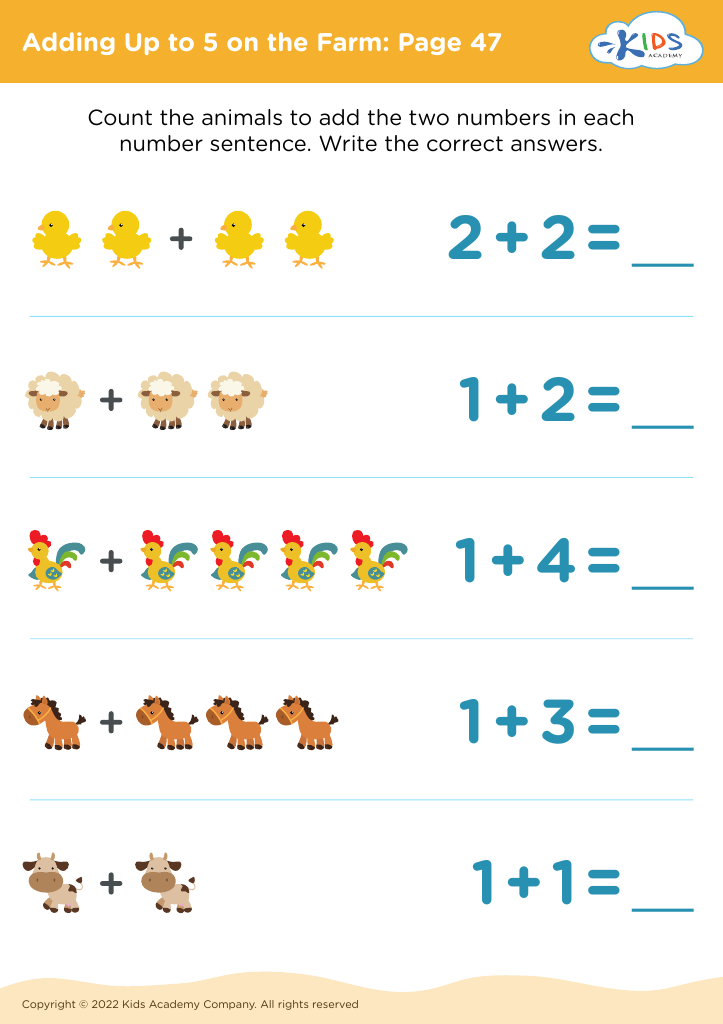
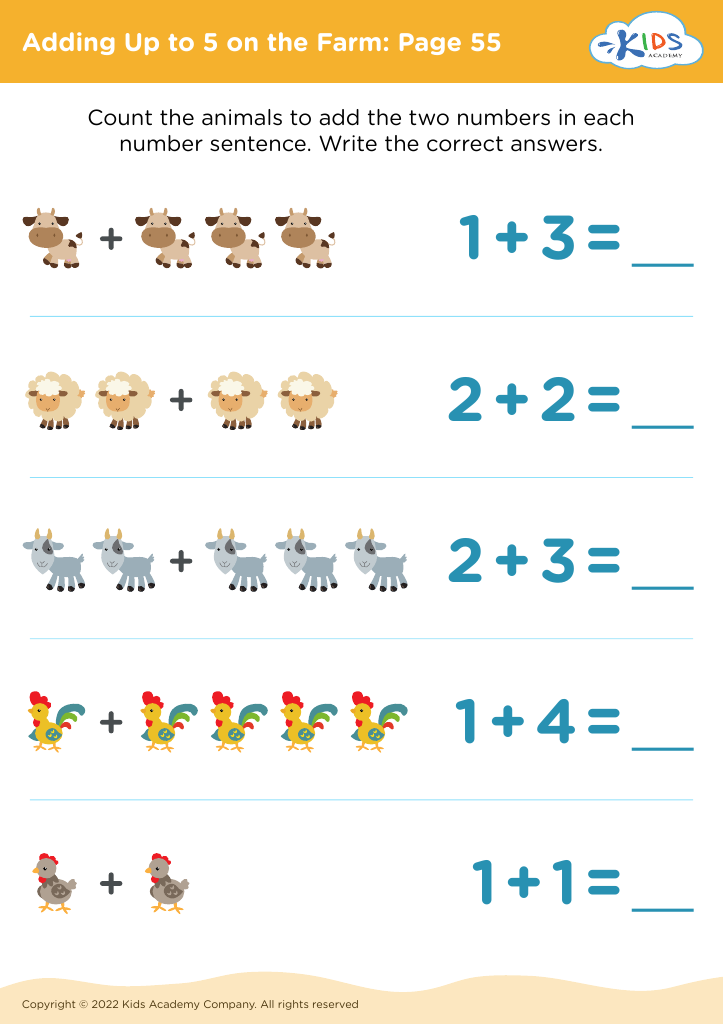
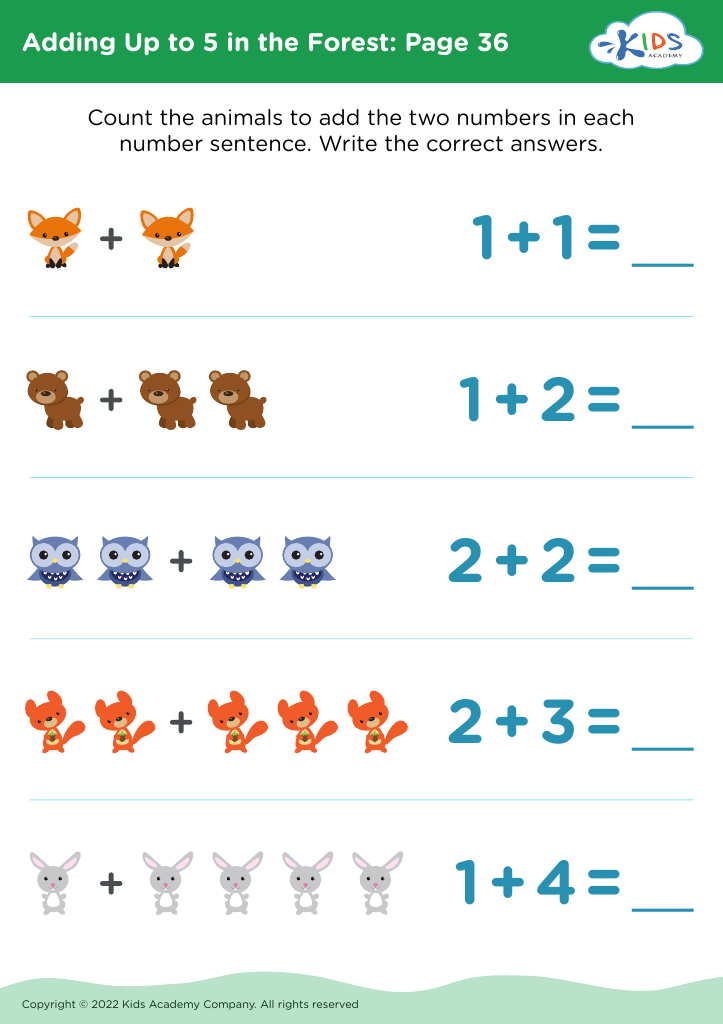
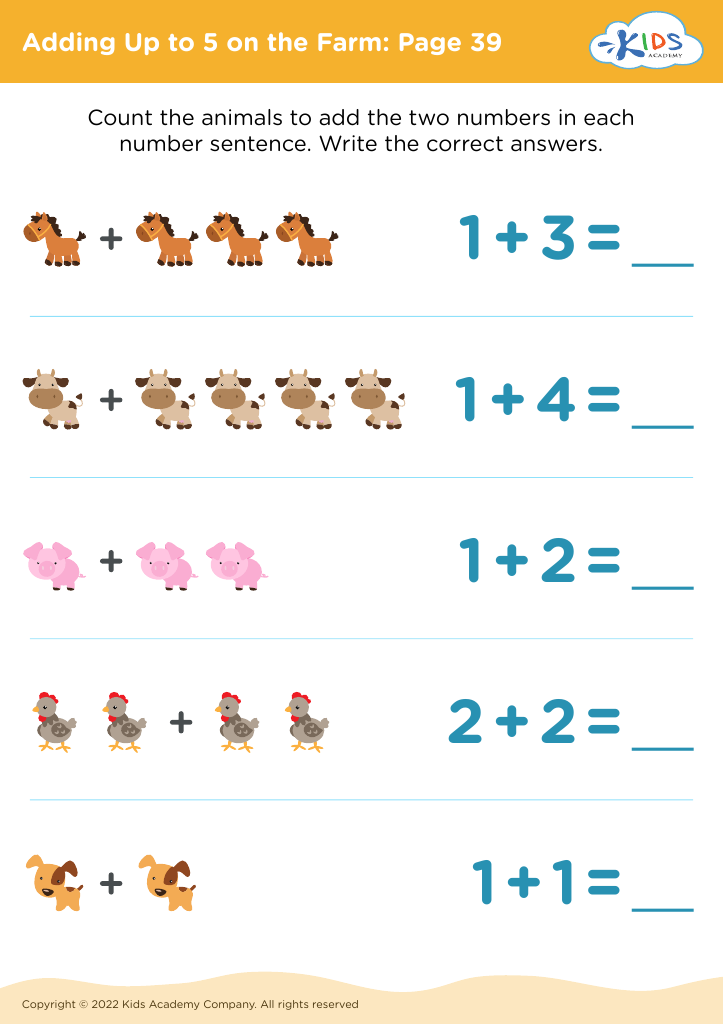
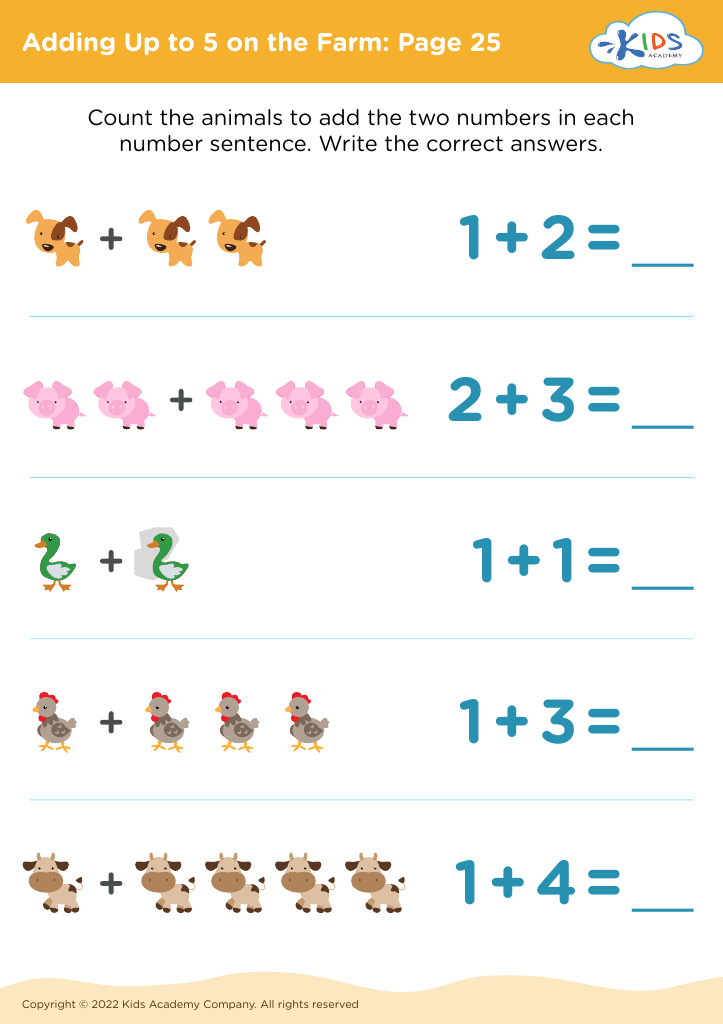
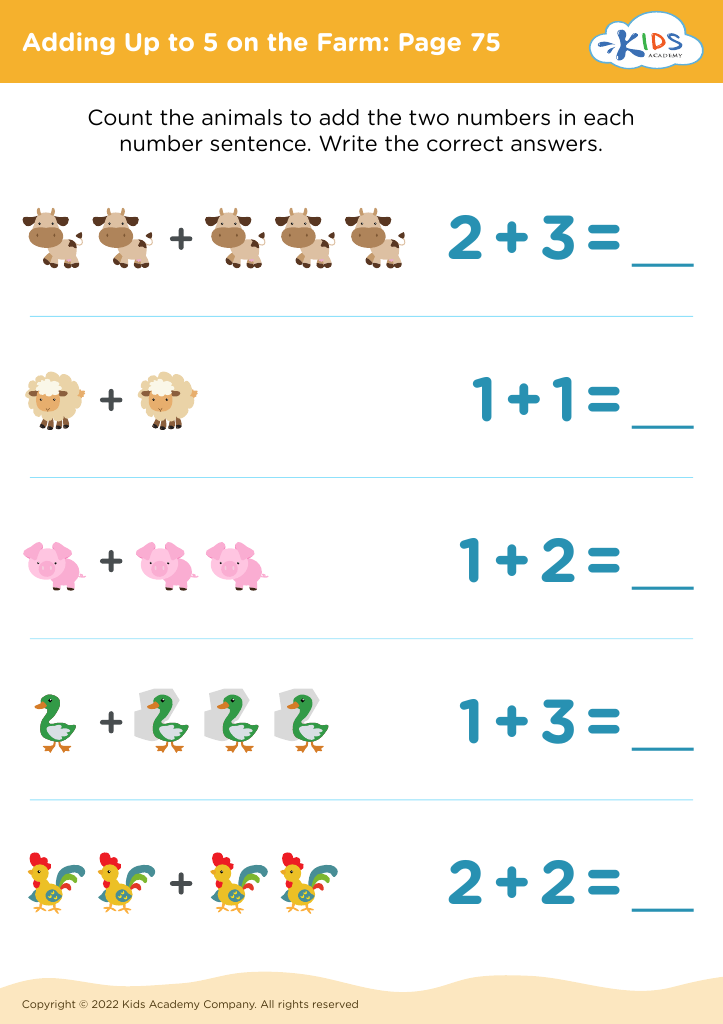
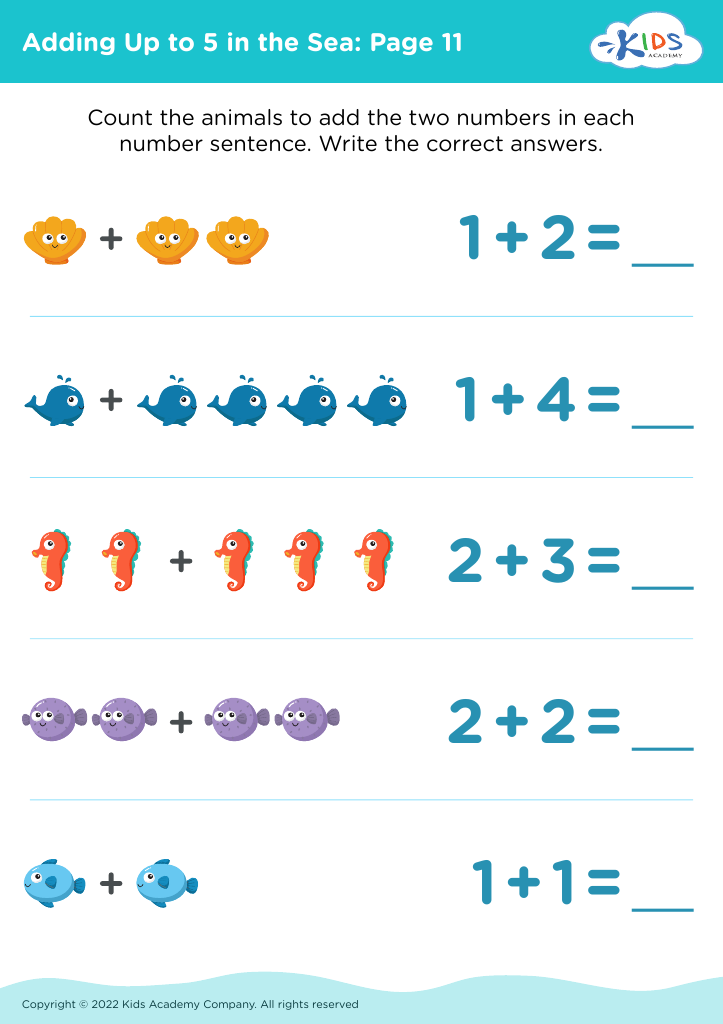
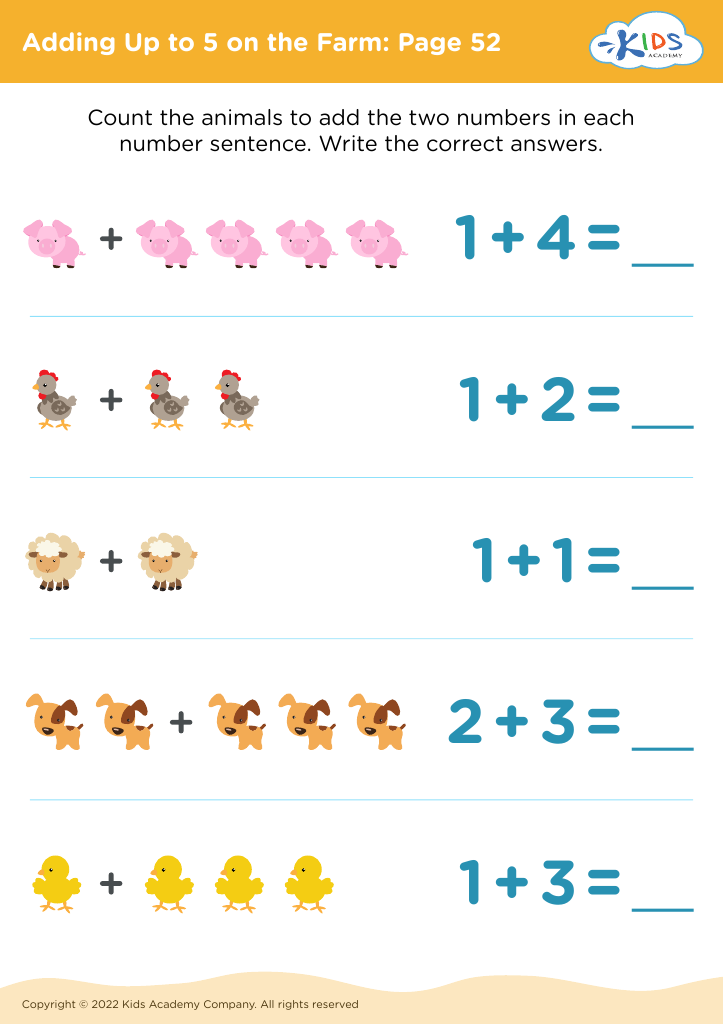
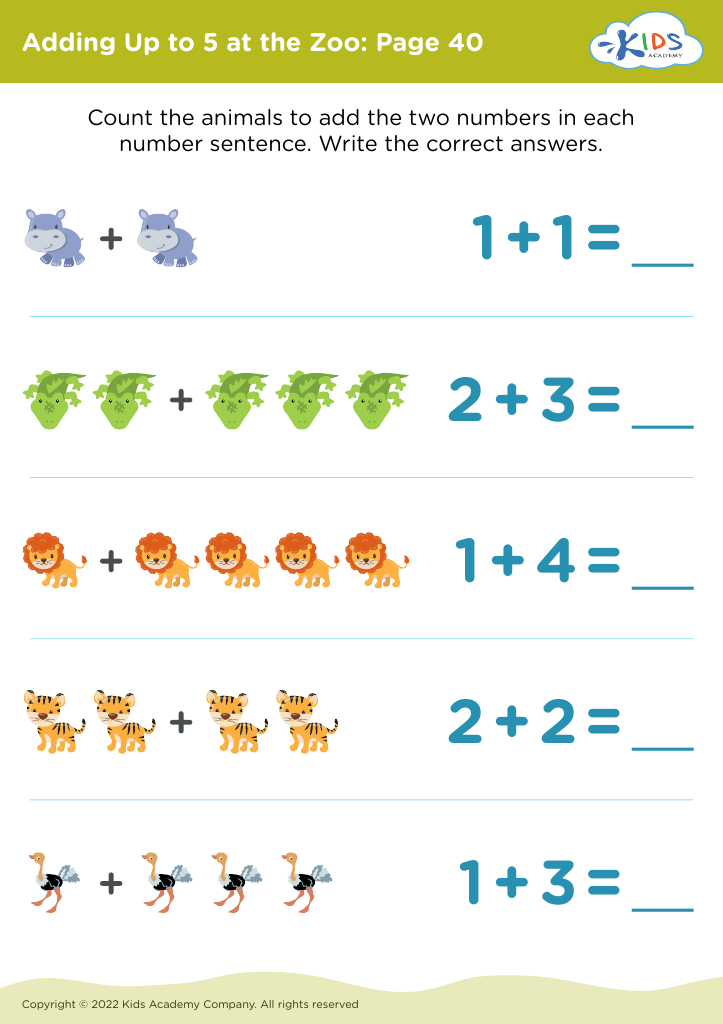
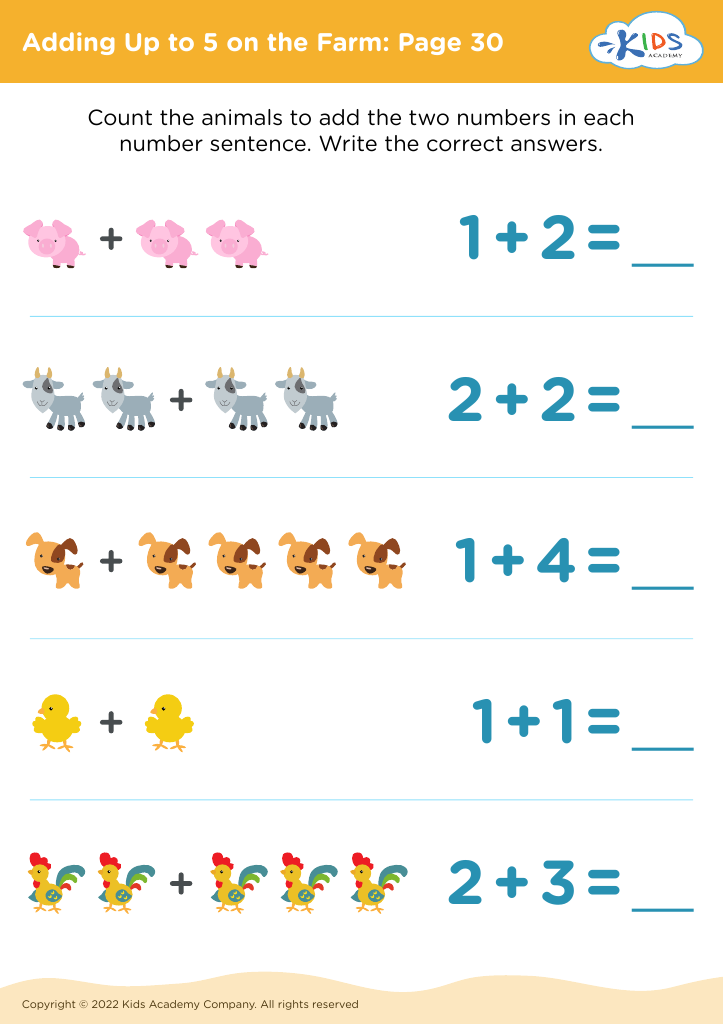








Parents and teachers should care about Animal Identification Adding Up to 5 for children ages 3-8 because it fosters essential early learning skills and lays a foundation for future academic success. At this critical developmental stage, children are not only eager to explore the world around them but also highly receptive to learning fundamental concepts through engaging activities.
Combining animal identification with simple arithmetic in an interactive way makes learning both enjoyable and meaningful. Recognizing different animals strengthens cognitive abilities and enriches vocabulary, while basic addition encourages numerical literacy, problem-solving skills, and logical thinking. When children match animals and add their quantities up to five, they are practicing observation, attention to detail, and sequential thought processes—all crucial for cognitive development.
Moreover, for this age group, hands-on and visually stimulating tasks are particularly effective. Animal identification drawing from real-world imagery enhances tactile learning and ensures compliance with early childhood education principles that emphasize play-based and explorative methods.
By supporting activities like Animal Identification Adding Up to 5, parents and teachers are helping children build confidence in their abilities, fostering a love for learning, and creating a strong educational foundation that will benefit future mathematical endeavors and broader academic pursuits. Plus, the engaging nature of these activities encourages parental and child interactions, making learning a shared, joyful experience.








