Animal recognition Adding Up to 5 Worksheets for Ages 3-8
90 filtered results
-
From - To
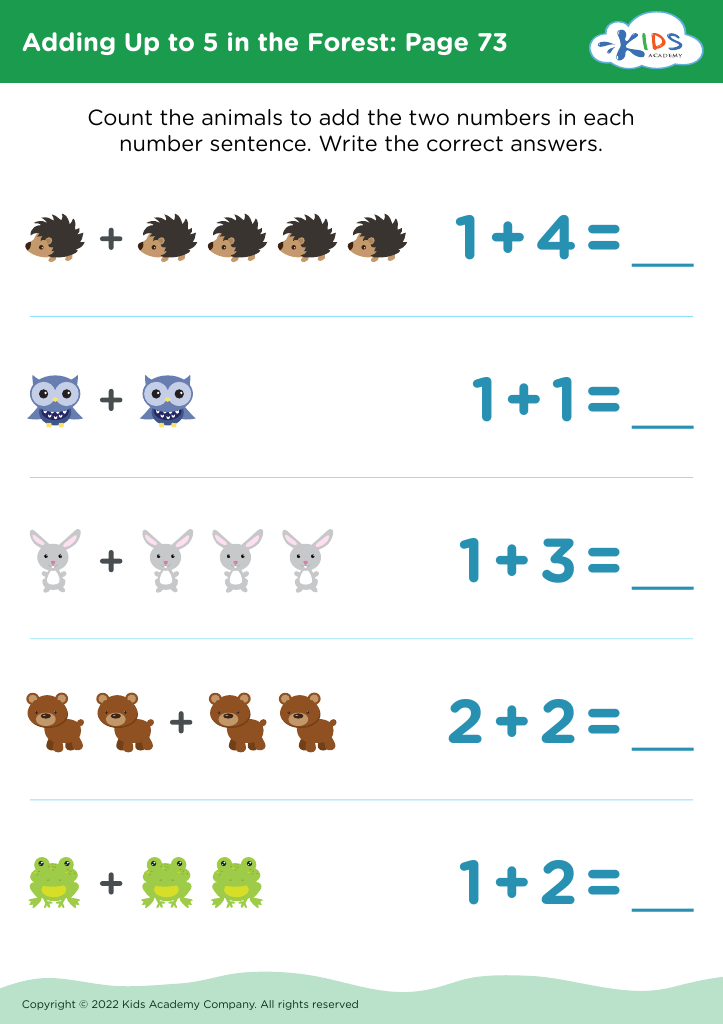
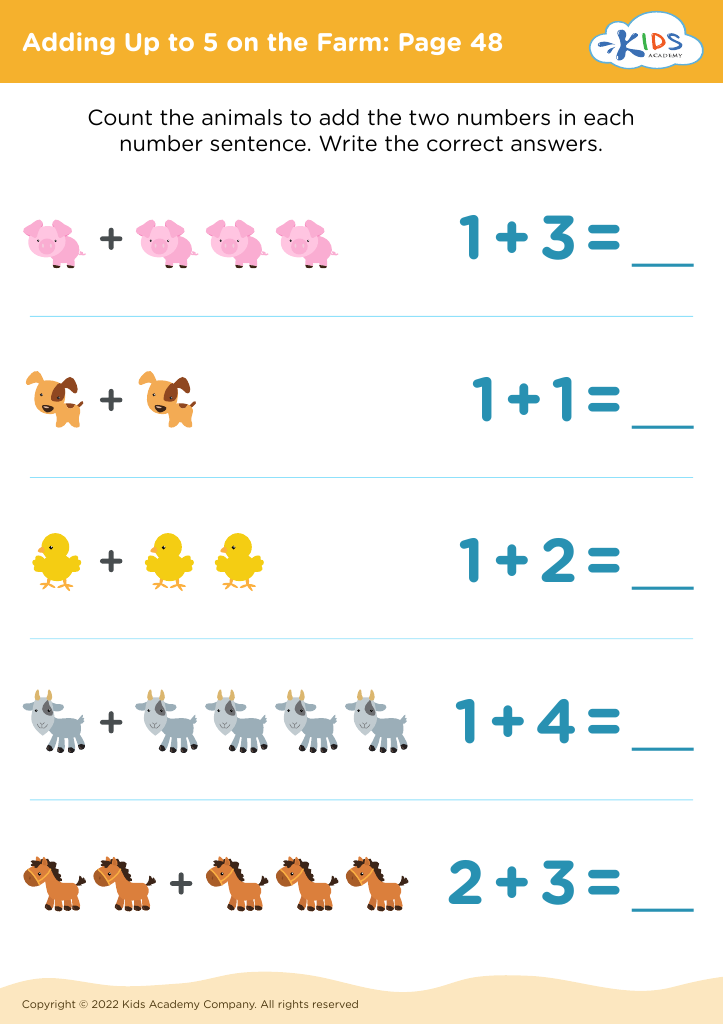
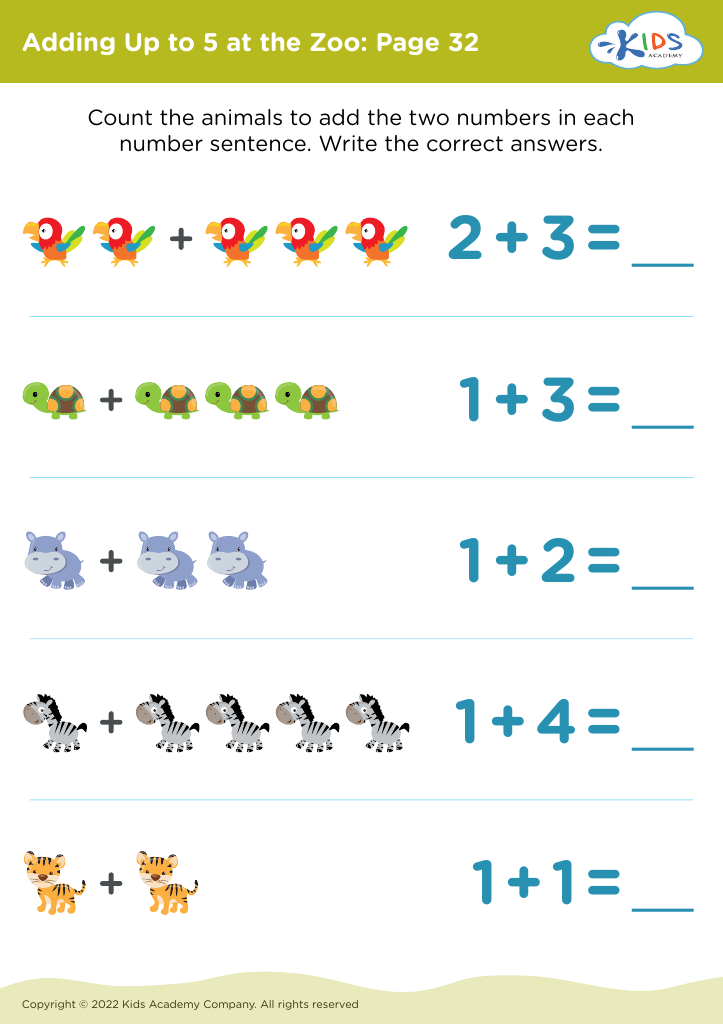
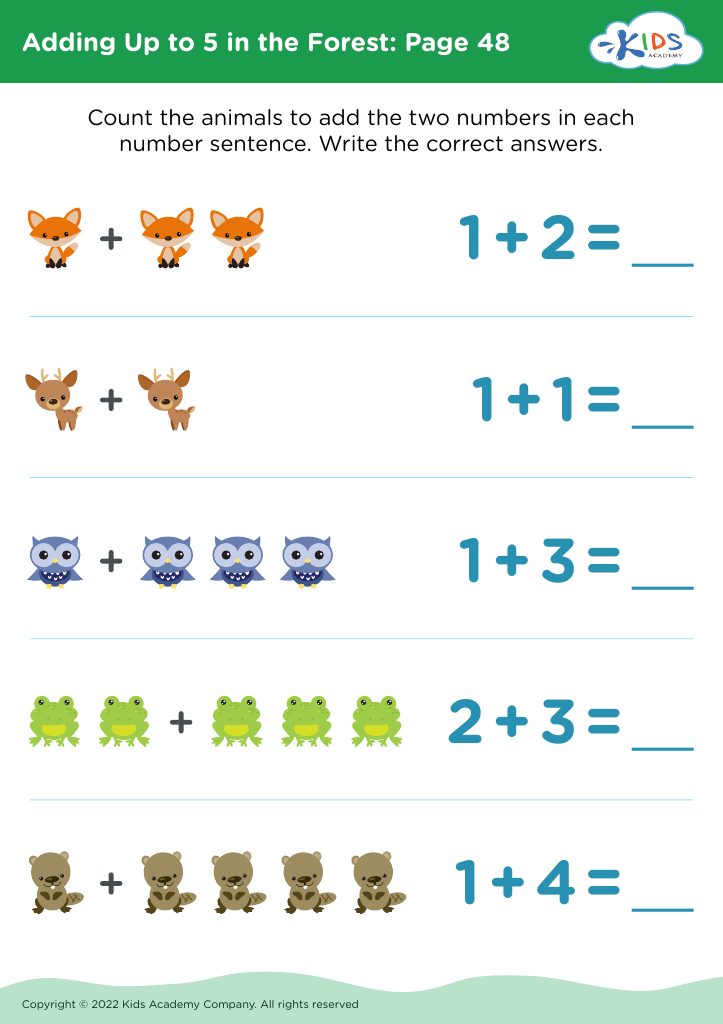
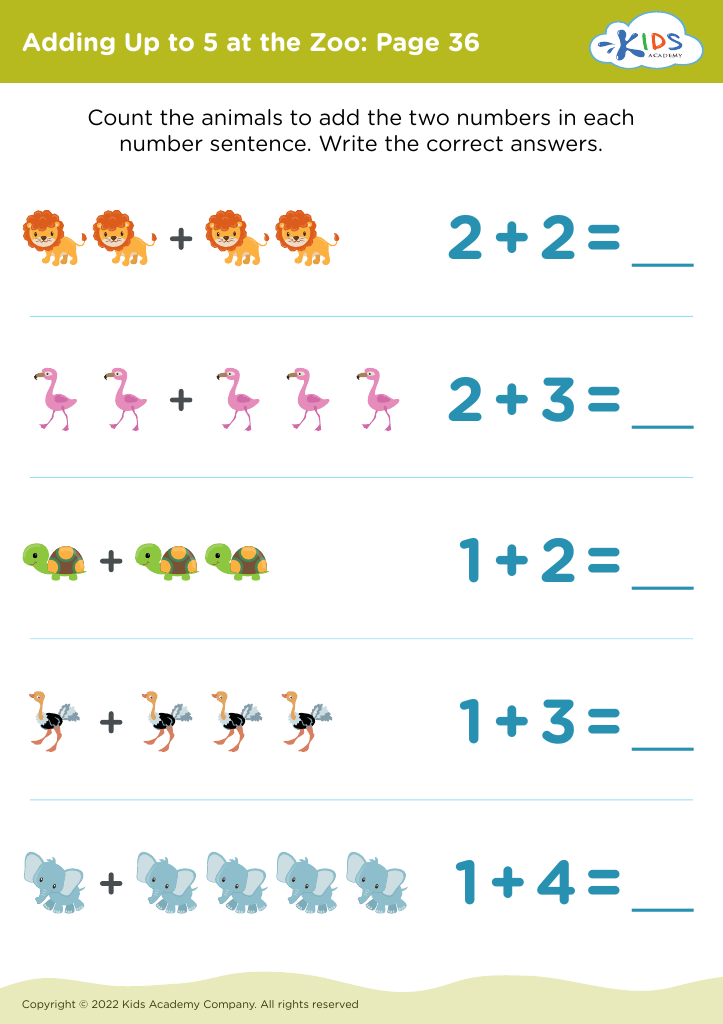
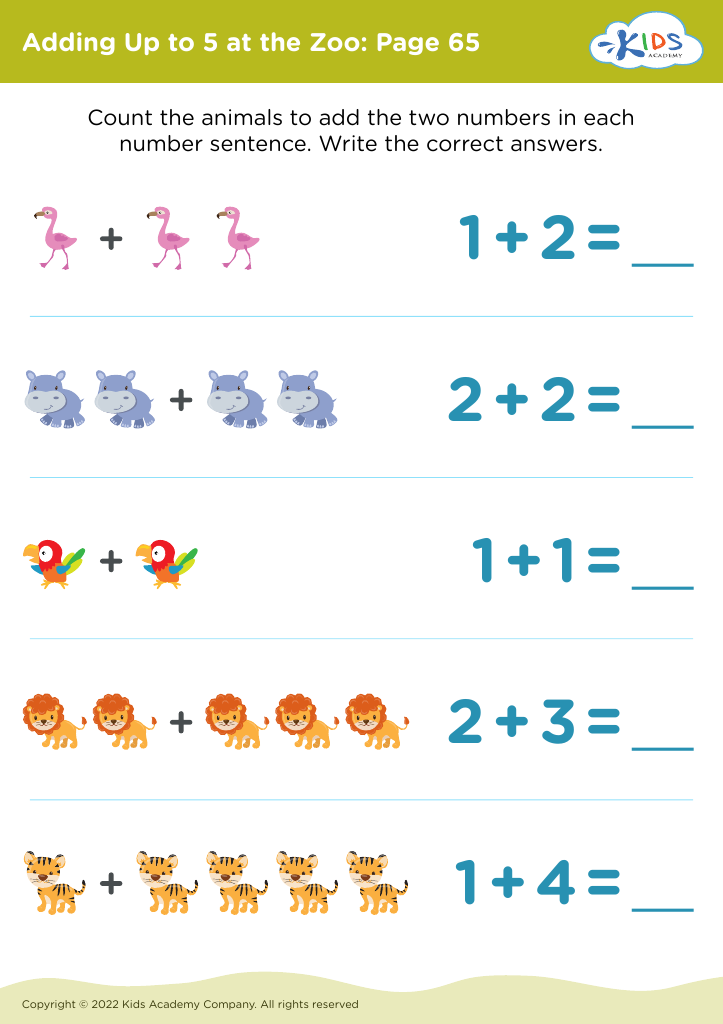
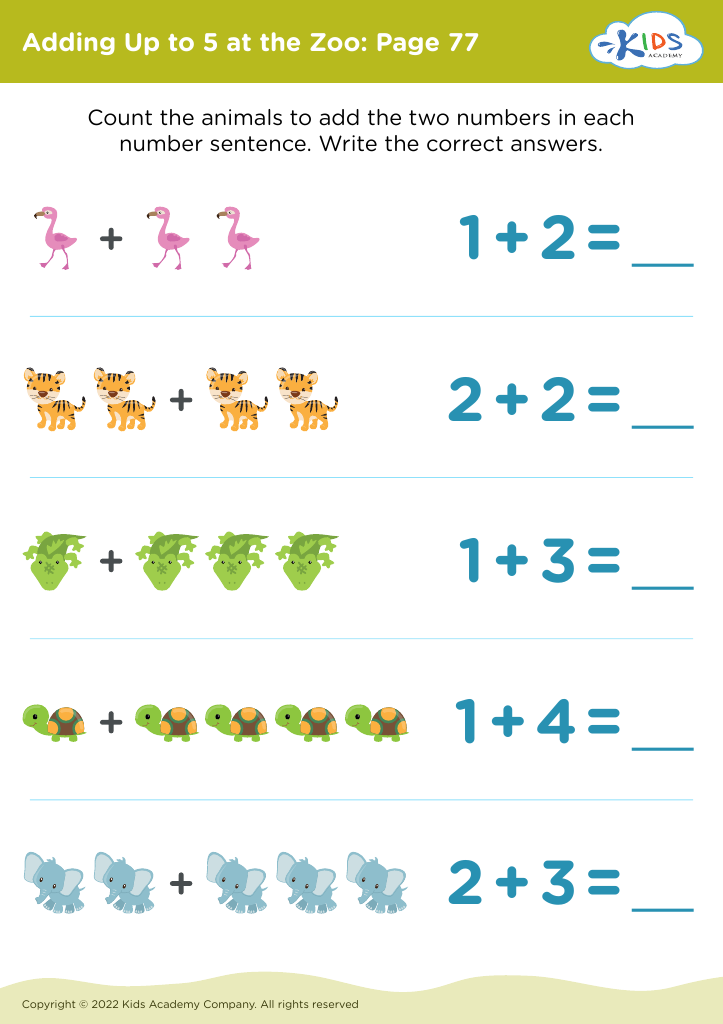
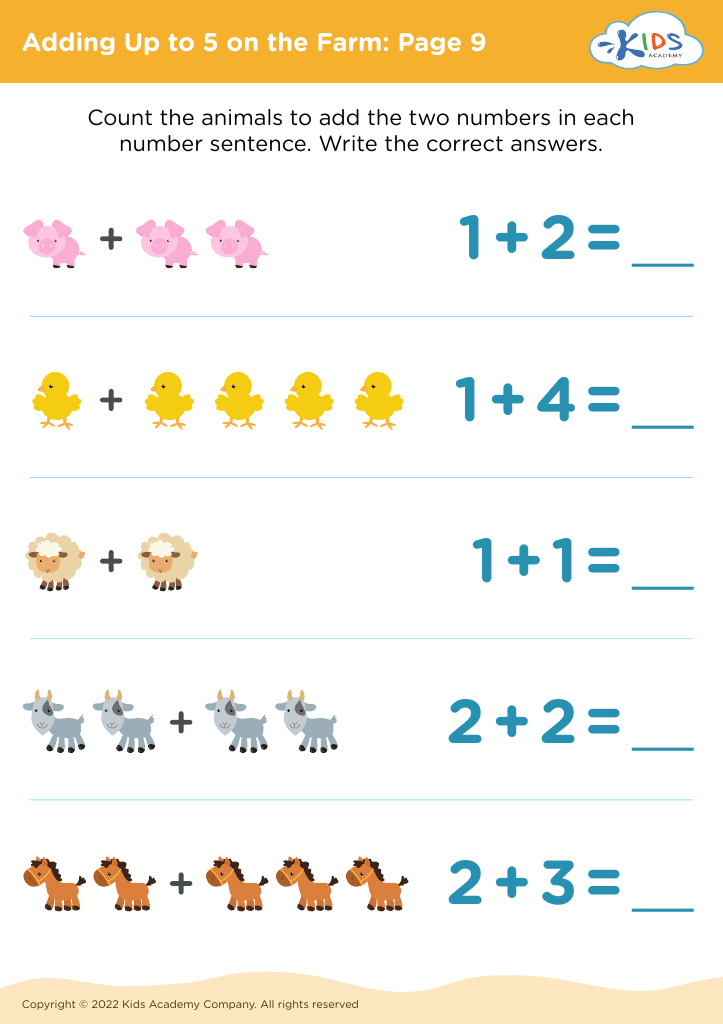
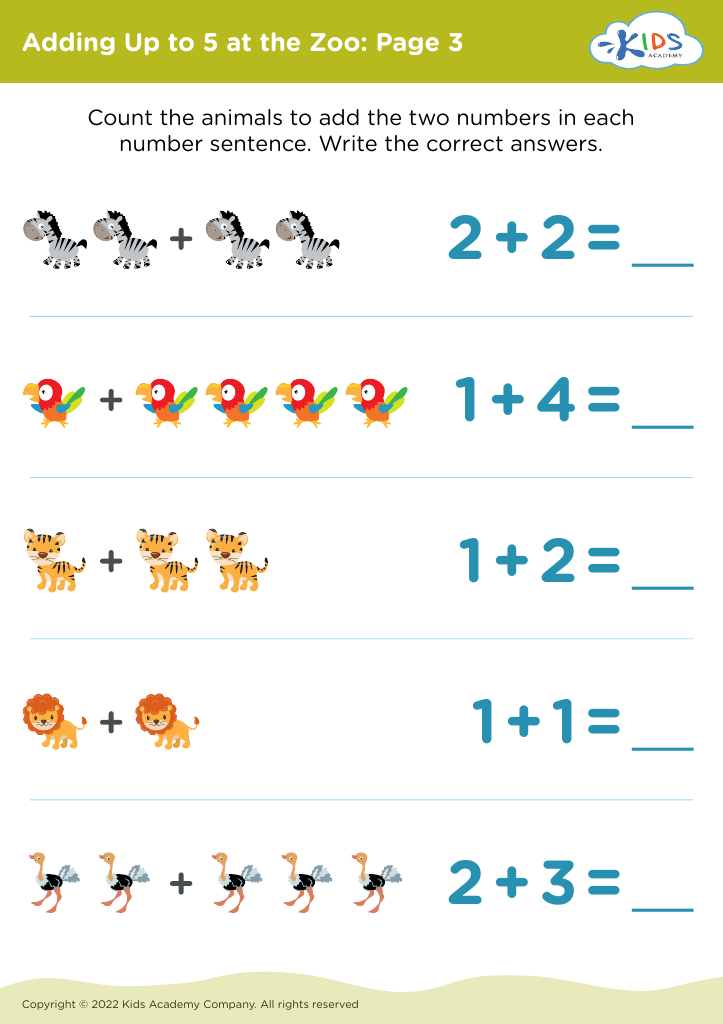
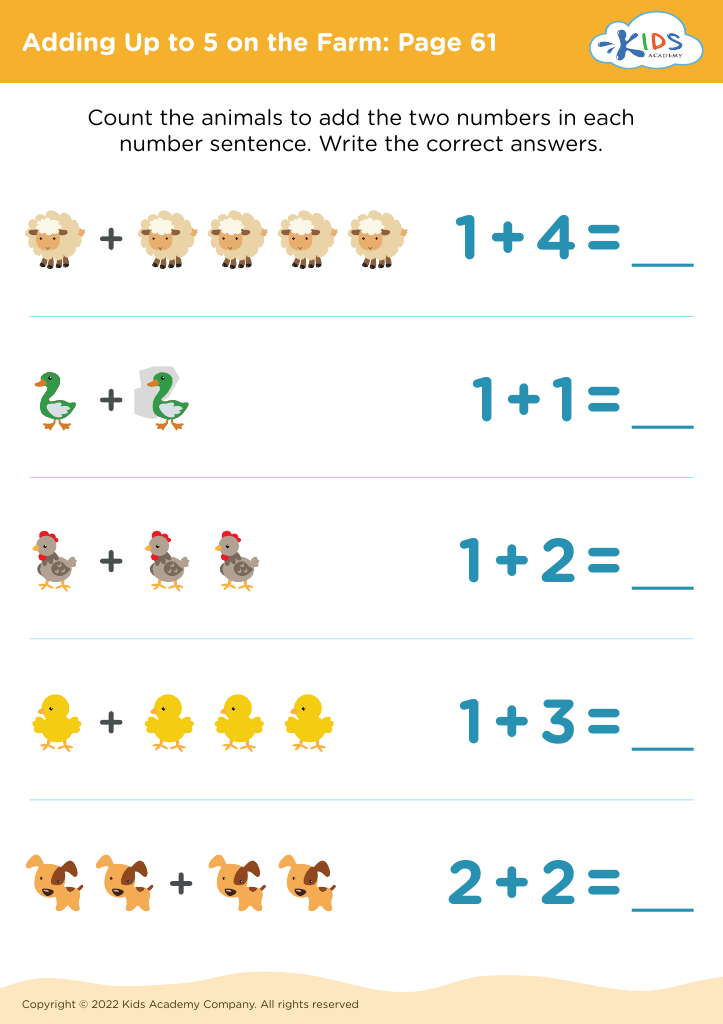
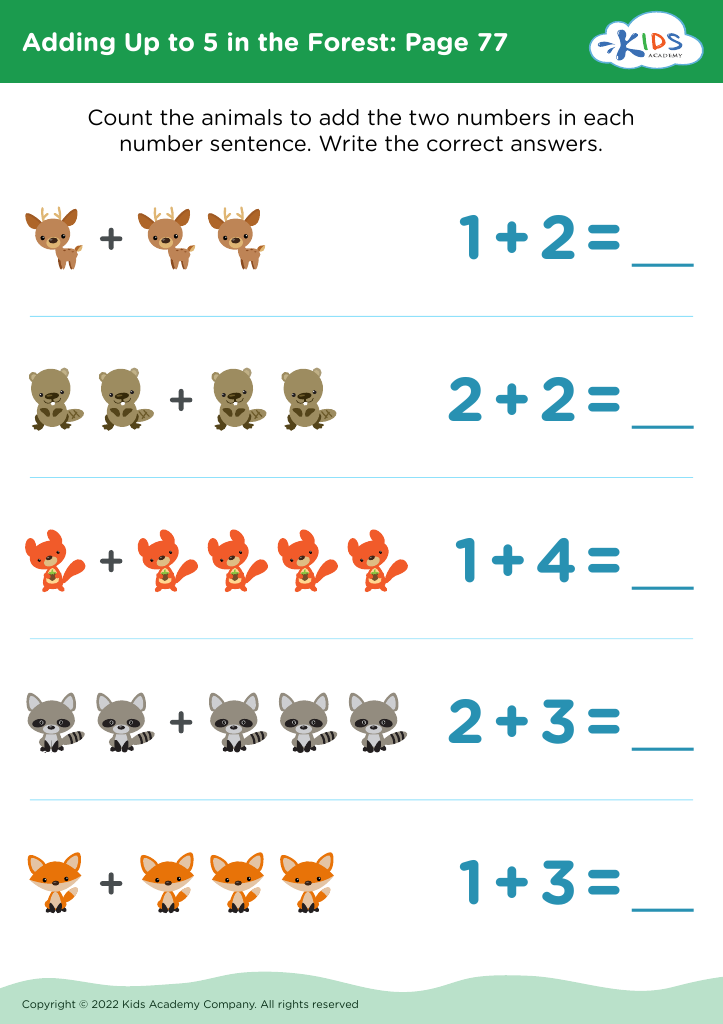
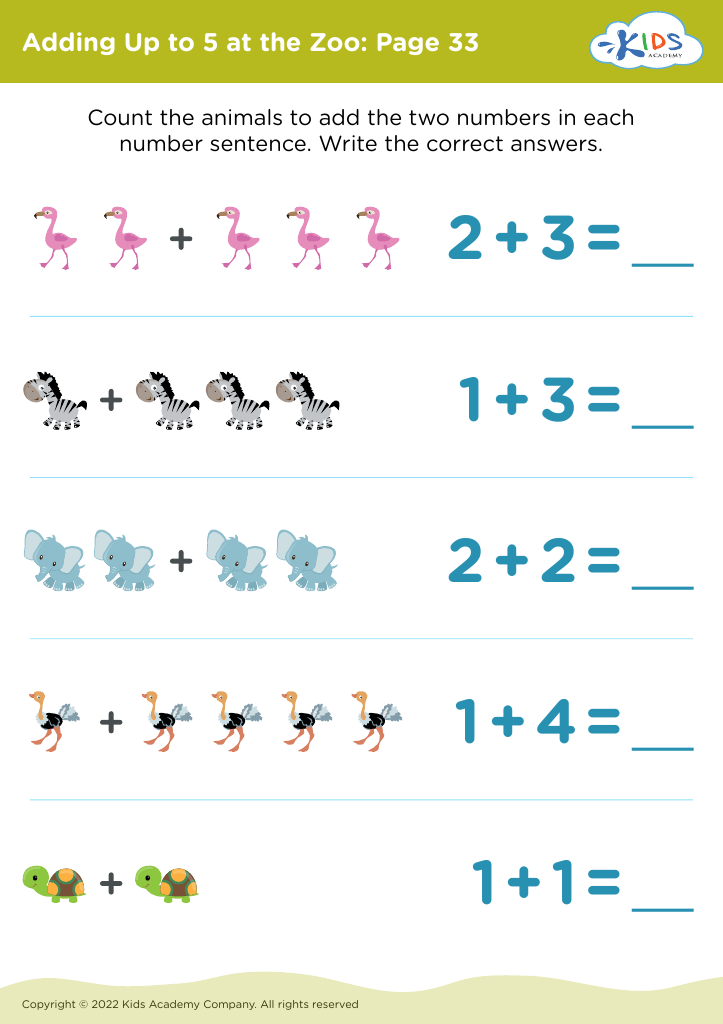
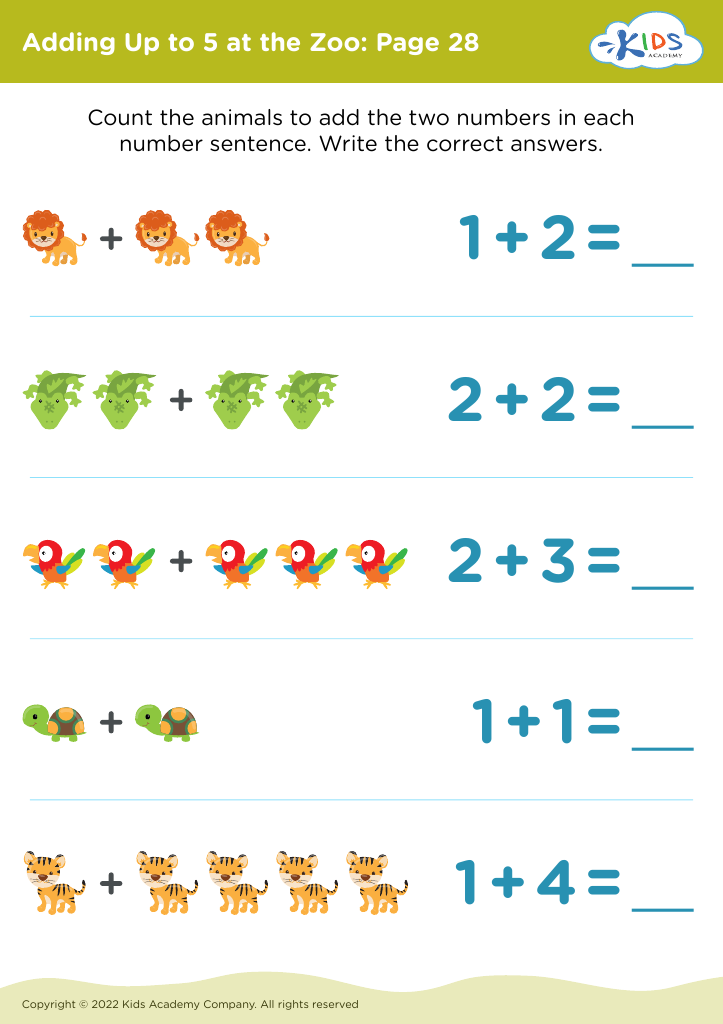
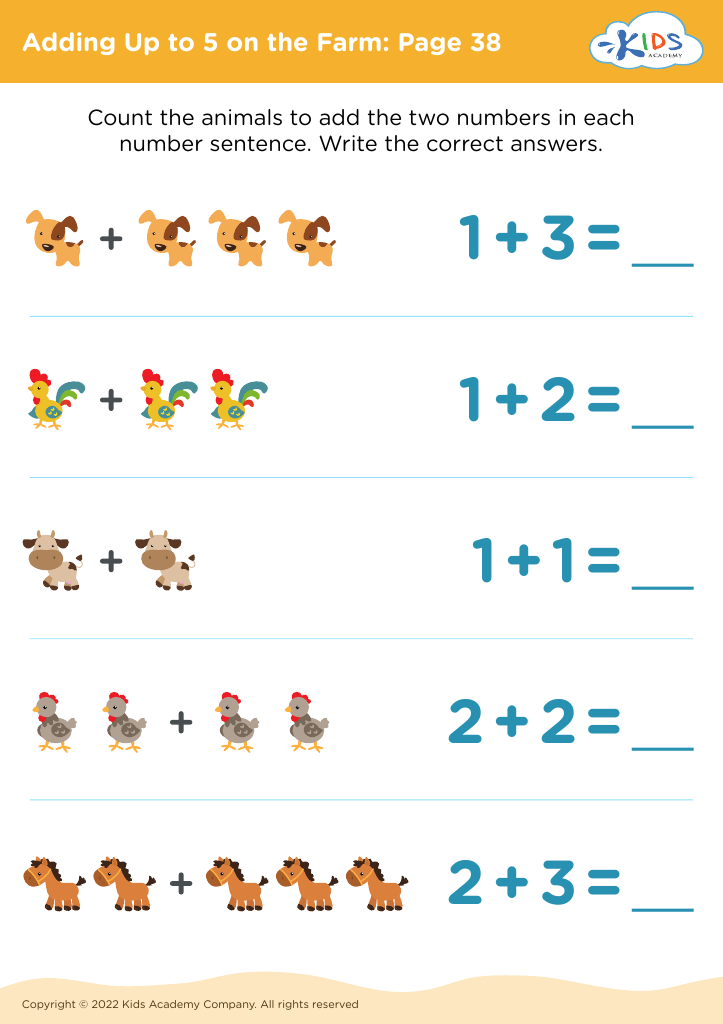
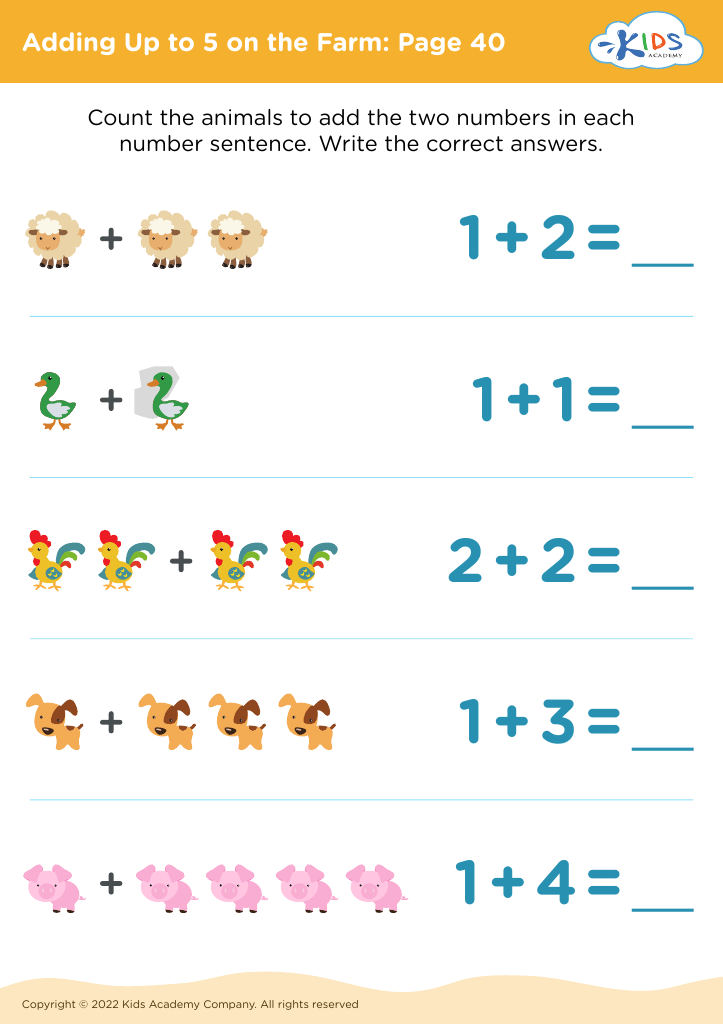
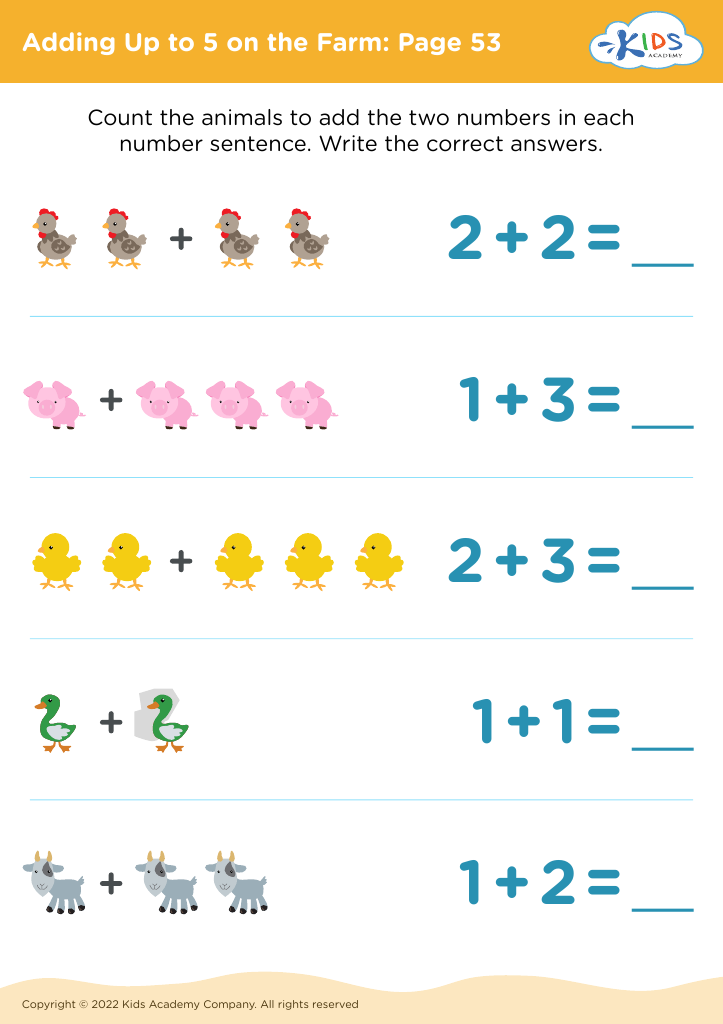
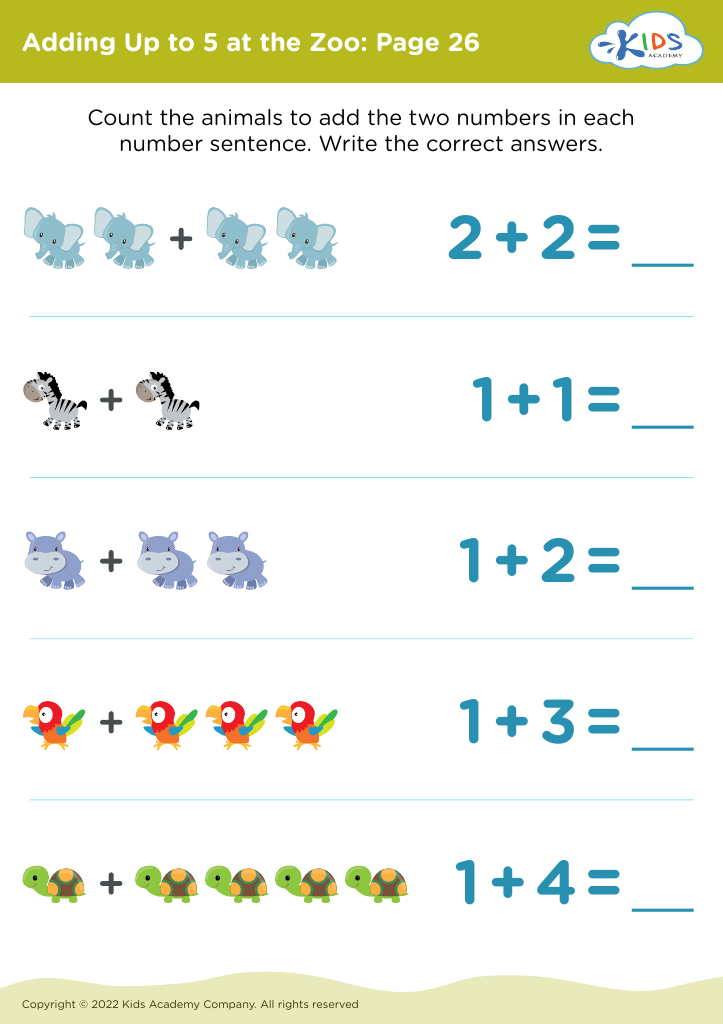
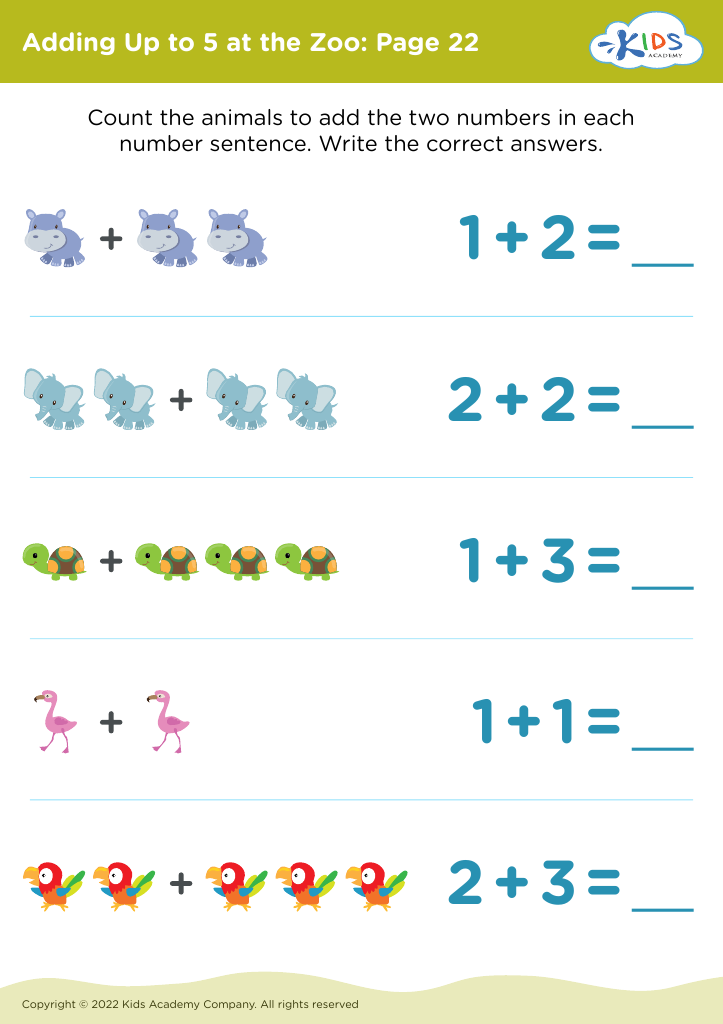
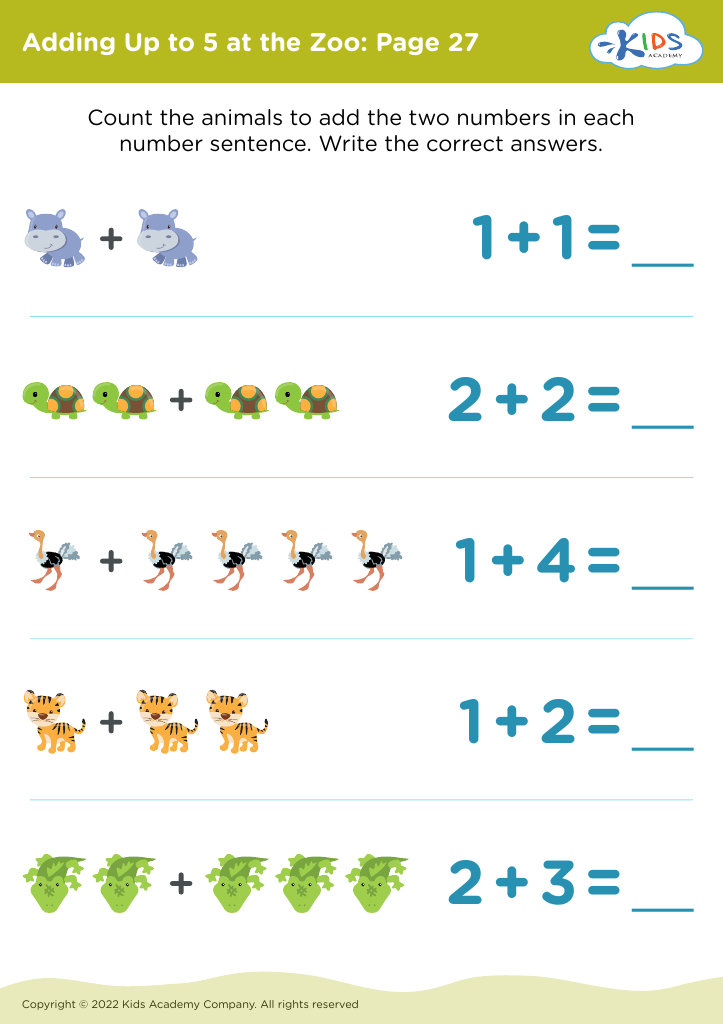
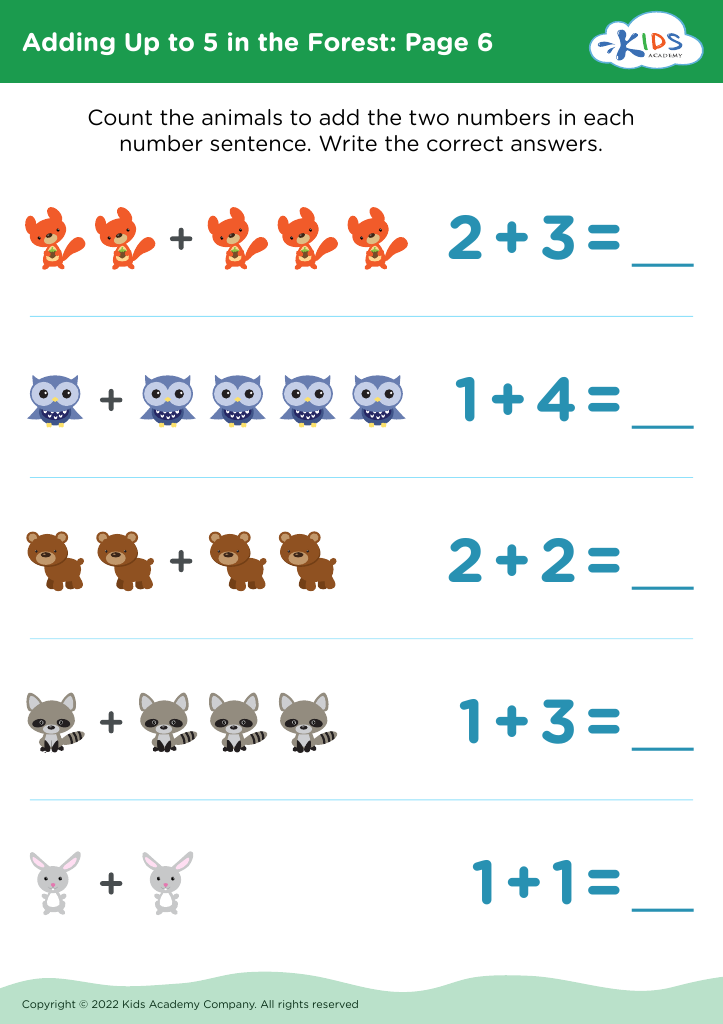
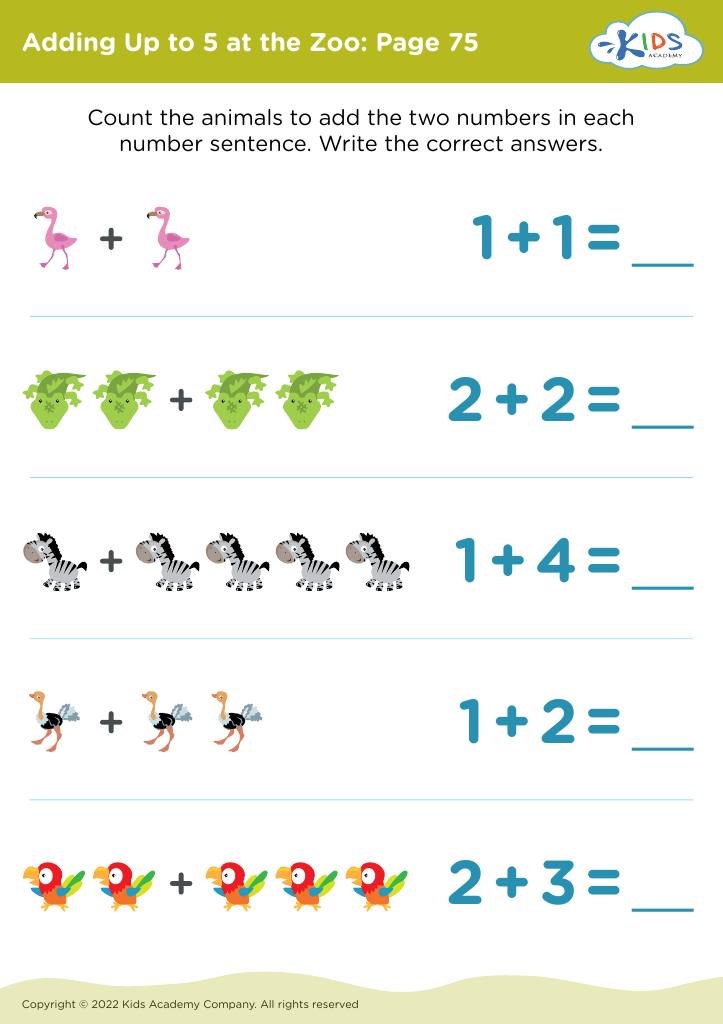
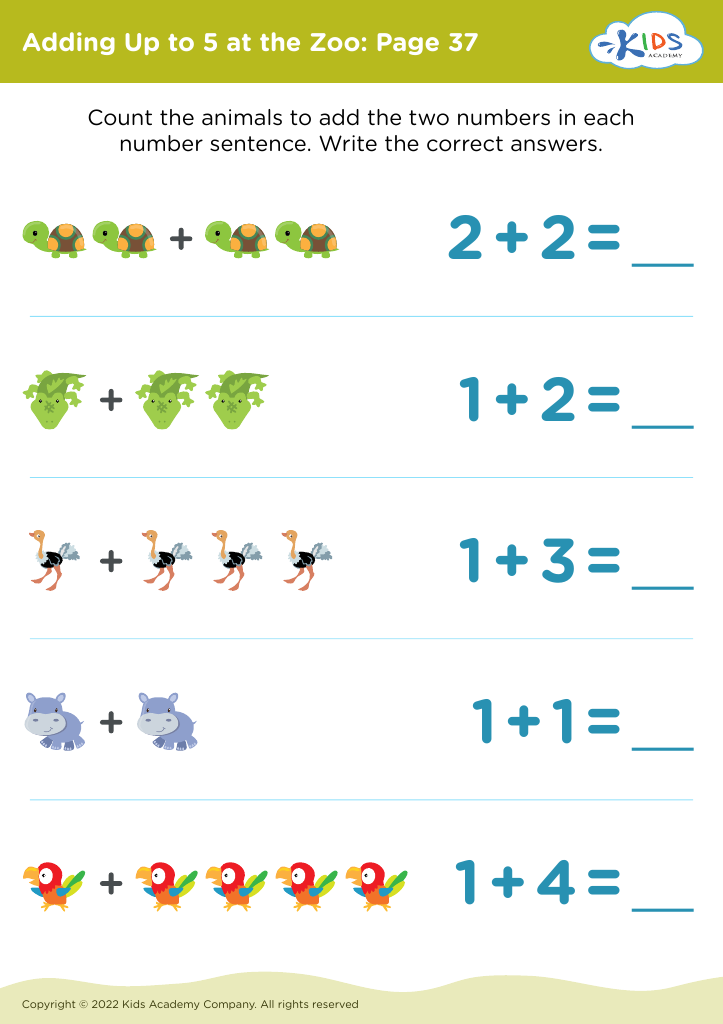
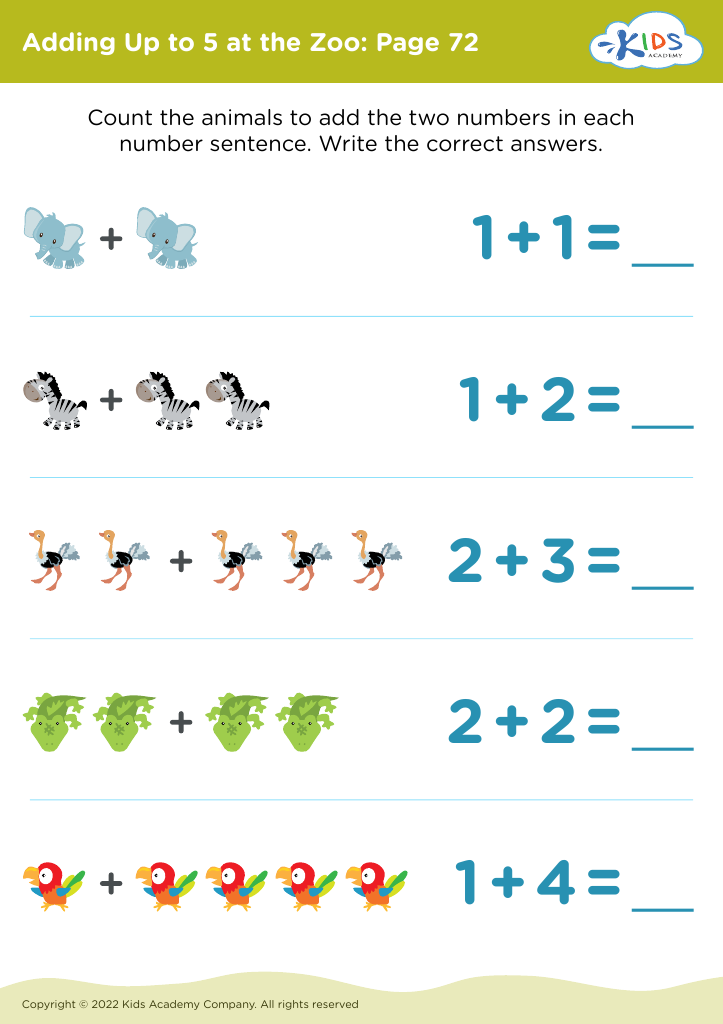
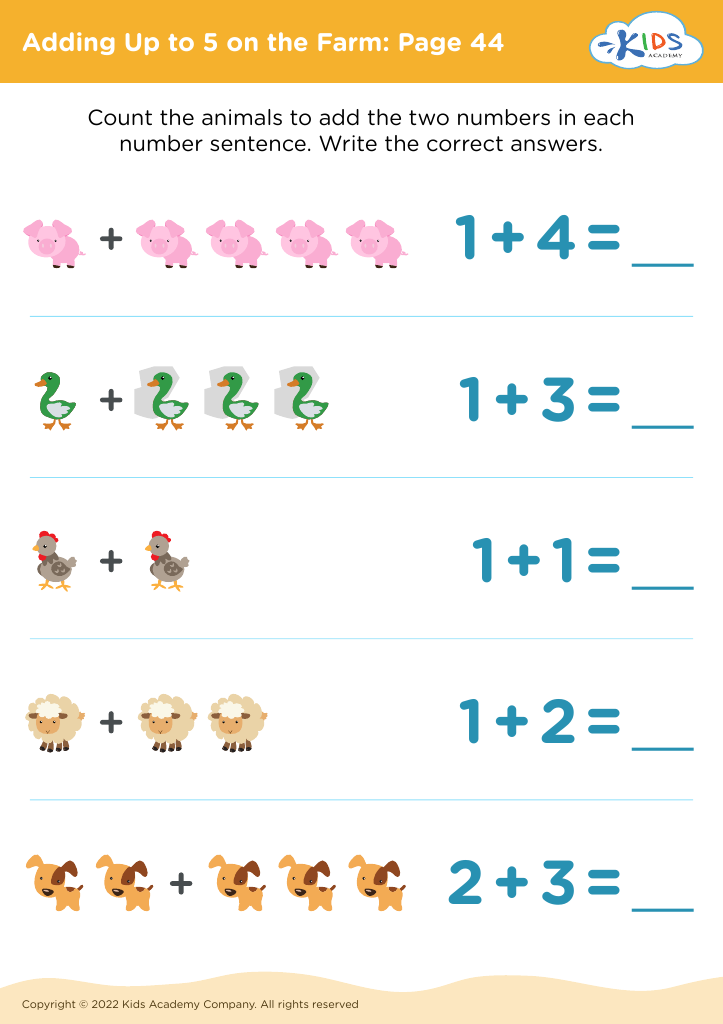
Discover our vibrant "Animal Recognition Adding Up to 5 Worksheets for Ages 3-8". These engaging activities seamlessly blend early math skills with fun animal illustrations, making them perfect for young learners. Kids will practice simple addition while improving their animal recognition, ensuring a holistic learning experience. Each worksheet is designed to keep children entertained and focused, using colorful graphics and easy-to-follow instructions. Ideal for both classroom and home learning, these worksheets support developmental milestones and foster a love of numbers and nature. Boost your child's confidence in math and zoology with our expertly crafted resources.





.jpg)


Parents and teachers should prioritize animal recognition and basic math skills, such as adding up to 5, for children aged 3-8 because these activities are foundational for cognitive development and early learning success. Firstly, animal recognition helps children engage with the natural world and develops categorization and memory skills. Understanding different animals fosters curiosity and a love of learning while enriching vocabulary and language abilities, enhancing a child's capacity to describe and understand their environment.
Simultaneously, learning to add up to 5 introduces foundational numeracy concepts. These early math skills are crucial for developing logical thinking and problem-solving abilities. Addition within this range is tangible and manageable, allowing children to grasp mathematical concepts with immediate and comprehensible feedback.
Combining these subjects – recognizing animals and basic mathematics – creates a multidisciplinary learning experience that is both educational and enjoyable. For example, counting animals in picture books or toys can seamlessly integrate literacy, numeracy, and science. These engaging activities make learning more enjoyable and meaningful, increasing the likelihood of fostering a lifelong passion for learning.
Moreover, achieving competency in these areas boosts a child's self-confidence and provides a strong skill foundation, boosting their readiness for more advanced education. Thus, caring about these topics promotes holistic educational development, setting kids up for future academic and personal success.








