Filters

84 filtered results

Clear all filters
Favorites
With answer key
Interactive

84 filtered results

Difficulty Level

Grade


Check out this FREE Trial Lesson on Adding Up to 5 for age 3-8!

Exactly the Same, or Not

Favorites
With answer key
Interactive
  • 3-8
  • Visual Learning
  • Adding Up to 5
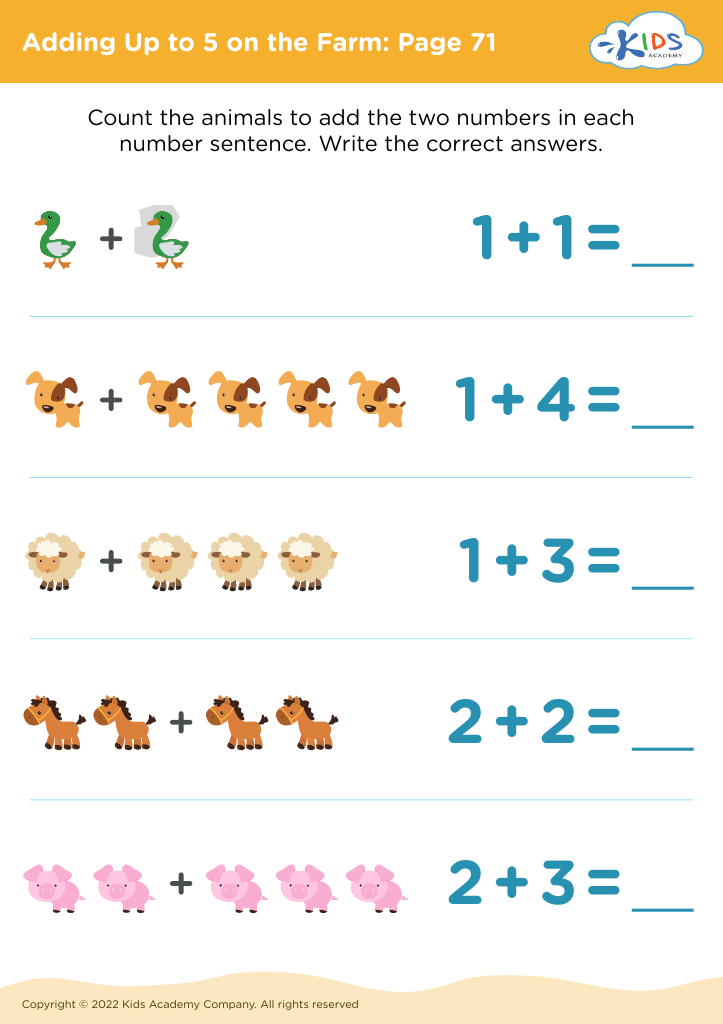
Adding Up to 5 on the Farm: Page 71
Worksheet
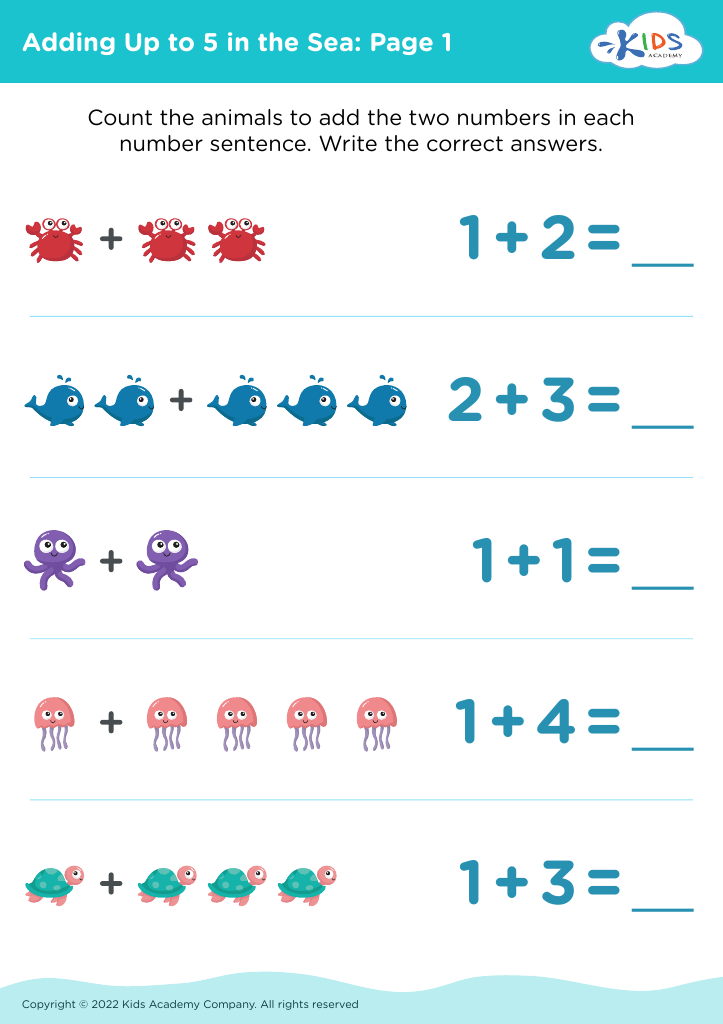
Adding Up to 5 in the Sea: Page 1

Adding Up to 5 in the Sea: Page 1

Adding Up to 5 in the Sea: Page 1
Worksheet
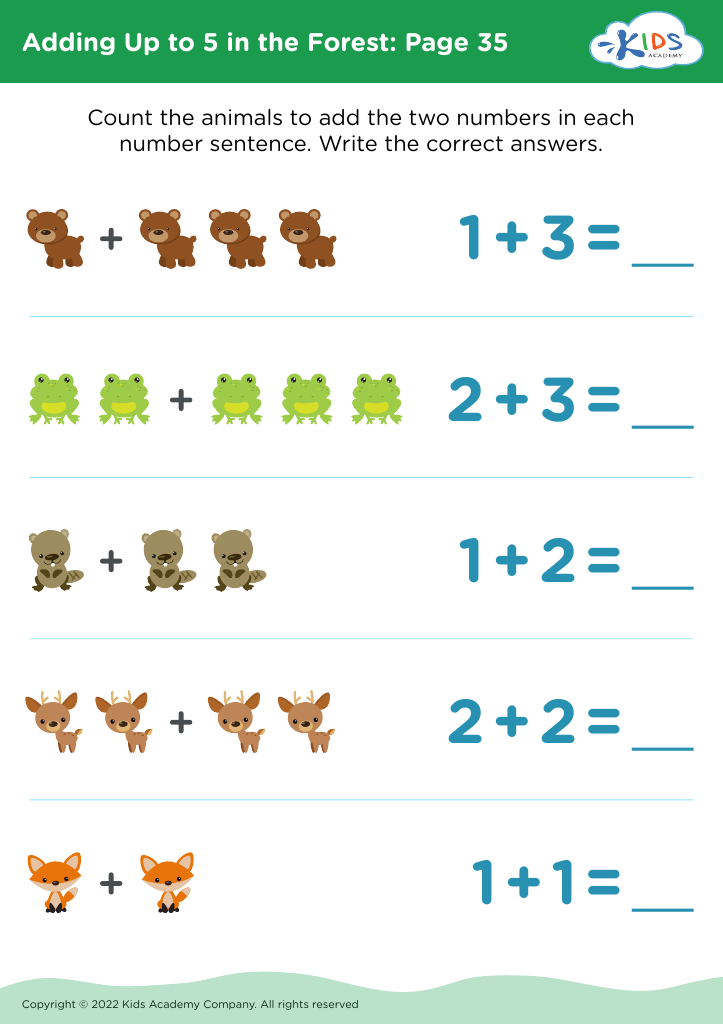
Adding Up to 5 in the Forest: Page 35
Worksheet
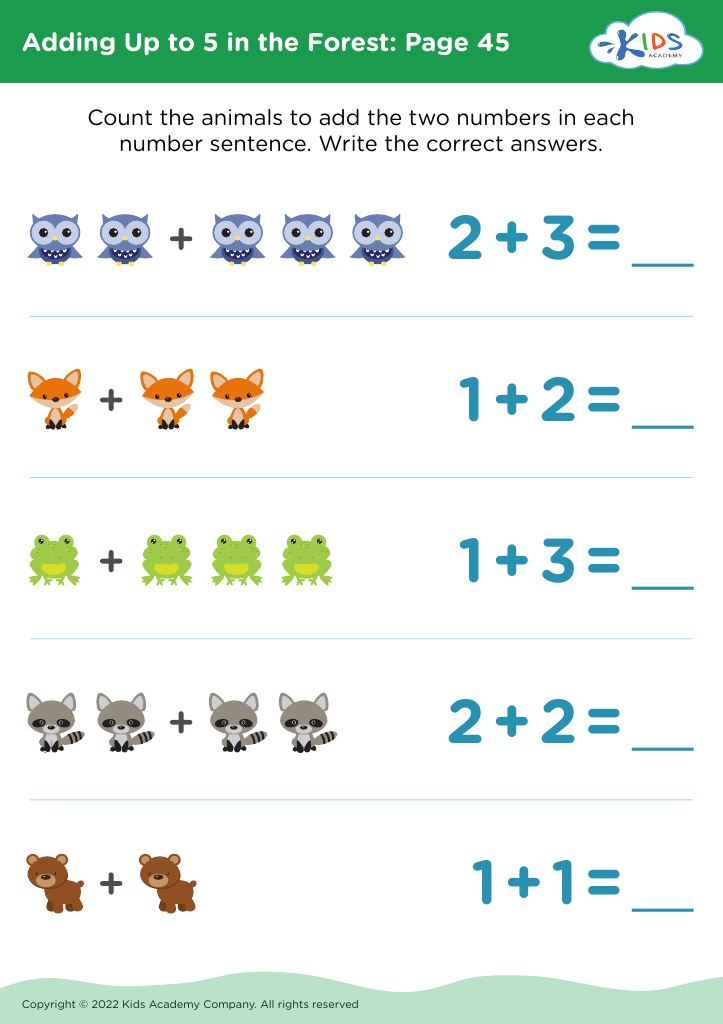
Adding Up to 5 in the Forest: Page 45
Worksheet
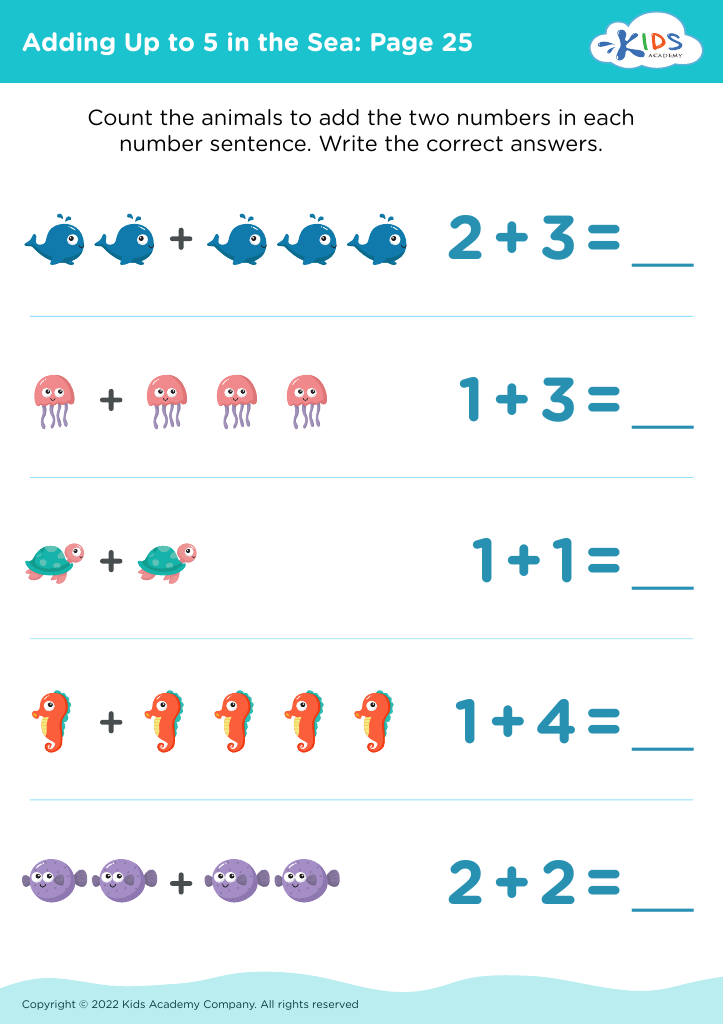
Adding Up to 5 in the Sea: Page 25
Worksheet
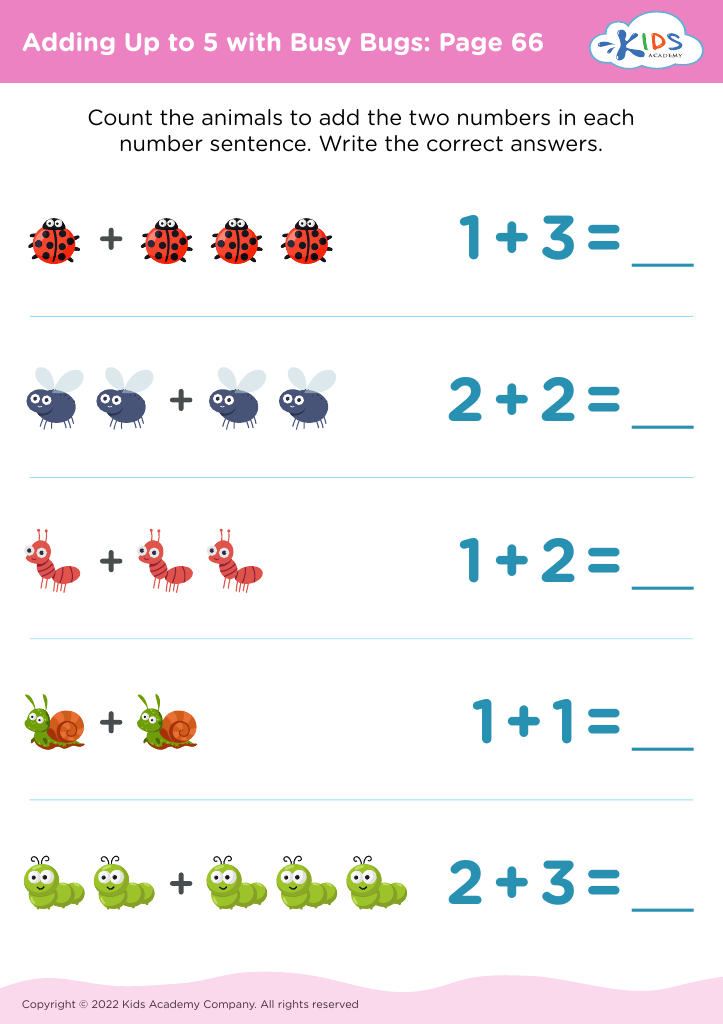
Adding Up to 5 with Busy Bugs: Page 66
Worksheet
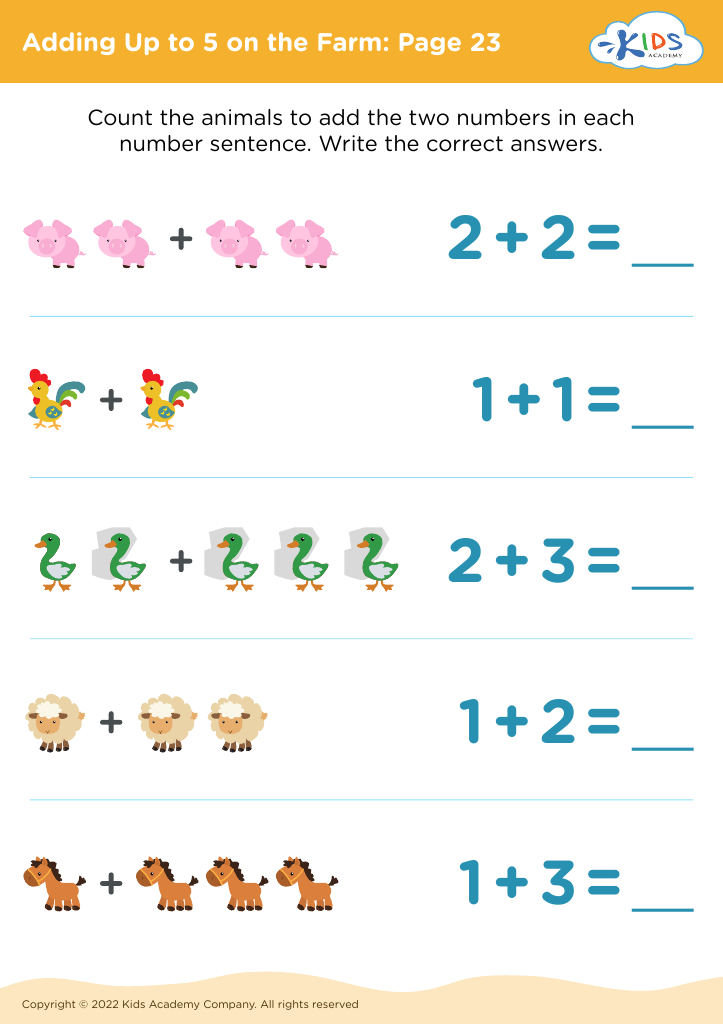
Adding Up to 5 on the Farm: Page 23
Worksheet
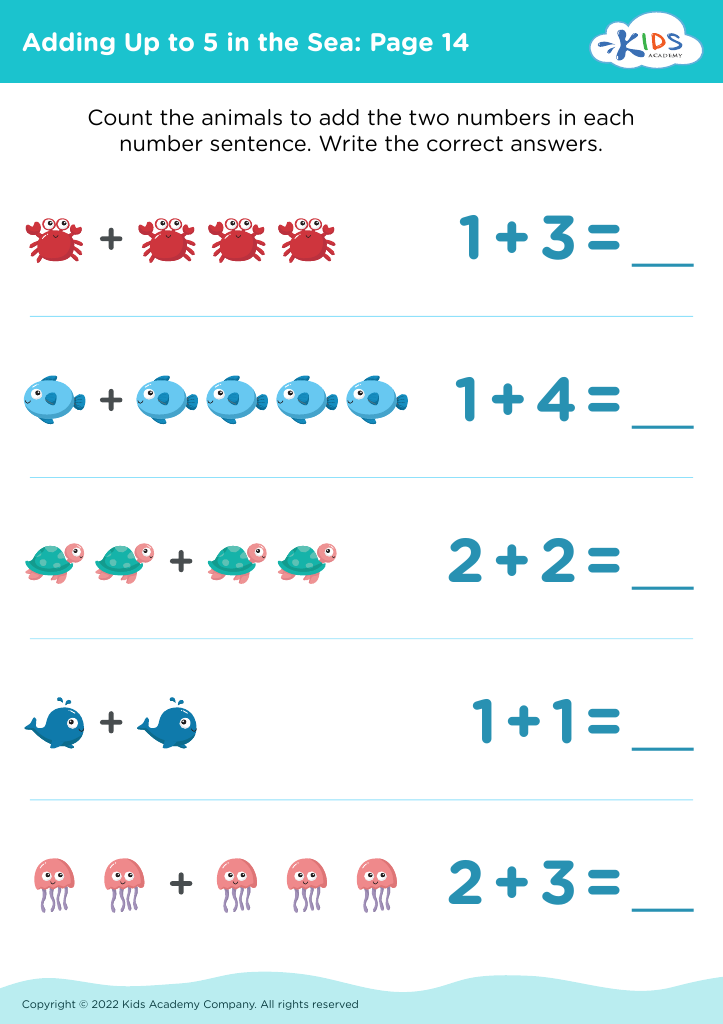
Adding Up to 5 in the Sea: Page 14
Worksheet
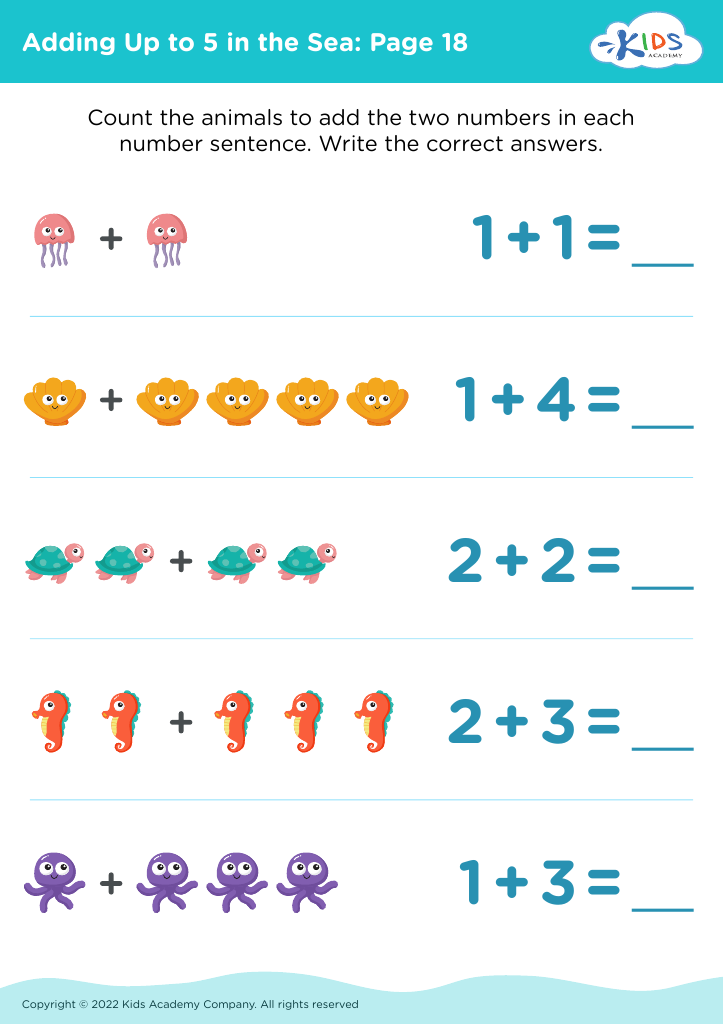
Adding Up to 5 in the Sea: Page 18
Worksheet
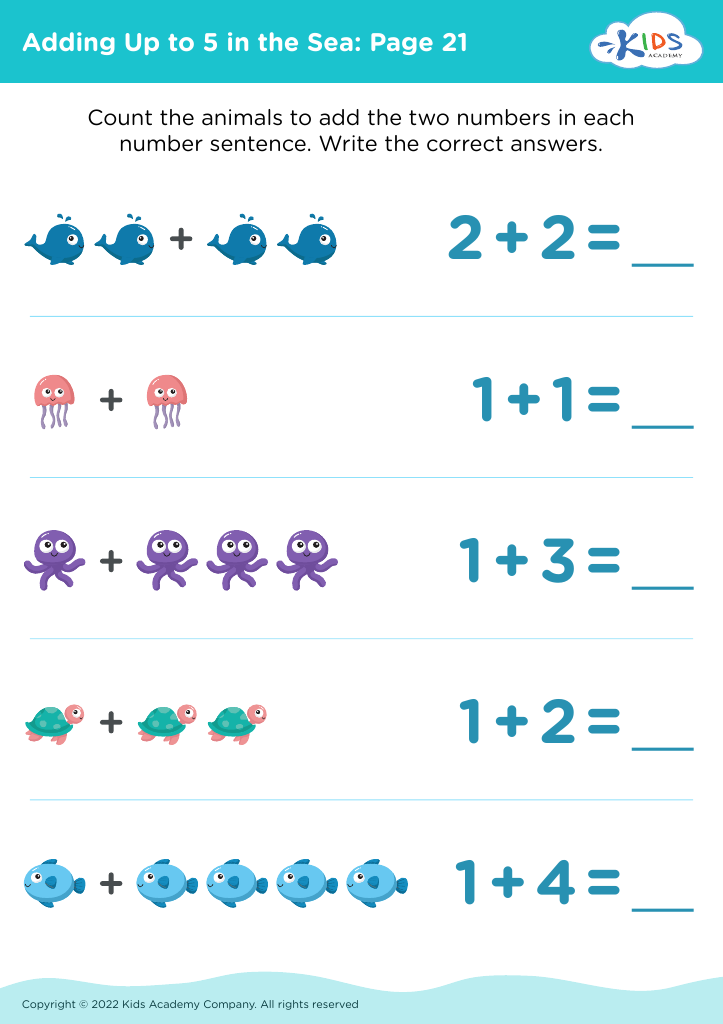
Adding Up to 5 in the Sea: Page 21
Worksheet
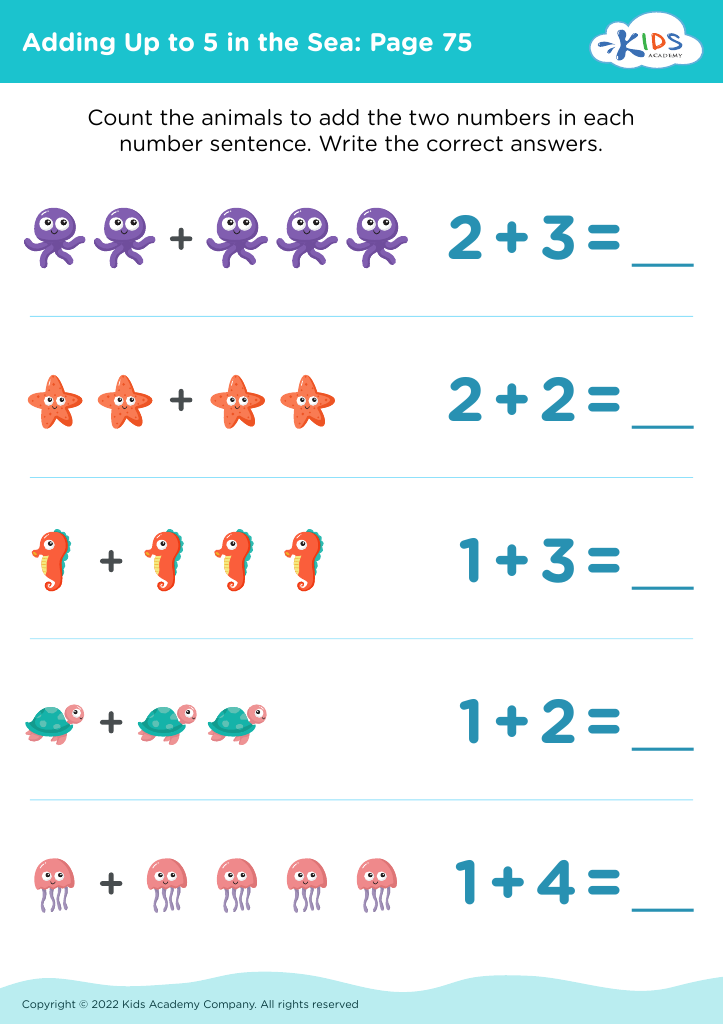
Adding Up to 5 in the Sea: Page 75
Worksheet
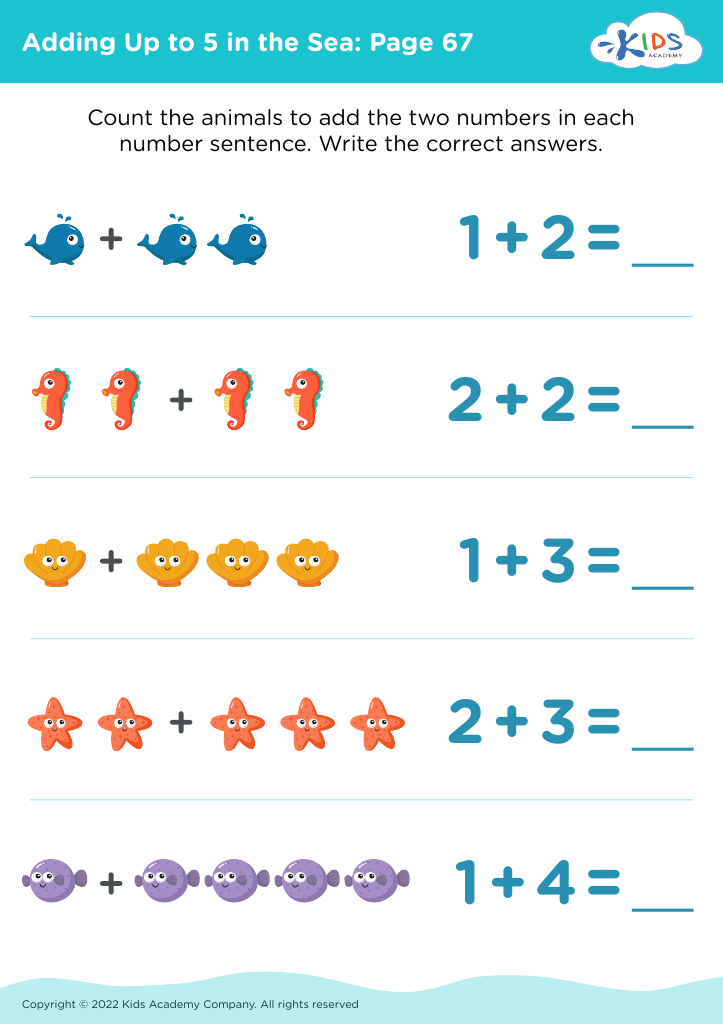
Adding Up to 5 in the Sea: Page 67
Worksheet
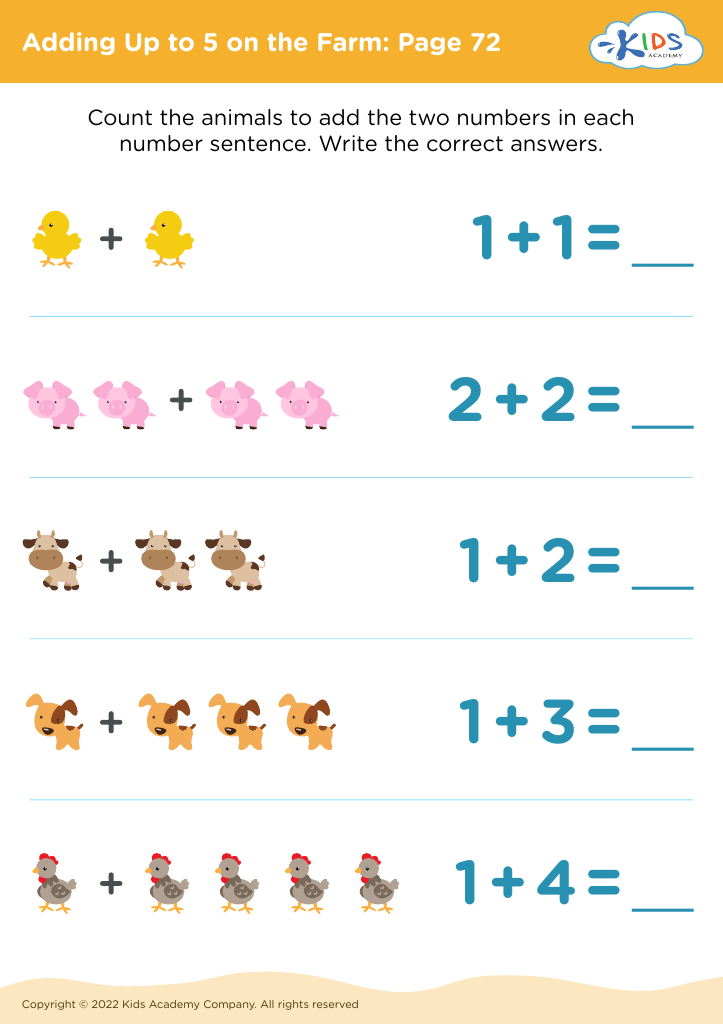
Adding Up to 5 on the Farm: Page 72
Worksheet
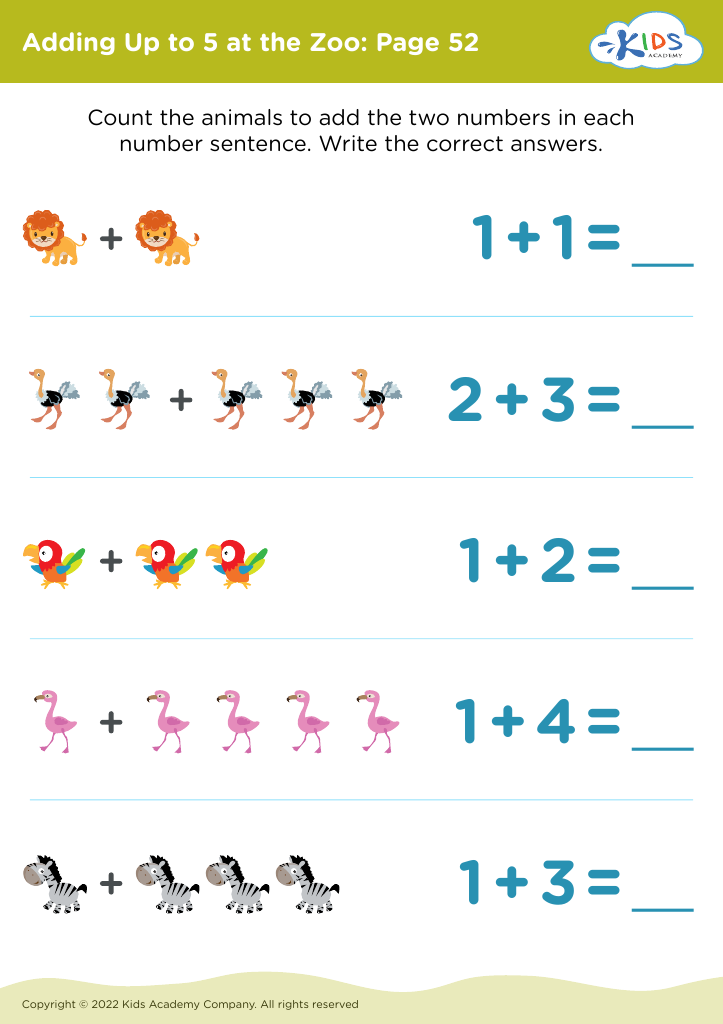
Adding Up to 5 at the Zoo: Page 52
Worksheet
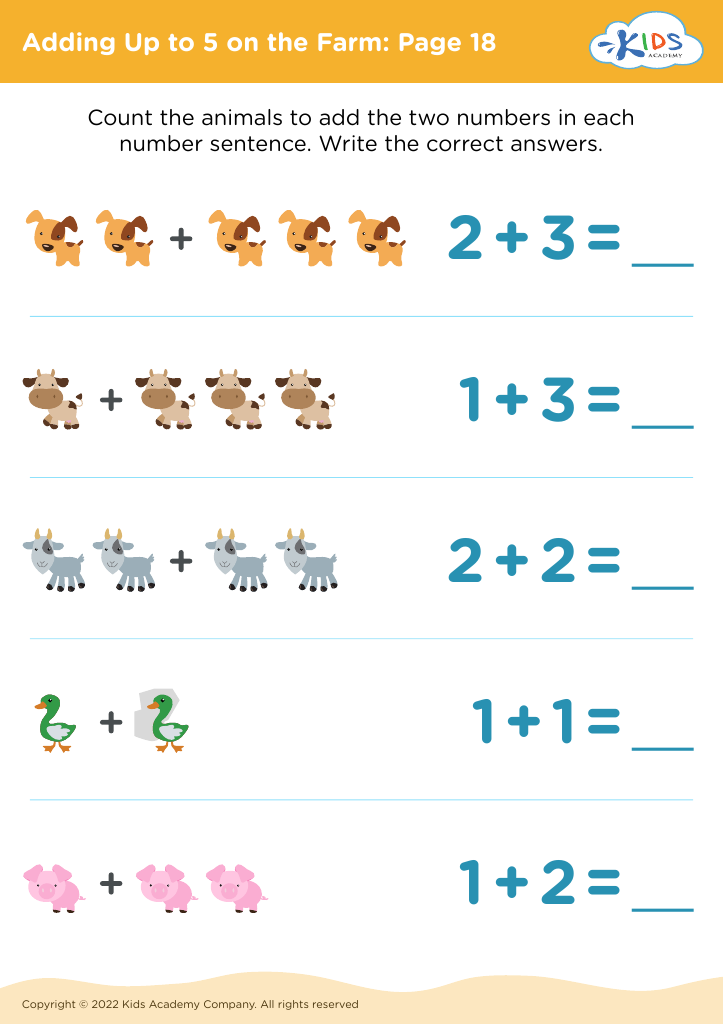
Adding Up to 5 on the Farm: Page 18
Worksheet
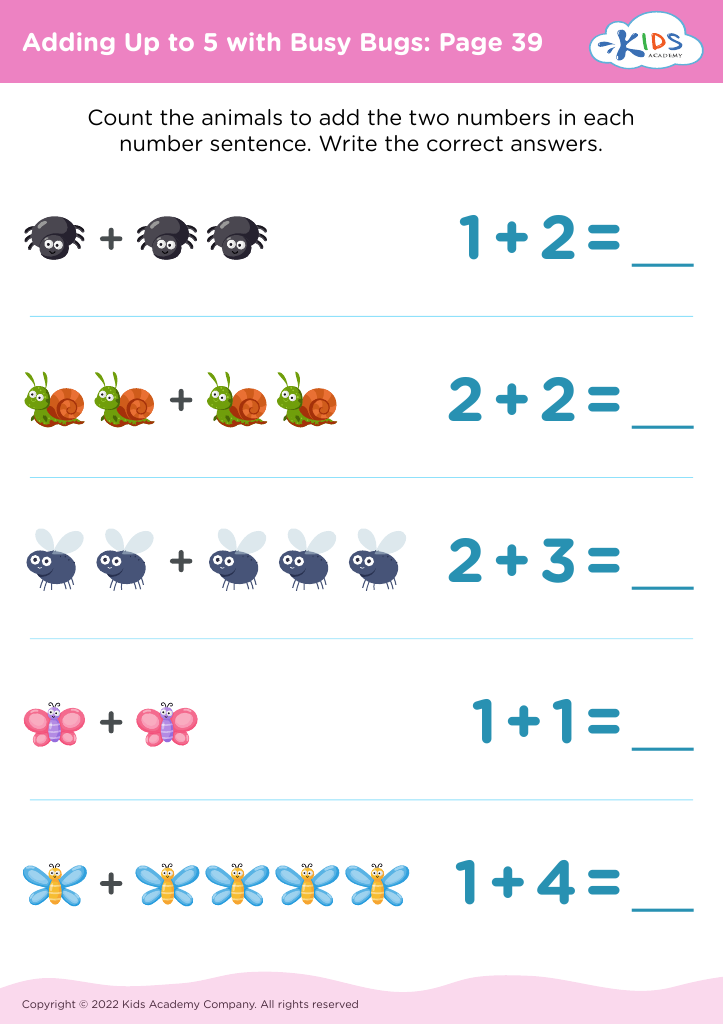
Adding Up to 5 with Busy Bugs: Page 39
Worksheet
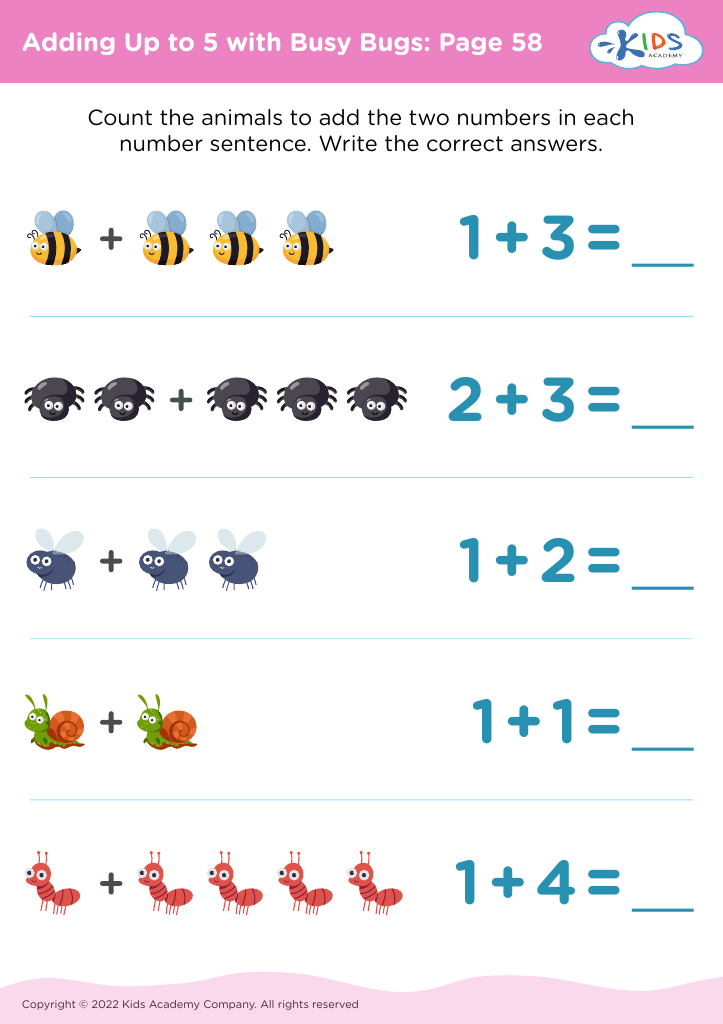
Adding Up to 5 with Busy Bugs: Page 58
Worksheet
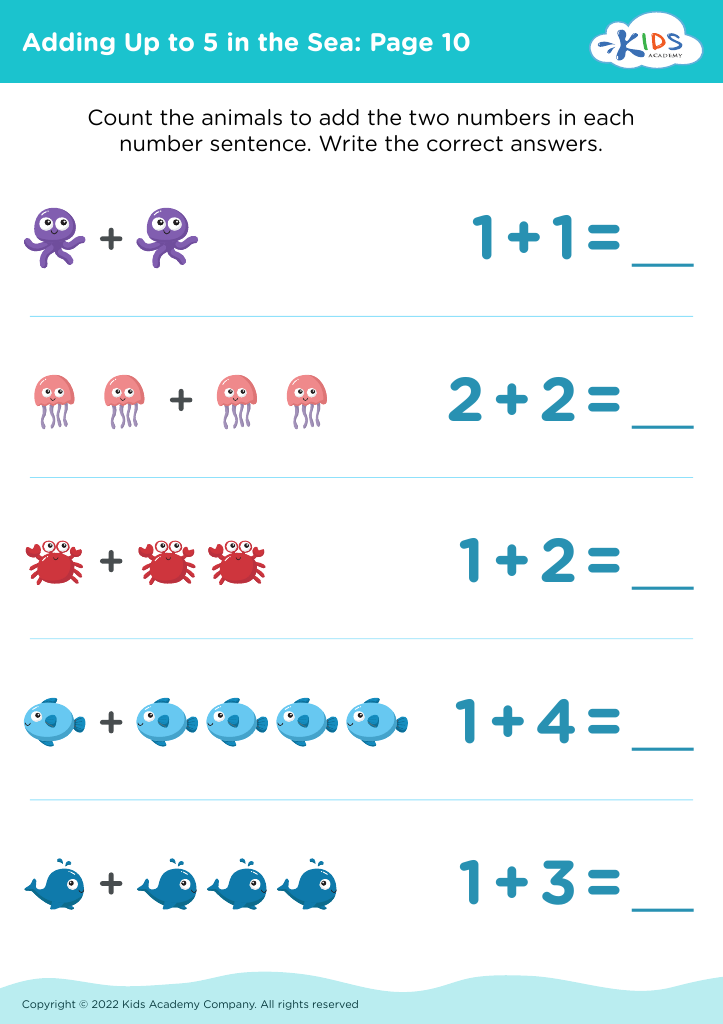
Adding Up to 5 in the Sea: Page 10
Worksheet
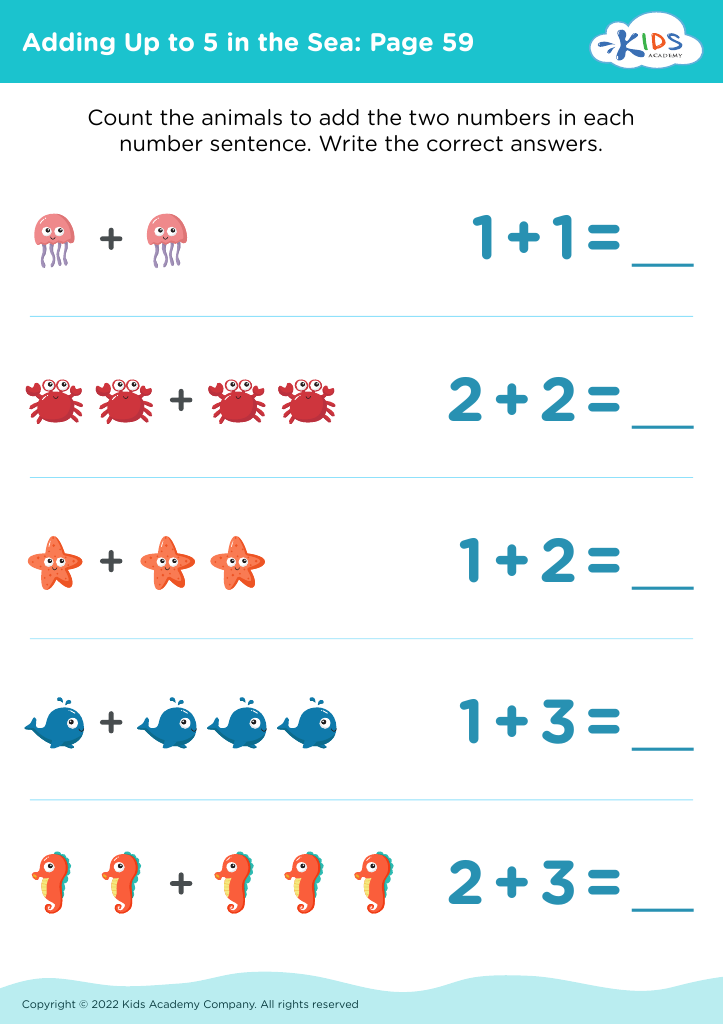
Adding Up to 5 in the Sea: Page 59
Worksheet
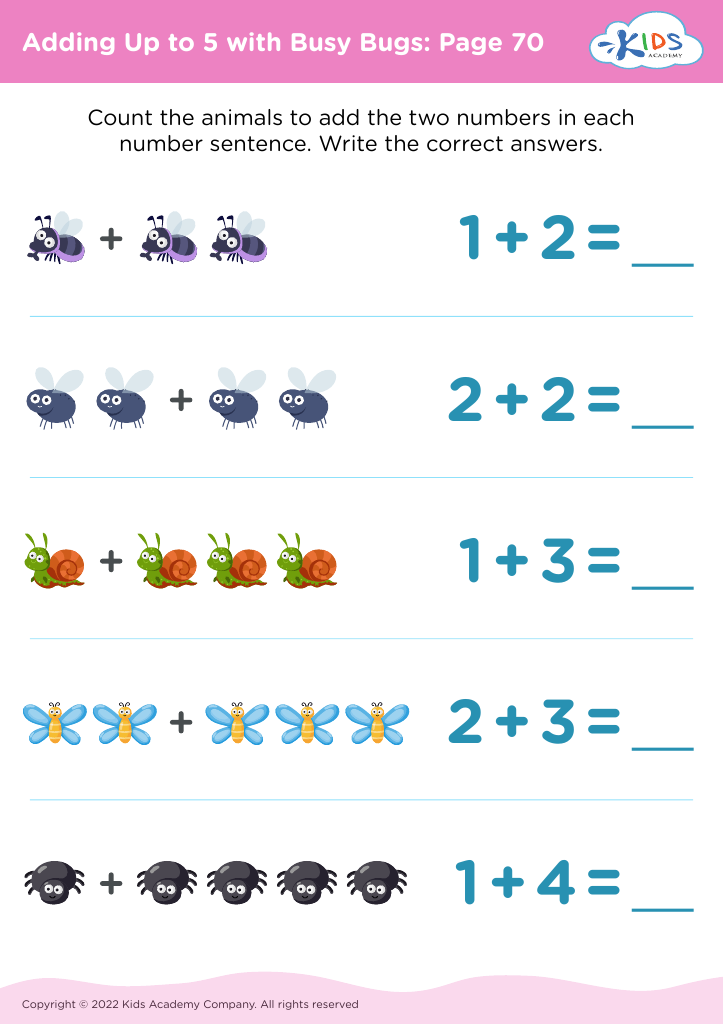
Adding Up to 5 with Busy Bugs: Page 70
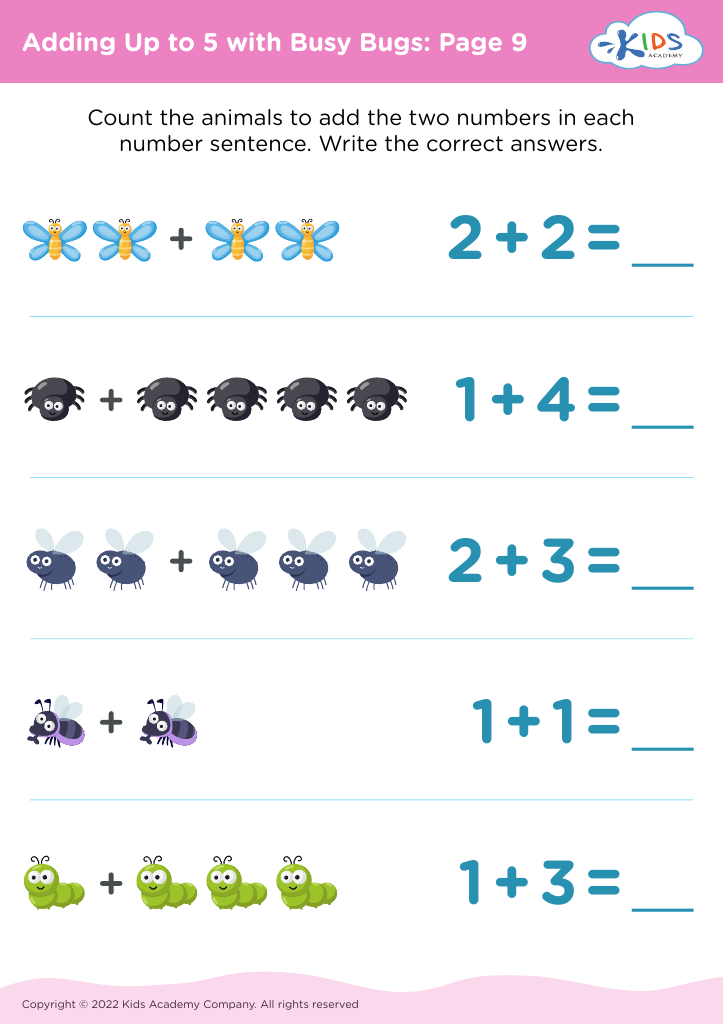
Worksheet
Adding Up to 5 with Busy Bugs: Page 9
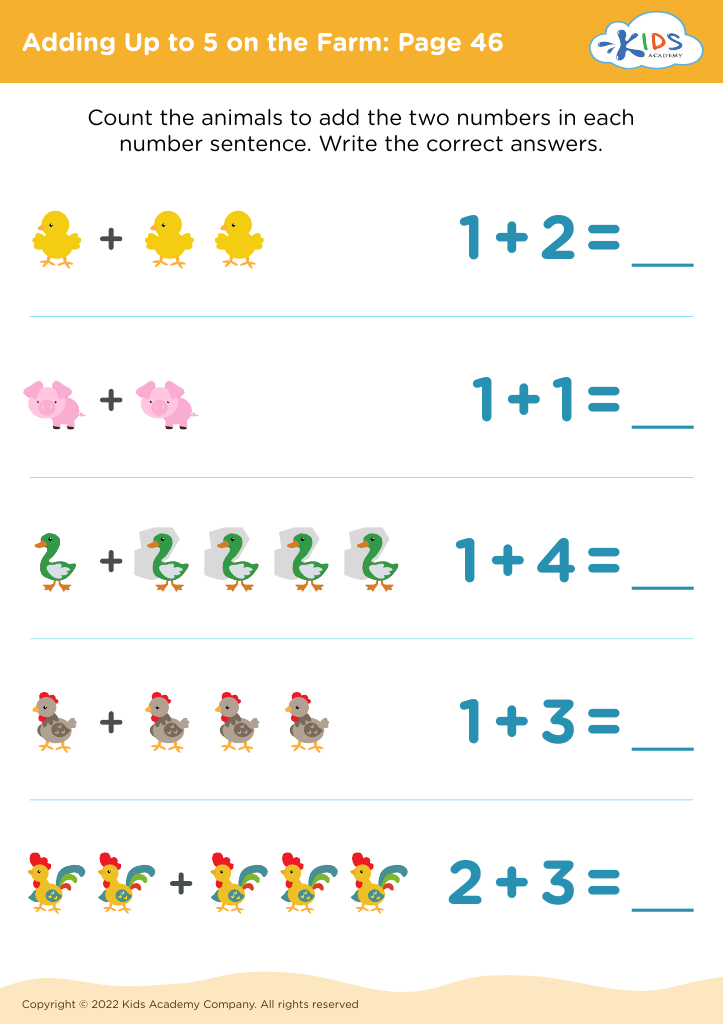
Worksheet
Adding Up to 5 on the Farm: Page 46
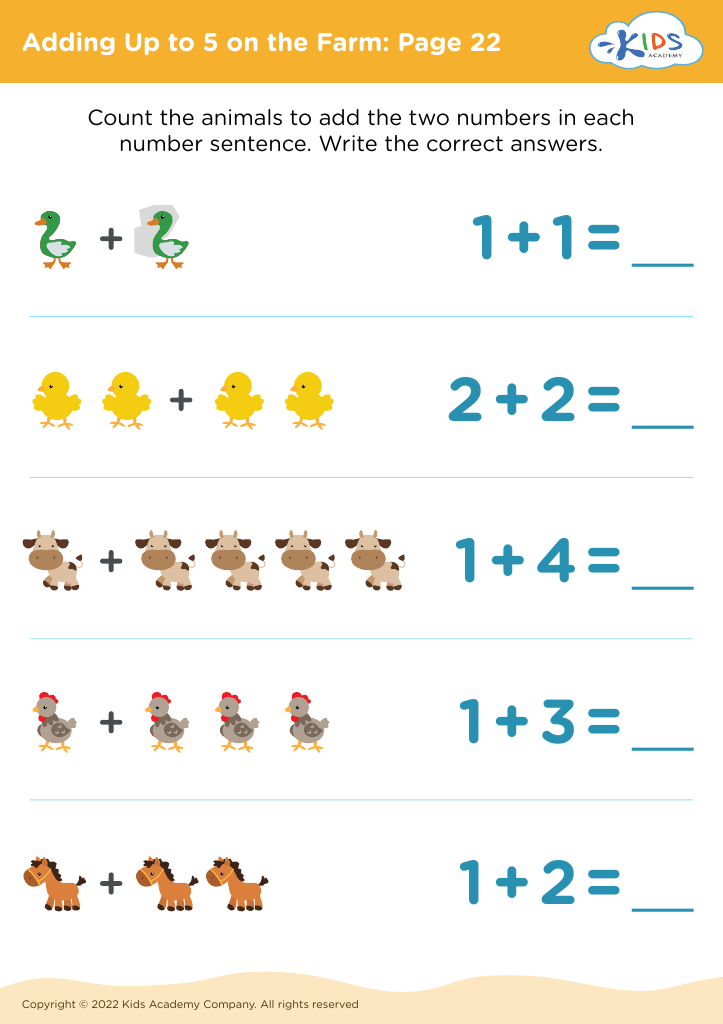
Worksheet
Adding Up to 5 on the Farm: Page 22
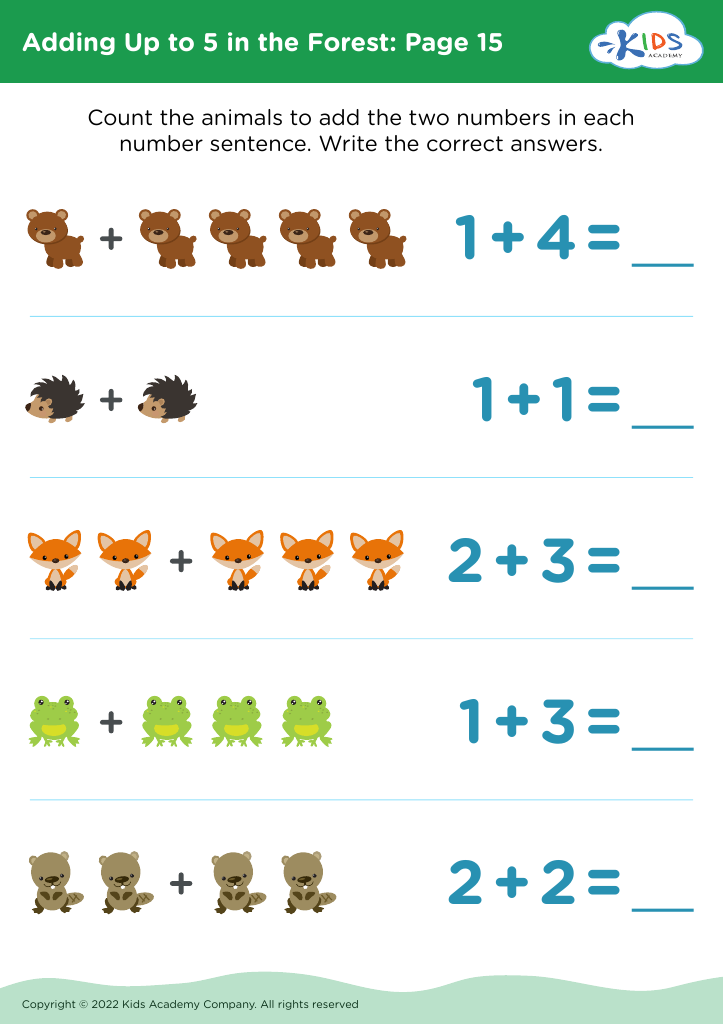
Worksheet
Adding Up to 5 in the Forest: Page 15
Worksheet


Visual learning is a powerful strategy for young children, especially when it comes to foundational math concepts like adding up to 5. Children aged 3-8 are at a crucial developmental stage where engaging their visual senses can significantly enhance their understanding and retention of information. By incorporating visual aid—such as colorful counters, pictorial representations, or interactive games—teachers and parents can make abstract concepts more concrete and accessible.

Visually accessible methods support different learning styles, catering to both visual learners and those who might struggle with traditional verbal instruction. This approach fosters a sense of ownership and engagement in the learning process, making mathematics less intimidating and more enjoyable.

Furthermore, visuals help young children develop critical thinking skills as they observe patterns and relationships between numbers. This foundation is essential, as early math skills are closely linked to future academic success. By reinforcing visual learning in addition to traditional methods, educators and caregivers can cultivate a positive attitude toward math, laying the groundwork for a lifelong love of learning.

Simply put, emphasizing visual learning in early math education is beneficial not only for academic growth but also for nurturing a children’s confidence and enjoyment in exploring the world of numbers.