Visual Learning Addition and Subtraction Word Problems Worksheets for Ages 3-8
5 filtered results
-
From - To
Discover our engaging Visual Learning Addition and Subtraction Word Problems Worksheets for ages 3-8! Specifically designed to captivate young minds, our worksheets blend colorful visuals with step-by-step word problems to develop essential math skills. By converting abstract concepts into relatable scenarios, children can grasp addition and subtraction with ease. Perfect for classroom or home use, these activities encourage independent learning while ensuring a solid mathematical foundation. Crafted by education experts, our worksheets support cognitive development, critical thinking, and problem-solving abilities. Ideal for both children starting their math journey and those needing extra practice, learning math has never been this fun!
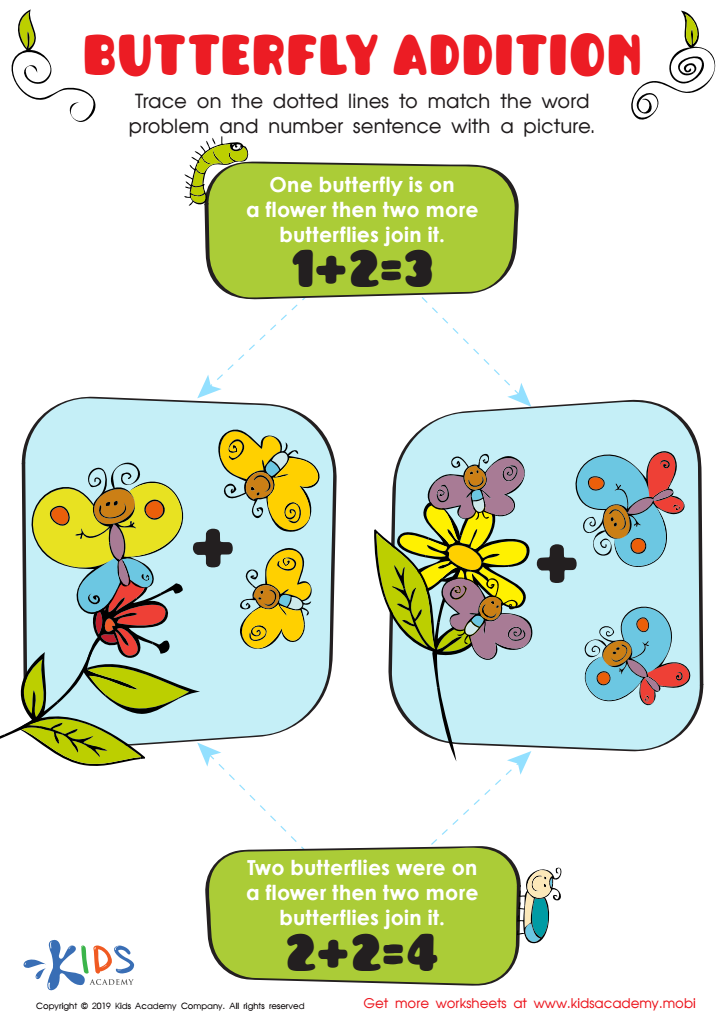
Butterfly Addition Worksheet
 Assign to My Students
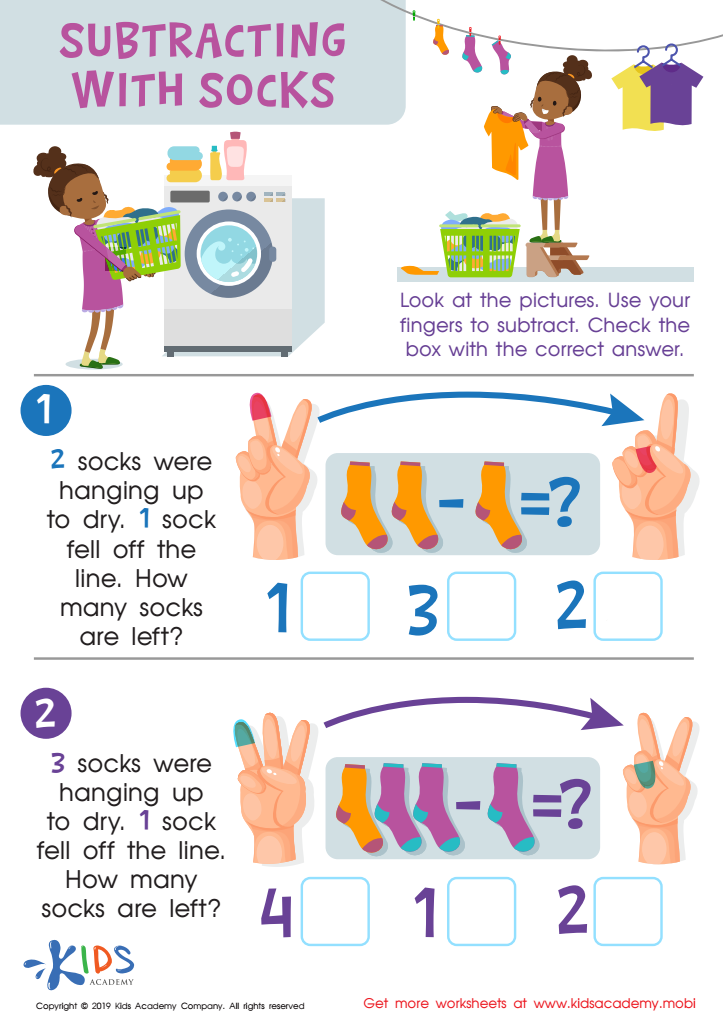
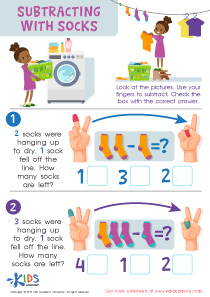
Subtracting Socks Worksheet
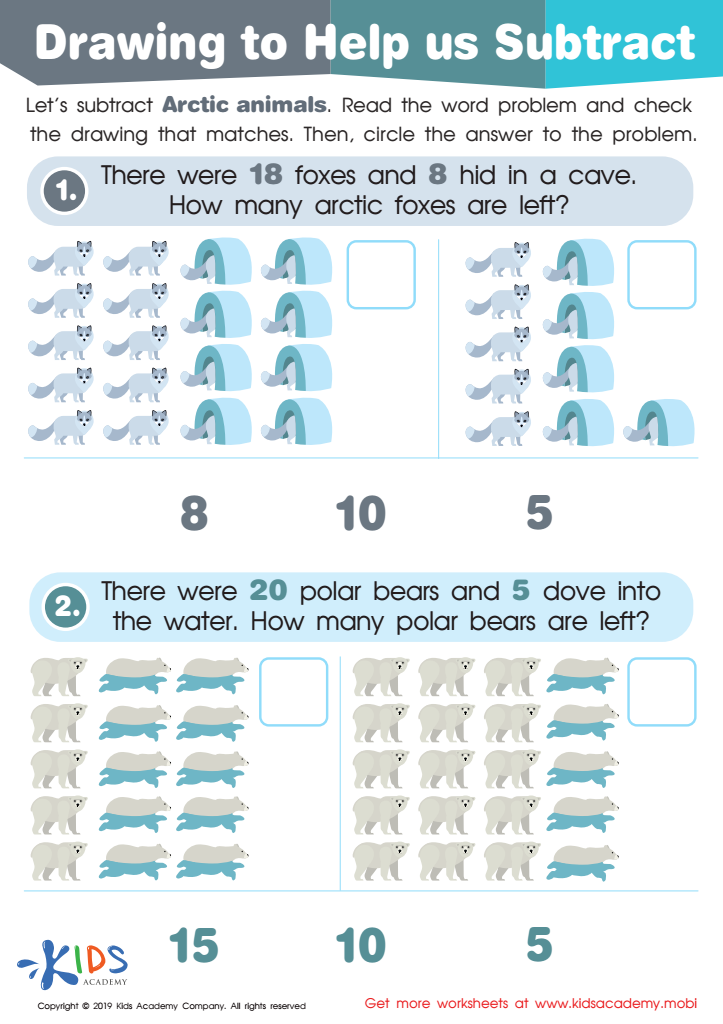
Drawing to Help Us Subtract Worksheet
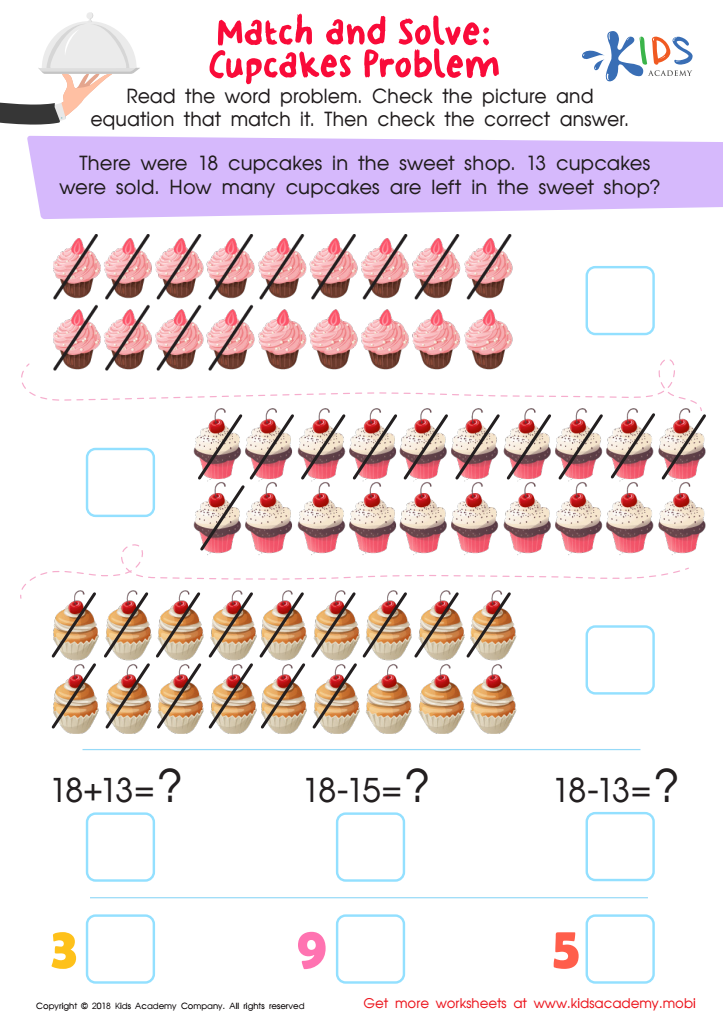
Match and Solve: Cupcakes Problem Worksheet
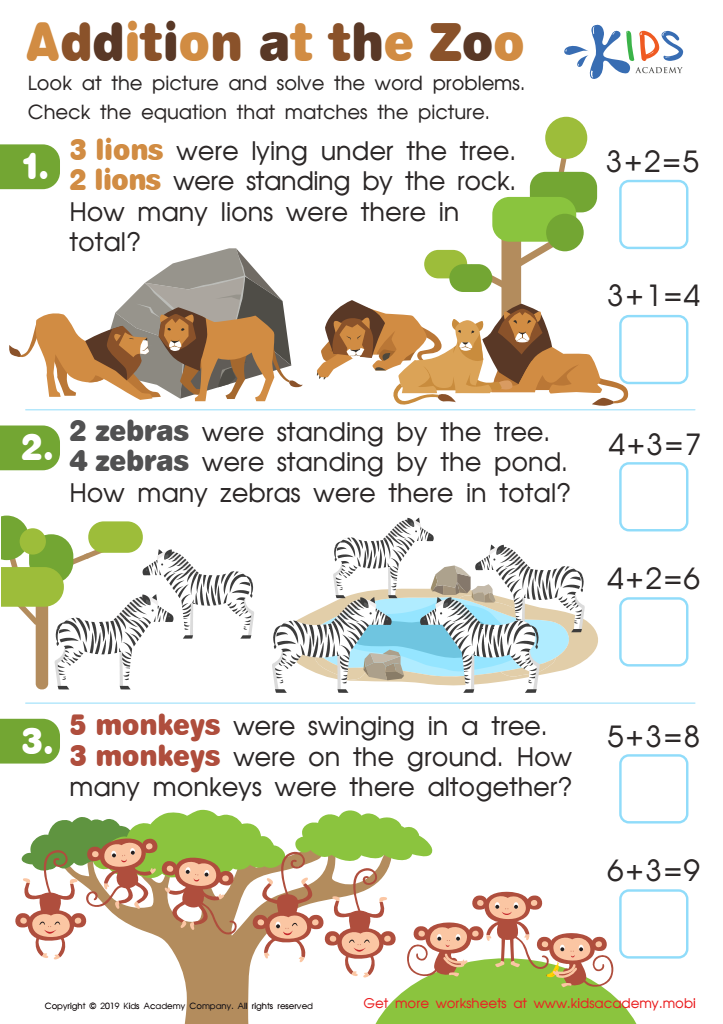
Addition at the Zoo Worksheet








Visual learning is crucial for young children because it leverages their innate ability to understand and relate to the world through images and patterns. For ages 3-8, using visual aids to teach addition and subtraction word problems provides several significant benefits. Firstly, it transforms abstract concepts into tangible realities. Picture-based problems, like counting apples or sharing toys, make mathematical operations more concrete and relatable, enhancing comprehension.
Visual learning also caters to the diverse learning styles present in a classroom. Some children grasp information better through sight rather than auditory or kinesthetic means. Moreover, it can anchor mathematical ideas more firmly in a young learner's mind by linking new knowledge to recognizable visual narratives and contexts.
In promoting visual skills, teachers and parents help children develop critical problem-solving abilities. Visualizing scenarios encourages logical thinking and improves spatial awareness, which is essential for more advanced math concepts they will encounter later.
Furthermore, visually engaging content often captures children's interest and motivation more effectively. When students are drawn into scenarios through compelling imagery, they are likelier to participate actively and enjoy the learning process. Hence, integrating visual learning into early math education supports better engagement, understanding, and long-term retention of fundamental mathematical skills.