
Color differentiation Addition & Subtraction Worksheets for Ages 3-8
3 filtered results
Difficulty Level
Grade
Age
-
From - To
Subject
Activity
Standards
Discover our engaging Color Differentiation Addition & Subtraction Worksheets, designed for children ages 3-8. These vibrant, fun worksheets help young learners easily grasp addition and subtraction concepts by using color-coded visuals to enhance understanding. Each worksheet features various activities that encourage kids to solve problems while matching and recognizing colors, fostering essential math and cognitive skills. Perfect for home or classroom use, our worksheets make learning math enjoyable and effective. Boost your child's confidence and success with our expertly crafted resources that align with educational standards. Explore today and watch your child thrive!
Favorites
With answer key
Interactive
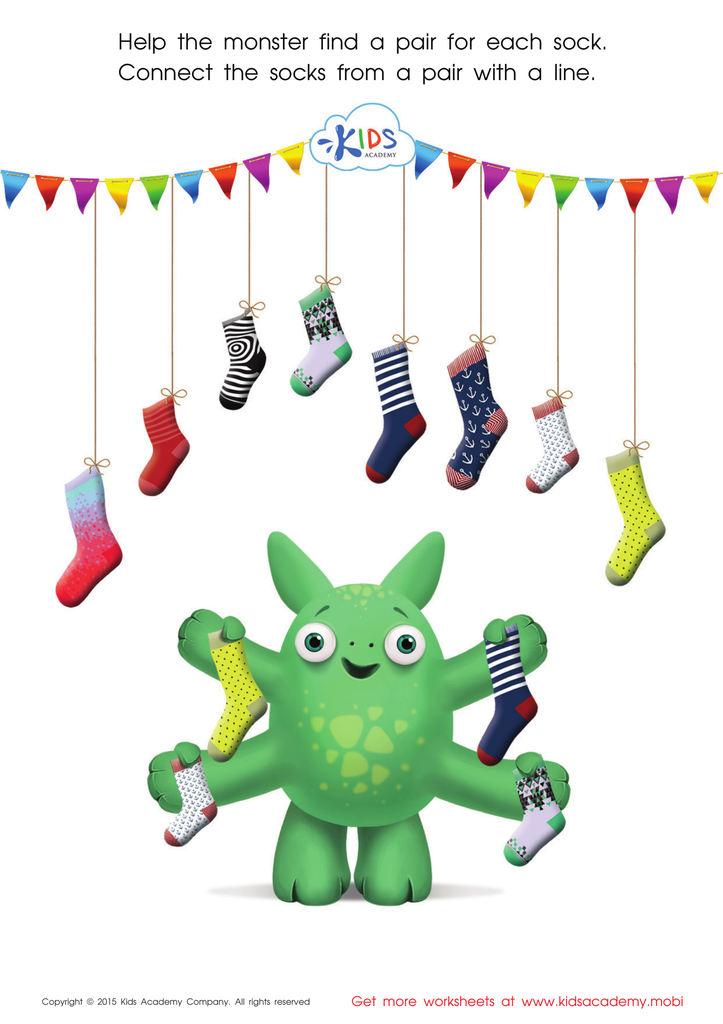
Math Matching Pairs Game: Monsterв's Socks Worksheet
Let your child learn, concentrate and practice sorting skills with this fun kindergarten worksheet. Matching polka dots, anchors, geo shapes and stripes on Monster's socks will help improve fine motor skills. Download and print this free worksheet and several others on different topics.
Math Matching Pairs Game: Monsterв's Socks Worksheet
Worksheet
Join Kids Academy for Free
Who is primarily going to use this learning content?








Color differentiation, in addition to traditional numerical teaching, plays a crucial role in the cognitive and emotional development of children aged 3-8. Developing the ability to differentiate and categorize colors lays the foundational skills needed for more complex cognitive tasks. This early skill helps children with organizational and classification tasks, fostering better problem-solving skills and logical thought processes.
In the context of addition and subtraction, using colors can make abstract mathematical concepts more concrete and understandable. For example, visual aids like bright-colored counting blocks or charts can make it easier for children to grasp the ideas of adding and taking away. This multisensory approach supports various learning styles, particularly benefiting visual learners who might struggle with traditional numeric representation alone.
Moreover, integrating color into these math lessons makes learning more engaging and enjoyable, capturing children's interest and making the educational experience more positive. It's not just about aesthetic manipulation; using colors can also aid memory retention as the brain associates colorful images with fun activities.
Encouraging color differentiation in addition and subtraction enhances critical visual and cognitive skills while enriching the learning environment, thus giving children a robust foundational platform from which to develop more advanced academic capabilities.








