Check out this FREE Trial Lesson on Addition & Subtraction for age 3-8!

Z

Favorites
With answer key
Interactive
  • 3-8
  • Comparing Fractions
  • Addition & Subtraction
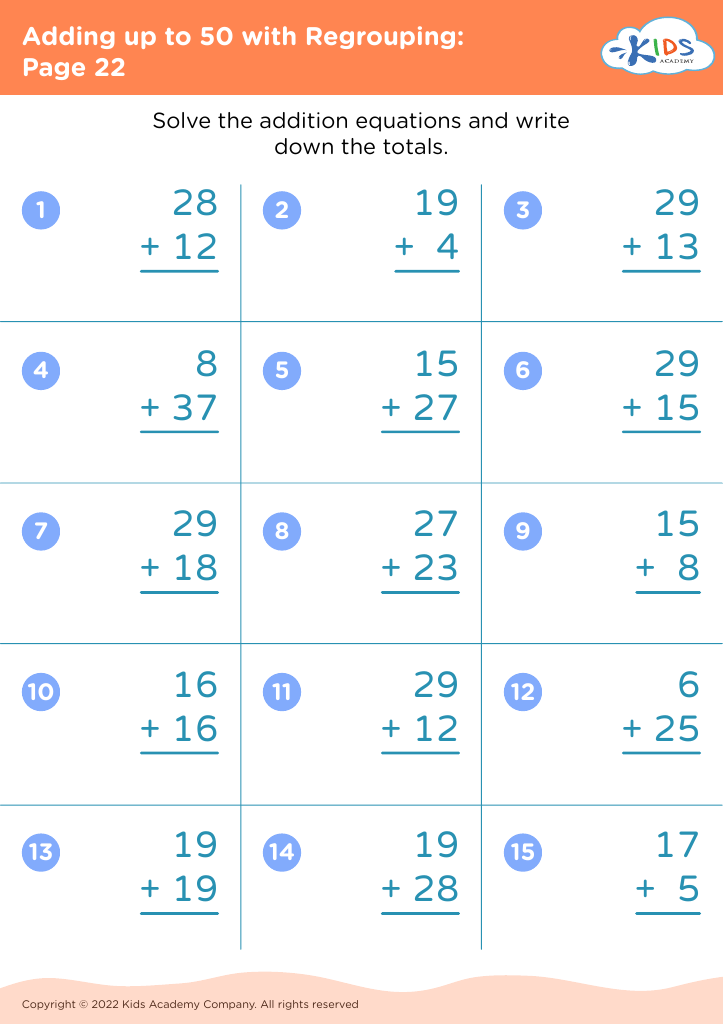
Adding up to 50 with Regrouping: Page 22
Worksheet
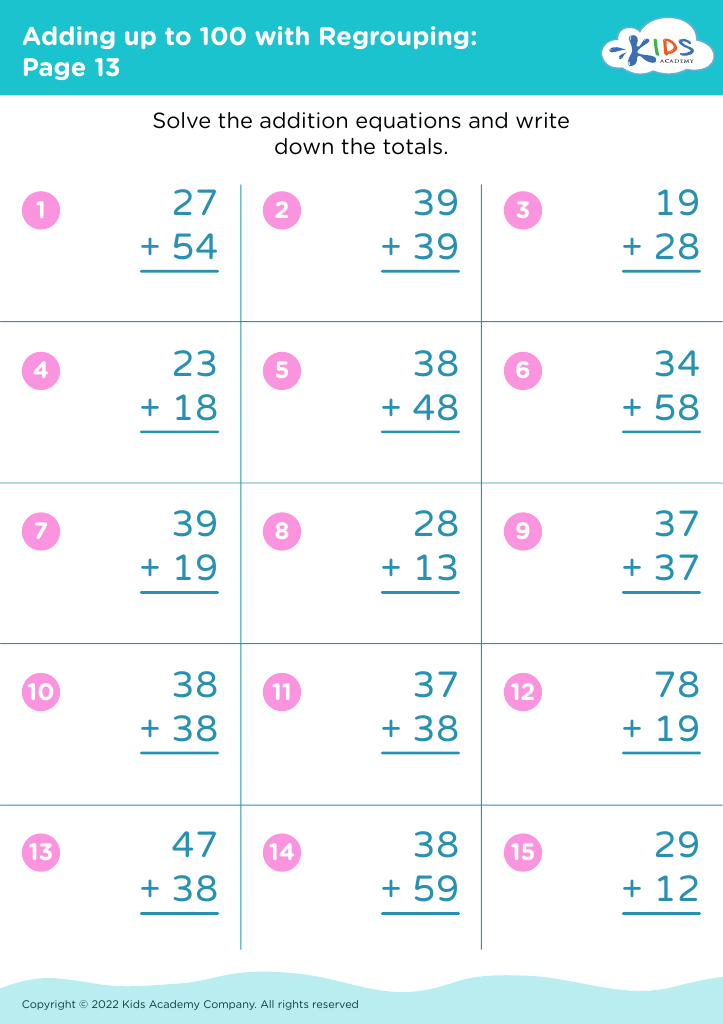
Adding up to 100 with Regrouping: Page 13
Worksheet
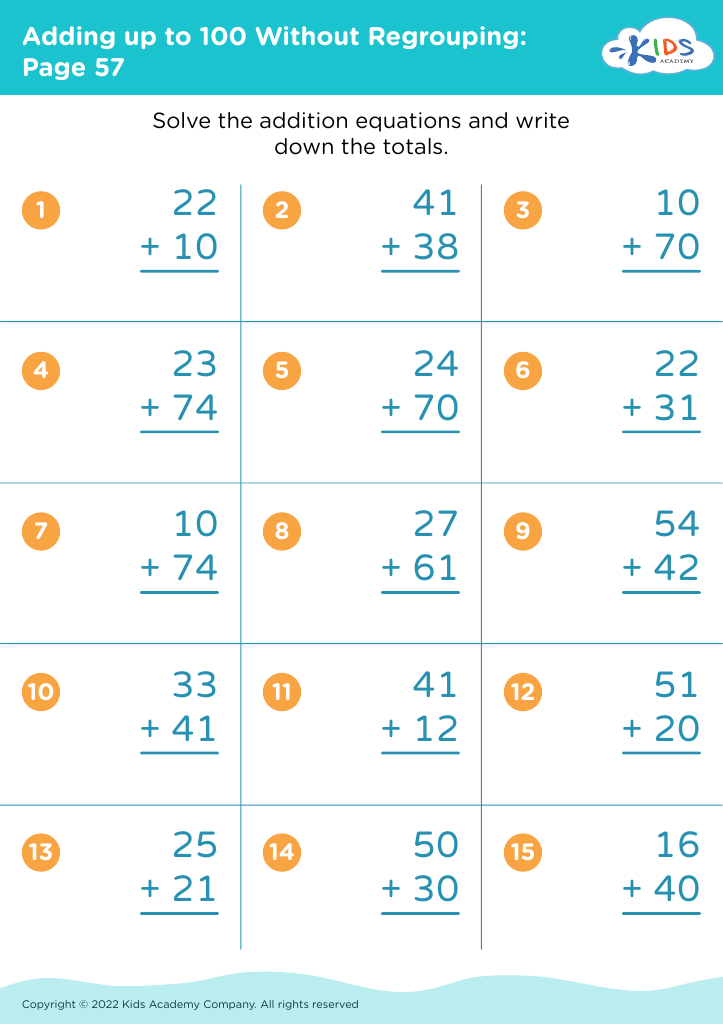
Adding up to 100 Without Regrouping: Page 57
Worksheet
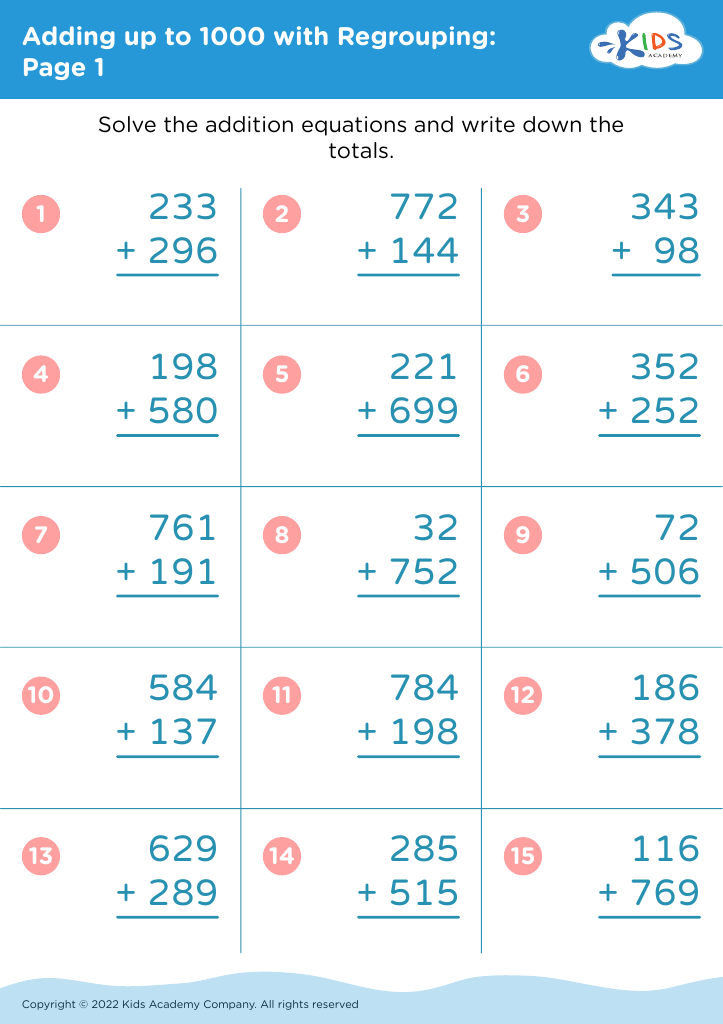
Adding up to 1000 with Regrouping: Page 1
Worksheet
Adding up to 100 Without Regrouping: Page 4
Worksheet
Adding up to 100: Page 20

Adding up to 100: Page 20

Adding up to 100: Page 20
Worksheet
Adding up to 1000 Without Regrouping: Page 67
Worksheet
Adding up to 1000 with Regrouping: Page 17
Worksheet
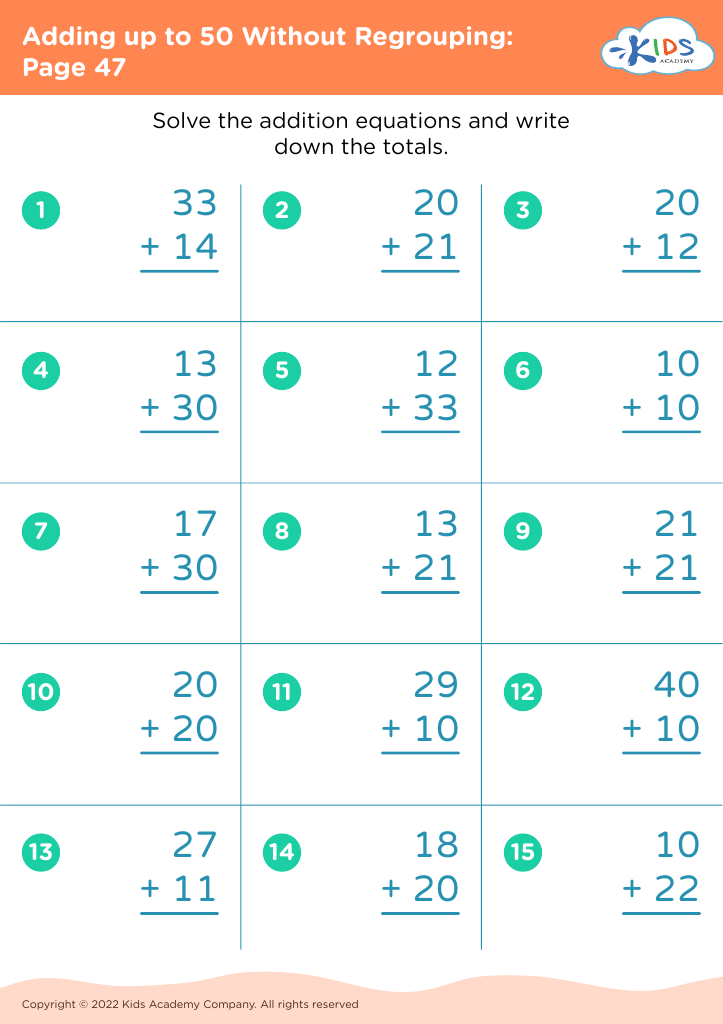
Adding up to 50 Without Regrouping: Page 47
Worksheet
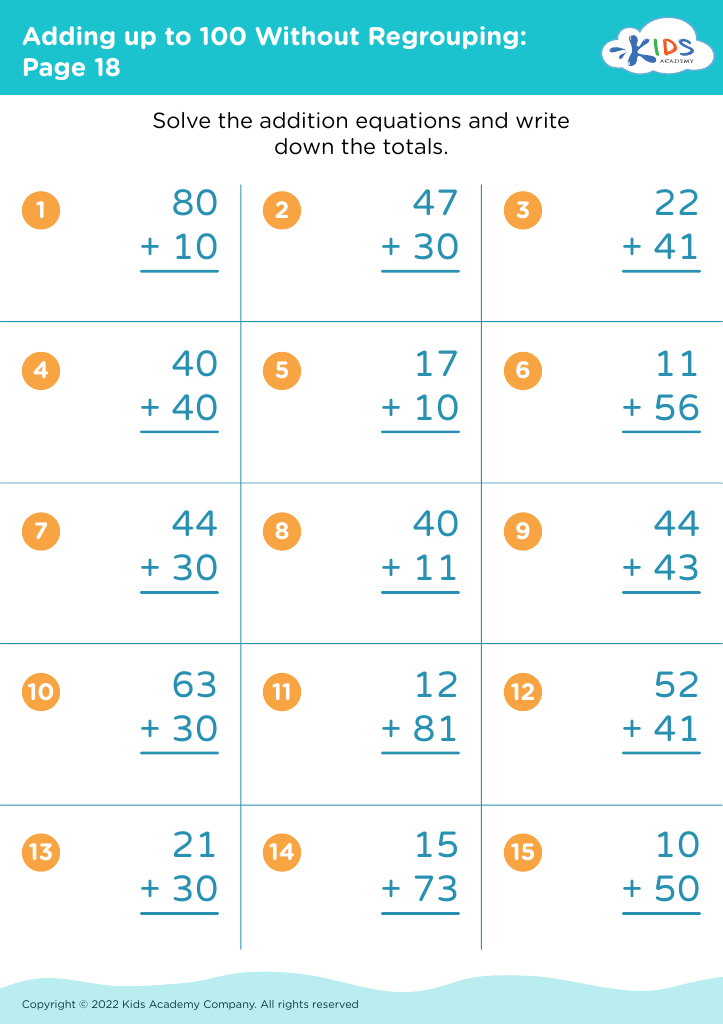
Adding up to 100 Without Regrouping: Page 18
Worksheet
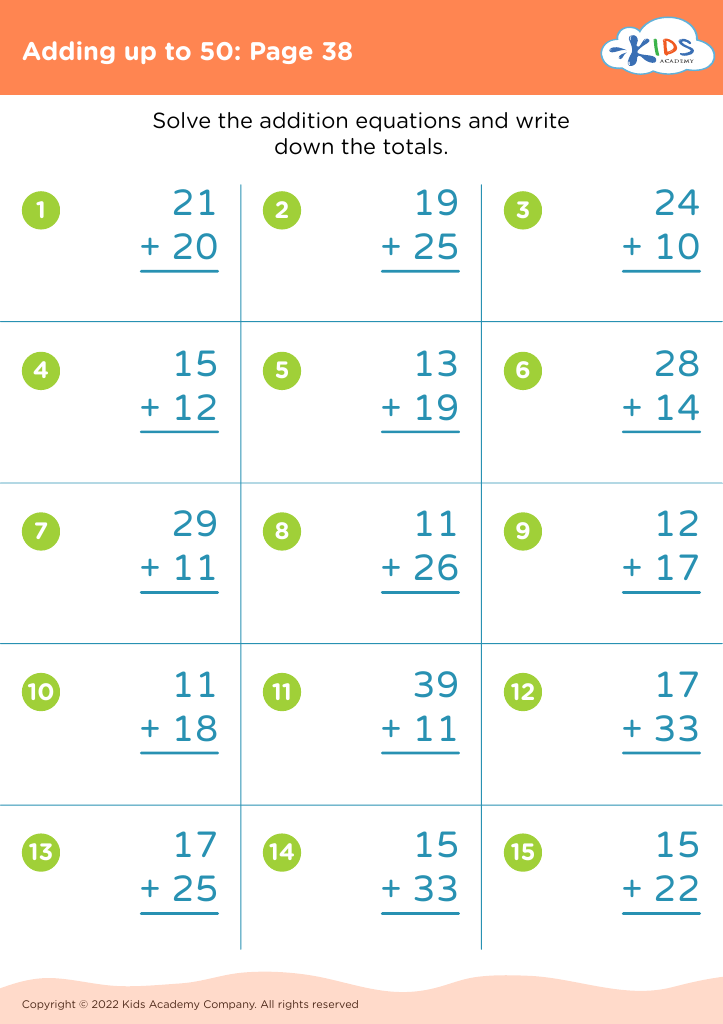
Adding up to 50: Page 38

Adding up to 50: Page 38

Adding up to 50: Page 38
Worksheet
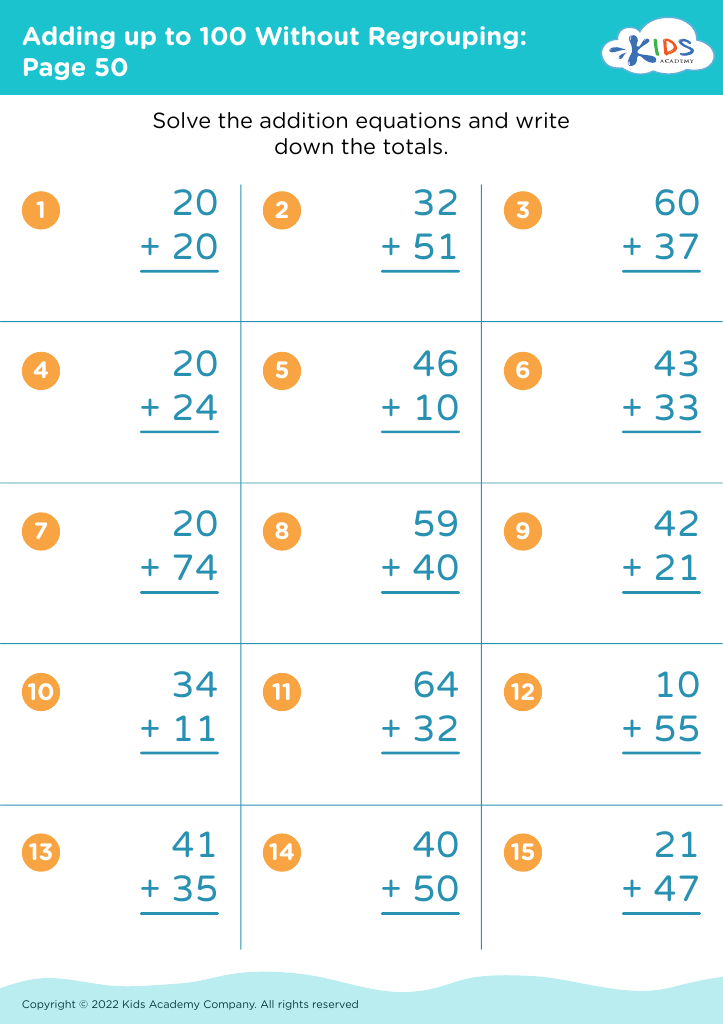
Adding up to 100 Without Regrouping: Page 50
Worksheet
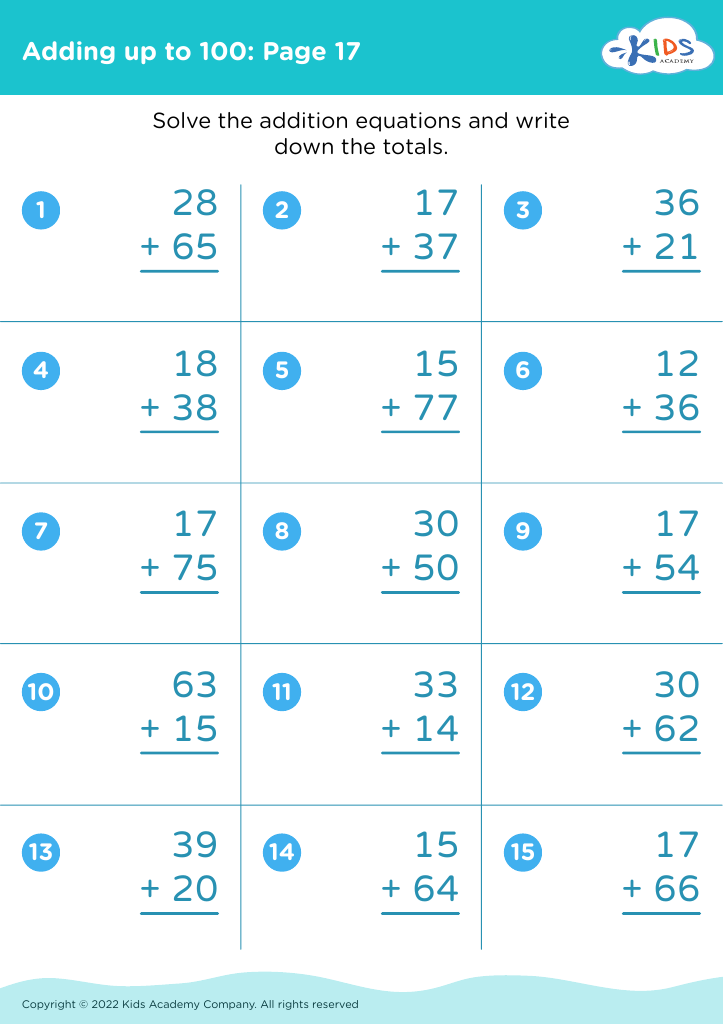
Adding up to 100: Page 17

Adding up to 100: Page 17

Adding up to 100: Page 17
Worksheet
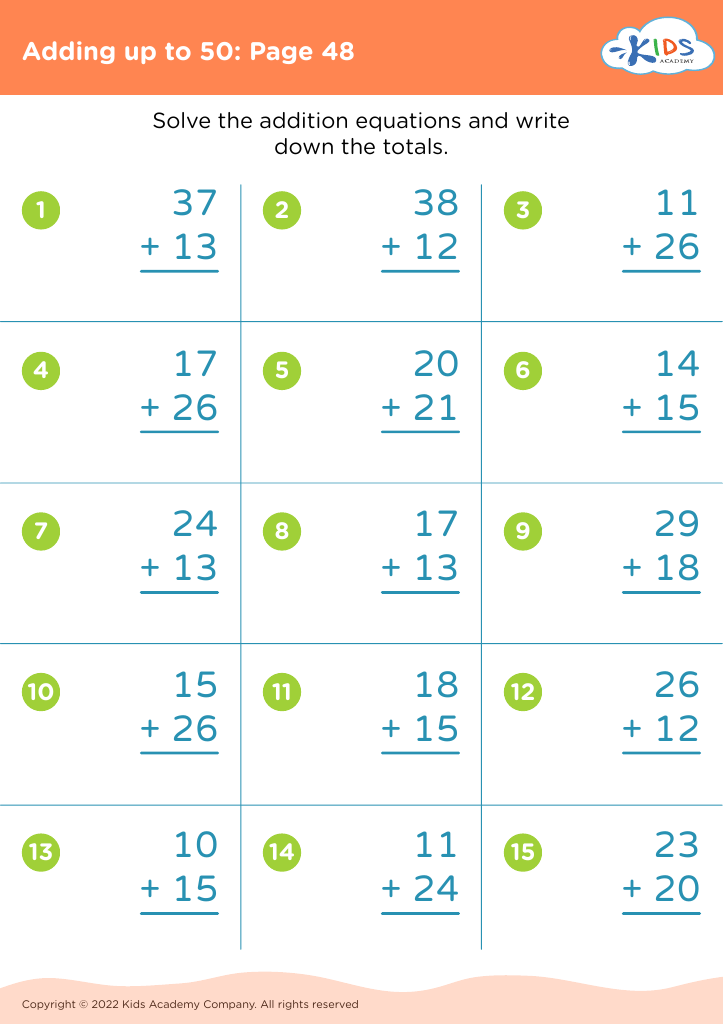
Adding up to 50: Page 48

Adding up to 50: Page 48

Adding up to 50: Page 48
Worksheet
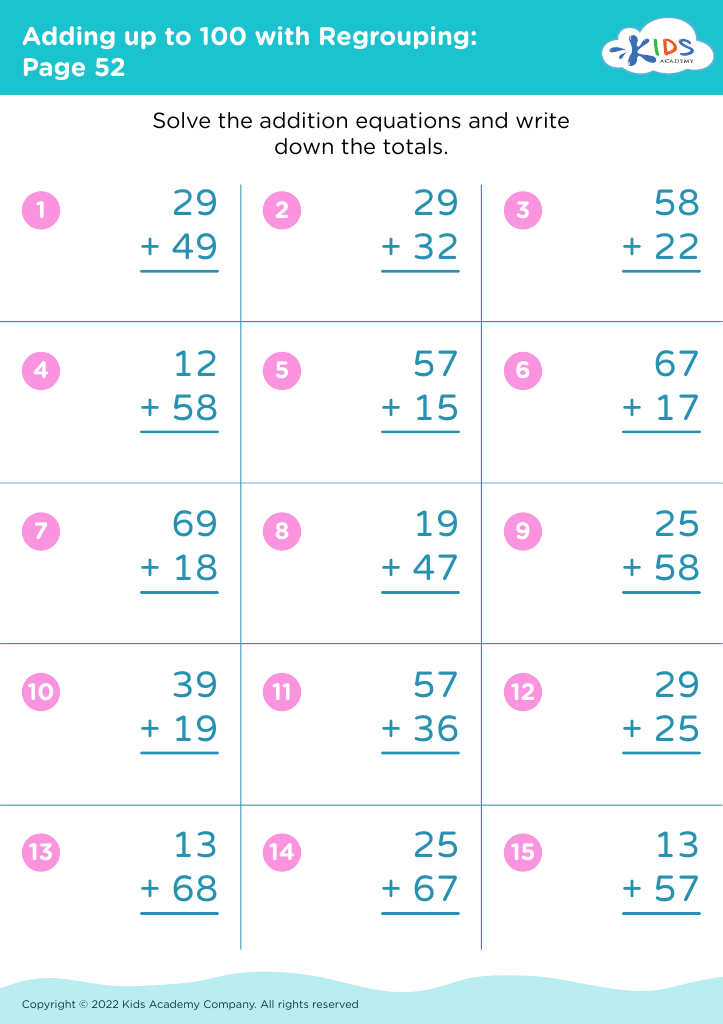
Adding up to 100 with Regrouping: Page 52
Worksheet
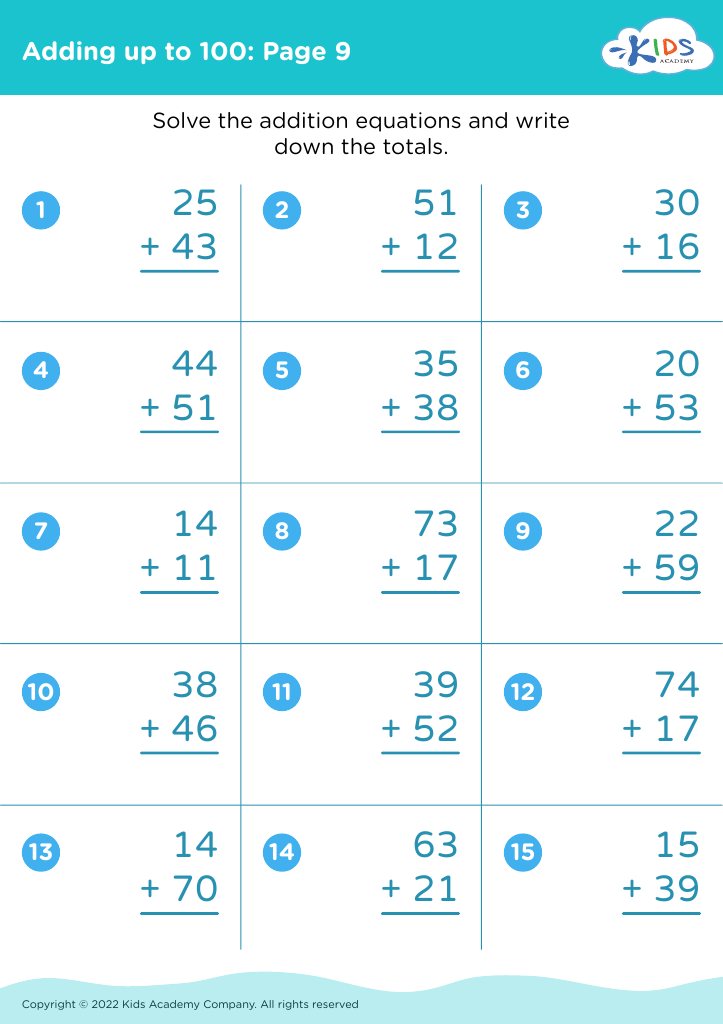
Adding up to 100: Page 9

Adding up to 100: Page 9

Adding up to 100: Page 9
Worksheet
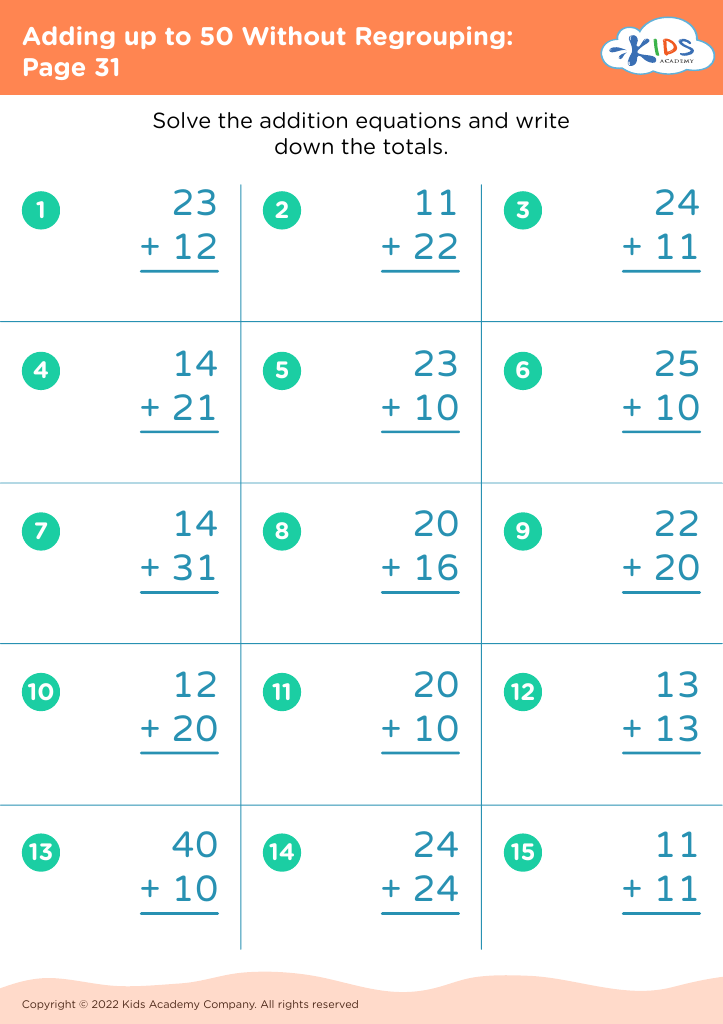
Adding up to 50 Without Regrouping: Page 31
Worksheet
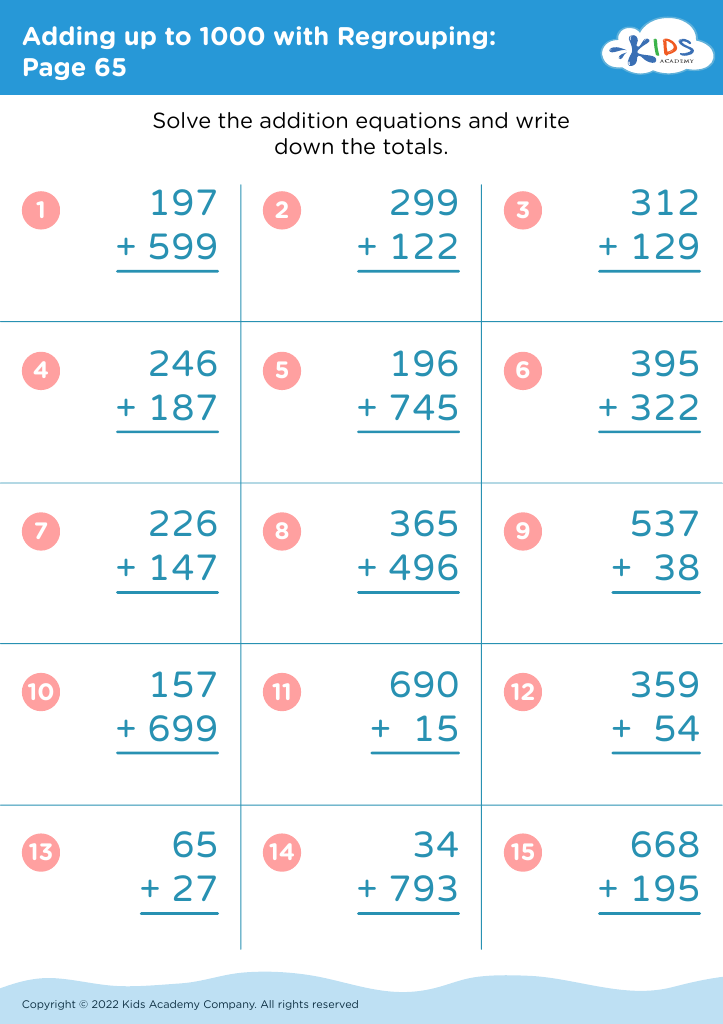
Adding up to 1000 with Regrouping: Page 65
Worksheet
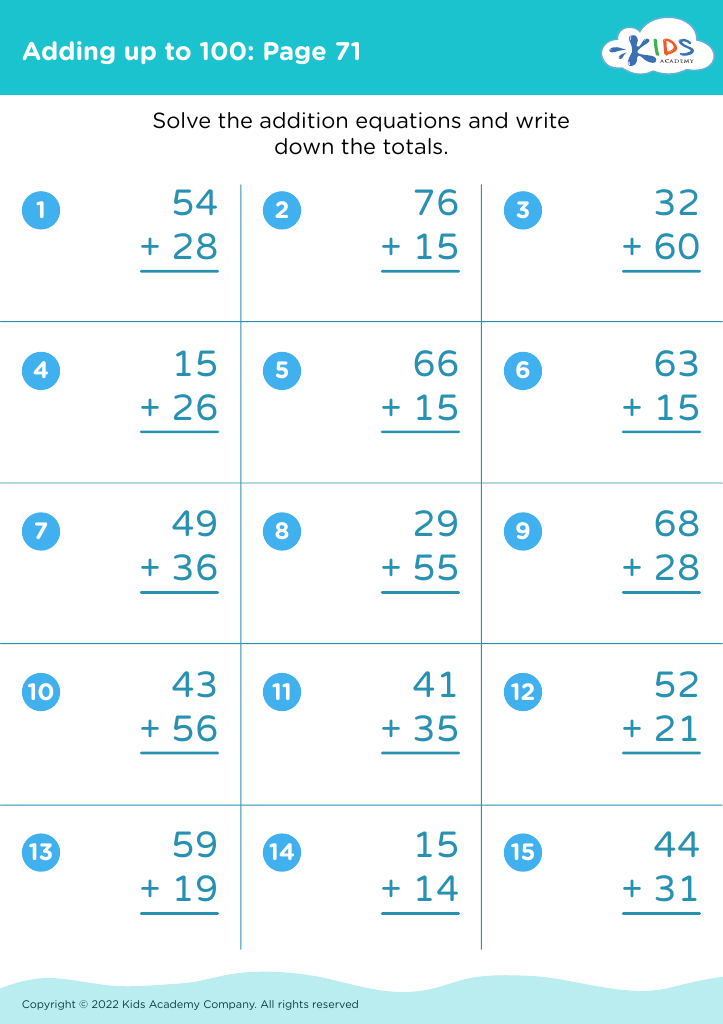
Adding up to 100: Page 71

Adding up to 100: Page 71

Adding up to 100: Page 71
Worksheet
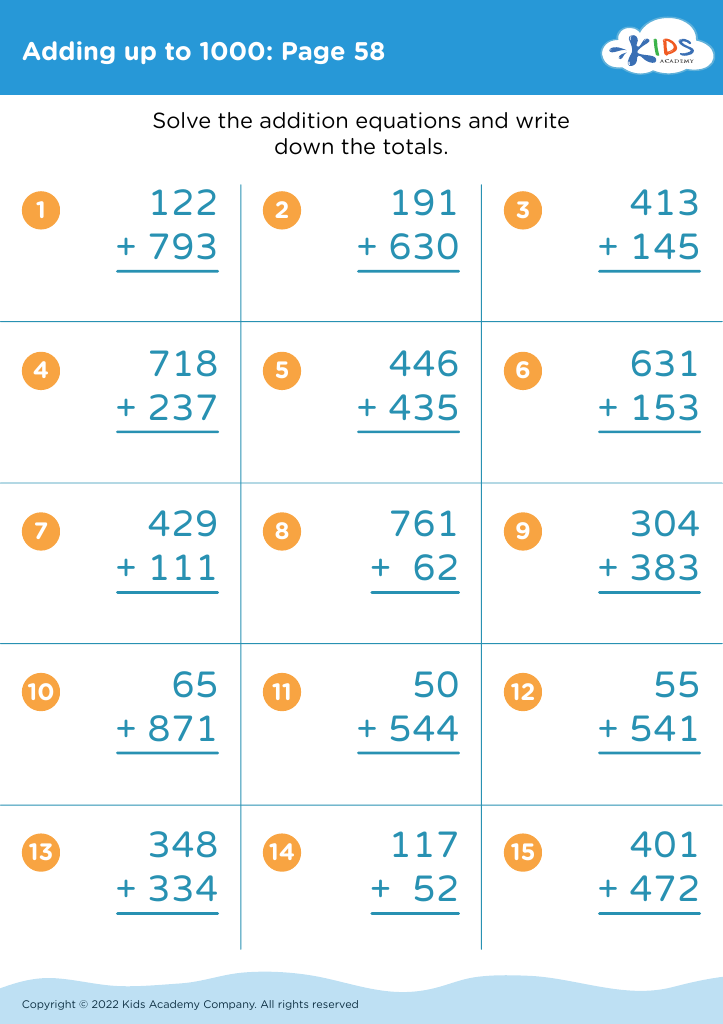
Adding up to 1000: Page 58

Adding up to 1000: Page 58

Adding up to 1000: Page 58
Worksheet
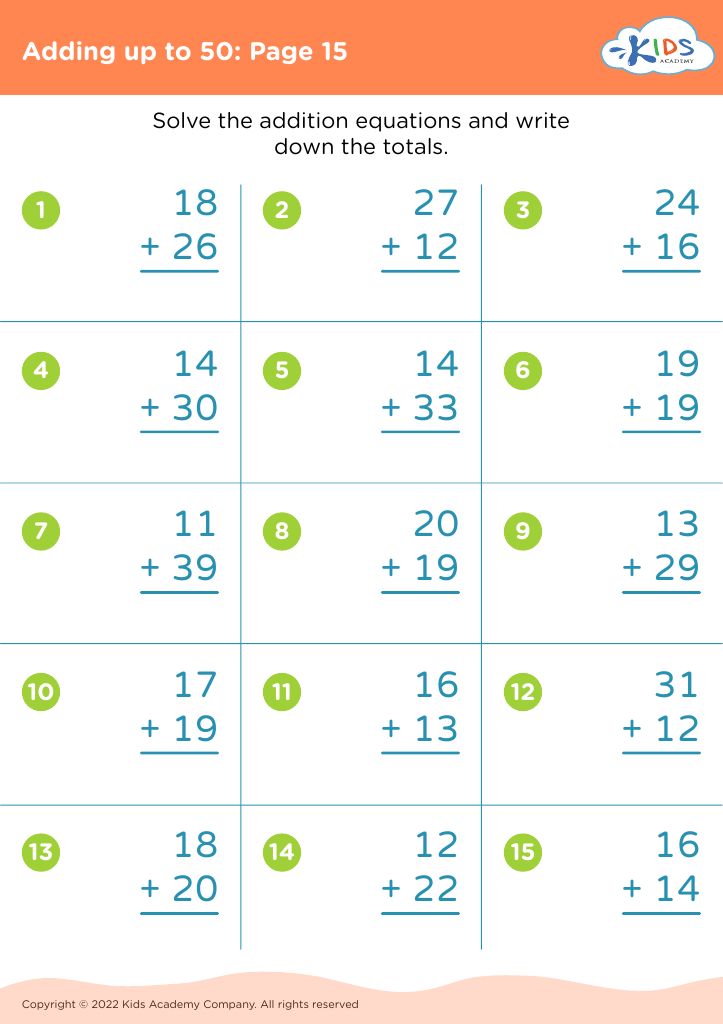
Adding up to 50: Page 15

Adding up to 50: Page 15

Adding up to 50: Page 15
Worksheet
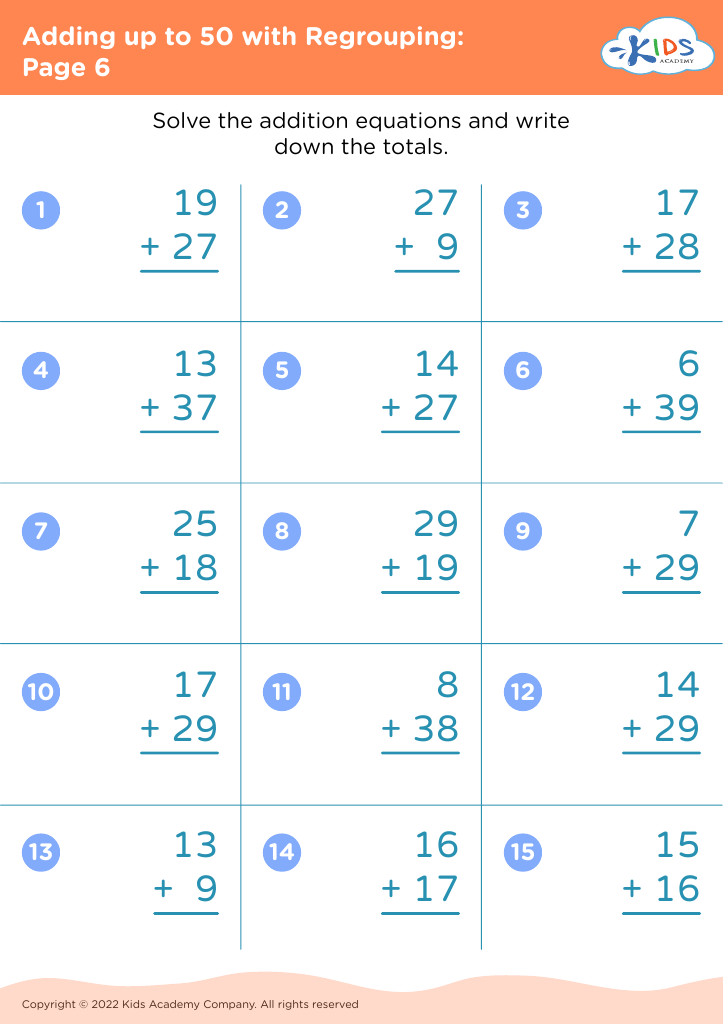
Adding up to 50 with Regrouping: Page 6
Worksheet
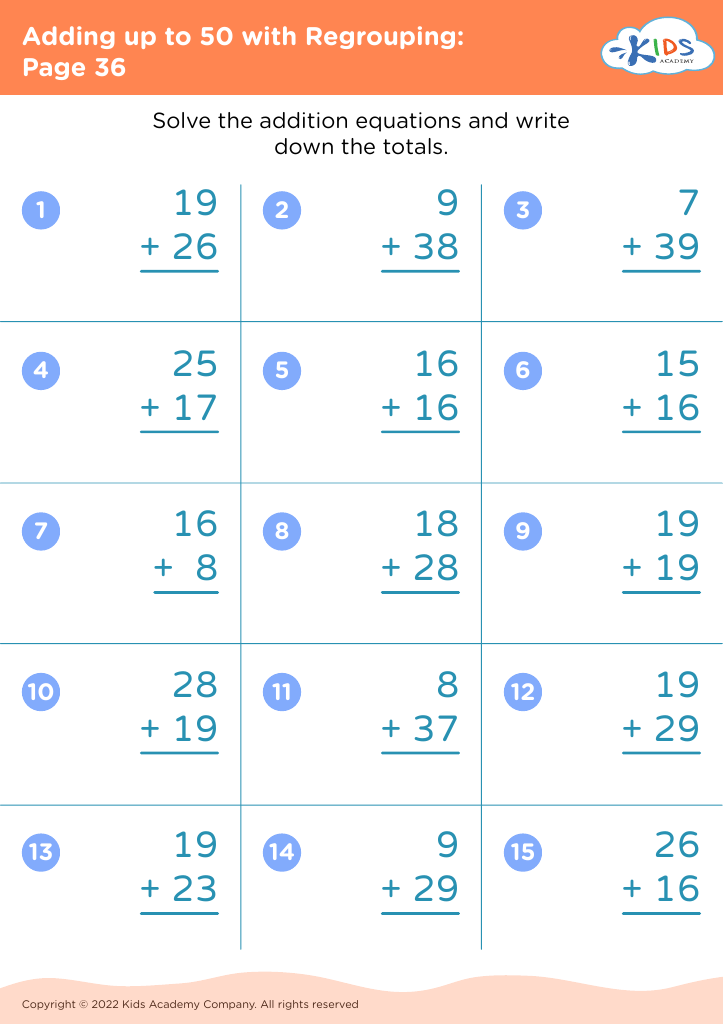
Adding up to 50 with Regrouping: Page 36
Worksheet
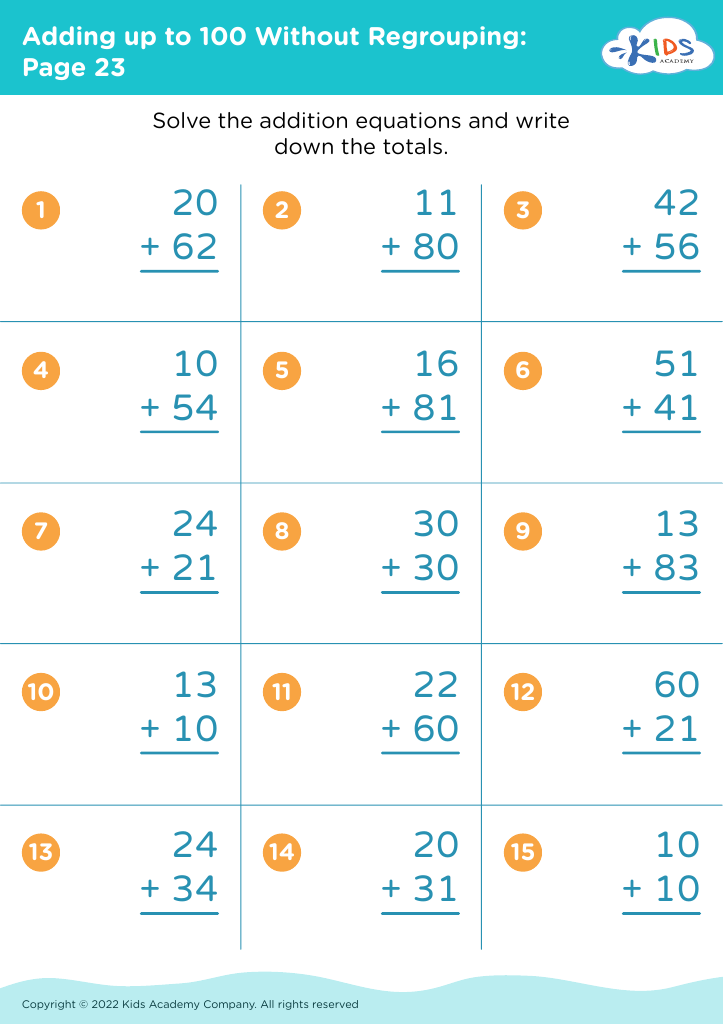
Adding up to 100 Without Regrouping: Page 23
Worksheet


Parents and teachers play a crucial role in the mathematical development of children, especially in foundational concepts like comparing fractions, addition, and subtraction. For children aged 3-8, these skills lay the groundwork for future learning in a wide range of mathematical concepts. Understanding fractions is vital for making sense of everyday situations, such as sharing food or dividing objects, which are relatable and engaging for young learners.

Learning to compare fractions helps children develop critical thinking and problem-solving skills. When they learn to add or subtract fractions, they are engaged in logical reasoning and applying their knowledge in practical scenarios. This fosters a deeper understanding of numbers and enhances cognitive development.

Moreover, mastering these concepts at an early age builds confidence and a positive attitude toward math, which can influence their future academic performance. It enables children to approach more advanced mathematics with ease, reducing anxiety and increasing proficiency.

Furthermore, watching children embrace these foundational concepts provides valuable insights into their learning styles, interests, and needs, allowing parents and educators to tailor guidance effectively. By prioritizing fraction education, we equip young learners with essential tools they’ll use throughout their educational journey and beyond.