Comparing lengths Addition & Subtraction Worksheets for Ages 3-8
3 filtered results
-
From - To
Introduce your young learners to the world of math with our engaging "Comparing Lengths Addition & Subtraction Worksheets for Ages 3-8." These grade-appropriate resources make learning fun and interactive. They are designed to help children grasp the concepts of length, addition, and subtraction through playful activities and visual aids. Each worksheet is tailored to build foundational skills in measurement and basic arithmetic. Ideal for both classroom and home use, these worksheets not only enhance mathematical understanding but also boost critical thinking and problem-solving abilities. Nurture your child's curiosity and love for learning with our expertly crafted worksheets.
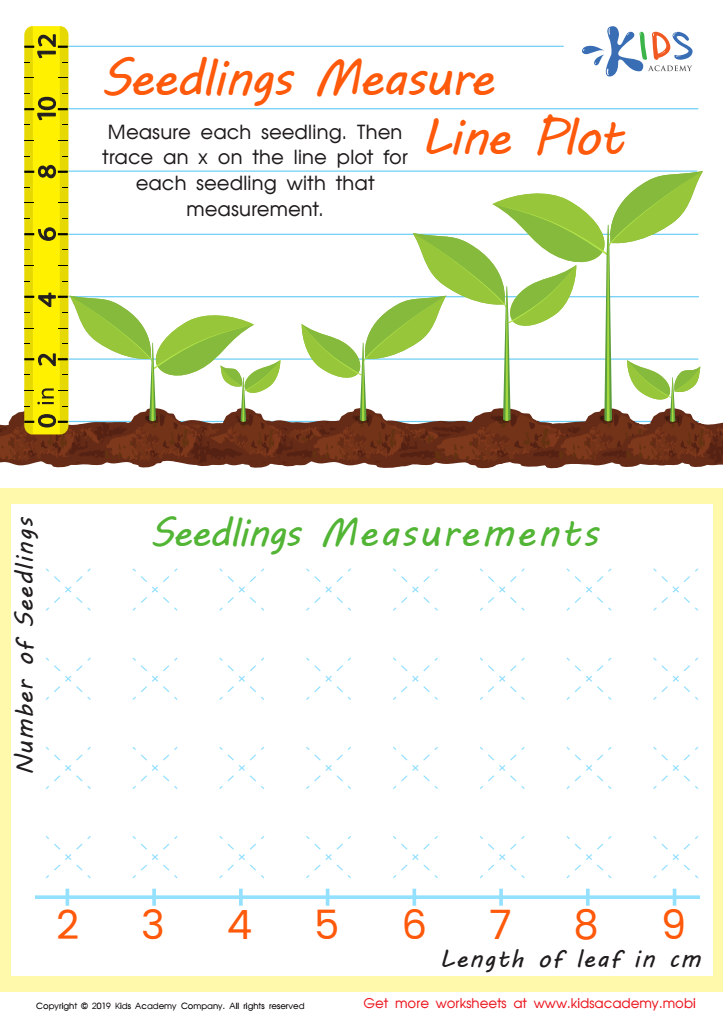
Seedling Measure Line Plot Worksheet
 Assign to My Students
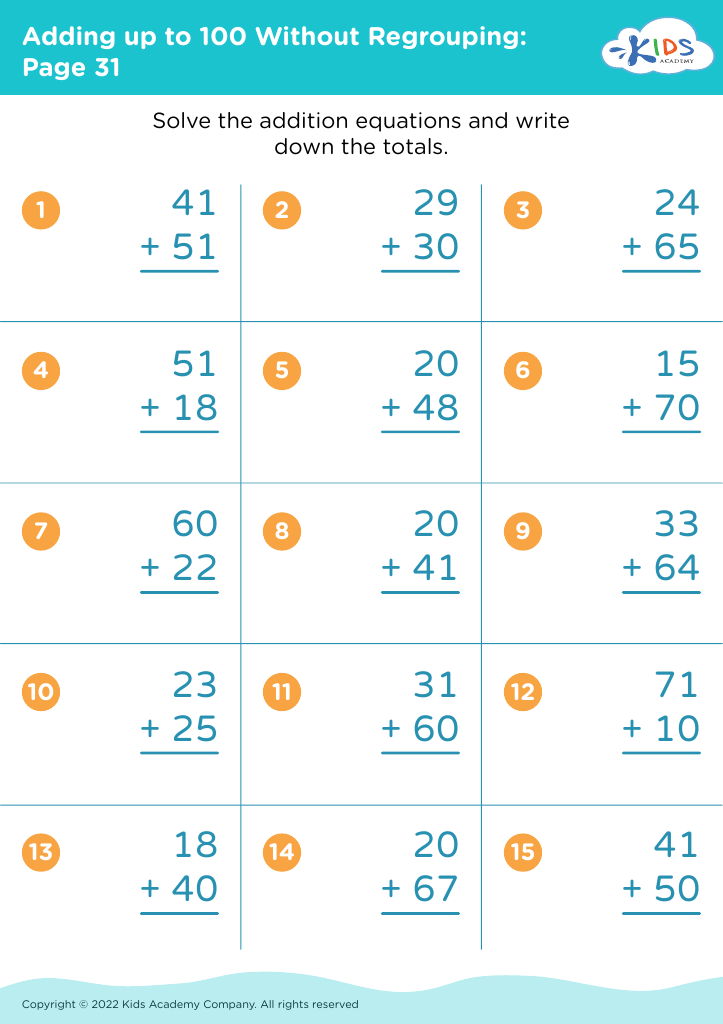
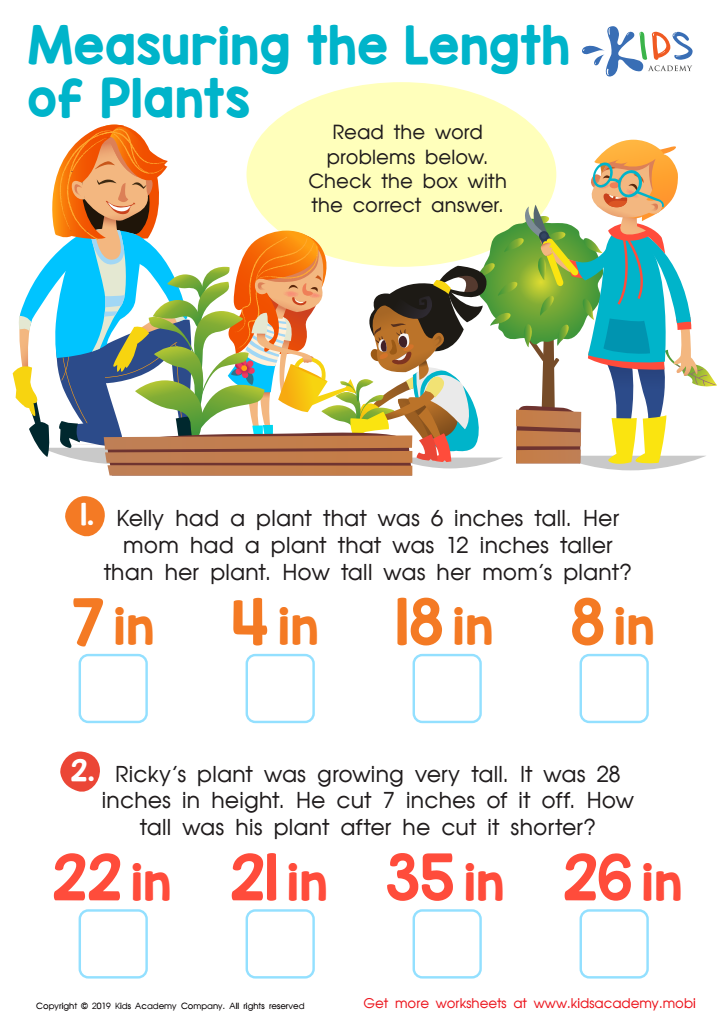
Measuring the Length of Plants Worksheet








Parents and teachers should focus on comparing lengths, addition, and subtraction for children ages 3-8 as these foundational math skills are crucial for cognitive development. Understanding how to compare lengths helps children grasp concepts of size, measurement, and spatial awareness. By seeing that one object can be longer or shorter than another, children develop their analytical thinking and problem-solving skills.
Introduction to addition and subtraction at an early age sets the groundwork for more complex mathematical concepts. These operations enhance numerical literacy, which is integral for everyday tasks, from counting objects to managing time and money in later life. Seeing math as a series of solvable problems makes children more confident learners.
Furthermore, incorporating these math concepts in early education promotes critical thinking and reasoning. Activities on addition and subtraction cultivate pattern recognition and logical sequencing. When children find joy in small learning victories, it fosters a positive attitude toward mathematics and develops their self-confidence. Engaging young minds with math through playful interaction and real-world applications makes learning tangible and interesting.
Therefore, emphasizing these early math skills ensures children build a solid foundational understanding, preparing them for academic success and empowering their overall intellectual growth.








