Discover our engaging "Fraction Comparison Addition & Subtraction Worksheets" designed for children aged 3-8! These worksheets help young learners understand the concept of fractions while enhancing their addition and subtraction skills. With a focus on fun and interactive exercises, kids will compare fractions visually, answer relatable problems, and develop a strong mathematical foundation. Our age-appropriate resources encourage critical thinking and boost confidence in math. Ideal for home or classroom use, these worksheets provide the perfect balance of challenge and learning. Equip your little ones with essential math skills today and watch them excel in their educational journey! Explore now!
Check out this FREE Trial Lesson on Addition & Subtraction for age 3-8!

A

Favorites
With answer key
Interactive
  • 3-8
  • Fraction comparison
  • Addition & Subtraction
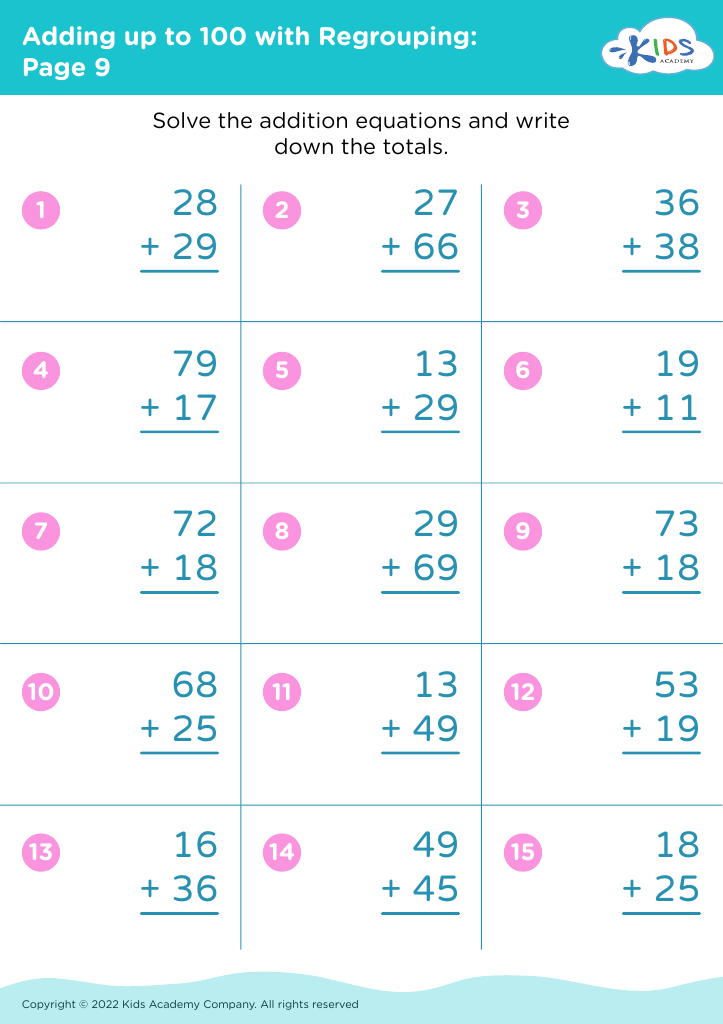
Adding up to 100 with Regrouping: Page 9
Worksheet
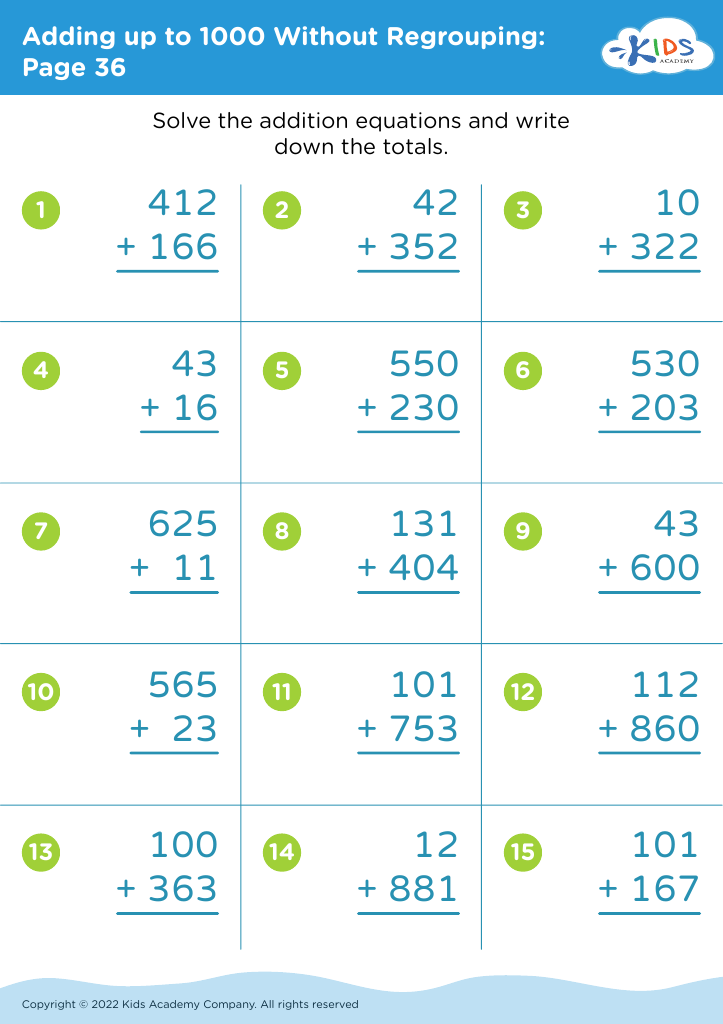
Adding up to 1000 Without Regrouping: Page 36
Worksheet
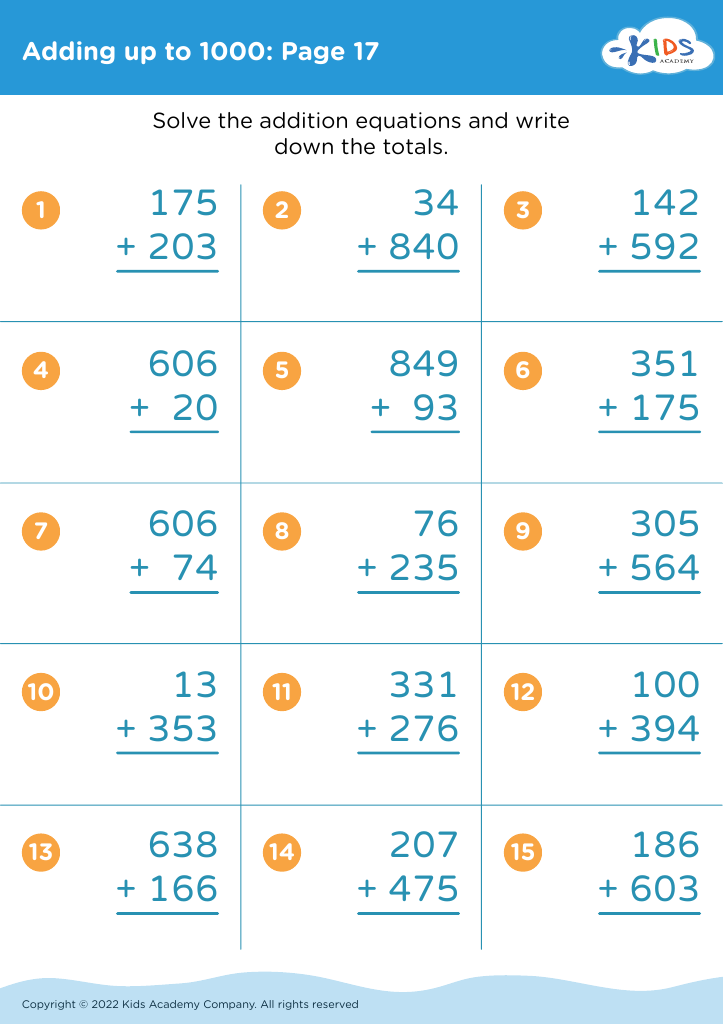
Adding up to 1000: Page 17

Adding up to 1000: Page 17

Adding up to 1000: Page 17
Worksheet
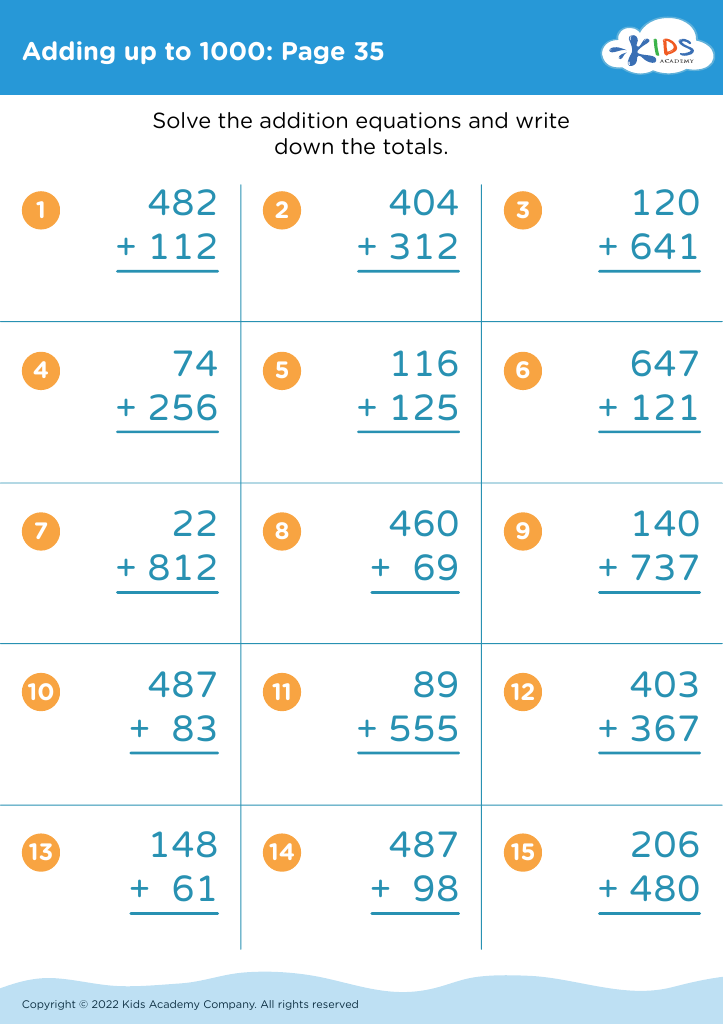
Adding up to 1000: Page 35

Adding up to 1000: Page 35

Adding up to 1000: Page 35
Worksheet
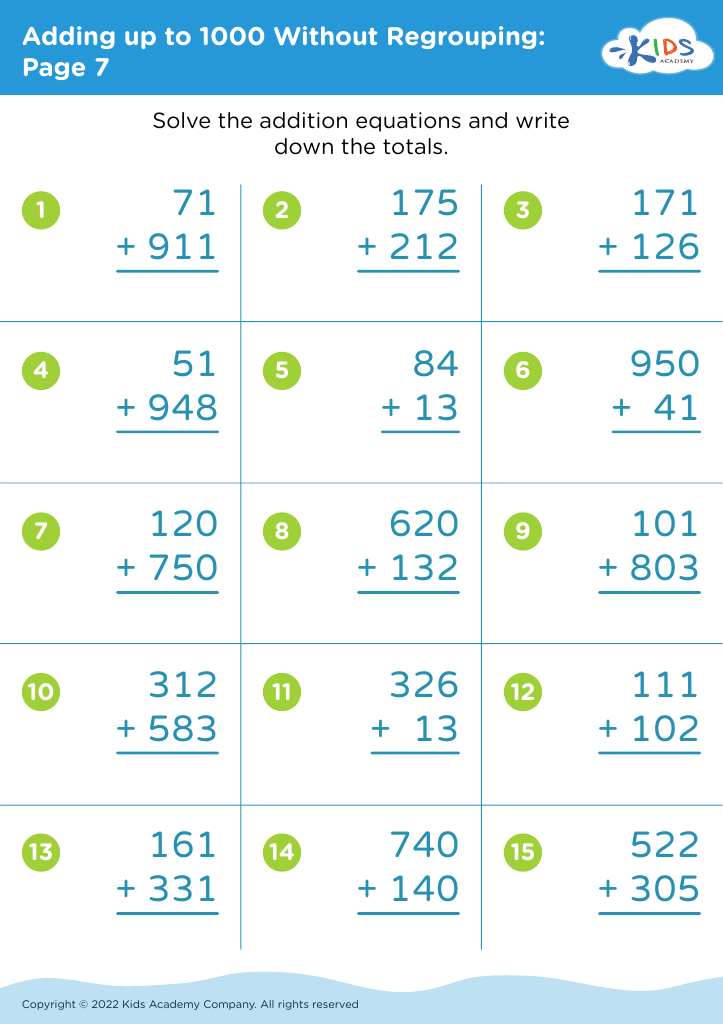
Adding up to 1000 Without Regrouping: Page 7
Worksheet
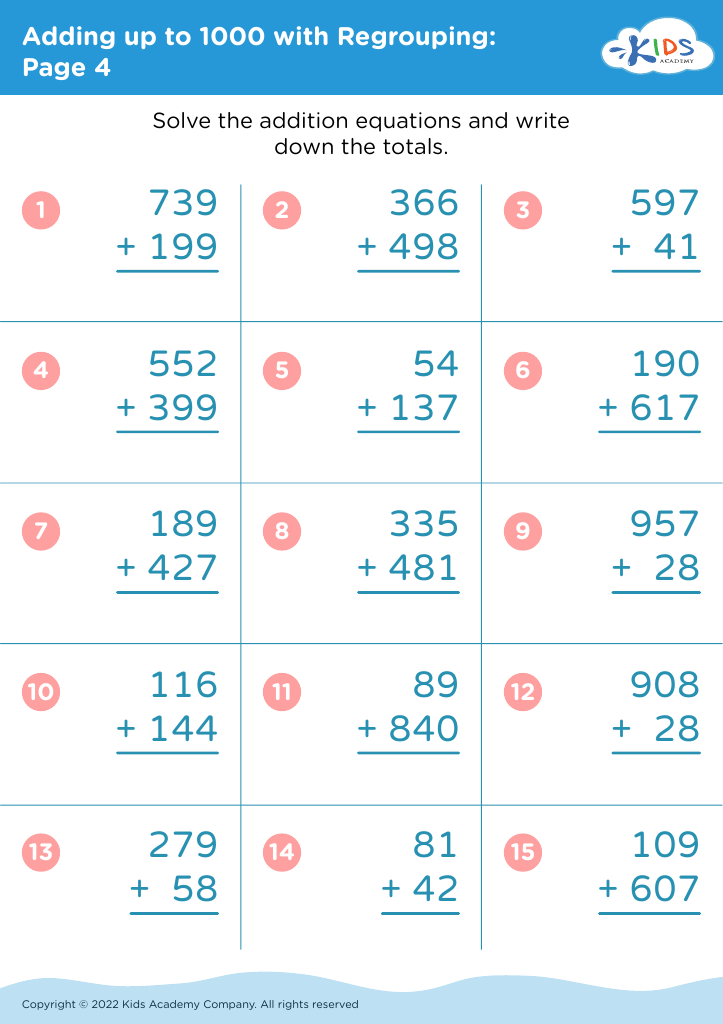
Adding up to 1000 with Regrouping: Page 4
Worksheet
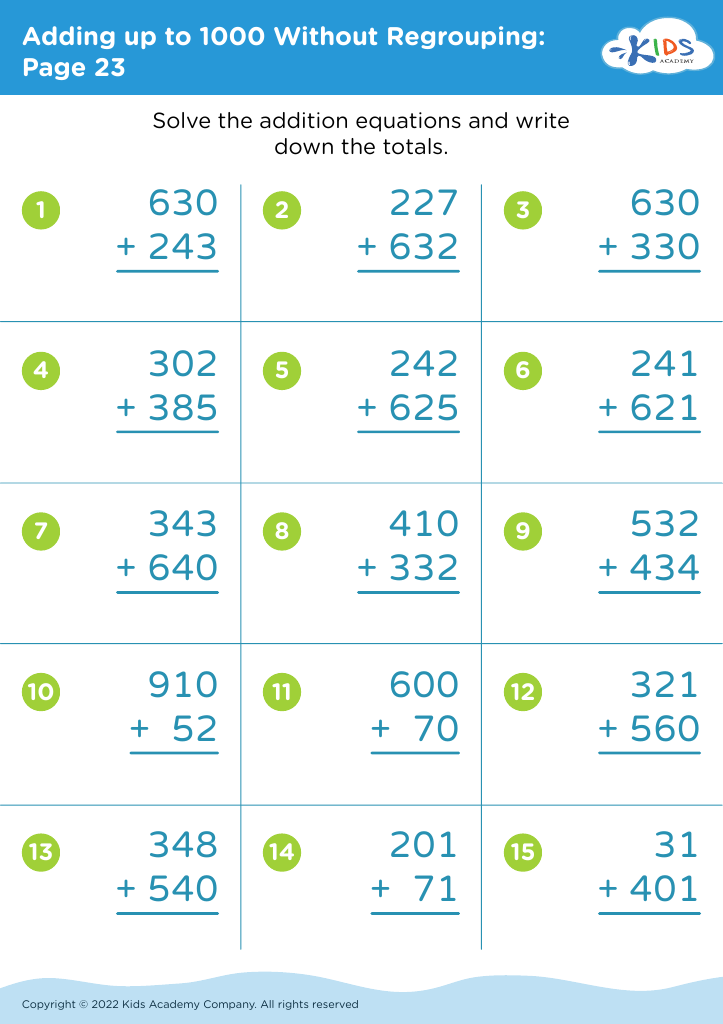
Adding up to 1000 Without Regrouping: Page 23
Worksheet
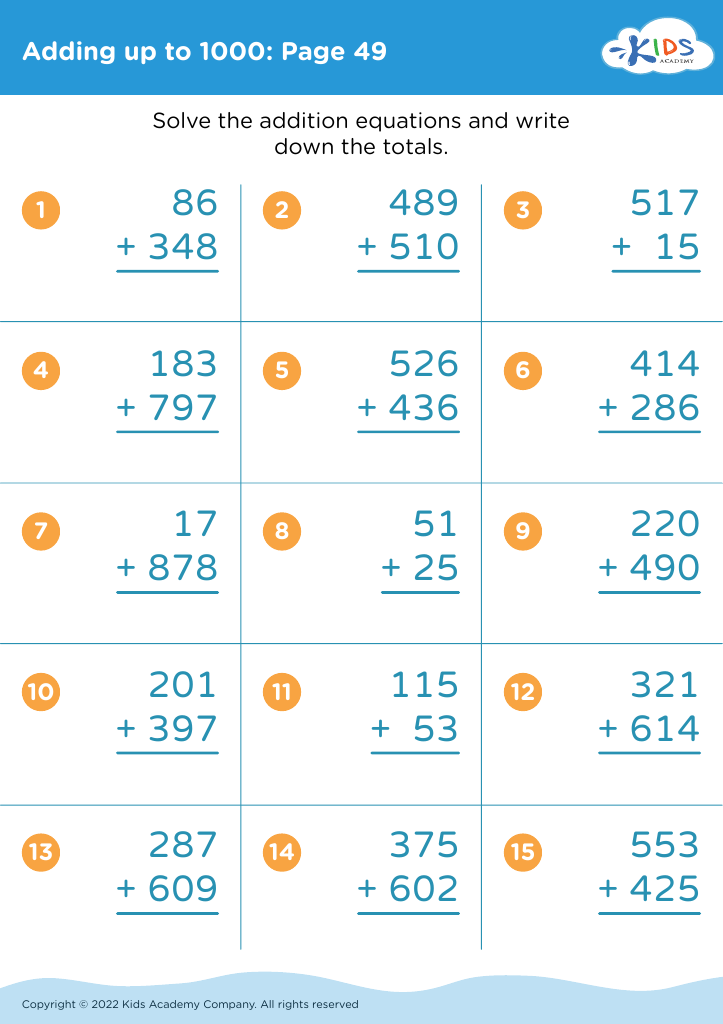
Adding up to 1000: Page 49

Adding up to 1000: Page 49

Adding up to 1000: Page 49
Worksheet
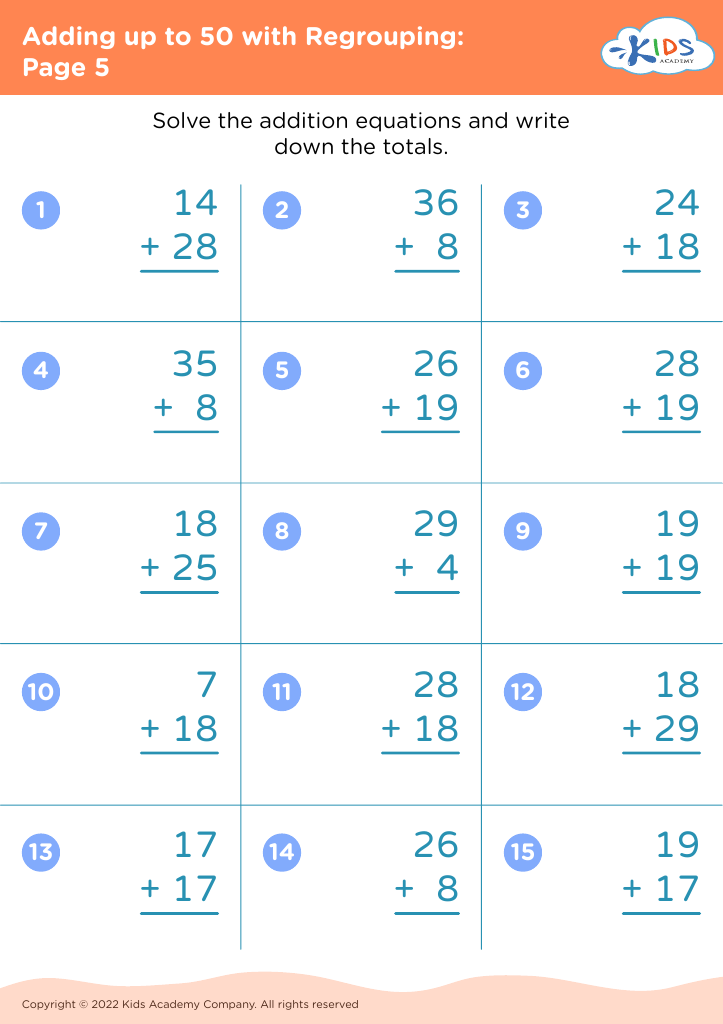
Adding up to 50 with Regrouping: Page 5
Worksheet
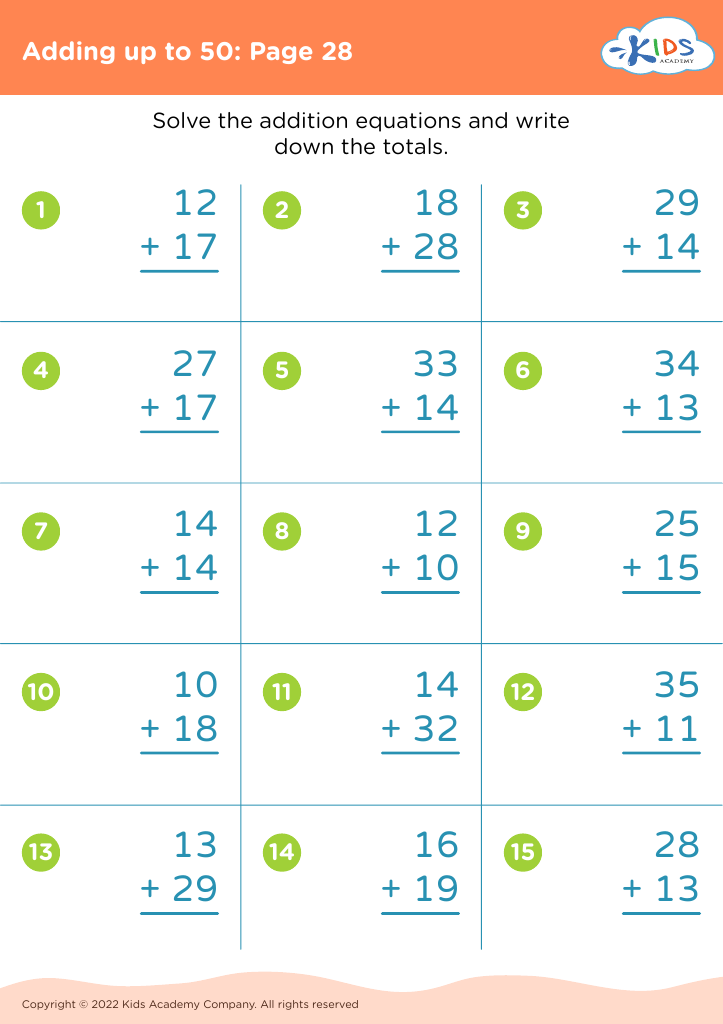
Adding up to 50: Page 28

Adding up to 50: Page 28

Adding up to 50: Page 28
Worksheet
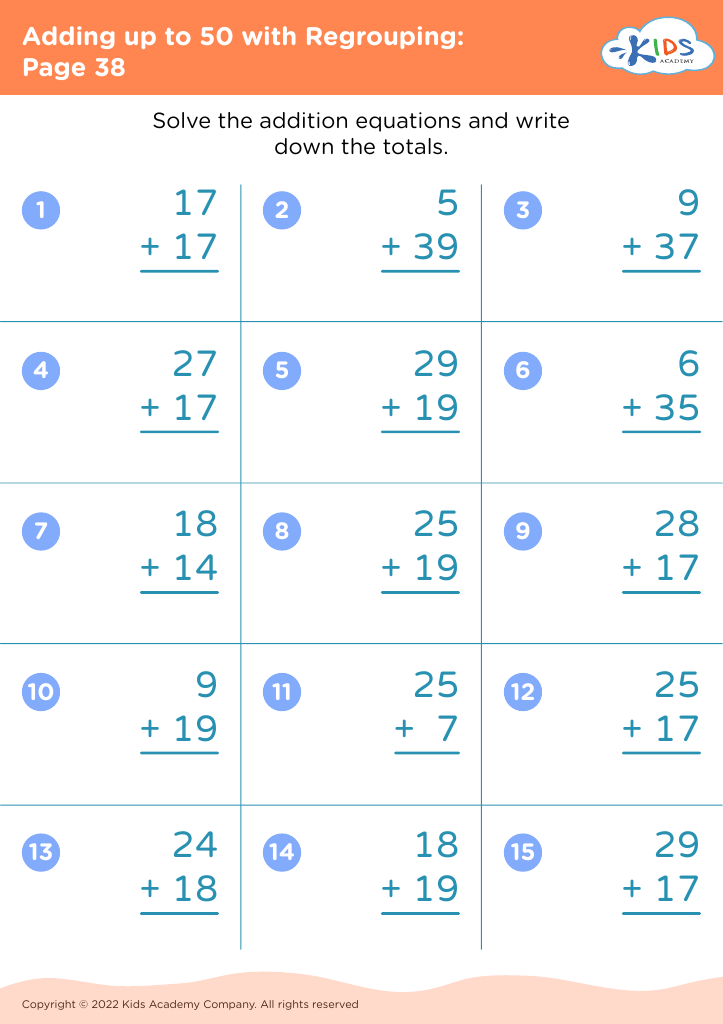
Adding up to 50 with Regrouping: Page 38
Worksheet
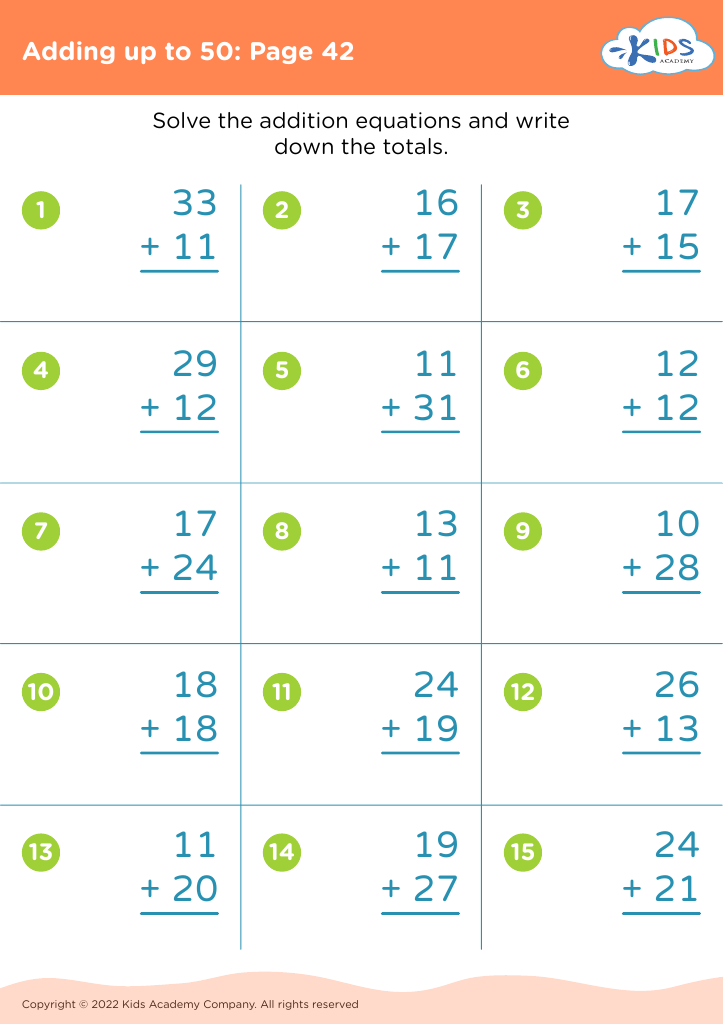
Adding up to 50: Page 42

Adding up to 50: Page 42

Adding up to 50: Page 42
Worksheet
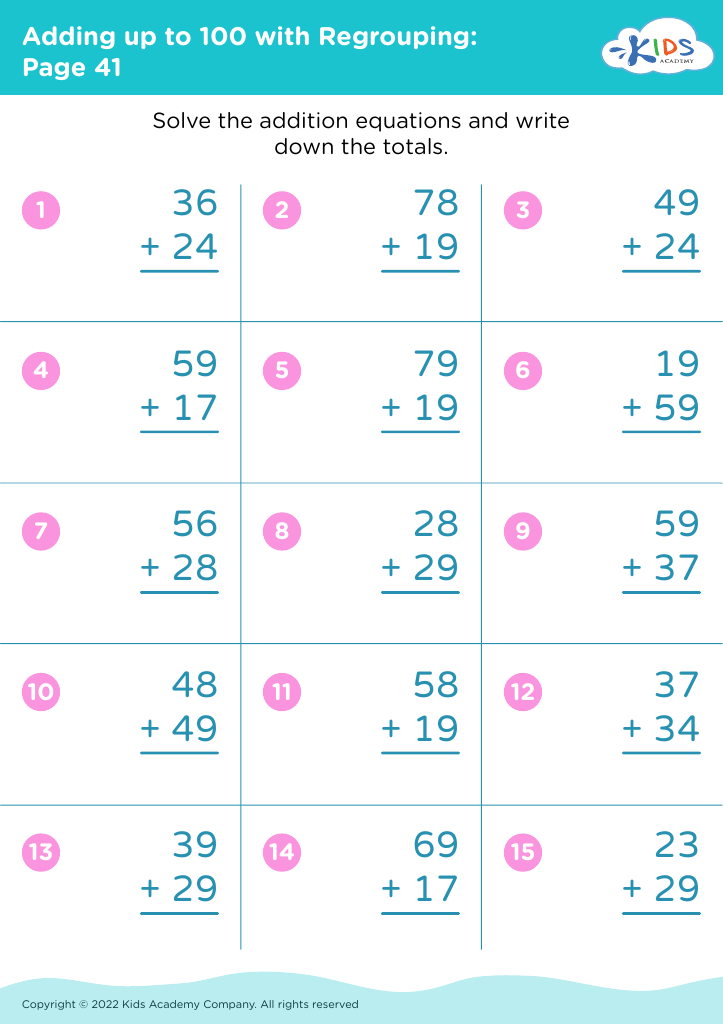
Adding up to 100 with Regrouping: Page 41
Worksheet
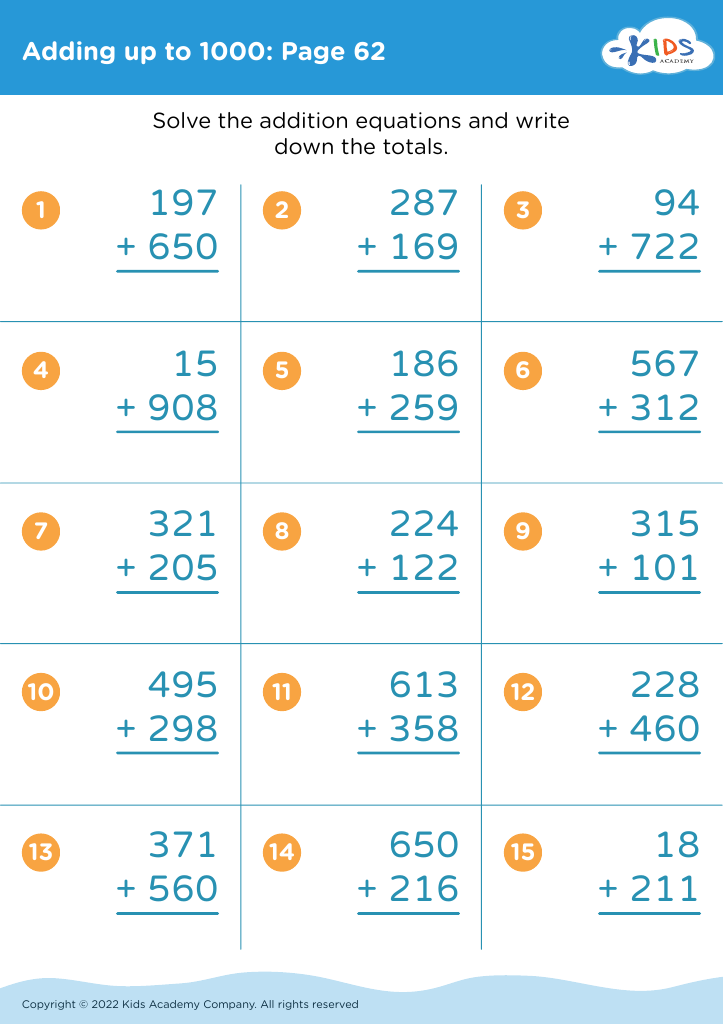
Adding up to 1000: Page 62

Adding up to 1000: Page 62

Adding up to 1000: Page 62
Worksheet
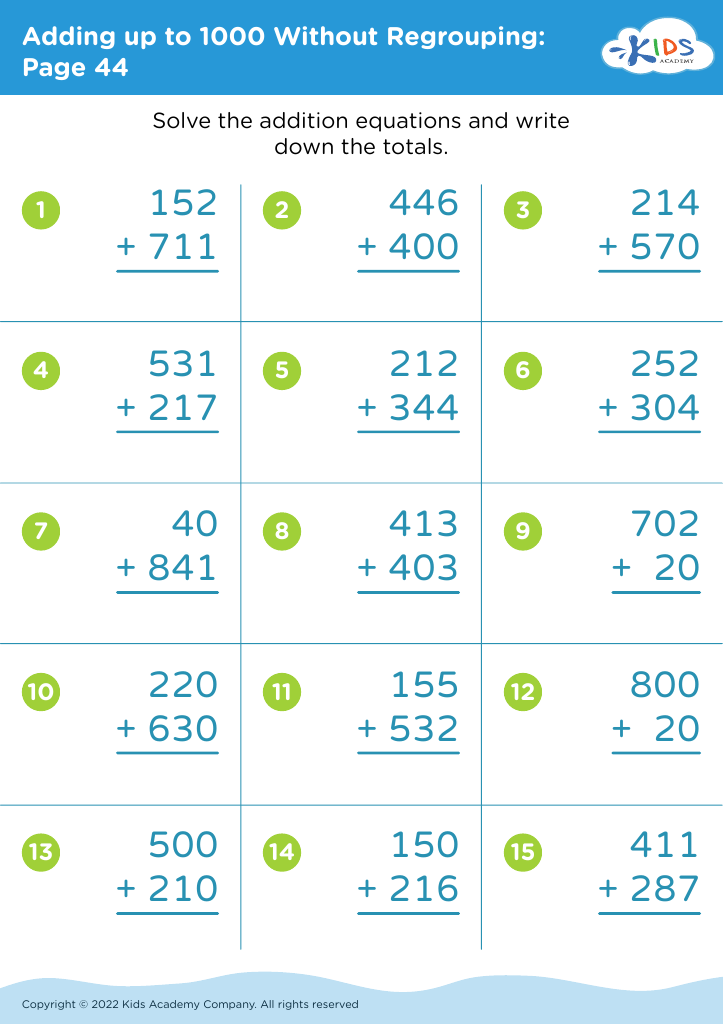
Adding up to 1000 Without Regrouping: Page 44
Worksheet
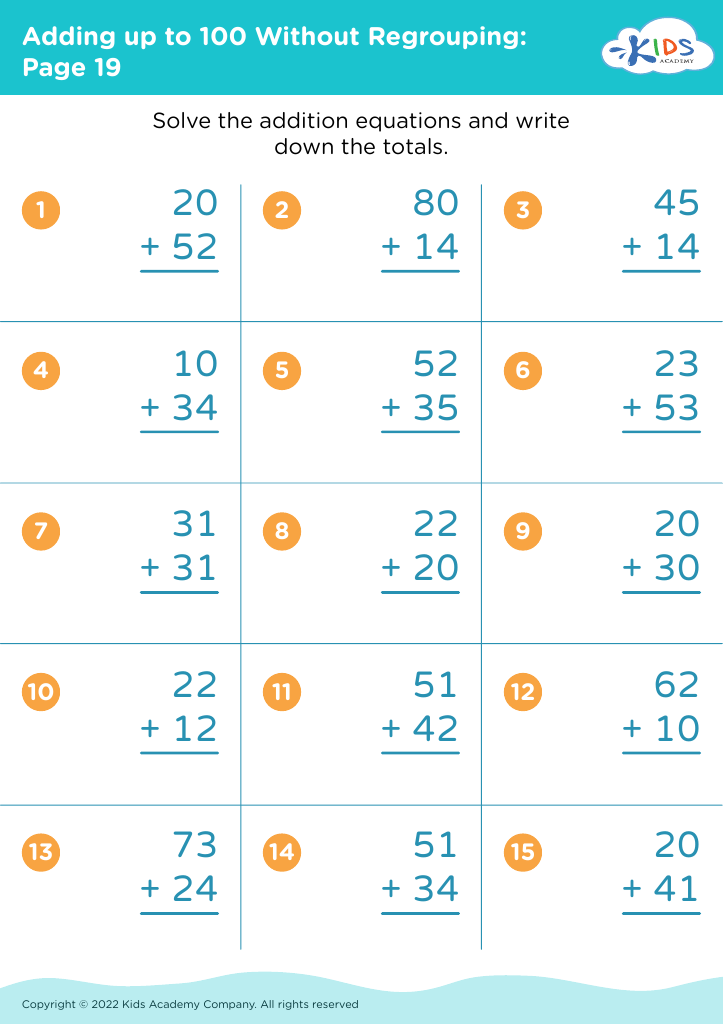
Adding up to 100 Without Regrouping: Page 19
Worksheet
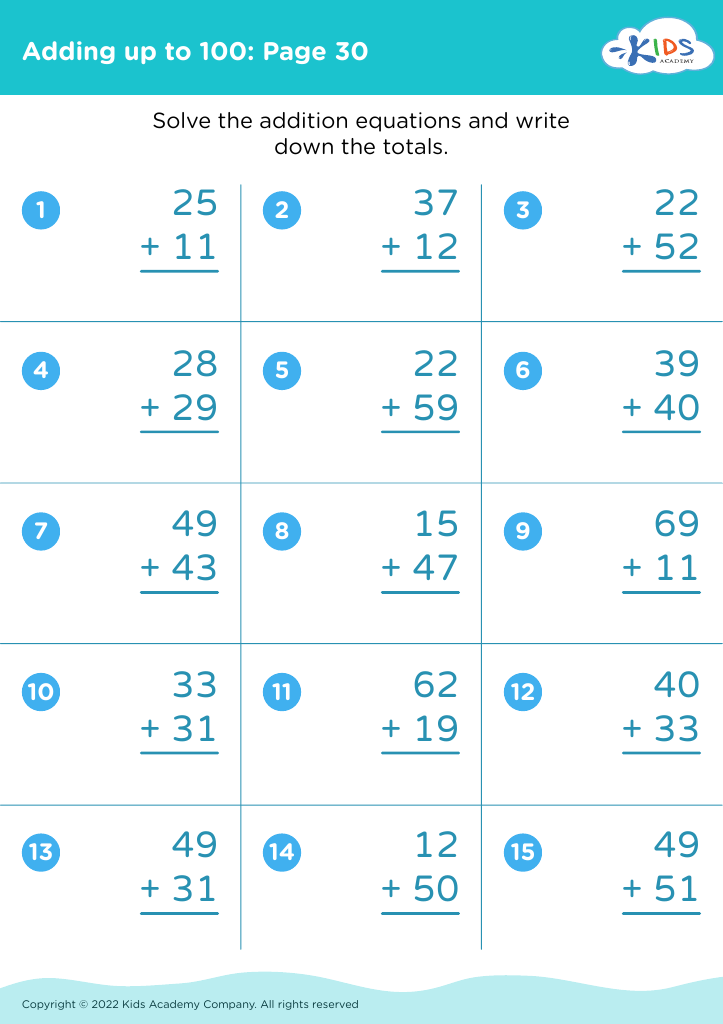
Adding up to 100: Page 30

Adding up to 100: Page 30

Adding up to 100: Page 30
Worksheet
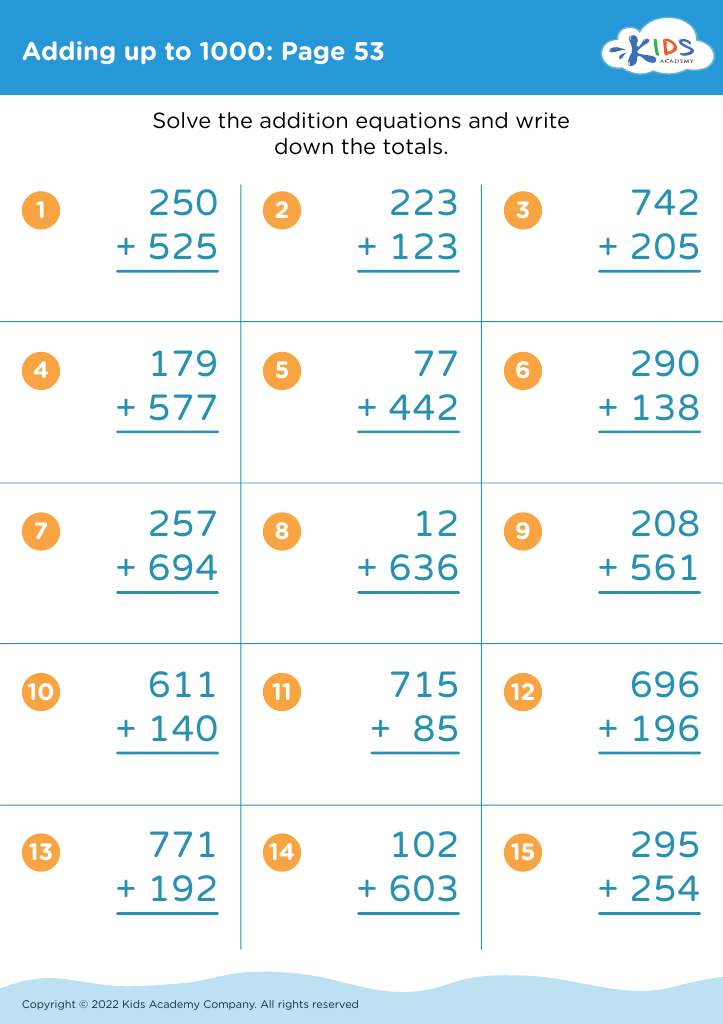
Adding up to 1000: Page 53

Adding up to 1000: Page 53

Adding up to 1000: Page 53
Worksheet
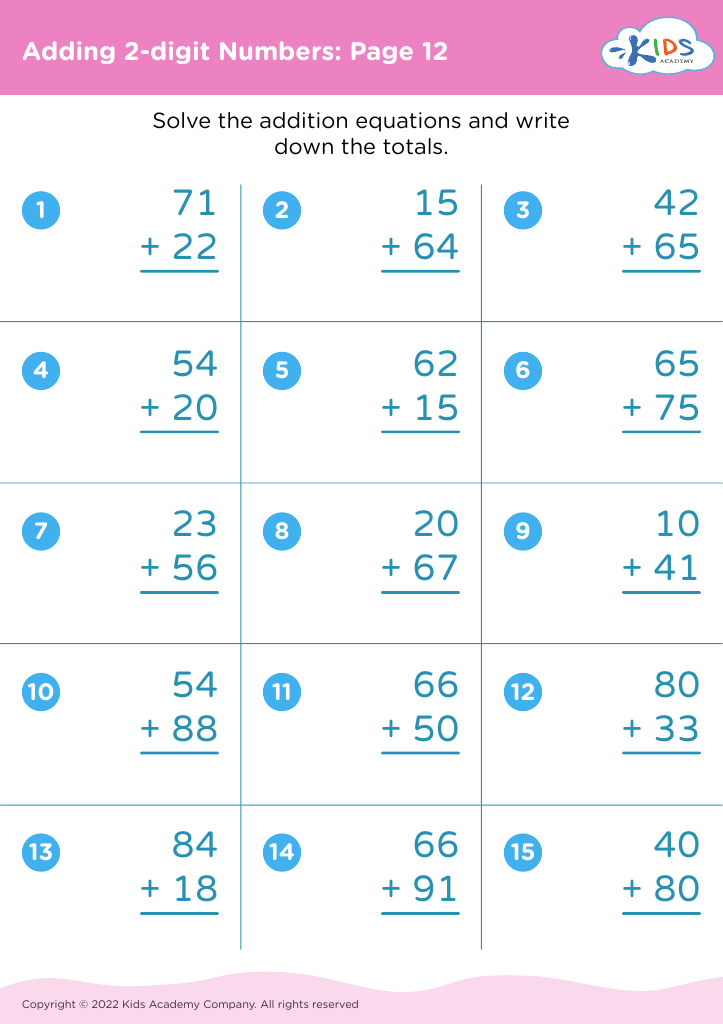
Adding 2-digit Numbers: Page 12

Adding 2-digit Numbers: Page 12

Adding 2-digit Numbers: Page 12
Worksheet
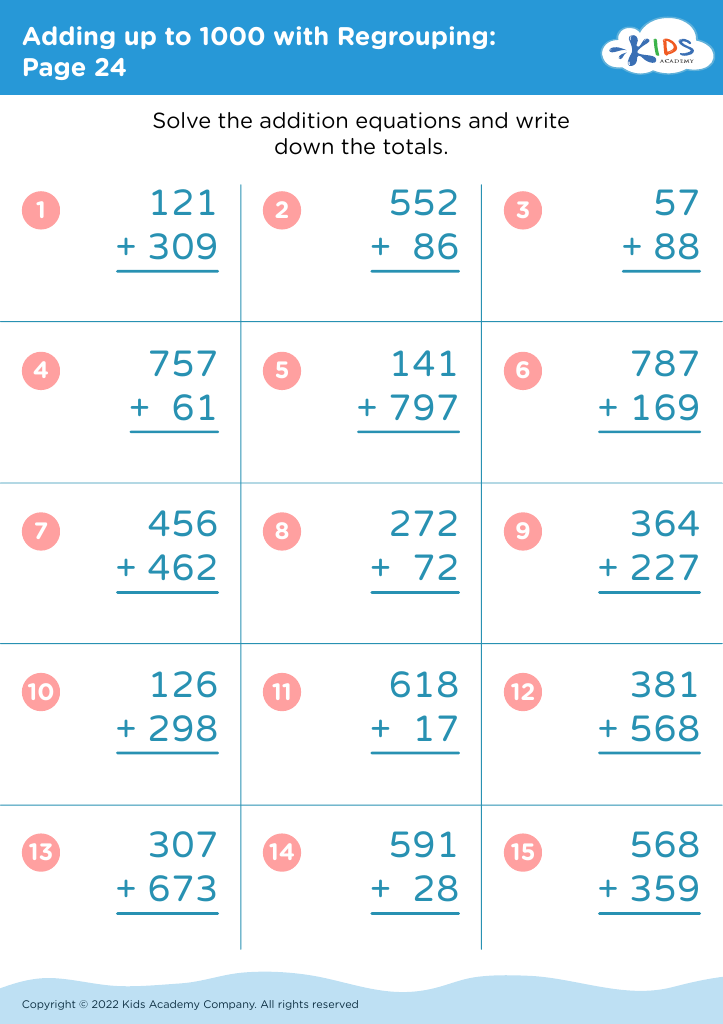
Adding up to 1000 with Regrouping: Page 24
Worksheet
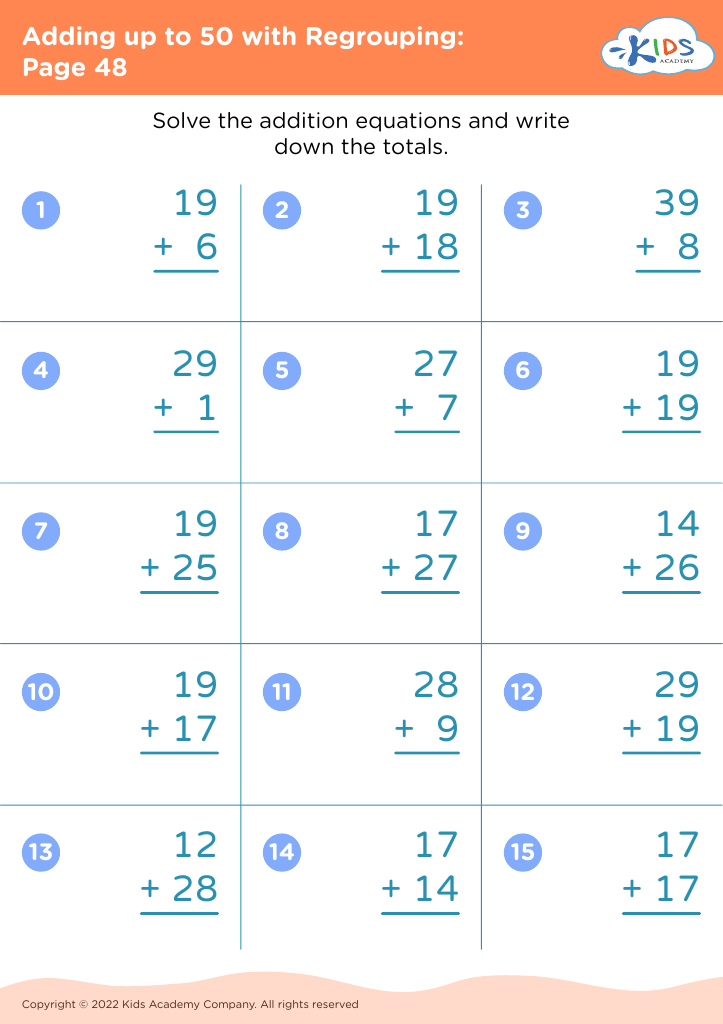
Adding up to 50 with Regrouping: Page 48
Worksheet
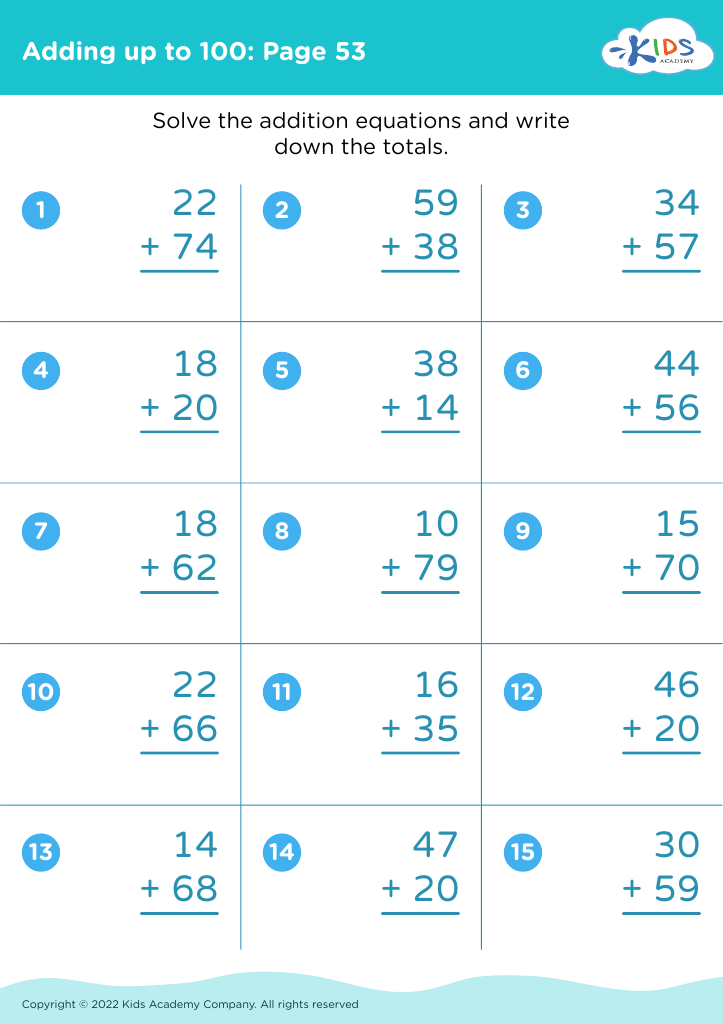
Adding up to 100: Page 53

Adding up to 100: Page 53

Adding up to 100: Page 53
Worksheet
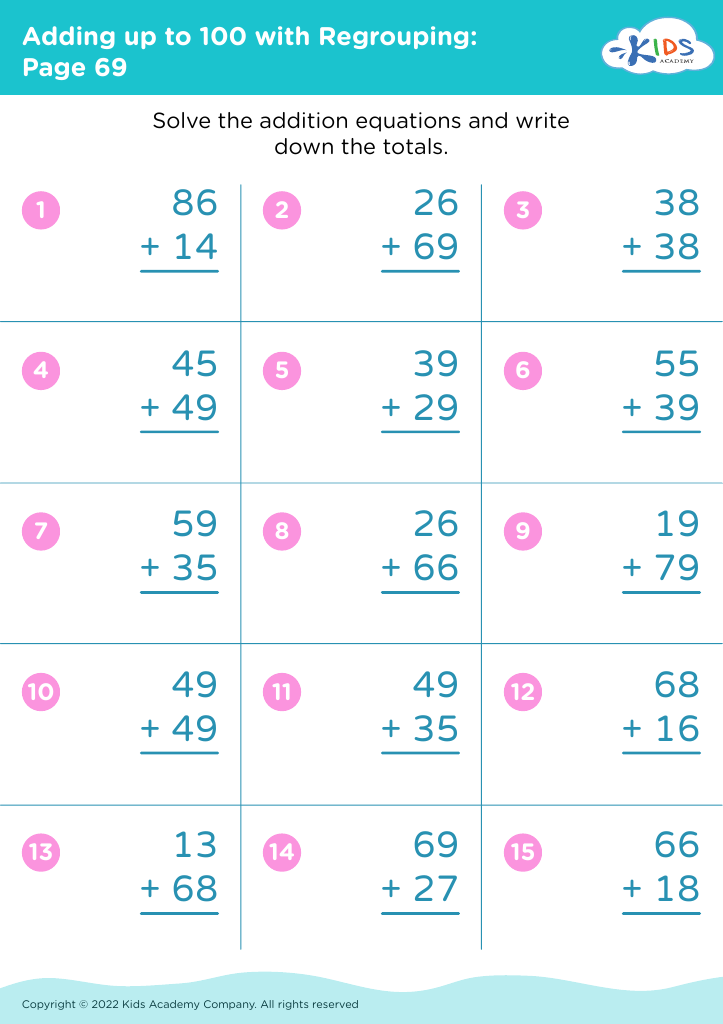
Adding up to 100 with Regrouping: Page 69
Worksheet
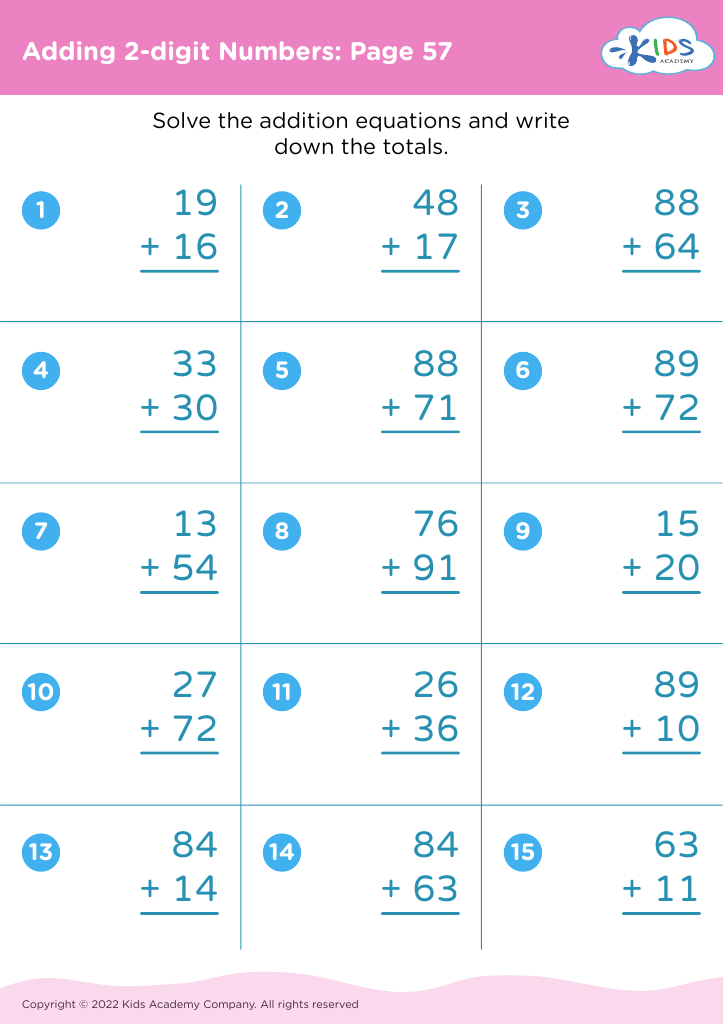
Adding 2-digit Numbers: Page 57

Adding 2-digit Numbers: Page 57

Adding 2-digit Numbers: Page 57
Worksheet


Understanding fraction comparison, addition, and subtraction is crucial for children ages 3-8 as it forms the foundation for more complex mathematical concepts they will encounter later in their education. Early familiarity with these concepts promotes critical thinking, problem-solving, and a firm grasp of numerical relationships.

Young learners begin by grasping basic fractions through visual representations like pie charts or segmenting objects. This tactile experience makes abstract concepts more relatable. As children progress, they learn to compare fractions, which encourages analytical thinking—skills essential for everyday decisions, such as cooking or sharing.

Moreover, incorporating addition and subtraction of fractions allows children to develop a deeper understanding of operations with different quantities. These early experiences significantly enhance their numerical fluency, making them more comfortable and confident when working with mathematics in the future.

Parents and teachers should prioritize these skills for holistic development; they contribute not only to academic success but also to cognitive and social skills. For instance, sharing snacks can be an engaging way to teach truths about fraction equivalents, nurturing collaboration and communication. Therefore, fostering a solid understanding of fractions at a young age has lasting benefits for a child’s educational journey and life skills.