Learn new vocabulary Addition & Subtraction Worksheets for Ages 3-8
4 filtered results
-
From - To
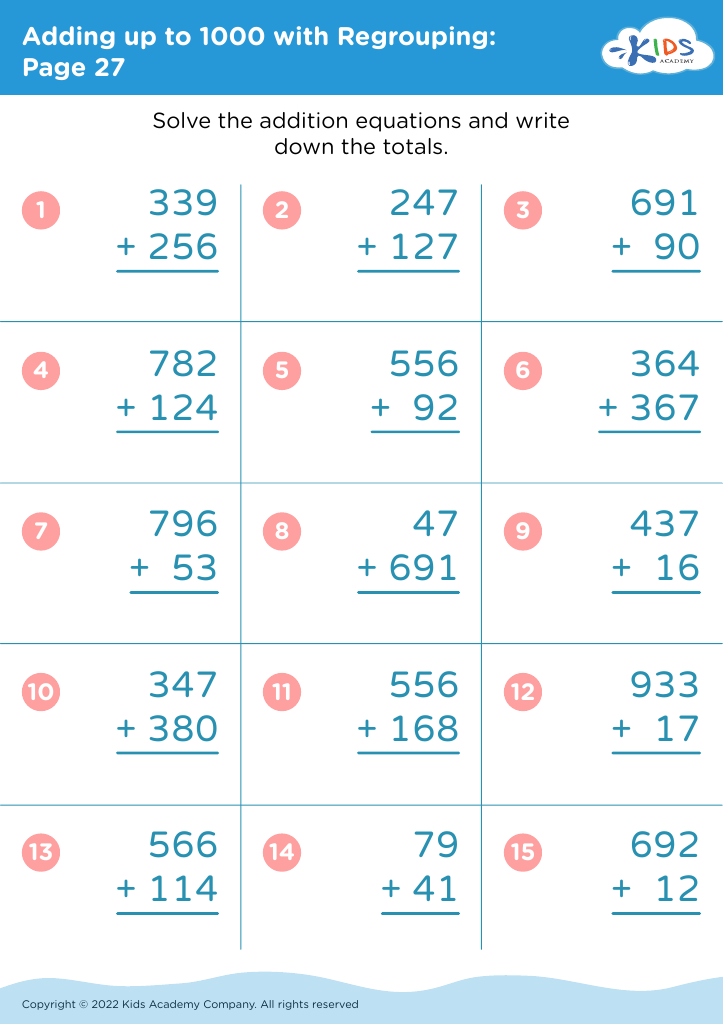
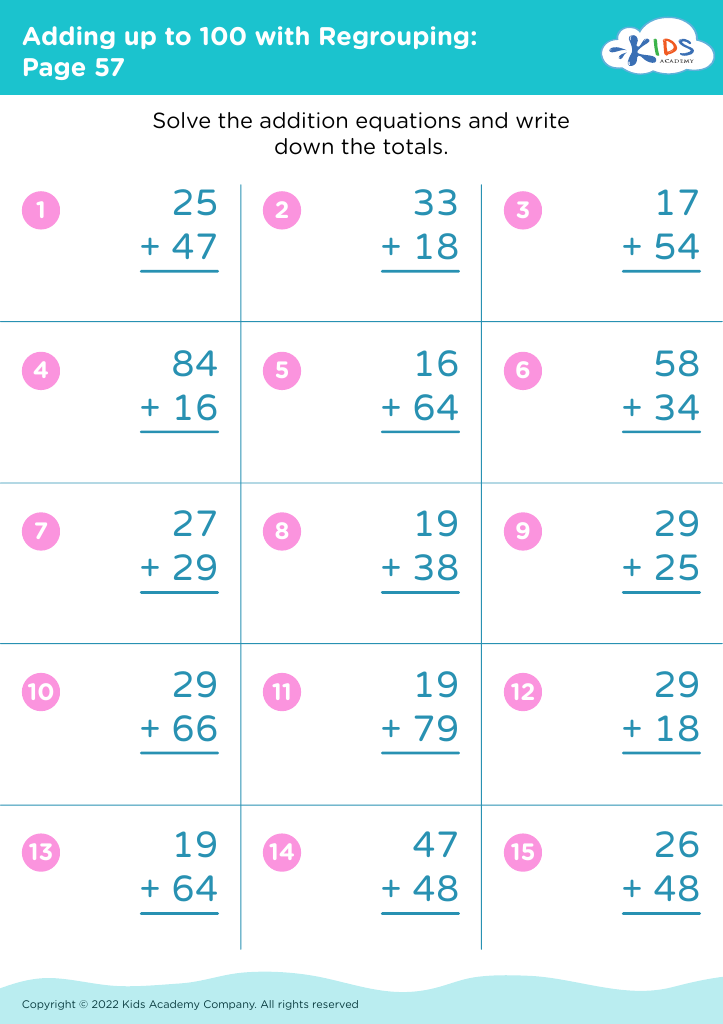
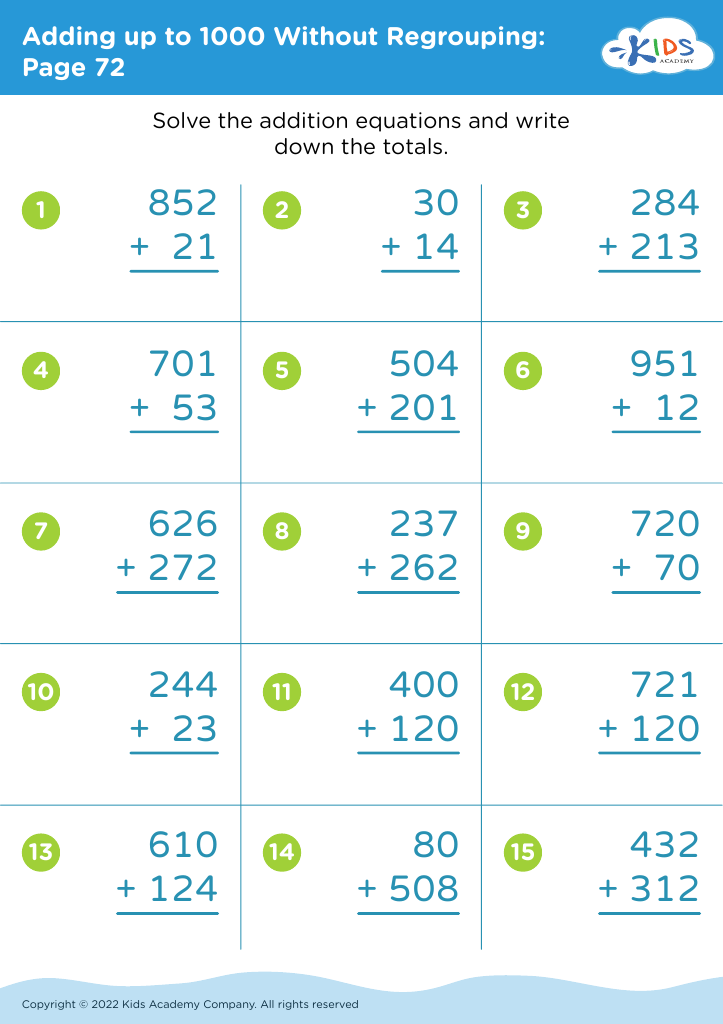
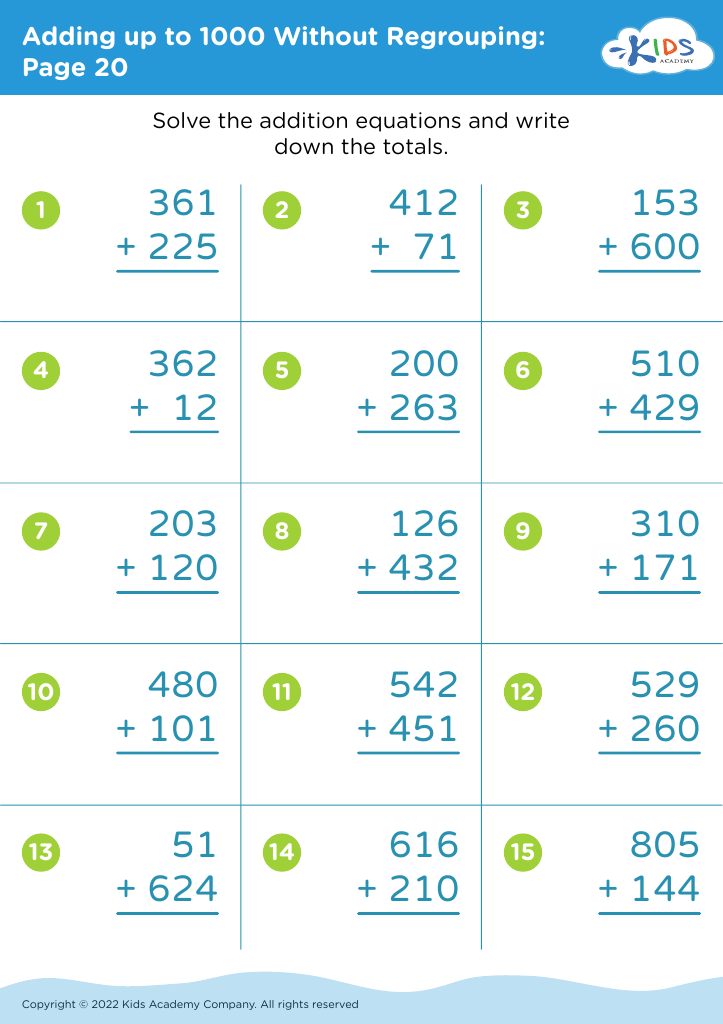
Discover our engaging "Learn New Vocabulary Addition & Subtraction Worksheets" designed for children aged 3-8! These fun and interactive worksheets help young learners master essential math concepts while expanding their vocabulary. Each worksheet features colorful illustrations and easy-to-follow instructions, making math enjoyable and accessible. Our materials encourage critical thinking and problem-solving skills, promoting a deeper understanding of numbers and operations. Perfect for homeschooling, classroom use, or extra practice at home, these worksheets will cultivate a love for learning and boost confidence in emerging mathematicians. Start your child's educational journey today with our thoughtfully crafted resources!








Parents and teachers should prioritize teaching new vocabulary related to addition and subtraction for children aged 3-8 for several reasons. First, a strong vocabulary in mathematical terms enhances children's understanding of basic mathematical concepts, laying a solid foundation for their future educational endeavors. Words like "sum," "difference," "plus," and "minus" are essential for communicating mathematical ideas effectively and clarify the operations involved in problem-solving.
Moreover, familiarizing young learners with these terms helps foster a positive attitude towards mathematics. When children can articulate their thoughts, they are more likely to engage with the material and feel confident in their abilities. Early exposure to mathematical vocabulary encourages rich discussions, stimulating critical thinking and reasoning skills.
Additionally, a focus on language development in math can improve overall literacy. The connection between vocabulary and comprehension extends beyond math, impacting general academic performance.
By emphasizing mathematical vocabulary early on, parents and teachers can create a supportive learning environment, ensuring children build both their cognitive skills and self-esteem. Ultimately, investing in vocabulary development in early mathematics education is crucial in equipping young learners with the tools they need for lifelong success in studies, problem-solving, and real-world applications.








