
Mathematical reasoning Addition & Subtraction Worksheets for Ages 3-8
39 filtered results
Difficulty Level
Grade
Age
-
From - To
Subject
Activity
Standards
Unlock your child's potential with our engaging Mathematical Reasoning Addition & Subtraction Worksheets, specially designed for ages 3-8. These worksheets foster critical thinking and problem-solving skills through fun, interactive activities that make learning math exciting. Perfectly tailored to different developmental stages, our resources help children build a strong foundation in basic arithmetic while enhancing their cognitive skills. With colorful illustrations and practical exercises, kids stay motivated and enjoy every learning moment. Give your child the tools they need to succeed in math and beyond with our expert-crafted printable worksheets. Explore now and start the learning adventure!
Favorites
With answer key
Interactive
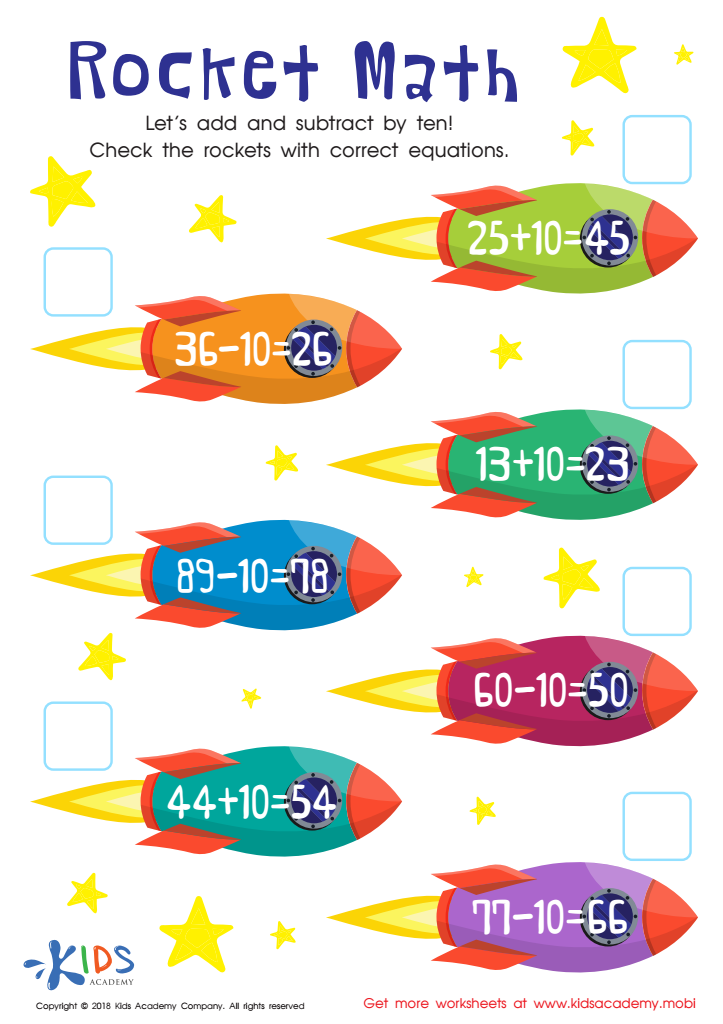
Rocket Math Worksheet
Your students will be math wizards in no time as they blast off on this exciting and colorful PDF worksheet. They'll use the 10s strategy to practice addition and subtraction, and they'll learn to skip count forwards and backwards. Keep them engaged and make learning fun!
 Assign to My Students
Rocket Math Worksheet
Worksheet
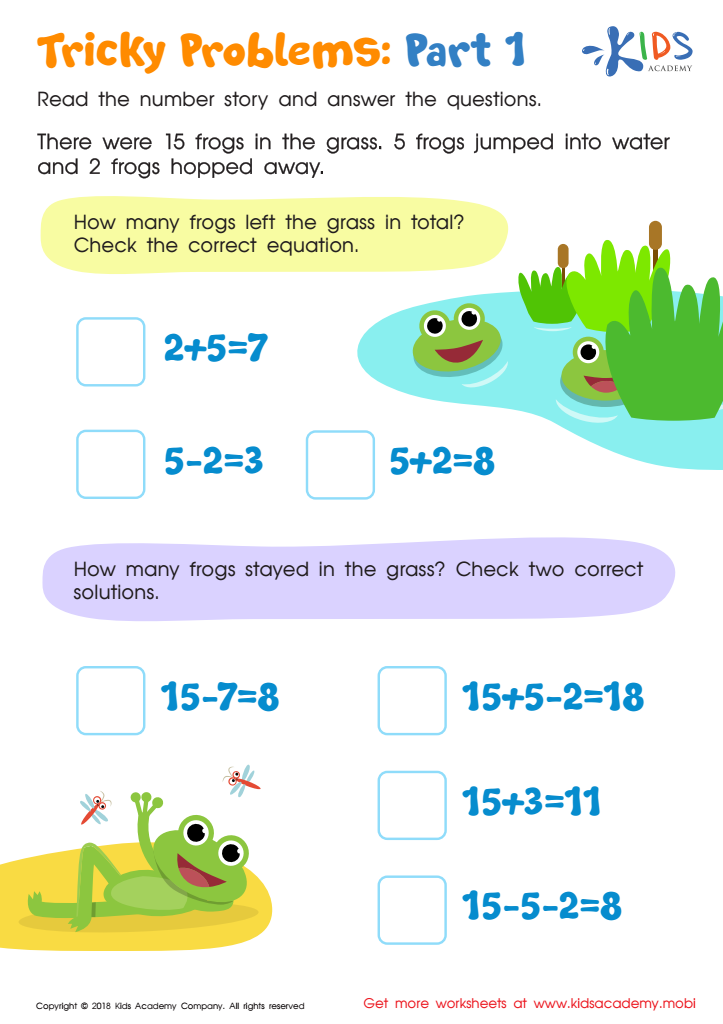
Tricky Problems Worksheet: Part 1
Visualizing word problems can help students solve them. This fun PDF worksheet encourages students to create mental images using math facts, then check boxes to match the equations for basic addition problems. It's a great way to build confidence in solving math.
Tricky Problems Worksheet: Part 1
Worksheet
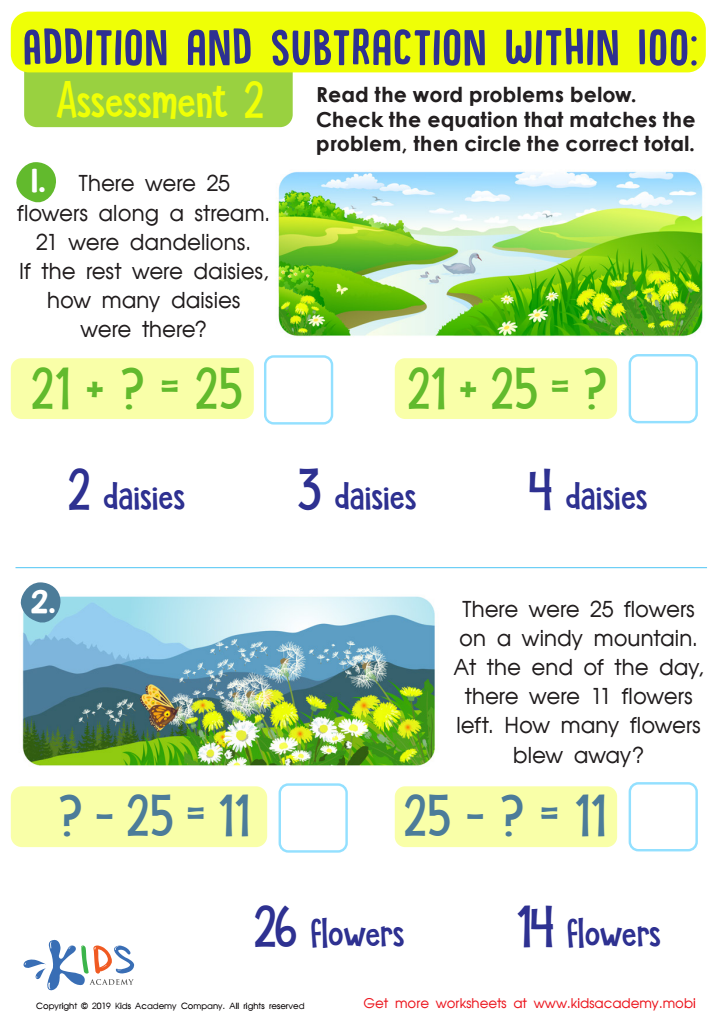
Assessment 2 Math Worksheet
Using fun exercises and pictures, you can get kids excited about math. With practice and reminders of what they've learnt, they'll be solving simple addition and subtraction equations with ease. Read the word problems in the picture to them, then help them check the equation and choose the correct answer.
Assessment 2 Math Worksheet
Worksheet
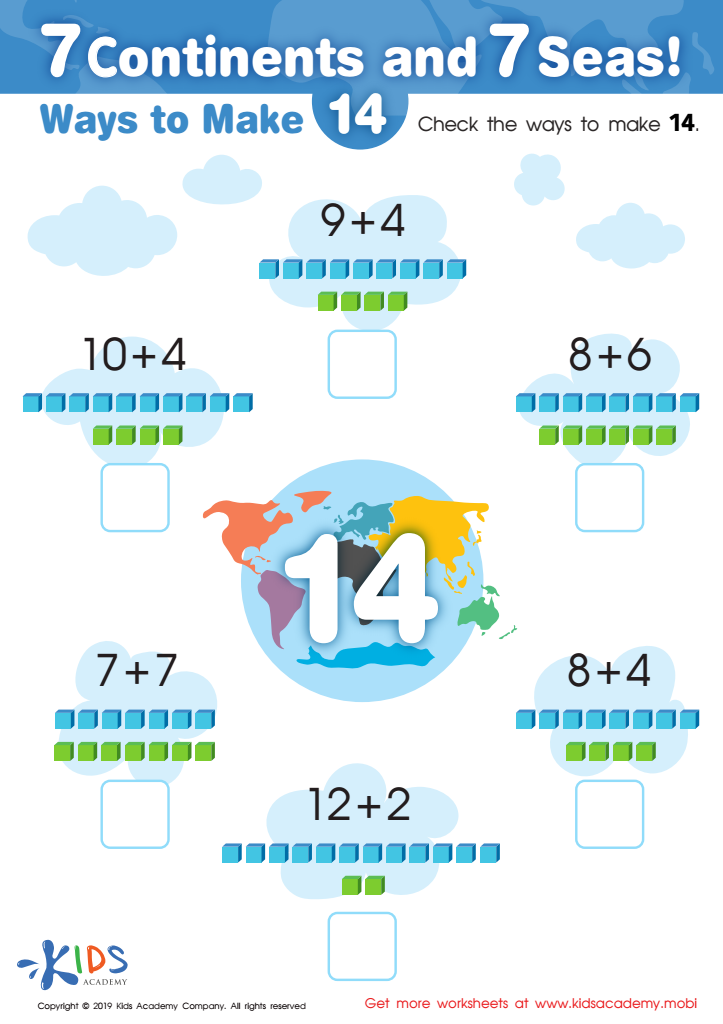
7 Continents and 7 Seas Worksheet
Remind kids of the continents and show them how different numbers can add up to the same figure. Give examples, like 2+2 =4, and 3+1 =4. Ask if they can provide other examples, then work through the simple additions in this worksheet with them. Ask them to circle all equations that make 14.
7 Continents and 7 Seas Worksheet
Worksheet
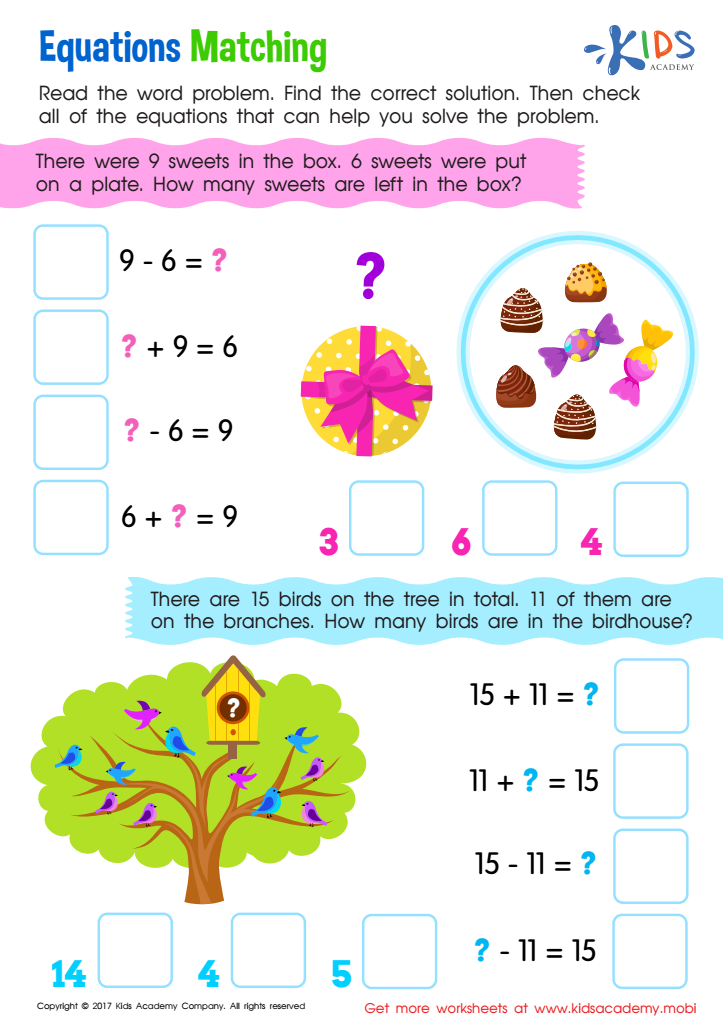
Equations Matching Word Problems Worksheet
Download this worksheet and give your young mathematician practice in solving equations using matching numbers and number family facts. They'll solve word problems, develop critical thinking and algebraic reasoning, and gain success with addition and subtraction.
Equations Matching Word Problems Worksheet
Worksheet
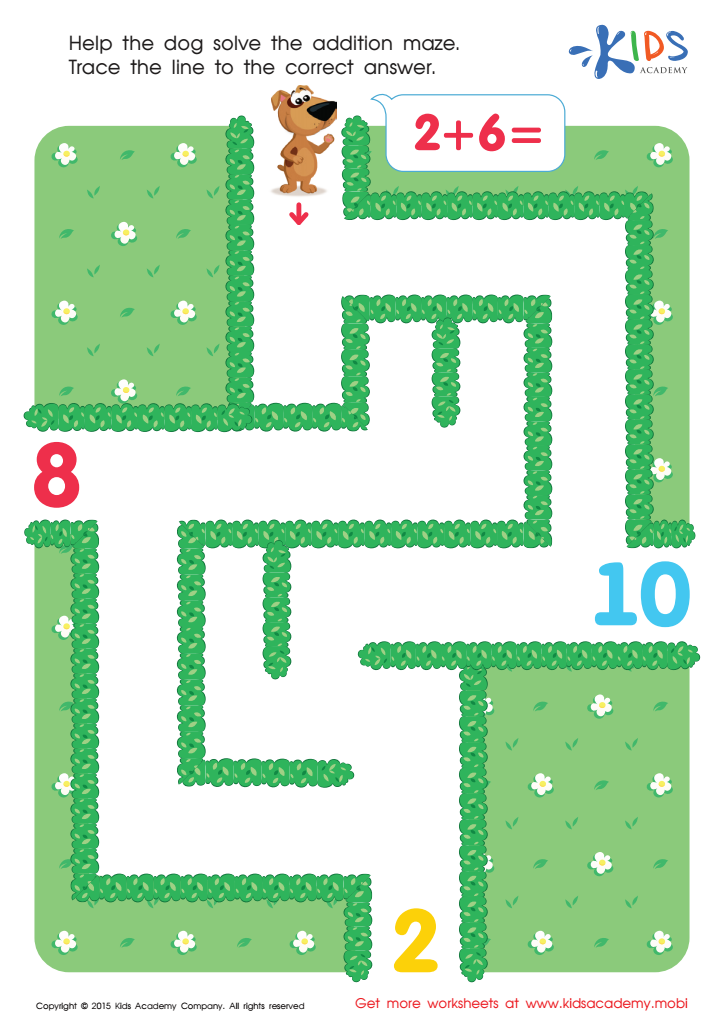
Two Plus Six Addition Worksheet
Make maths fun and interesting for your preschooler with our kindergarten addition worksheets. Help the dog to trace the right path to the correct answer and explore our free printable addition and subtraction worksheets. Visit our site for more study materials.
Two Plus Six Addition Worksheet
Worksheet
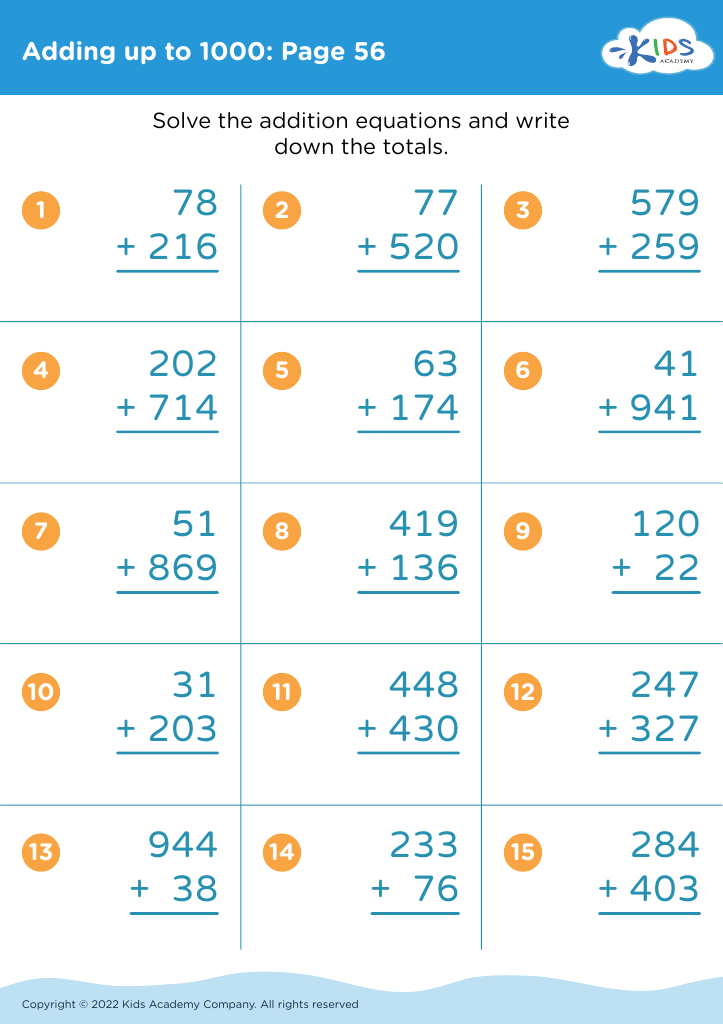
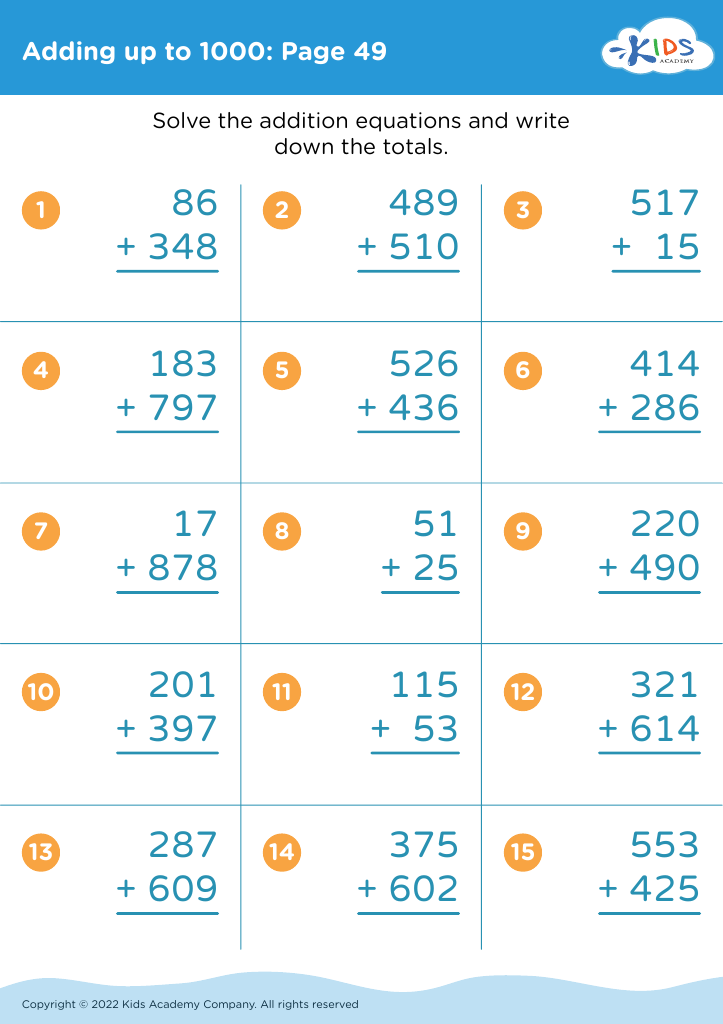
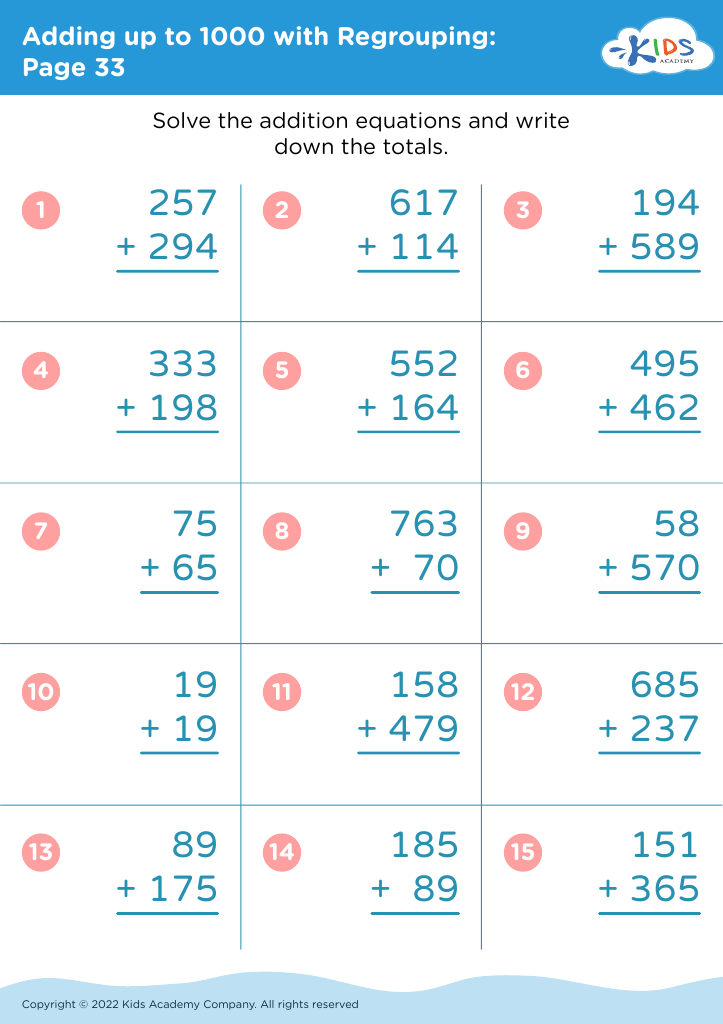
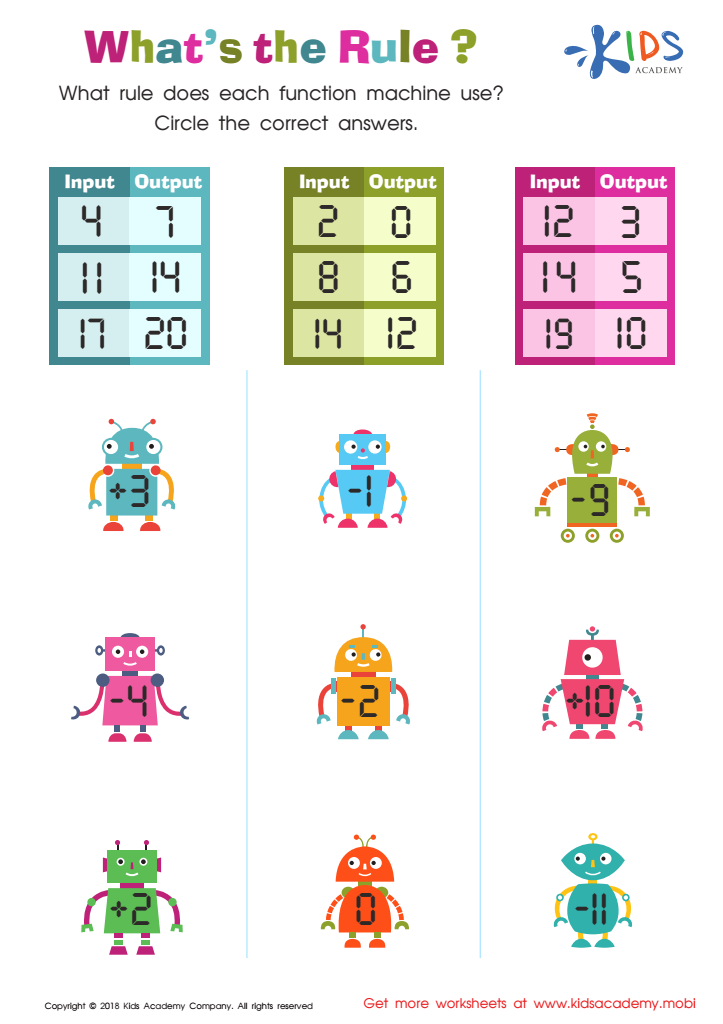
What's the Rule Worksheet
Robots are here to help your child find the relationship between each set of numbers! Adorably illustrated worksheets use vivid pictures that each contain a rule. Look at each function machine and find the pattern or relationship between the input and output. Then, complete the sheet by circling the correct answer!
What's the Rule Worksheet
Worksheet
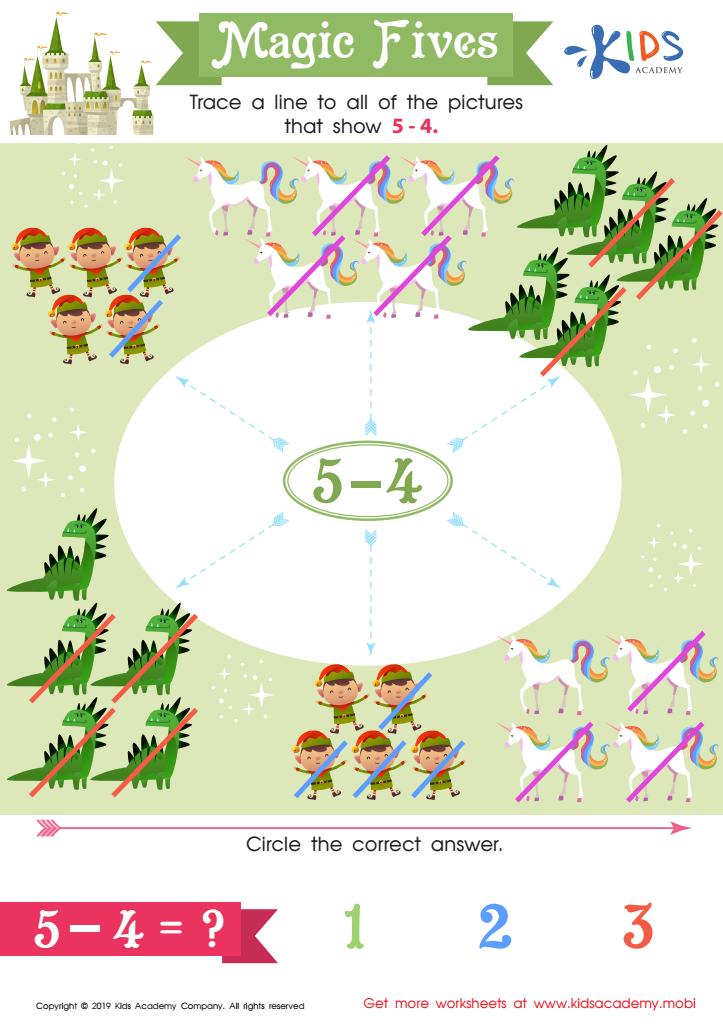
Magic Fives Worksheet
Help your students identify the objects & people in the worksheet. Point to the equation 5 -4 in the center, then get them to count the items and trace a line connecting those that add up to 5 - 4.
Magic Fives Worksheet
Worksheet
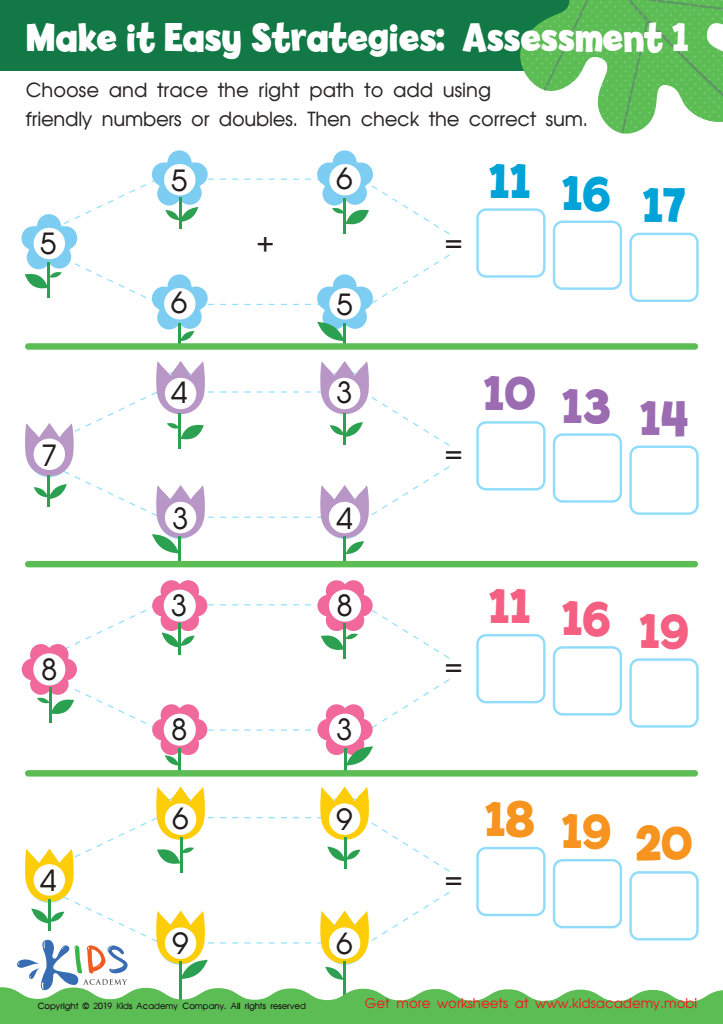
Make it Easy Strategies: Assessment 1 Worksheet
This tracing worksheet helps kids learn to add numbers and count with fun! Start by doing some simple math additions with your child. Guide them to trace the right path with friendly numbers or doubles, and check the sum. Make math enjoyable and rewarding while they learn!
Make it Easy Strategies: Assessment 1 Worksheet
Worksheet
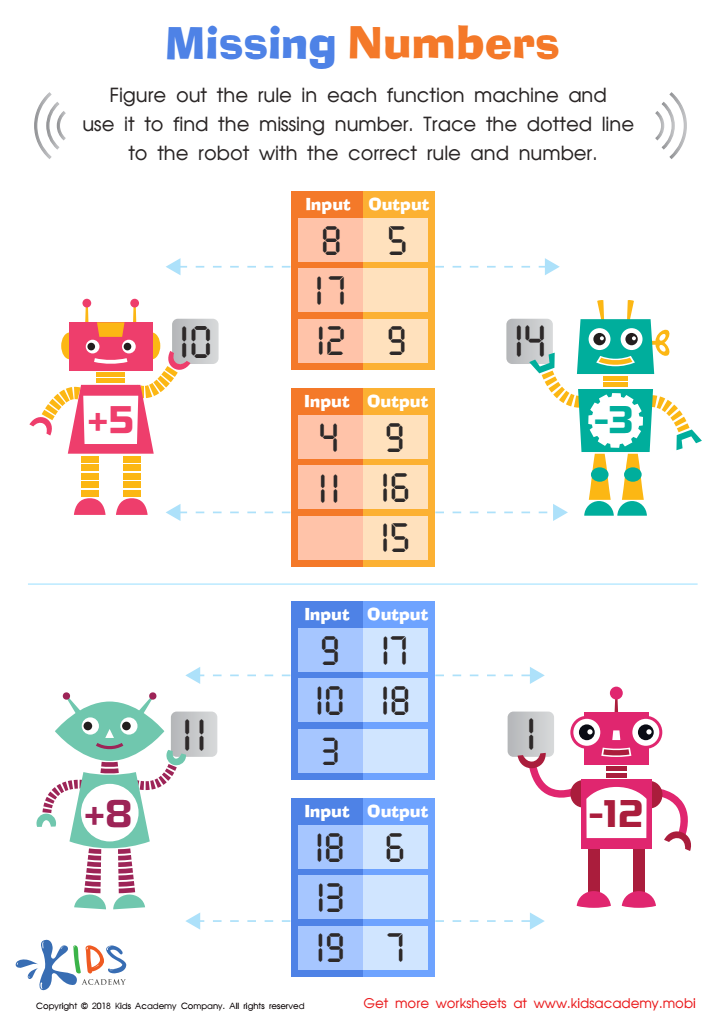
Missing Numbers Worksheet
Elementary students can learn the important pre-algebra skill of solving for missing numbers! Our robots guide them along with number-filled bellies and missing answers in their hands. Kids can examine the other numbers in each graph, use the rule to solve the missing number, and check their work with the missing number to ensure correctness.
Missing Numbers Worksheet
Worksheet
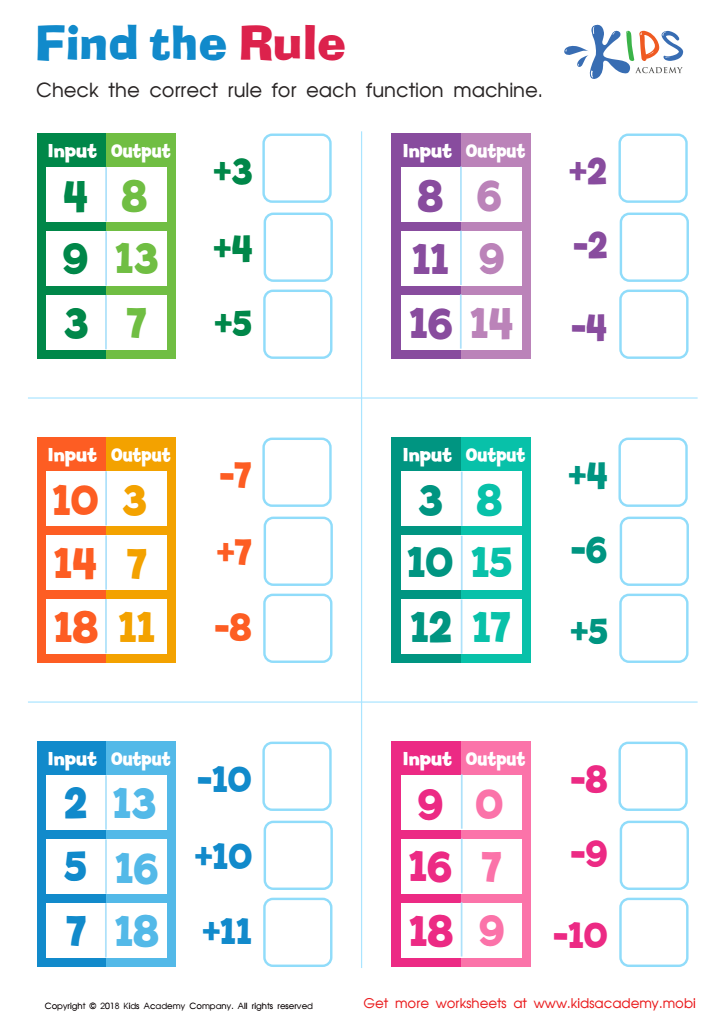
Find the Rule Worksheet
A function machine is an elementary math tool used to find an output by applying a rule, like addition or subtraction, to an input. Children use the diagram to understand the relationship between each input and output, with this worksheet helping them to analyze the machine and find the rule being used.
Find the Rule Worksheet
Worksheet
Join Kids Academy for Free
Who is primarily going to use this learning content?








Mathematical reasoning involving addition and subtraction is fundamental for children ages 3-8, and both parents and teachers should prioritize its development. At this young age, children are in a critical period of brain development where foundational skills are most effectively built. Introducing concepts of addition and subtraction helps cultivate number sense – an essential precursor to all higher mathematics.
When children engage in activities that incorporate simple arithmetic, they develop their abilities to recognize patterns, solve problems, and think logically. Preschool and early grade children need these skills to cope not just with mathematics in school but with real-life situations that require logical reasoning, such as sharing toys or understanding time.
Additionally, nurturing mathematical reasoning through addition and subtraction encourages a growth mindset. Successfully solving small arithmetic problems gives children valuable confidence in their abilities, promoting persistence and resilience when faced with more complex problems later.
Parents and teachers should employ playful and engaging methods to teach these concepts, such as using physical objects for counting or incorporating math into everyday routines. Such positive experiences foster not only mathematical understanding but also a positive attitude towards learning in general.
In sum, attention to these foundational math skills sets the stage for educational success and everyday problem-solving, making them imperative for young children's cognitive and emotional development.








