Problem Solving Addition & Subtraction Worksheets for Ages 3-8 - Page 2
29 filtered results
-
From - To
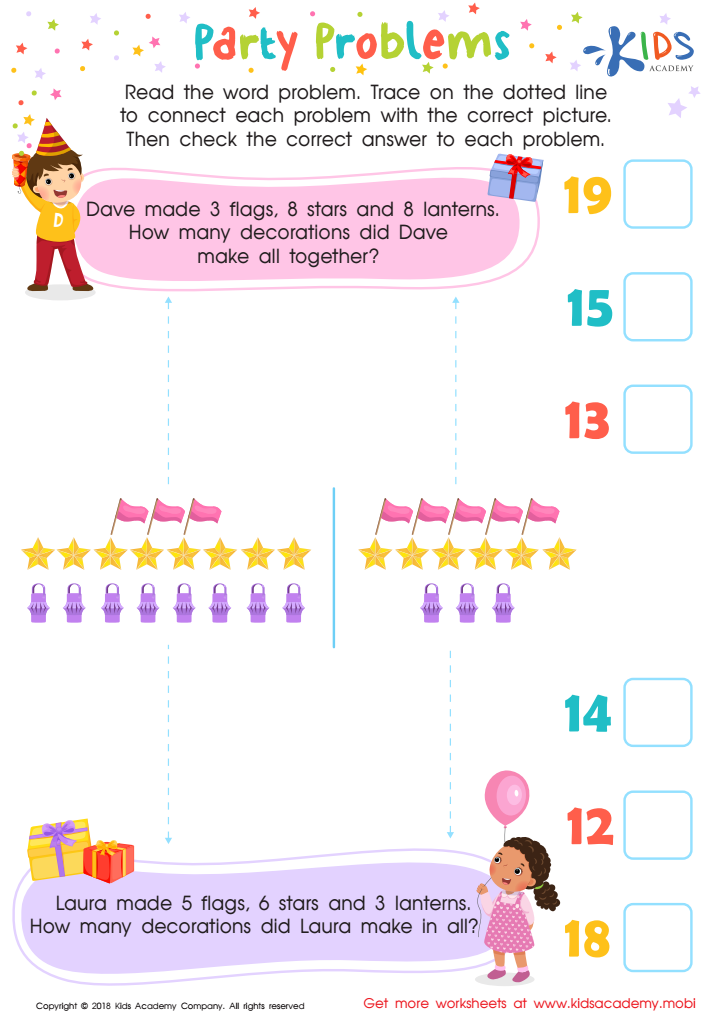
Party Problems Worksheet
 Assign to My Students
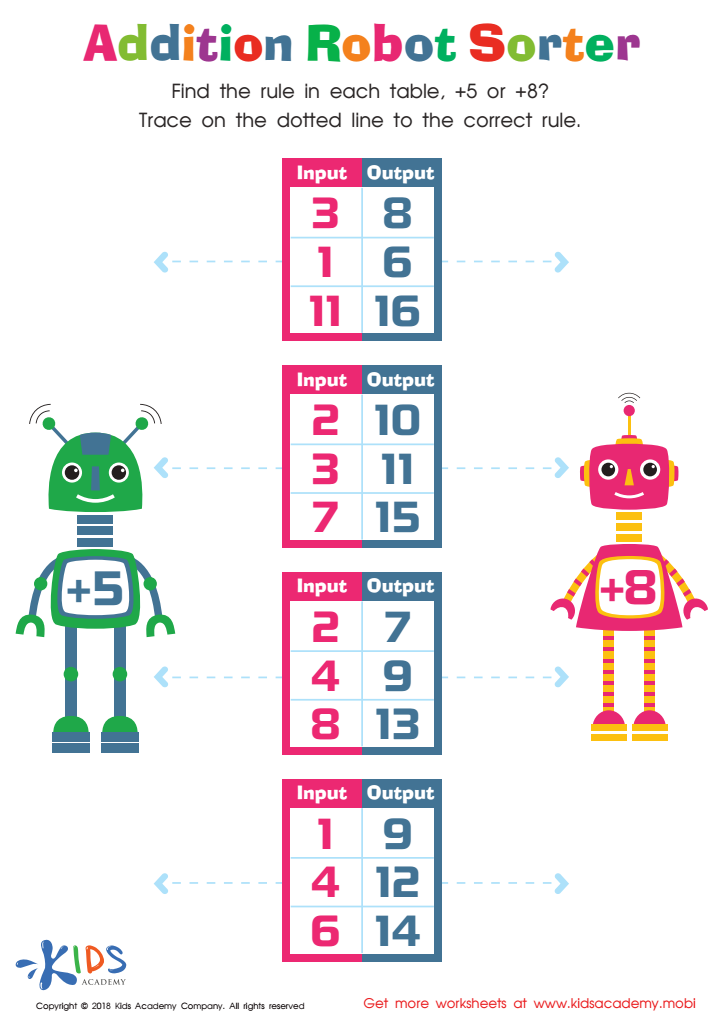
Addition Robot Sorter Worksheet
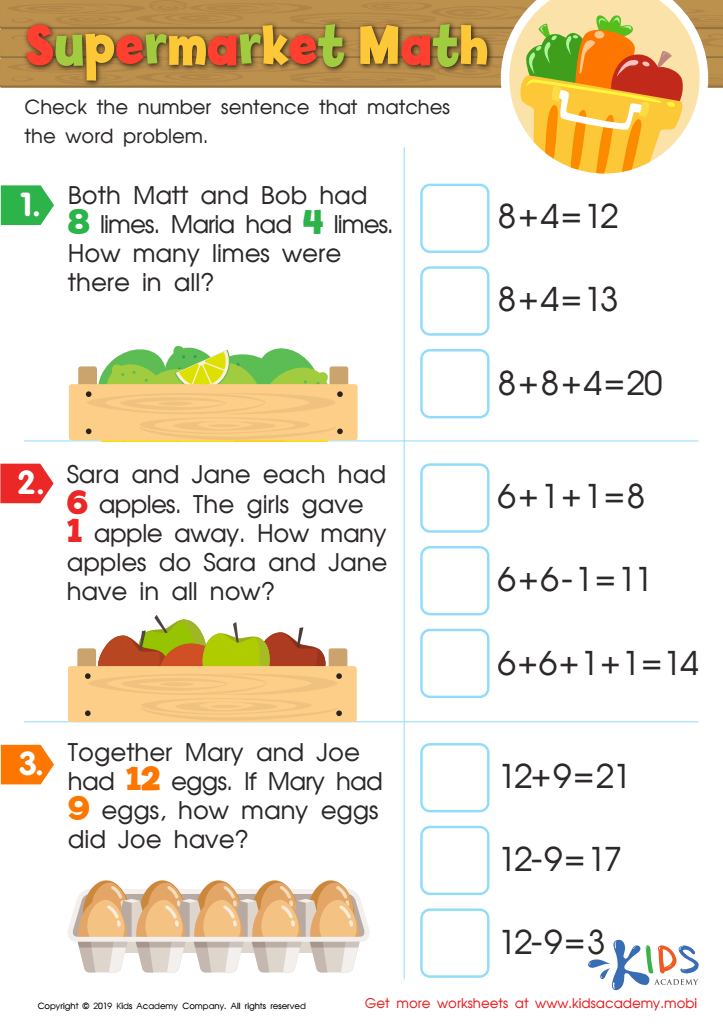
Supermarket Math Worksheet
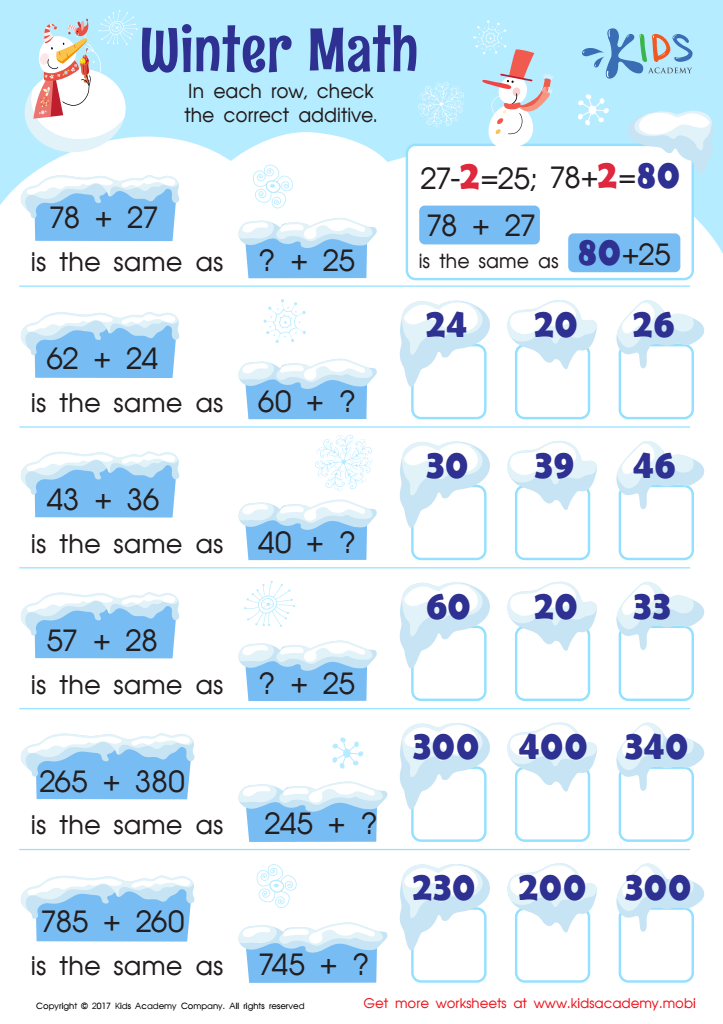
Free Addition Worksheet








Parents and teachers should prioritize problem solving in addition and subtraction for children aged 3-8 as it lays a foundational understanding of mathematics that extends beyond simple calculations. At this age, children are naturally curious and eager to engage with new concepts. By introducing problem-solving activities, they develop critical thinking skills, learning how to approach challenges systematically.
Moreover, mastering addition and subtraction teaches children essential cognitive skills, such as reasoning and decision-making. It enhances their ability to understand relationships between numbers and fosters cognitive flexibility, allowing them to approach problems from different angles. Engaging in these activities also promotes a positive attitude towards math, helping to combat math anxiety that can develop later in life.
Additionally, problem-solving fosters effective communication skills as children articulate their thought processes and collaborate with peers or adults. Learning through play and real-life scenarios keeps the experience enjoyable and relevant.
Most importantly, when children become comfortable with basic arithmetic early on, it sets them up for success in more advanced math concepts in the future. Investing time in these early problem-solving experiences contributes to their overall academic confidence and achievement.








