
Sequencing Skills Addition & Subtraction Worksheets for Ages 3-8
3 filtered results
Difficulty Level
Grade
Age
-
From - To
Subject
Activity
Standards
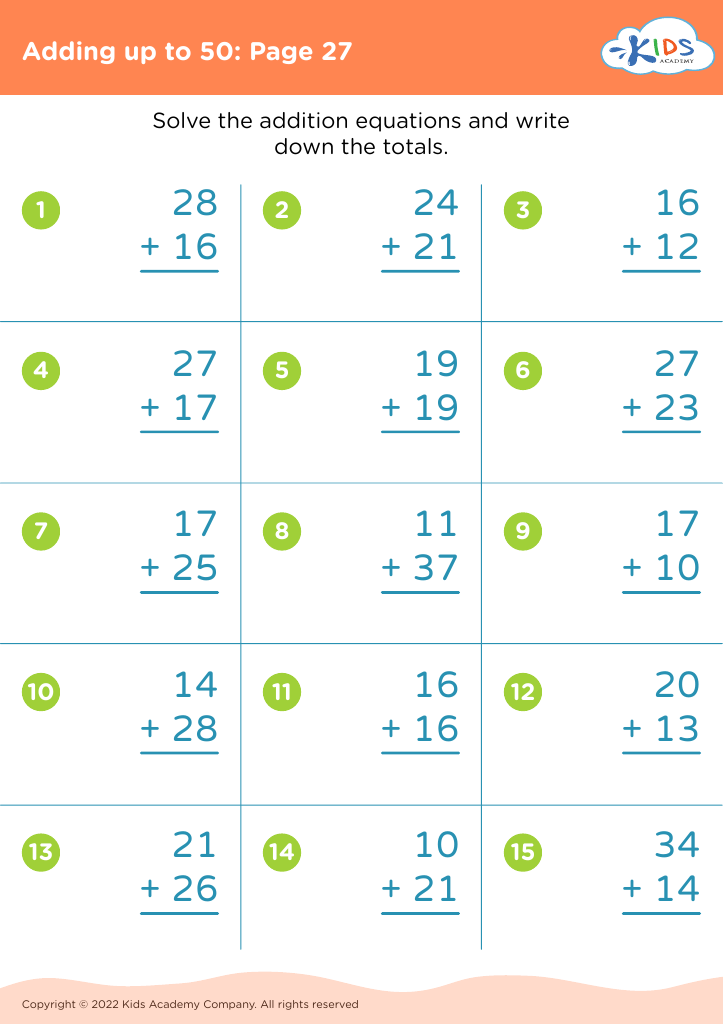
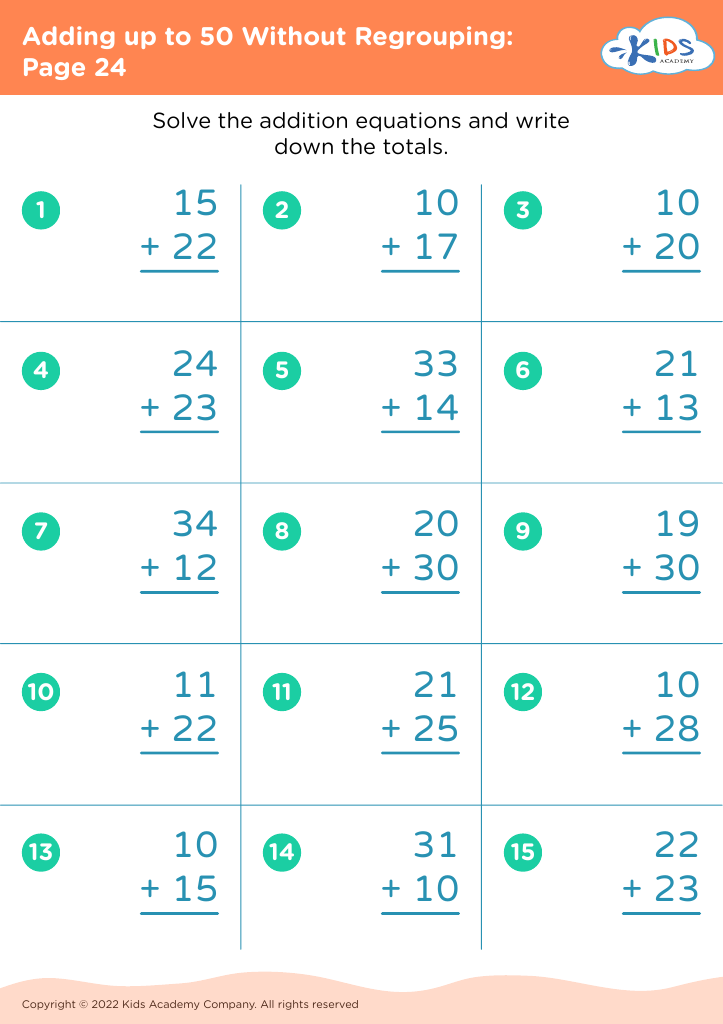
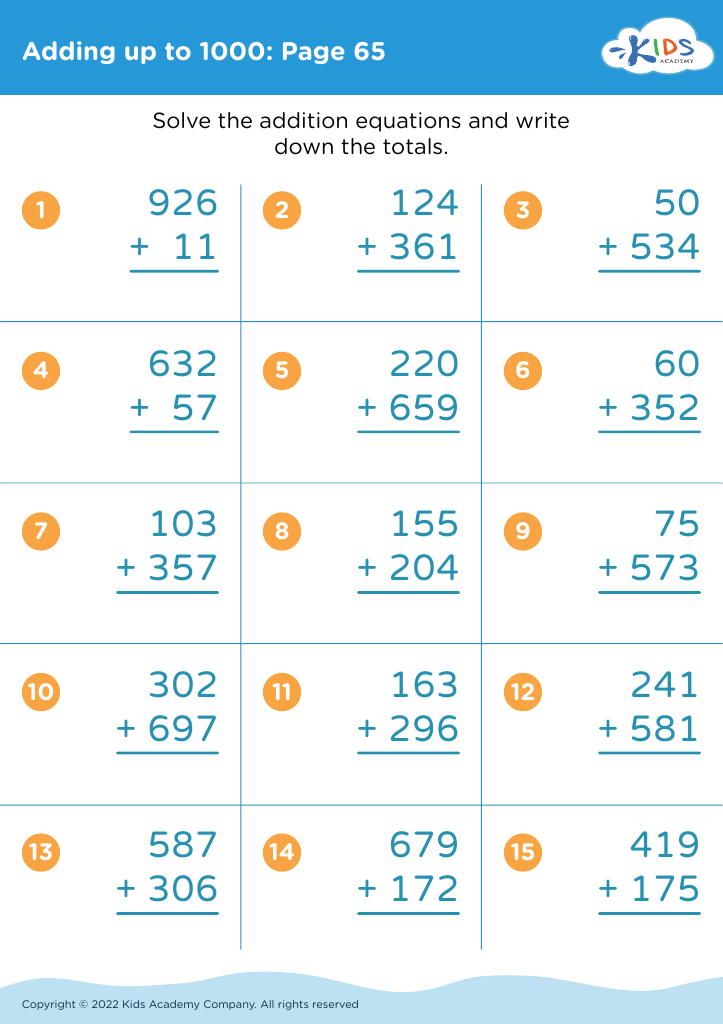
Enhance your child’s math journey with our engaging Sequencing Skills Addition & Subtraction Worksheets tailored for ages 3-8! These worksheets are designed to develop essential sequencing skills while reinforcing fundamental addition and subtraction concepts. Perfect for home or classroom use, they provide a fun and interactive way for young learners to visualize and order numbers. Each worksheet encourages critical thinking, problem-solving, and number recognition through colorful graphics and hands-on activities. Help your child build a strong mathematical foundation as they practice sequencing, ensuring their confidence in early math skills. Start your child’s math adventure today with our user-friendly resources!
Favorites
With answer key
Interactive
Join Kids Academy for Free
Who is primarily going to use this learning content?








Sequencing skills in addition and subtraction are crucial for children aged 3-8, as they serve as the foundation for mathematical understanding and problem-solving abilities. These skills help children learn to arrange numbers and operations logically, fostering critical thinking. When children grasp sequencing, they can recognize patterns and relationships within numbers, aiding recall and fluency in math skills.
In practical terms, facilitating these skills encourages children to break down problems into manageable steps, which is essential not only in mathematics but also in daily life activities, such as following instructions and completing tasks. For parents and teachers, nurturing these abilities helps build children's confidence, discouraging frustration when faced with mathematical challenges. Engaging children in sequencing activities—like arranging objects, counting, or solving simple equations—can also foster a love for learning.
Moreover, strong early sequencing skills correlate with future academic achievements. They provide a solid base for tackling complex concepts in later grades, ultimately leading to improved performance in mathematics. By recognizing the importance of sequencing in addition and subtraction, parents and teachers can play an essential role in preparing children for their educational journey, supporting their cognitive development and promoting lifelong skills.








