Understanding instructions Addition & Subtraction Worksheets for Ages 3-8
3 filtered results
-
From - To
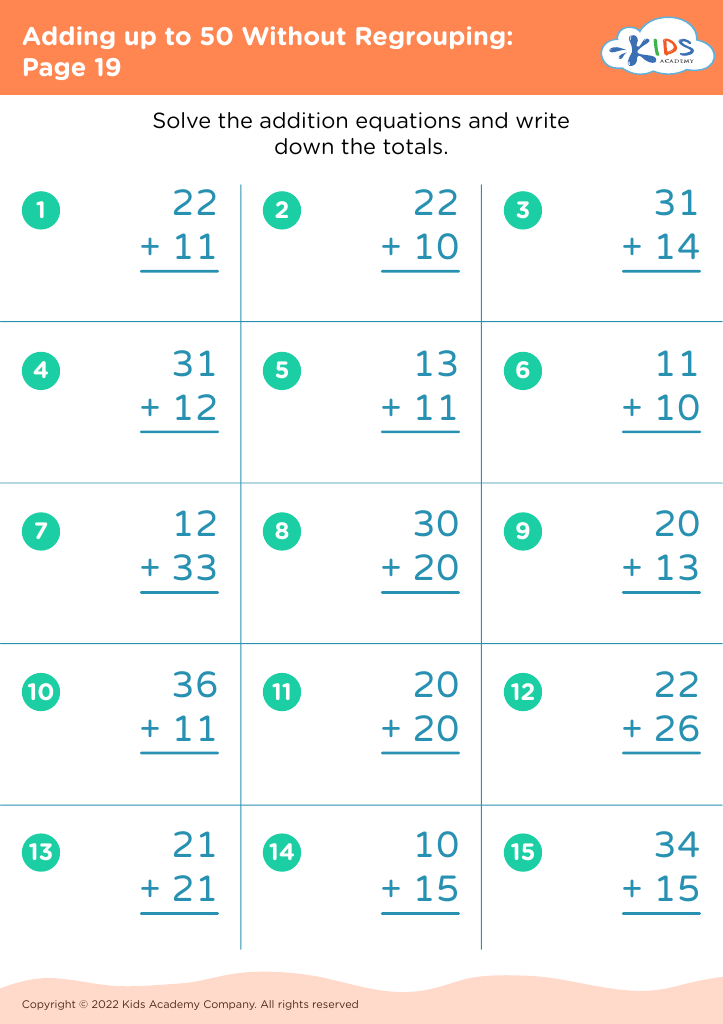
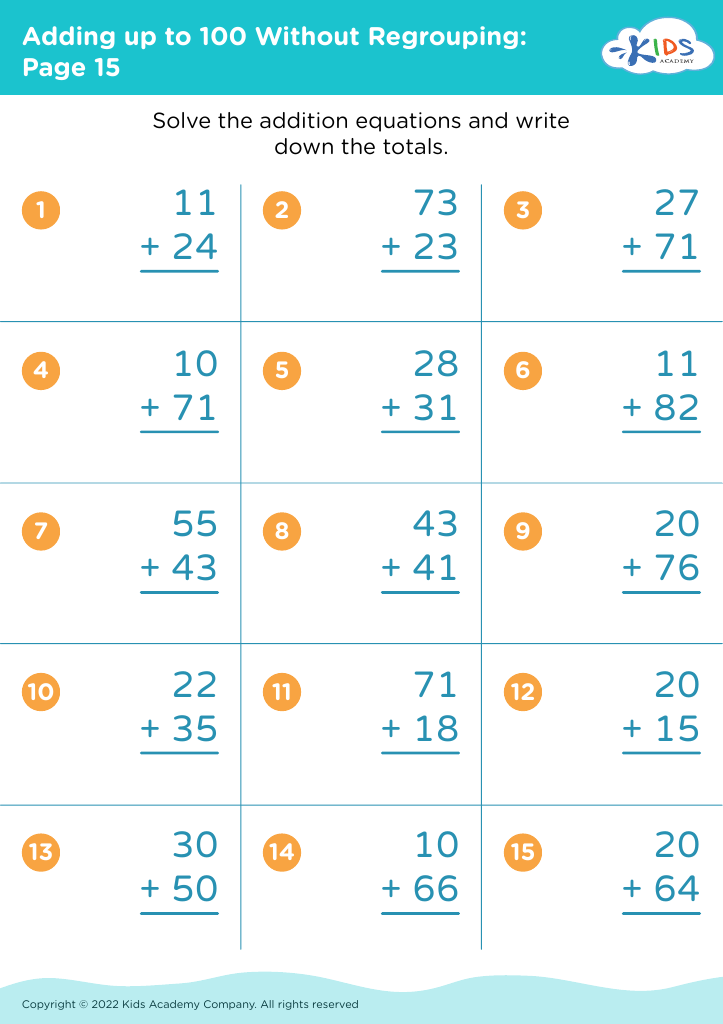
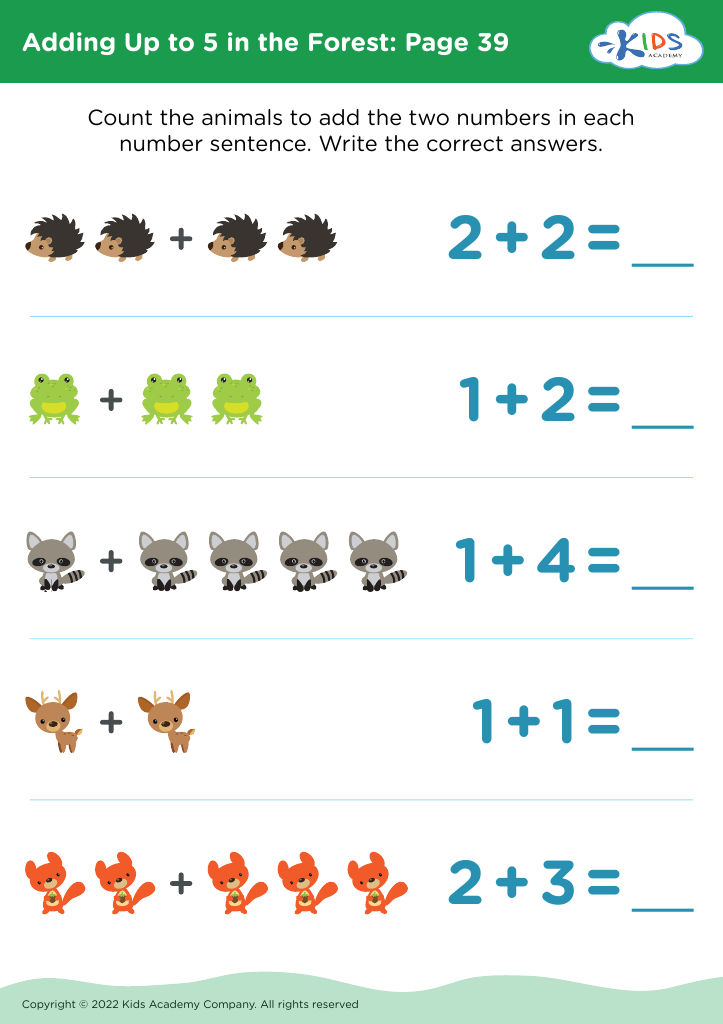
Discover our "Understanding Instructions Addition & Subtraction Worksheets," specifically designed for children aged 3-8. These engaging worksheets help young learners grasp the fundamentals of addition and subtraction by focusing on following directions and comprehending tasks. With colorful visuals and age-appropriate exercises, kids will develop their math skills while enhancing their ability to understand and execute instructions. Perfect for home or classroom use, these worksheets encourage critical thinking and problem-solving, ensuring a solid foundation in numeracy. Start your child's mathematical journey today with our comprehensive resources that make learning both fun and effective!








Understanding addition and subtraction instructions at an early age is crucial for children aged 3-8, as it forms the foundational skills necessary for later mathematical concepts. During these formative years, children develop critical thinking and problem-solving abilities, and a solid grasp of basic arithmetic is essential to support these cognitive skills. Parents and teachers should care because engaging effectively with these concepts can foster a love for math and build confidence in children.
Moreover, early understanding of addition and subtraction helps children make sense of everyday tasks, such as counting objects, sharing equally, and understanding money. By grasping these basic operations, children learn to approach challenges with a structured thinking process, preparing them for more complex math as they grow.
Encouraging children to follow instructions related to these operations enhances their listening skills, comprehension, and ability to work independently. Moreover, this skill set translates into broader academic success, as literacy in mathematics is linked to improved learning outcomes in other subjects. Overall, instilling a solid foundation in addition and subtraction equips children with the essential tools they'll need throughout their education and beyond, promoting lifelong learning and resilience.








