Understanding number relationships Addition & Subtraction Worksheets for Ages 3-8
8 filtered results
-
From - To
Explore our engaging "Understanding Number Relationships Addition & Subtraction Worksheets" designed for children aged 3-8! These worksheets aim to foster a strong foundational understanding of numbers and their relationships through fun and interactive activities. Enrich your child's learning experience as they practice addition and subtraction in a vibrant, easy-to-understand format. Our resources are crafted to support early numeracy skills and promote critical thinking, helping young learners connect number concepts with real-life scenarios. Perfect for classrooms, homeschooling, or supplemental practice, our worksheets provide countless opportunities for essential skill-building. Start nurturing your child's math confidence today!
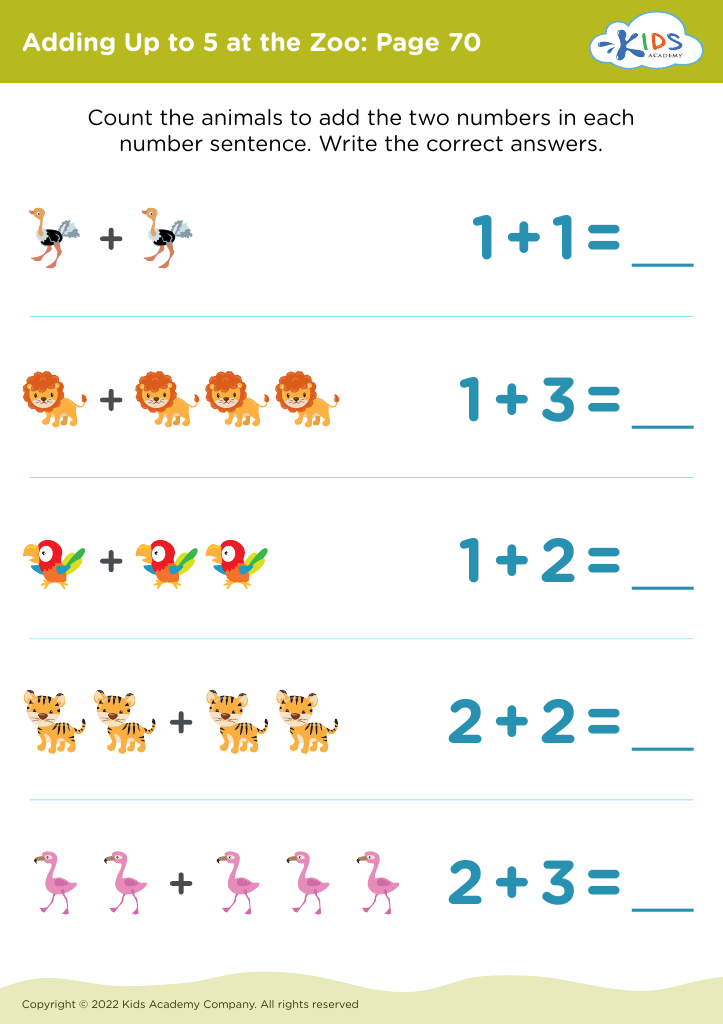
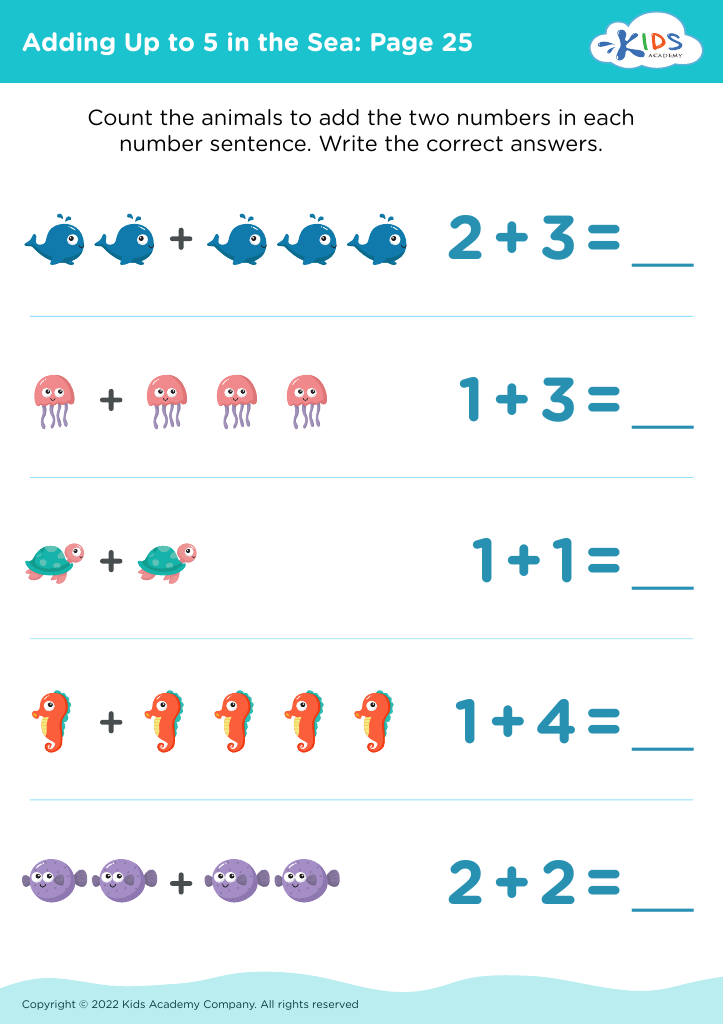
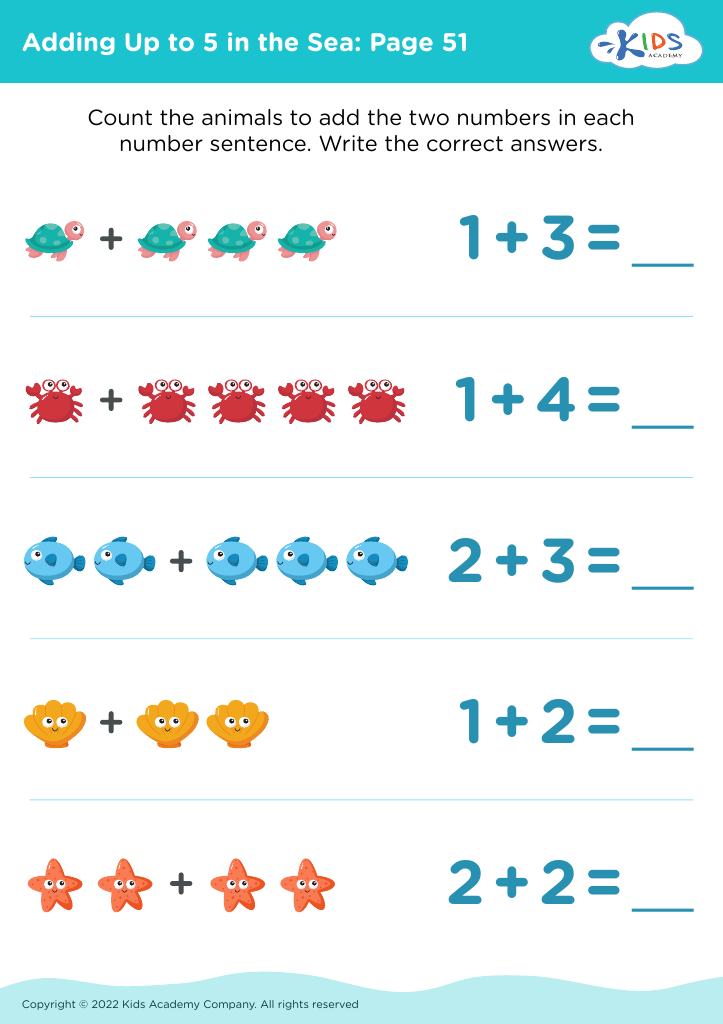
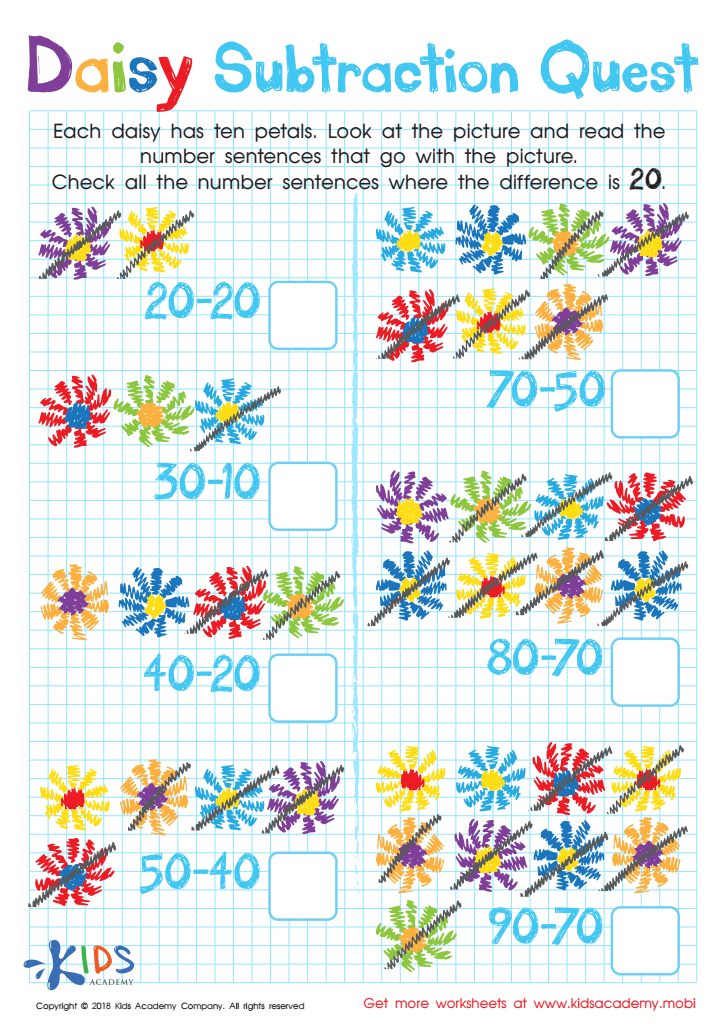
Daisy Subtraction Quest Worksheet
 Assign to My Students
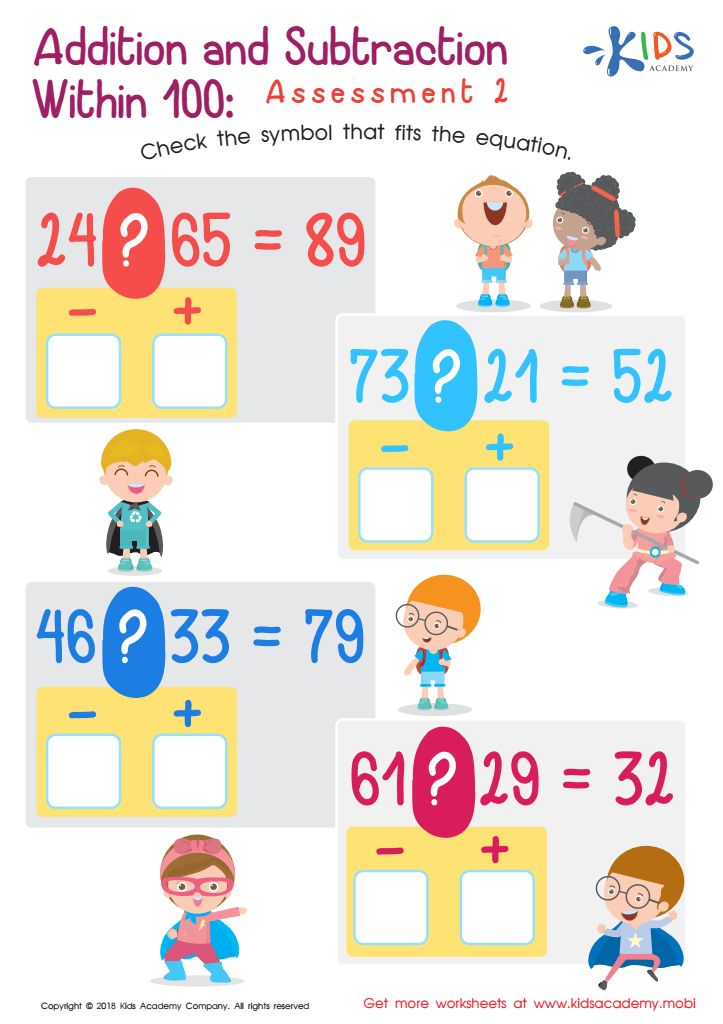
Addition and Subtraction Within 1: Assessment 2 Worksheet
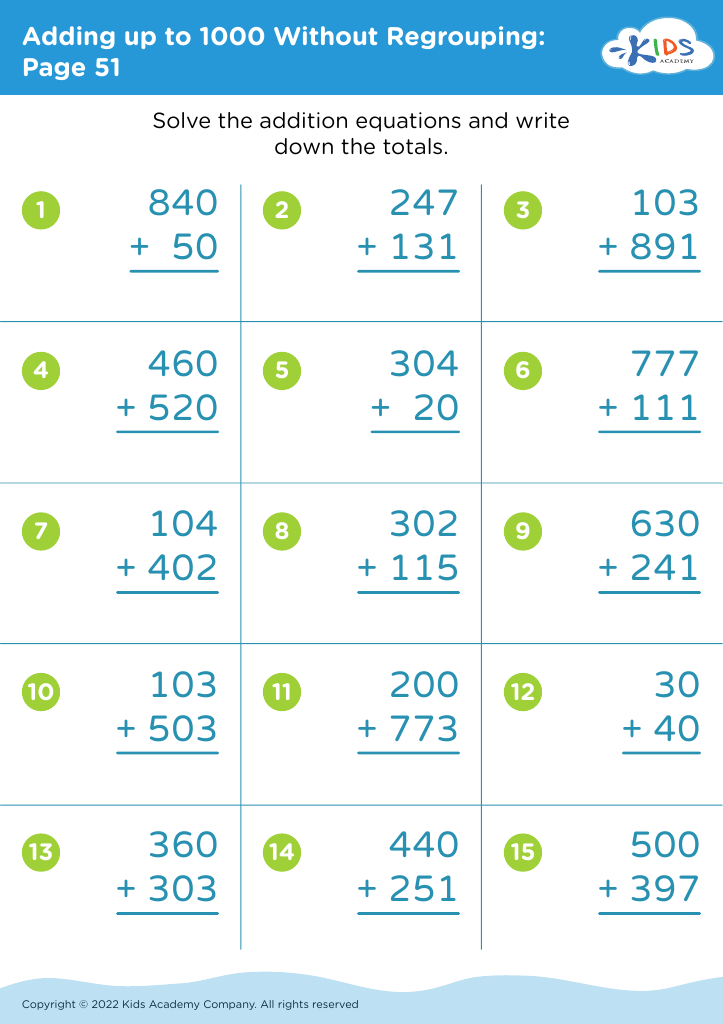
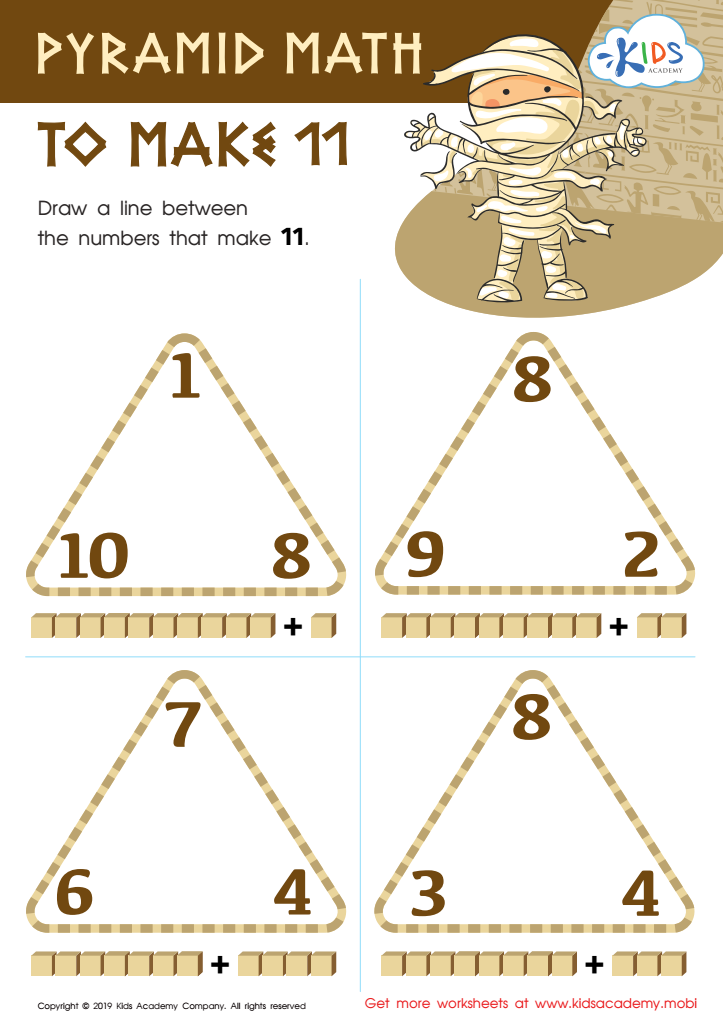
Pyramid Math to Make 11 Worksheet








Understanding number relationships, particularly addition and subtraction, is crucial for children aged 3-8 as it forms the foundation for their future mathematical competencies. At this developmental stage, young learners begin recognizing numerals, counting sequences, and understanding quantities. Fostering a solid grasp of addition and subtraction not only enhances their problem-solving skills but also supports logical thinking and cognitive development.
Parents and teachers play a significant role in facilitating this learning. Engaging children in playful activities that involve basic math concepts enables them to make connections between numbers and real-world situations. This helps children to visualize concepts, ensuring they grasp the idea that addition means 'putting together' and subtraction means 'taking away.'
Moreover, a strong understanding of these number relationships promotes confidence in math, reducing anxiety about more complex concepts that will arise in later grades. It encourages a positive attitude towards learning by allowing kids to experience success early on. By caring about enacting these foundational skills, adults can instill a love for math that supports lifelong learning. Overall, prioritizing number relationships in early education is an investment in a child's academic and emotional development, setting them up for success in their educational journey.








