Understanding number sequence Addition & Subtraction Worksheets for Ages 3-8
4 filtered results
-
From - To
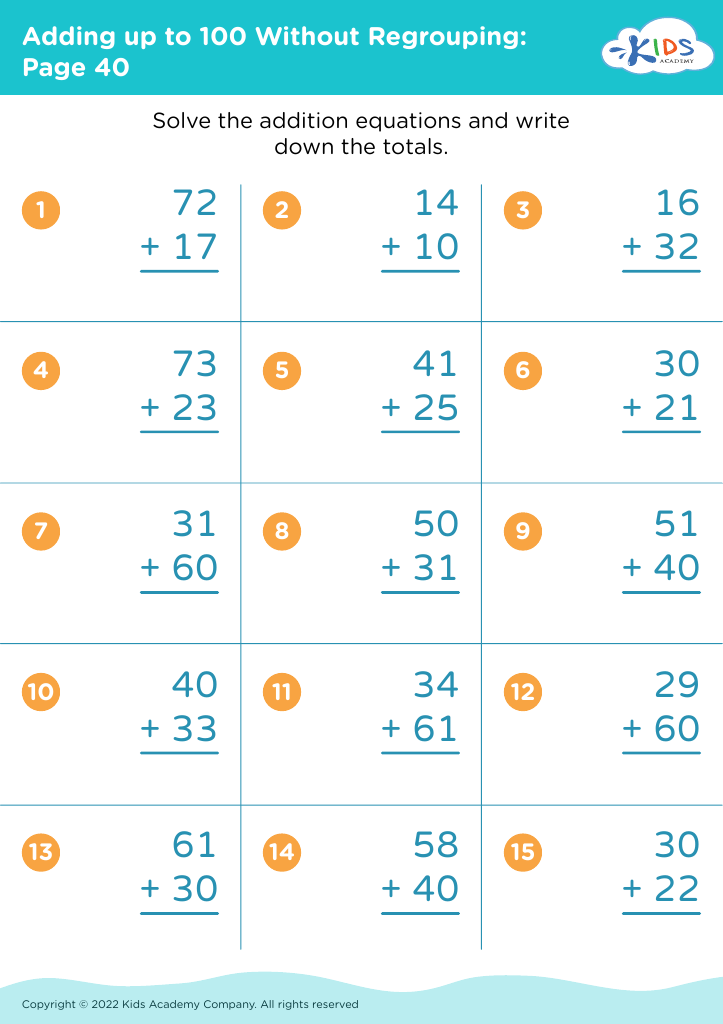
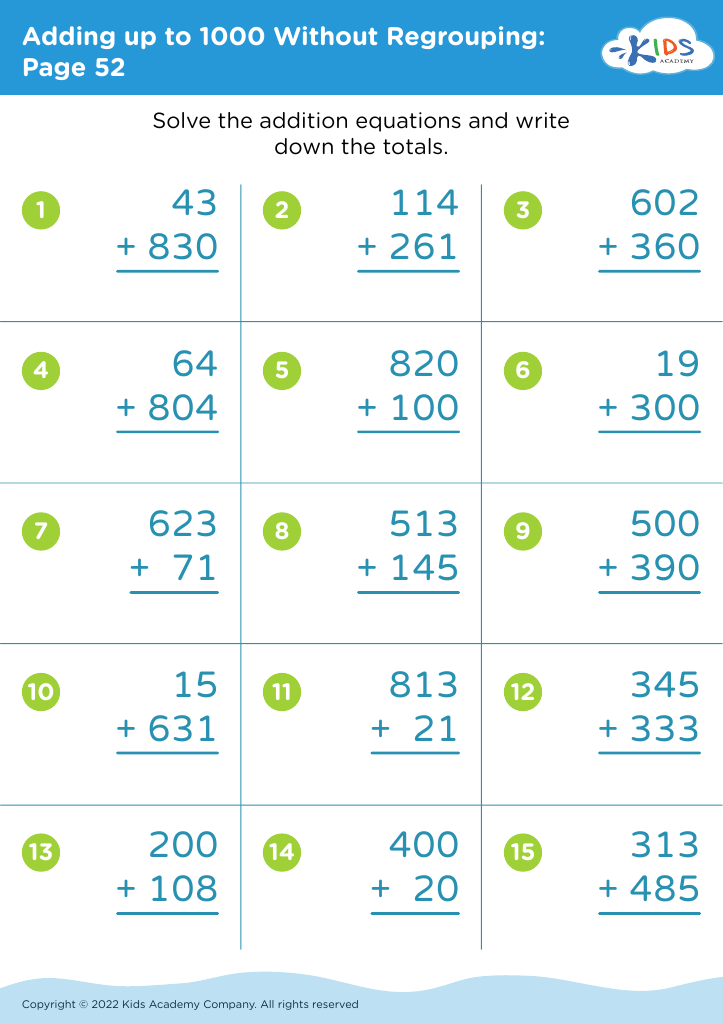
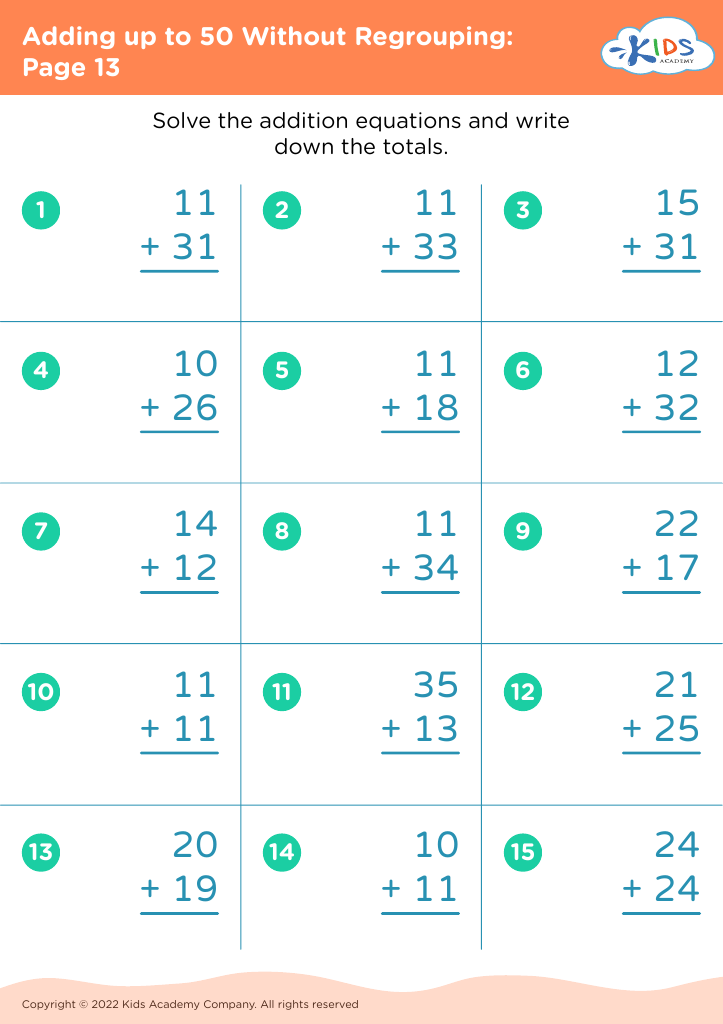
Unlock your child's potential in math with our Understanding Number Sequence Addition & Subtraction Worksheets, designed for ages 3-8. Our engaging and interactive worksheets help children master number sequences and fundamental arithmetic skills. By integrating colorful visuals and fun activities, we transform learning into a joyful experience. Perfect for home or classroom use, these worksheets aim to build essential math foundations that lead to academic success. Whether it's sequencing, simple addition, or subtraction, our tools are crafted to boost confidence and understanding. Invest in your child's future today with these powerful learning resources!
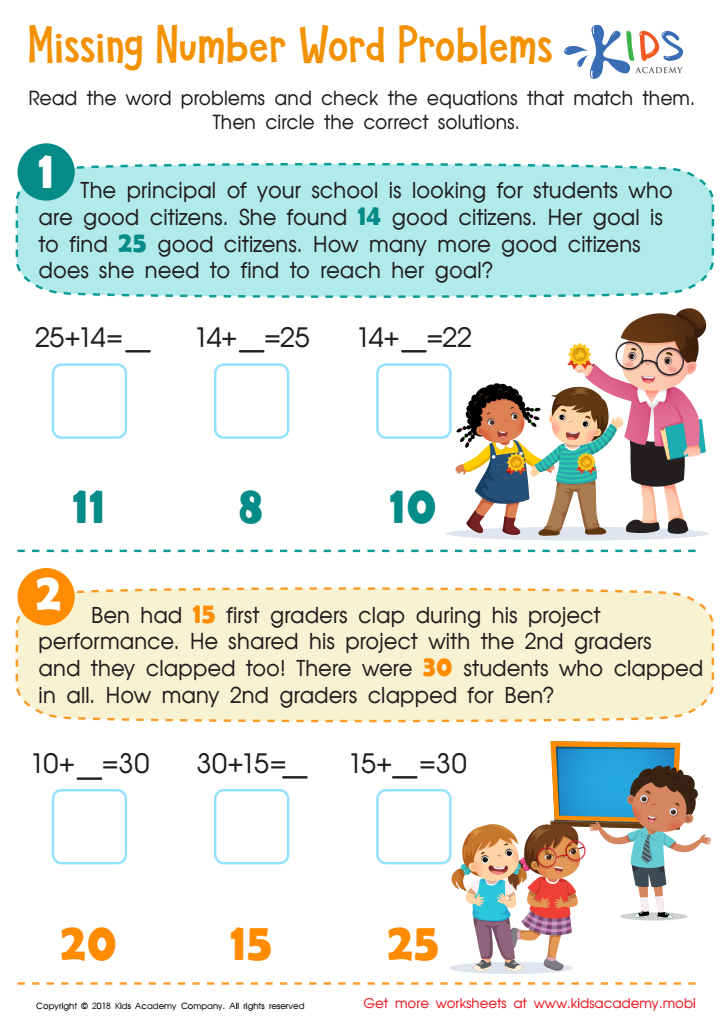
Missing Number Word Problems Worksheet
 Assign to My Students








Understanding number sequences, addition, and subtraction at ages 3-8 is foundational for children's cognitive development and future academic success. This critical period, often called the "formative years," lays the groundwork for more complicated mathematical concepts. When children learn number sequences, they grasp the idea of order, which is crucial for understanding larger numerical systems.
Early proficiency in addition and subtraction goes beyond merely counting objects. It enhances logical thinking, problem-solving abilities, and the capacity to understand and manipulate numbers mentally. These skills translate into better performance not only in mathematics but across all subjects that require analytical thinking.
For parents and teachers, nurturing these competencies can lead to improved self-esteem and confidence in children. When students grasp fundamental math principles early, they face fewer challenges as the curriculum becomes more complex. Furthermore, engaging children with interactive and enjoyable arithmetic activities can foster a lifelong interest in learning.
Investing time in teaching these basic math skills also has long-term societal benefits. Numerate individuals contribute more effectively to an increasingly data-driven world, making informed decisions at personal and community levels.
In essence, understanding these basic math concepts is not just about mastering school subjects; it equips children with essential life skills and sets them up for future success.








