Vocabulary development Addition & Subtraction Worksheets for Ages 3-8
8 filtered results
-
From - To
Accelerate your child's mathematical journey with our Vocabulary Development Addition & Subtraction Worksheets designed for ages 3-8. These engaging activities seamlessly blend vocabulary building with essential math skills, making learning both fun and effective. Our worksheets enhance young learners' understanding by introducing key mathematical terms and concepts through interactive exercises. Each sheet focuses on developing fluency in addition and subtraction, ensuring children grasp the fundamentals while expanding their mathematical language. Perfect for home or classroom use, these printable resources provide a solid foundation for future math success. Equip your child with the tools they need to excel in mathematics and vocabulary simultaneously.
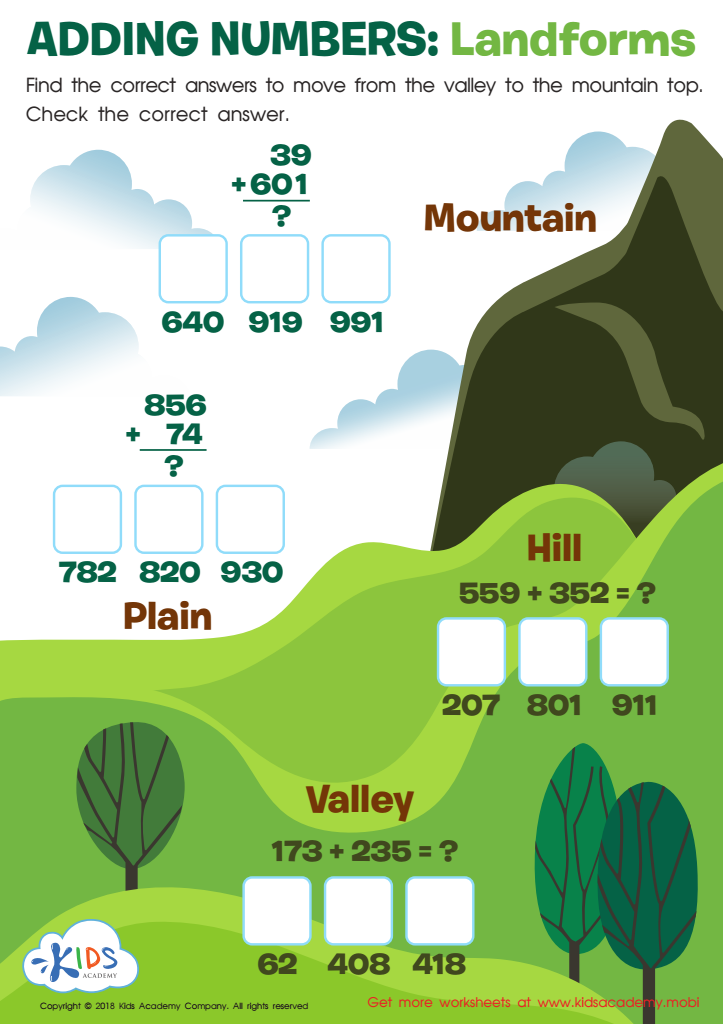
Adding Numbers: Landforms Worksheet
 Assign to My Students
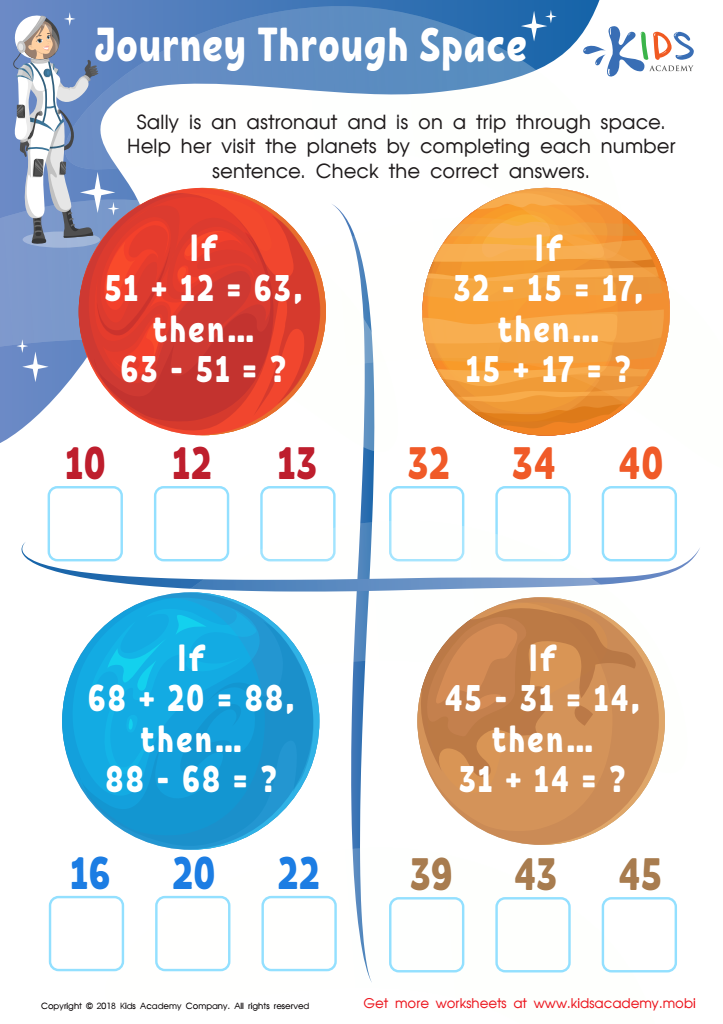
Journey Through Space Worksheet
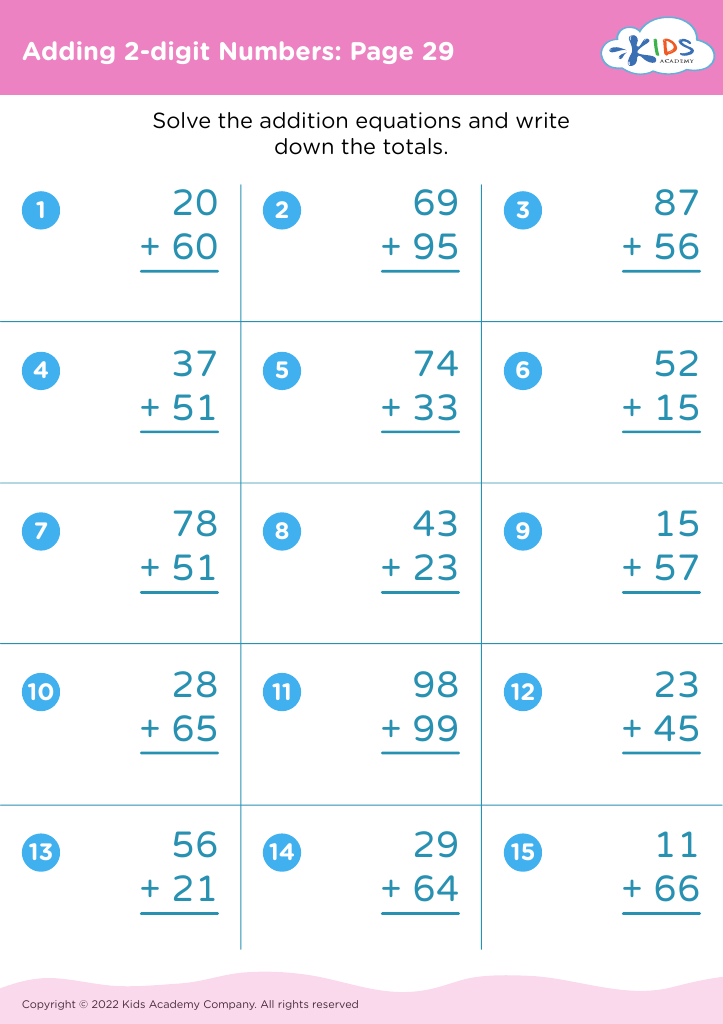
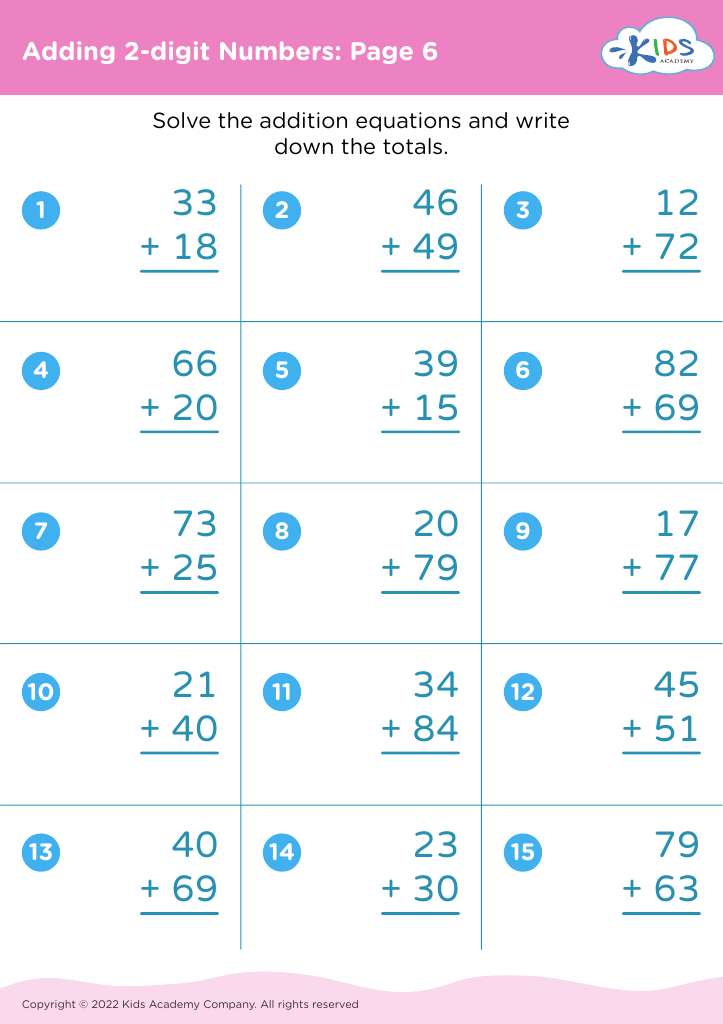
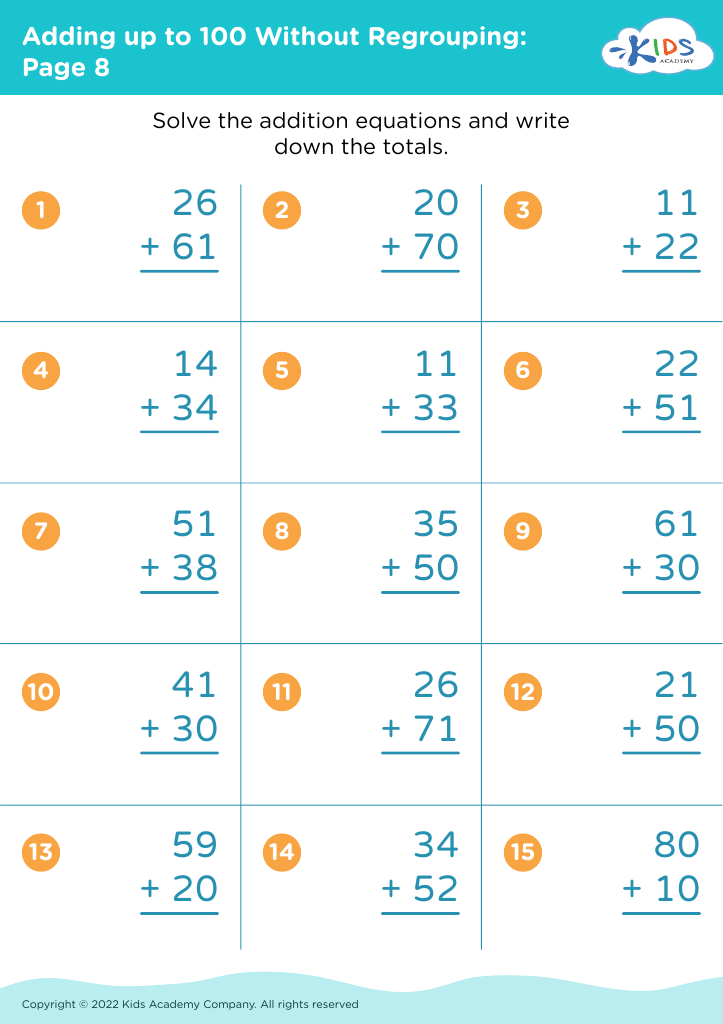
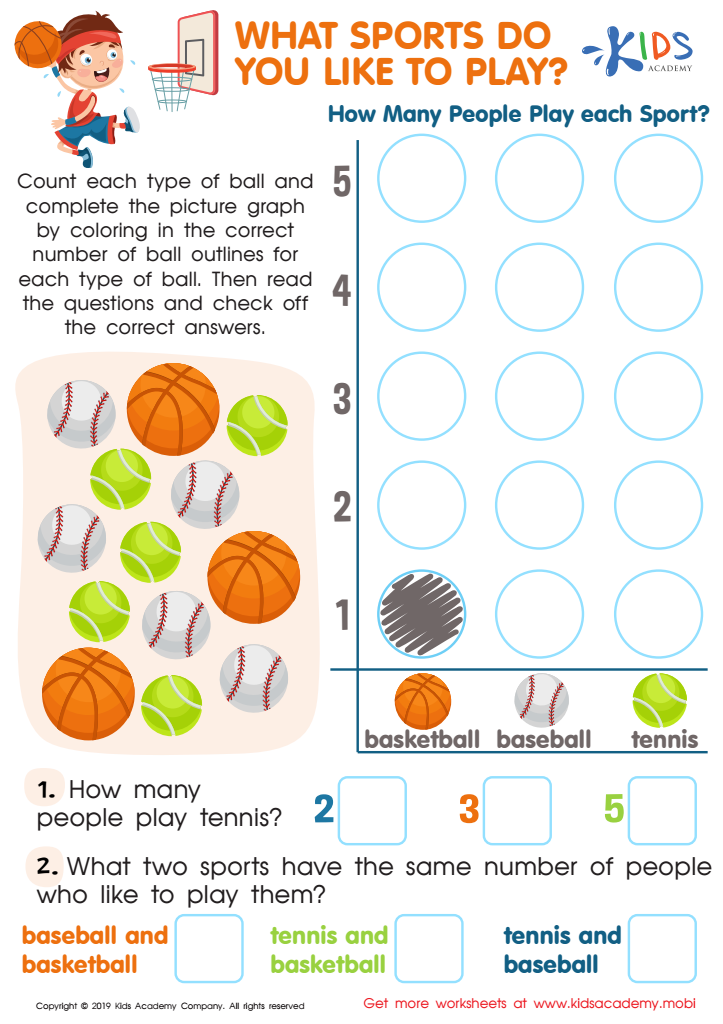
What Sports Do You Like to Play Worksheet








Vocabulary development and foundational math skills like addition and subtraction are crucial for children ages 3-8, as they lay the groundwork for future academic success and cognitive development. At this stage, children's brains are rapidly developing, and their ability to grasp and apply new concepts is at its peak.
Vocabulary is fundamental to communication and literacy. A rich vocabulary helps children express themselves clearly, understand others, and follow instructions. This early language proficiency is correlated with better reading comprehension and overall school performance. Intertwined with vocabulary growth is early mathematical learning, specifically addition and subtraction. These basic math skills form the basis for more complex mathematical reasoning encountered later in life.
Teaching these skills early on not only fosters academic curiosity but also equips children with problem-solving skills and boosts their confidence. Brain research shows that early exposure to these concepts strengthens neural connections, setting the stage for more advanced learning.
Neglecting vocabulary and foundational math can result in learning gaps that may be difficult to overcome later. By prioritizing these areas, parents and teachers provide children with essential tools for lifelong learning and success. Therefore, actively engaging young learners in vocabulary and basic math practices prepares them holistically for future educational challenges.








