Vocabulary development Addition & Subtraction Worksheets for 9-Year-Olds
3 filtered results
-
From - To
Boost your 9-year-old's math skills and vocabulary with our enriching Addition & Subtraction Worksheets! Designed to enhance both arithmetic proficiency and language mastery, these engaging worksheets challenge students to explore mathematical concepts while expanding their vocabulary. Each worksheet features fun, relatable problems that phrases vocabulary in a context that fosters understanding and retention. Your child will practice addition and subtraction facts while learning new words, making math enjoyable and educational. Perfect for home or classroom use, our resources cater to various learning styles, ensuring every child develops critical thinking and language skills essential for academic success. Start their learning journey today!
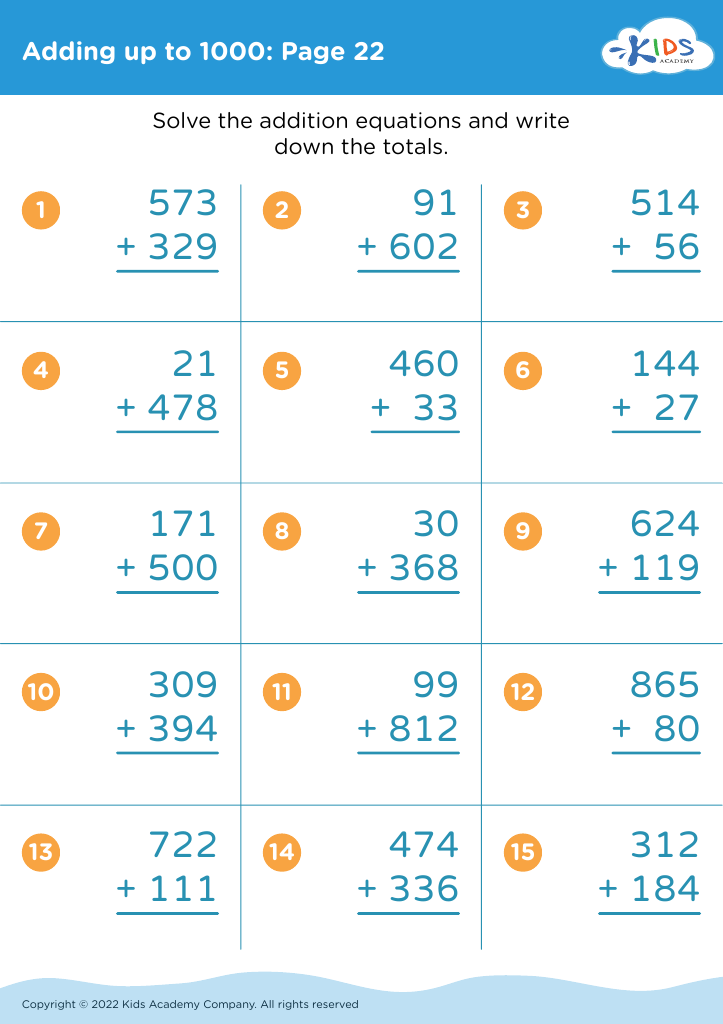
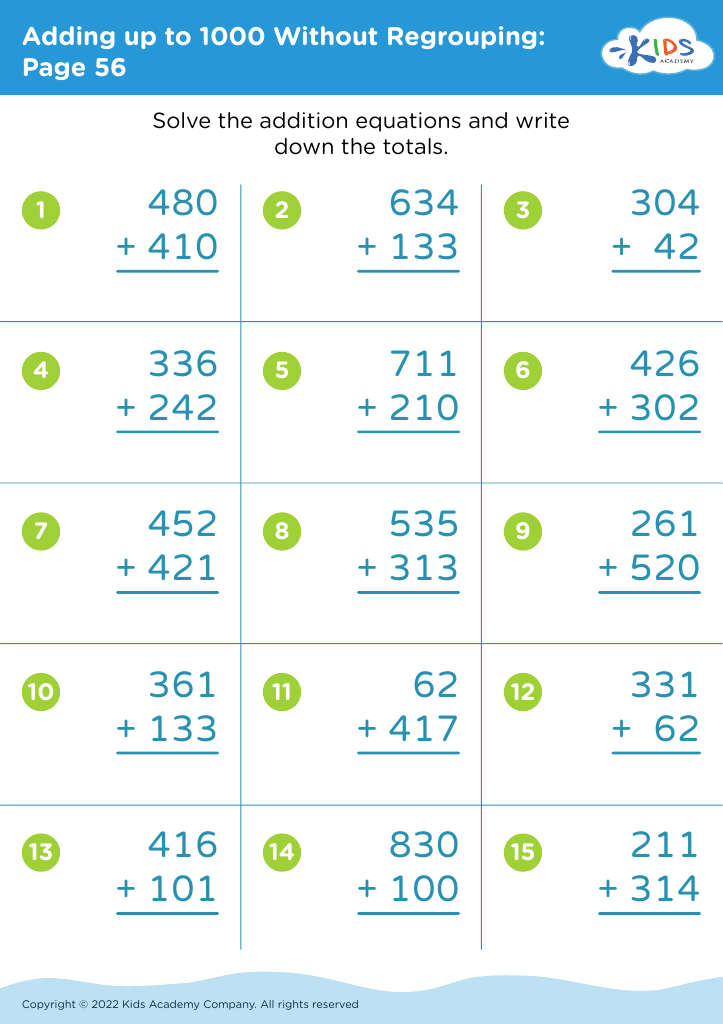
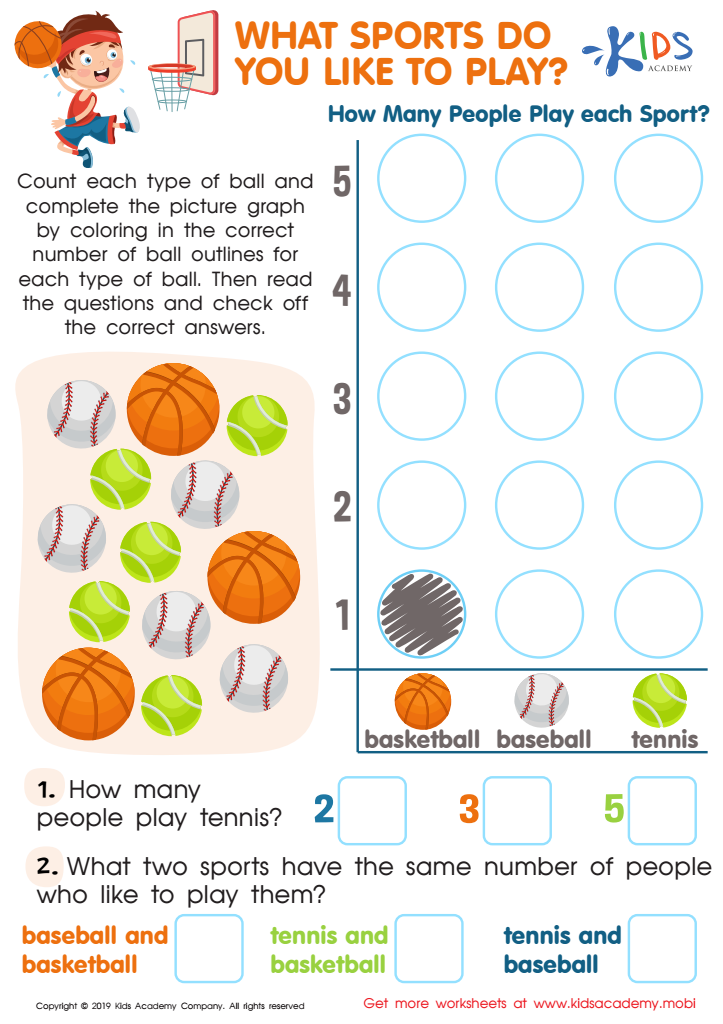
What Sports Do You Like to Play Worksheet
 Assign to My Students








Vocabulary development in the context of mathematics, particularly with addition and subtraction, is crucial for 9-year-olds as it lays the foundation for higher-level problem-solving skills. At this age, children are not just learning to perform arithmetic; they are also beginning to understand math concepts and relationships through language. A robust math vocabulary enhances their ability to interpret word problems, communicate their thinking, and grasp abstract ideas.
When children encounter terms like "sum," "difference," "combine," or "partition," they learn to connect these concepts with operations, which can significantly improve their understanding of numbers and equations. Parents and teachers should care about this development because strong vocabulary skills enable children to articulate their thought processes, leading to improved reasoning skills and academic performance.
Moreover, a solid mathematical vocabulary can boost a child's confidence, encouraging them to engage more fully in math-related discussions and activities. This engagement fosters a growth mindset, setting the stage for lifelong learning in mathematics and beyond. Ultimately, supporting vocabulary development can help 9-year-olds not only in their current studies but also in future academic pursuits, making it a vital area of focus for educators and caregivers alike.








