Filters

13 filtered results

Clear all filters
Favorites
With answer key
Interactive

13 filtered results

Difficulty Level

Grade


Enhance your child’s mathematical skills with our engaging Vocabulary Expansion Addition & Subtraction Worksheets designed for ages 3-8. These thoughtfully crafted worksheets not only teach essential math concepts but also enrich vocabulary through interactive activities. With a focus on real-world applications, children will learn to identify and use math-related terms confidently. From simple addition and subtraction problems to fun, themed exercises, each worksheet provides a balance of enjoyment and education. Perfect for classroom use or at-home learning, our resources promote both cognitive and language development, ensuring little learners build a strong foundation in math and literacy. Start their journey today!
Check out this FREE Trial Lesson on Addition & Subtraction for age 3-8!

Add 3 & 4 Numbers at the same time

Favorites
With answer key
Interactive
  • 3-8
  • Vocabulary expansion
  • Addition & Subtraction
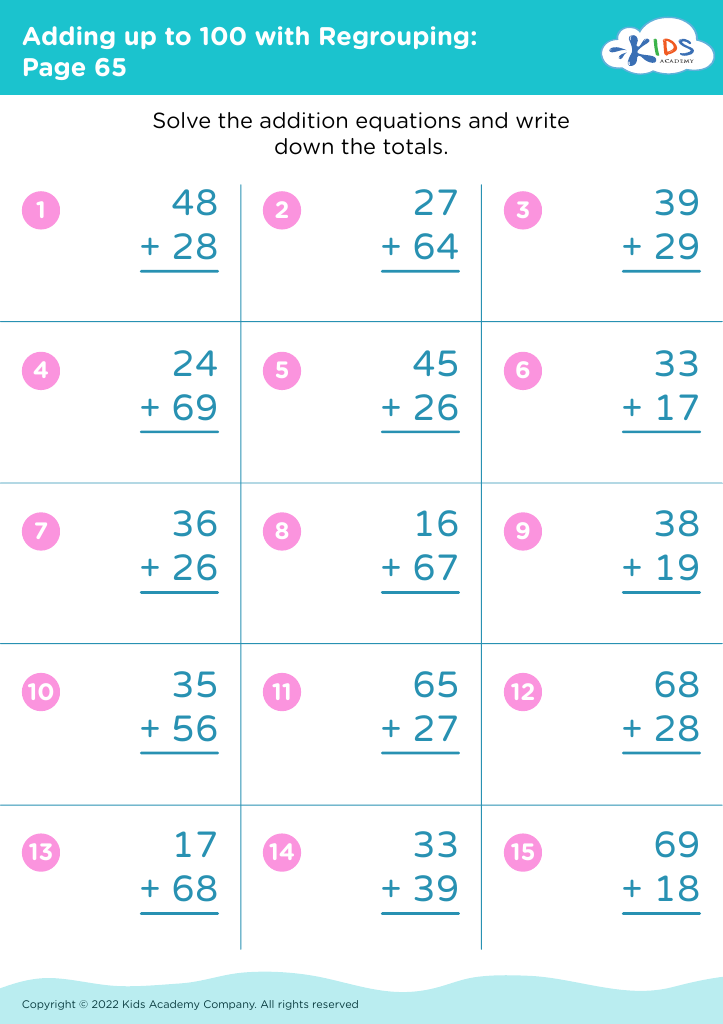
Adding up to 100 with Regrouping: Page 65
Worksheet
Adding up to 1000 with Regrouping: Page 6
Worksheet
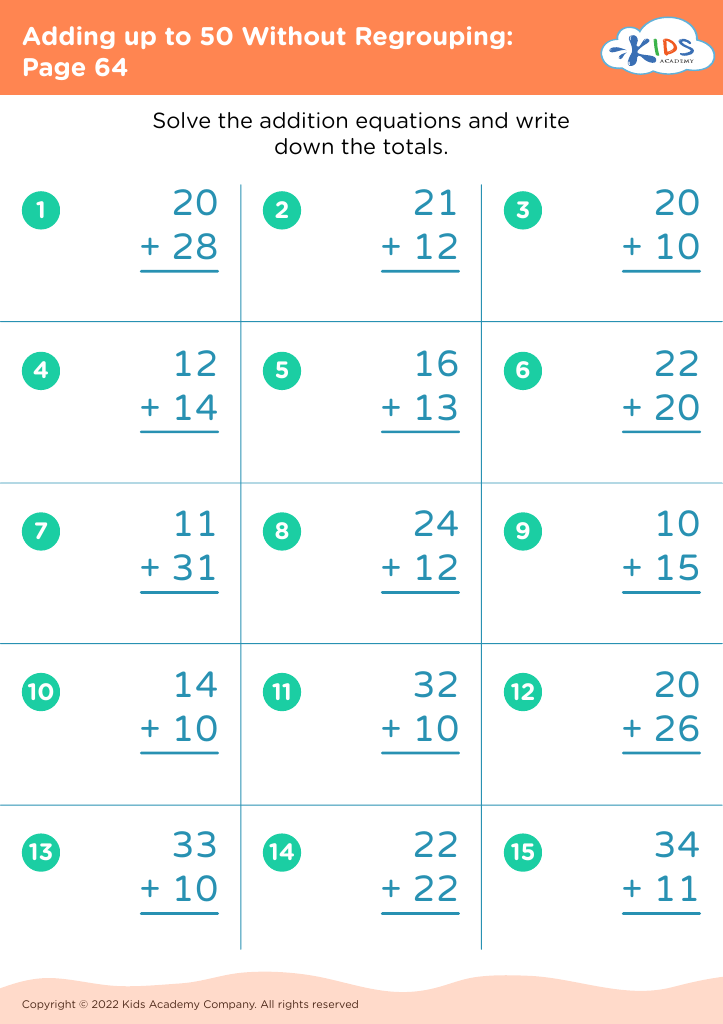
Adding up to 50 Without Regrouping: Page 64
Worksheet
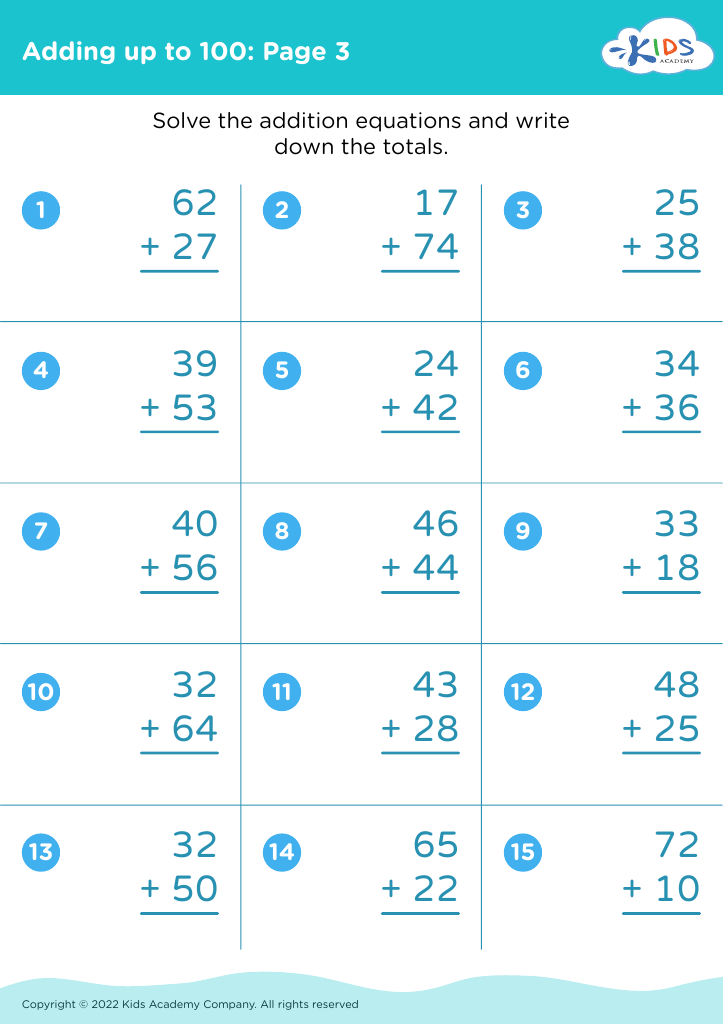
Adding up to 100: Page 3

Adding up to 100: Page 3

Adding up to 100: Page 3
Worksheet
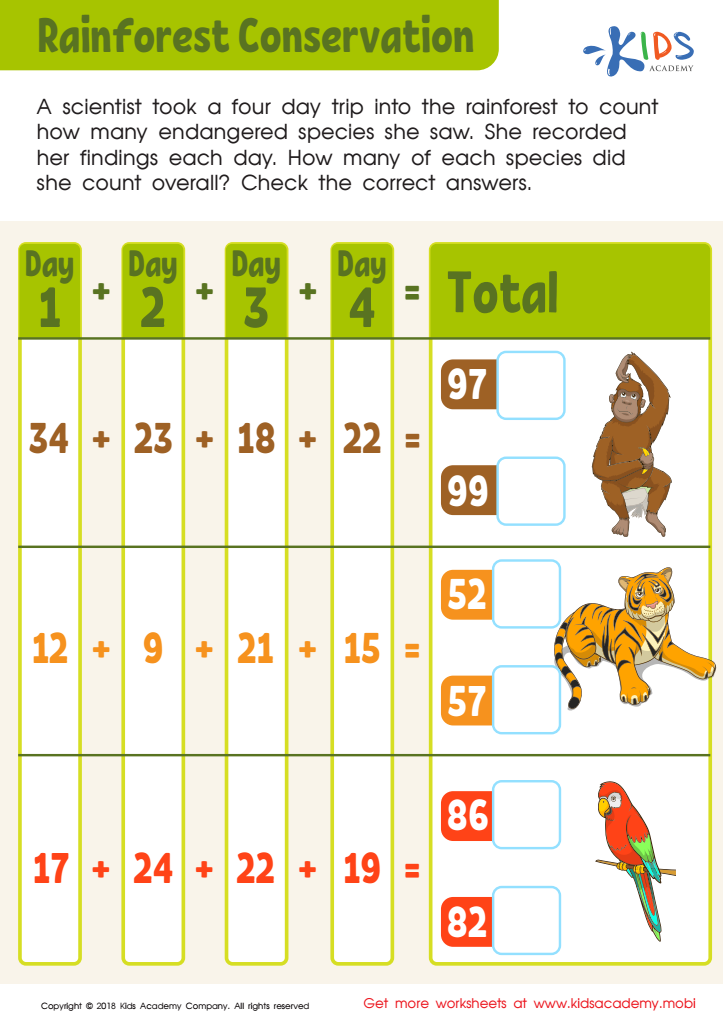
Rainforest Conservation Worksheet

Rainforest Conservation Worksheet

Explain to your child what a rainforest is and why it's important. A scientist took a four-day trip to count endangered species. Let your child count how many of each species were seen in total. Check the answers and help them understand.
Rainforest Conservation Worksheet
Worksheet
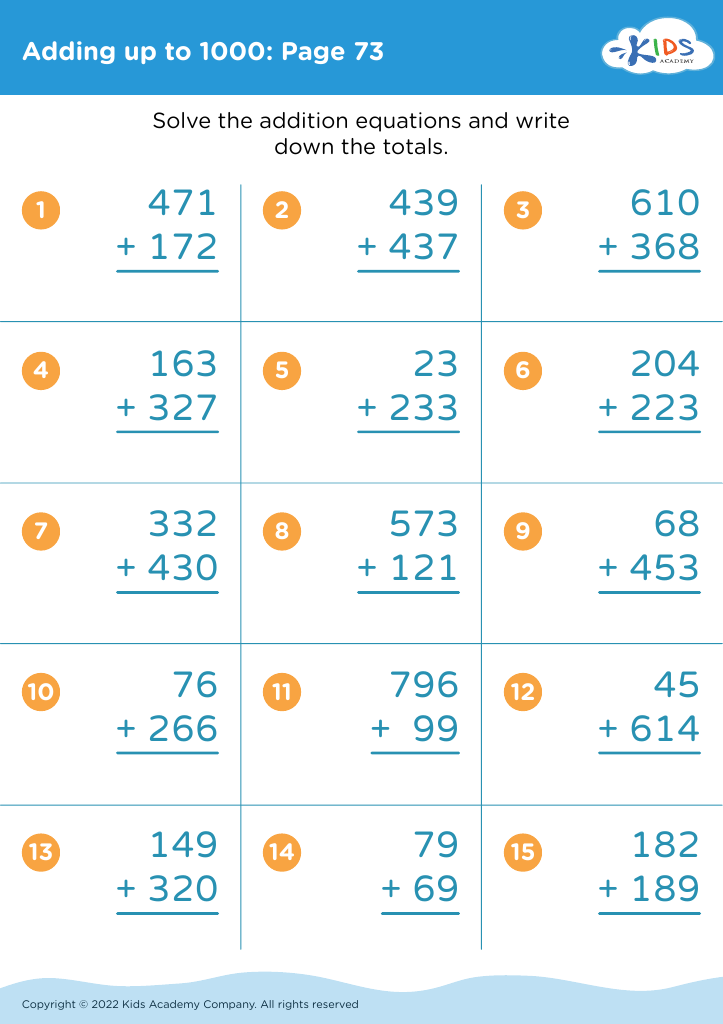
Adding up to 1000: Page 73

Adding up to 1000: Page 73

Adding up to 1000: Page 73
Worksheet
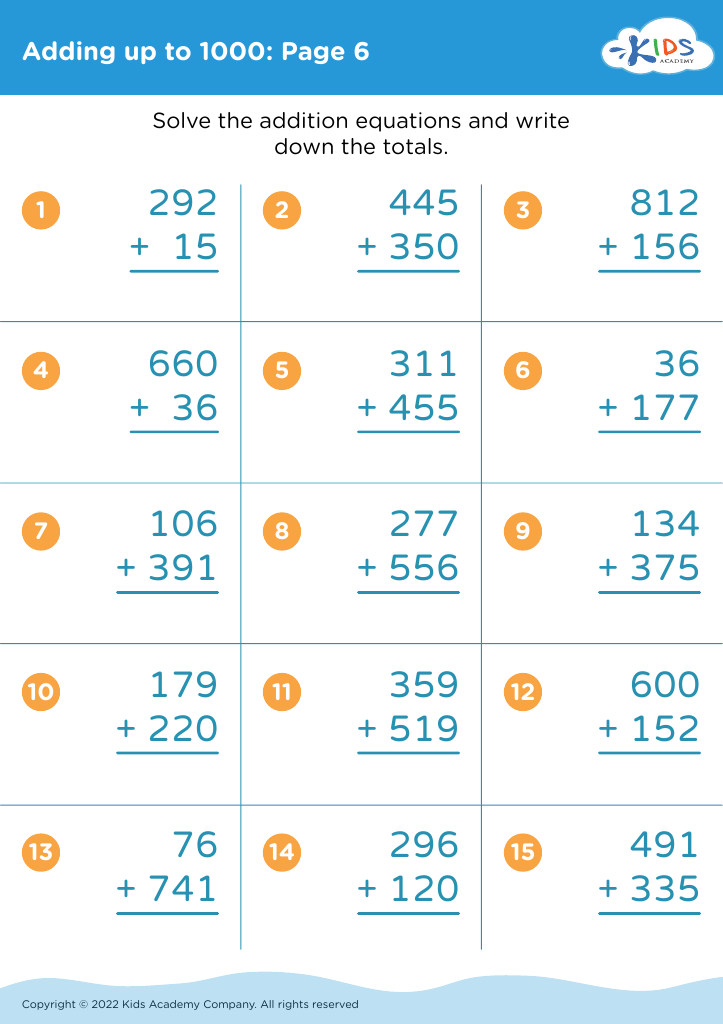
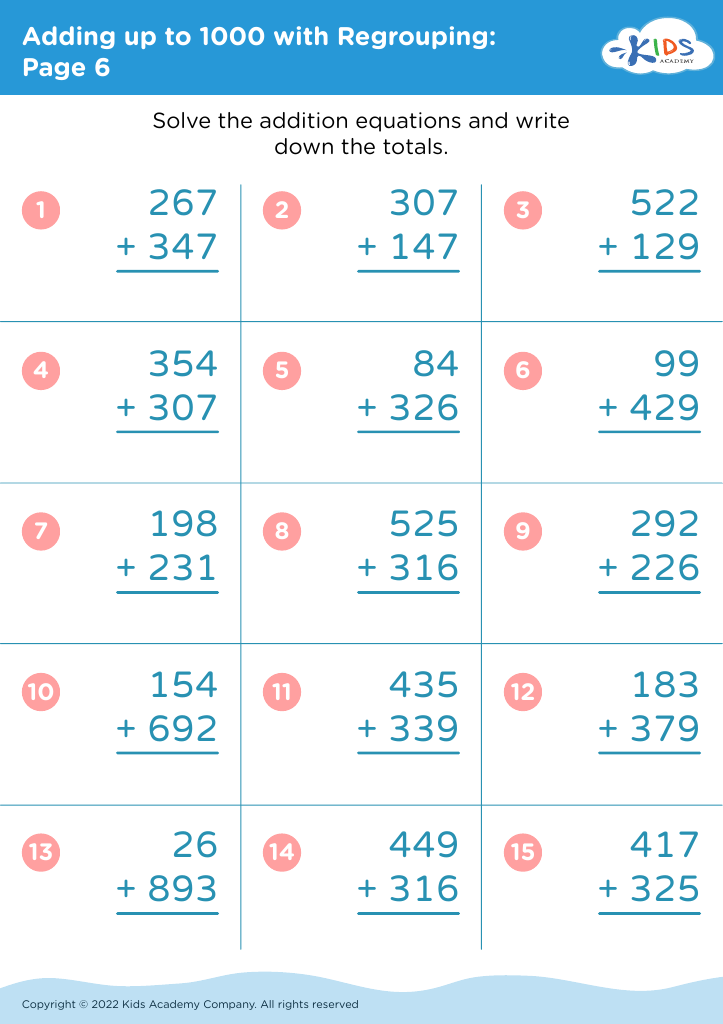
Adding up to 1000: Page 6

Adding up to 1000: Page 6

Adding up to 1000: Page 6
Worksheet
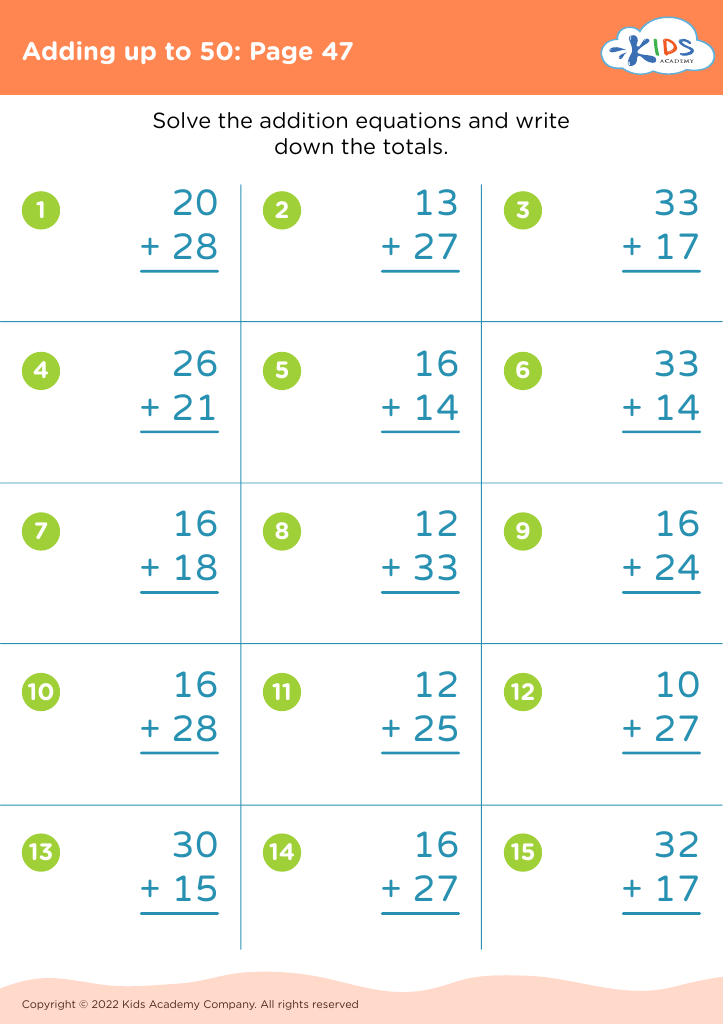
Adding up to 50: Page 47

Adding up to 50: Page 47

Adding up to 50: Page 47
Worksheet
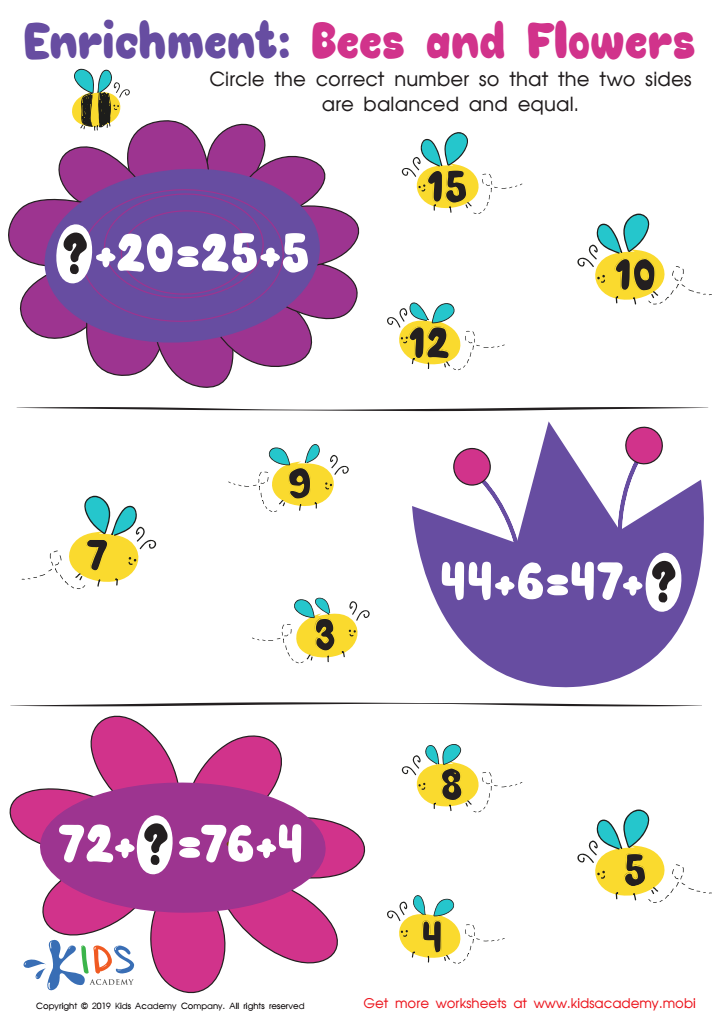
Enrichment: Bees and Flowers Worksheet
Enrichment: Bees and Flowers Worksheet
Help your kids become better at identifying bees and math with this worksheet! It features pictures of bees for your child to point out, as well as numbers to add up and circle to make the two sides equal. Let them having fun learning and watching bees flit around the flowers.
Enrichment: Bees and Flowers Worksheet
Worksheet
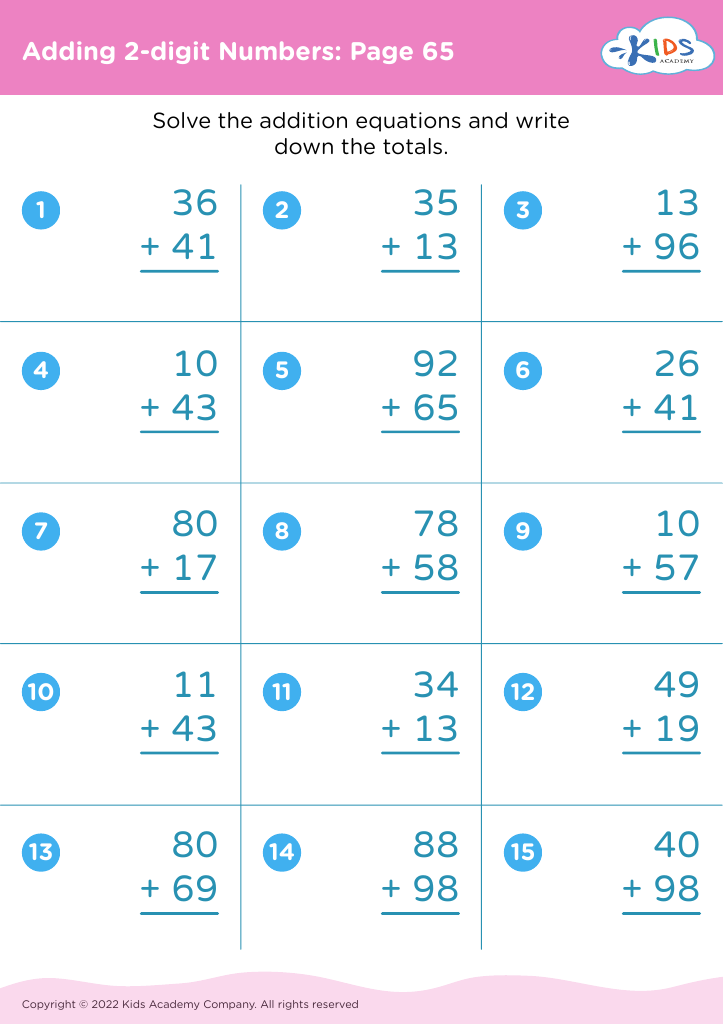
Adding 2-digit Numbers: Page 65

Adding 2-digit Numbers: Page 65

Adding 2-digit Numbers: Page 65
Worksheet
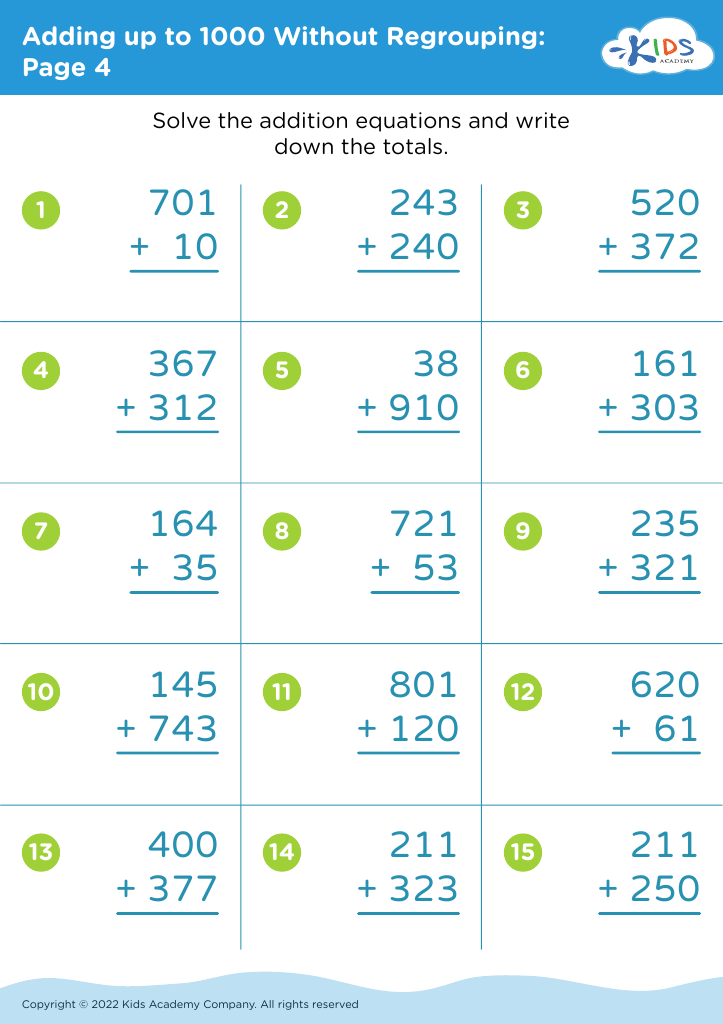
Adding up to 1000 Without Regrouping: Page 4
Worksheet
Animal Sanctuary Worksheet

Animal Sanctuary Worksheet

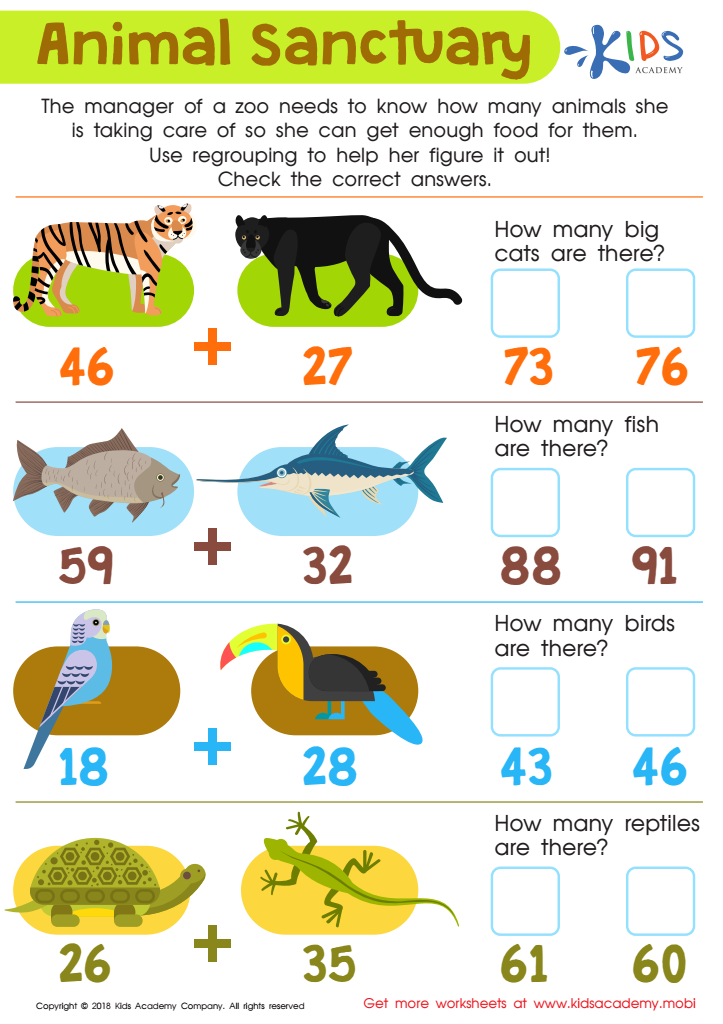
Do your kids love visiting the zoo? Ask which animals they remember & which ones they liked the most. The manager needs help to get enough food for all the animals. Help your child use regrouping to figure out how many animals there are. And ask them to check the answers.
Animal Sanctuary Worksheet
Worksheet
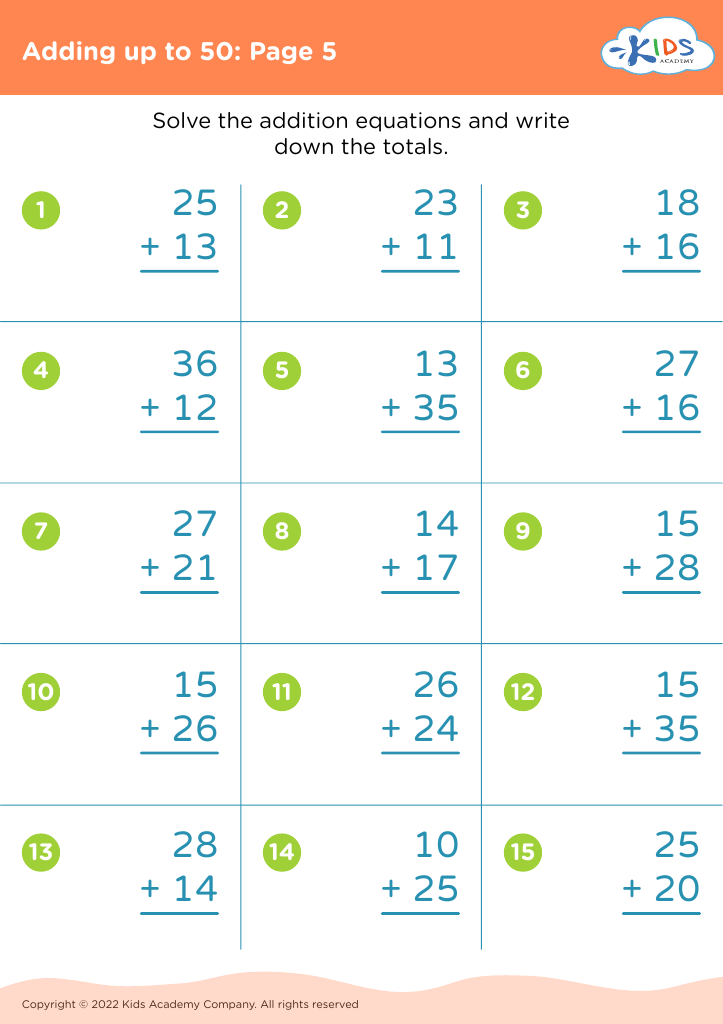
Adding up to 50: Page 5

Adding up to 50: Page 5

Adding up to 50: Page 5
Worksheet


Vocabulary expansion, along with foundational math skills like addition and subtraction, is crucial for children aged 3-8, influencing their academic and personal development. At this stage, children are rapidly acquiring language skills, which helps them express thoughts, understand instructions, and communicate clearly. A robust vocabulary enables children to engage more deeply with their surroundings, fostering curiosity and a love for learning.

Integrating vocabulary development with mathematical concepts is equally important. When children learn terms related to addition and subtraction, such as "total," "more," "less," and "combine," they begin to see math as a language that describes relationships between quantities. This understanding builds both their vocabulary and early numeracy skills, making it easier for them to tackle more complex mathematical ideas later on.

Teachers and parents should recognize that a strong foundation in both language and math sets the stage for future academic success. By promoting vocabulary growth alongside arithmetic skills, they enhance children's critical thinking and problem-solving abilities. Furthermore, children with advanced vocabulary and math skills gain confidence in their abilities, which encourages a positive attitude toward learning. Thus, focusing on vocabulary enhancement and math skills during these formative years will yield long-term benefits for children's overall educational journeys.