Basic Addition Addition Worksheets for Ages 3-8
16 filtered results
-
From - To
Welcome to our Basic Addition Worksheets for Ages 3-8! These engaging and colorful printables are designed to introduce young learners to the fundamentals of addition in a fun and interactive way. Ideal for preschool and early grades, our worksheets incorporate various themes and visuals to capture children's interest while developing their math skills. Each worksheet gradually increases in difficulty, allowing kids to build confidence as they learn to add numbers together. Perfect for home or classroom use, these resources promote essential early math development. Download our Basic Addition worksheets today and watch your child enjoy the journey of learning math!
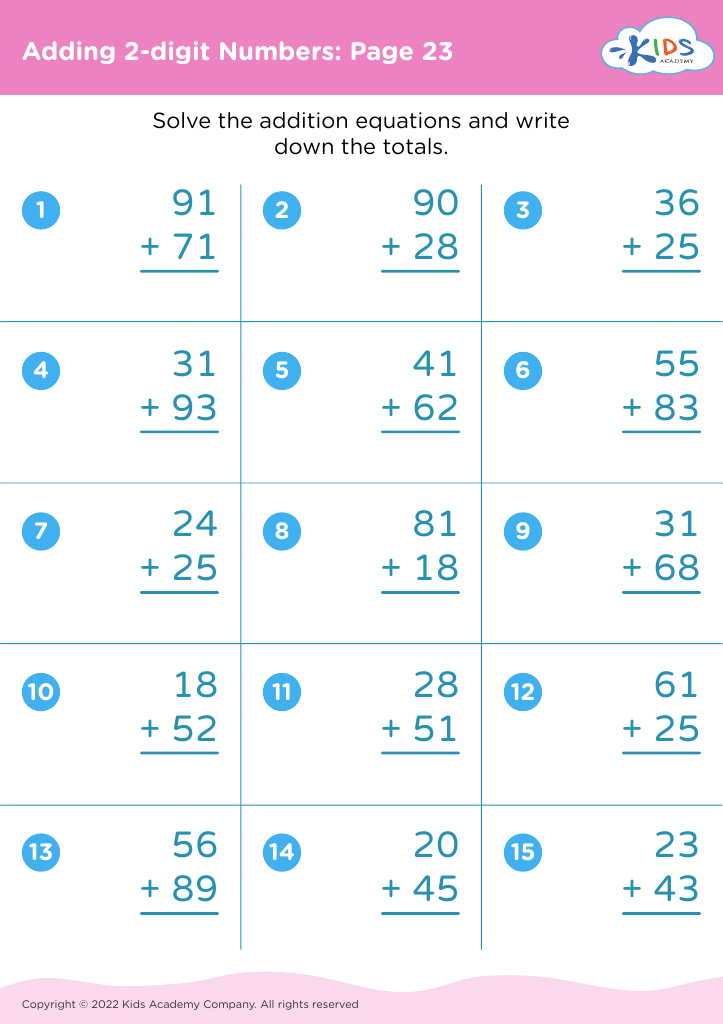
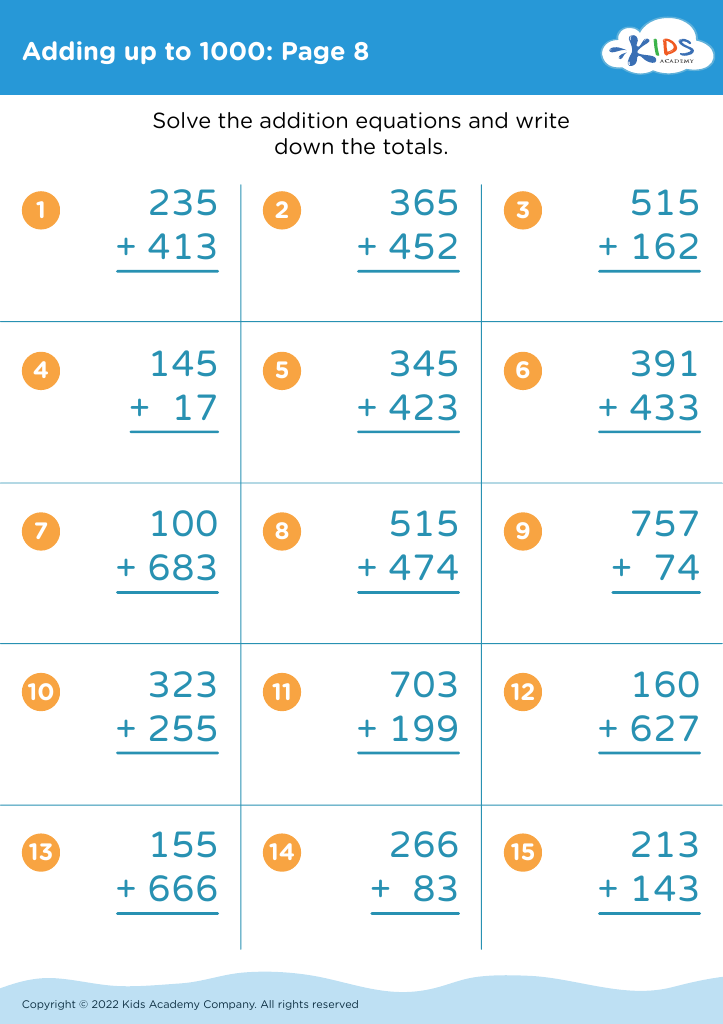
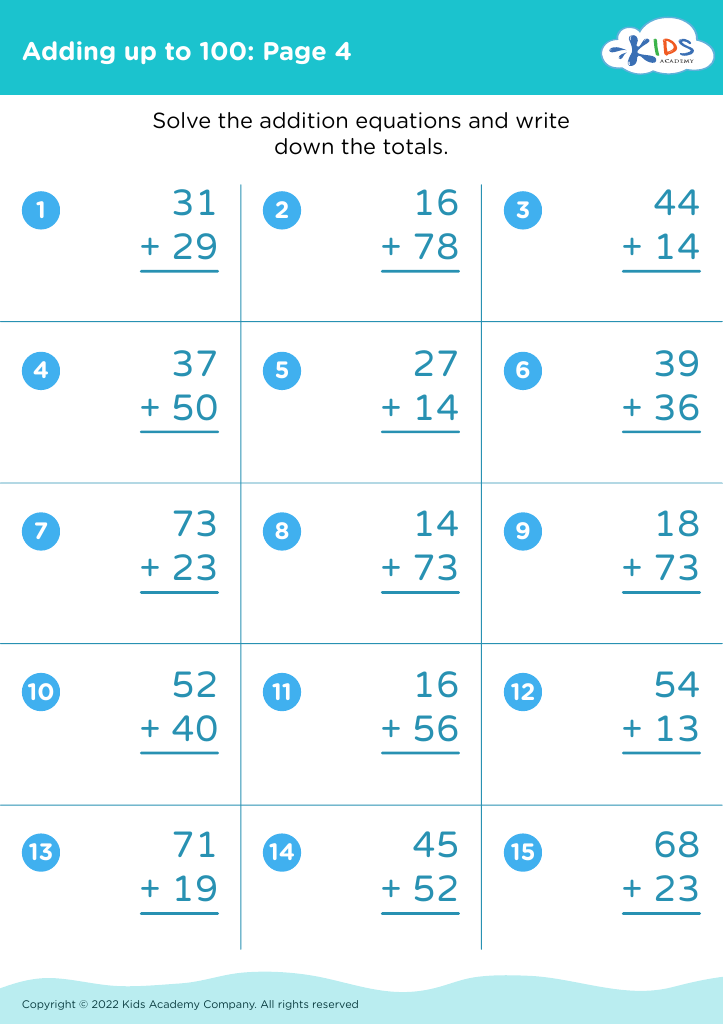
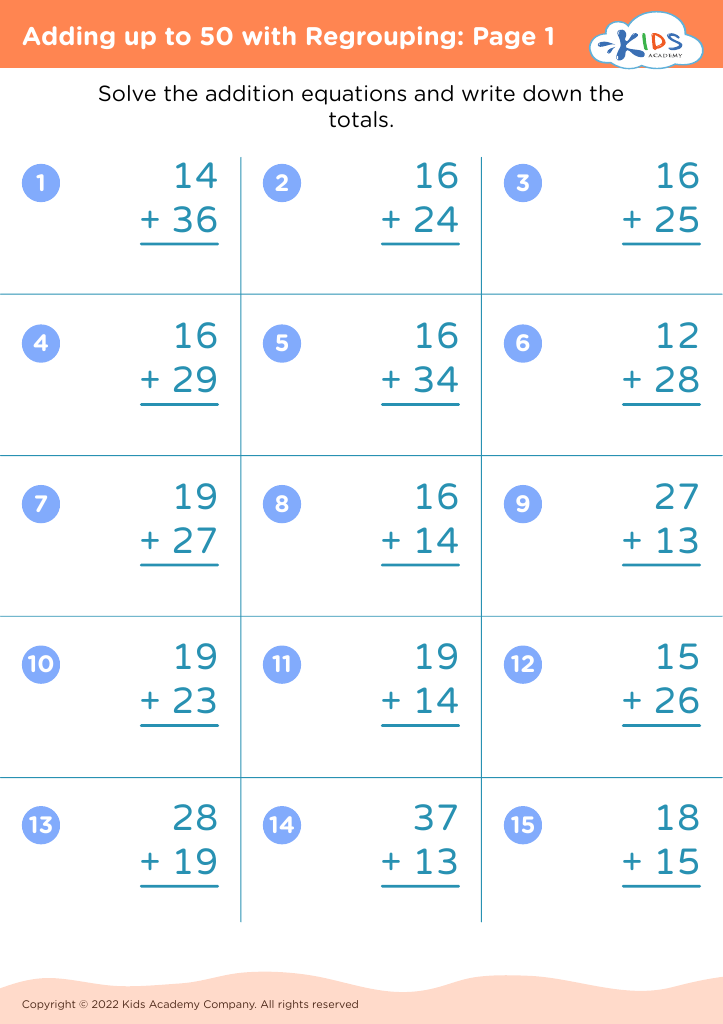
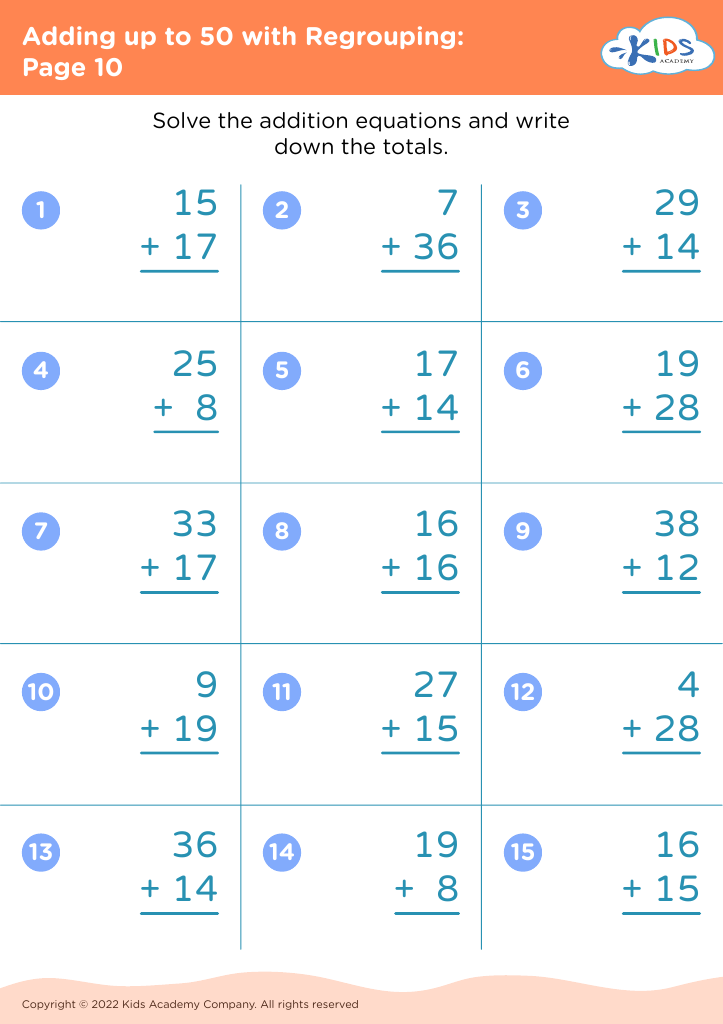
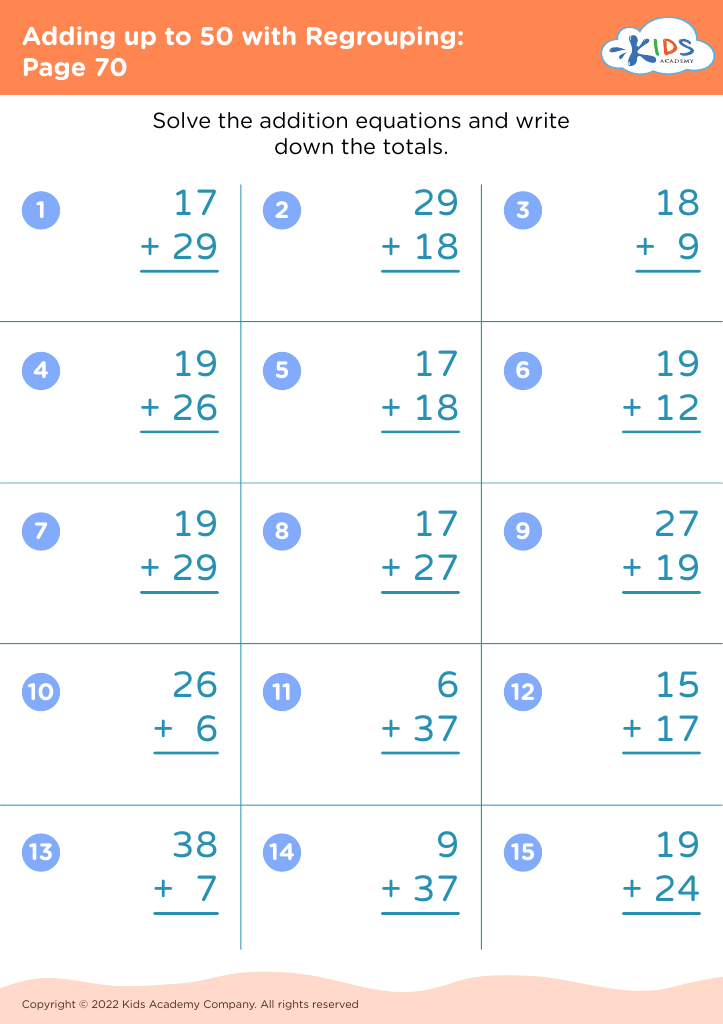
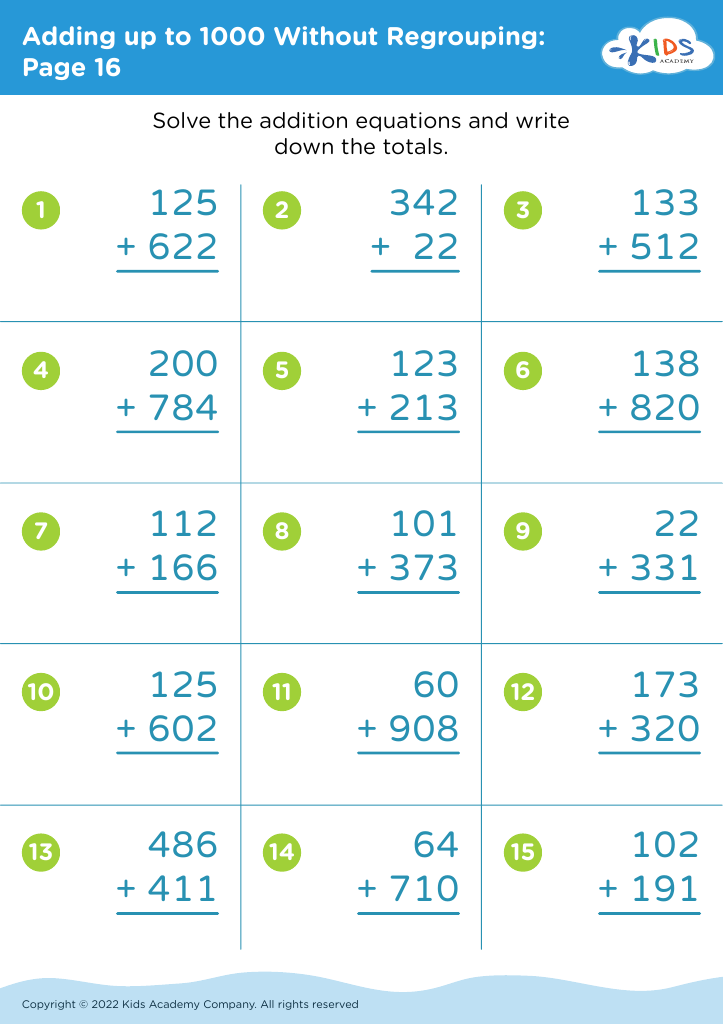
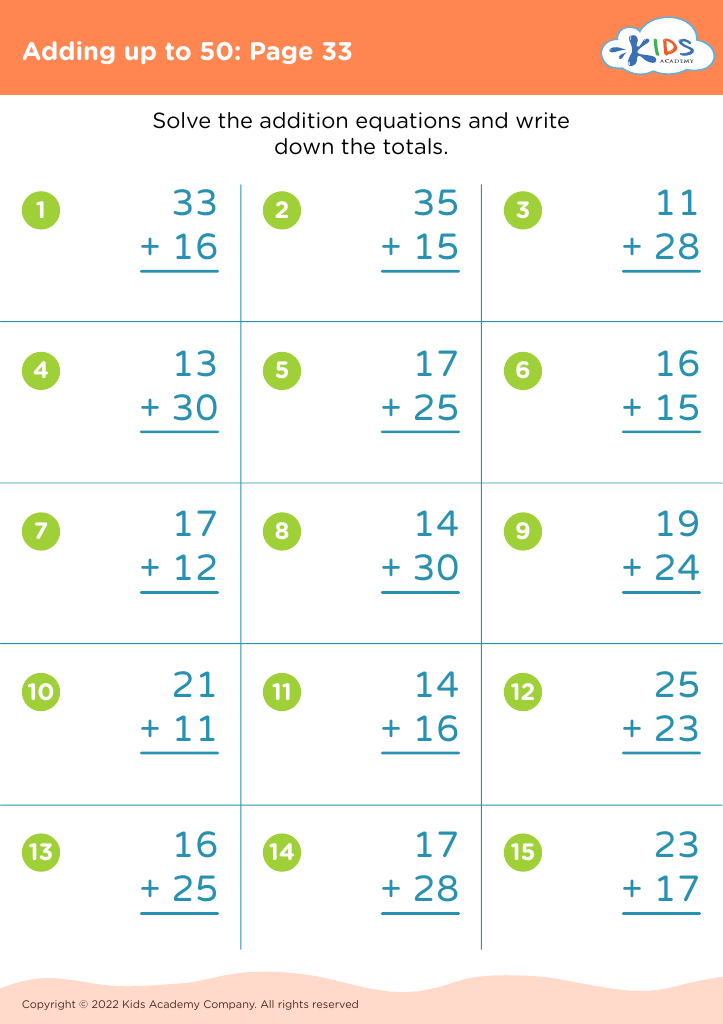
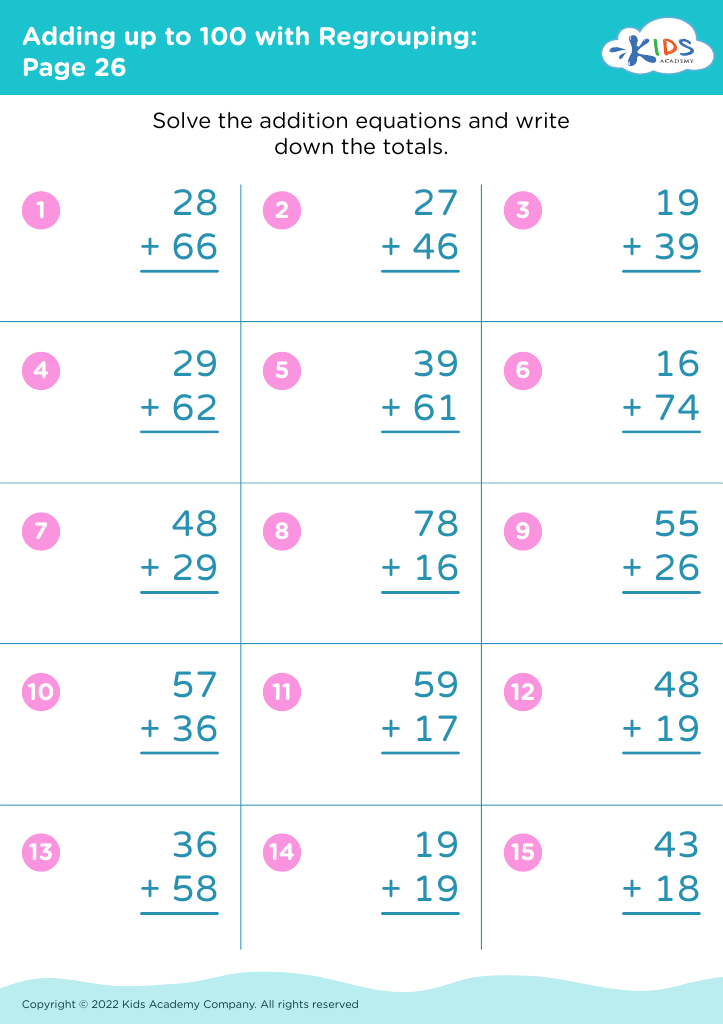
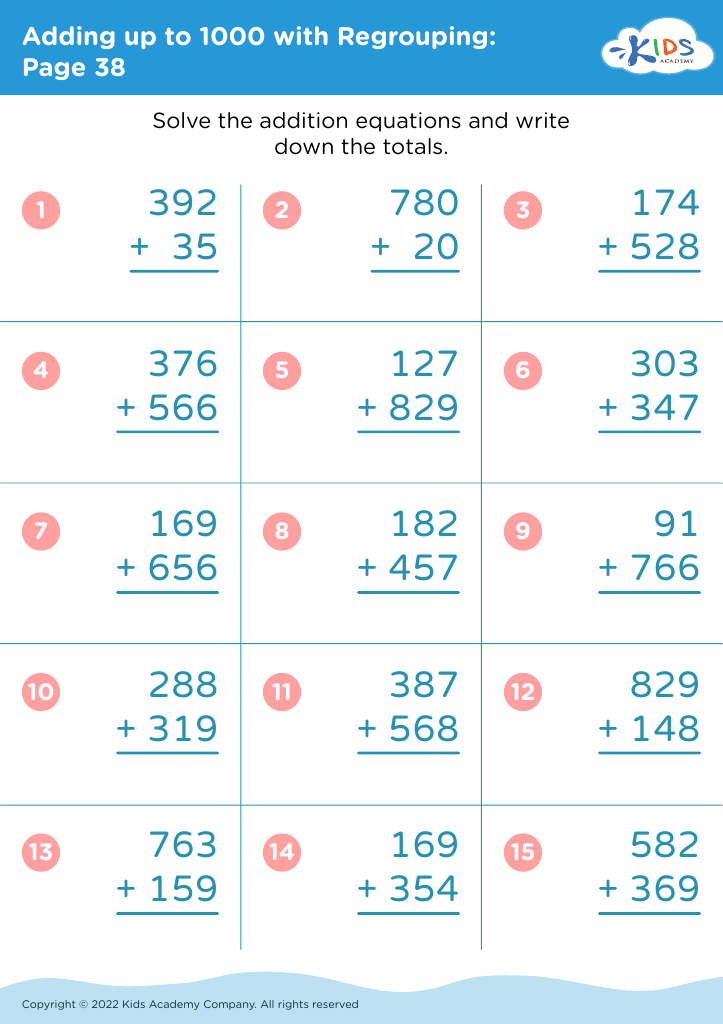
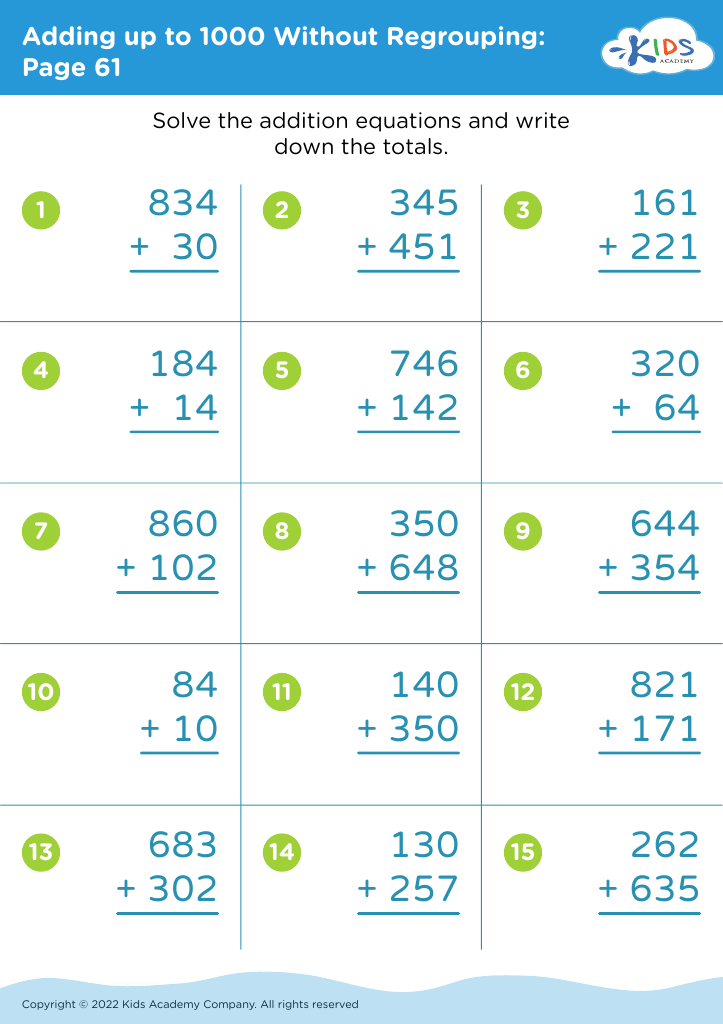
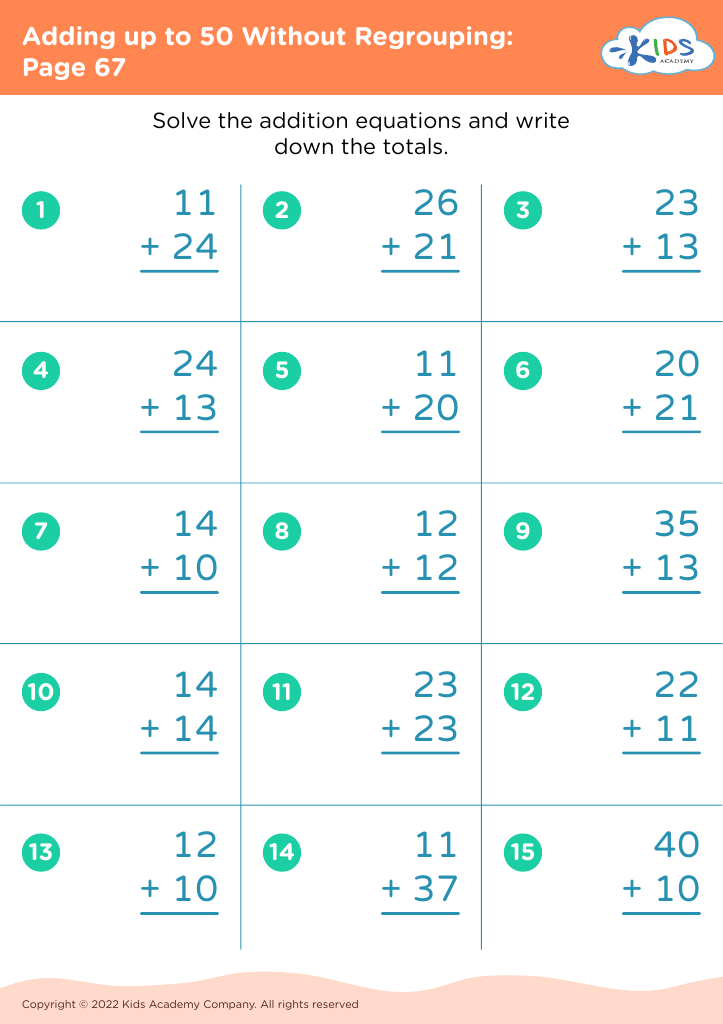
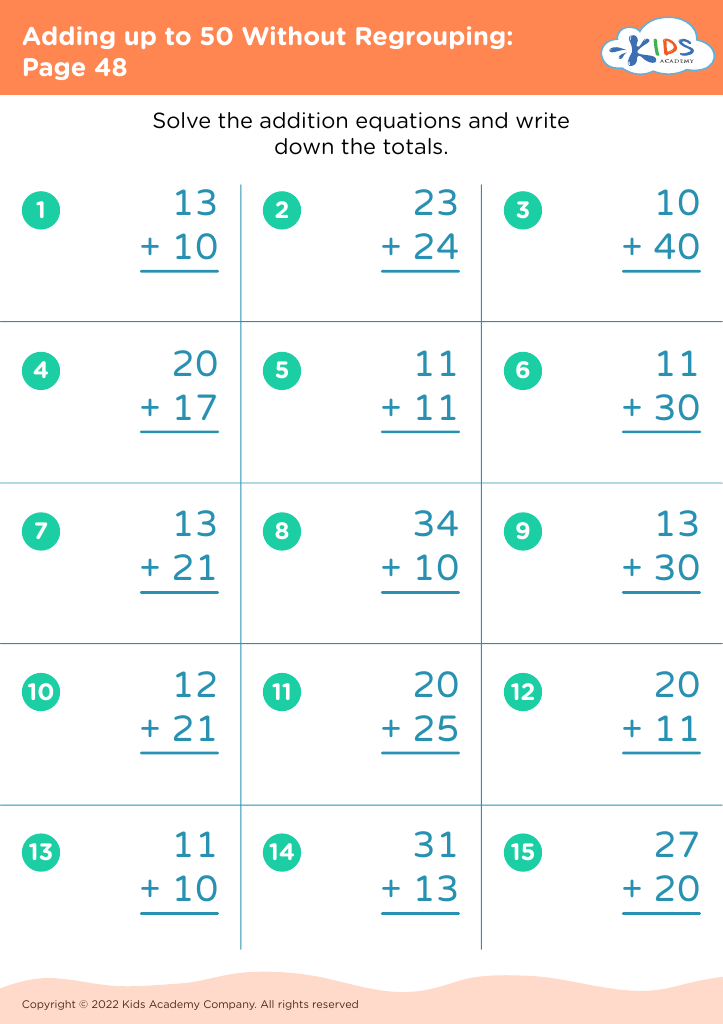
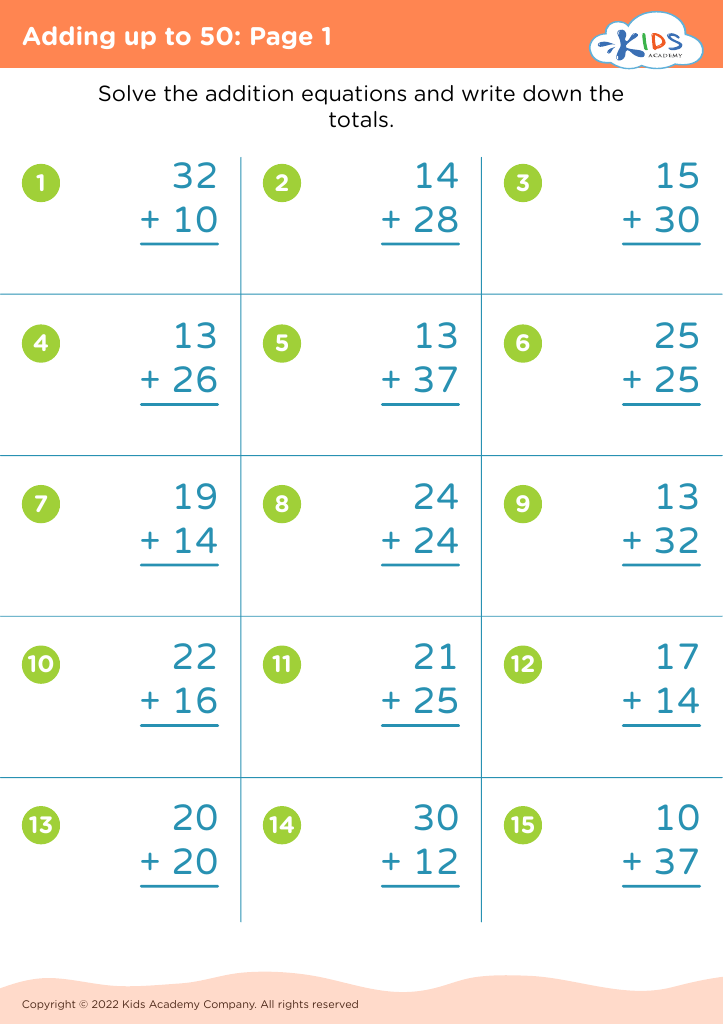
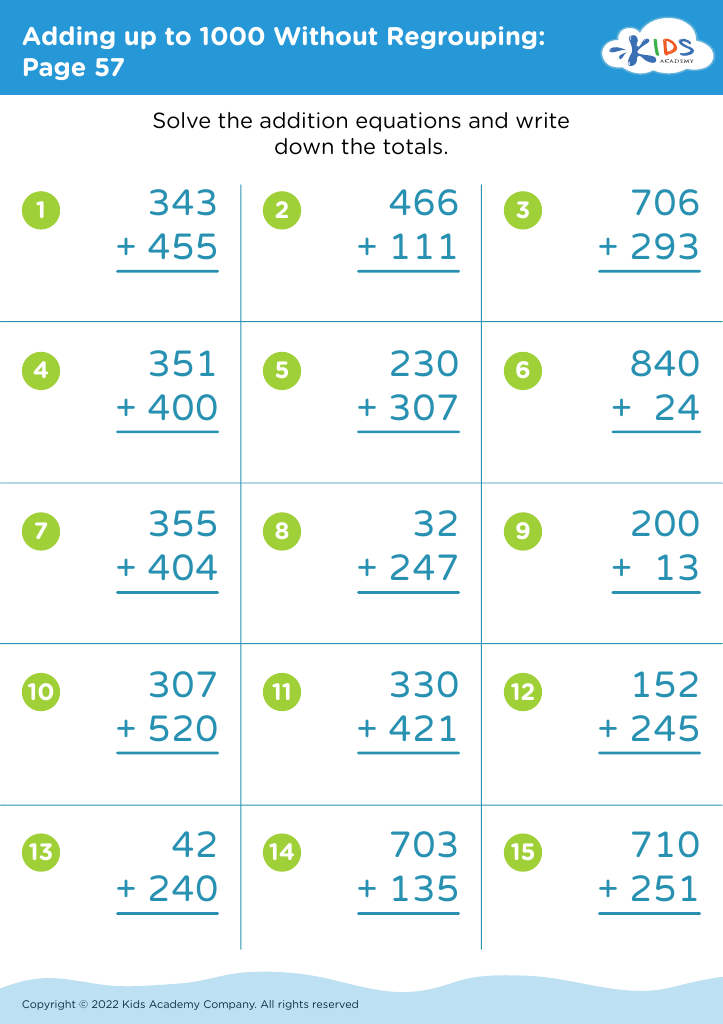
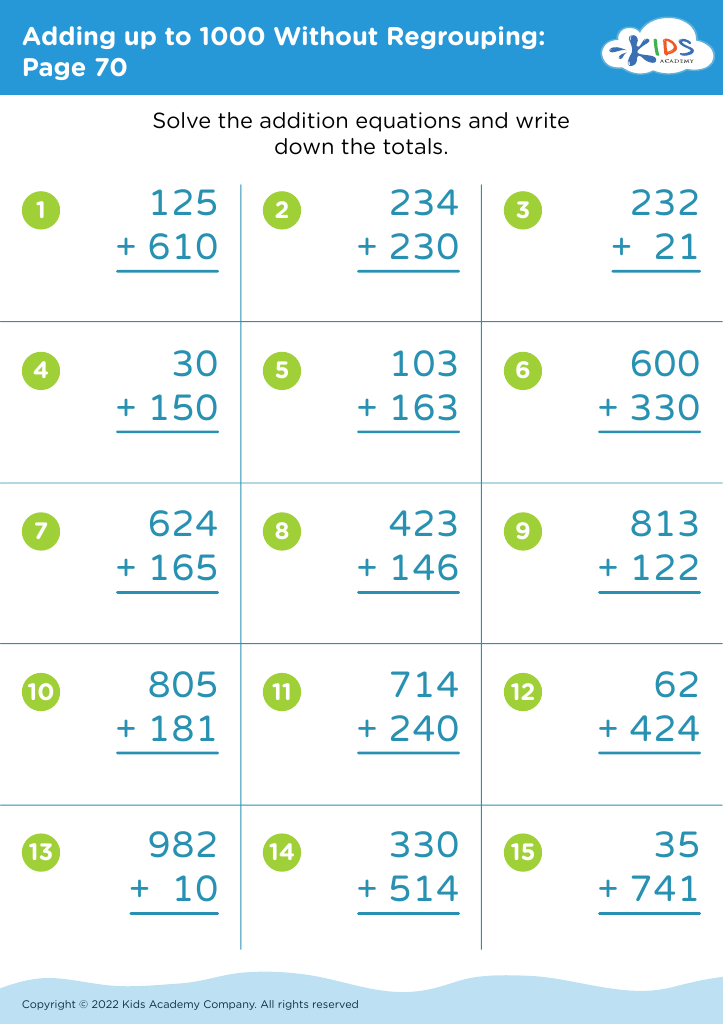








Basic addition skills for ages 3-8 are crucial for several reasons, making it essential for parents and teachers to prioritize this foundational learning. First, mastering addition supports broader mathematical understanding, which is vital for daily life, from handling money to planning activities. Early exposure to addition cultivates number sense, helping children recognize patterns and relationships between numbers.
Moreover, developing addition skills boosts cognitive and critical thinking abilities, enhancing problem-solving skills. Engaging children in addition through games and activities can transform learning into a fun experience, fostering positive attitudes toward math in the long term.
Additionally, acquiring addition skills at an early age can promote confidence in children as they tackle more complex mathematical concepts later in school. It also encourages perseverance during challenging tasks, teaching them that with practice, they can improve and succeed.
Finally, collaboration between parents and teachers in reinforcing addition skills ensures consistency in learning, helping children feel supported both at home and school. This cooperative approach contributes to a well-rounded education, laying a solid groundwork for future academic success. Investing time and effort into teaching basic addition can significantly impact a child’s overall confidence and competence in mathematics.








