Basic Arithmetic Addition Worksheets for Ages 3-8
39 filtered results
-
From - To
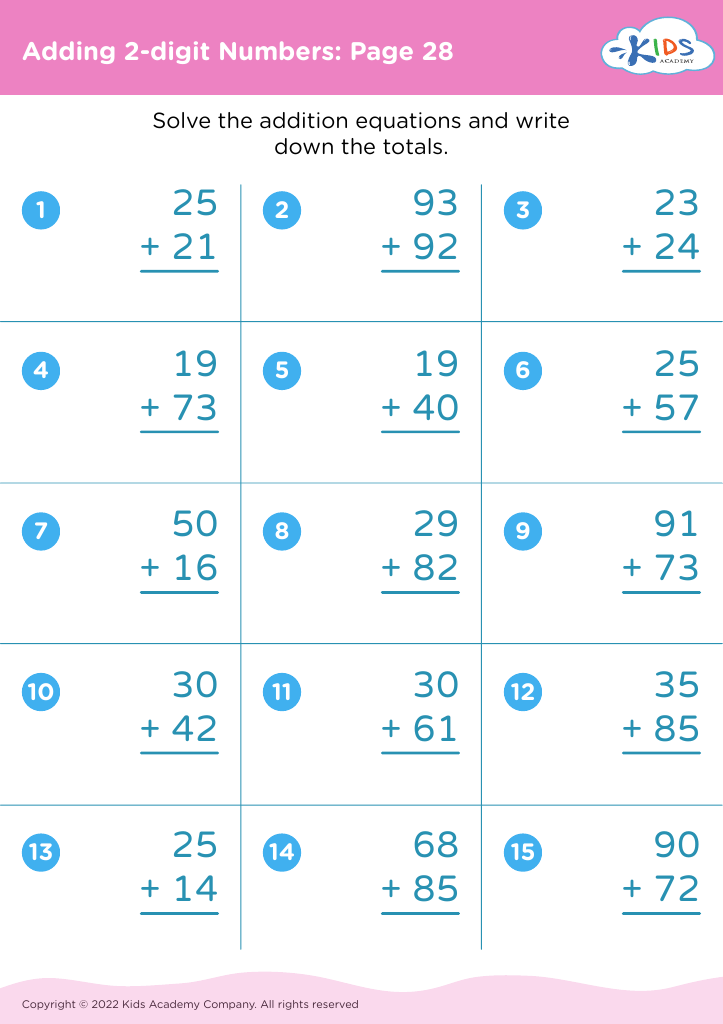
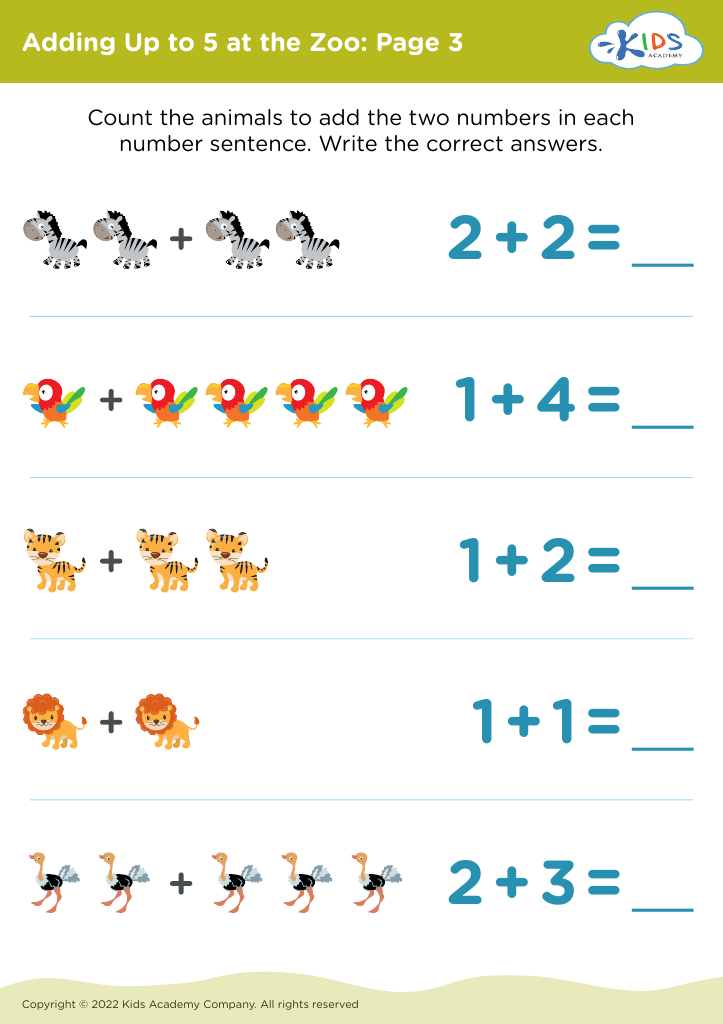
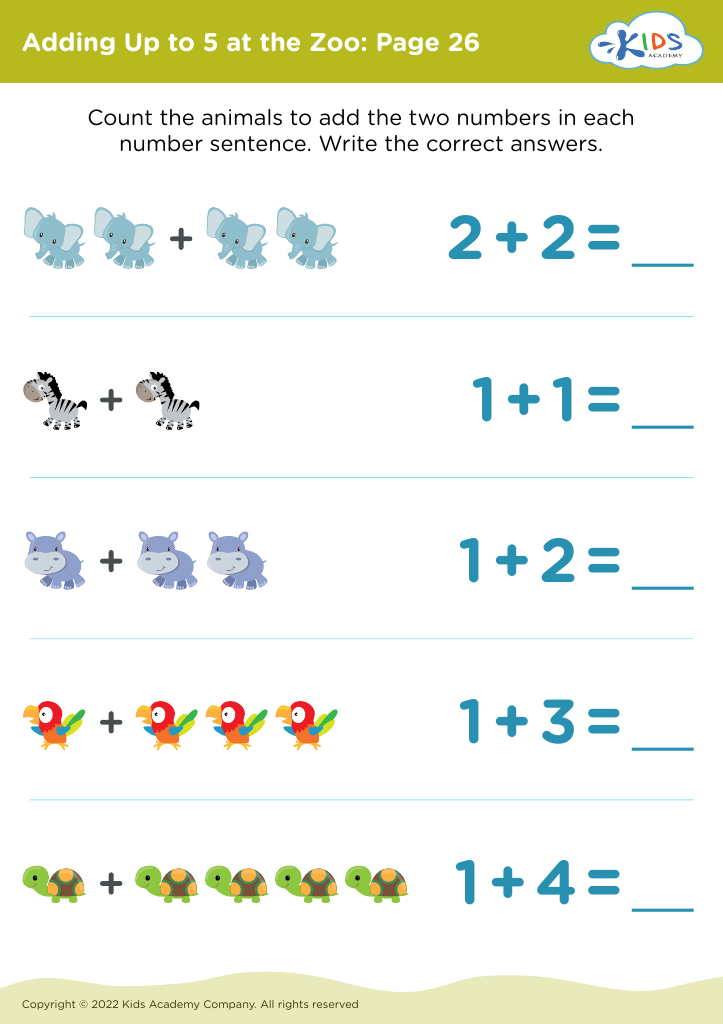
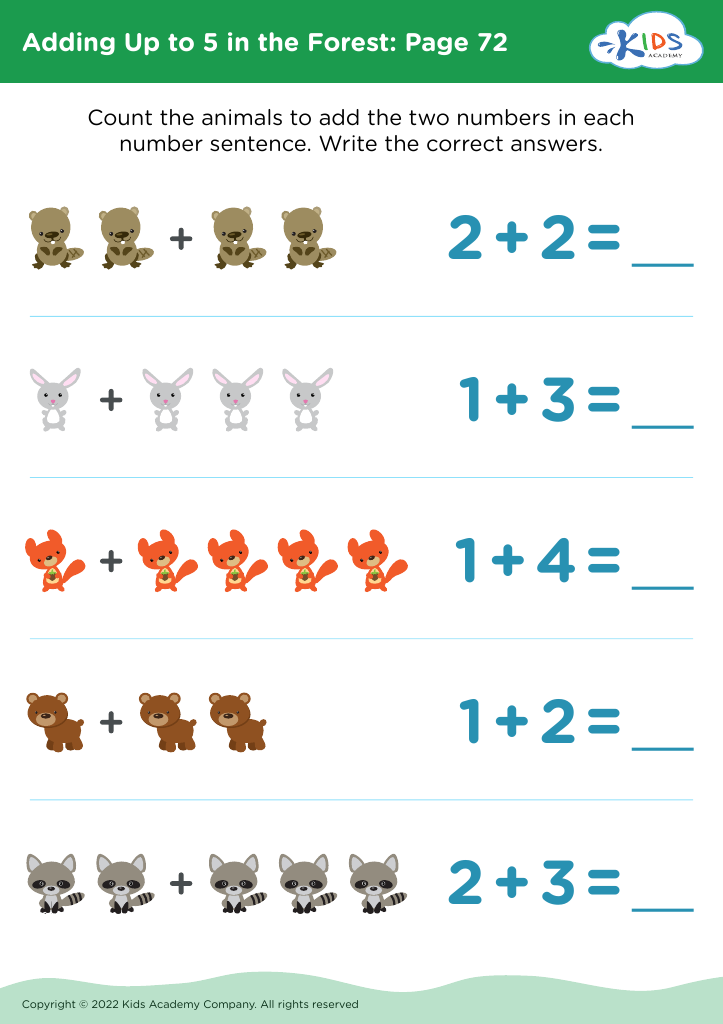
Discover our engaging Basic Arithmetic Addition Worksheets designed specifically for children aged 3-8. Perfect for young learners, these worksheets provide a fun and interactive way to introduce basic addition concepts. Each activity helps build foundational math skills through colorful illustrations, practical exercises, and step-by-step guidance. Ideal for classrooms or at-home learning, our worksheets cater to different learning styles, ensuring that every child can grasp addition confidently. With varying levels of difficulty, your child will progress at their own pace, making math enjoyable and accessible. Start nurturing your child's mathematical abilities and boost their confidence in addition today!
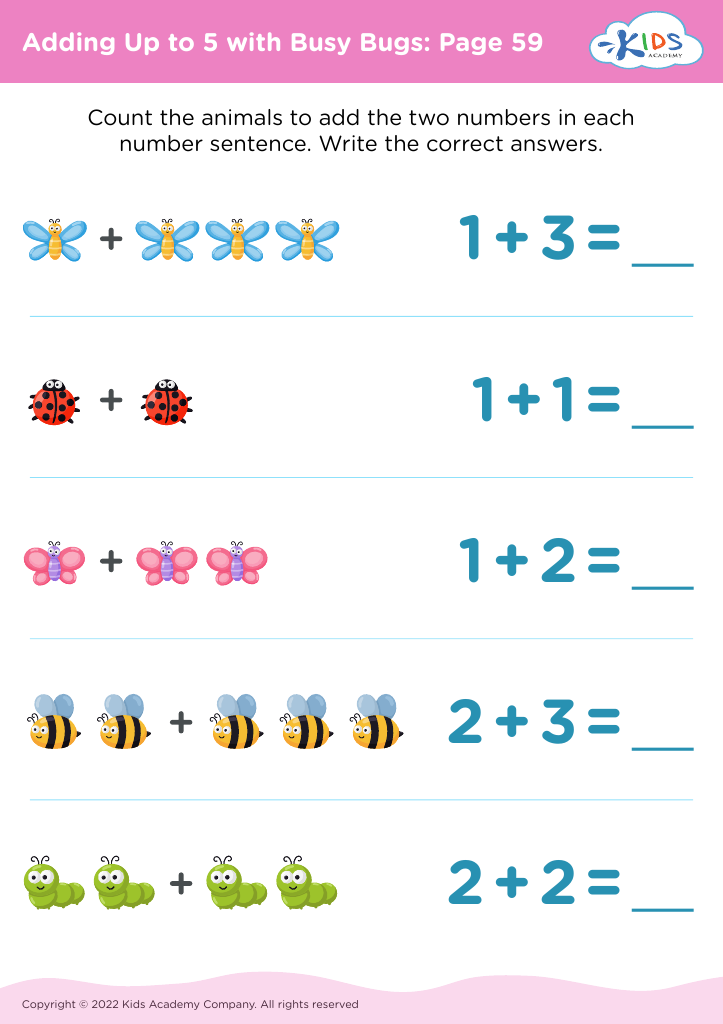
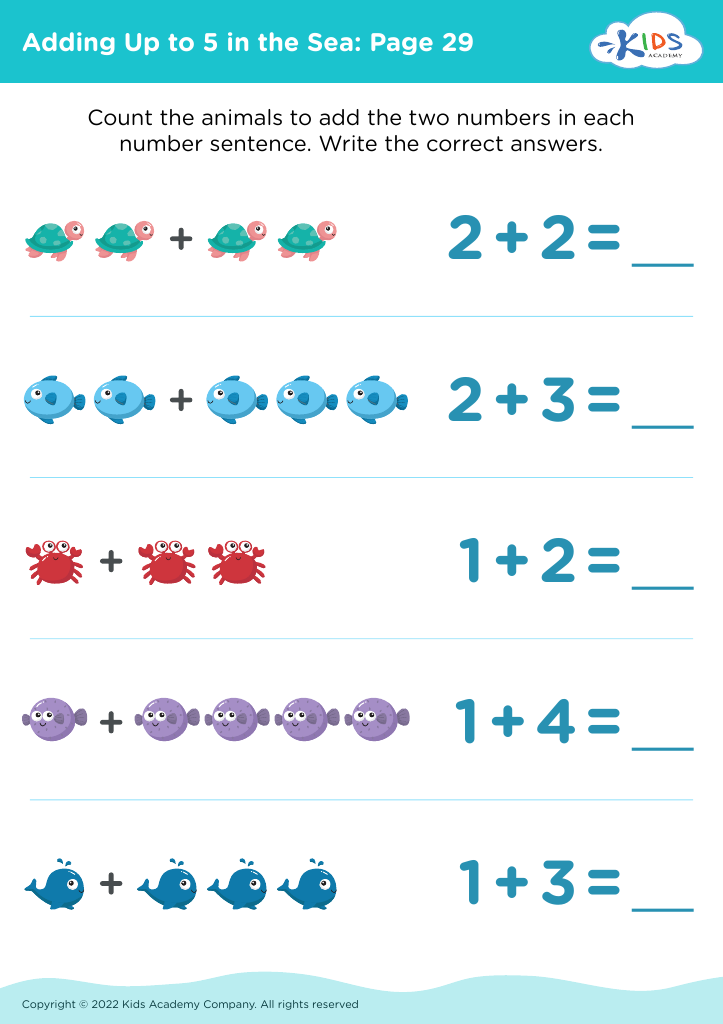
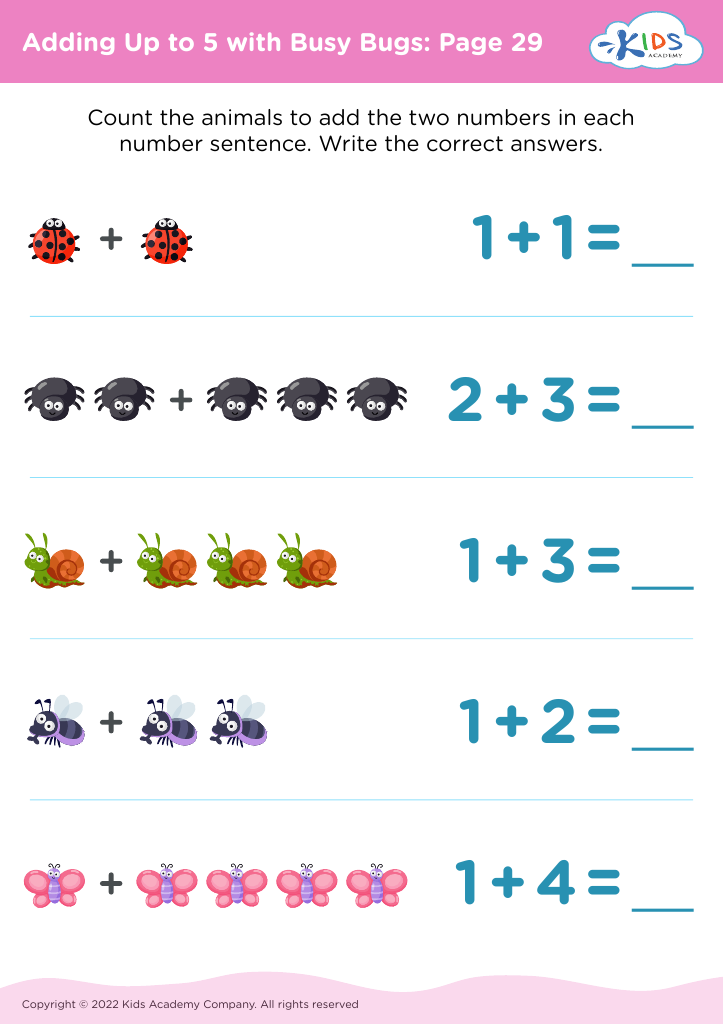
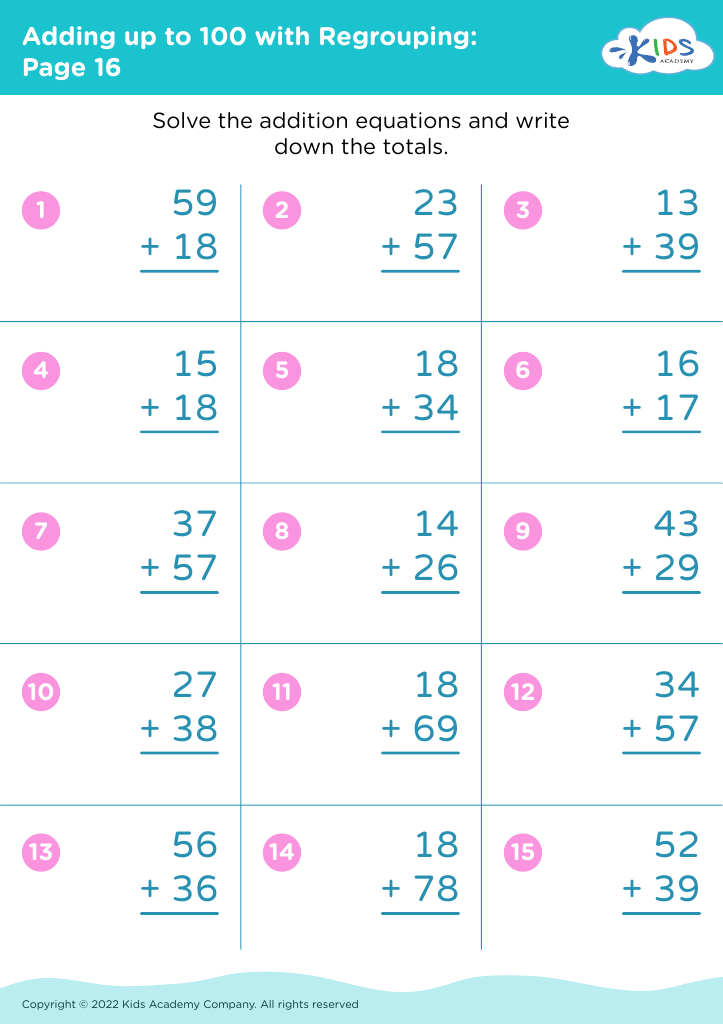
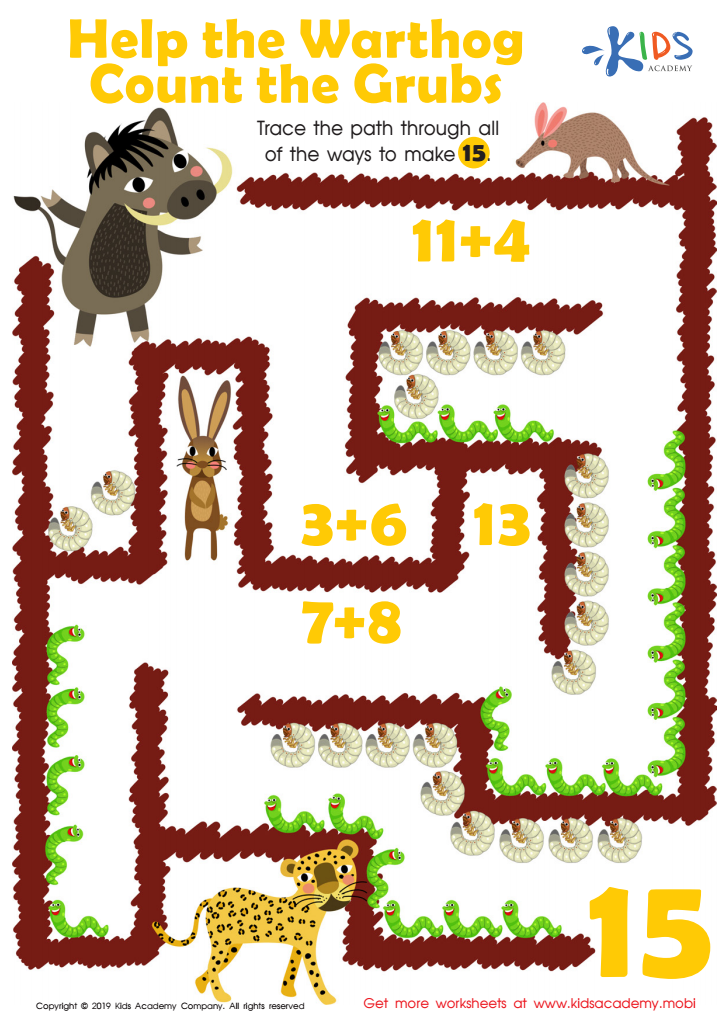
Help the Warthog Count the Grubs Worksheet
 Assign to My Students
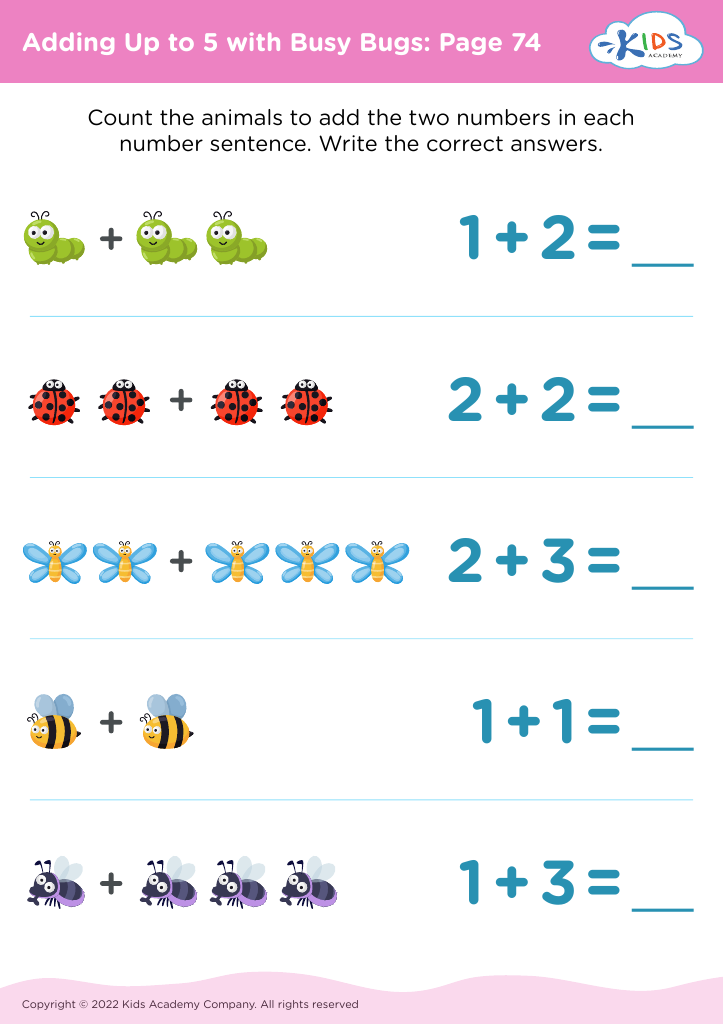
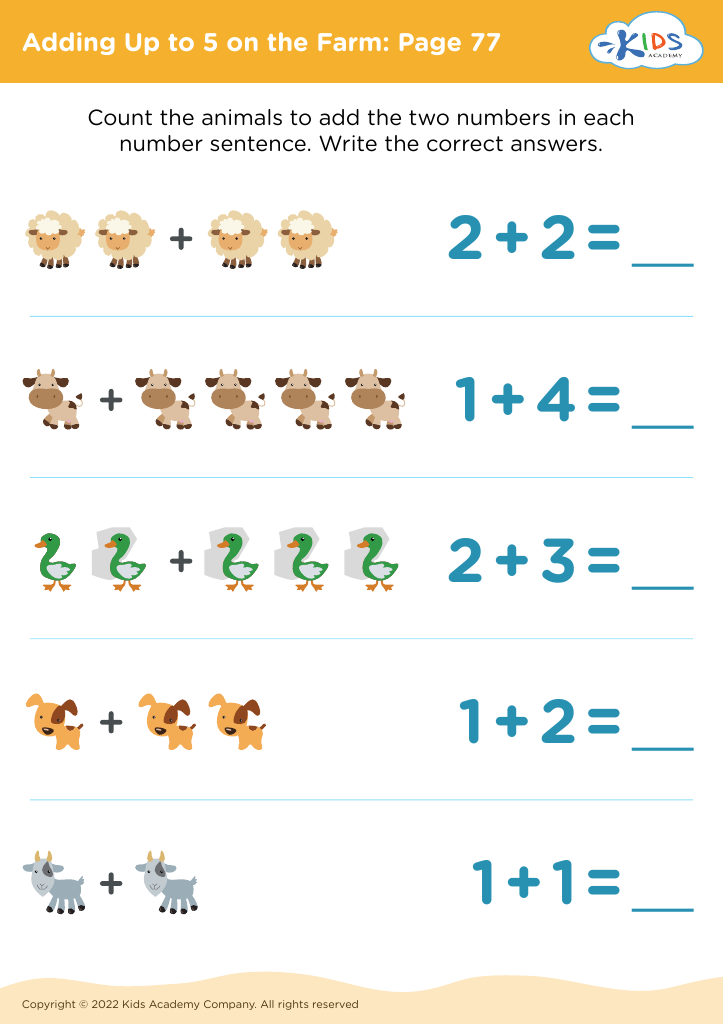
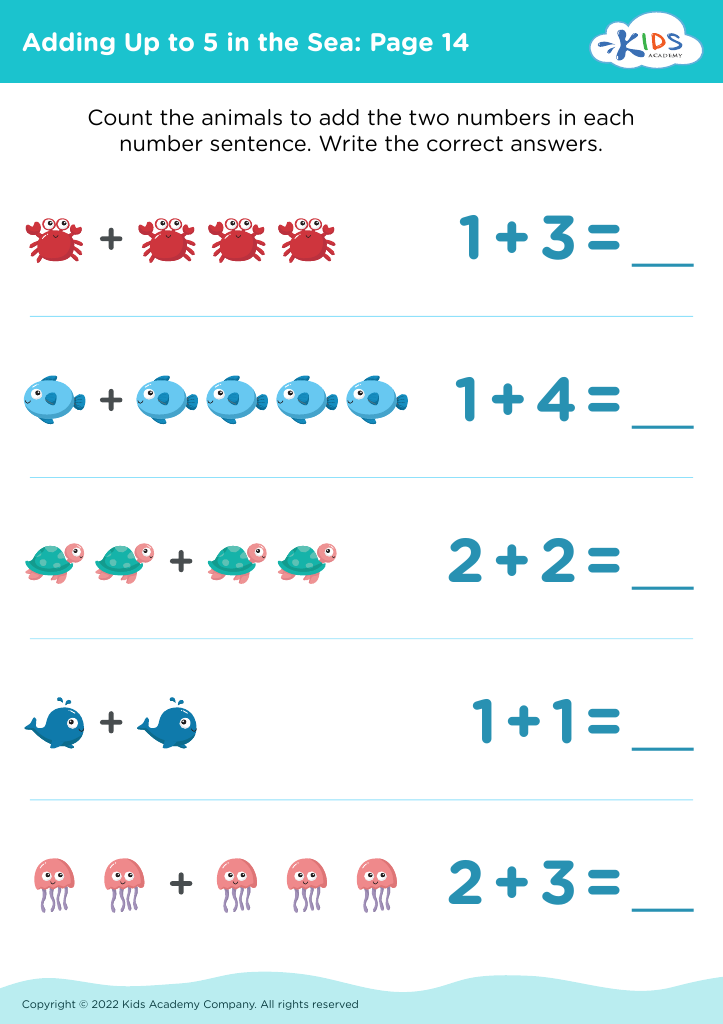
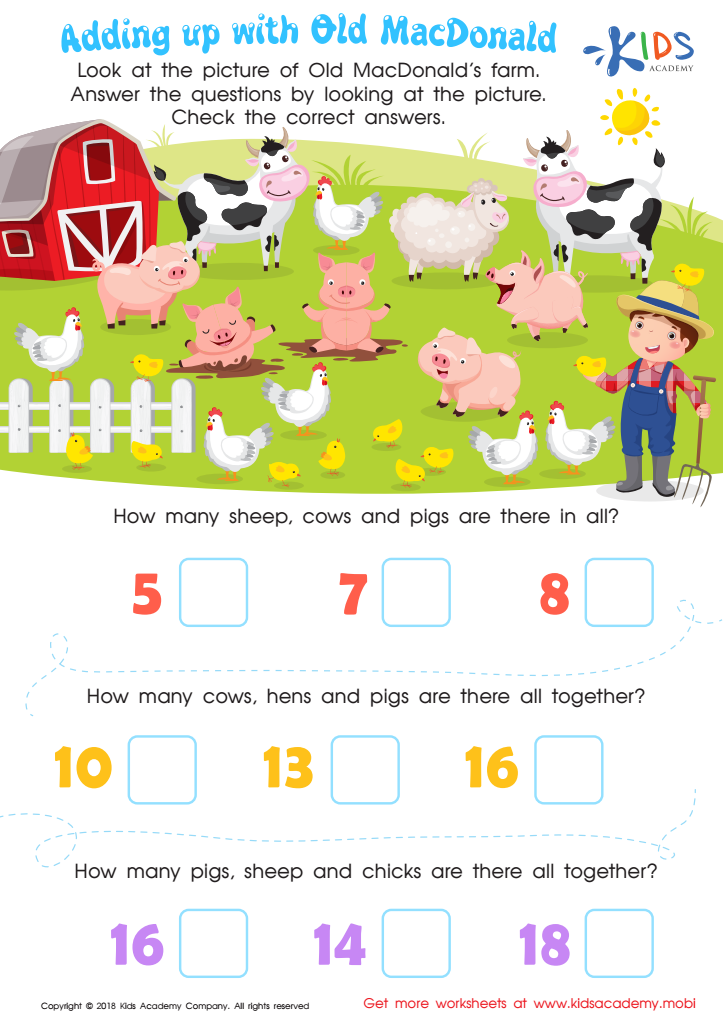
Adding Up with Old MacDonald Worksheet
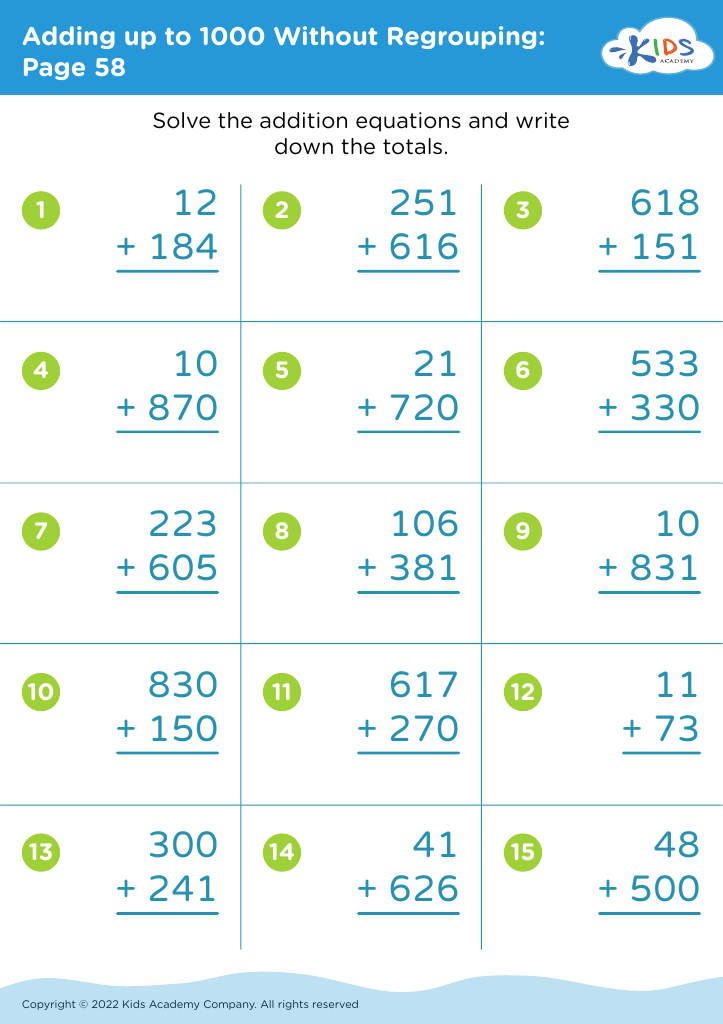
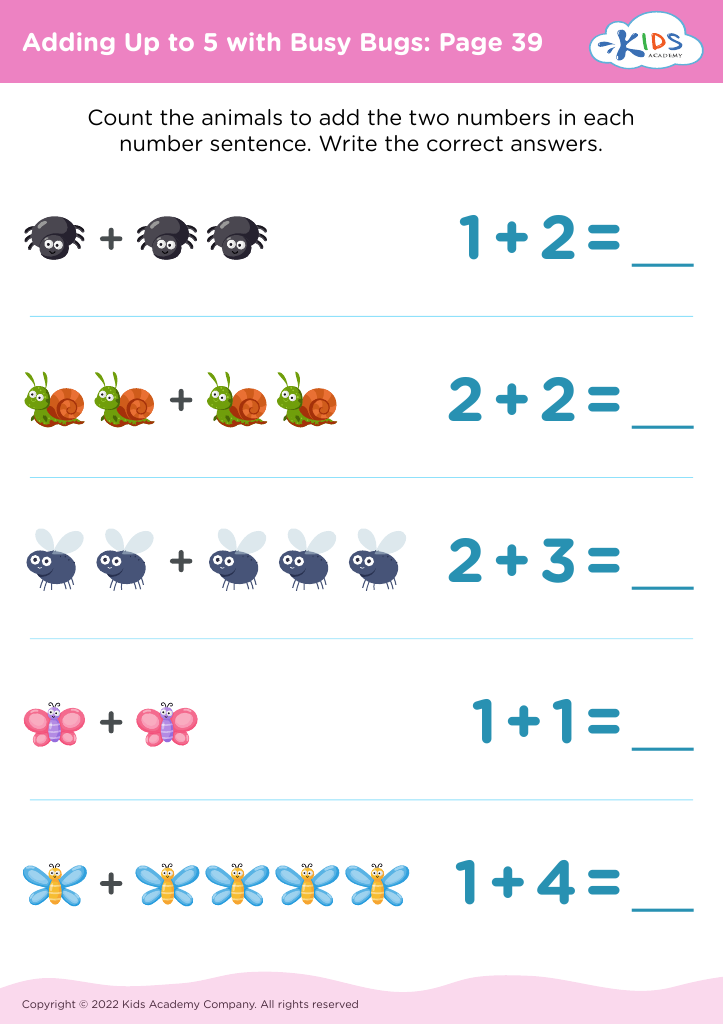
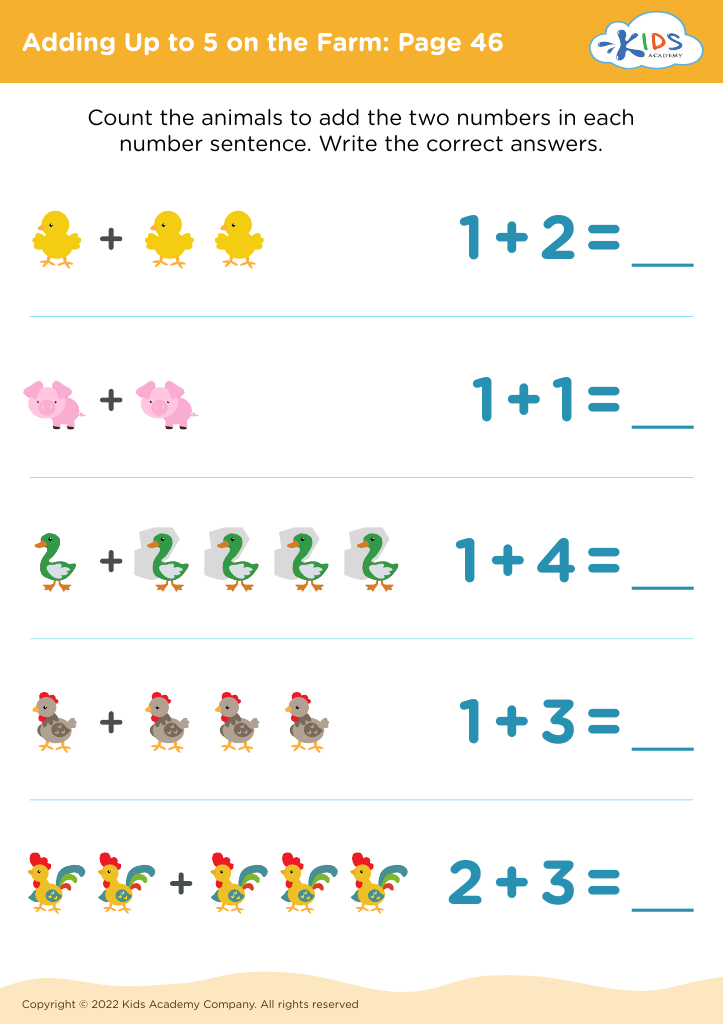
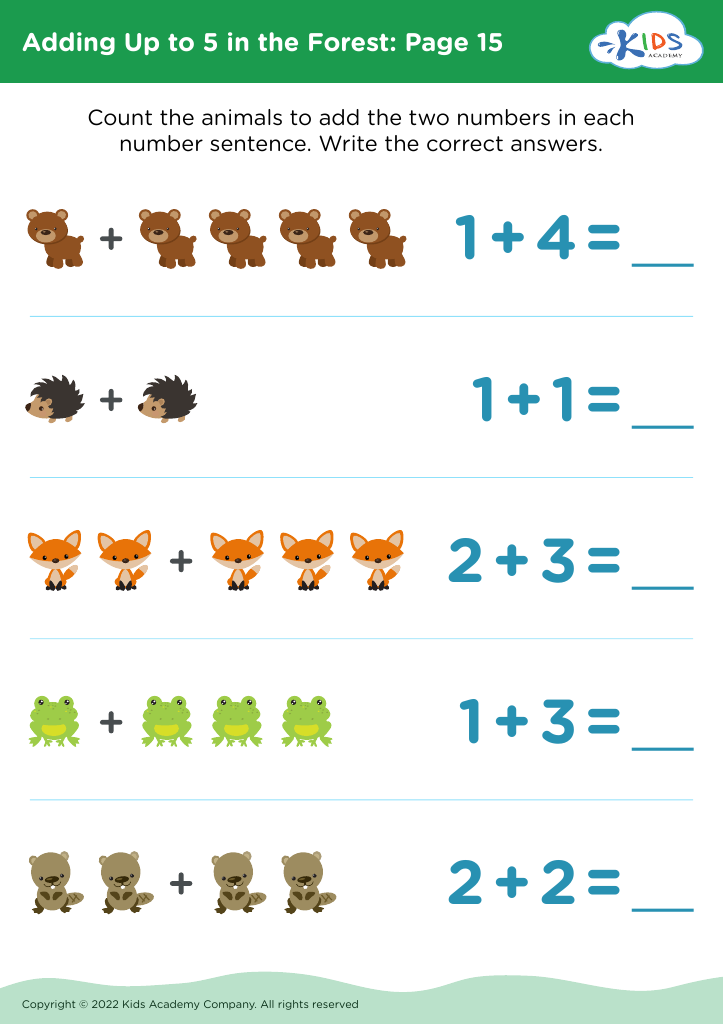
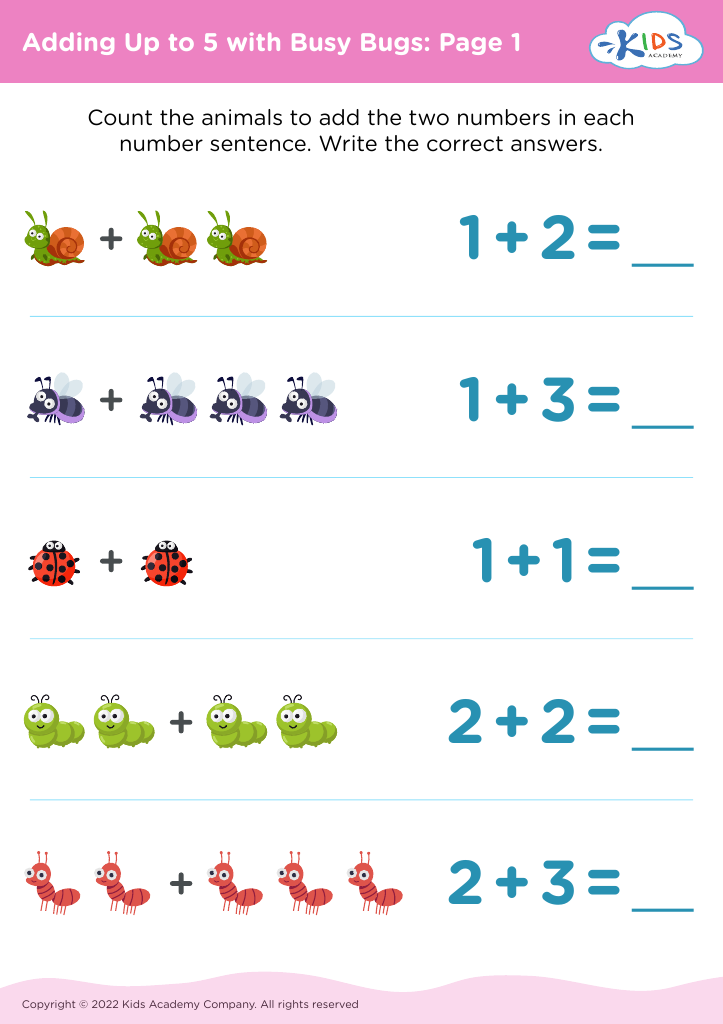
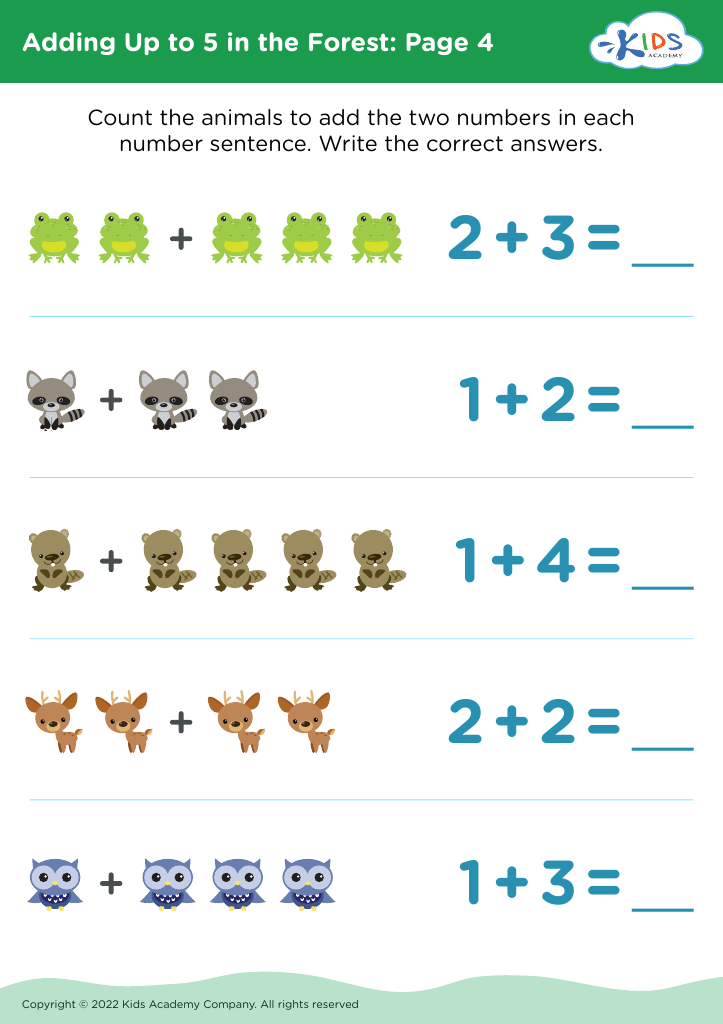
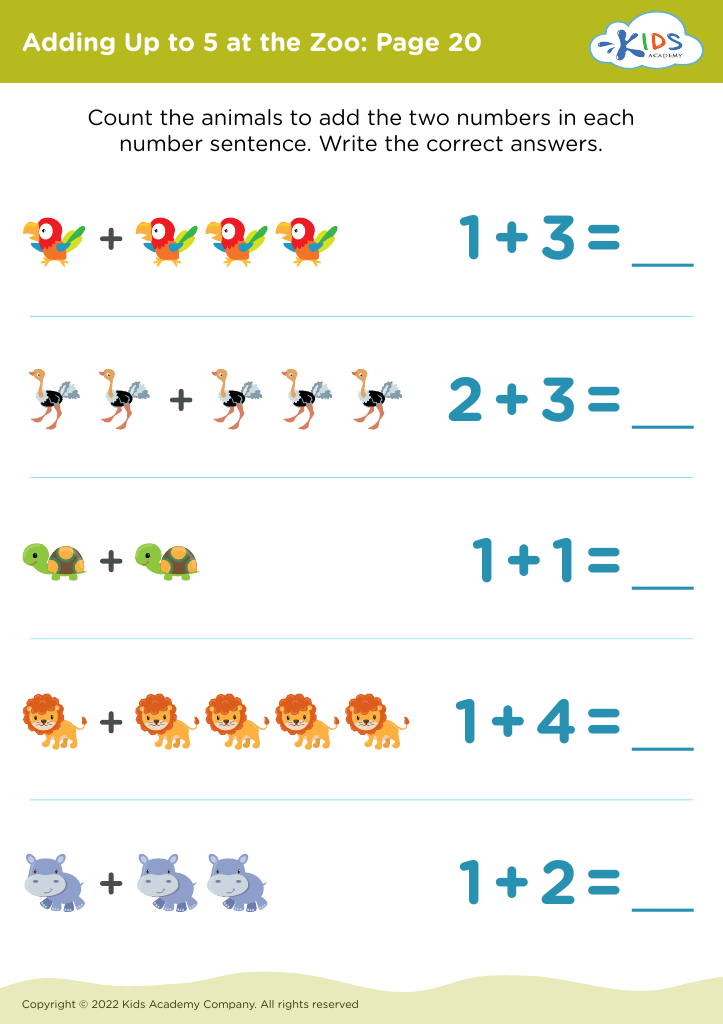
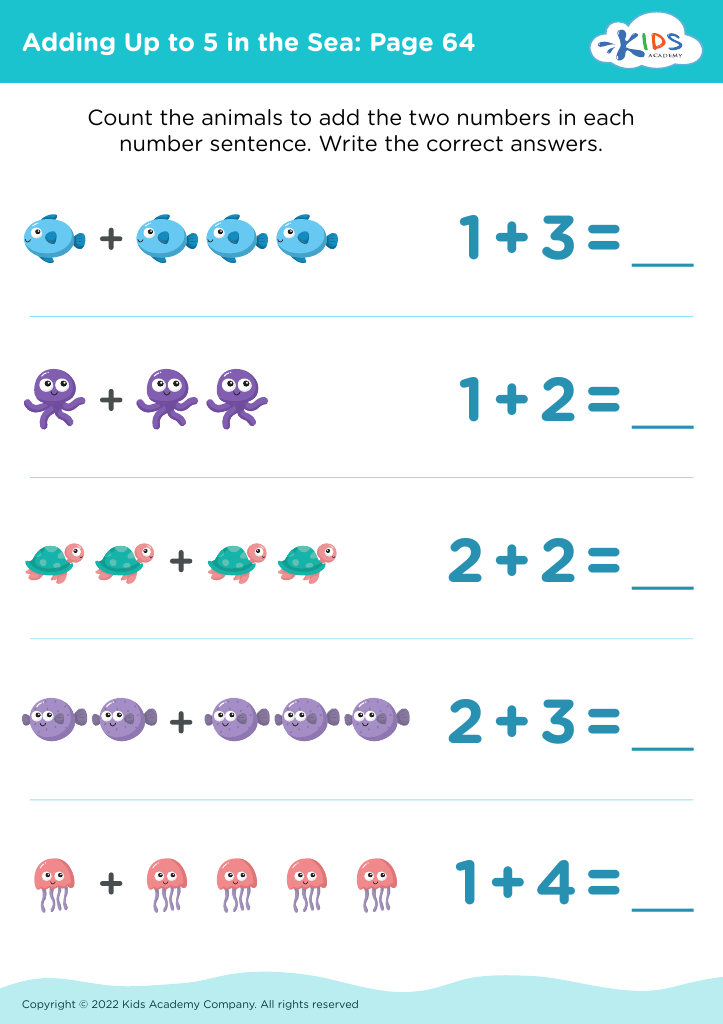
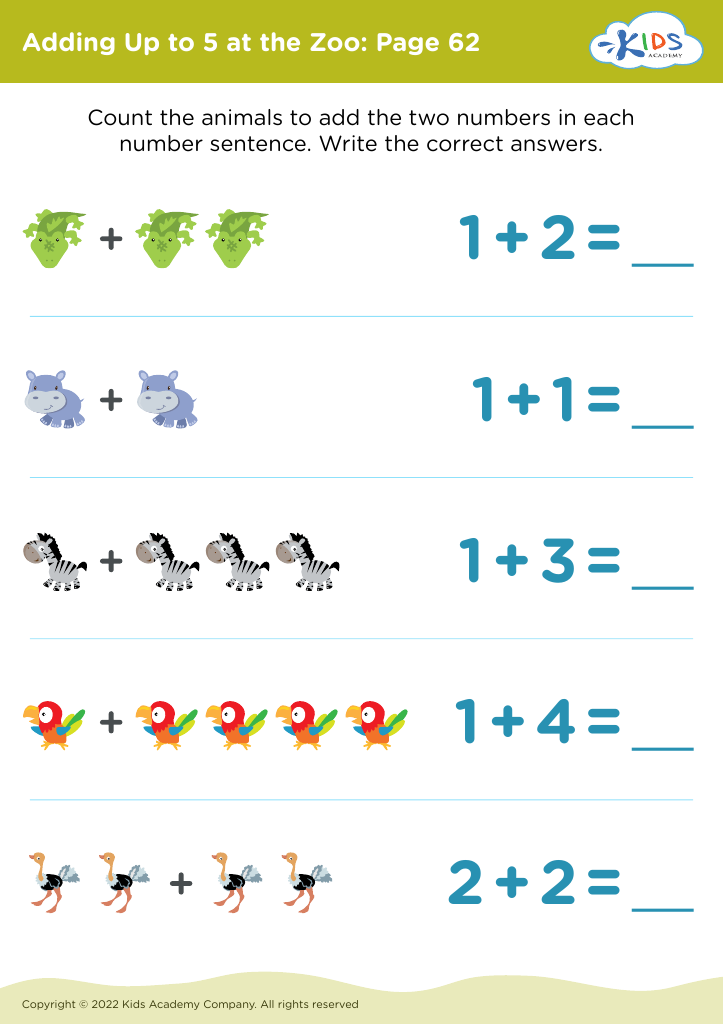
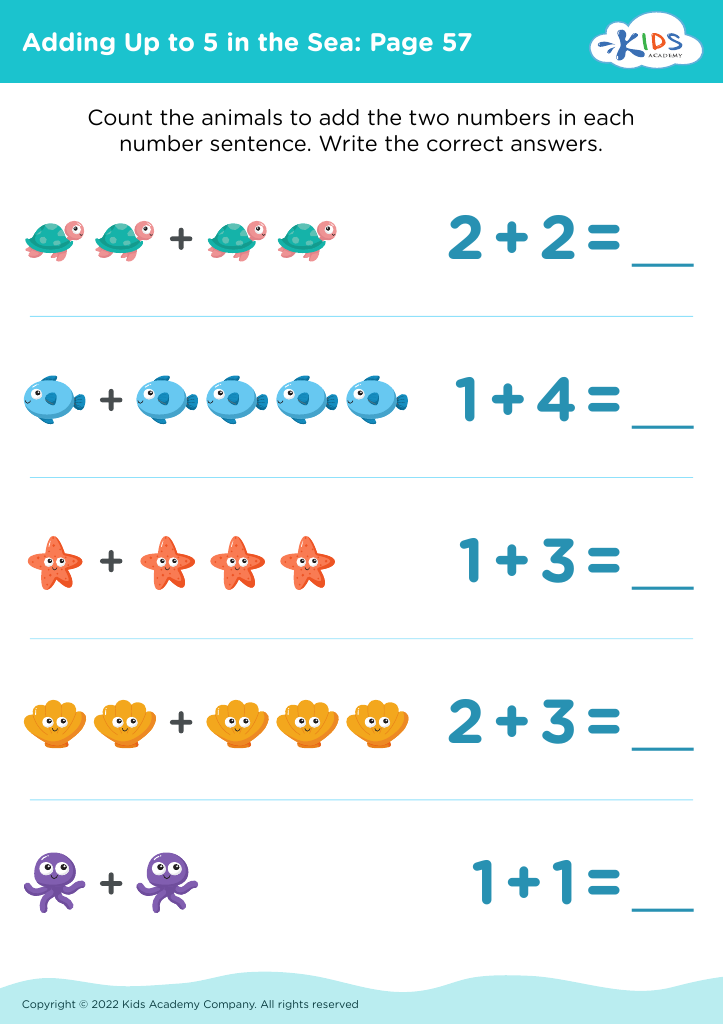
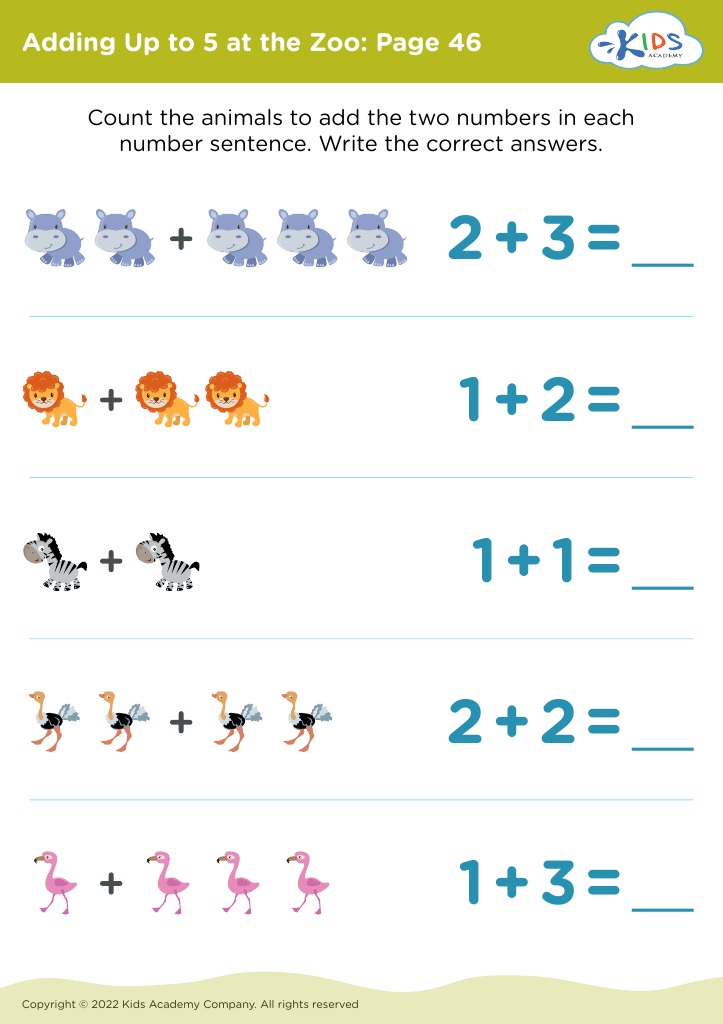








Basic arithmetic addition is a foundational skill that forms the cornerstone of a child’s mathematical understanding and overall cognitive development. For children aged 3-8, engaging with addition promotes critical thinking, problem-solving abilities, and logical reasoning, which are essential life skills.
Teaching basic addition helps children develop number sense, enhancing their ability to recognize patterns, understand relationships between numbers, and build confidence in their mathematical capabilities. Early math skills are a strong predictor of later academic success; children who grasp addition are more likely to excel in higher-level math concepts as they progress in their education.
Moreover, mastering addition can be a jumping-off point for higher-order skills such as subtraction, multiplication, and division, ensuring a smooth transition to advanced math topics. Parents and teachers should consider incorporating fun and interactive methods—like games, visual aids, and hands-on activities—to teach this crucial skill, making learning enjoyable and effective.
Encouraging practice in real-life situations, such as sharing snacks or counting toys, further enriches their understanding. By emphasizing basic arithmetic addition, parents and teachers not only enhance children’s mathematical abilities but instill a positive attitude toward learning, shaping a generation of confident and capable learners.








