Filters

227 filtered results

Clear all filters
Favorites
With answer key
Interactive

227 filtered results

Difficulty Level

Grade


Subject

    Check out this FREE Trial Lesson on Addition for age 3-8!

    X

    Favorites
    With answer key
    Interactive
    • 3-8
    • Counting skills
    • Addition
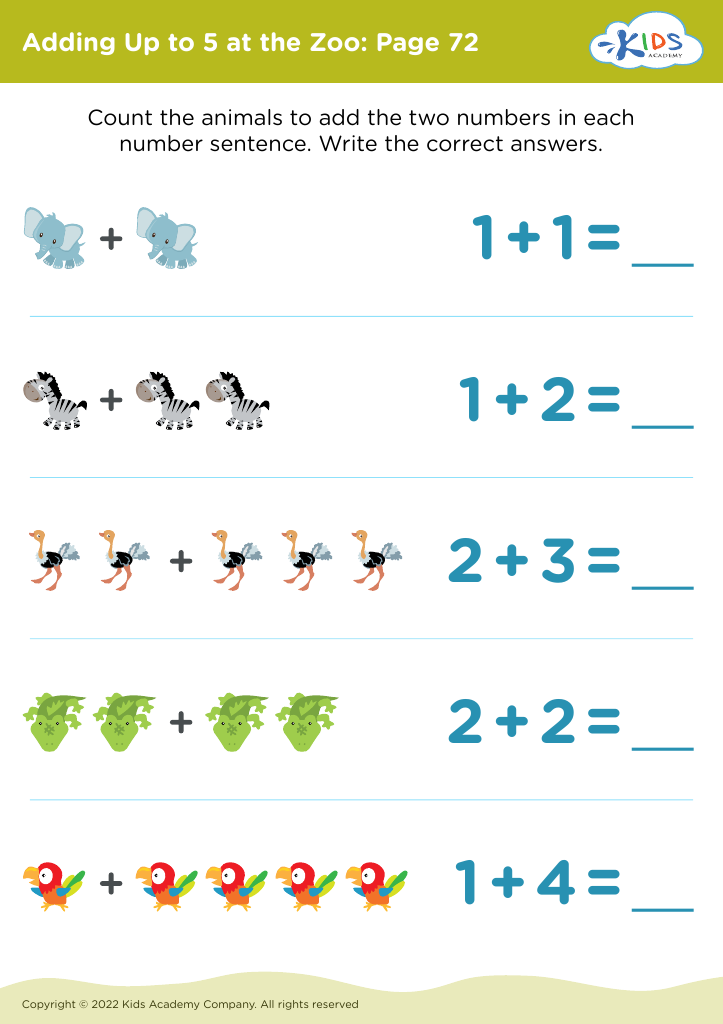
    Adding Up to 5 at the Zoo: Page 72
    Adding Up to 5 at the Zoo: Page 72
    Adding Up to 5 at the Zoo: Page 72
    Worksheet
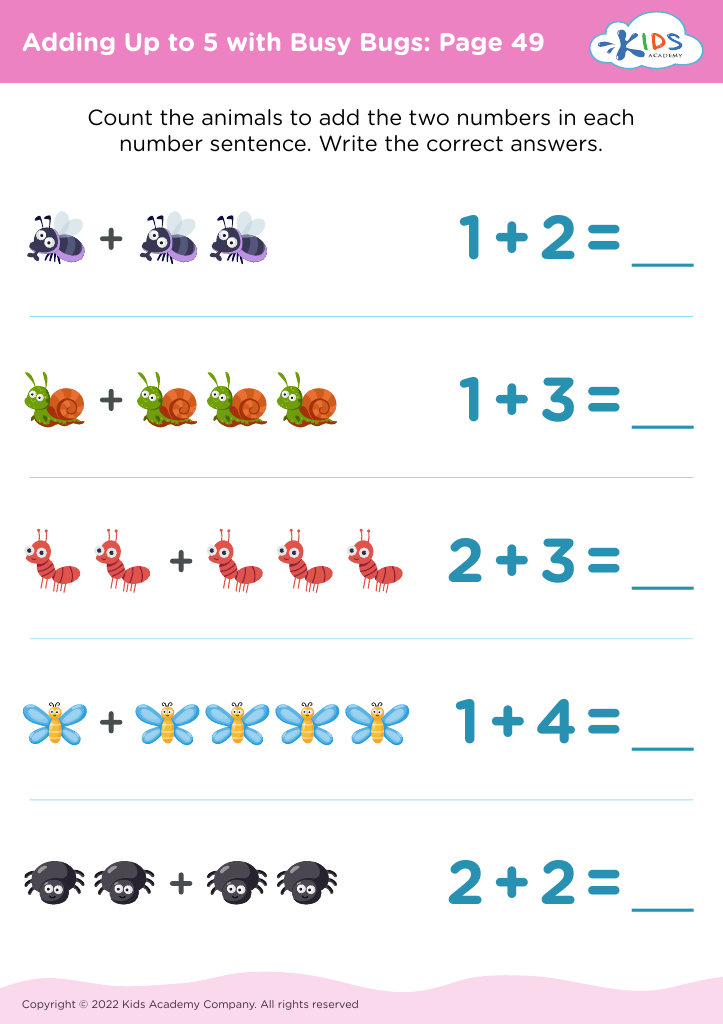
    Adding Up to 5 with Busy Bugs: Page 49
    Adding Up to 5 with Busy Bugs: Page 49
    Adding Up to 5 with Busy Bugs: Page 49
    Worksheet
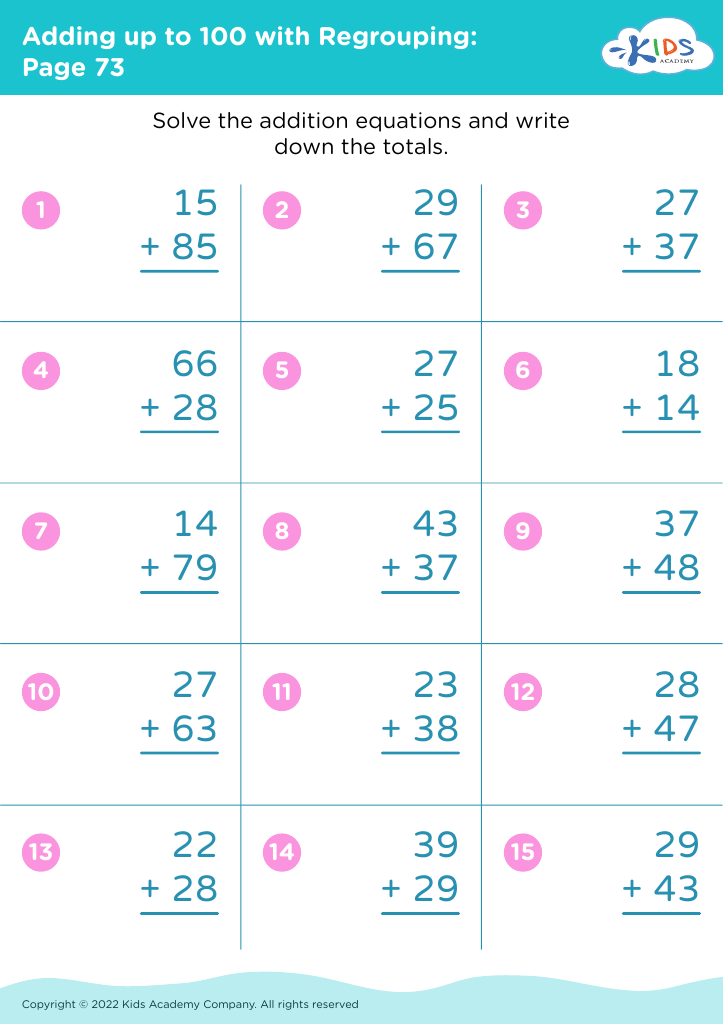
    Adding up to 100 with Regrouping: Page 73
    Adding up to 100 with Regrouping: Page 73
    Adding up to 100 with Regrouping: Page 73
    Worksheet
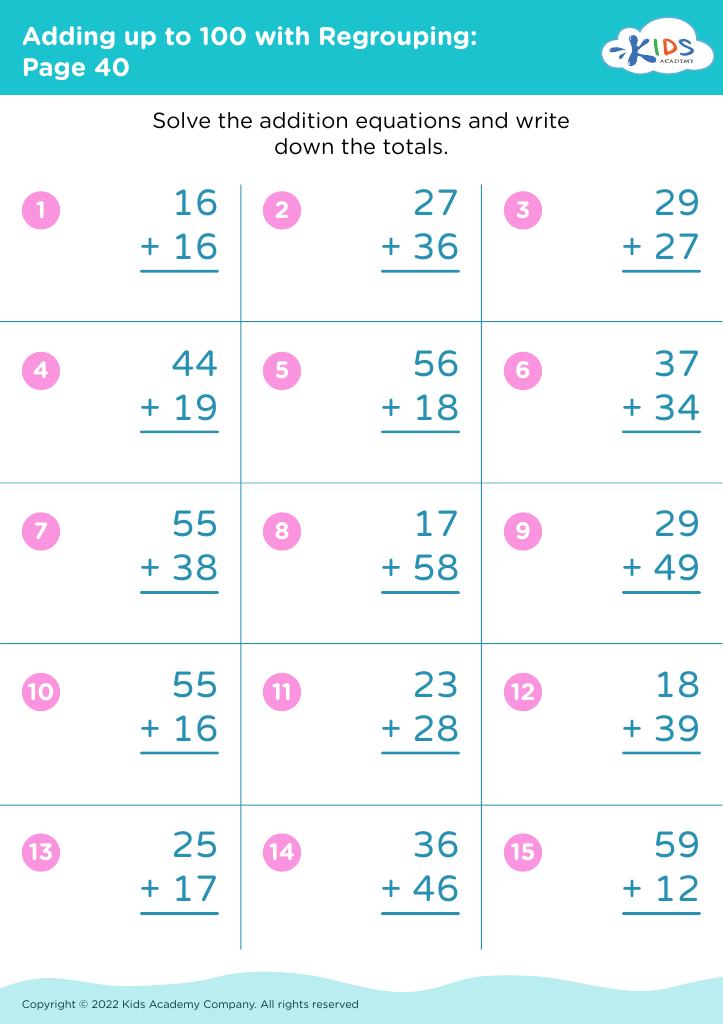
    Adding up to 100 with Regrouping: Page 40
    Adding up to 100 with Regrouping: Page 40
    Adding up to 100 with Regrouping: Page 40
    Worksheet
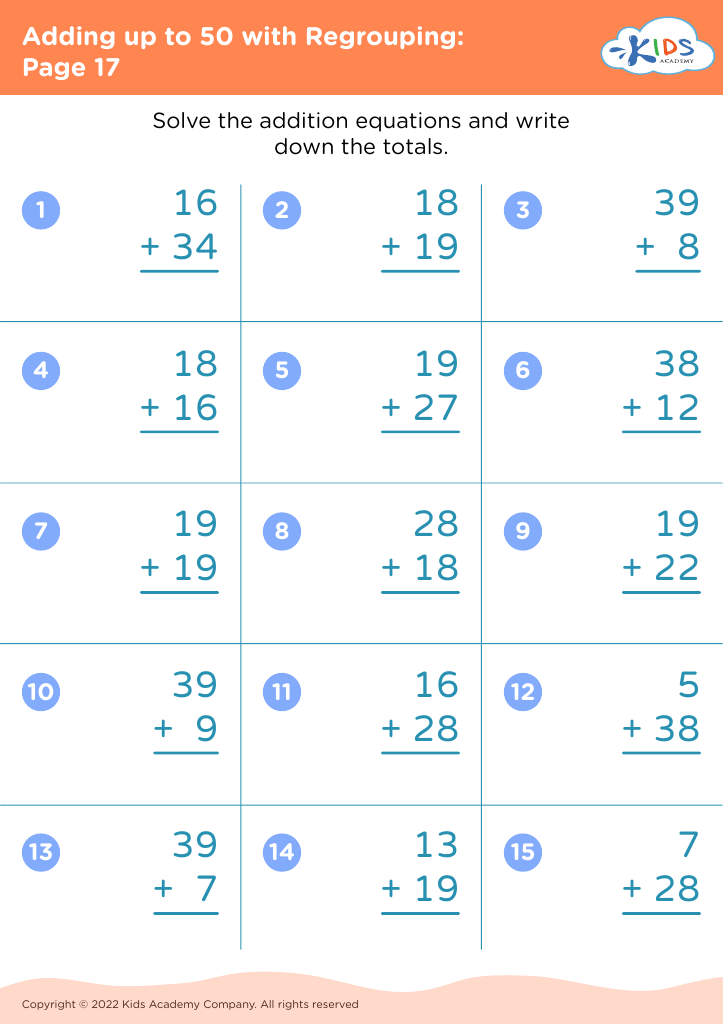
    Adding up to 50 with Regrouping: Page 17
    Adding up to 50 with Regrouping: Page 17
    Adding up to 50 with Regrouping: Page 17
    Worksheet
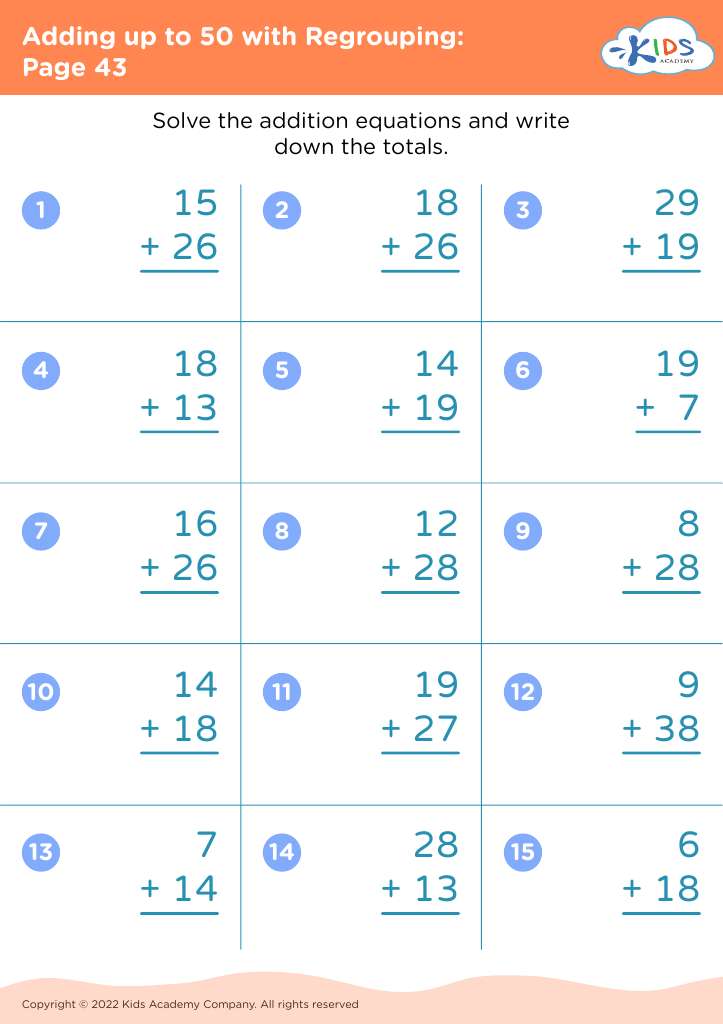
    Adding up to 50 with Regrouping: Page 43
    Adding up to 50 with Regrouping: Page 43
    Adding up to 50 with Regrouping: Page 43
    Worksheet
    Easter Arrays Worksheet
    Easter Arrays Worksheet

    Easter Arrays Worksheet

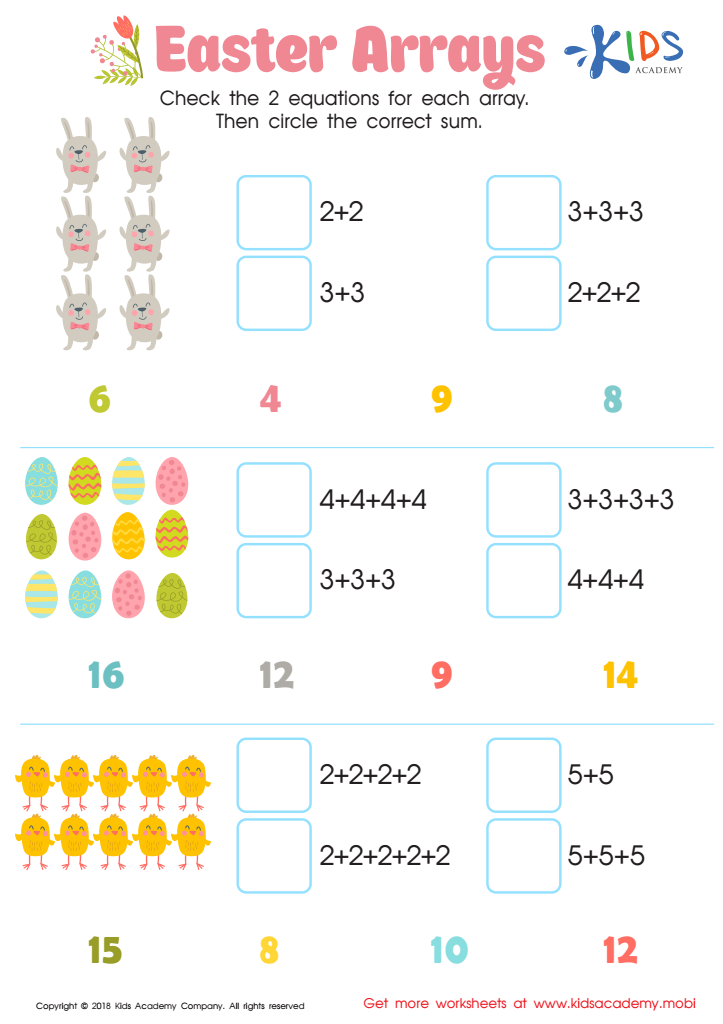
    Does your child love Easter? Do they adore the Easter bunny and egg hunts? Help them have fun with this worksheet! Go through it with them and check the equations for each array. Then, have them circle the correct sum. It's a great way to make the holiday extra exciting!
    Easter Arrays Worksheet
    Worksheet
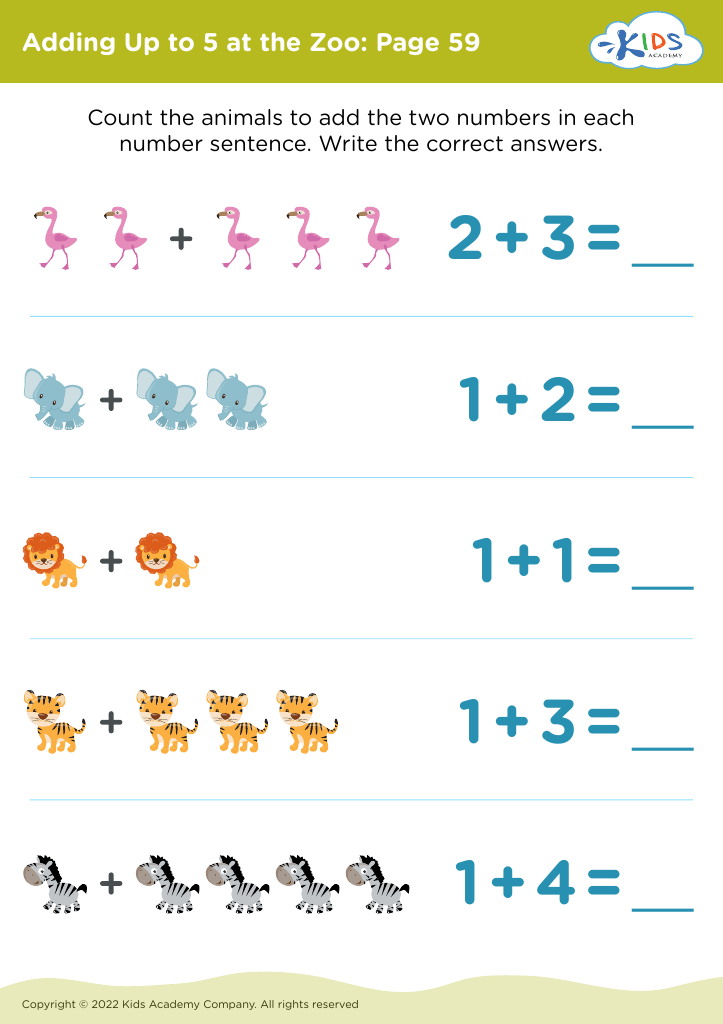
    Adding Up to 5 at the Zoo: Page 59
    Adding Up to 5 at the Zoo: Page 59
    Adding Up to 5 at the Zoo: Page 59
    Worksheet
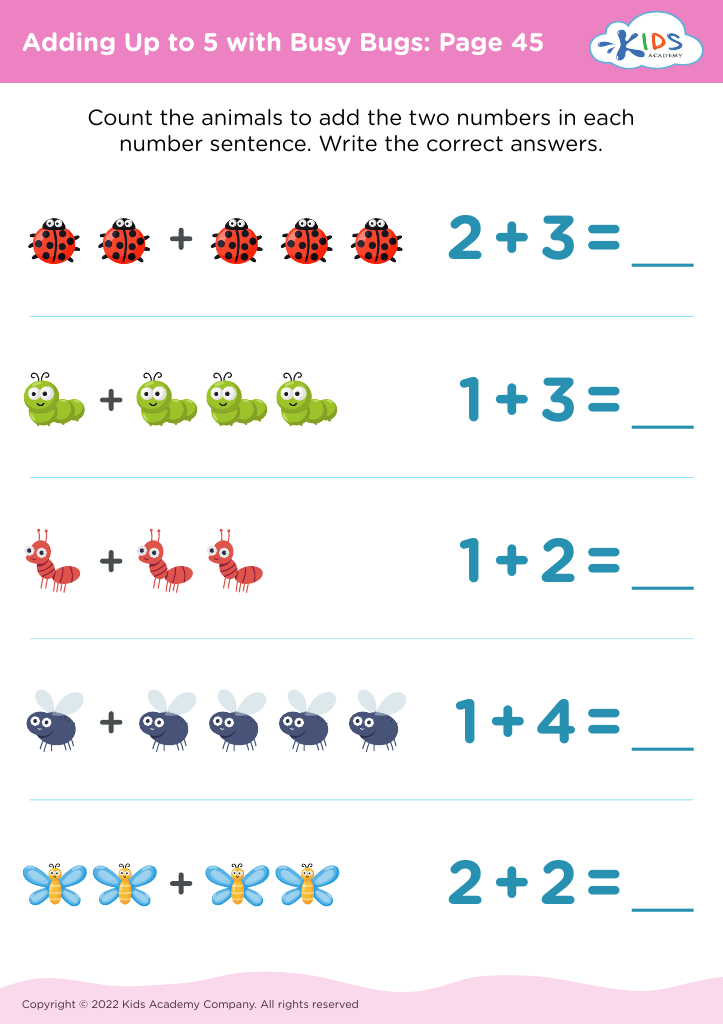
    Adding Up to 5 with Busy Bugs: Page 45
    Adding Up to 5 with Busy Bugs: Page 45
    Adding Up to 5 with Busy Bugs: Page 45
    Worksheet
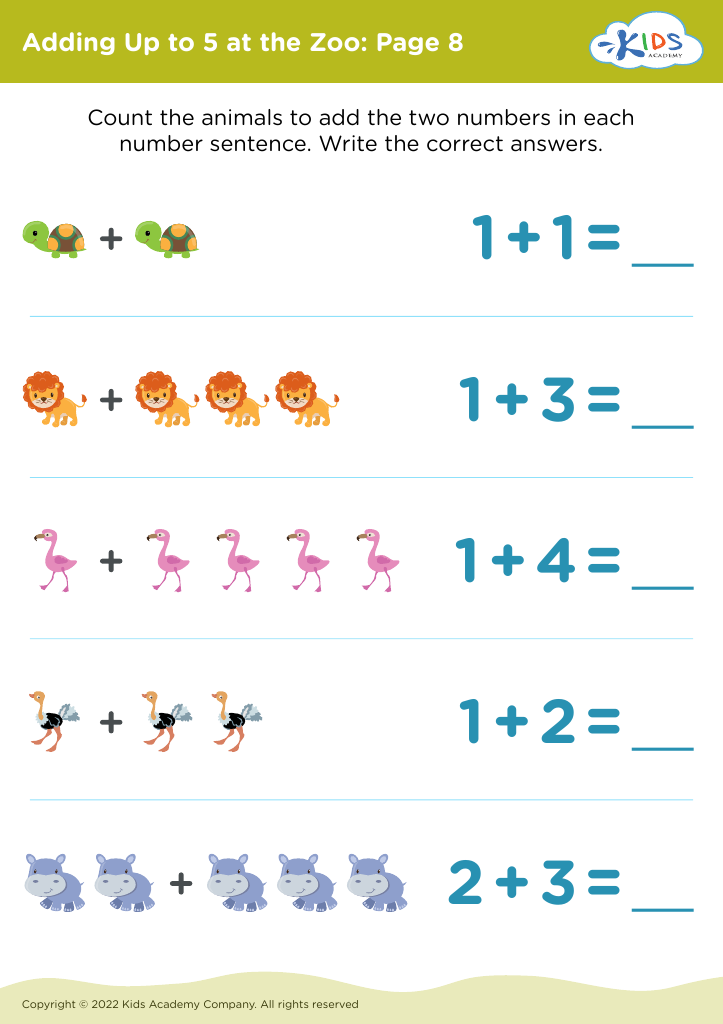
    Adding Up to 5 at the Zoo: Page 8
    Adding Up to 5 at the Zoo: Page 8

    Adding Up to 5 at the Zoo: Page 8

    Adding Up to 5 at the Zoo: Page 8
    Worksheet
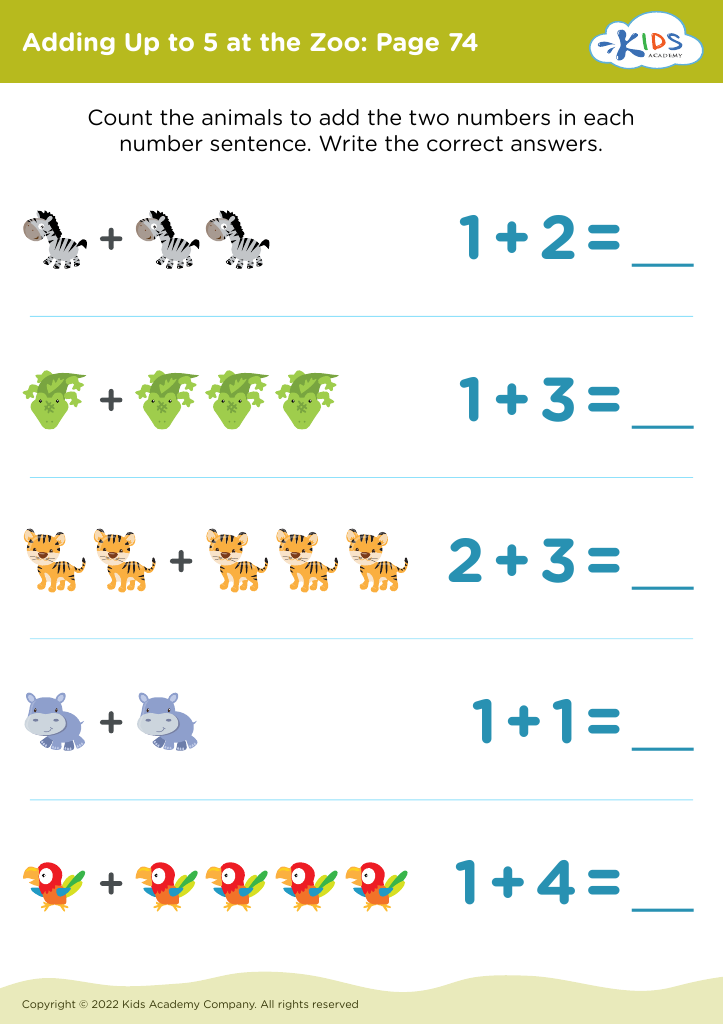
    Adding Up to 5 at the Zoo: Page 74
    Adding Up to 5 at the Zoo: Page 74
    Adding Up to 5 at the Zoo: Page 74
    Worksheet
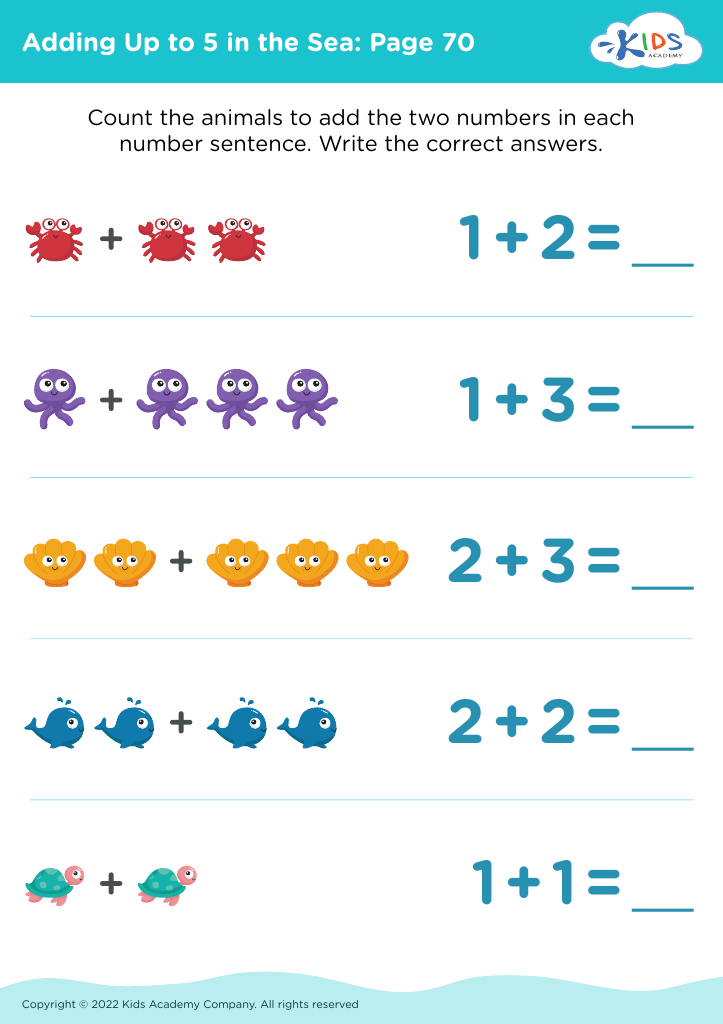
    Adding Up to 5 in the Sea: Page 70
    Adding Up to 5 in the Sea: Page 70
    Adding Up to 5 in the Sea: Page 70
    Worksheet
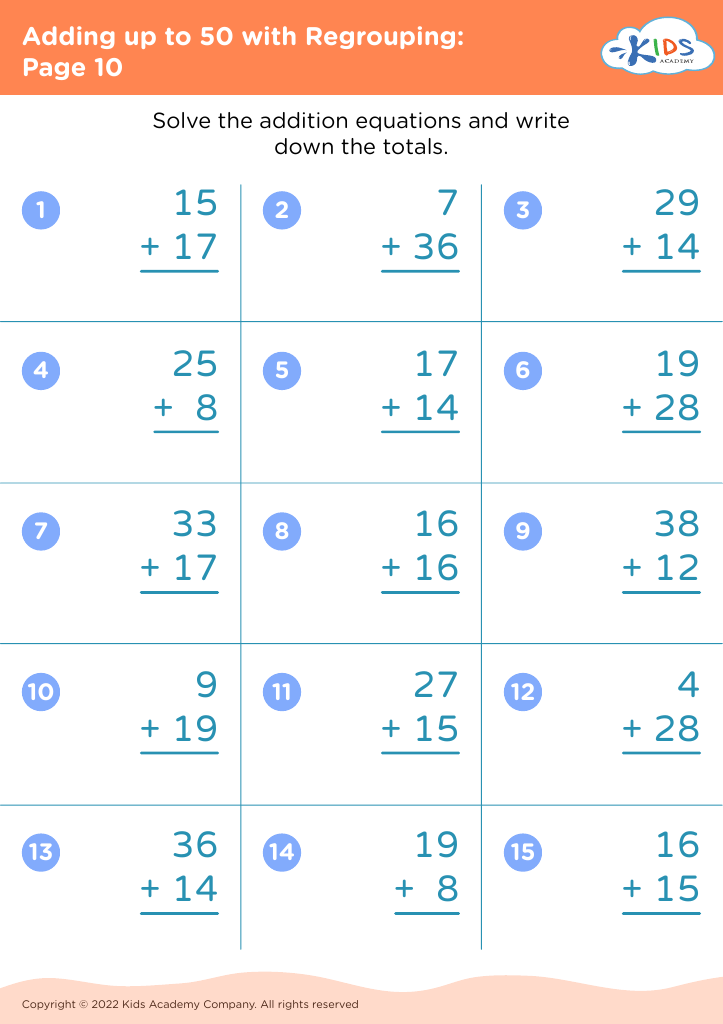
    Adding up to 50 with Regrouping: Page 10
    Adding up to 50 with Regrouping: Page 10
    Adding up to 50 with Regrouping: Page 10
    Worksheet
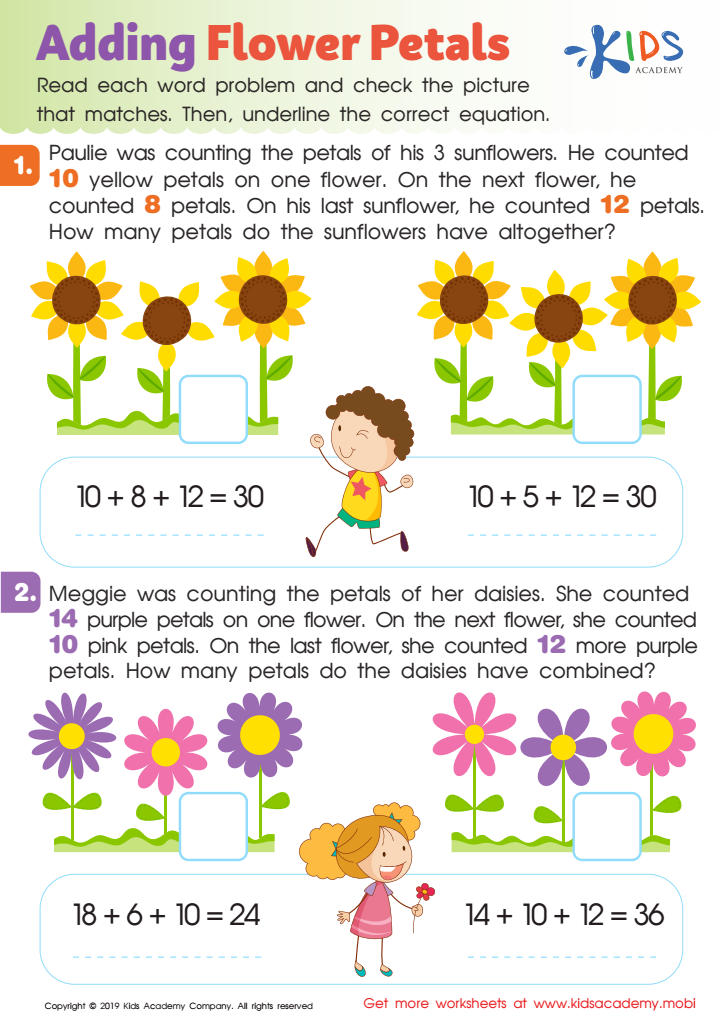
    Adding Flower Petals Worksheet
    Adding Flower Petals Worksheet
    Adding Flower Petals Worksheet
    This free worksheet helps little mathematicians learn to understand word problems. They'll read each one and match it to the corresponding picture. Important info is highlighted, teaching kids to look for key info when solving problems. Then they'll underline the correct number equation that matches the picture. A great way to practice problem-solving skills!
    Adding Flower Petals Worksheet
    Worksheet
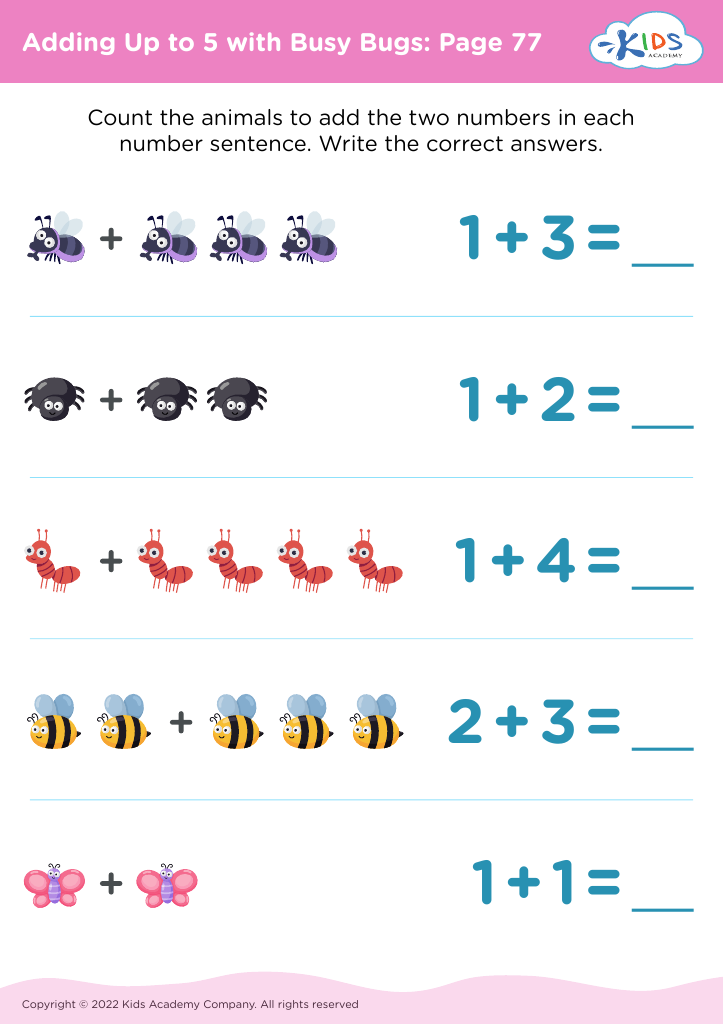
    Adding Up to 5 with Busy Bugs: Page 77
    Adding Up to 5 with Busy Bugs: Page 77
    Adding Up to 5 with Busy Bugs: Page 77
    Worksheet
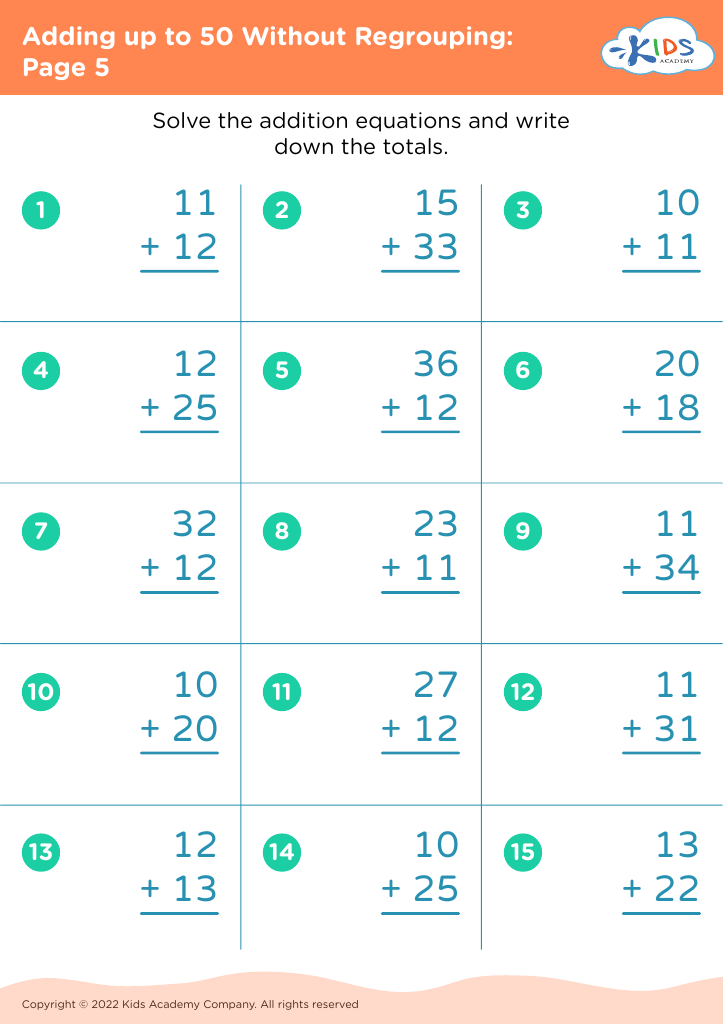
    Adding up to 50 Without Regrouping: Page 5
    Adding up to 50 Without Regrouping: Page 5
    Adding up to 50 Without Regrouping: Page 5
    Worksheet
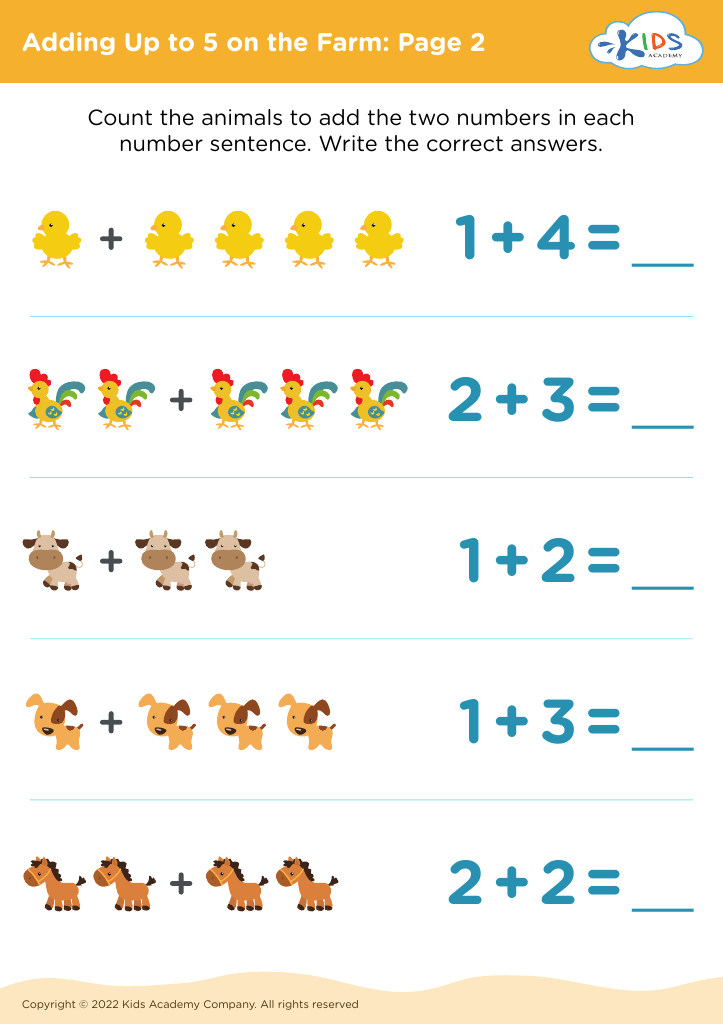
    Adding Up to 5 on the Farm: Page 2
    Adding Up to 5 on the Farm: Page 2
    Adding Up to 5 on the Farm: Page 2
    Worksheet
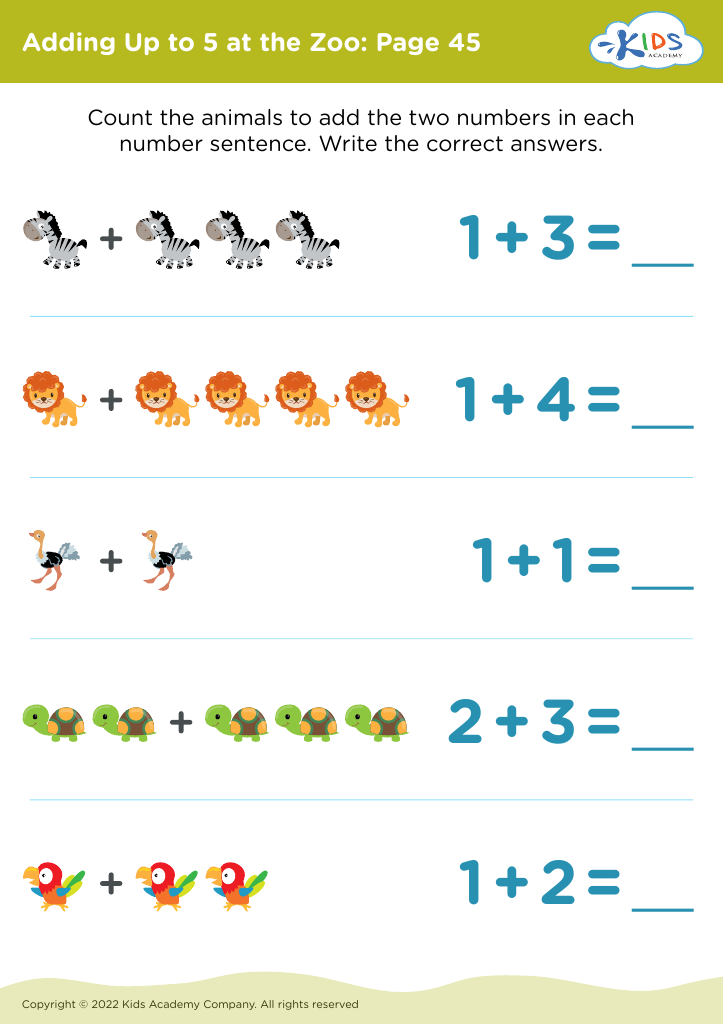
    Adding Up to 5 at the Zoo: Page 45
    Adding Up to 5 at the Zoo: Page 45
    Adding Up to 5 at the Zoo: Page 45
    Worksheet
    Help the Warthog Count the Grubs Worksheet
    Help the Warthog Count the Grubs Worksheet
    Help the Warthog Count the Grubs Worksheet
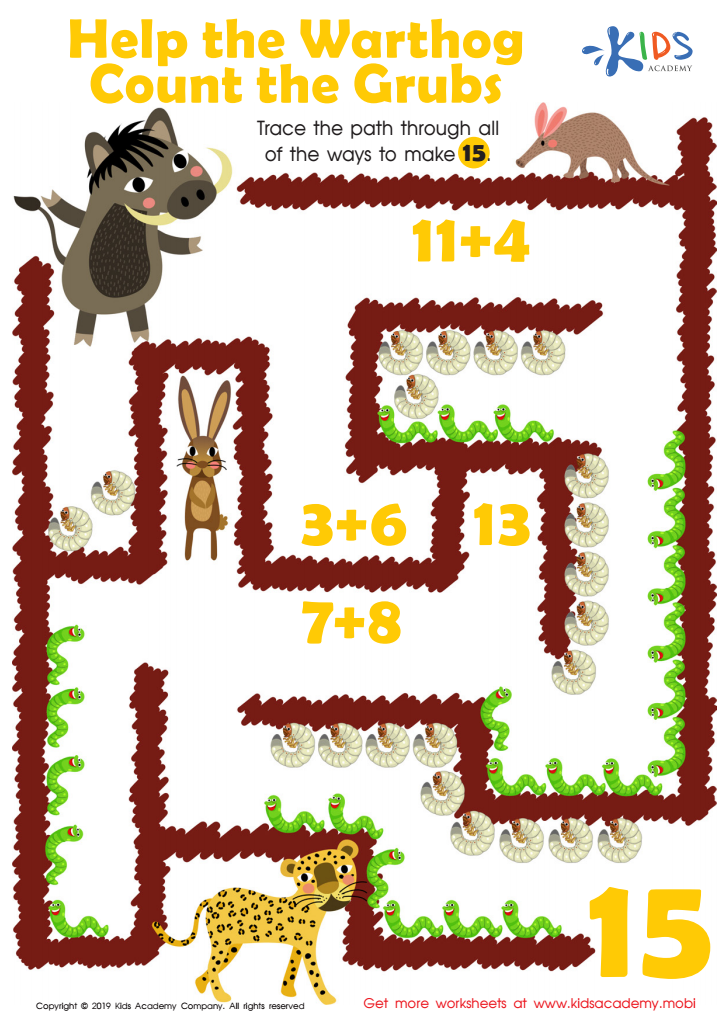
    Test your kids' knowledge of wild animals. Ask them to name some they know, then have them identify the animals on this worksheet. If they can't, take the time to tell them the names. Finally, trace the warthog's path through the maze by solving the equations and going through paths that make 15.
    Help the Warthog Count the Grubs Worksheet
    Worksheet
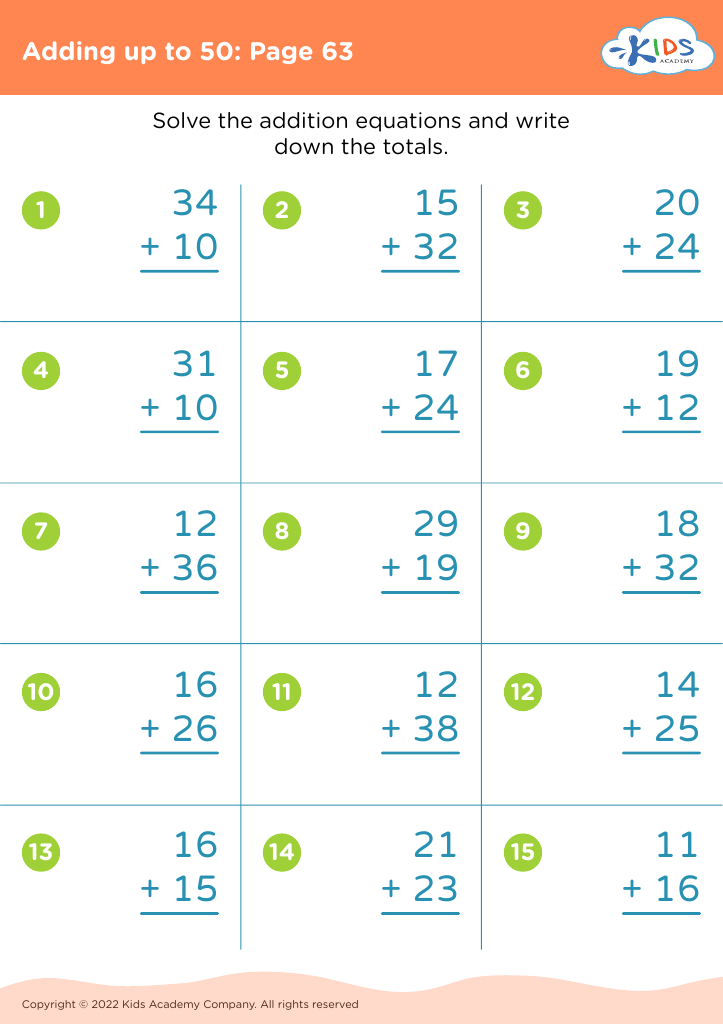
    Adding up to 50: Page 63
    Adding up to 50: Page 63

    Adding up to 50: Page 63

    Adding up to 50: Page 63
    Worksheet
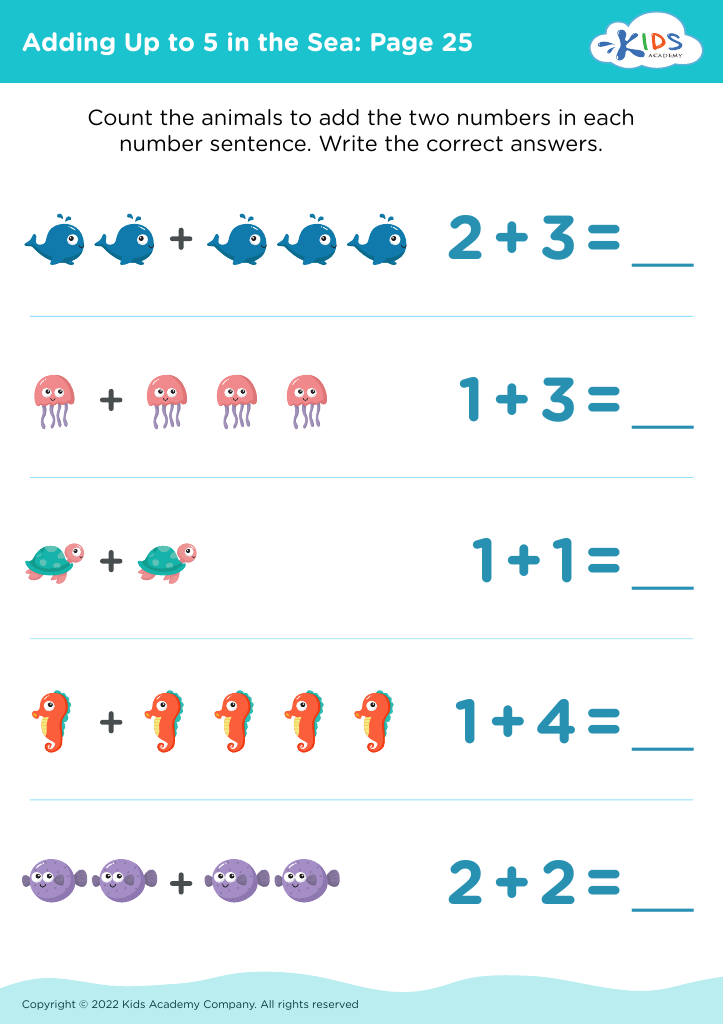
    Adding Up to 5 in the Sea: Page 25
    Adding Up to 5 in the Sea: Page 25
    Adding Up to 5 in the Sea: Page 25
    Worksheet
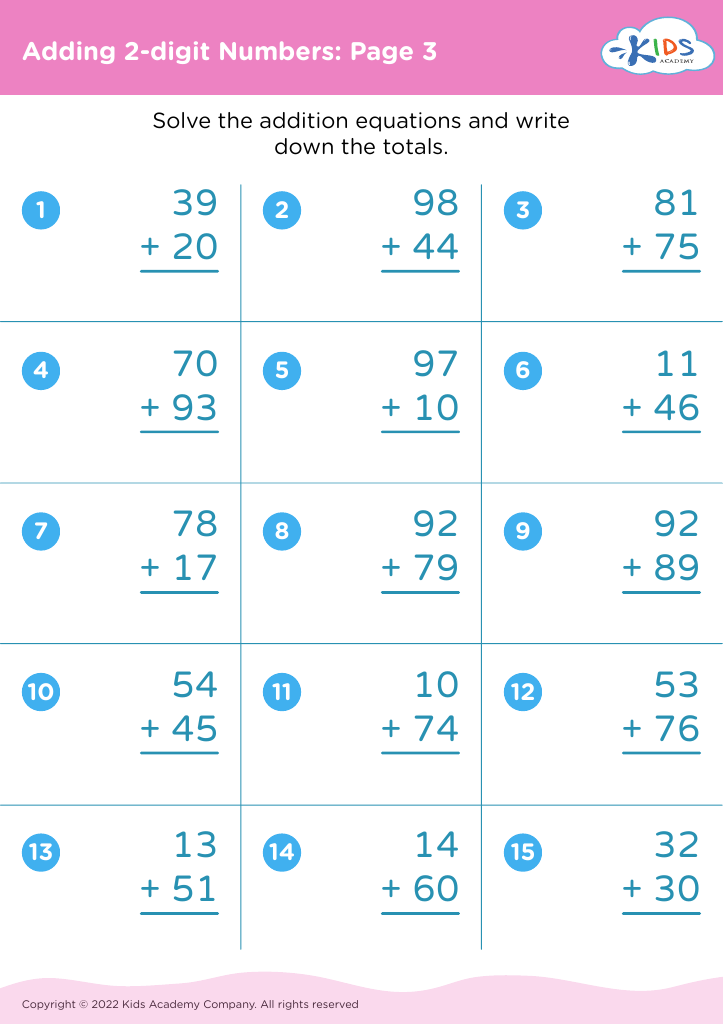
    Adding 2-digit Numbers: Page 3
    Adding 2-digit Numbers: Page 3

    Adding 2-digit Numbers: Page 3

    Adding 2-digit Numbers: Page 3
    Worksheet
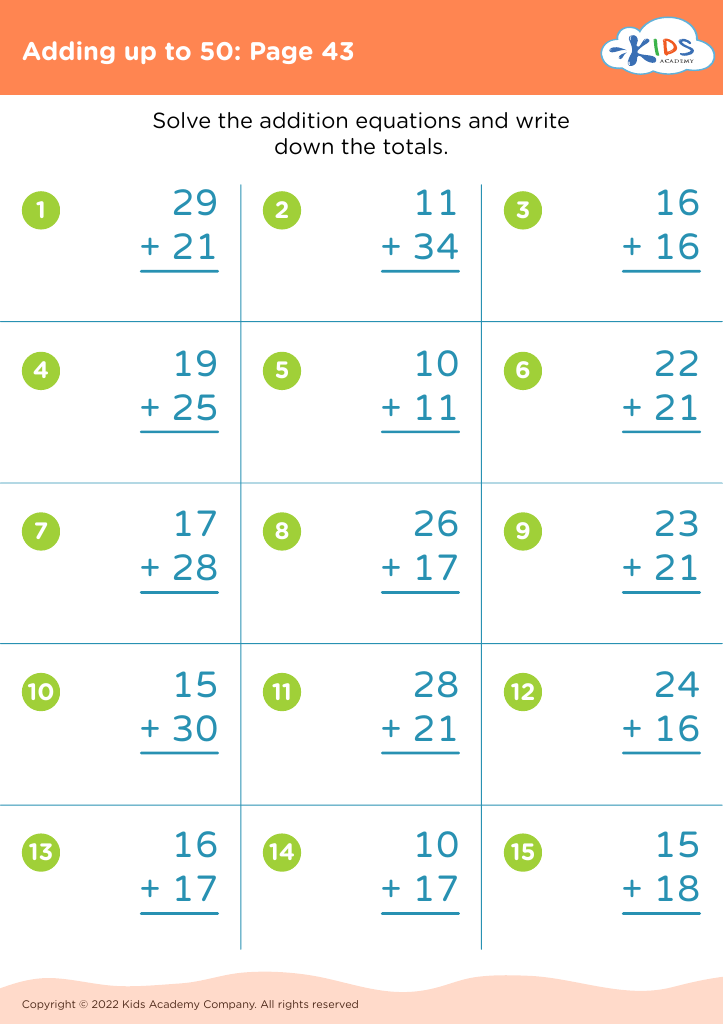
    Adding up to 50: Page 43
    Adding up to 50: Page 43

    Adding up to 50: Page 43

    Adding up to 50: Page 43
    Worksheet
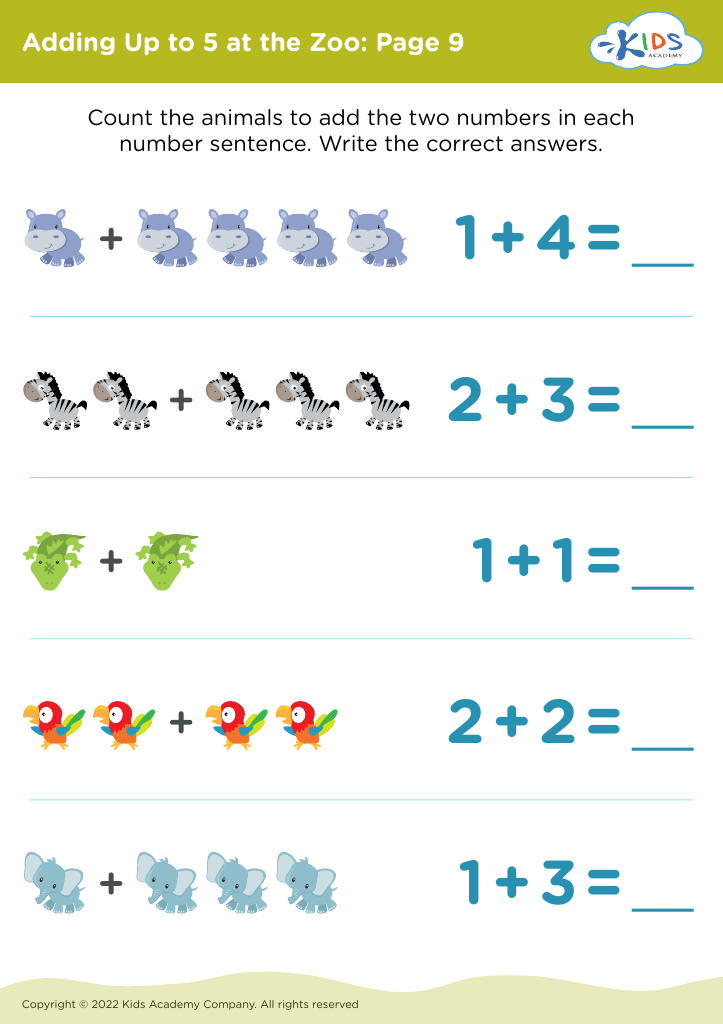
    Adding Up to 5 at the Zoo: Page 9
    Adding Up to 5 at the Zoo: Page 9

    Adding Up to 5 at the Zoo: Page 9

    Adding Up to 5 at the Zoo: Page 9
    Worksheet


    Counting skills and addition are fundamental building blocks in a child's early education, making them crucial for both parents and teachers to prioritize for children aged 3-8. First, mastering counting sets the stage for mathematical comprehension. By learning to count, children develop number sense—the ability to understand quantities and their relationships. This lays the groundwork for more complex mathematical concepts they will encounter later, such as subtraction, multiplication, and division.

    Moreover, counting and addition foster critical thinking and problem-solving skills. As children engage in these activities, they learn to analyze situations and come up with solutions, skills that are transferable across various subjects and life situations. Early exposure to these concepts also enhances cognitive development, encouraging children to think logically and sequentially.

    Additionally, counting activities can be made fun through games, songs, and interactive exercises, making learning engaging and enjoyable. This positive association with math boosts children's confidence and motivation to continue learning. By fostering these skills at an early age, parents and teachers lay a vital foundation that supports children's overall academic success and instills a lifelong appreciation for mathematics. Ultimately, prioritized counting and addition skills contribute significantly to a child's holistic development and preparedness for future learning challenges.