Improve number recognition Addition Worksheets for Ages 3-8
15 filtered results
-
From - To
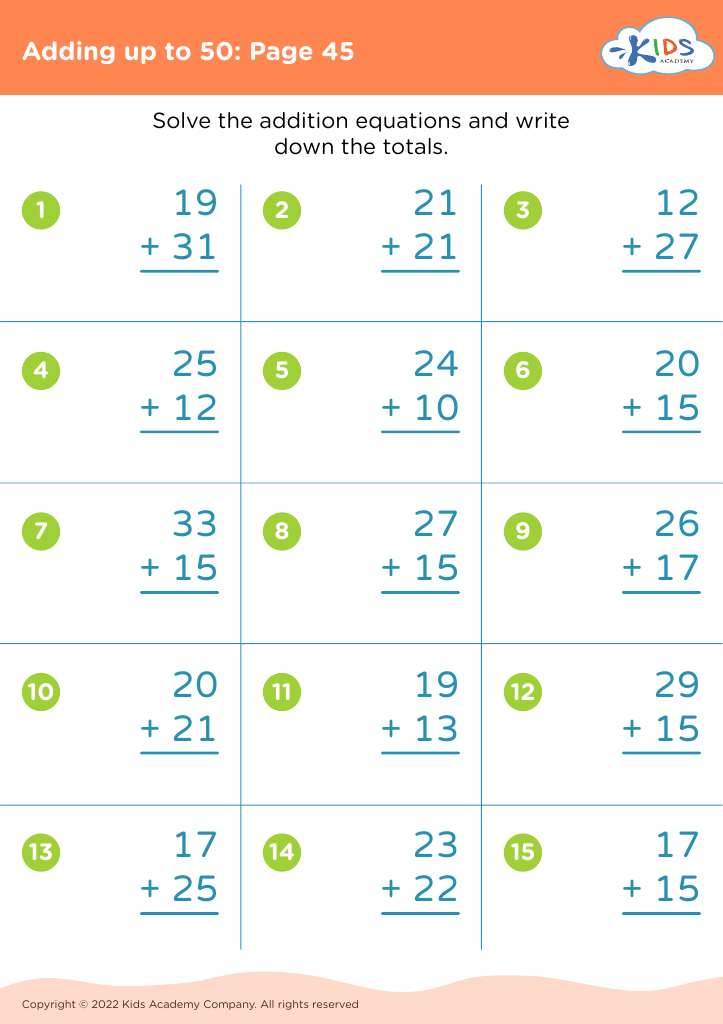
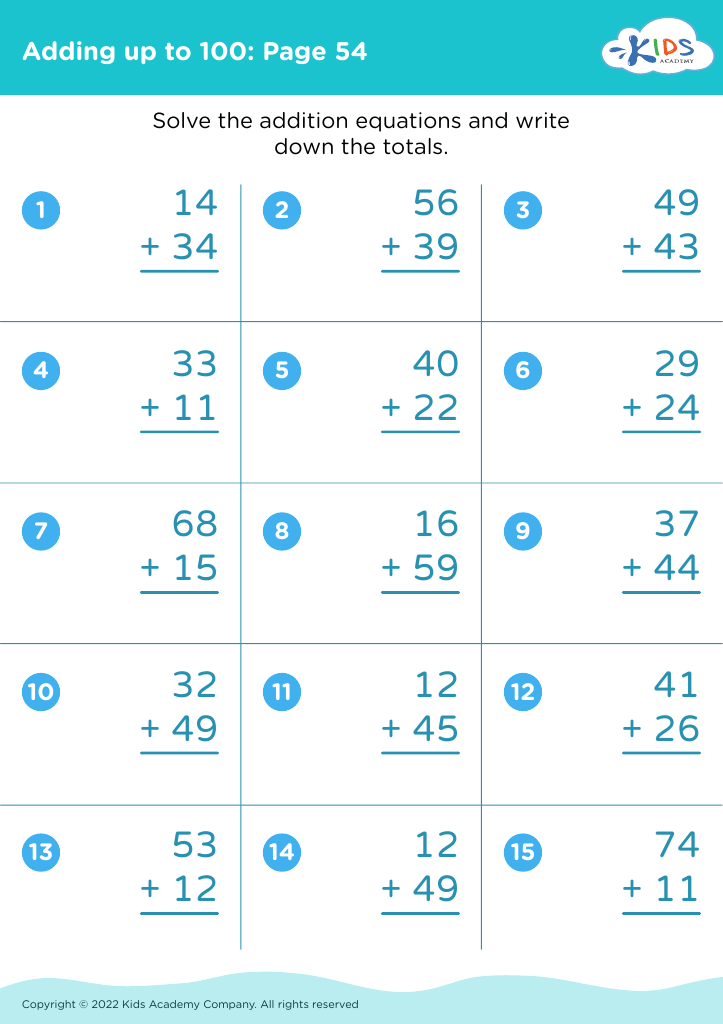
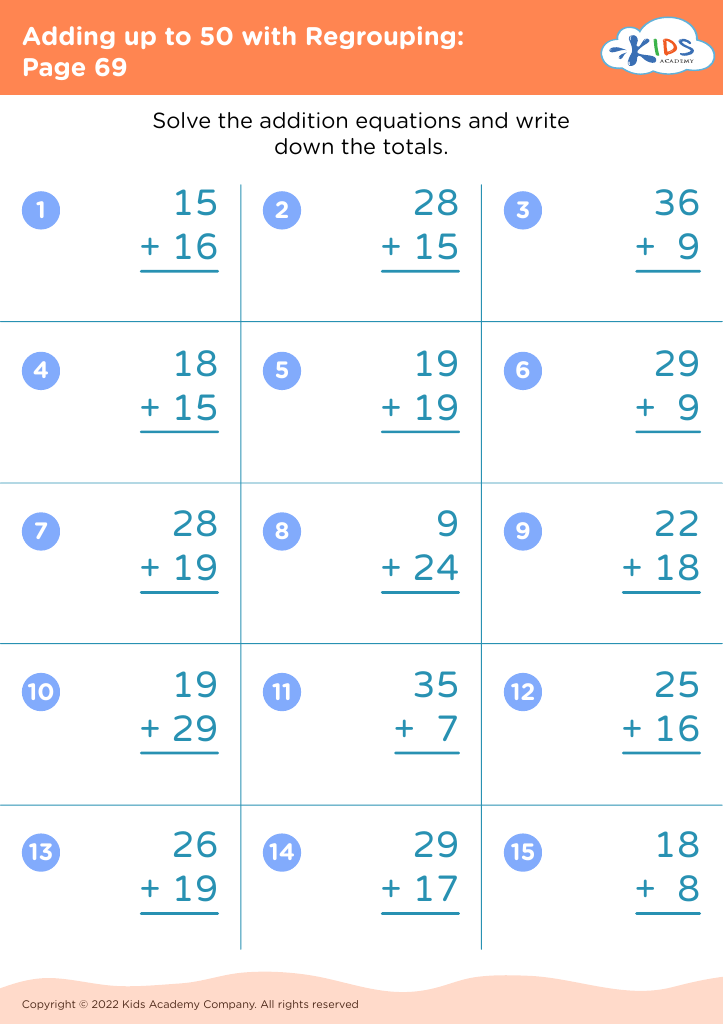
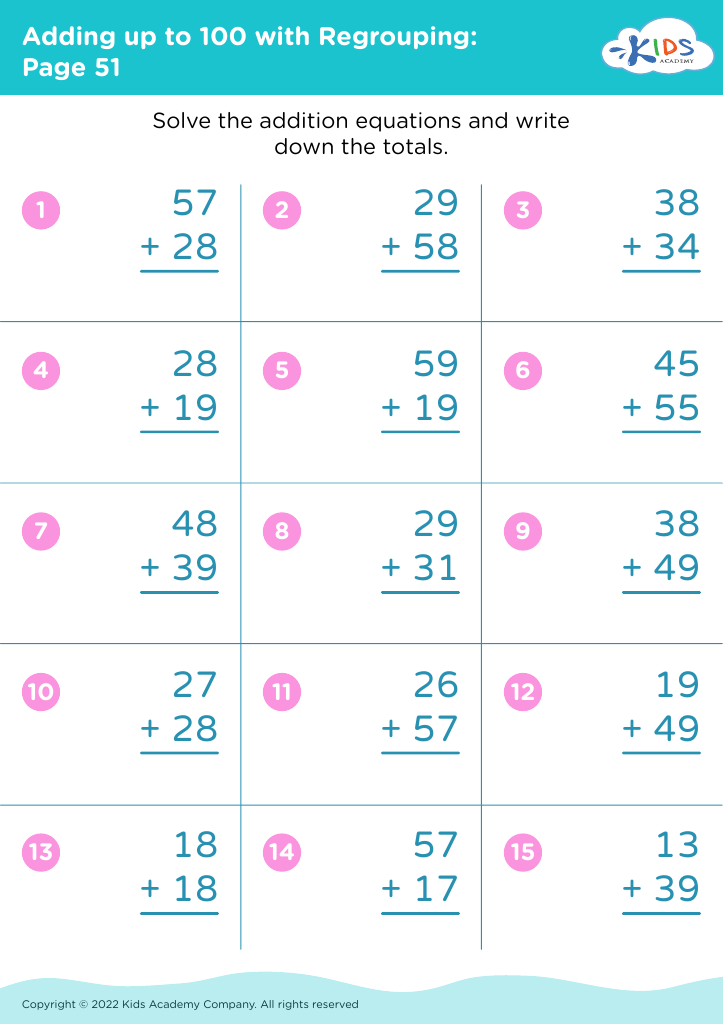
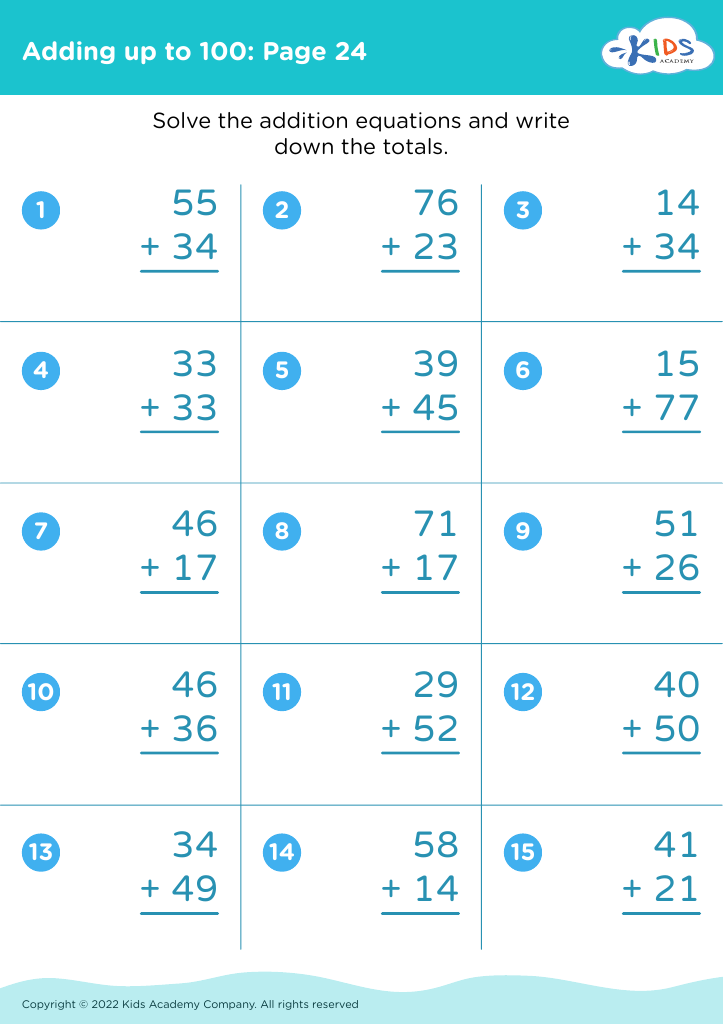
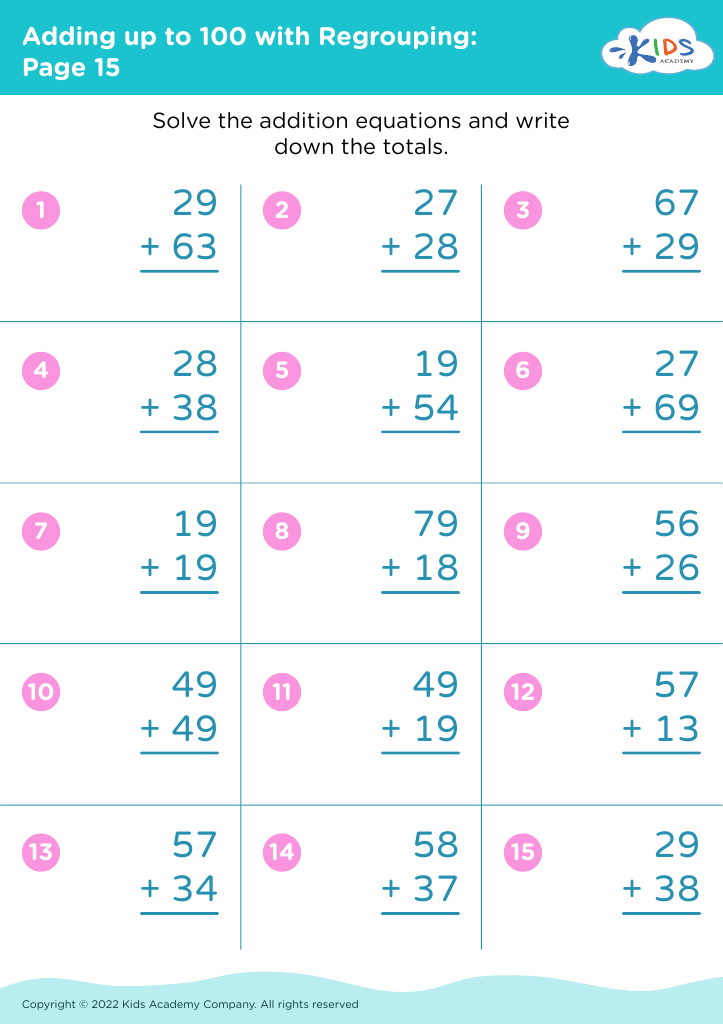
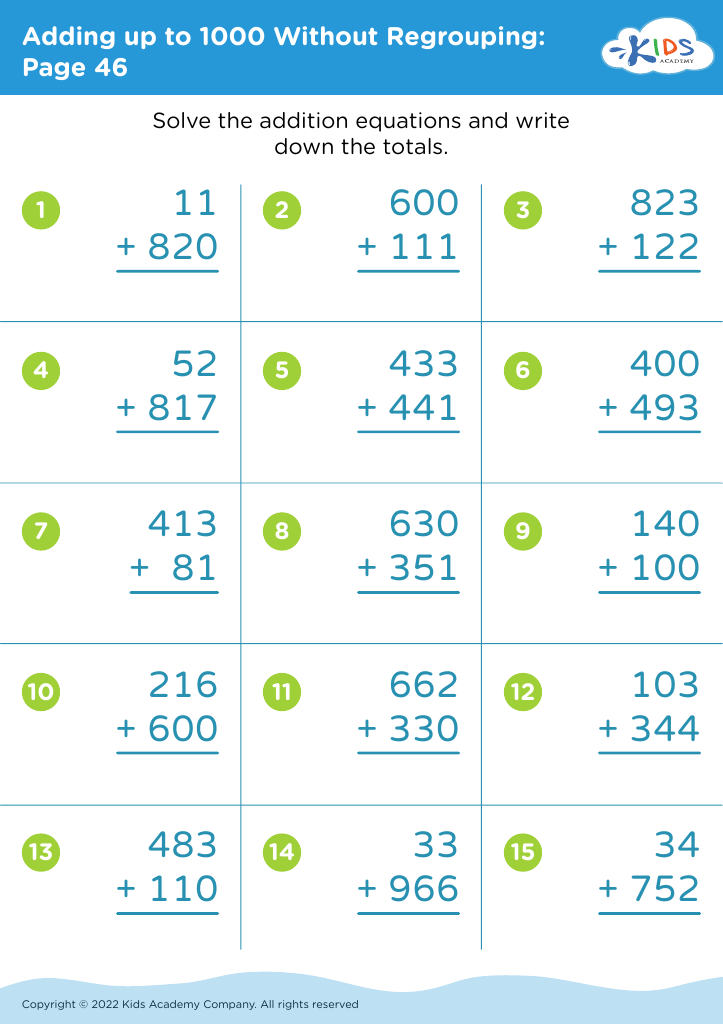
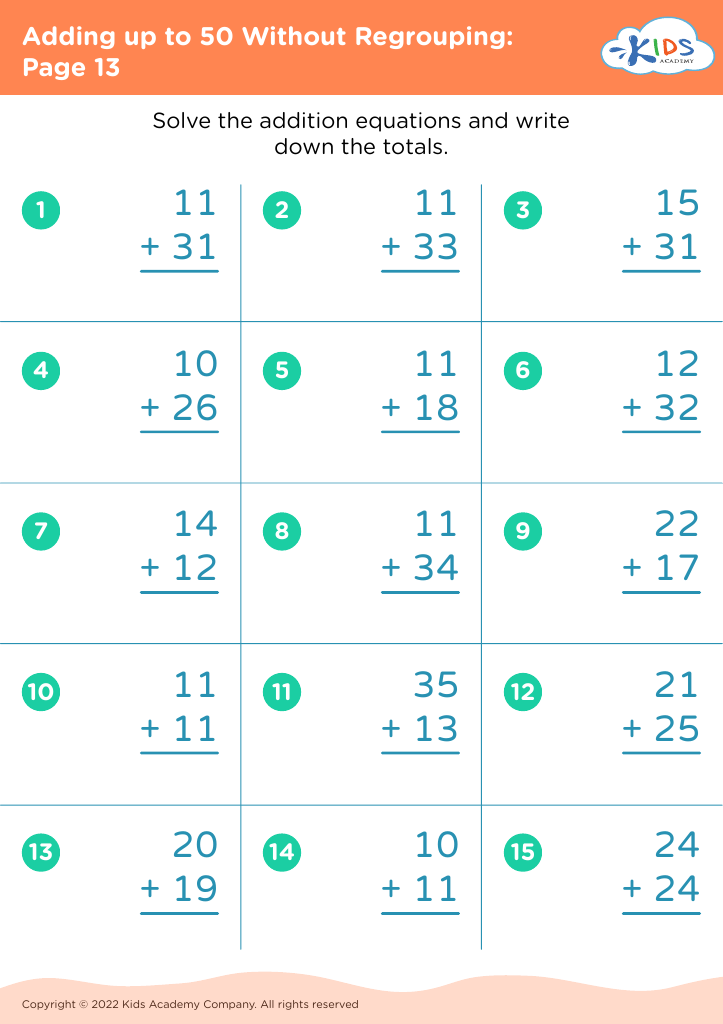
Welcome to our "Improve Number Recognition Addition Worksheets" designed for children aged 3-8! These engaging worksheets creatively blend number recognition and addition skills, providing a fun learning experience. Each activity is crafted to foster confidence and proficiency in understanding numbers and basic addition, encouraging young learners to explore math concepts through colorful illustrations and interactive exercises. Perfect for preschoolers and early graders, our worksheets help develop essential skills in a structured yet enjoyable way. Empower your child’s mathematical journey while nurturing their love for learning with our comprehensive collection of printable resources that guarantee improvement and success!
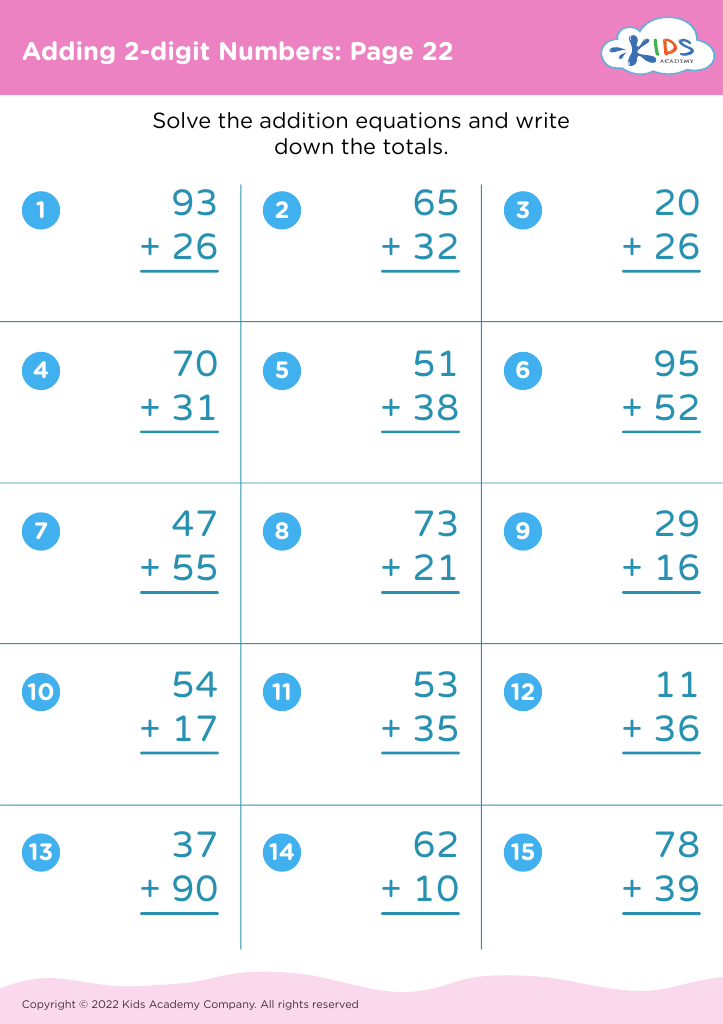
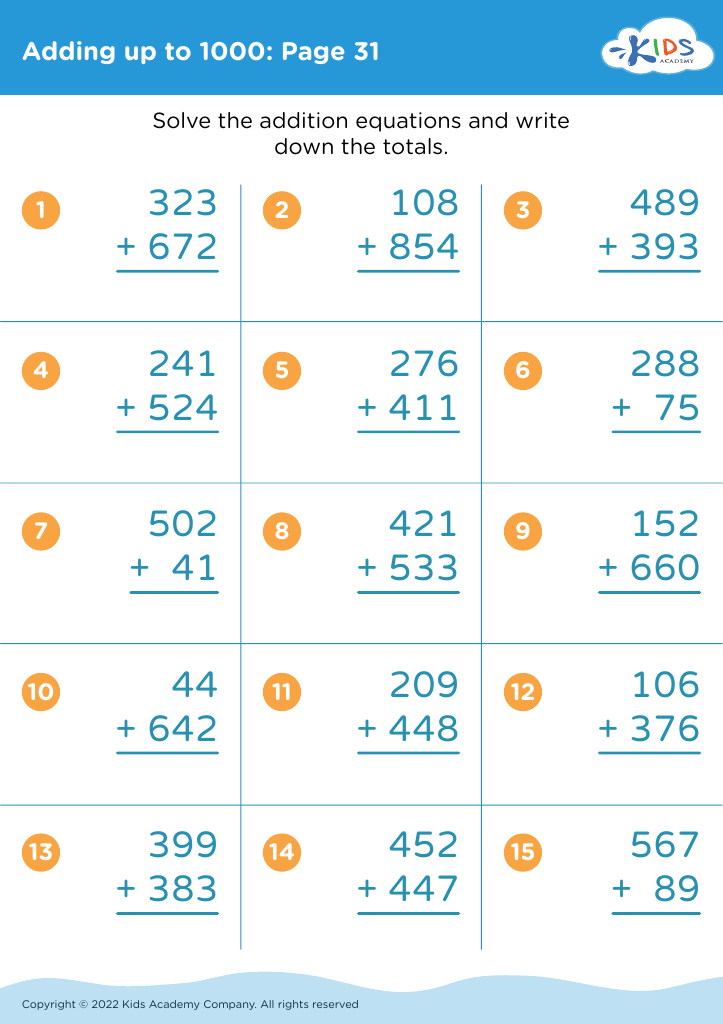
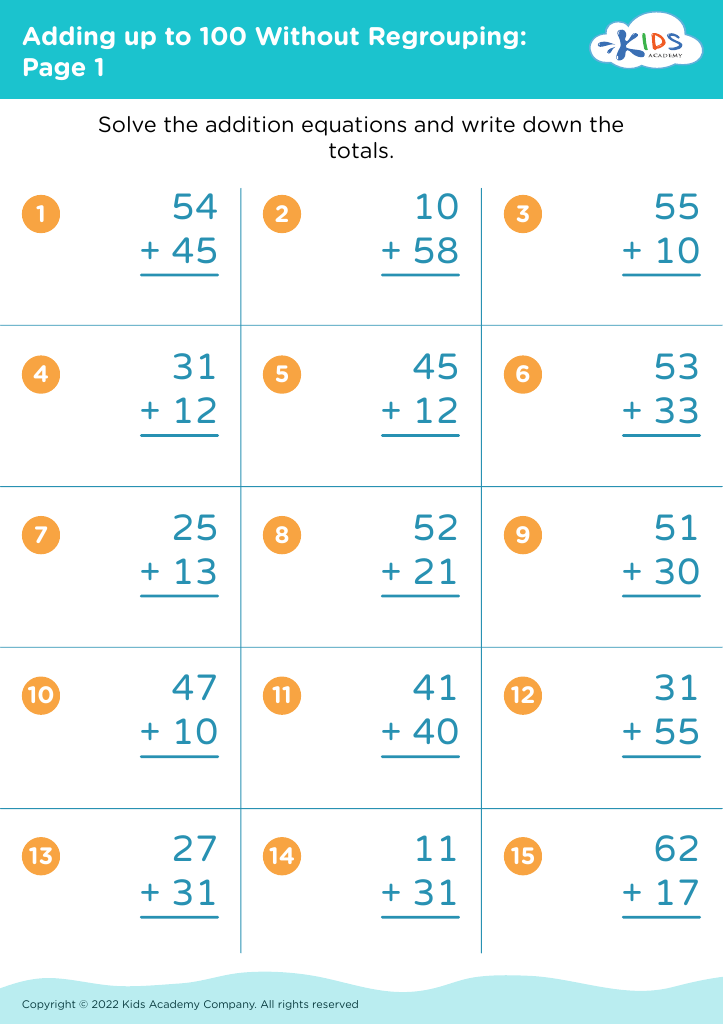
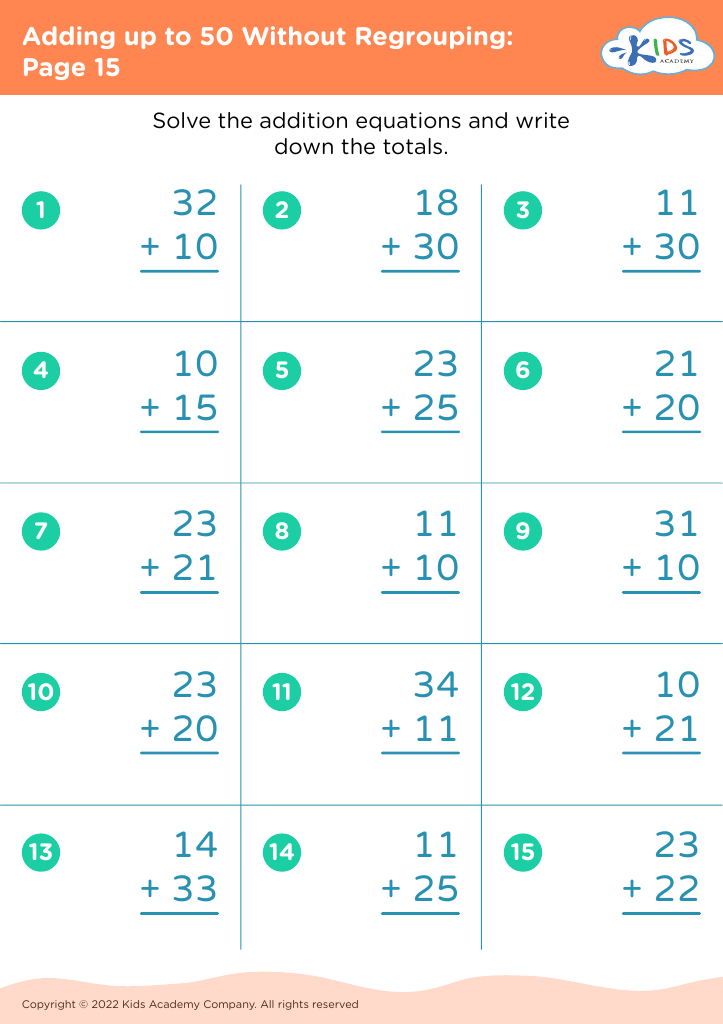
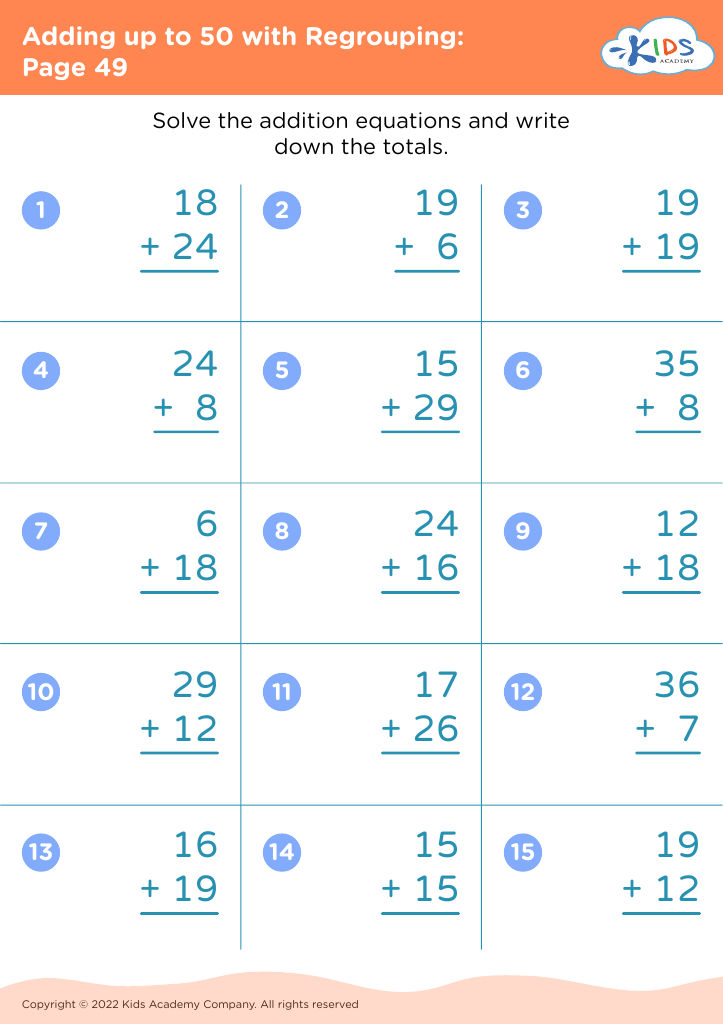
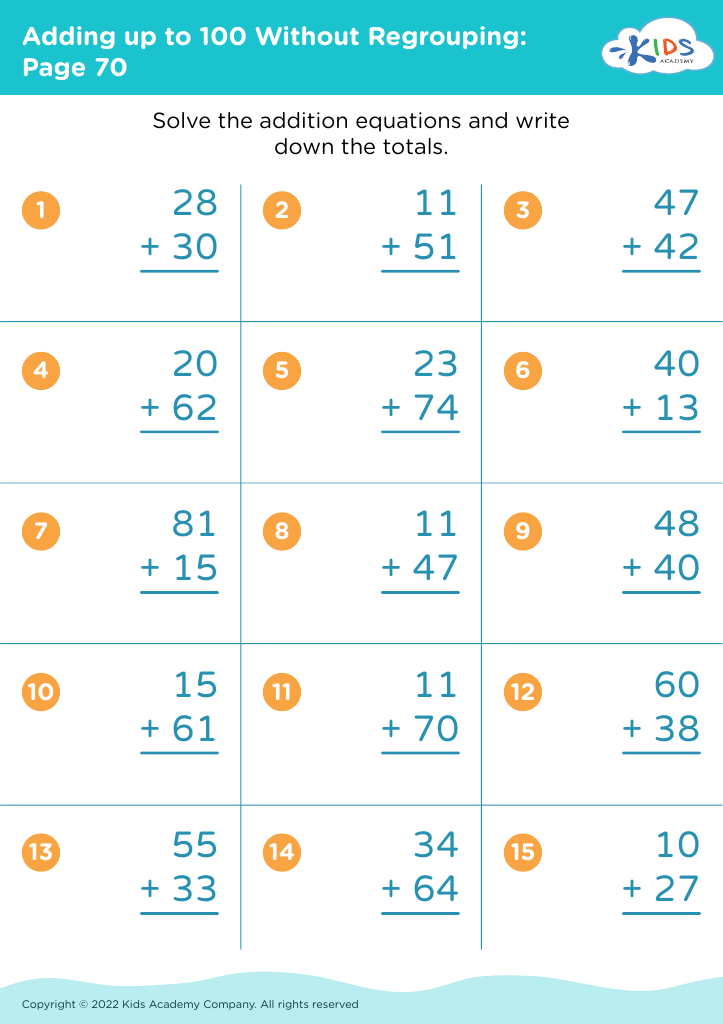
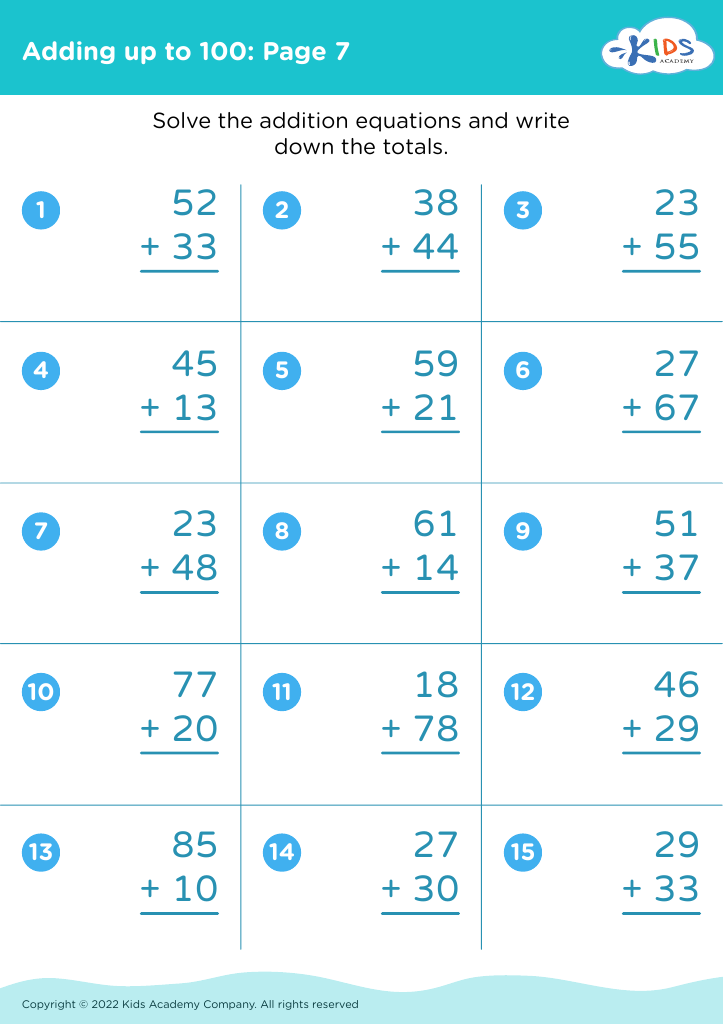








Improving number recognition and addition skills in children aged 3-8 is crucial for several reasons. First, foundational math skills are essential for future academic success. At this stage, children are developing cognitive abilities that will support more complex concepts later. Number recognition lays the groundwork for learning addition, which is foundational for all arithmetic.
Second, early mastery of these skills helps in building confidence. When children are able to recognize numbers and perform simple additions, they gain a sense of achievement that encourages a positive attitude toward math and learning in general. This confidence can diminish the anxiety many children face in their later school years when encountering more challenging math concepts.
Moreover, developing these skills boosts critical thinking and problem-solving abilities. Engaging with numbers and basic calculations fosters an interest in patterns, sequences, and logical thinking, which are vital across various subjects.
Finally, parents and teachers play a crucial role in creating engaging and supportive environments where number recognition and addition can thrive. Interactive games, hands-on activities, and practical applications can make foundational math skills enjoyable and meaningful, ensuring children develop a love for learning that lasts a lifetime.








