Logical thinking Addition Worksheets for Ages 3-8
9 filtered results
-
From - To
Discover our engaging Logical Thinking Addition Worksheets, designed for children aged 3-8! These worksheets seamlessly blend fun and education, helping young learners grasp the basics of addition while enhancing their logical thinking skills. Each worksheet offers age-appropriate challenges that stimulate critical thinking and problem-solving. Colorful illustrations and interactive exercises create an enjoyable learning experience, keeping kids motivated and inspired. Whether for classroom use or at-home practice, our addition worksheets lay a solid foundation for future math success. Explore our collection today to support your child's cognitive development and nurture a lifelong love for learning and mathematics.
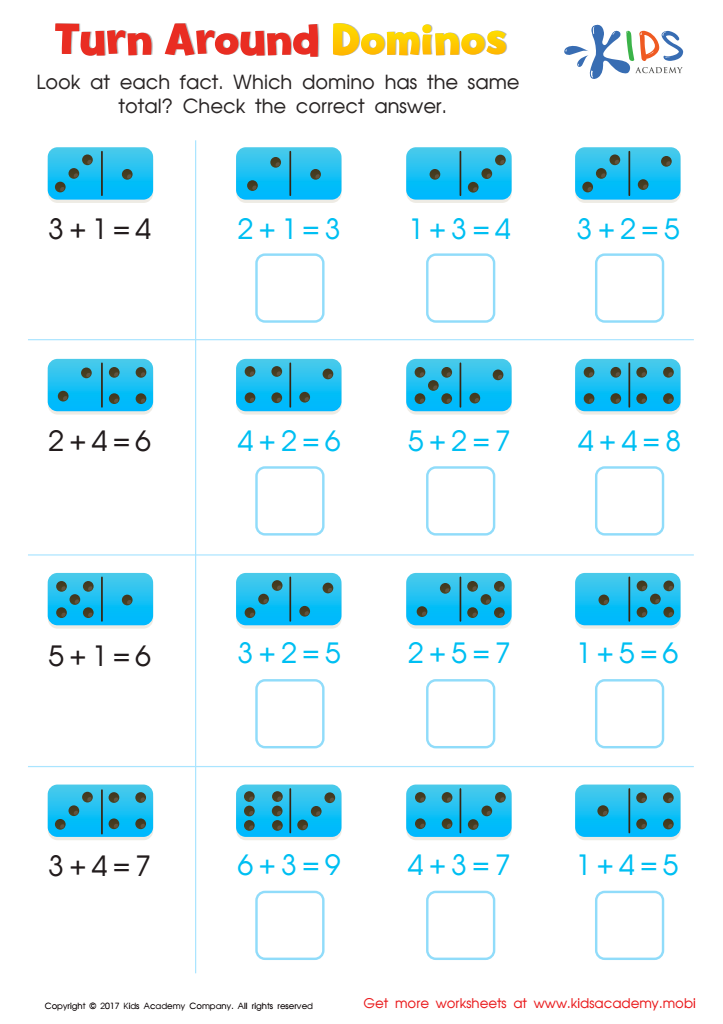
Turn Around Dominos Worksheet
 Assign to My Students
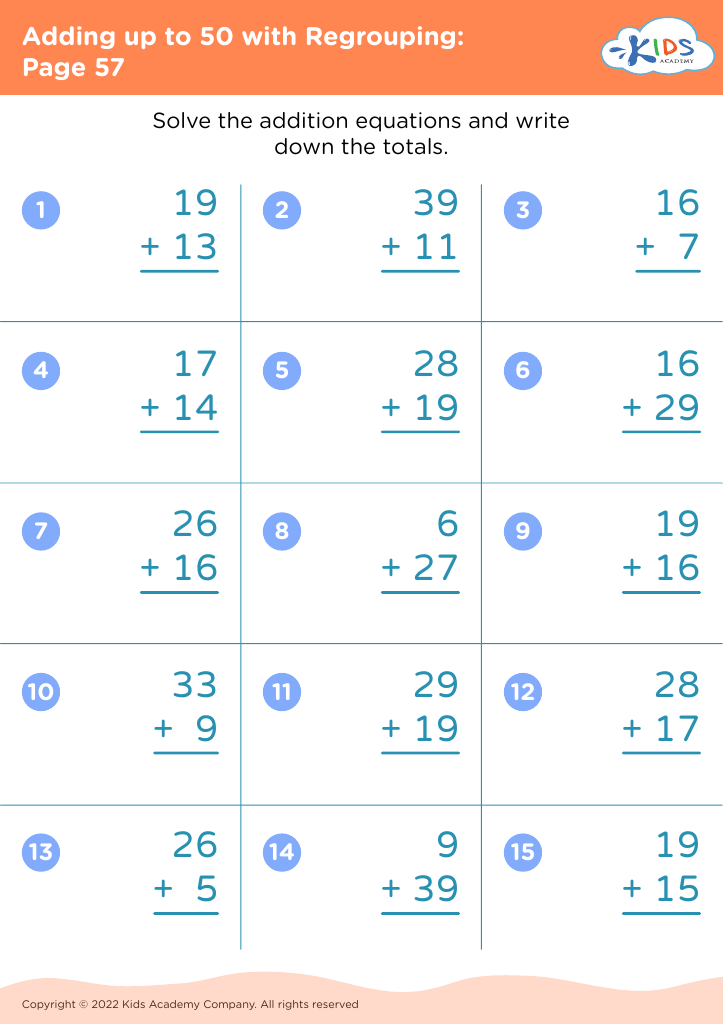
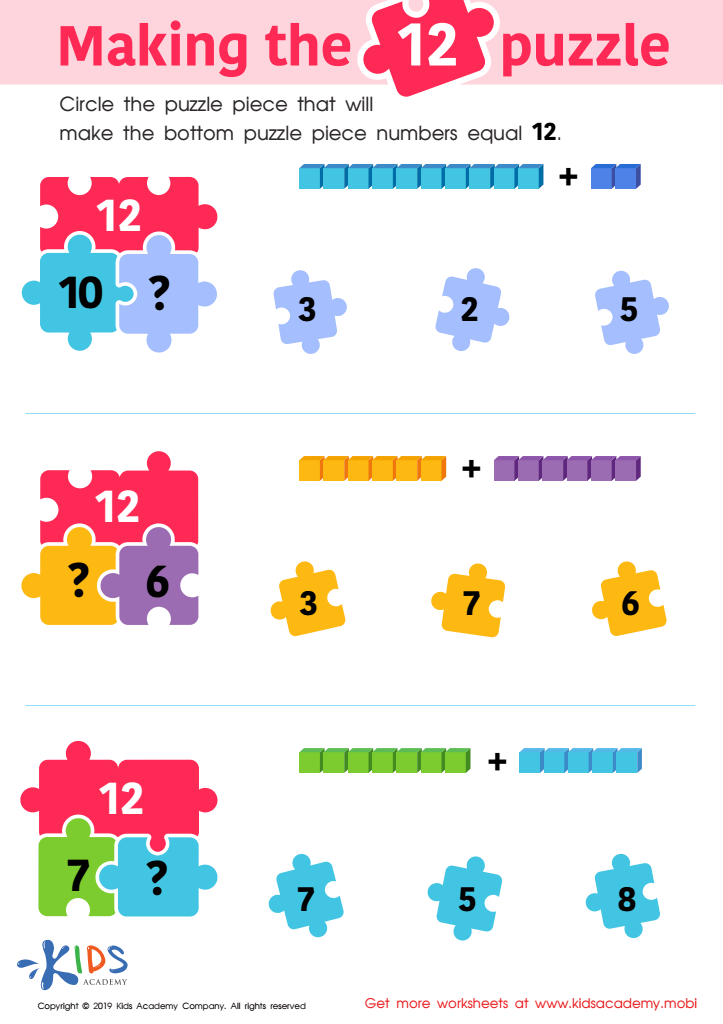
Making the 12 Puzzle Worksheet
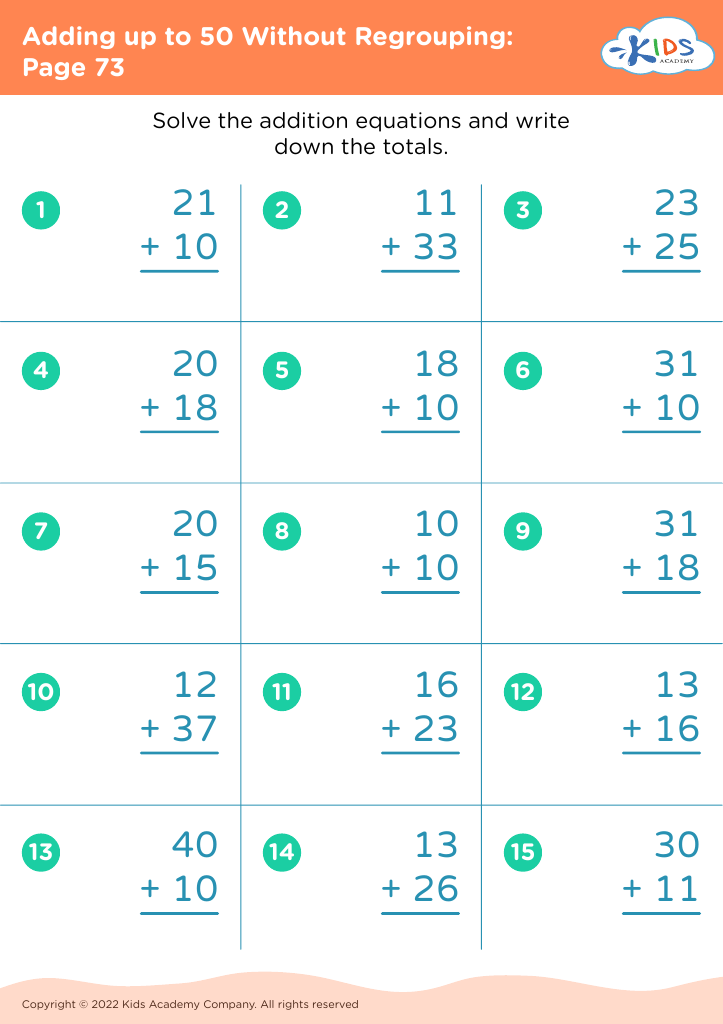
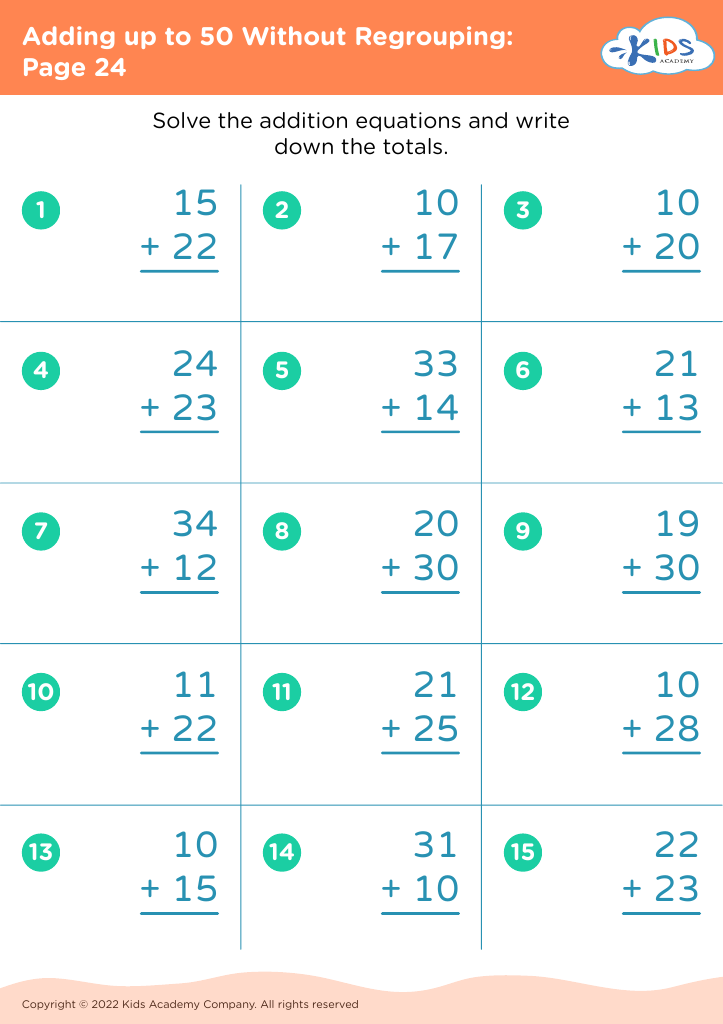
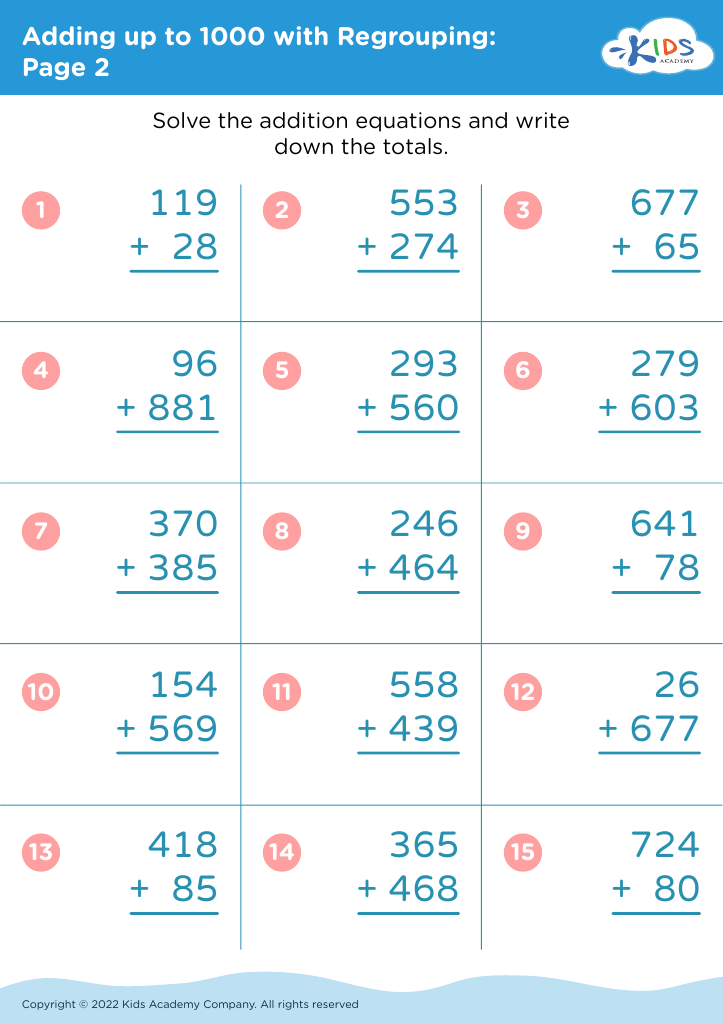








Logical thinking and the concept of addition are critical foundations for children aged 3-8. Combining these skills forms a crucial part of early cognitive development, fostering both numerical understanding and critical problem-solving abilities. When children engage in addition exercises, they are not merely learning to count; they are developing the ability to understand relationships between numbers and how they can be combined to form new values. This aids in their overall mathematical fluency, a key competency for future academic success.
Furthermore, introducing logical thinking at an early age empowers children to create connections between different ideas. They learn to recognize patterns, categorize information, and make informed guesses based on observed data. These abilities are transferable across various subjects, enhancing their reading comprehension, scientific inquiry, and even social interactions.
Additionally, engaging young children in these activities can be achieved through playful and interactive methods, such as counting objects, using story problems, or playing educational games. This not only sustains their attention but also makes learning enjoyable, instilling a positive attitude toward education.
In essence, paying attention to these foundational skills helps build a robust intellectual platform that supports children's lifelong learning and adaptability, equipping them better to face future educational challenges and everyday problem-solving tasks.








