Math problem-solving Addition Worksheets for Ages 3-8
11 filtered results
-
From - To
Explore our engaging Math Problem-Solving Addition Worksheets for children ages 3-8! Designed to make learning fun, these worksheets focus on building strong addition skills through interactive activities and colorful visuals. Perfect for young learners, teachers, and parents, these resources help kids develop their mathematical thinking and problem-solving abilities in a supportive environment. Our worksheets cater to different levels of learning, ensuring that each child progresses at their own pace. Promote confidence and a love for math in your child with our expertly crafted addition worksheets. Start today and make learning addition a joyful adventure!
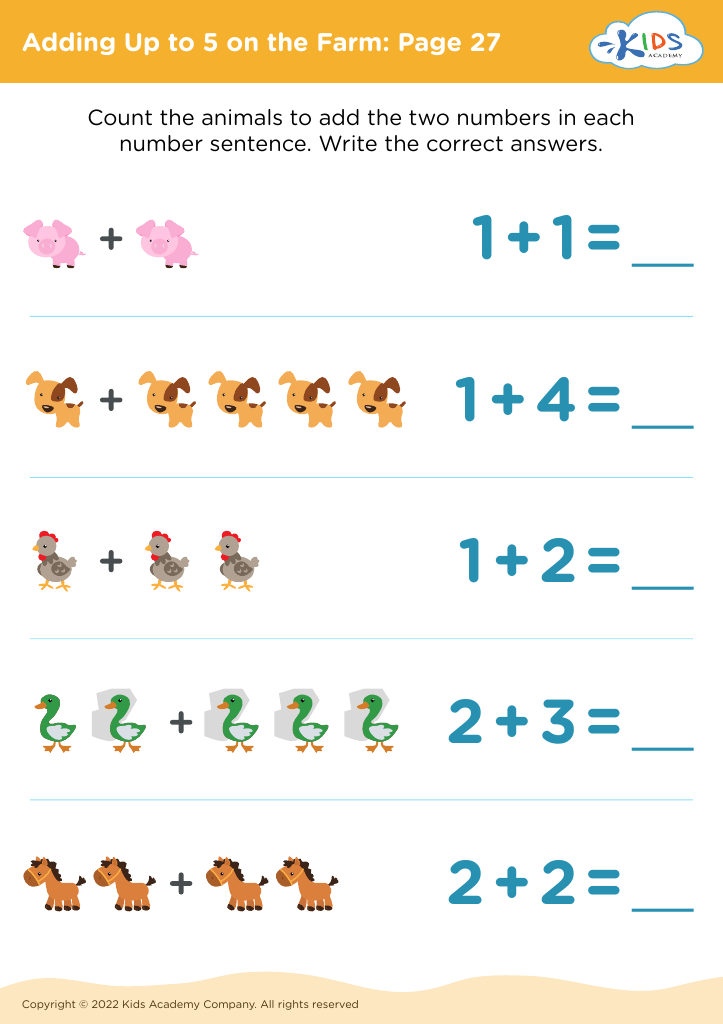
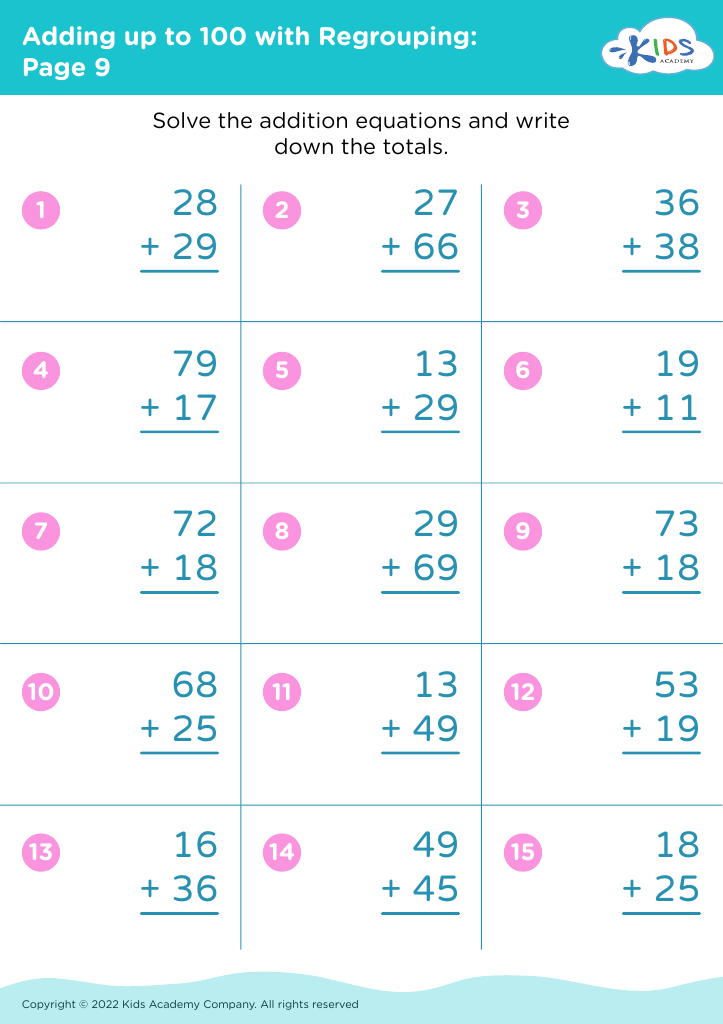
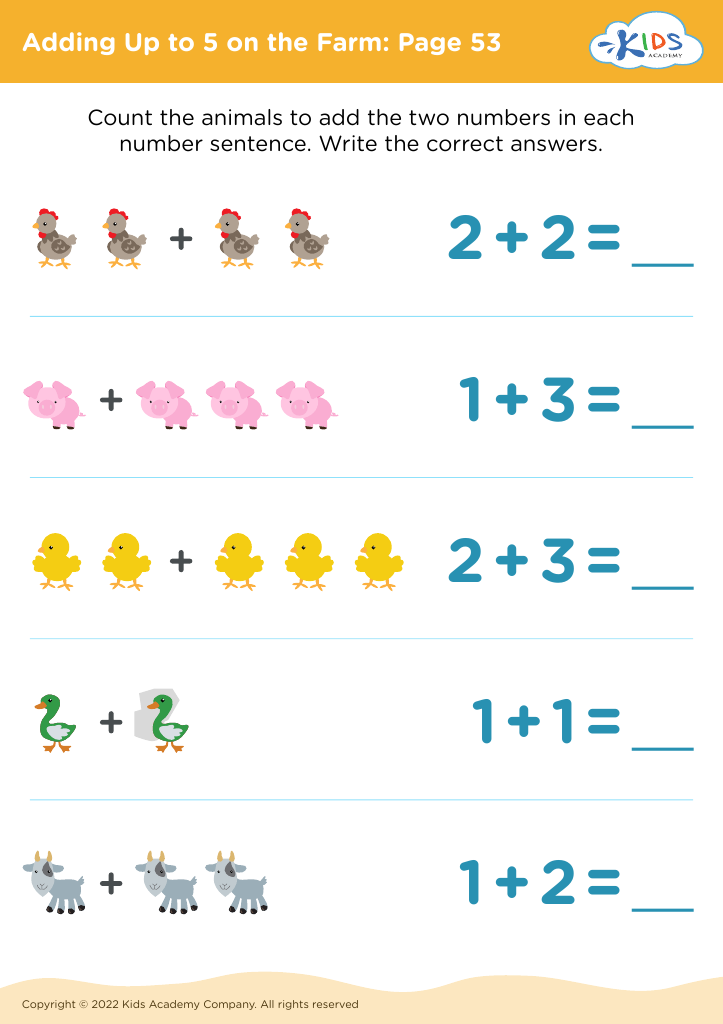
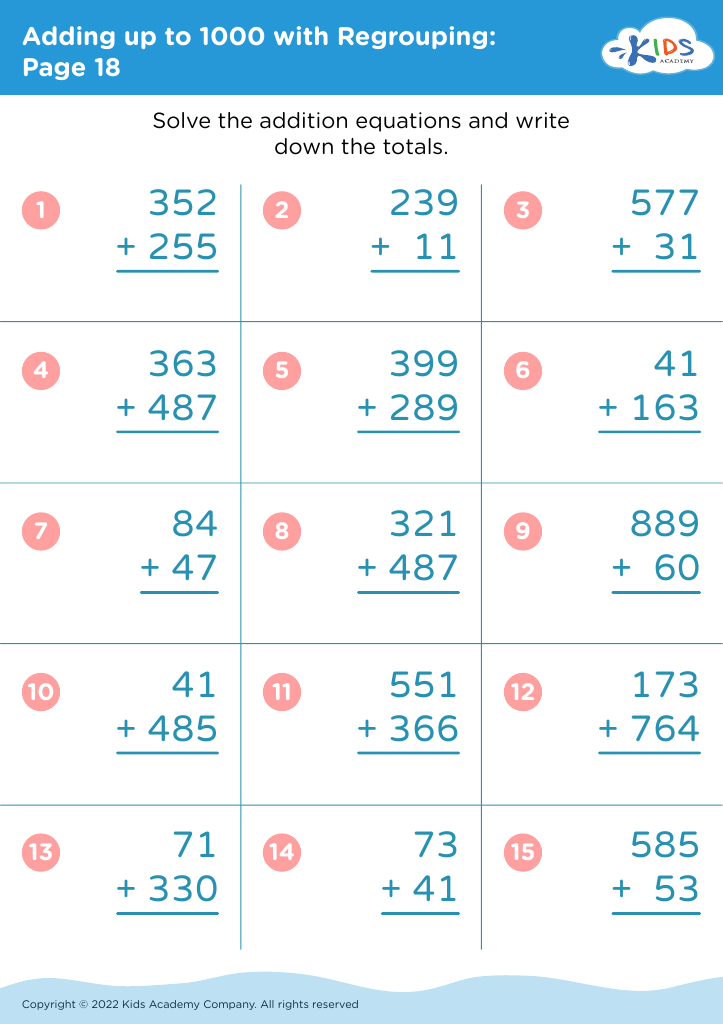
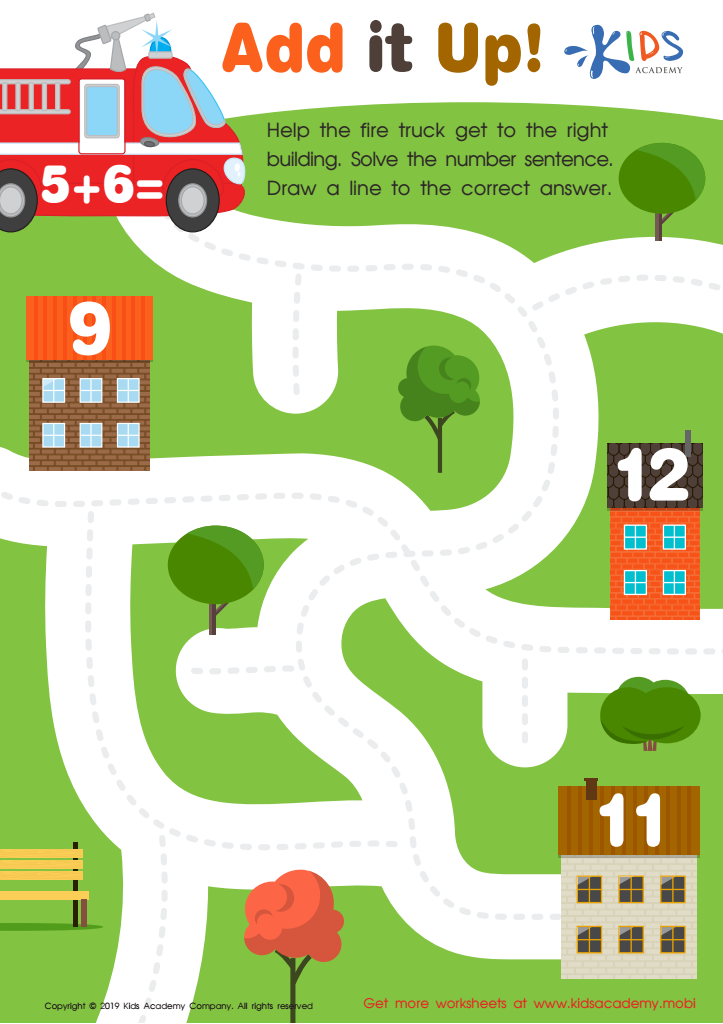
Add it Up Worksheet
 Assign to My Students
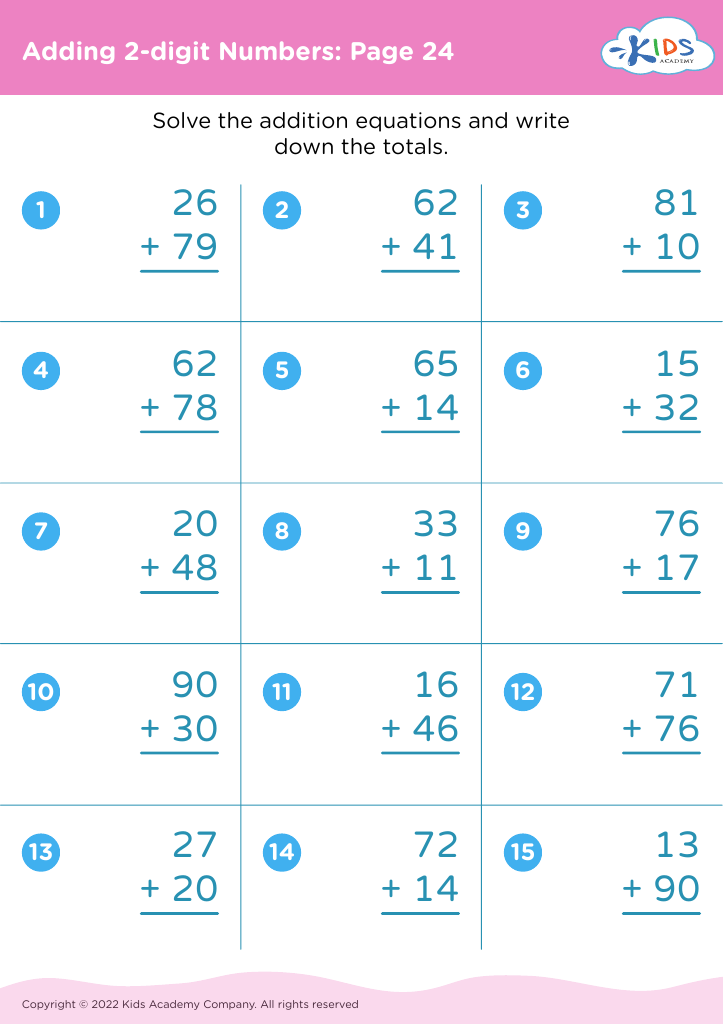
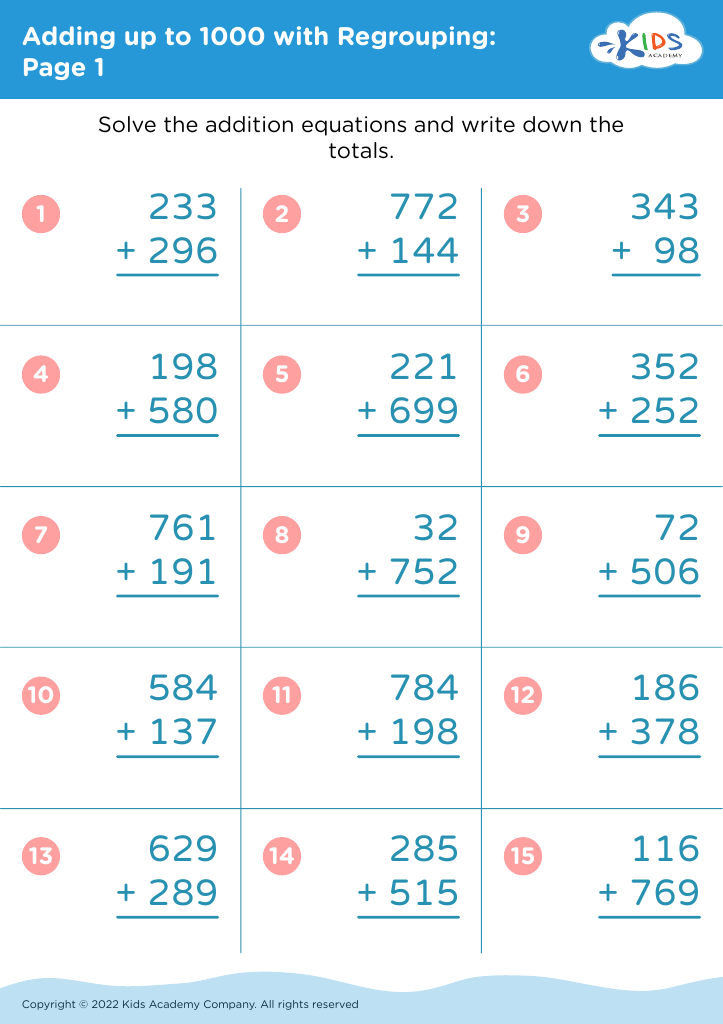
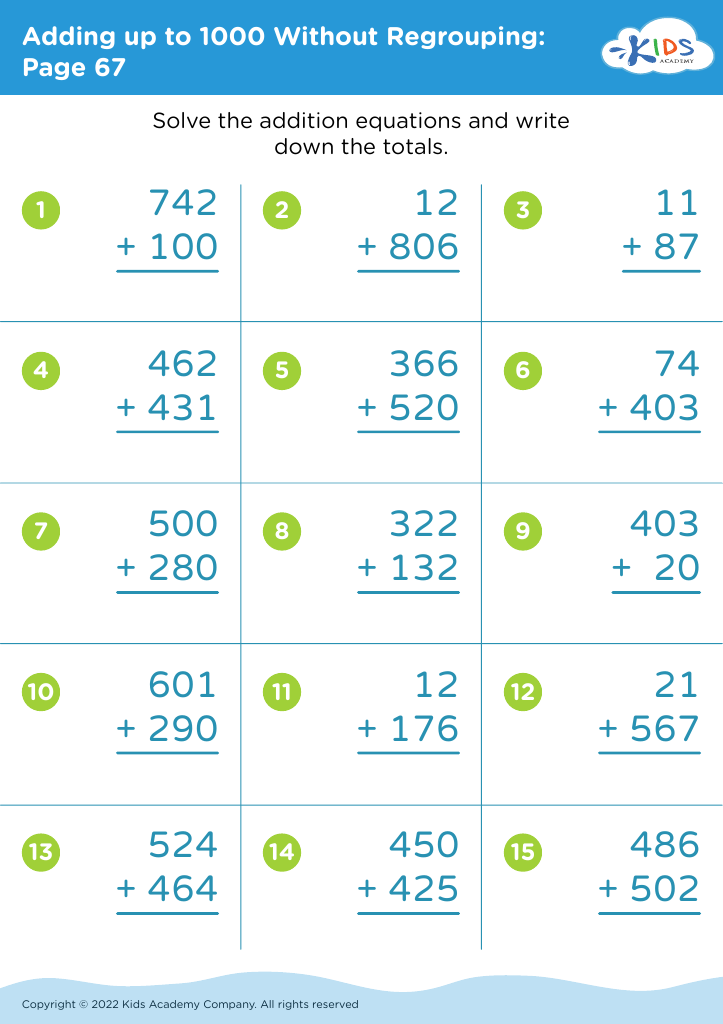
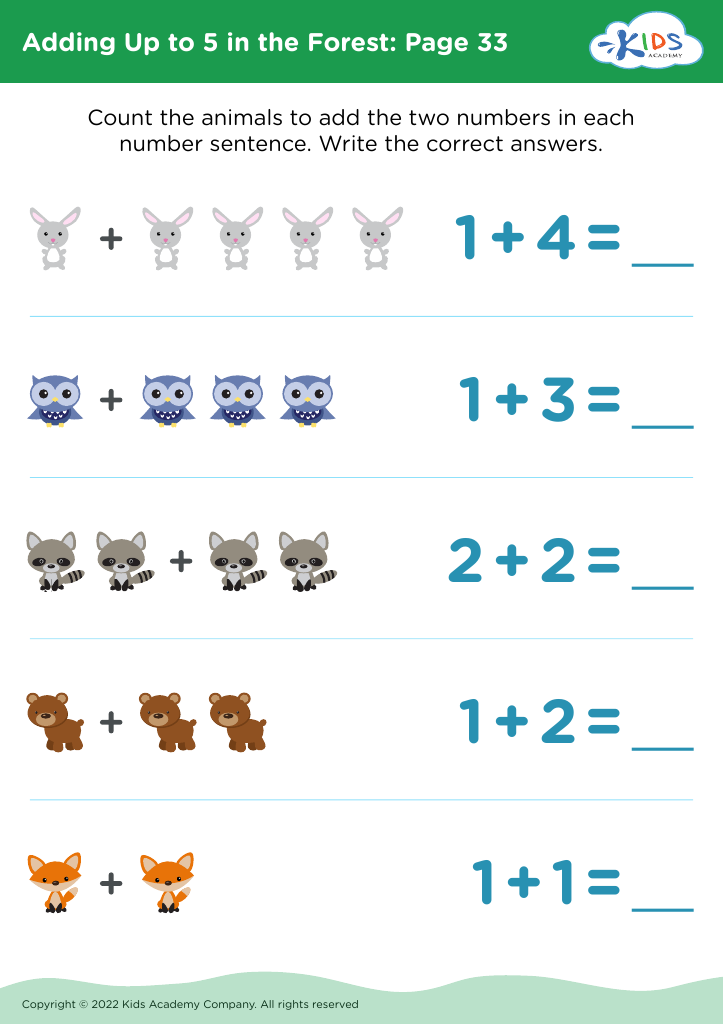
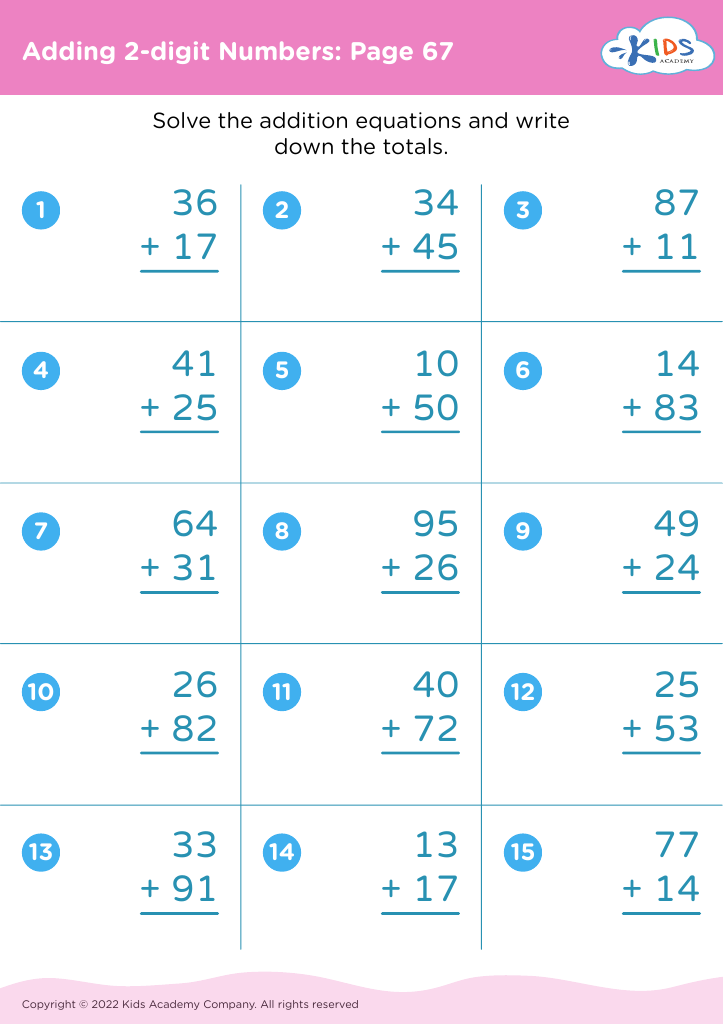
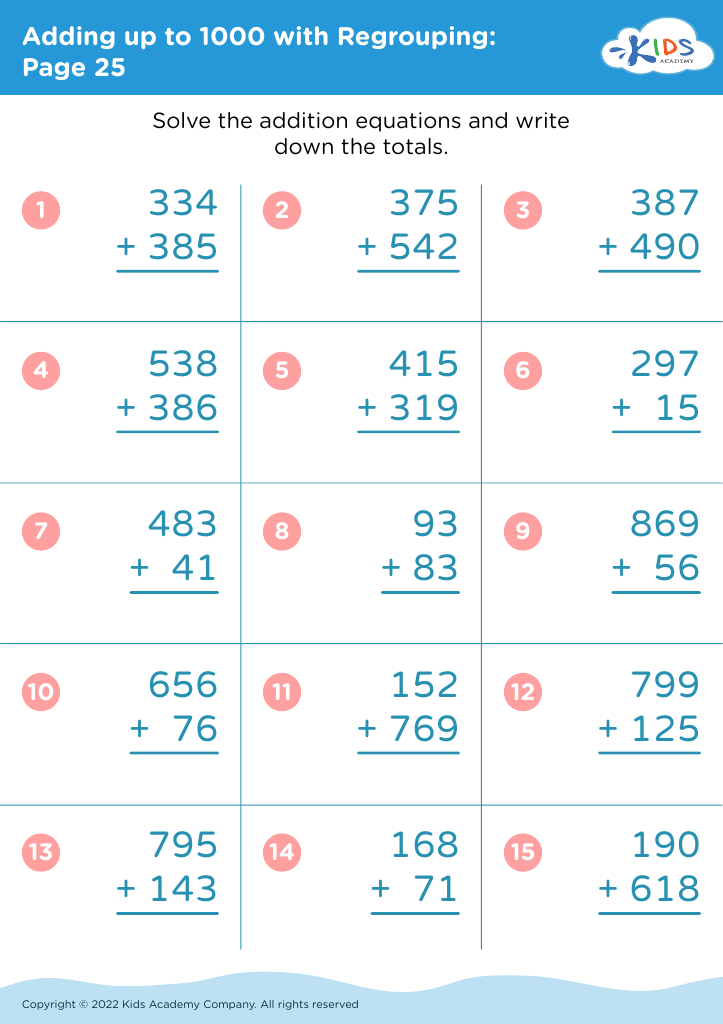








Math problem-solving involving addition is crucial for children aged 3-8 for several reasons that benefit their overall cognitive and academic development. At this formative age, young learners' brains are incredibly malleable, and introducing them to addition helps lay the foundation for essential mathematical skills. Developing an understanding of addition not only aids in grasping more complex arithmetic concepts later but also fosters critical thinking and problem-solving abilities.
Introducing addition to young children also boosts their confidence and encourages a proactive learning attitude. Kids who become comfortable with numbers early on are more likely to approach future math challenges with a positive mindset. Early exposure to math problem-solving has been linked to better performance in school, as math skills are closely tied to logical reasoning, analytical thinking, and understanding patterns - skills applicable across various subjects.
Furthermore, addition in real-life contexts helps kids relate math to their everyday world. Activities such as counting toys, fruits, or playing educational games make learning interactive and fun. This practical application fosters a love for learning and shows the real-world importance of math, enhancing a child’s enthusiasm and curiosity.
Overall, focusing on addition and math problem-solving at an early age equips children with the necessary tools to excel academically and develop confidence, setting a strong foundation for lifelong learning.








