Nature awareness Addition Worksheets for Ages 3-8
8 filtered results
-
From - To
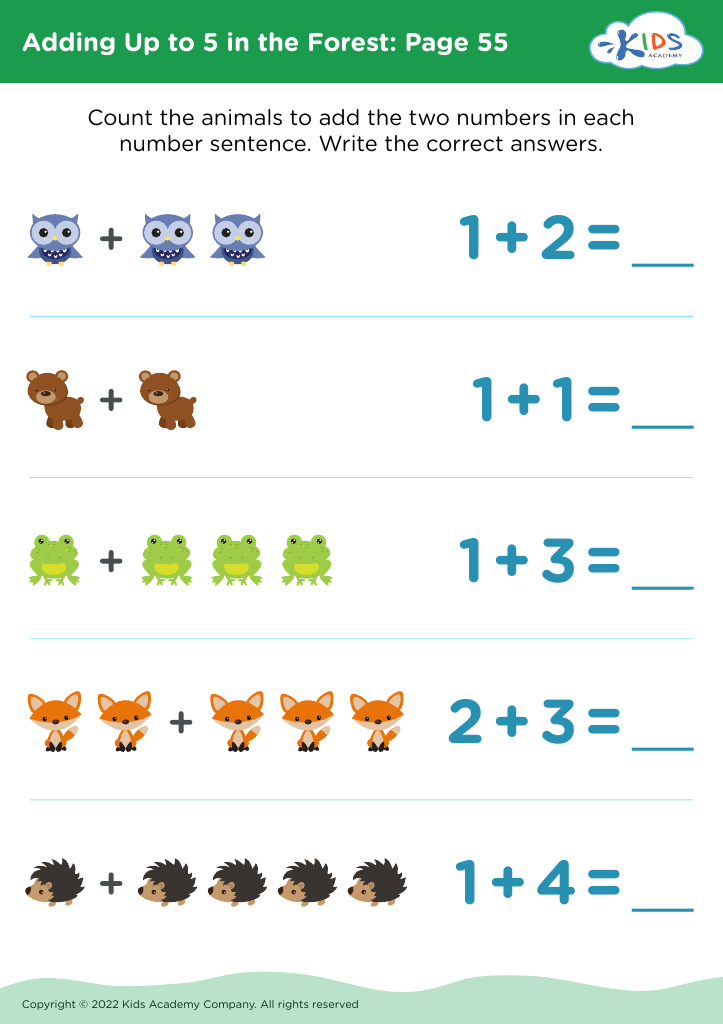
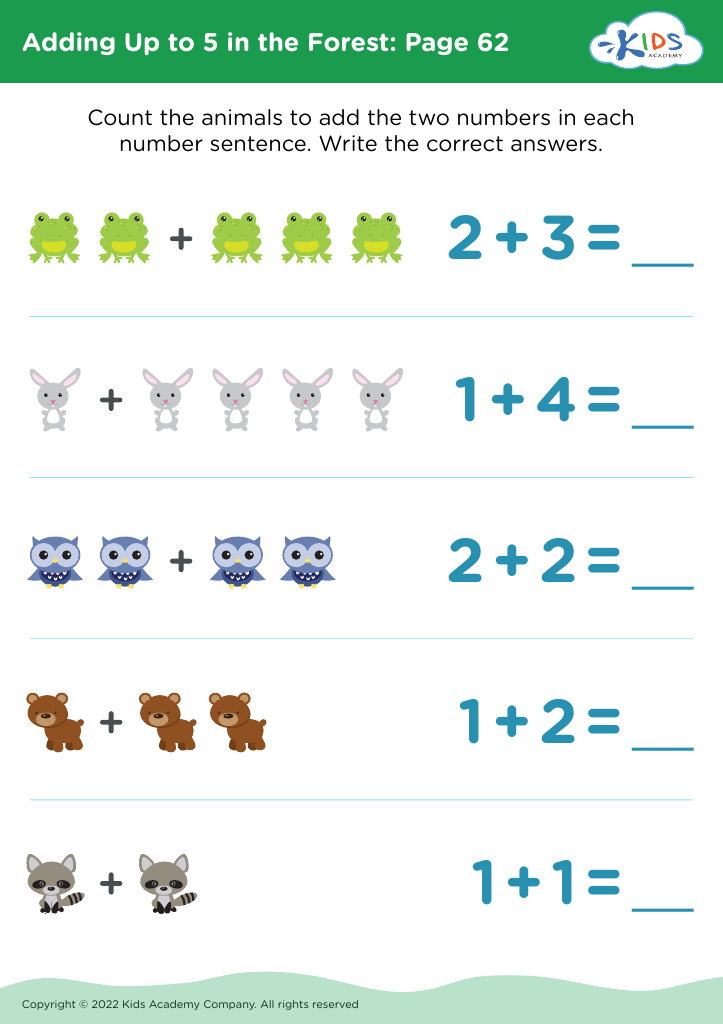
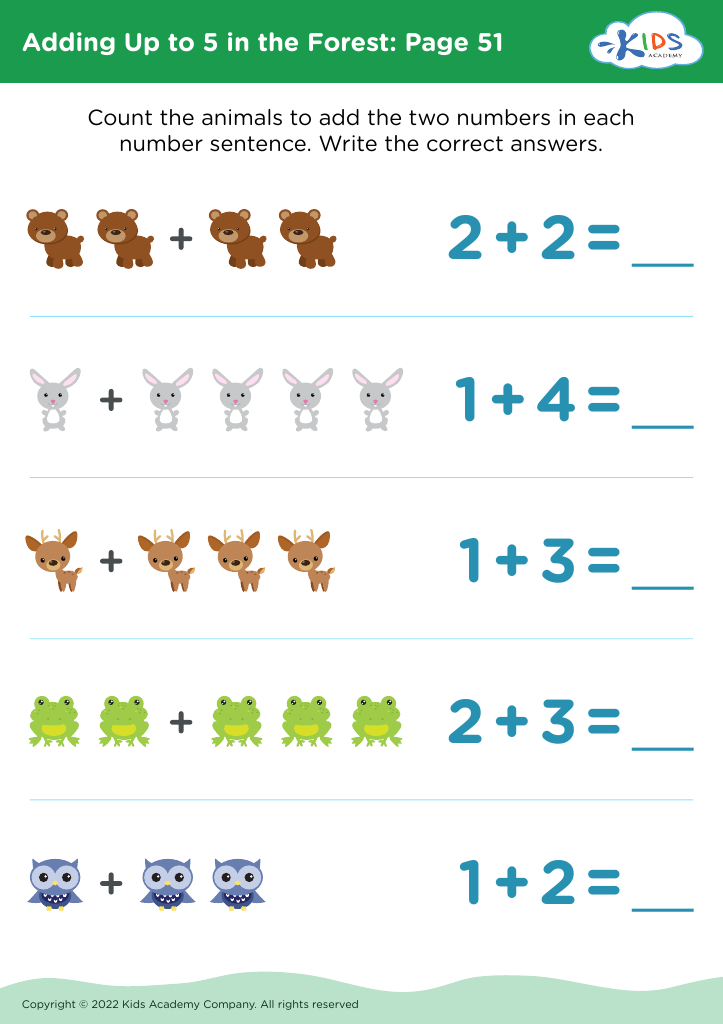
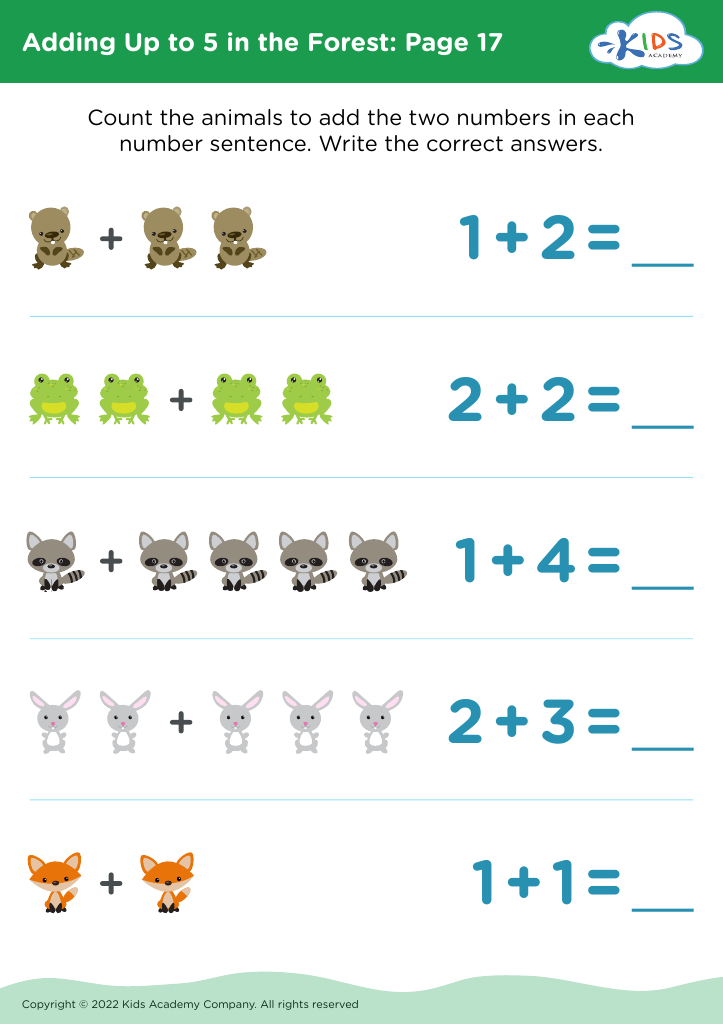
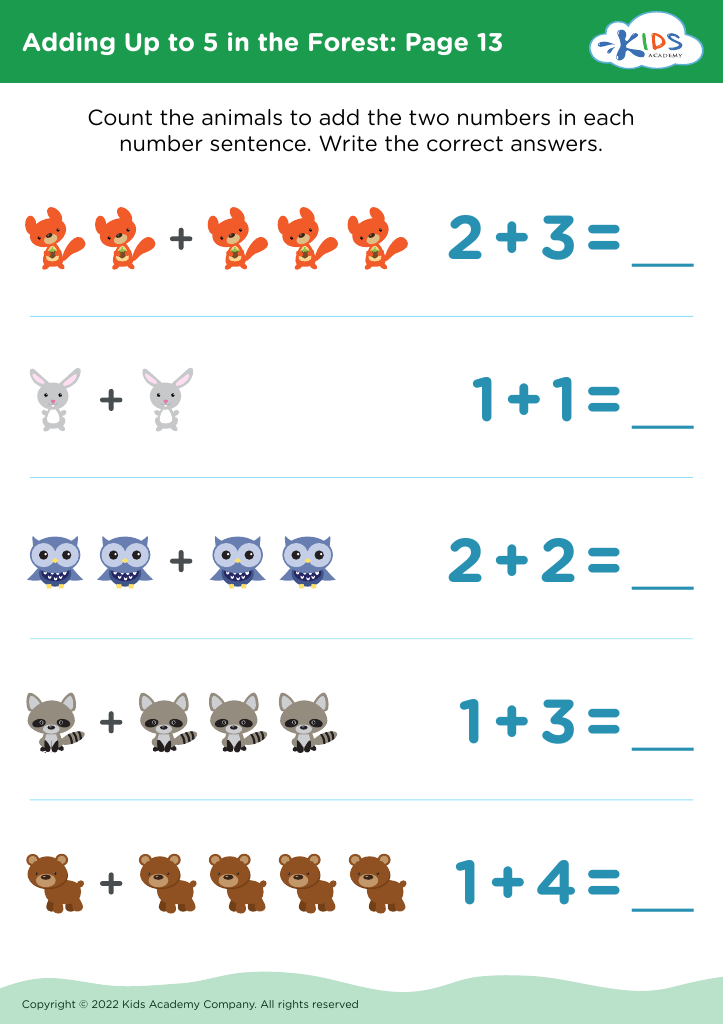
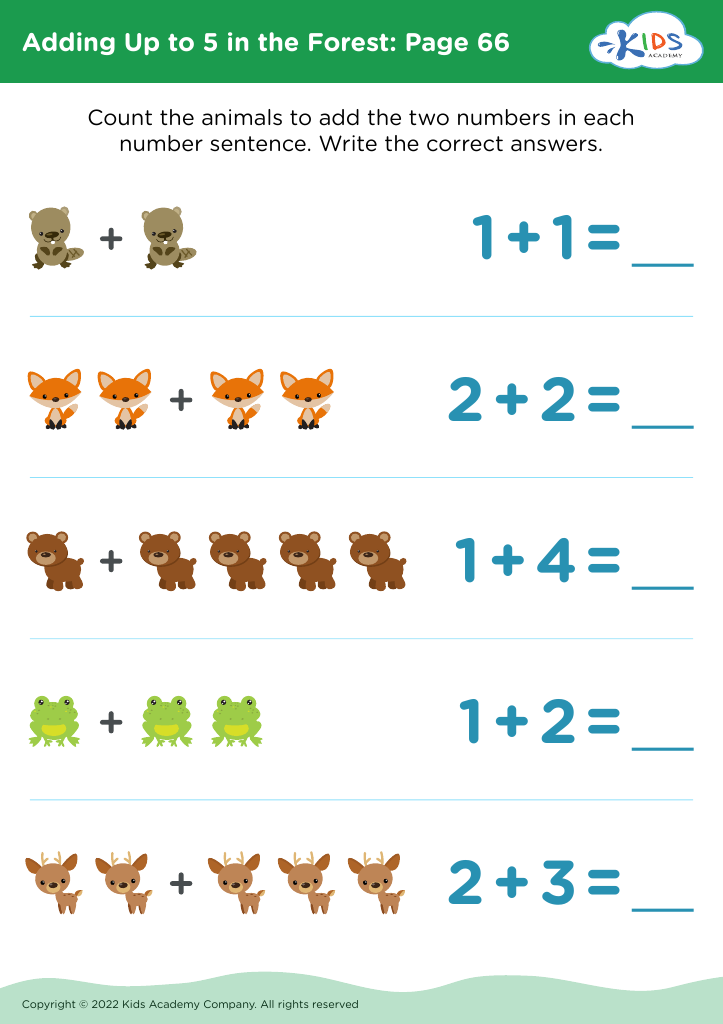
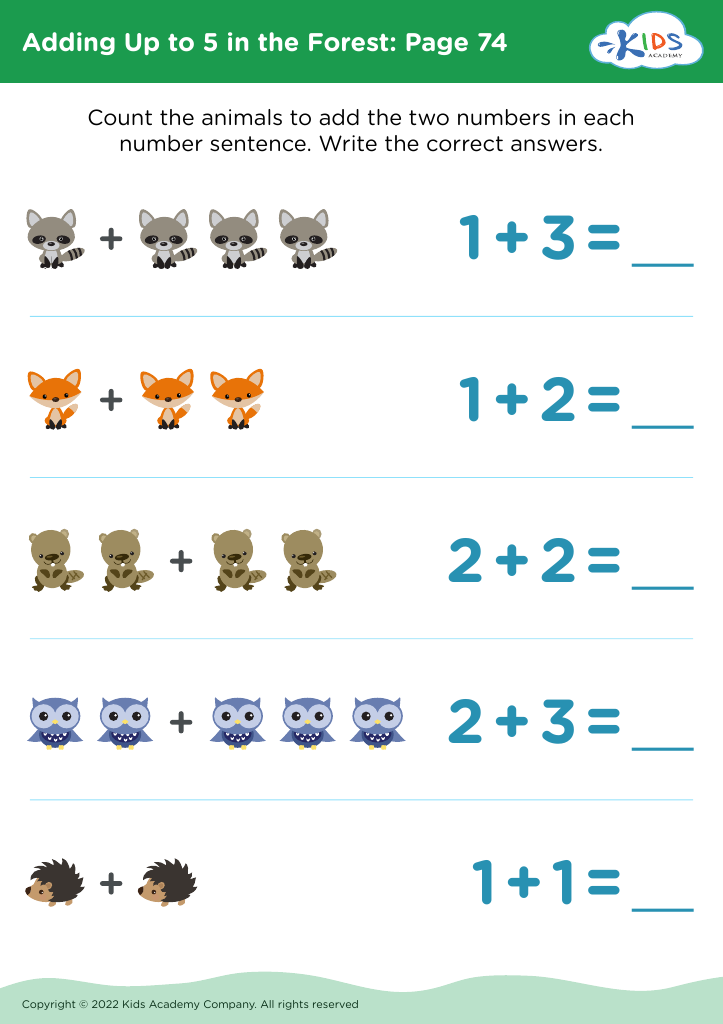
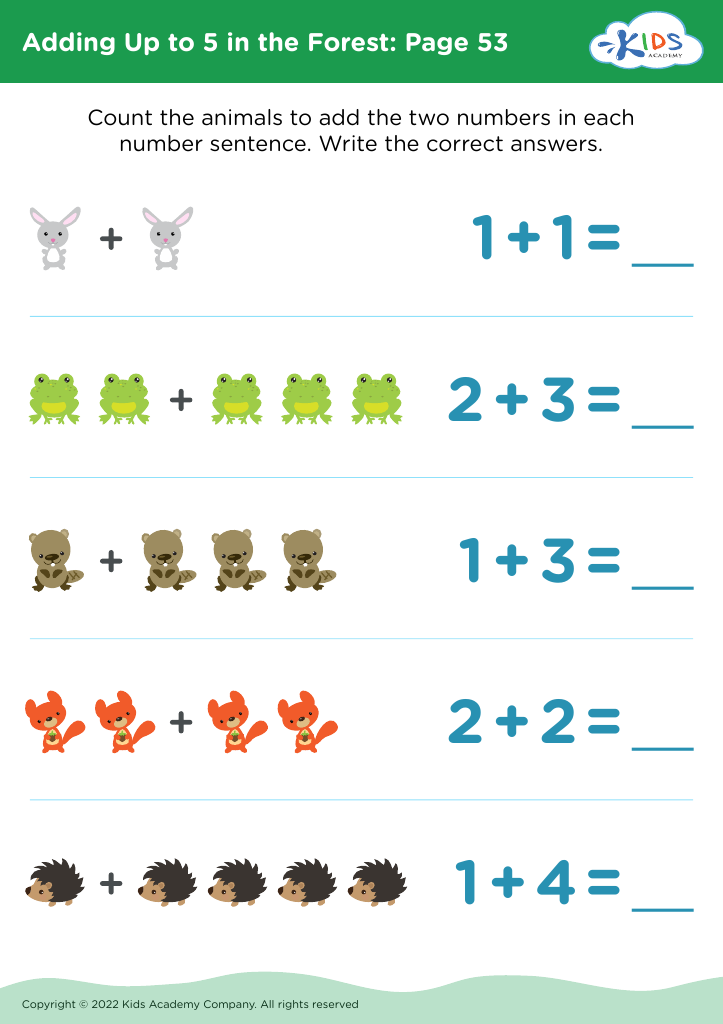
Introduce your child to the wonders of nature while building essential math skills with our Nature Awareness Addition Worksheets for ages 3-8. These engaging worksheets combine the beauty of the natural world with fun addition problems to enhance both math proficiency and an appreciation for the environment. Perfect for early learners, each worksheet features colorful, nature-themed illustrations designed to capture young imaginations while reinforcing fundamental addition concepts. Tailored for various learning levels, these printable resources foster a love for math and the great outdoors, making learning both enjoyable and educational. Ideal for classroom use or at-home practice!








Nature awareness is essential for children aged 3 to 8 as it cultivates respect and understanding of the environment from an early age. This foundational appreciation can foster lifelong behaviors in sustainability and conservation. Engaging with nature also enhances cognitive development. Activities such as observing plants, animals, and seasonal changes enrich vocabulary, critical thinking, and scientific inquiry, fostering curiosity and exploration.
Additionally, time spent in nature has been linked to significant emotional and physical health benefits. Outdoor play reduces stress, enhances mood, and improves physical fitness. Immersive nature experiences can encourage creativity, independence, and problem-solving skills, crucial aspects of a child's holistic development.
For parents and teachers, prioritizing nature awareness helps bridge experiential learning with traditional academics, creating a well-rounded education. Moreover, children learn empathy when they observe wildlife and ecosystems, helping them form compassionate connections with living beings.
Fostering a connection with nature early on instills a sense of stewardship and responsibility. This proactive mindset can lead to positive, impactful behaviors, ultimately benefiting both the individual and the broader community. Therefore, nature awareness is not just an addition; it is an integral component of developing informed, healthy, and responsible individuals.








